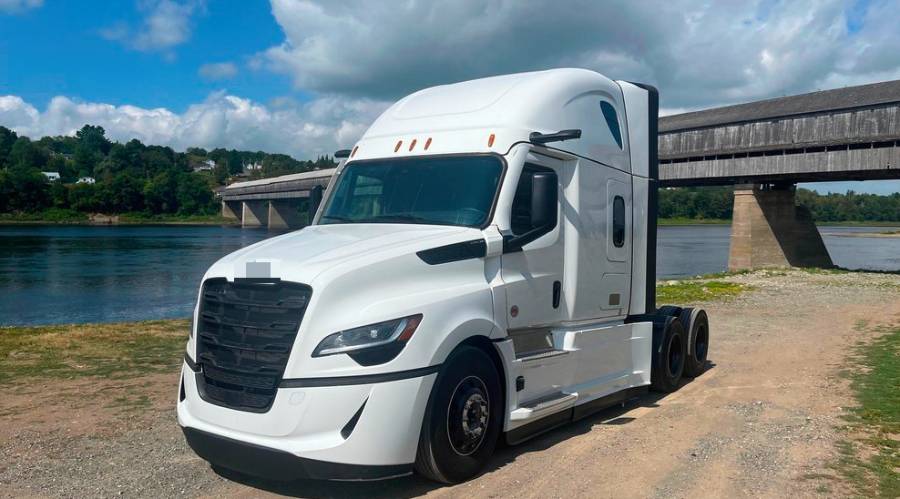
A Freightliner Cascadia fifth wheel may fail to release because of excessive trailer tension, jammed locking jaws, damaged release linkage, insufficient lubrication, or a malfunctioning air release system. These problems prevent the locking mechanism from disengaging the trailer kingpin, making it difficult or impossible to uncouple the trailer.
The exact cause depends on the fifth wheel model and its release mechanism. Manual fifth wheels rely on a mechanical release handle and linkage, while air-operated systems use pneumatic components to activate the release mechanism. Both designs can experience mechanical binding, worn components, or improper trailer positioning. For example, excessive pressure between the kingpin and locking jaws can prevent the fifth wheel from opening even when the release mechanism is functioning correctly.
Start by securing the truck and trailer, checking for excessive kingpin tension, and inspecting accessible release components for visible damage. Follow the installed fifth wheel manufacturer’s uncoupling instructions before attempting corrective action. Never force the locking mechanism or position yourself beneath an unsupported trailer.
This guide explains the common causes of Freightliner Cascadia fifth wheel release failures, how to identify mechanical and pneumatic problems, which corrective actions are appropriate, and when professional repair is necessary. It also covers maintenance practices that help prevent recurring release problems.
Why Is the Freightliner Cascadia Fifth Wheel Not Releasing?
A Freightliner Cascadia fifth wheel may not release because of five main problems: excessive trailer tension, stuck locking jaws, damaged release linkage, insufficient lubrication, or a faulty air release system. Each problem interferes with the mechanism that secures the trailer kingpin inside the fifth wheel. Identifying the specific cause is necessary before attempting to uncouple the trailer.
Excessive trailer tension is a common cause of fifth wheel release difficulty. When the tractor and trailer push or pull against each other, the kingpin places pressure on the locking jaws. This pressure creates mechanical resistance that prevents the jaws from disengaging. For example, a trailer parked on uneven ground or a tractor positioned against the trailer’s resistance can place enough load on the kingpin to make the release handle difficult to operate. Relieving this pressure through the manufacturer’s approved uncoupling procedure can restore normal release operation without requiring component replacement.
Stuck or seized locking jaws can prevent the fifth wheel from releasing even when the trailer is correctly positioned. The locking jaws hold the trailer kingpin in place and must move through their designed travel to disengage it. Dirt, rust, hardened grease, and mechanical wear can restrict this movement. A fifth wheel that has operated for extended periods without proper cleaning or lubrication may develop enough resistance to prevent the jaws from opening completely. Damaged or excessively worn locking components require inspection and repair according to the fifth wheel manufacturer’s specifications.
Damaged release linkage can interrupt the mechanical connection between the release handle and the locking mechanism. The linkage transfers movement from the handle to the internal locking components. Bent rods, worn pivots, damaged springs, or seized joints can prevent the mechanism from completing its release cycle. For example, a release handle that moves farther than normal without disengaging the jaws may indicate disconnected or damaged linkage. A handle that barely moves may indicate binding, excessive kingpin pressure, or seized components. These symptoms help identify the affected mechanism but do not establish the exact failure without inspection.
Insufficient lubrication increases friction between moving fifth wheel components, including locking jaws, pivots, and release linkage. Lubrication reduces metal-to-metal contact and helps the locking mechanism operate smoothly. When grease deteriorates or becomes contaminated with road debris, internal components can become difficult to move. However, lubrication cannot correct bent linkage, broken components, or locking jaws that exceed manufacturer wear limits. The correct lubricant and application points depend on the installed fifth wheel model.
A faulty air release system can also prevent a Freightliner Cascadia fifth wheel from unlocking when the truck is equipped with a pneumatic release mechanism. These systems use compressed air to operate an actuator connected to the fifth wheel release assembly. Insufficient air pressure, damaged air lines, defective control valves, or a malfunctioning actuator can prevent the release mechanism from receiving the force required to operate. For example, an air leak between the control valve and actuator may prevent proper release movement even when the truck’s main air system shows normal pressure. Air-operated fifth wheels also contain mechanical locking components, so an air system fault must be distinguished from a jammed locking mechanism.
The most useful diagnostic distinction is whether the release mechanism cannot be activated, activates without unlocking the jaws, or unlocks while the trailer remains physically engaged. Each condition points toward a different group of causes. The installed fifth wheel manufacturer’s service instructions should determine the inspection and repair procedure.
How Do You Safely Troubleshoot a Freightliner Cascadia Fifth Wheel That Won’t Release?
To troubleshoot a Freightliner Cascadia fifth wheel that will not release, secure the truck and trailer, verify the uncoupling setup, inspect the accessible release mechanism, and determine whether the failure is mechanical or pneumatic. Follow the procedure specified for the installed fifth wheel model. A fifth wheel is a load-bearing coupling device, and an unexpected release can cause trailer movement, equipment damage, or serious injury.
What Should You Check Before Attempting to Release the Fifth Wheel?
Before attempting to release the fifth wheel, check five conditions: ground stability, vehicle movement protection, landing gear support, kingpin loading, and release mechanism condition. These checks help distinguish an incorrect uncoupling setup from a mechanical failure.
Start by confirming that the tractor and trailer are positioned on firm, reasonably level ground. Apply the appropriate parking brakes and use wheel chocks as required by the manufacturer’s procedure and site safety rules. Verify that the trailer landing gear is correctly positioned and capable of supporting the trailer. Landing gear that is improperly deployed can leave excessive vertical load on the coupling or allow the trailer to drop when the kingpin disengages.
Next, assess whether the kingpin is under excessive forward or backward pressure. Trailer tension can develop when the tractor and trailer are positioned against each other, especially on sloped ground. This pressure can hold the locking jaws against the kingpin and make the release mechanism difficult to operate. Any adjustment to relieve tension must follow the approved uncoupling procedure and be performed without exposing anyone to vehicle movement.
Finally, inspect visible and safely accessible parts of the fifth wheel release assembly. Look for bent release handles, damaged linkage, corrosion, excessive debris, and disconnected components. Do not place hands or tools inside the locking jaw opening, crawl between unsecured equipment, or attempt to force the release mechanism. Stop troubleshooting if the trailer cannot be safely supported or controlled.
How Can You Identify a Mechanical or Air Release Problem?
A mechanical fifth wheel release problem is identified by abnormal handle movement, binding linkage, or locking jaws that fail to disengage. An air release problem is indicated by pneumatic controls or actuators that do not operate as intended. The first diagnostic step is to identify which release system is installed on the Freightliner Cascadia.
For a manually operated fifth wheel, observe how the release handle responds during the manufacturer-approved uncoupling procedure. A handle that resists movement may indicate kingpin tension, seized linkage, or jammed locking components. A handle that moves without producing the expected release action may indicate worn, disconnected, or damaged linkage. These symptoms require inspection because the same handle behavior can result from different mechanical faults.
For an air-operated fifth wheel, verify that the truck meets the release system’s specified operating conditions. The release control, available air supply, pneumatic lines, and actuator must work together to disengage the locking mechanism. A control that produces no apparent actuator response may indicate an air supply, valve, electrical-control, or actuator problem, depending on the installed system. An actuator that moves without releasing the kingpin suggests a possible mechanical obstruction or linkage fault.
The distinction matters because replacing pneumatic components will not resolve locking jaws that are mechanically jammed, while lubricating the release linkage will not repair a defective air valve. Confirm the fifth wheel manufacturer and model before using diagnostic specifications, adjusting components, or replacing parts. Fontaine and SAF-Holland fifth wheels, for example, can use different release designs and service requirements.
A fifth wheel that remains locked after the approved checks should be inspected by a qualified heavy-truck technician. Do not bypass safety interlocks, disconnect pressurized components without the prescribed isolation procedure, or operate the vehicle with an uncertain coupling condition.
How Do You Fix a Freightliner Cascadia Fifth Wheel That Won’t Release?
To fix a Freightliner Cascadia fifth wheel that won’t release, identify and correct the condition preventing the locking jaws from disengaging the trailer kingpin. The appropriate solution depends on whether the failure involves trailer tension, seized locking components, damaged release linkage, or a malfunctioning pneumatic system. Trailer tension may be resolved through proper uncoupling procedures, while damaged locking components and defective release mechanisms require professional repair.
Begin by confirming that the tractor and trailer are secured, the landing gear is properly supporting the trailer, and the fifth wheel release system is being operated according to its manufacturer’s instructions. Identify the installed fifth wheel model before attempting adjustments or repairs. Freightliner Cascadia trucks can use different fifth wheel assemblies, and their release mechanisms, lubrication points, and service procedures are not identical.
For mechanical binding caused by dirt, corrosion, or deteriorated grease, cleaning and lubricating the approved service points may restore normal movement. However, lubrication should not be used as a substitute for repairing damaged components. Bent release rods, broken springs, excessively worn locking jaws, and defective pneumatic actuators must be inspected and repaired or replaced according to manufacturer specifications. The trailer must remain securely supported throughout any service operation.
How Do You Release a Fifth Wheel Stuck Under Trailer Tension?
To release a fifth wheel stuck under trailer tension, relieve the pressure between the trailer kingpin and the fifth wheel locking jaws using the manufacturer’s approved uncoupling procedure. Excessive longitudinal pressure can hold the locking mechanism against the kingpin, preventing the jaws from opening even when the release handle or pneumatic actuator operates correctly.
Trailer tension develops when the tractor and trailer exert opposing forces on the coupling. For example, a tractor that has stopped while pulling against the trailer can leave the kingpin pressed against the locking mechanism. A similar condition can occur when the combination is parked on an incline or when the trailer shifts during landing gear deployment. The resulting friction increases the force required to move the locking jaws.
Correcting this condition requires securing the combination, confirming adequate trailer support, and following the fifth wheel manufacturer’s prescribed procedure for relieving kingpin pressure. Depending on the installed assembly and operating conditions, this may involve controlled tractor positioning performed by a trained operator. Vehicle movement must never be attempted while someone is between the tractor and trailer or near the coupling mechanism.
Once the pressure has been relieved, operate the release mechanism only as directed by the manufacturer. If the locking jaws remain engaged or the release handle continues to resist movement, stop the uncoupling attempt. Persistent resistance can indicate internal mechanical damage rather than trailer tension alone.
How Do You Fix a Stuck Fifth Wheel Release Mechanism?
To fix a stuck fifth wheel release mechanism, inspect the accessible release linkage, identify mechanical obstructions, and service or replace defective components according to the fifth wheel manufacturer’s specifications. Common causes include contaminated grease, corrosion, seized pivots, bent linkage, and worn locking components.
Start with a visual inspection of the release handle and accessible external linkage while the truck and trailer are secured. Check for visible deformation, disconnected components, excessive rust, and debris around moving parts. A release handle that cannot complete its normal travel may indicate a seized pivot or internal binding. A handle that moves without activating the locking mechanism may indicate a damaged linkage connection.
Cleaning and lubrication can correct movement problems caused by dirt or insufficient grease, provided the affected components are serviceable. Use the lubricant recommended for the specific fifth wheel assembly and apply it only at designated lubrication points. Some fifth wheel designs contain specialized components or surfaces with different maintenance requirements, making model-specific instructions essential.
If inspection reveals bent linkage, damaged locking jaws, broken springs, or excessive component wear, the defective parts require professional evaluation. Internal locking components must not be modified, forced open, or adjusted outside manufacturer specifications. A fifth wheel that cannot reliably lock and release its kingpin must remain out of service until its operation has been verified using the prescribed inspection procedure.
Why Is the Freightliner Cascadia Fifth Wheel Release Handle Stuck?
A Freightliner Cascadia fifth wheel release handle becomes stuck because of excessive kingpin pressure, seized linkage pivots, corrosion, damaged release components, or worn locking jaws. These conditions increase resistance within the mechanical release assembly and prevent the handle from moving through its normal operating range.
Excessive kingpin pressure is an important cause to check because it can prevent an otherwise functional release mechanism from operating. When the tractor and trailer are positioned under longitudinal tension, the locking jaws remain pressed against the kingpin. Pulling the release handle against this resistance may be difficult or unsuccessful. The condition should be evaluated through the manufacturer’s approved uncoupling procedure rather than by applying additional force to the handle.
Corrosion and inadequate lubrication can also restrict handle movement. The release handle operates through mechanical connections that transfer force to the internal locking mechanism. Rusted pivots, hardened grease, and accumulated road debris increase friction along this linkage. For example, a fifth wheel exposed to road salt and moisture without appropriate maintenance may develop stiff linkage joints that prevent normal release operation.
Mechanical damage produces similar symptoms but requires a different solution. Bent release rods, worn pivot connections, broken springs, or damaged locking jaws can interfere with the movement of the handle. A handle that moves only partway may indicate binding, while unusually loose movement may indicate a disconnected or damaged linkage. These observations help narrow the diagnosis but cannot confirm a specific failed component without inspection.
Do not extend the release handle with a pipe, strike it with a hammer, or force the locking mechanism open. Excessive force can damage the release assembly or cause an unexpected uncoupling. If the handle remains stuck after the approved setup and tension checks, have a qualified technician inspect the fifth wheel before returning it to service.
Why Is the Freightliner Cascadia Air Release Fifth Wheel Not Working?
A Freightliner Cascadia air release fifth wheel may stop working because of low air pressure, leaking air lines, a defective release valve, a malfunctioning pneumatic actuator, or mechanical binding inside the locking mechanism. These failures prevent the pneumatic system from generating or transferring the force needed to disengage the trailer kingpin.
An air-operated fifth wheel uses compressed air to activate a release mechanism connected to the locking assembly. When the driver operates the release control under the required conditions, air pressure moves an actuator that operates the release linkage. The locking jaws can then disengage when the coupling is correctly positioned and the mechanism is functioning normally. The exact control sequence and operating requirements depend on the installed fifth wheel model.
Air release failures generally fall into two categories: pneumatic faults and mechanical faults. Pneumatic faults prevent the actuator from receiving or converting sufficient air pressure into movement. Mechanical faults prevent the locking mechanism from opening even when the actuator operates. Distinguishing these conditions helps avoid replacing functional air system components when the actual problem is a jammed release linkage or locking jaw assembly.
Can Low Air Pressure Prevent the Fifth Wheel From Releasing?
Low air pressure can prevent an air-operated fifth wheel from releasing because the pneumatic actuator requires sufficient pressure to move the release linkage. When the available pressure falls below the system’s operating requirement, the actuator may fail to move or may not complete its designed travel.
Insufficient pressure can result from an undercharged air system, an air supply restriction, or leakage within the release circuit. For example, a damaged air line supplying the fifth wheel actuator can reduce the pressure available at the actuator even when the truck’s main air pressure gauges display normal readings. This distinction is important because adequate pressure in the vehicle’s primary air system does not automatically confirm adequate pressure at every pneumatic component.
Check the vehicle’s air pressure indicators and verify that the release system’s required operating conditions have been met. The minimum pressure needed for release must be obtained from the installed fifth wheel manufacturer’s documentation rather than assumed from a general Freightliner Cascadia specification. If the air supply is inadequate or the cause of pressure loss is uncertain, a qualified technician should diagnose the pneumatic circuit before further release attempts.
Can a Faulty Release Valve or Actuator Cause the Problem?
A faulty release valve or pneumatic actuator can prevent the Freightliner Cascadia fifth wheel from unlocking by interrupting airflow or failing to convert air pressure into mechanical movement. Both components are necessary for proper operation on systems that use pneumatic actuation.
The release valve controls the delivery of compressed air to the actuator. A valve that sticks, leaks internally, or fails to operate can prevent the actuator from receiving the required air supply. Damaged pneumatic fittings and air lines can produce similar symptoms by allowing compressed air to escape before reaching the release mechanism. For example, an air leak near the actuator connection may reduce available operating pressure and prevent the release linkage from completing its movement.
The pneumatic actuator converts air pressure into mechanical force. Internal seal damage, actuator binding, or a damaged connection to the release linkage can interfere with this process. An actuator that receives the specified air supply but fails to produce the required movement may need repair or replacement. However, an actuator that moves normally while the fifth wheel remains locked indicates that the problem may involve the linkage, locking jaws, or kingpin loading rather than the pneumatic supply.
Diagnosis should follow the manufacturer’s service procedure, including appropriate pressure testing and component inspection by trained personnel. Never disconnect pressurized air lines, bypass release controls, or modify pneumatic safety devices to force the fifth wheel to unlock. Repair or replace defective components using parts approved for the installed assembly, then verify proper locking and release operation before returning the equipment to service.
When Should You Stop Troubleshooting a Stuck Freightliner Cascadia Fifth Wheel?
Stop troubleshooting a stuck Freightliner Cascadia fifth wheel when the trailer cannot be safely supported, the locking mechanism shows visible damage, the release system remains unresponsive after approved checks, or further attempts would require excessive force or unsafe access. These conditions indicate that continued uncoupling attempts could cause unexpected trailer movement, coupling damage, or personal injury.
Visible mechanical damage is a clear reason to stop. Bent release linkage, cracked components, broken springs, severely corroded locking parts, and abnormal jaw movement can compromise the fifth wheel’s ability to retain or release the kingpin. For example, a release handle that moves without operating the locking mechanism may indicate a disconnected linkage or damaged internal component. Repeatedly pulling the handle does not correct the defect and may increase the risk of an uncontrolled release.
Unsafe trailer support also requires immediate attention. The landing gear must be correctly positioned and capable of supporting the trailer before uncoupling. If the trailer shifts, the landing gear appears unstable, or the tractor and trailer cannot be secured against unintended movement, suspend the procedure. Do not attempt to separate the tractor from a trailer whose support condition is uncertain.
Persistent pneumatic faults require professional diagnosis. Air leaks, defective release valves, damaged actuators, and unexplained pressure loss should be inspected using the manufacturer’s approved testing procedures. Similarly, locking jaws that remain engaged after the proper tension-relief and release procedures require mechanical inspection rather than additional force.
Contact a qualified heavy-truck technician or appropriate roadside service provider when the fifth wheel cannot be released safely using the approved procedure. The technician should identify the installed fifth wheel model, inspect the affected components, correct the failure, and verify the coupling system’s operation. Do not return the truck-trailer combination to service until the locking mechanism has been confirmed safe and functional.
How Do You Prevent Freightliner Cascadia Fifth Wheel Release Problems?
To prevent Freightliner Cascadia fifth wheel release problems, follow the manufacturer’s inspection and lubrication schedule, keep the locking mechanism clean, inspect moving components for wear, and use proper coupling and uncoupling procedures. These maintenance practices reduce mechanical binding, protect the release linkage, and help identify defects before they prevent the trailer from disconnecting.
Regular inspection and lubrication are essential for maintaining smooth fifth wheel operation. The locking jaws, release linkage, pivots, and other designated contact points experience repeated mechanical loads during coupling, driving, and uncoupling. Without adequate lubrication, friction accelerates component wear and increases resistance within the release mechanism. Contaminated grease can also trap dirt and road debris, restricting the movement of locking components. Use the lubricant, application points, and service intervals specified by the installed fifth wheel manufacturer. Fontaine and SAF-Holland assemblies may have different maintenance requirements depending on their design.
Cleaning the fifth wheel mechanism helps prevent corrosion and debris accumulation. Road salt, moisture, dust, and hardened grease can collect around the locking assembly and external release linkage. Over time, these contaminants can interfere with moving components and make the release handle difficult to operate. During scheduled maintenance, remove accessible contamination using approved cleaning methods and inspect the mechanism for corrosion or damaged parts. Avoid directing high-pressure cleaning equipment into components where the manufacturer prohibits it, and restore lubrication as required after cleaning.
Proper coupling and uncoupling practices reduce unnecessary stress on the locking jaws and trailer kingpin. Positioning the tractor and trailer correctly helps prevent excessive longitudinal pressure from developing at the coupling. Before uncoupling, secure the vehicle combination, verify landing gear support, and follow the manufacturer’s prescribed release sequence. Forcing the release handle against a loaded kingpin can damage linkage components and contribute to recurring release difficulties.
Component wear inspections should include the locking mechanism, release linkage, mounting hardware, and trailer kingpin. Look for abnormal movement, visible deformation, corrosion, and signs that the locking jaws are not operating correctly. Critical wear measurements must follow the manufacturer’s specifications because acceptable clearances vary by fifth wheel design. Replace components that fail inspection rather than attempting to compensate for excessive wear through lubrication or unauthorized adjustment.
For air-operated fifth wheels, preventive maintenance also includes inspecting accessible pneumatic lines, fittings, controls, and actuator connections. Air leaks, damaged hoses, and deteriorated connections can reduce actuator performance and eventually prevent the fifth wheel from releasing. Any pneumatic testing or repair must follow the installed system’s service instructions.
Read more: Freightliner Cascadia Air Unlock Not Available: Fixes
What Are the Signs of a Worn Freightliner Cascadia Fifth Wheel?
The main signs of a worn Freightliner Cascadia fifth wheel include excessive movement at the coupling, recurring release difficulty, abnormal locking behavior, visible component damage, and unusual noises during tractor-trailer movement. These symptoms indicate that the locking mechanism, fifth wheel structure, or related components may require inspection and repair.
Excessive movement between the tractor and trailer can indicate wear in the locking mechanism or kingpin. The fifth wheel must retain the trailer kingpin within the manufacturer’s specified tolerances. As locking components wear, clearance may increase and allow abnormal movement during acceleration, braking, or changes in direction. For example, repeated clunking when transitioning between acceleration and braking can indicate excessive coupling play, although suspension and driveline problems can produce similar noises. A qualified technician must measure the coupling components to determine whether wear limits have been exceeded.
Recurring release difficulty is another warning sign. A fifth wheel that repeatedly requires unusual handle force or fails to disengage after the approved uncoupling setup may have worn locking jaws, damaged linkage, or binding internal components. Occasional difficulty caused by trailer tension does not automatically indicate mechanical wear. However, repeated problems under correct operating conditions justify a detailed inspection of the release assembly.
Abnormal locking behavior can indicate deterioration of components responsible for securing the kingpin. A release handle that does not return to its expected position, locking jaws that fail to engage correctly, or a coupling that does not pass the manufacturer’s required inspection checks must be treated as a potential safety defect. A fifth wheel that cannot reliably secure the kingpin must not be used to tow a trailer.
Visible damage provides additional evidence of component deterioration. Cracks, bent linkage, damaged mounting hardware, severe corrosion, and unusual wear patterns require professional evaluation. Some internal wear cannot be identified through a basic visual inspection, making manufacturer-approved measurement tools and inspection procedures necessary.
A worn fifth wheel should be repaired or replaced according to the manufacturer’s service limits. Replacing individual components may be appropriate when approved service parts and procedures are available. Assemblies with structural damage or wear beyond allowable limits may require more extensive repair or replacement.
Can a Damaged Trailer Kingpin Cause Fifth Wheel Release Problems?
A damaged trailer kingpin can cause fifth wheel release problems by interfering with the locking jaws or creating abnormal contact between the kingpin and locking mechanism. Excessive wear, deformation, incorrect dimensions, and improper alignment can prevent the coupling from engaging or disengaging as designed.
The trailer kingpin is the steel coupling component that enters the fifth wheel throat and is retained by the locking jaws. Its dimensions and condition are essential for proper coupling operation. When the kingpin becomes worn or deformed, its contact surfaces may no longer interact correctly with the locking mechanism. For example, a kingpin with a damaged locking surface can create abnormal resistance during uncoupling, even when the release linkage operates normally.
Kingpin wear and deformation can result from repeated coupling loads, inadequate maintenance, improper alignment, or operation with damaged coupling components. Wear may develop on the surfaces contacted by the locking jaws, while impact damage can distort the kingpin or surrounding trailer structure. These conditions can affect both locking security and release performance. A kingpin that appears damaged should be inspected using the applicable manufacturer’s dimensional and wear specifications.
Improper kingpin alignment can also contribute to release difficulties. When the tractor and trailer are positioned incorrectly, the kingpin may place uneven pressure on the locking jaws. This condition can occur when the combination is parked on uneven ground or when the coupling remains under longitudinal tension. Unlike permanent kingpin damage, alignment-related binding may be resolved through the manufacturer’s approved uncoupling procedure.
A damaged kingpin must be distinguished from a defective fifth wheel locking mechanism. If the release linkage operates correctly but the coupling remains engaged, both the kingpin and locking components require inspection. Replacing fifth wheel parts without checking the trailer kingpin may leave the original problem unresolved.
Do not attempt to reshape, grind, or modify a damaged trailer kingpin to make it fit the fifth wheel. Kingpins that exceed allowable wear limits or show structural damage require repair or replacement using approved procedures. Both the kingpin and fifth wheel must pass the applicable inspection requirements before the tractor-trailer combination returns to service.