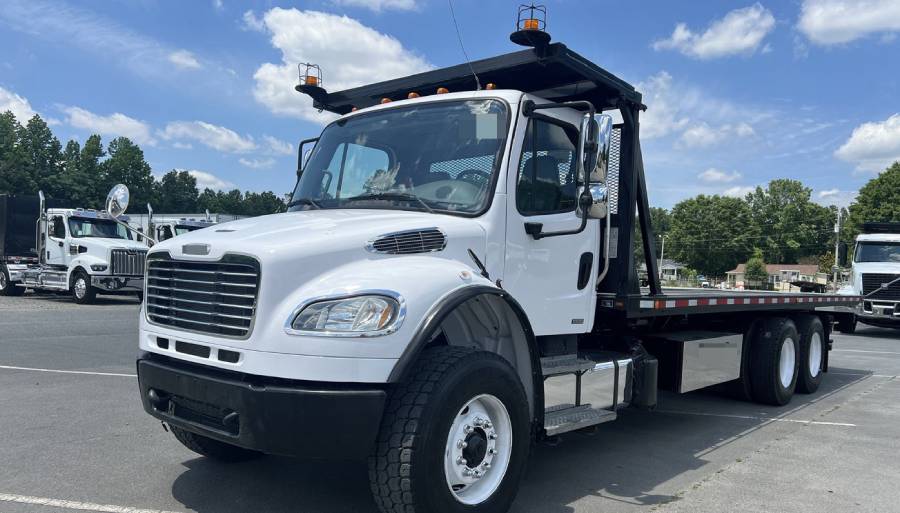
The most common Freightliner M2 Cummins ISB 6.7 problems involve the diesel particulate filter (DPF), exhaust gas recirculation (EGR) system, turbocharger, fuel injectors, and cooling system. These issues can cause engine power loss, hard starting, rough idle, overheating, excessive DPF regeneration, and unexpected engine derating. The symptoms and underlying causes vary depending on the truck’s model year, mileage, operating conditions, and maintenance history.
The Cummins ISB 6.7 is a 6.7-liter inline-six turbocharged diesel engine used in various medium-duty truck applications, including the Freightliner Business Class M2. Although designed for commercial operation, its performance depends on properly functioning fuel delivery, air intake, cooling, and emissions control systems. For example, a restricted DPF can trigger engine derating, while a leaking charge-air cooler connection can reduce boost pressure and acceleration. These problems require different diagnostic procedures despite producing similar symptoms.
Identifying the root cause requires examining engine fault codes, operating conditions, sensor readings, and mechanical components before replacing parts. This guide explains the major Freightliner M2 Cummins ISB 6.7 problems, their symptoms, causes, diagnostic procedures, and repair options. It also covers repair costs, preventive maintenance, and engine reliability to help owners reduce downtime and avoid unnecessary repairs.
What Are the Most Common Freightliner M2 Cummins ISB 6.7 Problems?
The most common Freightliner M2 Cummins ISB 6.7 problems involve DPF restrictions, EGR system malfunctions, turbocharger issues, fuel system faults, DEF/SCR failures, cooling system problems, and electrical sensor faults. These seven problem categories can affect engine performance, fuel efficiency, emissions compliance, and vehicle reliability. Their occurrence depends on engine mileage, operating conditions, maintenance history, and emissions system configuration.
DPF restrictions and regeneration problems can cause reduced engine power, frequent regeneration cycles, increased exhaust backpressure, and engine derating. The diesel particulate filter captures soot from exhaust gases and periodically burns accumulated soot during regeneration. Repeated short trips, interrupted regeneration cycles, or excessive soot production can prevent effective filter cleaning. Ash accumulation also restricts the DPF over time because regeneration does not remove noncombustible ash.
EGR valve and EGR cooler problems can produce rough engine operation, reduced power, coolant loss, and diagnostic fault codes. The exhaust gas recirculation system redirects a controlled portion of exhaust gas into the intake to reduce nitrogen oxide emissions. Carbon deposits can interfere with EGR valve movement, while internal EGR cooler leaks can allow coolant to enter the exhaust or intake path.
Turbocharger and fuel system problems can cause poor acceleration, hard starting, rough idle, and insufficient engine power. A leaking charge-air connection or malfunctioning turbocharger actuator can reduce boost pressure. Restricted fuel filters, faulty injectors, or inadequate fuel rail pressure can disrupt fuel delivery and combustion.
DEF/SCR system faults can trigger emissions warnings and engine derating when the engine control system detects problems with DEF delivery, NOx sensors, or selective catalytic reduction performance. Cooling system failures, including coolant leaks, thermostat faults, and fan malfunctions, can cause overheating. Damaged wiring, defective sensors, and poor electrical connections can also produce intermittent warnings or incorrect engine control signals.
The following table summarizes the seven problem categories and their typical symptoms.
| Problem | Typical Symptoms | Possible Causes |
|---|---|---|
| DPF restriction | Frequent regeneration, reduced power, engine derate | Soot buildup, ash accumulation, incomplete regeneration |
| EGR system failure | Rough running, coolant loss, fault codes | Carbon deposits, valve malfunction, cooler leakage |
| Turbocharger problems | Low boost, poor acceleration, reduced power | Charge-air leaks, actuator faults, turbocharger damage |
| Fuel system problems | Hard starting, rough idle, hesitation | Restricted filters, injector faults, low fuel pressure |
| DEF/SCR faults | Emissions warnings, engine derate | DEF dosing faults, NOx sensor failures, SCR malfunction |
| Cooling system problems | High coolant temperature, overheating | Coolant leaks, thermostat failure, fan malfunction |
| Electrical and sensor faults | Intermittent warnings, inconsistent engine performance | Wiring damage, faulty sensors, poor connections |
These symptoms do not confirm a specific component failure. For example, reduced engine power can result from a turbocharger fault, restricted fuel delivery, or an emissions-related derate. Accurate diagnosis requires retrieving engine fault codes and evaluating the affected systems before replacing components.
What Causes DPF Problems on a Freightliner M2 Cummins ISB 6.7?
DPF problems on a Freightliner M2 Cummins ISB 6.7 are caused by excessive soot accumulation, incomplete regeneration, ash buildup, and faults in the engine or exhaust aftertreatment system. These conditions increase exhaust restriction and can trigger frequent regeneration, DPF warning lights, reduced engine power, and engine derating. The severity depends on filter loading, operating conditions, and the specific fault detected by the engine control module (ECM).
The diesel particulate filter captures soot particles produced during combustion. Regeneration removes accumulated soot by raising exhaust temperatures high enough to oxidize the trapped particles. However, repeated short-distance driving, extended low-load operation, and interrupted regeneration cycles can prevent the filter from completing this process. Freightliner M2 trucks used for urban deliveries or frequent stop-and-go operations are particularly exposed to these operating conditions. Excessive soot production from fuel injection problems, insufficient boost pressure, or EGR system faults can also increase DPF loading.
Frequent DPF regeneration does not always indicate a defective particulate filter. A malfunctioning exhaust temperature sensor, inaccurate differential pressure reading, or underlying combustion problem can cause repeated regeneration requests or prevent successful regeneration. Ash accumulation presents a separate issue because ash consists of noncombustible residues that remain inside the filter after soot regeneration. As ash loading increases, the DPF eventually requires approved cleaning or replacement rather than additional regeneration cycles.
Diagnosing Cummins ISB 6.7 DPF problems begins with retrieving active and inactive fault codes using Cummins INSITE or a compatible diagnostic tool. Technicians should examine DPF differential pressure, estimated soot loading, exhaust temperature readings, regeneration history, and related engine faults. The diagnostic process must distinguish an actual filter restriction from a defective sensor or another aftertreatment malfunction. Repair options include correcting upstream engine faults, replacing failed sensors, performing an authorized regeneration when permitted by the manufacturer’s diagnostic procedure, or professionally cleaning the DPF when ash accumulation exceeds service limits.
A severely restricted DPF should not be subjected to repeated forced regeneration without confirming that the procedure is safe and permitted for the recorded fault conditions. Excessive exhaust temperatures can damage aftertreatment components. Correcting the underlying cause before clearing fault codes or returning the truck to service helps prevent recurring DPF problems and unnecessary filter replacement.
What Causes EGR Valve and EGR Cooler Problems on the Cummins ISB 6.7?
EGR valve and EGR cooler problems on the Cummins ISB 6.7 are primarily caused by carbon accumulation, valve actuator malfunctions, internal coolant leaks, and thermal stress. These failures can produce rough engine operation, reduced power, increased emissions, coolant loss, and diagnostic fault codes. The affected components and symptoms depend on the engine’s emissions configuration, operating hours, and maintenance history.
The exhaust gas recirculation (EGR) system reduces nitrogen oxide (NOx) emissions by routing a controlled portion of exhaust gas back into the engine’s intake system. The EGR valve regulates exhaust gas flow, while the EGR cooler lowers exhaust gas temperature before recirculation. Carbon deposits mixed with oil residue can accumulate around the EGR valve and restrict its movement. A valve stuck open can introduce excessive exhaust gas during operating conditions that require fresh intake air, resulting in unstable combustion, rough idle, and poor acceleration. A valve stuck closed can prevent the system from achieving commanded EGR flow and trigger emissions-related fault codes.
EGR cooler failures are commonly associated with internal leakage or restrictions that interfere with exhaust gas cooling. The cooler transfers heat from exhaust gases to engine coolant through internal passages. Repeated heating and cooling cycles can contribute to material fatigue, while corrosion or excessive thermal stress can damage internal components. An internal leak may allow coolant to enter the exhaust gas path, causing unexplained coolant loss and, under certain conditions, white exhaust vapor. Coolant loss alone does not confirm EGR cooler failure because external leaks, radiator problems, and other cooling system defects can produce similar symptoms.
Diagnosing EGR problems requires comparing commanded and actual EGR operation, checking relevant Cummins fault codes, and inspecting the valve, actuator, wiring, and associated sensors. For suspected EGR cooler leakage, technicians should perform cooling system pressure tests and follow the engine-specific Cummins inspection procedures. Cleaning may restore operation when removable carbon deposits are the confirmed cause and the component remains mechanically functional. However, damaged actuators, leaking cooler cores, and electrically defective components generally require repair or replacement according to manufacturer specifications.
Ignoring EGR system faults can contribute to increased soot production, reduced engine efficiency, and additional DPF regeneration problems. Identifying whether the failure originates in the EGR valve, cooler, electrical controls, or another engine system prevents unnecessary component replacement and helps restore proper engine operation.
Why Does a Freightliner M2 Cummins ISB 6.7 Lose Power?
A Freightliner M2 Cummins ISB 6.7 loses power primarily because of insufficient turbocharger boost, restricted fuel delivery, or engine derating triggered by emissions system faults. These conditions reduce available engine torque and cause slow acceleration, poor hill-climbing performance, or difficulty maintaining highway speeds. Identifying the cause requires determining whether the engine is experiencing a mechanical performance problem or an electronically commanded power limitation.
Mechanical power loss occurs when the engine cannot produce the expected torque despite receiving a normal power request. For example, a leaking charge-air cooler connection allows compressed intake air to escape, reducing the oxygen available for combustion. Restricted fuel filters or inadequate fuel rail pressure can also prevent the engine from delivering the fuel quantity required under load. In contrast, an engine derate occurs when the electronic control module (ECM) intentionally limits engine output because of detected operating or emissions-related conditions. DPF restrictions, SCR system faults, and certain engine protection conditions can initiate these limitations.
The distinction is important because replacing a turbocharger will not correct an emissions-related derate, while clearing diagnostic codes will not repair a physical boost leak. Technicians should first retrieve active fault codes, review engine operating data, and compare actual performance with the specifications for the engine’s serial number and calibration.
Can Turbocharger Problems Cause Power Loss on the Cummins ISB 6.7?
Turbocharger problems can cause significant power loss on the Cummins ISB 6.7 by reducing intake manifold boost pressure and limiting the air available for combustion. Depending on the engine configuration, faults involving the variable geometry turbocharger (VGT), electronic actuator, or charge-air system can prevent the engine from reaching its commanded boost pressure. Typical symptoms include weak acceleration, reduced pulling power, abnormal turbocharger noise, and boost-related diagnostic fault codes.
The turbocharger uses exhaust gas energy to compress incoming air before it enters the engine cylinders. On VGT-equipped ISB 6.7 engines, adjustable turbine vanes regulate exhaust gas flow through the turbine to support boost control across different operating conditions. Carbon accumulation, actuator malfunction, or mechanical damage can interfere with vane movement and reduce boost response. However, low boost pressure does not automatically indicate turbocharger failure. Split charge-air hoses, loose clamps, and leaking intercooler connections can produce similar symptoms without internal turbocharger damage.
Diagnosing turbocharger-related power loss requires comparing commanded and actual boost readings under appropriate operating conditions. Technicians should inspect the charge-air piping, perform an approved pressure or leak test, and check turbocharger actuator operation using compatible diagnostic equipment. A confirmed charge-air leak requires repairing the affected hose, connection, or cooler. Internal turbocharger damage or an actuator failure requires further testing and repair according to the applicable Cummins service procedure.
Can Fuel System Problems Cause Engine Power Loss?
Fuel system problems cause Cummins ISB 6.7 power loss when the engine cannot maintain the fuel pressure or injection quantity required for combustion. Restricted fuel filters, inadequate fuel supply, high-pressure fuel system faults, and malfunctioning injectors can produce hesitation, weak acceleration, rough running, and hard starting. These symptoms become more noticeable under heavy loads because engine fuel demand increases with the requested torque.
The Cummins ISB 6.7 uses a high-pressure common rail fuel injection system that delivers precisely controlled fuel quantities into the cylinders. The ECM regulates injection timing and quantity based on operating conditions and sensor feedback. A restricted fuel filter can limit fuel delivery to the high-pressure system, while excessive injector return flow or a fuel pressure control fault can prevent the rail from maintaining its commanded pressure. Fuel contamination can also damage precision fuel system components and disrupt injection performance.
Fuel system diagnosis should begin with checking fuel quality, filter condition, relevant fault codes, and low-pressure fuel supply. Technicians can then compare commanded and actual fuel rail pressure during the operating conditions associated with the complaint. Additional manufacturer-approved tests may be necessary to identify injector leakage, pressure control problems, or high-pressure pump faults. High-pressure common rail components must not be loosened while the system is pressurized because escaping fuel can cause serious injection injuries.
The correct repair depends on the confirmed source of power loss rather than the symptom alone. Boost leaks require air system repairs, fuel pressure faults require targeted fuel system diagnosis, and ECM-commanded derates require correction of the triggering condition. Verifying engine performance under the original operating conditions after repair helps confirm that the underlying problem has been resolved.
Why Does a Freightliner M2 Cummins ISB 6.7 Have Hard Starting or Rough Idle?
A Freightliner M2 Cummins ISB 6.7 can experience hard starting or rough idle because of insufficient fuel pressure, air entering the fuel system, faulty injectors, weak batteries, or malfunctioning engine sensors. Hard starting occurs when the engine requires extended cranking or multiple attempts before running. Rough idle occurs when combustion becomes inconsistent, causing noticeable engine vibration, fluctuating RPM, or uneven operation while the truck is stationary.
Fuel delivery problems are a major cause of starting difficulties in the Cummins ISB 6.7. The common rail injection system requires sufficient fuel pressure before the ECM can deliver the commanded injection quantity. Restricted fuel filters, air intrusion through damaged fuel lines or connections, and excessive injector return flow can prevent the system from building adequate pressure during cranking. For example, a leaking fuel connection may allow air to enter the supply system after the truck sits overnight, resulting in extended cranking during the next startup. Fuel pressure faults can also cause rough idle when the engine cannot maintain stable injection quantities.
Faulty fuel injectors can cause rough idle by delivering inconsistent fuel quantities or disrupting combustion in individual cylinders. Injector wear, internal leakage, and contamination can affect injection performance, producing uneven engine operation, increased exhaust smoke, or reduced fuel efficiency. However, these symptoms do not establish injector failure without testing. Technicians should evaluate fuel rail pressure, inspect fuel quality, review injector-related fault codes, and perform manufacturer-approved cylinder contribution or fuel system tests before replacing injectors.
Electrical problems can also prevent the Cummins ISB 6.7 from starting reliably. Weak batteries, corroded terminals, excessive resistance in starter cables, and poor ground connections can reduce cranking speed and interfere with engine control system operation. Crankshaft or camshaft position sensor faults can disrupt the engine speed and position signals required for accurate injection timing. Damaged wiring or intermittent sensor connections may cause starting problems that appear only under specific temperature or vibration conditions.
Diagnosing hard starting and rough idle requires checking battery voltage and cranking performance, retrieving ECM fault codes, and comparing actual fuel rail pressure with commanded values. Technicians should also inspect the fuel supply system for restrictions or air intrusion and verify engine speed signals during cranking. The diagnostic sequence should account for whether the problem occurs during cold starts, hot restarts, or continuous idling because these conditions help narrow the possible causes.
Repairing the confirmed fault is more effective than replacing multiple fuel or electrical components based on symptoms alone. Restricted filters require replacement, leaking fuel connections require sealing or repair, and defective sensors or injectors require component-specific testing. After repairs, the engine should start consistently and maintain a stable idle under the operating conditions that originally produced the problem.
Why Does a Freightliner M2 Cummins ISB 6.7 Overheat?
A Freightliner M2 Cummins ISB 6.7 overheats because of coolant leaks, thermostat malfunctions, restricted radiator airflow, water pump problems, or cooling fan failures. These conditions prevent the cooling system from removing engine heat efficiently, causing coolant temperatures to rise beyond the normal operating range. Overheating becomes particularly noticeable during heavy hauling, prolonged idling, steep climbs, or operation in high ambient temperatures.
The Cummins ISB 6.7 uses a liquid cooling system that circulates coolant through the engine block, cylinder head, radiator, and associated cooling components. The water pump maintains coolant circulation, while the thermostat regulates coolant flow according to engine temperature. A thermostat stuck closed can restrict coolant circulation through the radiator, causing engine temperature to rise rapidly. A worn water pump, damaged impeller, or coolant leak can also reduce the system’s ability to transfer heat away from critical engine components.
Radiator restrictions and cooling fan malfunctions can cause overheating even when the coolant level is correct. Dirt, debris, and damaged radiator fins reduce airflow through the cooling package, limiting heat dissipation. A malfunctioning fan clutch or fan control system can prevent sufficient airflow during low-speed driving or extended idling. For example, a Freightliner M2 that overheats while stationary but maintains normal temperatures at highway speeds may have inadequate fan operation or restricted airflow through the radiator. This symptom helps narrow the diagnosis but does not independently confirm a fan failure.
Coolant loss can also result from damaged hoses, radiator leaks, loose connections, or internal engine problems. A leaking EGR cooler may contribute to unexplained coolant consumption on engines equipped with a cooled EGR system. Persistent coolant loss without visible external leakage requires additional testing to determine whether coolant is escaping internally. Continuing to operate an overheating engine increases the risk of cylinder head damage, head gasket failure, and other expensive mechanical repairs.
Diagnosing Cummins ISB 6.7 overheating begins with checking coolant level and inspecting the cooling system for visible leaks after the engine has cooled. Technicians should verify actual coolant temperature, examine radiator airflow, test cooling fan operation, and evaluate thermostat and water pump performance. Cooling system pressure testing can help locate leaks, while diagnostic fault codes and temperature sensor readings can identify electronic monitoring or control problems. The correct operating temperature range and testing procedures should be confirmed using the specifications for the engine’s configuration.
An overheating Freightliner M2 should be stopped safely and the engine shut down when coolant temperature reaches a critical warning level or severe overheating is suspected. Never remove the radiator or coolant reservoir pressure cap while the cooling system is hot and pressurized because escaping steam and coolant can cause serious burns. The truck should return to service only after the underlying cooling system fault has been corrected and stable engine temperatures have been verified under appropriate operating conditions.
How Do You Diagnose Freightliner M2 Cummins ISB 6.7 Problems?
Diagnosing Freightliner M2 Cummins ISB 6.7 problems requires retrieving engine fault codes, analyzing live sensor data, inspecting mechanical components, and performing manufacturer-approved diagnostic tests. This process identifies whether a problem originates from the fuel system, turbocharger, cooling system, emissions equipment, or electronic controls. Accurate diagnosis also requires confirming the engine serial number, model year, ECM calibration, and emissions configuration because diagnostic procedures and component specifications differ between engine versions.
The engine control module (ECM) continuously monitors operating parameters such as fuel rail pressure, intake manifold pressure, coolant temperature, and exhaust aftertreatment conditions. When monitored values fall outside programmed limits, the ECM can record diagnostic fault codes and activate warning indicators. However, a fault code identifies a detected condition rather than necessarily identifying the failed component. For example, a low boost pressure fault may result from a leaking charge-air hose, turbocharger actuator malfunction, or another air management problem.
A complete diagnosis combines electronic fault information with physical inspection and functional testing. Technicians should document when the problem occurs, including engine temperature, vehicle load, road speed, and whether the symptoms appear during acceleration, idling, or regeneration. Comparing these operating conditions with recorded fault data helps distinguish intermittent electrical faults from mechanical failures and prevents unnecessary component replacement.
What Diagnostic Tools Are Used for Cummins ISB 6.7 Problems?
Cummins INSITE is a primary diagnostic software platform used to troubleshoot compatible Cummins ISB 6.7 engines. It allows technicians to retrieve fault codes, monitor engine parameters, review available operating information, and perform supported diagnostic tests. Access to individual functions depends on the engine ECM, software version, calibration, and diagnostic permissions.
Cummins INSITE communicates with the engine control system through a compatible vehicle communication adapter. Technicians can examine active and inactive fault codes, review available fault snapshots, and monitor parameters such as engine speed, coolant temperature, fuel rail pressure, and intake manifold pressure. For example, comparing commanded and actual fuel rail pressure during cranking can help identify fuel delivery problems, while evaluating boost pressure under load can support diagnosis of turbocharger or charge-air system faults.
Heavy-duty diagnostic scanners that support the truck’s communication protocols can also retrieve engine and vehicle fault information. Many commercial vehicle systems use SAE J1939 communications, which represent diagnostic conditions through suspect parameter numbers (SPNs) and failure mode identifiers (FMIs). An SPN identifies the affected parameter or system, while an FMI describes the detected failure condition. Cummins-specific fault codes provide additional diagnostic information and should be interpreted using the documentation applicable to the engine configuration.
Diagnostic coverage differs between tools. A generic heavy-duty scanner may display fault codes and selected live data but lack the manufacturer-specific tests available through Cummins INSITE. Freightliner chassis diagnostics may also require separate software when the problem involves vehicle wiring, instrument cluster communications, or chassis control modules rather than the Cummins engine ECM.
How Do You Troubleshoot Cummins ISB 6.7 Problems Step by Step?
Troubleshooting Cummins ISB 6.7 problems follows eight steps: documenting symptoms, identifying the engine configuration, retrieving fault codes, inspecting components, analyzing live data, performing targeted tests, repairing confirmed faults, and verifying engine operation. Following this sequence reduces diagnostic errors and helps distinguish the original failure from secondary symptoms.
- Document the operating symptoms. Record whether the engine experiences power loss, hard starting, rough idle, overheating, excessive regeneration, or warning lights. Identify when the symptoms occur and whether they are intermittent or continuous.
- Identify the engine configuration. Confirm the engine serial number, model year, emissions equipment, and ECM calibration. These details determine which Cummins diagnostic procedures, fault code definitions, and operating specifications apply.
- Retrieve active and inactive fault codes. Connect Cummins INSITE or a compatible diagnostic tool and record all relevant faults before clearing any information. Review available fault snapshots and operating conditions to determine which faults may be related.
- Inspect the affected components. Check wiring connections, fluid levels, hoses, filters, and visible mechanical damage. For example, low boost pressure should prompt inspection of charge-air connections before concluding that the turbocharger requires replacement.
- Analyze live engine data. Compare measured parameters with commanded values and manufacturer specifications under appropriate operating conditions. Fuel rail pressure, boost pressure, coolant temperature, and exhaust aftertreatment readings can help identify abnormal system behavior.
- Perform targeted diagnostic tests. Use manufacturer-approved procedures to evaluate the suspected system. These may include charge-air leak testing, cooling system pressure testing, electrical circuit checks, or supported actuator tests. High-pressure fuel system testing requires specialized equipment and appropriate safety precautions.
- Repair the confirmed root cause. Replace, repair, or service components only after testing establishes the source of the malfunction. Address related faults that could cause the same problem to return, such as excessive soot production contributing to repeated DPF restrictions.
- Verify the repair. Clear fault codes when appropriate, operate the engine under the conditions that originally produced the symptoms, and confirm that the relevant parameters remain within specification. Check for recurring active faults before returning the truck to normal operation.
Successful troubleshooting depends on identifying the cause of the detected condition rather than treating every fault code as a component replacement instruction. For example, a DPF restriction fault may originate from excessive soot production caused by an upstream engine problem. Replacing the DPF without correcting that problem can result in repeated filter restrictions. Combining fault code interpretation, live data analysis, mechanical inspection, and repair verification provides a more reliable diagnostic process for the Freightliner M2 Cummins ISB 6.7.
How Much Does It Cost to Fix Freightliner M2 Cummins ISB 6.7 Problems?
Freightliner M2 Cummins ISB 6.7 repair costs depend on the failed component, replacement part quality, diagnostic labor, and repair complexity. Minor repairs involving sensors, filters, or electrical connections generally cost less than replacing a turbocharger, EGR cooler, fuel injector, or diesel particulate filter. Total expenses also vary according to the truck’s model year, engine configuration, parts availability, and commercial diesel repair shop rates.
DPF repairs illustrate the difference between servicing an existing component and replacing it. A DPF restricted by accumulated ash may qualify for professional cleaning when the filter substrate remains intact. However, a cracked, melted, or otherwise damaged filter may require replacement. The final cost depends on filter accessibility, cleaning requirements, replacement part specifications, and whether related exhaust sensors or mounting components also need attention. Replacing a DPF without correcting excessive soot production can result in additional repair expenses.
EGR, turbocharger, and fuel system repairs vary substantially because the underlying failure determines which components require replacement. An EGR valve affected by removable carbon deposits may require cleaning and functional testing, while an internally leaking EGR cooler generally requires replacement. Similarly, a charge-air hose leak can be repaired without replacing the turbocharger, whereas damaged turbocharger bearings or an inoperative actuator may require more extensive work. Fuel system repairs range from replacing restricted filters to diagnosing and replacing defective injectors or high-pressure components.
The following table compares common repair categories without assigning fixed prices that may not reflect the truck’s configuration or current local labor rates.
| Repair Category | Potential Repair | Main Cost Factors |
|---|---|---|
| DPF system | Professional cleaning or filter replacement | Filter condition, removal labor, replacement part |
| EGR valve | Cleaning or replacement | Carbon buildup, actuator condition, accessibility |
| EGR cooler | Cooler replacement | Component price, coolant service, labor |
| Turbocharger | Hose, actuator, or turbocharger replacement | Confirmed failure, component availability, labor |
| Fuel system | Filter, injector, or fuel system repair | Number of affected components, diagnostic testing |
| DEF/SCR system | Sensor, dosing component, or SCR repair | Fault location, component type, diagnostic complexity |
| Cooling system | Thermostat, water pump, radiator, or fan repair | Failed component, coolant replacement, accessibility |
| Electrical system | Sensor, connector, or wiring repair | Circuit complexity, diagnostic time, replacement parts |
Labor costs are an important part of Cummins ISB 6.7 repair expenses because commercial diesel repairs often require specialized diagnostic equipment and component access. Shops may charge separately for fault code analysis, electrical testing, pressure testing, and repair verification. Dealerships, independent diesel repair facilities, and mobile service providers can have different labor rates. Additional charges may apply when the repair requires towing, emergency service, or extended vehicle downtime.
To estimate the total repair cost accurately, truck owners should request an itemized quote separating diagnostic charges, replacement parts, labor hours, fluids, and applicable taxes. The estimate should also identify whether the proposed repair addresses the confirmed root cause or only a related symptom. Comparing quotes for the same diagnostic findings and repair scope helps avoid unnecessary expenses while ensuring that the Freightliner M2 receives the correct repair.
Are Some Freightliner M2 Cummins ISB 6.7 Model Years More Problematic?
Some Freightliner M2 Cummins ISB 6.7 model years have different potential failure points because of changes in emissions equipment, engine controls, and component configurations. However, there is insufficient comparable failure-rate data to identify one model year as the least reliable. The likelihood of engine problems depends on the truck’s maintenance history, operating hours, mileage, duty cycle, and specific engine configuration rather than its production year alone.
The introduction of stricter diesel emissions requirements significantly changed the systems used with the Cummins ISB 6.7. Engines built for the 2007 U.S. emissions standards incorporated diesel particulate filter technology, introducing additional components associated with soot accumulation, regeneration, and exhaust temperature monitoring. The 2010 emissions standards brought selective catalytic reduction (SCR) and diesel exhaust fluid (DEF) systems to relevant Cummins on-highway applications. These systems added components such as DEF dosing equipment and NOx sensors, creating additional diagnostic considerations for trucks equipped with them.
Later Cummins ISB 6.7 and B6.7 configurations also differ in electronic controls, emissions calibrations, and aftertreatment components. These changes affect diagnostic procedures, fault code interpretation, and replacement part compatibility. For example, a DEF dosing fault applies to an SCR-equipped engine but not to a configuration without that system. Similarly, turbocharger actuator specifications and sensor arrangements must be matched to the engine’s exact configuration rather than selected solely by the Freightliner M2 model year.
The truck’s production year does not always identify the engine’s exact emissions configuration. Engine production dates, vehicle certification requirements, and application-specific equipment can differ. Owners and technicians should therefore use the Cummins engine serial number, emissions label, and vehicle identification information to confirm the installed components before ordering parts or following a repair procedure.
Maintenance records provide a more useful indication of used Freightliner M2 engine condition than model year alone. A truck with documented oil changes, fuel filter service, cooling system maintenance, and completed emissions repairs may present fewer ownership risks than a newer truck with neglected maintenance and unresolved fault codes. Buyers should review engine operating hours, idle time, diagnostic history, regeneration performance, and evidence of previous overheating or fuel system repairs. These checks help identify existing problems without relying on unsupported claims that a particular model year is inherently defective.
Read more: Freightliner M2 106 Transmission Problems & Fixes
How Can You Prevent Freightliner M2 Cummins ISB 6.7 Problems?
Preventing Freightliner M2 Cummins ISB 6.7 problems requires regular engine oil changes, proper fuel filtration, cooling system inspections, emissions system maintenance, and early diagnosis of developing faults. These preventive measures reduce the risk of premature component wear, fuel delivery problems, overheating, and excessive DPF restrictions. Maintenance intervals should follow Cummins recommendations for the specific engine serial number, operating conditions, and duty cycle rather than a single schedule applied to every Freightliner M2.
Engine oil maintenance protects critical components, including the turbocharger, crankshaft bearings, and valve train. The Cummins ISB 6.7 relies on pressurized engine oil to lubricate moving components and remove heat from heavily loaded surfaces. Oil degradation, contamination, or insufficient oil pressure can accelerate wear and increase the risk of mechanical failure. Owners should use engine oil that meets the applicable Cummins specifications, replace oil filters at the prescribed intervals, and monitor oil consumption between services. Trucks operating under severe conditions, including extended idling and frequent stop-and-go driving, may require different maintenance intervals from vehicles used primarily for highway transportation.
Fuel system maintenance helps prevent injector damage, hard starting, and reduced engine performance. The high-pressure common rail injection system contains precision components that are sensitive to water, dirt, and fuel contamination. Restricted fuel filters can reduce fuel supply, while contaminated fuel can damage injectors and high-pressure components. Replacing fuel filters according to the applicable service schedule, draining water separators where required, and using clean diesel fuel help protect the injection system. Fuel system connections should also be inspected for leakage or air intrusion when starting problems occur.
Cooling system inspections reduce the risk of overheating and expensive engine damage. Owners should monitor coolant levels, inspect hoses and connections, examine radiator cleanliness, and check for visible leaks. Coolant must meet the engine manufacturer’s specifications because incorrect coolant chemistry can contribute to corrosion, deposits, and cooling system deterioration. Cooling fan operation, thermostat performance, and water pump condition should be investigated when engine temperatures become abnormal. Unexplained coolant loss requires prompt diagnosis rather than repeated topping off without identifying the leak.
DPF and EGR maintenance helps reduce exhaust restrictions and repeated regeneration problems. The DPF requires suitable exhaust temperatures and operating conditions to complete regeneration, while EGR components must maintain proper exhaust gas flow. Trucks operating primarily on short delivery routes or at low engine loads may experience conditions that interfere with regeneration. Drivers should respond promptly to DPF warnings and follow the vehicle manufacturer’s regeneration instructions. Repeated regeneration failures require diagnosis of the underlying cause, including excessive soot production, faulty sensors, or exhaust aftertreatment malfunctions. Regeneration cannot remove accumulated noncombustible ash, making periodic filter servicing necessary when specified by the applicable maintenance requirements.
Proper DEF handling protects the selective catalytic reduction system from contamination and dosing problems. SCR-equipped Freightliner M2 trucks require diesel exhaust fluid that meets ISO 22241 specifications. DEF should be stored in clean, compatible containers and protected from contamination by fuel, oil, dirt, or other fluids. Contaminated or unsuitable DEF can interfere with dosing system operation and contribute to emissions-related fault codes. Owners should also investigate DEF warning messages, NOx sensor faults, and SCR efficiency problems before they result in engine derating.
Routine diagnostic checks provide another opportunity to identify developing problems before they cause unexpected downtime. Reviewing active fault codes, monitoring abnormal coolant temperatures, investigating changes in fuel consumption, and addressing unusual engine noises can reveal problems that are not yet severe enough to prevent normal operation. Maintenance records should document service dates, engine mileage, operating hours, replaced components, and recurring fault codes. These records help technicians identify patterns and distinguish new failures from unresolved problems.
The most effective preventive maintenance strategy combines manufacturer-specified service intervals with inspections based on the truck’s actual operating conditions. A Freightliner M2 used for frequent urban deliveries experiences different engine loads, idle times, and regeneration conditions than a truck operating primarily on highways. Adjusting inspections and maintenance to these differences helps protect the Cummins ISB 6.7 engine, reduce unplanned repairs, and maintain reliable commercial vehicle operation.
Is the Freightliner M2 Cummins ISB 6.7 a Reliable Engine?
The Freightliner M2 Cummins ISB 6.7 is generally considered a reliable medium-duty diesel engine when properly maintained and operated within its intended specifications. Its 6.7-liter inline-six design supports commercial applications that require sustained torque, frequent operation, and substantial engine service life. However, overall reliability depends on maintenance history, operating hours, duty cycle, and the condition of supporting systems, particularly the fuel injection and emissions control equipment.
Engine mileage alone does not determine the remaining service life of a Cummins ISB 6.7. Two Freightliner M2 trucks with identical odometer readings can have significantly different mechanical conditions because of variations in engine hours, idle time, vehicle loads, and maintenance practices. Extended idling increases engine operating hours without adding substantial mileage, while frequent stop-and-go operation creates different thermal and emissions system demands than continuous highway driving. Reviewing engine hours alongside mileage provides a more complete picture of accumulated engine use.
The engine’s high-pressure common rail fuel system, turbocharger, and cooling components require consistent maintenance to maintain dependable operation. Clean fuel protects precision injectors and fuel system components, while proper lubrication reduces wear in the turbocharger and internal engine assemblies. Cooling system maintenance is equally important because repeated overheating can damage cylinder head components and compromise engine reliability. A truck with documented oil changes, fuel filter replacements, and cooling system inspections provides stronger evidence of responsible maintenance than one with incomplete service records.
Emissions system condition is another important factor in Freightliner M2 Cummins ISB 6.7 reliability. DPF restrictions, EGR malfunctions, DEF dosing faults, and NOx sensor failures can cause warning lights, repeated regeneration events, and engine derating even when the engine’s internal mechanical components remain functional. Trucks used for short urban routes or extended low-load operation may encounter operating conditions that make effective DPF regeneration more difficult. Addressing these problems promptly helps prevent recurring faults and unnecessary vehicle downtime.
For buyers evaluating a used Freightliner M2, reliability assessment should include maintenance documentation, active and inactive fault codes, engine operating hours, cold-start performance, coolant condition, and evidence of previous major repairs. A diagnostic inspection should also examine fuel rail pressure, turbocharger performance, and aftertreatment system operation when relevant. These checks help identify existing mechanical or electronic problems that may not be apparent during a short test drive.
The Cummins ISB 6.7 can provide dependable service in a Freightliner M2, but its reliability is determined by actual operating condition rather than engine reputation alone. Consistent preventive maintenance, appropriate operating practices, and timely diagnosis of developing faults are essential for reducing repair expenses and maintaining long-term commercial truck performance.