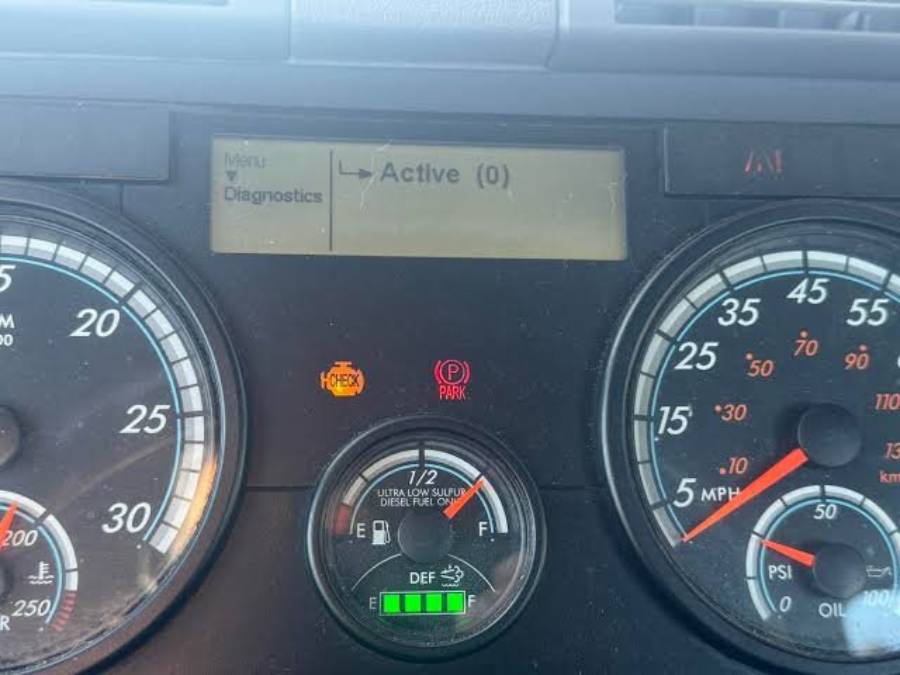
Resetting the engine light on a Freightliner truck requires identifying the fault, fixing the underlying problem, and clearing the diagnostic trouble codes when necessary. Most Freightliner trucks equipped with Detroit or Cummins engines use electronic control modules (ECMs) to monitor engine performance and detect faults. A compatible heavy-duty diagnostic scanner can retrieve fault codes and clear eligible stored codes after repairs. However, clearing a code does not repair the problem that triggered the warning.
The reset procedure depends on the Freightliner model, engine configuration, and type of warning light. For example, a Freightliner Cascadia with a Detroit DD15 engine may require Detroit DiagnosticLink or another compatible diagnostic tool, while a Freightliner M2 with a Cummins engine may require different diagnostic software. Some warning lights turn off automatically after the system confirms that the fault has been resolved, while others require additional diagnostic procedures.
Before attempting a reset, distinguish between the Check Engine and Stop Engine warning lights. A Stop Engine warning can indicate a serious condition requiring the driver to stop safely and follow the manufacturer’s instructions rather than simply clear the warning.
This guide explains how to reset a Freightliner engine light, read and clear fault codes, identify common reset failures, and determine when professional diagnosis is necessary.
How Do You Reset the Engine Light on a Freightliner Truck?
To reset the engine light on a Freightliner truck, retrieve the diagnostic trouble codes, repair the underlying fault, and clear the eligible codes using a compatible heavy-duty diagnostic scanner. The procedure applies broadly to Freightliner Cascadia, M2, and other electronically controlled models, although diagnostic tools and reset requirements vary by engine and model year.
Freightliner trucks use electronic control modules (ECMs) to monitor engine operation, emissions systems, and related components. When a monitored system detects a malfunction, the control module records a diagnostic trouble code (DTC) and may activate the Check Engine Light. Clearing the code without correcting the malfunction does not prevent the warning from returning.
How Do You Reset the Freightliner Engine Light Step by Step?
Follow these six steps to diagnose the warning and reset the engine light after completing the necessary repairs.
- Park the truck safely. Stop on level ground, engage the parking brake, and check the dashboard for warning messages. If the red Stop Engine Light is illuminated, follow the manufacturer’s shutdown instructions before attempting diagnostics.
- Retrieve the engine fault codes. Access the truck’s diagnostic information through the instrument cluster or connect a compatible heavy-duty scanner to the diagnostic port. Record all displayed diagnostic trouble codes, including Suspect Parameter Number (SPN) and Failure Mode Identifier (FMI) values when available.
- Identify and repair the underlying problem. Use the fault codes and manufacturer diagnostic procedures to locate the malfunction. For example, an engine warning associated with a diesel particulate filter (DPF) fault may require inspection of the exhaust aftertreatment system rather than a simple electronic reset.
- Connect a compatible diagnostic scanner. Use a tool that supports the truck’s engine control system. Detroit-powered Freightliner trucks may support Detroit DiagnosticLink, while Cummins-powered models require compatible Cummins diagnostic capabilities.
- Clear eligible diagnostic trouble codes. After completing repairs, follow the scanner’s fault-clearing procedure. Some active faults cannot be cleared until the control module detects that the underlying problem has been resolved.
- Verify the reset. Check whether the warning light has turned off, scan for remaining active faults, and complete any manufacturer-required verification procedures. Do not operate the truck if an unresolved warning indicates an unsafe condition.
A successful reset means the relevant fault is no longer triggering the engine warning. However, a stored diagnostic code and an illuminated warning light are not always equivalent. Some inactive codes remain in diagnostic history even after the dashboard warning disappears.
Can You Reset a Freightliner Check Engine Light Without a Scanner?
Yes, a Freightliner Check Engine Light can turn off without a diagnostic scanner after the underlying fault has been corrected and the engine control module (ECM) confirms that the malfunction is no longer present. However, there is no universal manual reset procedure that works on every Freightliner truck. The result depends on the engine model, fault type, and conditions required by the vehicle’s diagnostic system.
One method is to repair the problem and allow the ECM to complete its normal diagnostic checks. For example, a temporary sensor-related warning may disappear after the sensor operates correctly and the control module completes the required monitoring cycles. The number of operating cycles varies by fault, and some diagnostic trouble codes remain stored even after the warning light turns off.
Turning the ignition off and restarting the engine may also help determine whether a warning remains active. However, cycling the ignition does not erase stored fault codes or repair an engine malfunction. If the warning returns after restarting, the underlying condition may still be present or the diagnostic system may require further verification.
Disconnecting the truck’s batteries is not a recommended universal reset method. Freightliner trucks contain multiple electronic control modules, and interrupting battery power can affect electronic settings without clearing the relevant engine fault. Some emissions-related faults also require specific repair verification procedures that cannot be bypassed by disconnecting the batteries.
A diagnostic scanner is necessary when the fault requires electronic clearing, additional diagnostic tests, or manufacturer-specific reset procedures. For Freightliner trucks equipped with Detroit DD13, DD15, or DD16 engines, a compatible heavy-duty diagnostic tool provides access to engine fault information that basic ignition procedures cannot retrieve or erase.
How Do You Clear Freightliner Engine Fault Codes With a Diagnostic Scanner?
To clear Freightliner engine fault codes with a diagnostic scanner, connect a compatible heavy-duty scan tool, retrieve the stored diagnostic trouble codes (DTCs), repair the identified faults, and use the software’s fault-clearing function. The engine control module (ECM) must recognize that the malfunction has been corrected before certain active faults can be cleared.
Freightliner trucks commonly use SAE J1939 communication for heavy-duty engine diagnostics, although the diagnostic connector and supported protocols vary by model year. A compatible scanner communicates with the ECM to retrieve fault information, monitor engine parameters, and perform supported diagnostic functions. A standard passenger-car OBD-II scanner may not provide access to the manufacturer-specific functions required for Freightliner engines.
Diagnostic software must match the truck’s engine configuration. Detroit DiagnosticLink supports diagnostic functions for compatible Detroit engines, including the DD13, DD15, and DD16. Cummins INSITE provides diagnostic capabilities for supported Cummins engines. The available fault-clearing functions depend on the engine controller, software version, and diagnostic access permissions.
How Do You Read and Clear SPN and FMI Fault Codes?
To read and clear Freightliner SPN and FMI fault codes, establish communication with the engine control module, identify the reported malfunction, and complete the appropriate repair before attempting to erase the fault.
An SPN (Suspect Parameter Number) identifies the parameter or system associated with a diagnostic fault, while an FMI (Failure Mode Identifier) describes the type of failure detected. For example, SPN 110 relates to engine coolant temperature, while FMI 0 indicates that a valid parameter is above its normal operating range at the most severe level. Together, these identifiers help technicians determine which diagnostic procedure to follow.
The scanner generally distinguishes between two fault conditions:
- Active faults: Malfunctions currently detected by the control module. These may continue to trigger warning lights until the underlying condition is corrected.
- Inactive faults: Previously detected malfunctions that are no longer active. Depending on the engine controller, these codes may remain in diagnostic history until cleared or removed according to system-specific rules.
Before clearing codes, save the complete fault report, including SPN/FMI combinations, occurrence counts, and available operating data. This information helps identify intermittent failures and prevents the loss of useful diagnostic evidence.
After completing the repair, select the scanner’s supported fault-clearing function and follow the on-screen instructions. Some engine and aftertreatment faults require additional verification, such as completing a diagnostic test or confirming that specific operating conditions have been met.
Finally, scan the engine control module again to verify that the repaired fault is no longer active. A warning light that remains illuminated after clearing codes indicates that additional diagnosis or a manufacturer-specific verification procedure may be required.
Why Does the Freightliner Engine Light Stay On After Resetting?
A Freightliner engine light stays on after resetting when the engine control module (ECM) continues to detect an active fault, the underlying problem has not been fully repaired, or the system requires additional verification before turning off the warning. Clearing diagnostic trouble codes (DTCs) does not override an active malfunction, and the warning may return immediately or after the truck completes another diagnostic check.
Active engine faults are a primary reason a Freightliner Check Engine Light remains illuminated. The ECM continuously monitors engine sensors, fuel delivery, exhaust aftertreatment components, and other electronic systems. When a monitored parameter remains outside its permitted operating range, the control module can reactivate the warning even after a technician attempts to clear the code. For example, a coolant temperature warning may remain active when the engine is overheating or a temperature sensor continues reporting an abnormal value.
Incomplete repairs also cause warning lights to return. Replacing a component identified during diagnosis does not guarantee that the underlying malfunction has been eliminated. A fault associated with an exhaust gas recirculation (EGR) system, for instance, may involve a damaged electrical connector, restricted passage, or malfunctioning valve. Replacing the valve without checking the associated wiring and airflow conditions can leave the original problem unresolved.
Diesel emissions faults may require additional verification before the engine warning clears. Freightliner trucks equipped with diesel particulate filters (DPFs), selective catalytic reduction (SCR) systems, and diesel exhaust fluid (DEF) monitoring can have fault-specific clearing requirements. Depending on the engine and diagnostic code, the repair process may involve confirming sensor readings, completing an approved diagnostic test, or meeting specified operating conditions. Clearing the fault code alone does not necessarily remove an emissions-related warning or engine derate.
A recurring warning can also indicate an intermittent electrical problem. Loose connectors, damaged wiring, and unstable sensor signals may temporarily stop producing a fault before triggering the warning again during vibration, acceleration, or changes in engine temperature. Reviewing recorded fault occurrences and operating conditions helps identify these intermittent failures.
To determine why the engine light remains on, scan the ECM again and compare the current active codes with those recorded before the reset. Follow the diagnostic procedure for each remaining fault, verify the repair, and complete any required system checks. Do not repeatedly erase fault codes without diagnosing their cause, especially when the truck displays a Stop Engine warning or experiences reduced engine power.
How Do You Reset the Engine Light on Different Freightliner Models?
Resetting the engine light on different Freightliner models requires identifying the truck’s engine, retrieving its diagnostic trouble codes, repairing the underlying fault, and completing the appropriate clearing procedure. Freightliner Cascadia and M2 trucks use different engine configurations and electronic control systems, so the diagnostic software and reset requirements are not always identical.
For a Freightliner Cascadia, the engine light reset procedure depends on the model year and installed engine. Cascadia trucks equipped with Detroit DD13, DD15, or DD16 engines use electronic engine management systems that support compatible heavy-duty diagnostic software, including Detroit DiagnosticLink. The technician connects the diagnostic tool, retrieves active and inactive fault codes, identifies the malfunction, and performs the necessary repairs before clearing eligible codes.
For example, a Freightliner Cascadia with a Detroit DD15 engine may display a Check Engine Light because of a fault involving the exhaust aftertreatment system. The technician must identify the specific diagnostic code and inspect the affected components before attempting a reset. Certain DPF, DEF, and SCR faults require additional diagnostic verification, and the warning may remain active until the engine control module confirms that the required conditions have been satisfied.
For a Freightliner M2, the reset procedure depends on whether the truck uses a Cummins, Detroit, or another supported engine configuration. M2 trucks equipped with compatible Cummins engines can be diagnosed using Cummins INSITE or another approved diagnostic tool. The technician retrieves engine fault codes, follows the relevant troubleshooting procedure, repairs the malfunction, and clears eligible faults through the engine control module.
Older Freightliner models, including certain Columbia and Coronado trucks, may use different diagnostic connectors, communication protocols, and engine control systems. Their reset procedures must therefore be matched to the specific engine and model year rather than copied from a newer Cascadia or M2.
Regardless of the model, a successful engine light reset requires correcting the fault and confirming that the warning is no longer active. Consult the truck’s service documentation when the diagnostic tool reports an unsupported clearing function or the warning remains illuminated after repairs.
What Causes the Check Engine Light to Come On in a Freightliner?
A Freightliner Check Engine Light comes on when the engine control module (ECM) detects a malfunction involving engine performance, electronic sensors, fuel delivery, or emissions control systems. Five common categories of faults include sensor failures, fuel system problems, exhaust gas recirculation (EGR) malfunctions, diesel particulate filter (DPF) restrictions, and diesel exhaust fluid (DEF) or selective catalytic reduction (SCR) system faults.
Engine sensor failures can trigger the Check Engine Light when the ECM receives electrical signals outside expected operating ranges. Sensors monitoring coolant temperature, intake manifold pressure, and other engine parameters provide information used to regulate engine operation. For example, a malfunctioning coolant temperature sensor may report an incorrect temperature, causing the ECM to record a diagnostic trouble code even when the engine is not overheating.
Fuel system problems can activate the warning when the engine experiences abnormal fuel pressure, injector control faults, or fuel delivery irregularities. On diesel-powered Freightliner trucks, restricted fuel filters, defective pressure sensors, and injector-related malfunctions can affect combustion efficiency and engine performance. The ECM records faults when monitored conditions exceed programmed diagnostic thresholds.
EGR system malfunctions can also illuminate the Check Engine Light. The EGR system redirects a controlled portion of exhaust gases into the intake system to reduce nitrogen oxide emissions. A sticking EGR valve, faulty position sensor, or restricted gas passage can disrupt the expected exhaust gas flow and trigger an engine fault.
DPF restrictions and regeneration problems are another source of engine warnings. The DPF captures soot from diesel exhaust and periodically requires regeneration to remove accumulated particulate matter. Excessive soot loading, failed regeneration attempts, or faulty exhaust temperature and pressure sensors can produce diagnostic faults and, under certain conditions, engine power restrictions.
DEF and SCR system faults can activate emissions-related warnings when the system detects incorrect DEF dosing, inadequate emissions conversion, or malfunctioning components. Examples include DEF pump faults, dosing valve problems, and nitrogen oxide sensor failures. Certain unresolved faults can eventually lead to engine derate conditions under the applicable emissions control strategy.
The Check Engine Light alone cannot identify which component has failed. Reading the stored diagnostic trouble codes and following the corresponding diagnostic procedures is necessary to determine the actual cause. Replacing parts based only on the illuminated warning can result in unnecessary repairs without resolving the malfunction.
Read more: How Long Does a Parked Regen Take on a Freightliner?
What Is the Difference Between Freightliner Check Engine and Stop Engine Lights?
The main difference between the Freightliner Check Engine Light and Stop Engine Light is the severity of the warning and the action required from the driver. The amber Check Engine Light indicates a detected engine or emissions-related malfunction, while the red Stop Engine Light signals a potentially serious condition that requires the driver to stop safely and follow the manufacturer’s shutdown instructions. Both warnings are controlled by the truck’s electronic monitoring systems, but they represent different levels of urgency.
The Freightliner Check Engine Light illuminates when the engine control module (ECM) detects a fault involving engine sensors, fuel delivery, emissions equipment, or other monitored components. For example, a malfunctioning exhaust gas recirculation (EGR) sensor may trigger an amber warning without requiring an immediate engine shutdown. However, the severity depends on the specific fault code and accompanying symptoms. Drivers should check dashboard messages, monitor engine performance, and arrange appropriate diagnostics rather than assuming the truck is safe to operate indefinitely.
The Freightliner Stop Engine Light indicates a more urgent engine protection warning. Conditions such as critically low engine oil pressure, excessive coolant temperature, or other severe engine faults can activate this warning, depending on the engine configuration. Continuing to operate the truck under these conditions can cause substantial engine damage. The driver should move to a safe location as soon as possible and follow the applicable shutdown procedure. Some engine protection systems may also reduce engine power or initiate an automatic shutdown.
Resetting these warnings requires different considerations. A Check Engine Light may turn off after the underlying malfunction is repaired and the ECM completes its diagnostic checks. A Stop Engine Light must never be cleared simply to bypass an unresolved engine protection condition. The underlying fault must be diagnosed and corrected before the truck returns to normal operation.
Drivers should also distinguish these engine warnings from DPF regeneration indicators and other emissions-related dashboard messages. The exact symbols, colors, and operating instructions vary by Freightliner model and model year, making the vehicle’s operator manual the appropriate reference for interpreting specific warnings.
How Can You Prevent the Freightliner Check Engine Light From Coming Back On?
To prevent the Freightliner Check Engine Light from coming back on, follow the manufacturer’s maintenance schedule, maintain the engine and emissions systems, address diagnostic trouble codes promptly, and inspect electrical components for developing faults. These preventive measures reduce the likelihood of recurring engine warnings, although they cannot eliminate every mechanical or electronic failure.
Follow the recommended engine maintenance schedule for the specific Freightliner model and engine configuration. Routine maintenance includes changing engine oil, replacing fuel filters, inspecting air filters, and checking coolant levels at the intervals specified by the manufacturer. For example, a Freightliner Cascadia equipped with a Detroit DD15 engine requires maintenance based on its operating conditions, mileage, and applicable Detroit service schedule. Neglecting these services can contribute to fuel delivery problems, overheating, and other conditions that trigger engine warnings.
Maintain the diesel exhaust aftertreatment system to reduce faults involving the diesel particulate filter (DPF), diesel exhaust fluid (DEF), and selective catalytic reduction (SCR) system. Use DEF that meets ISO 22241 specifications, monitor dashboard regeneration messages, and follow the manufacturer’s instructions when DPF regeneration is required. Repeatedly interrupting necessary regeneration cycles can contribute to soot accumulation and additional aftertreatment faults. A blocked DPF or malfunctioning DEF dosing system requires diagnosis rather than repeated fault-code clearing.
Address diagnostic trouble codes as soon as practical instead of waiting for noticeable engine performance problems. An intermittent sensor fault or abnormal pressure reading may appear before a component fails completely. Recording the Suspect Parameter Number (SPN), Failure Mode Identifier (FMI), and fault occurrence information allows technicians to identify recurring conditions and investigate their causes before they lead to more extensive repairs.
Inspect electrical connections and wiring during scheduled maintenance, particularly around engine sensors, wiring harnesses, and exhaust aftertreatment components. Heat, moisture, vibration, and corrosion can damage connectors or interrupt electrical signals. For example, a loose connector on an exhaust temperature sensor may cause intermittent readings that activate the Check Engine Light even when the sensor itself is functional.
Keep accurate maintenance and diagnostic records for every engine warning and completed repair. Record the fault codes, affected components, corrective actions, and verification results. Fleet operators can use these records to identify repeated failures across vehicles, while individual truck owners can determine whether a warning is associated with a previous repair.
Preventing recurring Freightliner engine warnings depends on correcting the root cause of each malfunction rather than repeatedly clearing stored codes. Consistent maintenance, timely diagnostics, and proper repair verification help maintain reliable engine operation and reduce unexpected downtime.