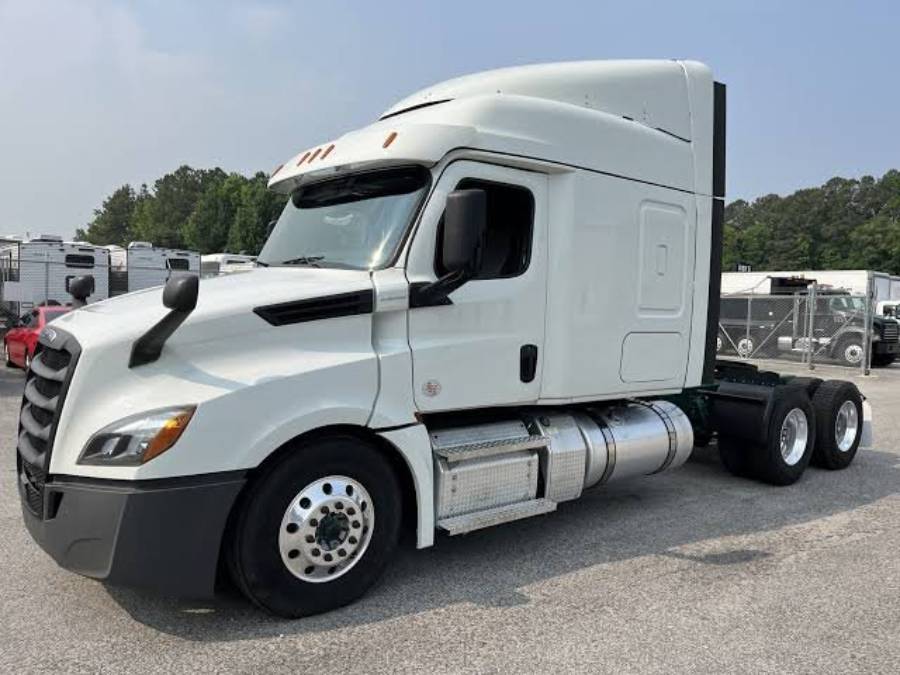
A parked regen on a Freightliner typically takes 20 to 60 minutes, depending on the truck’s engine, diesel particulate filter (DPF) soot load, and exhaust system conditions. Freightliner Cascadia and M2 trucks may require different regeneration times based on their engine configurations and aftertreatment systems. A regeneration cycle can exceed one hour when the DPF contains excessive soot or the system struggles to maintain the required exhaust temperature.
Parked regeneration removes accumulated soot from the DPF by raising exhaust temperatures high enough to oxidize trapped particles. The engine control module (ECM) manages this process by adjusting engine operation and monitoring aftertreatment conditions. During regeneration, engine idle speed typically increases, and dashboard indicators provide information about the cycle’s status. Once regeneration finishes, the engine generally returns to normal idle, although completion indicators vary by model.
A Freightliner parked regen that takes longer than expected does not necessarily indicate a mechanical failure. However, repeated interruptions, active fault codes, or abnormal exhaust temperatures can prevent successful completion. Understanding typical regeneration times, the factors affecting duration, and the signs of a completed cycle helps drivers distinguish normal operation from problems requiring professional diagnostics.
How Long Does a Parked Regen Typically Take on a Freightliner?
A parked regeneration on a Freightliner typically takes 20 to 60 minutes, although the exact duration depends on the engine configuration, diesel particulate filter (DPF) soot load, and exhaust aftertreatment conditions. Trucks with moderate soot accumulation may complete regeneration within this range, while heavily loaded filters or unfavorable operating conditions can extend the process beyond one hour.
During parked regeneration, the engine control module (ECM) increases exhaust temperatures to burn accumulated soot inside the DPF. This process converts trapped carbon particles into gases and leaves a small amount of noncombustible ash behind. The regeneration cycle continues until the aftertreatment system determines that its operating targets have been satisfied or a condition causes the process to stop.
The time required for regeneration also depends on how quickly the exhaust system reaches the necessary temperature. A truck that has been operating under load may have warmer exhaust components than one that has been idling for an extended period. However, the engine’s regeneration strategy and current soot load remain important factors in determining the total duration.
Drivers should measure parked regen duration from the moment the system accepts the regeneration request until the truck indicates that the cycle has finished. A completed regeneration is not determined by elapsed time alone. A return to normal idle speed and changes in dashboard indicators can help identify completion, but drivers should follow the instructions for their specific Freightliner model.
How Long Does a Parked Regen Take on Different Freightliner Models?
Freightliner Cascadia and M2 trucks do not have one universal parked regeneration duration. Although 20 to 60 minutes is a useful general estimate, actual regeneration time depends more on the installed engine, aftertreatment configuration, and DPF condition than on the Freightliner model name alone.
The Freightliner Cascadia commonly uses Detroit DD13, DD15, or DD16 engines, depending on the vehicle configuration and production year. These engines use electronically controlled aftertreatment systems that monitor operating conditions during DPF regeneration. A Cascadia equipped with a Detroit DD15 engine may complete parked regeneration within the typical duration range, but a higher soot load, active fault, or interrupted cycle can increase the time required.
Freightliner M2 trucks are available with different diesel engine configurations, including Cummins and Detroit engines in applicable model years. Because these engines use different control strategies and aftertreatment components, parked regeneration procedures and durations can differ from those of a Cascadia. The correct duration expectations should therefore come from the engine manufacturer’s documentation for the specific truck.
The following table summarizes the main differences affecting parked regeneration time.
| Freightliner Model | Common Engine Configurations | Parked Regen Duration |
|---|---|---|
| Cascadia | Detroit DD13, DD15, DD16 | Often approximately 20–60 minutes; varies by configuration |
| M2 | Cummins or Detroit diesel engines | Varies by installed engine and aftertreatment system |
| Other Freightliner diesel models | Model-specific diesel engines | Depends on engine specifications and DPF conditions |
These figures are general operating estimates rather than manufacturer-guaranteed regeneration times. Two Freightliner trucks equipped with the same engine can still require different regeneration durations because their DPF soot loads, maintenance conditions, and operating histories differ.
The most reliable way to establish the expected parked regen duration is to identify the truck’s engine model and consult its operator’s manual. This also helps drivers distinguish normal regeneration behavior from an unusually long or unsuccessful cycle.
What Factors Affect Freightliner Parked Regen Duration?
Four main factors affect Freightliner parked regen duration: DPF soot load, exhaust gas temperature, engine operating conditions, and aftertreatment system faults. These factors determine how quickly the diesel particulate filter reaches the required regeneration conditions and whether the engine control module (ECM) can complete the process without interruption.
DPF soot load is a major factor affecting regeneration time. The diesel particulate filter captures carbon particles produced during diesel combustion. As soot accumulates, exhaust backpressure increases, and the aftertreatment system must remove the deposits through regeneration. A filter with a higher soot load may require a longer regeneration cycle than one with moderate accumulation. However, excessive soot loading can prevent normal parked regeneration entirely, requiring professional cleaning or repair rather than additional regeneration time.
Exhaust gas temperature determines how effectively accumulated soot burns inside the DPF. During active regeneration, the engine management system raises exhaust temperatures to support soot oxidation. The required temperature depends on the engine and aftertreatment design, with active regeneration commonly involving DPF temperatures around 500–600°C (932–1,112°F). When the system cannot achieve or maintain its target temperature, regeneration may take longer, stop prematurely, or fail to complete.
Engine operating conditions influence the stability of the regeneration process. The ECM monitors parameters such as engine temperature, engine speed, parking brake status, and other operating requirements before allowing parked regeneration. For example, an engine that has not reached its required operating temperature may delay regeneration initiation. Changes to required operating conditions during the cycle can also cause the system to cancel regeneration before the DPF reaches its target soot level.
Aftertreatment system faults can extend or prevent parked regeneration. Faulty exhaust temperature sensors, DPF differential pressure sensors, fuel dosing components, or other emission-control components can interfere with regeneration control. For example, an inaccurate exhaust temperature reading may prevent the ECM from confirming that the DPF has reached the required temperature. Active diagnostic trouble codes may also inhibit regeneration to protect the engine and exhaust system.
These four factors explain why two Freightliner trucks with similar engines can experience different parked regen durations. The actual time depends on the system’s ability to establish and maintain the conditions necessary for soot removal, not simply on the amount of time the engine has been running.
How Do You Know When a Freightliner Parked Regen Is Complete?
A Freightliner parked regen is complete when the engine control system ends the regeneration cycle and the truck returns to its normal operating state. The most useful completion indicators include changes in engine idle speed, regeneration-related dashboard messages, and the absence of an active regeneration request. The exact signals depend on the Freightliner model, engine, and instrument cluster configuration.
Engine idle speed commonly decreases after successful parked regeneration. During the cycle, the ECM may raise engine RPM to increase exhaust flow and maintain the temperatures needed for soot oxidation. Once the regeneration process finishes, the engine generally returns to its normal idle speed. For example, a truck that maintains elevated RPM during regeneration may automatically reduce engine speed when the cycle ends. However, a decrease in RPM alone does not prove successful completion because interrupted or aborted regeneration can produce similar behavior.
Dashboard indicators provide additional information about regeneration status. Freightliner trucks use warning lights and display messages to communicate DPF conditions and regeneration requirements. Depending on the configuration, the DPF indicator may change or turn off after successful regeneration. The High Exhaust System Temperature (HEST) light indicates elevated exhaust temperatures and may remain illuminated while the exhaust system is hot, even after regeneration has ended. Therefore, the HEST light should not be treated as a standalone regeneration completion indicator.
A completed regeneration must also be distinguished from an interrupted cycle. Parked regeneration can stop because of changes in operating conditions, driver intervention, or an active system fault. In these situations, the engine may return to normal idle without achieving the required soot reduction. A persistent DPF warning, regeneration failure message, or active diagnostic trouble code indicates that further evaluation may be necessary.
Drivers should confirm completion using the vehicle’s regeneration status display and the instructions in the applicable Freightliner or engine operator’s manual. If the truck continues requesting parked regeneration immediately after a completed cycle, the DPF soot load and aftertreatment system should be checked. Repeated regeneration requests can indicate an underlying problem that requires diagnosis rather than another extended idle period.
Why Is My Freightliner Parked Regen Taking So Long?
A Freightliner parked regen may take longer than expected because of excessive DPF soot accumulation, insufficient exhaust temperature, interrupted regeneration cycles, or aftertreatment system faults. Although many parked regenerations finish within approximately 20–60 minutes, a cycle exceeding this range does not automatically indicate a mechanical problem. The cause depends on the truck’s engine configuration, regeneration status, and diagnostic information.
Why Is My Freightliner Parked Regen Taking More Than an Hour?
A Freightliner parked regen lasting more than one hour may indicate a high soot load, difficulty maintaining regeneration temperature, or an aftertreatment issue. However, some engine configurations and operating conditions require longer regeneration periods. Drivers should compare the elapsed time with the engine manufacturer’s guidance before assuming the cycle has failed.
Excessive soot accumulation is one possible reason for extended regeneration. When a truck operates at low engine loads, idles frequently, or repeatedly interrupts automatic regeneration, soot can accumulate faster than the DPF removes it. The engine management system must then address the increased soot load during an authorized regeneration cycle. If the soot level exceeds the system’s permitted regeneration threshold, the ECM may inhibit parked regeneration and require professional service.
Insufficient exhaust temperature can also prevent timely completion. The aftertreatment system needs sustained heat to oxidize soot inside the DPF. Problems involving exhaust temperature sensors, fuel dosing components, or engine operating conditions can interfere with temperature control. For example, a malfunctioning exhaust temperature sensor may prevent the ECM from accurately monitoring regeneration conditions, resulting in an incomplete cycle or a diagnostic fault.
Can a Freightliner Parked Regen Take Two Hours?
A Freightliner parked regen can remain active for two hours under abnormal conditions, but two hours should not be treated as a standard regeneration duration. A prolonged cycle requires evaluation against the specific engine manufacturer’s instructions, dashboard messages, and aftertreatment status.
A regeneration that continues for two hours may involve excessive soot loading, difficulty reaching the required exhaust temperature, or a control-system problem. However, elapsed time alone cannot identify the cause. Some regeneration attempts may also terminate unsuccessfully and leave the truck requesting another cycle, making repeated attempts appear to be one continuous regeneration event.
Drivers should avoid assuming that additional idling will resolve every extended regeneration. If the cycle exceeds the manufacturer’s expected duration, the regeneration status is unclear, or warning messages appear, the appropriate next step is to follow the vehicle’s diagnostic guidance. Repeatedly initiating parked regeneration without identifying the underlying problem can waste fuel and delay necessary repairs.
What Should You Do If a Freightliner Parked Regen Does Not Finish?
If a Freightliner parked regen does not finish, check the regeneration status, inspect dashboard warnings, verify operating conditions, and determine whether professional diagnostics are required. An incomplete cycle can result from an interrupted regeneration request, an unmet operating requirement, or a malfunction in the diesel exhaust aftertreatment system.
First, check the dashboard for active warning lights and regeneration messages. The DPF indicator, check engine light, stop engine warning, and diagnostic messages provide information about the system’s condition. A persistent DPF warning after an attempted regeneration may indicate that the filter has not reached its required soot level. A stop engine warning or another critical fault requires following the manufacturer’s instructions rather than continuing repeated regeneration attempts.
Second, confirm that the truck meets the required parked regeneration conditions. Depending on the engine and vehicle configuration, these requirements can include an engaged parking brake, transmission in neutral, appropriate engine temperature, and the absence of conditions that inhibit regeneration. For example, releasing the parking brake or operating certain controls during regeneration may cause the ECM to cancel the cycle. The specific requirements must be checked against the truck’s operator’s manual.
Third, determine whether the regeneration stopped because of driver intervention or a system fault. A cycle that ends unexpectedly without a completion indication may have been interrupted rather than successfully finished. If the truck continues requesting regeneration, record the warning messages and any available diagnostic trouble codes. This information helps technicians distinguish operating-condition problems from component failures.
Fourth, arrange professional diagnostics when regeneration repeatedly fails or the system reports an active fault. A qualified diesel technician can examine DPF differential pressure readings, exhaust temperature sensor data, fuel dosing operation, and stored diagnostic trouble codes. These checks help identify whether the problem involves excessive soot, ash accumulation, defective sensors, or another aftertreatment component.
Parked regeneration must also be performed in a safe location because exhaust temperatures become extremely high. Keep the exhaust outlet away from dry vegetation, spilled fuel, combustible materials, and enclosed spaces. Never attempt regeneration inside a garage or another poorly ventilated area. If abnormal exhaust behavior, critical warnings, or unsafe conditions develop, stop the procedure according to the manufacturer’s instructions and seek appropriate service.
An unsuccessful parked regen should be diagnosed rather than repeatedly restarted without identifying the cause. Resolving the underlying problem protects the DPF and other aftertreatment components while reducing the risk of recurring regeneration failures.
How Do You Start a Parked Regen on a Freightliner?
To start a parked regen on a Freightliner, park the truck in a safe location, engage the parking brake, place the transmission in neutral, and follow the regeneration instructions for the specific engine and vehicle configuration. The engine control module (ECM) must confirm that the required operating conditions are satisfied before allowing the regeneration cycle to begin.
First, position the truck in a safe, well-ventilated outdoor area. Parked regeneration generates extremely high exhaust temperatures, creating a fire hazard near dry grass, fuel spills, and other combustible materials. Keep the exhaust outlet clear of obstructions and maintain the clearance specified in the vehicle’s operator’s manual. Never perform parked regeneration inside a garage or enclosed maintenance facility without an approved exhaust management system.
Second, prepare the truck for regeneration. Engage the parking brake, shift the transmission into neutral, and allow the engine to reach the operating conditions required by the manufacturer. Depending on the Freightliner model and engine configuration, the system may also require specific engine temperature, pedal position, and fault-status conditions. A parked regen request may be rejected when these requirements are not satisfied.
Third, initiate regeneration using the designated control or dashboard procedure. On Freightliner trucks equipped with a parked regeneration switch, the driver typically holds the switch for the period specified in the operator’s manual. Other configurations may use different controls or require a service diagnostic tool. When the ECM accepts the request, engine speed generally increases as the aftertreatment system begins raising exhaust temperature.
Finally, monitor the regeneration cycle until the system indicates completion. Avoid operating vehicle controls that could interrupt the process, and watch for warning messages or unexpected changes in engine behavior. Once regeneration finishes, the engine generally returns to normal idle. Confirm successful completion through the vehicle’s regeneration status indicators rather than relying on elapsed time alone.
Drivers should not attempt repeated or forced regeneration when the truck displays critical engine warnings or regeneration-inhibiting faults. The correct starting procedure and safety requirements are defined by the applicable Freightliner and engine manufacturer’s manuals.
Read more: Freightliner Regen Not Working: Causes & Fixes
How Often Does a Freightliner Need a Parked Regen?
A Freightliner does not require parked regeneration at a fixed mileage or hourly interval. The frequency depends on DPF soot accumulation, engine operating conditions, driving patterns, and the effectiveness of automatic regeneration. A properly functioning truck that regularly completes regeneration while driving may rarely need a driver-initiated parked regen.
Driving conditions directly influence how frequently parked regeneration becomes necessary. Trucks operating at sustained highway speeds generally experience higher exhaust temperatures and more opportunities for passive or automatic active regeneration. In contrast, frequent idling, short trips, and low-load operation can limit the conditions needed for effective soot removal. For example, a Freightliner Cascadia used primarily for long-distance highway transportation may require fewer parked regenerations than a truck spending extended periods idling or operating at low speeds.
Interrupted automatic regeneration can increase the need for parked regeneration. When an active regeneration cycle stops before sufficient soot has been removed, the DPF retains part of its accumulated soot load. Repeated interruptions can eventually trigger a dashboard request for parked regeneration. The ECM determines when regeneration is required using calculated soot loading and available aftertreatment sensor information.
Frequent parked regen requests can also indicate an underlying maintenance problem. Faulty exhaust temperature sensors, DPF pressure sensors, fuel dosing components, or excessive engine soot production can interfere with normal regeneration. Ash accumulation inside the DPF can also restrict exhaust flow because noncombustible ash cannot be removed through ordinary regeneration.
Drivers should follow the vehicle’s DPF warning indicators and manufacturer maintenance schedule rather than initiating parked regeneration at arbitrary intervals. If parked regeneration becomes unusually frequent, professional diagnostics can determine whether the cause involves operating conditions, incomplete regeneration, or an aftertreatment system fault.
Does Parked Regen Take Longer Than Driving Regen on a Freightliner?
Parked regeneration does not necessarily take longer than driving regeneration on a Freightliner because both processes depend on DPF soot load, exhaust temperature, and engine operating conditions. A parked regen typically takes approximately 20–60 minutes, while active regeneration during driving can also take several tens of minutes. Actual durations vary by engine configuration and aftertreatment system requirements.
Parked regeneration occurs while the truck remains stationary, whereas driving regeneration takes place during normal vehicle operation. During parked regen, the engine control module (ECM) adjusts engine speed and aftertreatment operation to generate the exhaust temperatures needed to oxidize accumulated soot. Driving regeneration uses exhaust heat produced under engine load and, when necessary, additional temperature management to remove soot without requiring the driver to stop.
Driving conditions influence how efficiently regeneration proceeds. Sustained highway operation generally provides higher exhaust temperatures than prolonged idling, which can support passive regeneration or help an active regeneration cycle maintain its target temperature. However, frequent stops, low engine loads, and interrupted driving cycles can prevent regeneration from finishing. Parked regeneration provides a controlled operating process when the vehicle requests stationary soot removal.
The following table compares the two regeneration methods.
| Factor | Parked Regen | Driving Regen |
|---|---|---|
| Vehicle condition | Stationary | Moving |
| Typical duration | Approximately 20–60 minutes | Variable; often several tens of minutes |
| Engine operation | ECM-controlled elevated idle | Normal driving under engine load |
| Driver involvement | Requires an authorized parked regen request | Generally automatic |
| Exhaust temperature | Raised through controlled engine and aftertreatment operation | Supported by engine load and aftertreatment controls |
| Main purpose | Remove accumulated soot while stationary | Remove accumulated soot during vehicle operation |
Neither regeneration method is universally faster. Driving regeneration reduces the need for dedicated downtime when it completes during normal operation, while parked regeneration allows the truck to address soot accumulation without driving. Freightliner drivers should follow dashboard regeneration requests and engine manufacturer instructions rather than choosing a regeneration method based only on expected duration.