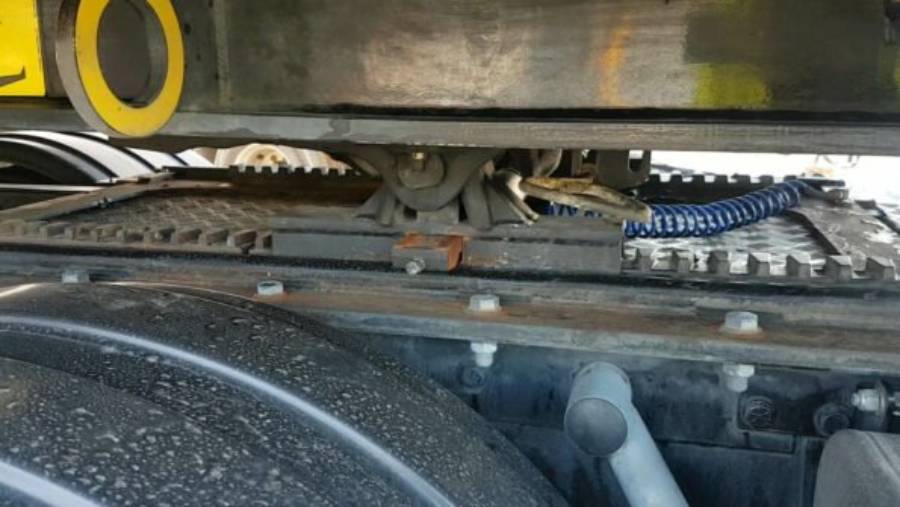
Moving a fifth wheel on a Freightliner requires releasing the slider locking mechanism, repositioning the tractor slowly while the trailer remains secured, and locking the fifth wheel into its new position. The sliding fifth wheel travels along rails mounted on the tractor frame, allowing its position relative to the drive axles and trailer to be adjusted. The exact controls and procedures vary by Freightliner model and fifth wheel configuration, so the vehicle and fifth wheel manufacturer instructions should take priority.
Drivers primarily move a sliding fifth wheel to change weight distribution or obtain appropriate tractor-to-trailer clearance. Moving the fifth wheel changes where the trailer’s kingpin load acts on the tractor, which affects how weight is distributed between the steer and drive axles. Because even a small position change can alter axle loading and available clearance, the fifth wheel should be moved in controlled increments rather than repositioned without a specific target.
The adjustment is complete only after the locking mechanism has fully re-engaged. The locking pins should be visually checked before the vehicle returns to service because activating the fifth wheel control does not by itself confirm that the slider is mechanically locked. The following sections explain how to release, move, reposition, and verify a Freightliner sliding fifth wheel, as well as what to check when the assembly refuses to slide.
How Do You Move a Fifth Wheel on a Freightliner?
To move a fifth wheel on a Freightliner, secure the trailer, release the fifth wheel slider locks, move the tractor slowly until the fifth wheel reaches the required position, and re-engage the locking mechanism. The fifth wheel itself does not need to be manually pushed along the frame. Instead, the tractor moves relative to the secured trailer while the fifth wheel slider is unlocked, allowing the assembly to travel along its mounting rails. Because Freightliner trucks can use different fifth wheel assemblies and controls, follow the procedure specified for the truck and installed fifth wheel when it differs from the general process below.
Start by positioning the tractor and trailer on firm, level ground and keeping the combination straight. Secure the trailer so it cannot roll during the adjustment. The trailer landing gear may need to be lowered according to the applicable fifth wheel manufacturer’s procedure to support the trailer and reduce unwanted movement. Do not completely disconnect the tractor from the trailer when the goal is only to reposition a sliding fifth wheel.
Next, release the fifth wheel slider locking mechanism. On an air-operated system, this normally involves using the fifth wheel slide control and allowing the locking pins to retract from the slider rails. Check the locking pins visually before attempting to move the fifth wheel. A control in the release position does not prove that the pins have physically disengaged. Trying to force the slider while the pins remain engaged can place unnecessary stress on the locking mechanism.
Keep the trailer secured and move the tractor slowly in the direction required to change the fifth wheel position. Use small, controlled movements rather than attempting a large adjustment at once. Stop when the fifth wheel reaches the intended position on the slider rails. The correct position depends on the reason for the adjustment, such as changing axle-weight distribution or obtaining adequate tractor-to-trailer clearance.
Re-engage the slider locking mechanism after reaching the target position. Move the tractor slightly if required for the locking pins to align with and enter the rail holes. Visually confirm that the locking pins are fully engaged before driving the truck. The fifth wheel should not be considered secured solely because the cab control has been returned to its locked position.
The complete process therefore has 5 functional stages: secure the tractor-trailer, release the slider locks, verify that the pins are disengaged, reposition the fifth wheel, and verify that the slider is locked again. This sequence keeps the adjustment controlled and provides a physical check of the locking mechanism before the Freightliner returns to service.
How Do You Release the Fifth Wheel Slider on a Freightliner?
Release a Freightliner fifth wheel slider by securing the tractor-trailer, operating the fifth wheel slide control, and confirming that the slider locking pins have fully retracted. The locking pins connect the sliding fifth wheel assembly to its mounting rails. Until those pins disengage, the fifth wheel cannot move freely along the rails.
Air-operated slider systems use the truck’s pneumatic system to operate the release mechanism. The driver activates the appropriate fifth wheel slide control, and air pressure actuates the mechanism that retracts the locking pins. Because configurations vary between Freightliner models and installed fifth wheel assemblies, the location and operation of the control should be confirmed in the applicable vehicle and fifth wheel documentation.
The most important verification occurs at the slider itself. Inspect the locking mechanism and confirm that the pins are clear of the rail holes before attempting to reposition the tractor. The switch position and the actual position of the locking pins are two separate checks. A pin can remain partially engaged because of mechanical binding, insufficient actuation, contamination, or load against the locking mechanism even when the release control has been activated.
If the pins do not release, avoid using excessive tractor movement to force them out. Relieving pressure on the locking mechanism with a small controlled movement may allow the pins to retract, depending on the installed system. Persistent failure to disengage indicates that the slider or its release mechanism needs inspection rather than additional force.
After the fifth wheel has been repositioned, return the control to the locked position and confirm that the pins enter the appropriate rail holes completely. This final visual inspection verifies the mechanical connection between the fifth wheel slider and the tractor frame before the vehicle moves under normal operating conditions.
How Do You Slide a Freightliner Fifth Wheel Forward?
To slide a Freightliner fifth wheel forward, release the slider locking pins, keep the trailer secured, and move the tractor backward slowly so the fifth wheel assembly moves toward the front of the tractor along the slider rails. Make the adjustment in small increments and verify the final position before re-engaging the locking mechanism.
Start with the tractor and trailer aligned on firm, level ground. Secure the trailer against unintended movement and prepare the fifth wheel slider according to the procedures specified for the installed assembly. Activate the fifth wheel slide control and visually verify that the locking pins have fully disengaged from the rail holes. The fifth wheel should not be repositioned while a locking pin remains fully or partially engaged.
Once the slider is released, use slow tractor movement to change the fifth wheel position. Because the trailer remains secured through the kingpin connection, controlled tractor movement changes the position of the sliding fifth wheel relative to the tractor frame. Avoid rapid acceleration or large movements. Moving gradually provides better control over the final slider position and reduces the chance of passing the intended locking position.
Stop when the fifth wheel reaches the required position. Return the slider control to the locked position and allow the locking pins to align with the appropriate holes in the rails. A slight controlled tractor movement may be required for alignment. Confirm visually that the locking pins are fully engaged before returning the Freightliner to normal operation.
Moving the fifth wheel forward changes the position at which the trailer load is transferred to the tractor. This adjustment can affect axle loading and tractor-to-trailer clearance, so the final position should be selected for a specific operating requirement rather than simply moving the fifth wheel as far forward as possible.
How Do You Slide a Freightliner Fifth Wheel Backward?
To slide a Freightliner fifth wheel backward, release the slider locking pins, secure the trailer, and move the tractor forward slowly so the fifth wheel travels toward the rear of the tractor along the slider rails. Stop at the required position, re-engage the locking mechanism, and visually confirm that the locking pins have entered the rail holes completely.
Before moving the tractor, verify that the slider is actually unlocked. The release control activates the mechanism, but the physical position of the locking pins determines whether the fifth wheel can slide. If a pin remains engaged, do not force the tractor forward in an attempt to overcome it. Remove the binding condition or inspect the release mechanism before continuing.
Move the tractor in a slow and controlled manner once the pins are clear. The objective is to reposition the fifth wheel by a defined amount, not to move it rapidly from one end of the slider rails to the other. Small adjustments make it easier to align the locking pins with the desired rail position and provide greater control over changes in axle loading and clearance.
After reaching the target position, place the slider control back in the locked position. If the pins do not immediately align with the rail holes, use a slight controlled movement to establish alignment rather than assuming the mechanism has locked. The adjustment is complete only when the locking pins are visibly and fully engaged.
Moving the fifth wheel backward also changes the relationship between the trailer kingpin, tractor frame, and drive axles. It can therefore alter weight distribution and increase or decrease clearance at critical points of the tractor-trailer combination. The next step is determining which direction to move the fifth wheel when axle weight is the reason for the adjustment.
Which Way Should You Move the Fifth Wheel to Adjust Axle Weight?
Move the fifth wheel forward to transfer more of the trailer’s kingpin load toward the tractor’s steer axle, and move it backward to shift weight away from the steer axle toward the drive axles. The adjustment changes the location where the trailer load acts on the tractor, so fifth wheel position directly affects weight distribution between the steer and drive axles.
When the fifth wheel moves forward, the kingpin load acts farther forward relative to the drive axles. This increases the portion of the load carried by the front of the tractor and can increase steer axle weight while reducing some load on the drive axles. A forward adjustment is therefore relevant when the drive axles are carrying excessive weight while the steer axle still has available legal and equipment capacity.
Moving the fifth wheel backward produces the opposite effect. The kingpin load acts closer to, or farther behind, the center of the drive axle group, depending on the tractor configuration. This reduces the amount of weight transferred toward the steer axle and places a greater share on the drive axles. A backward adjustment can therefore reduce steer axle loading, provided the drive axle group has sufficient remaining capacity.
The fifth wheel does not directly correct trailer axle weight in the same way that moving trailer tandems does. Sliding the fifth wheel primarily changes weight distribution within the tractor, especially between the steer and drive axles. If the trailer axle group itself is overweight, adjusting the trailer tandem position may also be necessary. The appropriate adjustment depends on the individual axle weights shown after weighing the complete tractor-trailer combination.
For example, consider a tractor with a steer axle that has available capacity while its drive axle group is above the applicable limit. Moving the fifth wheel forward can transfer part of the kingpin load from the drive axles toward the steer axle. The truck should then be weighed again because the actual amount transferred per slider position depends on wheelbase, axle spacing, fifth wheel design, load placement, and the specific tractor-trailer configuration.
Do not move the fifth wheel solely by estimating how much weight needs to change. Use actual axle weights and verify them after adjustment. The objective is to distribute the load within the applicable axle, tire, suspension, fifth wheel, and vehicle ratings while maintaining sufficient tractor-to-trailer clearance.
How Far Should You Move the Fifth Wheel at One Time?
Move a Freightliner fifth wheel in small, controlled increments and recheck the result rather than making a large adjustment at once. There is no single adjustment distance that applies to every Freightliner because slider rail hole spacing, fifth wheel design, tractor wheelbase, axle configuration, and installed equipment can differ between vehicles.
Each available locking position represents a specific change in fifth wheel location. Moving through several positions at once creates a larger change in load distribution and clearance, while moving one or a small number of positions provides greater control. When axle weight is the reason for moving the fifth wheel, the safest practical approach is to establish the current axle weights, make a measured adjustment, lock the slider, and weigh the vehicle again.
For example, if the drive axles are overweight and the steer axle has available capacity, move the fifth wheel forward by a controlled amount rather than immediately taking it to the front of its adjustment range. Lock the slider, verify pin engagement, and obtain new axle weights. A second adjustment can then be made if additional weight transfer is required.
Clearance must also be checked whenever the fifth wheel position changes. Moving the fifth wheel changes the relationship between the tractor and trailer, including the space between the trailer and the back of the cab and the relationship between the trailer and tractor components during turns. A position that produces acceptable axle weights is not automatically suitable if it creates inadequate clearance.
The required position is therefore determined by three constraints: axle loading, equipment ratings, and tractor-to-trailer clearance. Continue adjusting only until these requirements are satisfied, and use the Freightliner and installed fifth wheel manufacturer’s specifications when they provide model-specific limits or procedures.
Why Won’t the Fifth Wheel Slide on a Freightliner?
A Freightliner fifth wheel may not slide because the locking pins remain engaged, air pressure is insufficient, the pins are under mechanical load, the slider rails are obstructed, the mechanism needs lubrication or service, or the pneumatic or mechanical release system has a fault. Identify the cause before applying additional tractor force because forcing a locked slider can damage the pins, rails, or release mechanism.
One common cause is locking-pin binding. Pressure between the locking pins and slider rail holes can prevent the pins from retracting even after the slide control has been activated. A small, controlled tractor movement may relieve this pressure and allow the release mechanism to retract the pins. Check the pins visually after relieving the load instead of assuming that operating the control has unlocked the slider.
Insufficient air pressure can also prevent an air-operated fifth wheel slider from releasing correctly. The pneumatic actuator requires adequate system pressure to operate the release mechanism. If the truck has insufficient air pressure or the pneumatic system supplying the slider has a fault, the locking pins may remain fully or partially engaged. Restore the required operating pressure and inspect the system if the release mechanism still fails to operate.
Dirt, corrosion, and accumulated debris can restrict movement along the slider rails. These contaminants can interfere with both the sliding surfaces and locking components, particularly when the fifth wheel has remained in one position for an extended period. Inspect the rails and locking mechanism for visible contamination or damage rather than attempting to overcome resistance with greater tractor movement.
A fifth wheel that releases but remains difficult to move may also require maintenance. Slider assemblies contain moving and contact surfaces that must operate freely enough for controlled adjustment. Follow the lubrication and maintenance requirements specified by the installed fifth wheel manufacturer because lubrication points and service procedures differ among assemblies.
A mechanical or pneumatic fault should be suspected when adequate air pressure is available, the pins are not visibly bound, and the release mechanism still fails to retract them. Problems can occur in the actuator, linkage, air lines, control components, locking pins, or related hardware. Do not continue forcing a fifth wheel that will not release normally. Inspect and repair the mechanism before attempting another adjustment.
How Do You Know the Fifth Wheel Is Locked After Moving It?
A fifth wheel is locked after adjustment when the slider locking pins are fully engaged in the rail holes and the assembly cannot move freely along the slider rails. Verify the mechanical engagement directly instead of relying only on the position of the fifth wheel slide control inside the cab.
Start with a visual inspection of the slider mechanism. Check that the locking pins have extended completely into the appropriate holes on the slider rails. A pin that is only partially engaged does not provide the same secure connection as a fully seated pin. Inspect the accessible locking components from a safe position and compare their position with the locking configuration specified by the fifth wheel manufacturer.
If the pins do not align immediately after returning the control to the locked position, a slight controlled tractor movement may allow them to line up with the rail holes. Stop once engagement occurs and inspect the mechanism again. Do not drive normally while waiting for the pins to find a locking position.
The cab control should also be returned to its normal locked position after the adjustment. However, control position confirms the driver’s command, while visual inspection confirms the mechanical result. Both conditions matter because a pneumatic or mechanical problem can prevent the locking mechanism from completing the commanded action.
Before returning the truck to service, verify that the fifth wheel remains at the intended slider position and that the locking mechanism is fully engaged. If the adjustment was made to correct axle loading, obtain updated axle weights as required. If the fifth wheel was moved for clearance, confirm adequate tractor-to-trailer clearance through the necessary operating range.
These checks complete the adjustment process: the fifth wheel must be in the required position, the locking pins must be fully engaged, and the resulting axle loading and clearance must remain within the limits applicable to the specific tractor-trailer combination.
Why Does Fifth Wheel Position Matter on a Freightliner?
Fifth wheel position matters on a Freightliner because it affects axle weight distribution, tractor-to-trailer clearance, and the operating geometry of the tractor-trailer combination. The correct position must support acceptable axle loading while maintaining enough clearance for the tractor and trailer to operate without contacting each other.
Axle weight distribution is one of the primary reasons for changing fifth wheel position. The trailer transfers part of its load to the tractor through the kingpin and fifth wheel. Changing the fifth wheel’s location changes where that load acts in relation to the tractor axles. Moving the fifth wheel forward transfers more load toward the steer axle, while moving it backward transfers weight away from the steer axle and toward the drive axles. This relationship allows the driver to make targeted adjustments when the steer or drive axle group requires a change in loading.
Clearance is the second major consideration. Moving the fifth wheel forward decreases the distance between the trailer and the rear of the tractor cab. If that distance becomes too small, the trailer can approach or contact the cab or other tractor components during a tight turn. Moving the fifth wheel rearward can increase cab-to-trailer clearance, but the new position must still provide adequate clearance between other tractor and trailer components.
The required clearance also depends on the tractor and trailer combination. Trailer dimensions, kingpin location, tractor wheelbase, fifth wheel mounting range, and equipment installed behind the cab can change the amount of space required. A fifth wheel position that works with one trailer should therefore not automatically be treated as the correct position for every trailer connected to the same Freightliner.
The correct fifth wheel position must satisfy all relevant requirements at the same time. A position is not suitable merely because the axle weights are acceptable if it creates insufficient clearance, and adequate clearance does not make a position suitable if axle or component ratings are exceeded. Verify both conditions whenever a significant fifth wheel adjustment is made.
Read more: How to Reset Freightliner Stop Engine Light
When Should You Adjust the Fifth Wheel Position?
Adjust the fifth wheel position when axle weight distribution needs correction, tractor-to-trailer clearance needs to change, or a different tractor-trailer configuration requires another fifth wheel location. The fifth wheel should be repositioned for a defined operating requirement rather than moved routinely without a specific reason.
Axle loading is a common reason for adjustment. If weighing shows that the drive axles carry too much weight while the steer axle has available capacity, moving the fifth wheel forward can transfer part of the kingpin load toward the steer axle. If steer axle loading needs to be reduced and the drive axles have sufficient capacity, moving the fifth wheel backward can transfer load in the opposite direction. Obtain new axle weights after the adjustment rather than assuming the desired distribution has been achieved.
Clearance can also require a position change. A trailer with a different kingpin location or front-end geometry can change the available space behind the tractor cab. Moving the fifth wheel rearward may provide additional cab-to-trailer clearance in an appropriate configuration. Any clearance adjustment must still preserve acceptable axle loading and remain within the permitted adjustment range of the installed fifth wheel.
Changing trailers can therefore create a reason to reassess fifth wheel position even when the tractor itself has not changed. Two trailers can place their kingpins differently relative to their front structure and load, producing different clearance and weight-distribution characteristics when connected to the same tractor. Checking the combination is more reliable than treating an existing slider position as universally correct.
Do not use fifth wheel adjustment as the solution to every axle-weight problem. Sliding the fifth wheel primarily redistributes load between the tractor’s steer and drive axles. Trailer tandem position and cargo placement affect other parts of the overall weight distribution. Determine which axle group requires correction before deciding which component to adjust.
After any fifth wheel position change, complete three checks before normal operation: confirm full locking-pin engagement, verify required tractor-to-trailer clearance, and confirm axle loading when weight distribution was the reason for the adjustment. These checks establish whether the new position actually meets the purpose of moving the fifth wheel.
How Can You Keep a Freightliner Sliding Fifth Wheel Working Properly?
Keep a Freightliner sliding fifth wheel working properly by inspecting the slider rails and locking mechanism, keeping moving surfaces appropriately lubricated, removing debris and corrosion, and correcting damaged or malfunctioning components before operating the truck. Regular attention to these areas helps the fifth wheel release, slide, and lock correctly when its position needs to be adjusted.
Inspect the slider rails and locking pins as part of routine fifth wheel checks. The rails provide the path along which the fifth wheel assembly moves, while the locking pins secure the assembly at the selected position. Look for damaged components, excessive wear, corrosion, accumulated debris, or other conditions that could restrict movement or prevent complete pin engagement. A locking pin that does not retract or engage correctly should be addressed before the fifth wheel is repositioned or the truck returns to normal service.
Keep the required sliding and moving surfaces lubricated according to the fifth wheel manufacturer’s maintenance instructions. Proper lubrication reduces friction and helps components move through their intended range. The exact lubrication points, lubricant type, and service interval depend on the fifth wheel assembly installed on the Freightliner, so use the specifications for that equipment rather than applying one maintenance schedule to every fifth wheel.
Remove dirt, road debris, and corrosion that interfere with the slider mechanism. Contamination around the rails or locking components can make adjustment difficult even when the release system operates normally. Cleaning also makes visual inspection more effective because the condition and position of the locking components are easier to evaluate when they are not covered by accumulated material.
Check the release system when the locking pins respond slowly, fail to retract, or do not return fully to the locked position. On an air-operated slider, this includes the pneumatic components that actuate the locking mechanism. A slider that repeatedly requires excessive tractor movement or force to release should be inspected for an underlying mechanical or pneumatic problem rather than treated as normal operation.
Inspect the fifth wheel again after every position adjustment. The 3 critical post-adjustment checks are full locking-pin engagement, adequate tractor-to-trailer clearance, and the intended fifth wheel position. Check axle weights again when weight distribution was the reason for moving the fifth wheel.
A sliding fifth wheel should move only when intentionally released and remain securely fixed when locked. If the assembly cannot consistently perform both functions, correct the condition before normal operation. Freightliner trucks can use different fifth wheel makes and configurations, so the truck documentation and installed fifth wheel manufacturer’s inspection, lubrication, adjustment, and service requirements should remain the primary references for model-specific maintenance.
1 thought on “How to Move a Fifth Wheel on a Freightliner”