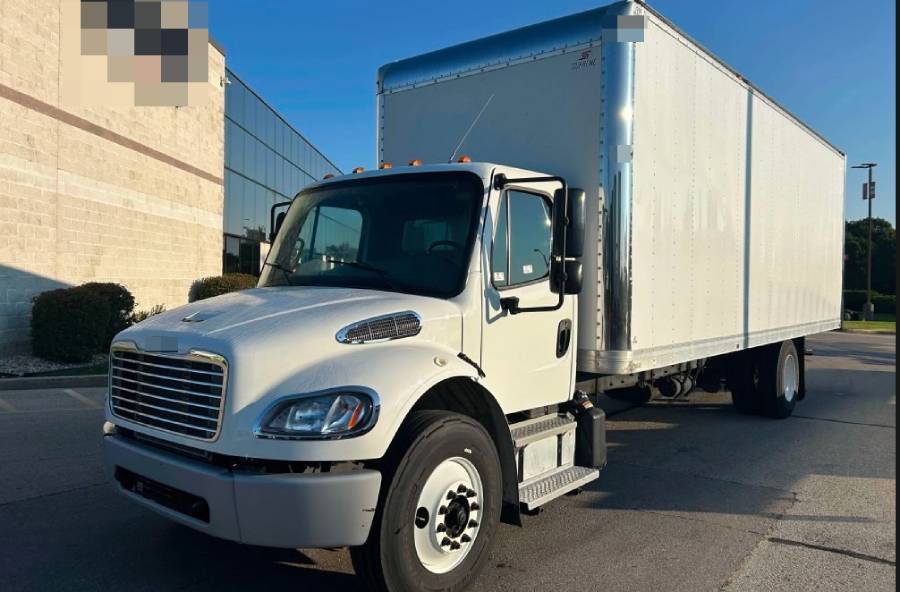
A Freightliner M2 with no power may have a dead battery, loose battery connections, a faulty ground, a blown main fuse, or a problem with its power distribution system. The exact cause depends on whether the truck has no electrical power, fails to respond when the ignition key is turned, or starts but loses engine power while driving.
Complete electrical power loss typically points to a problem with the battery supply, main electrical connections, or power distribution circuits. If the dashboard lights illuminate but the engine does not crank, the fault may involve the ignition switch, starter relay, starter motor, or starting interlock circuit. A Freightliner M2 that starts normally but struggles to accelerate requires a different diagnosis involving fuel delivery, turbocharger performance, or engine derate conditions.
Diagnosing these problems starts with identifying the symptoms rather than replacing components without testing. Battery voltage measurements, ground connection inspections, fuse checks, and diagnostic fault codes help narrow down the affected system. Because Freightliner M2 electrical configurations vary by model year and engine, component locations and testing procedures must match the specific truck.
This guide explains the main causes of Freightliner M2 power loss, how to identify electrical and engine-related faults, and which troubleshooting steps can help restore normal operation.
Why Does a Freightliner M2 Have No Power?
A Freightliner M2 can lose power because of battery failure, poor electrical connections, blown fuses, faulty power distribution components, starting circuit problems, or engine performance faults. The affected system determines whether the truck loses all electrical functions, fails to crank, or experiences reduced engine power while driving.
Complete electrical failure occurs when battery power cannot reach the truck’s main electrical circuits. Discharged batteries, corroded terminals, damaged battery cables, and loose ground connections can interrupt the supply of electricity to the dashboard, ignition system, and electronic control modules. A failed main power connection or battery disconnect switch can produce similar symptoms even when the batteries have sufficient voltage.
A Freightliner M2 that has working headlights and dashboard indicators but does not crank has a different problem. The ignition switch, starter relay, starter solenoid, and transmission starting interlock are possible causes. In this situation, the electrical system may have enough power to operate accessories but cannot complete the starter control circuit or deliver sufficient current to the starter motor.
Engine power loss occurs when the truck starts and runs but cannot produce normal acceleration or maintain speed under load. Restricted fuel delivery, insufficient turbocharger boost, and engine derate conditions can reduce available engine torque. These faults require engine diagnostics rather than basic electrical power restoration.
The following table identifies the main symptoms and their likely causes.
| Freightliner M2 symptom | Possible causes |
|---|---|
| No lights, no dashboard, no crank | Discharged batteries, bad ground, main power connection failure |
| Dashboard works, but engine does not crank | Starter relay, ignition switch, starter motor, starting interlock |
| Dashboard has no power, but other electrical functions work | Dashboard fuse, wiring fault, instrument cluster power supply |
| Electrical power cuts in and out | Loose battery cables, damaged wiring, intermittent ground connection |
| Engine starts but has weak acceleration | Clogged fuel filter, boost leak, turbocharger problem, engine derate |
| No power after battery replacement | Incorrect cable connections, loose terminals, blown main fuse, open power circuit |
Identifying which electrical functions still operate is the first diagnostic step. It separates power supply failures from starting circuit faults and engine performance problems, reducing unnecessary component replacement.
What Causes a Freightliner M2 to Have No Electrical Power?
A Freightliner M2 has no electrical power when the battery supply is insufficient or the electrical path between the batteries and the vehicle’s circuits is interrupted. The four primary areas to inspect are the batteries, battery cables, ground connections, and main power distribution components. A battery disconnect switch, where equipped, must also be checked because an open or defective switch can prevent power from reaching downstream circuits.
These faults can produce identical symptoms, including a completely dark dashboard, inoperative headlights, and no response when turning the ignition key. Testing voltage at the batteries and at downstream power connections helps determine whether the problem originates at the power source or farther along the electrical circuit.
Can a Dead Battery or Bad Ground Cause Complete Power Loss?
Yes. Discharged batteries and faulty ground connections can cause a Freightliner M2 to lose all electrical power. The batteries supply electricity to the starting system and vehicle electronics, while ground cables provide the return path needed to complete electrical circuits. A failure in either part of the circuit can prevent electrical components from operating.
Most Freightliner M2 trucks use a nominal 12-volt electrical system, although battery quantity and configuration vary. A fully charged 12-volt lead-acid battery typically measures approximately 12.6–12.8 volts at rest. A reading near 12.0 volts indicates substantial discharge, while a reading below 12 volts indicates a severely discharged battery. These measurements are useful starting points, but voltage alone cannot confirm whether a battery can deliver sufficient current under load.
Battery cable problems can produce the same symptoms as a discharged battery. Corrosion increases electrical resistance at the terminals, while loose connections can interrupt current flow. For example, a battery may measure 12.6 volts directly across its posts, but a severely corroded positive cable connection may prevent sufficient voltage from reaching the truck’s electrical distribution system.
Ground connections are equally important. A loose or damaged ground cable between the battery negative terminal and the chassis or engine can prevent electrical current from returning to the battery. High resistance in the ground path may cause dim lights, intermittent dashboard operation, clicking during starting, or complete electrical failure.
To distinguish these faults, measure battery voltage directly at the posts and compare it with voltage at accessible downstream connections. A voltage-drop test performed while the circuit is carrying current can identify excessive resistance in positive or ground cables. The correct test points and acceptable voltage drops depend on the circuit being tested.
Can a Blown Fuse or Faulty Power Distribution Module Cut Off Power?
Yes. A blown main fuse, failed high-current protection device, or faulty power distribution connection can interrupt electrical power to critical Freightliner M2 circuits. The power distribution system routes battery electricity to the ignition system, lighting, control modules, and other electrical equipment. An interruption in a main supply circuit can disable several systems simultaneously.
Freightliner M2 trucks use electrical distribution components that vary by production year and configuration. These can include power distribution modules, fuse panels, circuit protection devices, and a bulkhead module. The bulkhead module manages selected chassis electrical functions, but it should not automatically be considered the cause of a completely dead truck. Its power supply and ground circuits must be verified before diagnosing module failure.
A blown main fuse interrupts current when an electrical circuit experiences excessive current. Short circuits, damaged wiring insulation, and certain component failures can cause this condition. For example, a wire harness that rubs against a metal bracket may develop damaged insulation, allowing the conductor to contact the chassis and potentially blow a protective fuse.
A faulty battery disconnect switch can also prevent electricity from reaching the truck’s electrical system. If the switch is open, defective, or has a high-resistance connection, the batteries may retain normal voltage while downstream circuits receive little or no power. Trucks equipped with a disconnect switch should have its position and electrical operation checked during diagnosis.
Fuse testing should establish whether voltage is present at both sides of the fuse under the appropriate operating conditions. A fuse with voltage at its input but not its output may be open. However, a fuse with no voltage on either side points toward an upstream power supply problem rather than proving the fuse itself is defective.
Replacing a blown fuse without identifying the underlying fault can result in repeated failure. Always use the fuse rating specified for the circuit and the truck’s VIN-specific service documentation. Never install a higher-rated fuse or bypass a circuit protection device to restore power.
The next diagnostic stage is to determine whether electrical power reaches the ignition and starting circuits. This distinction is especially important when the Freightliner M2 dashboard operates normally but the engine does not respond to the ignition key.
Why Does a Freightliner M2 Have No Power When Turning the Key?
A Freightliner M2 that has electrical power but does not respond when the ignition key is turned may have a faulty ignition switch, defective starter relay, failed starter solenoid, damaged starter wiring, or an open starting interlock circuit. These components control the electrical sequence required to crank the engine. A failure anywhere in that sequence can prevent the starter motor from operating even when the dashboard lights and other electrical accessories work normally.
The ignition switch initiates the starting process by sending a start request through the truck’s electrical control system. Depending on the model year and configuration, this request passes through relays, control modules, and safety interlocks before reaching the starter solenoid. If the ignition switch fails to provide the required signal, the starter circuit remains inactive. Common symptoms include dashboard lights that illuminate normally, no starter engagement, and no cranking sound when the key is turned to the START position.
A defective starter relay or solenoid can produce similar symptoms. The starter relay controls the electrical signal used to activate the starter solenoid, while the solenoid engages the starter drive and connects the starter motor to its high-current power supply. A failed relay may prevent the solenoid from receiving the start command. A defective solenoid may produce a clicking sound without engaging the starter motor. However, clicking can also indicate low battery voltage or excessive resistance in the starter power circuit, so the sound alone does not identify the failed component.
The transmission starting interlock is another possible cause. Freightliner M2 trucks with automatic transmissions generally require the transmission to be in an approved starting position, such as Park or Neutral, depending on the transmission configuration. If the transmission range signal or associated starting interlock circuit fails, the truck may prevent starter engagement even when the ignition switch operates correctly. The exact interlock arrangement varies by transmission and model year.
Diagnosing a no-crank condition requires checking whether the starter control circuit receives a valid start command and whether sufficient voltage reaches the starter during an attempted start. If the starter receives the required control signal and battery power but does not operate, the starter motor or solenoid becomes a stronger suspect. If the control signal is missing, diagnosis should move upstream toward the ignition switch, starter relay, interlock circuit, or applicable control module.
A no-crank condition should not be confused with a crank-no-start condition. If the starter rotates the engine normally but the engine does not start, the problem may involve fuel delivery, engine control, or other engine operating requirements rather than the starter circuit itself. This distinction prevents unnecessary starter replacement.
Why Does a Freightliner M2 Have No Power to the Dashboard?
A Freightliner M2 dashboard can lose power because of a blown instrument cluster fuse, interrupted ignition power supply, faulty ground connection, damaged wiring, defective instrument cluster, or a problem involving the bulkhead module. These faults can disable dashboard indicators, gauges, and warning lights while leaving other electrical systems operational.
The dashboard receives electrical power through protected circuits connected to the vehicle’s power distribution system. Depending on the truck’s electrical configuration, the instrument cluster may require both a constant battery supply and an ignition-switched supply. If either required circuit loses power, the cluster may fail to initialize or operate correctly. For example, a blown fuse supplying the instrument cluster can leave the dashboard completely dark even though the headlights and other accessories continue working.
A faulty ground connection can also interrupt dashboard operation. The instrument cluster requires a reliable ground path to complete its electrical circuits. Corroded connectors, loose ground fasteners, and damaged wiring can create excessive resistance, causing intermittent gauge operation, flickering indicators, or complete display failure. These symptoms may become more noticeable when vibration or temperature changes affect an already weakened electrical connection.
The bulkhead module is another component to consider when diagnosing Freightliner M2 dashboard problems. On applicable M2 electrical architectures, the bulkhead module participates in chassis electrical control and communicates with other electronic systems. A failure involving module power, ground, communication wiring, or the module itself can affect dashboard-related functions. However, a dark instrument cluster does not automatically indicate bulkhead module failure. The cluster’s required power and ground connections should be tested before investigating module replacement.
Communication faults can produce dashboard symptoms even when electrical power remains available. Freightliner M2 electronic systems use vehicle communication networks, including J1939 on applicable configurations, to exchange operating information. A communication interruption may cause gauges to display incorrect values, warning indicators to activate, or engine information to disappear from the instrument cluster. These symptoms differ from a completely unpowered dashboard because the cluster may still illuminate or display information.
The following table helps distinguish common Freightliner M2 dashboard power problems.
| Dashboard symptom | Possible cause | Initial diagnostic check |
|---|---|---|
| Dashboard completely dark | Blown fuse, missing power supply, bad ground | Check cluster power and ground circuits |
| Dashboard lights flicker | Loose connector, poor ground, unstable supply voltage | Inspect connections and test voltage under load |
| Gauges stop working but display remains on | Communication fault, sensor data problem | Scan applicable modules for communication faults |
| Dashboard works intermittently | Damaged wiring, loose connector, intermittent power supply | Inspect wiring and test circuits while reproducing the fault |
| Dashboard loses power when key is turned | Ignition supply fault, voltage drop, connection problem | Measure supply voltage during key operation |
Dashboard troubleshooting should begin by checking the electrical functions that remain operational. If headlights, cab lighting, and other accessories work normally, the fault may be limited to the instrument cluster supply or related control circuits. If several unrelated electrical systems fail simultaneously, the problem may involve a shared power distribution connection, ignition supply, or ground circuit.
Fuse and connector locations vary across Freightliner M2 production years. Use the vehicle’s VIN-specific wiring diagrams to identify the correct instrument cluster fuse, power supply terminals, and ground connections. A diagnostic scanner capable of communicating with the truck’s electronic modules can help identify network faults when basic electrical tests confirm that the cluster receives the required power and ground.
Why Does a Freightliner M2 Lose Engine Power While Driving?
A Freightliner M2 can lose engine power while driving because of restricted fuel delivery, insufficient turbocharger boost, engine sensor faults, or an electronically commanded engine derate. These problems reduce the engine’s ability to generate torque, causing weak acceleration, difficulty climbing hills, or reduced vehicle speed. Unlike complete electrical power failure, the engine generally continues running, although severe faults can eventually cause it to stall.
Engine power loss becomes more noticeable when the truck operates under heavy loads. Accelerating, climbing steep grades, and maintaining highway speeds require greater fuel delivery and airflow. A restricted fuel filter or leaking charge-air connection may allow the engine to idle normally but prevent it from producing sufficient power under load. Engine control systems can also intentionally limit torque when they detect operating conditions that require protection or emissions-related restrictions.
Identifying whether the power loss occurs continuously, only under acceleration, or alongside dashboard warning indicators helps narrow down the affected system. A sudden reduction in available torque accompanied by an engine warning light may indicate an active derate condition, while gradually worsening acceleration under load may point toward fuel restriction or an air delivery problem.
Can Fuel System Problems Cause a Freightliner M2 to Lose Power?
Yes. Fuel system problems can reduce Freightliner M2 engine power by restricting the amount of fuel available for combustion. Common causes include clogged fuel filters, contaminated diesel fuel, air entering the fuel supply, and insufficient fuel pressure. The exact fuel system components and diagnostic specifications depend on whether the truck uses a Cummins, Detroit, or another applicable engine configuration.
A clogged fuel filter restricts diesel flow between the fuel tank and engine. As the engine demands more fuel during acceleration, the restriction can prevent the fuel system from maintaining the required supply. This causes reduced engine torque, hesitation, or difficulty maintaining speed under load. For example, a truck may idle smoothly and drive normally on level roads but struggle when climbing a hill because fuel demand exceeds the restricted supply.
Contaminated diesel fuel can produce similar symptoms. Water, sediment, and other contaminants can obstruct fuel filters or interfere with fuel system operation. Air entering through damaged fuel lines, loose fittings, or deteriorated seals can also disrupt fuel delivery. Depending on the engine and severity of the fault, symptoms may include rough running, hard starting, intermittent power loss, or stalling.
Fuel system diagnosis should begin with the maintenance history, fuel filter condition, water separator, and visible fuel line connections. If these inspections do not identify the cause, technicians should measure fuel supply pressure or restriction using the engine manufacturer’s diagnostic procedure. Replacing fuel system components without confirming the fault can increase repair costs without restoring engine performance.
Can Engine Derate or Turbocharger Problems Reduce Power?
Yes. Engine derate conditions and turbocharger faults can significantly reduce Freightliner M2 acceleration and available engine torque. A turbocharger problem limits the compressed air entering the engine, while an engine derate deliberately restricts power through the electronic engine control system.
The turbocharger increases intake air pressure to support efficient diesel combustion and higher engine output. A leaking charge-air cooler, damaged boost hose, malfunctioning turbocharger actuator, or other air system fault can prevent the engine from reaching its required boost pressure. For example, a split charge-air hose may cause noticeable power loss during acceleration because pressurized intake air escapes before reaching the engine.
An engine derate occurs when the engine control module limits engine output in response to specific operating conditions. Depending on the engine and emissions system, these conditions can include overheating, low oil pressure, emissions aftertreatment faults, or other monitored failures. Some derate strategies limit engine torque, while more severe conditions may restrict engine speed or vehicle speed.
Warning lights and diagnostic trouble codes provide important information about electronically controlled power restrictions. A Freightliner M2 equipped with an applicable diesel aftertreatment system may display engine or emissions warnings before or during a derate. However, the warning indicator alone does not identify the failed component. Engine-specific diagnostic codes and live operating data are needed to determine the underlying cause.
Turbocharger and derate diagnosis requires comparing actual engine operating conditions with manufacturer specifications. Boost pressure, fuel pressure, engine temperature, and relevant aftertreatment data help distinguish mechanical performance problems from electronically commanded power limitations. A truck showing overheating, low oil pressure, or a severe stop-engine warning should be stopped safely and evaluated before continued operation.
How Do You Troubleshoot a Freightliner M2 With No Power?
Troubleshooting a Freightliner M2 with no power requires identifying the affected system, testing the battery supply, inspecting electrical connections, verifying circuit protection, and checking the ignition or engine control system. The correct sequence depends on whether the truck has no electrical response, fails to crank, or loses engine power while driving.
Begin by checking which electrical components still operate. Headlights, dashboard indicators, cab lighting, and starter response provide useful clues about the location of the fault. A completely unresponsive truck requires power supply testing, while a truck with a functioning dashboard but no starter engagement requires starting circuit diagnosis. An engine that runs but lacks acceleration requires fuel, air, and electronic engine diagnostics.
The following table summarizes the recommended diagnostic sequence.
| Step | Diagnostic check | What to identify |
|---|---|---|
| 1 | Identify operating symptoms | Complete electrical loss, no-crank, or engine power loss |
| 2 | Measure battery voltage | Battery state of charge and supply voltage |
| 3 | Inspect battery cables and grounds | Loose connections, corrosion, damaged cables |
| 4 | Test main fuses and power distribution | Interrupted power supply or circuit protection fault |
| 5 | Check ignition and starter circuits | Missing start command or insufficient starter power |
| 6 | Retrieve diagnostic trouble codes | Engine, electrical, or communication faults |
| 7 | Verify the suspected component | Confirm the fault before repair or replacement |
These steps form a diagnostic framework rather than a requirement to perform every test on every truck. For example, a Freightliner M2 that runs normally but experiences engine derate does not require starter circuit testing unless additional symptoms indicate a starting system fault.
How Do You Test the Battery, Ground Connections, and Main Fuses?
Test Freightliner M2 batteries, grounds, and main fuses by measuring voltage at the power source and verifying that electricity reaches the required downstream circuits. A digital multimeter is the primary tool for these checks. Battery load testing equipment and VIN-specific wiring diagrams provide additional information when basic voltage measurements do not identify the fault.
Start with the batteries while the engine is off and electrical loads are minimized. A fully charged 12-volt lead-acid battery generally measures approximately 12.6–12.8 volts after resting. A reading near 12.0 volts indicates significant discharge, while a substantially lower reading suggests that charging and battery condition testing are necessary. For trucks using multiple batteries, inspect the complete battery bank and its connections according to the installed configuration.
Next, inspect the positive and negative battery connections for corrosion, loose fasteners, damaged insulation, and broken cable strands. A cable can appear intact externally while containing corrosion or internal conductor damage. Measure voltage at the battery posts and compare it with the voltage available at the cable terminals and appropriate downstream power connections. A significant difference under load indicates resistance or an interruption along the tested path.
Ground connections should be tested using voltage-drop measurements while the relevant circuit is operating. Connect the meter across the ground path being evaluated and observe the voltage difference under load. Excessive voltage drop indicates resistance caused by loose connections, corrosion, damaged cables, or poor contact with the chassis or engine. Acceptable values depend on the circuit, load, and manufacturer specifications, so a single universal voltage-drop limit should not be applied to every Freightliner M2 ground circuit.
Main fuse testing requires identifying the correct fuse or circuit protection device from the truck’s wiring documentation. With the circuit in its specified operating state, measure voltage at both sides of the fuse relative to a verified ground. Voltage at the supply side but not the load side indicates an open fuse or connection problem. No voltage at either side suggests an upstream supply interruption that requires further investigation.
A blown fuse should only be replaced with one of the specified type and amperage after the cause has been investigated. Repeated fuse failure indicates an unresolved electrical problem, such as damaged wiring or a shorted component. High-current battery cables and exposed electrical connections also present short-circuit hazards, so technicians should follow the manufacturer’s isolation and testing procedures before disconnecting or repairing these circuits.
How Do You Check Ignition Circuits and Diagnostic Fault Codes?
Check Freightliner M2 ignition circuits by verifying the start command, starter relay operation, starter power supply, and applicable starting interlocks. If the engine runs but loses power, retrieve diagnostic trouble codes from the engine and related electronic control systems instead of focusing on the starter circuit.
For a no-crank condition, begin by confirming that the transmission is in the required starting position and that the batteries have sufficient charge. Observe whether the dashboard indicators respond when the ignition key is turned. If the dashboard operates normally but the starter remains inactive, inspect the starting circuit using the vehicle-specific wiring diagram.
The ignition switch and associated control system must provide the required start request before the starter relay or solenoid can operate. A technician can determine whether the appropriate control signal reaches the starter circuit during an attempted start. If the signal is present but the starter does not engage, the starter solenoid, motor, high-current connections, and ground path require further testing. If the signal is absent, diagnosis should move toward the ignition switch, relay control, starting interlock, and applicable electronic modules.
Starting interlocks should never be bypassed to force starter engagement. Bypassing a transmission safety circuit can allow unexpected vehicle movement and create a serious injury risk. Testing should follow the approved procedure for the truck’s transmission and starting system.
For engine power loss, connect a diagnostic scanner that supports the installed engine and relevant Freightliner M2 electronic systems. Retrieve active and stored diagnostic trouble codes, recording the code numbers and associated descriptions before clearing anything. Engine-related codes may identify problems involving fuel pressure, boost pressure, temperature sensors, emissions aftertreatment, or electronic communication.
Diagnostic codes identify detected conditions rather than always identifying the defective component. For example, a low boost pressure code may result from a leaking charge-air hose, turbocharger control problem, or another air system restriction. Replacing the turbocharger based only on the code can overlook the actual cause. Confirm the fault by inspecting the related components and comparing live sensor readings with the engine manufacturer’s specifications.
If the scanner cannot communicate with an expected module, verify the module’s power supply, ground connections, and applicable communication circuits before assuming the module has failed. J1939 communication problems can affect multiple electronic systems, but their diagnosis requires the correct network architecture and service information.
Completing these checks should narrow the problem to a specific circuit, component, or operating system. The next step is to repair the confirmed fault and verify that the Freightliner M2 operates normally under the conditions that originally produced the power loss.
How Do You Fix a Freightliner M2 That Has No Power?
Fixing a Freightliner M2 with no power requires repairing the electrical or mechanical component responsible for the failure. The appropriate repair depends on whether the truck has a discharged battery, damaged ground connection, blown fuse, faulty starting circuit, or engine performance problem. Confirming the cause through electrical measurements and diagnostic testing prevents unnecessary parts replacement.
For battery-related power loss, recharge and test the batteries before deciding whether replacement is necessary. A discharged battery may recover after proper charging, but a battery that fails a load or conductance test requires replacement according to the manufacturer’s specifications. If the batteries repeatedly discharge, inspect the charging system and check for excessive parasitic electrical loads. On trucks equipped with multiple batteries, evaluate the complete battery bank because a defective battery can affect the performance of the others.
Loose or corroded battery connections should be cleaned, repaired, or replaced based on their condition. Disconnect the battery system according to the vehicle manufacturer’s procedure before servicing electrical connections. Remove corrosion from accessible terminals, inspect cables for damaged conductors, and tighten connections to the specified torque. Severely corroded cables or damaged terminals require replacement because cleaning the exterior does not repair internal conductor deterioration. After completing the repair, verify that the connection maintains the required voltage under electrical load.
A faulty ground connection requires restoring a reliable electrical path between the battery, chassis, engine, and affected components. Remove corrosion from the appropriate grounding surfaces, repair loose fasteners, and replace damaged ground straps. A voltage-drop test under load should confirm that excessive resistance has been eliminated. For example, if the dashboard previously lost power because of a corroded chassis ground, restoring the connection should allow the affected circuits to receive stable voltage.
Blown fuses and power distribution faults must be repaired only after identifying the underlying electrical problem. Replace a failed fuse with the exact type and amperage specified for the circuit. If the replacement fuse blows again, inspect the associated wiring and connected components for short circuits or excessive current draw. A damaged power distribution connection, fuse holder, or battery disconnect switch may require repair or replacement after testing confirms the failure. Electronic modules should not be replaced until their power supplies, grounds, and communication circuits have been verified.
For a Freightliner M2 that has electrical power but will not crank, repair the starting circuit component identified during diagnosis. A defective starter relay can be replaced after confirming that its control and supply circuits operate correctly. A failed starter motor or solenoid requires replacement or an appropriate professional repair. If the ignition switch or transmission starting interlock is responsible, use the model-specific service procedure to restore normal operation without bypassing safety functions.
Engine power loss requires a different repair approach. A restricted fuel filter should be replaced using the engine manufacturer’s specified filter and priming procedure. Damaged fuel lines, leaking charge-air hoses, and faulty turbocharger control components require repair based on inspection and diagnostic results. If the engine has entered derate mode, identify and correct the underlying fault before clearing diagnostic codes. Resetting a fault code without correcting its cause does not provide a reliable repair.
Professional diesel diagnostic service is necessary when troubleshooting involves high-current electrical circuits, complex wiring faults, electronic module communication failures, or engine control problems that cannot be confirmed with basic testing. A qualified technician can use VIN-specific wiring diagrams, manufacturer diagnostic software, and live operating data to isolate faults accurately.
After completing any repair, verify that the Freightliner M2 starts, maintains stable electrical power, and operates without the original symptoms. Recheck battery charging voltage, affected circuits, and relevant diagnostic trouble codes. If the original complaint involved engine power loss, confirm normal performance under appropriate operating conditions through a safe, controlled road test. A repair is complete only when testing confirms that the original fault has been corrected.
Read more: Freightliner M2 Check Engine Light: Causes & Fixes
Can Freightliner M2 Electrical Problems Vary by Model Year?
Yes. Freightliner M2 electrical problems can vary by model year because changes in wiring layouts, power distribution components, electronic control modules, and engine configurations affect how electrical faults occur and are diagnosed. Although different Freightliner M2 models may exhibit similar symptoms, the locations of fuses, relays, connectors, and control modules are not necessarily identical.
Freightliner M2 trucks have been produced with different electrical architectures, including variations in bulkhead modules, power distribution systems, and chassis wiring. Earlier Business Class M2 configurations and newer M2 Plus models may use different electronic components and diagnostic procedures. A fuse location or wiring diagram that applies to one production year may not match another truck. Using incorrect electrical documentation can lead to testing the wrong circuit or replacing an unrelated component.
Engine configurations also influence power loss diagnosis. Freightliner M2 trucks have been equipped with different Cummins and Detroit diesel engines, each using specific engine control systems, sensors, fuel delivery components, and diagnostic procedures. For example, a truck equipped with a Cummins B6.7 may require different fuel pressure tests and diagnostic software than one equipped with a Detroit DD5 or DD8. Engine derate conditions and emissions-related warnings also depend on the installed engine and aftertreatment system.
The vehicle identification number (VIN) provides the most reliable starting point for selecting the correct service documentation. Technicians should use the VIN, engine model, and transmission configuration to identify applicable wiring diagrams, fuse assignments, module connections, and manufacturer diagnostic procedures. This ensures that troubleshooting follows the actual electrical architecture rather than assumptions based on another Freightliner M2.
How Can You Prevent Freightliner M2 Power Problems?
Preventing Freightliner M2 power problems requires regular battery inspections, secure electrical connections, proper charging system maintenance, and early detection of wiring damage. These maintenance practices reduce the likelihood of unexpected electrical failures and help identify developing problems before they interrupt truck operation.
Battery maintenance is especially important because commercial trucks depend on reliable electrical power for starting, lighting, engine controls, and other onboard systems. Battery terminals should remain clean, securely connected, and free from excessive corrosion. Inspect battery cases for cracks, swelling, or electrolyte leakage where applicable. A battery that repeatedly loses charge should be tested rather than continually recharged without investigating the cause.
Electrical wiring and ground connections also require periodic inspection. Vibration, moisture, road salt, and repeated temperature changes can damage cables or weaken electrical connections over time. Pay particular attention to battery cables, chassis ground straps, exposed wiring harnesses, and connectors near the engine compartment. Damaged insulation, loose mounting points, and corrosion should be corrected before they cause intermittent electrical faults or complete power loss.
Charging system maintenance helps prevent battery-related breakdowns. The alternator must provide sufficient electrical output to support vehicle loads and recharge the batteries while the engine operates. A malfunctioning alternator, slipping drive belt, or damaged charging cable can gradually discharge the batteries even when they are in good condition. Measuring charging voltage and checking for charging system fault codes can help identify these problems before the truck fails to start.
How Often Should You Inspect Freightliner M2 Batteries and Electrical Connections?
Freightliner M2 battery terminals, cables, and accessible electrical connections should be visually checked during routine vehicle inspections, with detailed electrical testing performed according to the applicable maintenance schedule and operating conditions. There is no single inspection interval that applies to every Freightliner M2 because maintenance requirements depend on model year, vehicle configuration, duty cycle, and environmental exposure.
A practical preventive maintenance program separates routine visual checks from detailed electrical inspections. Drivers can look for visible corrosion, loose battery connections, damaged cables, and battery warning indicators during regular vehicle inspections. Maintenance technicians should perform battery condition testing, charging system checks, and ground connection inspections at intervals established by the fleet maintenance program and manufacturer documentation.
Trucks operating in demanding environments require particular attention. Frequent short trips, extended periods of inactivity, high electrical accessory loads, and exposure to moisture or road salt can increase stress on batteries and electrical connections. For example, a Freightliner M2 used for frequent urban deliveries may experience repeated starting cycles and limited battery recharge time, making battery condition and charging system performance important maintenance considerations.
Maintenance records should document battery test results, electrical repairs, recurring fault codes, and previous power loss incidents. Comparing these records helps identify developing problems, such as a battery bank that gradually loses capacity or a ground connection that repeatedly develops excessive resistance. Addressing these conditions during scheduled maintenance reduces the risk of unexpected starting failures and electrical downtime.