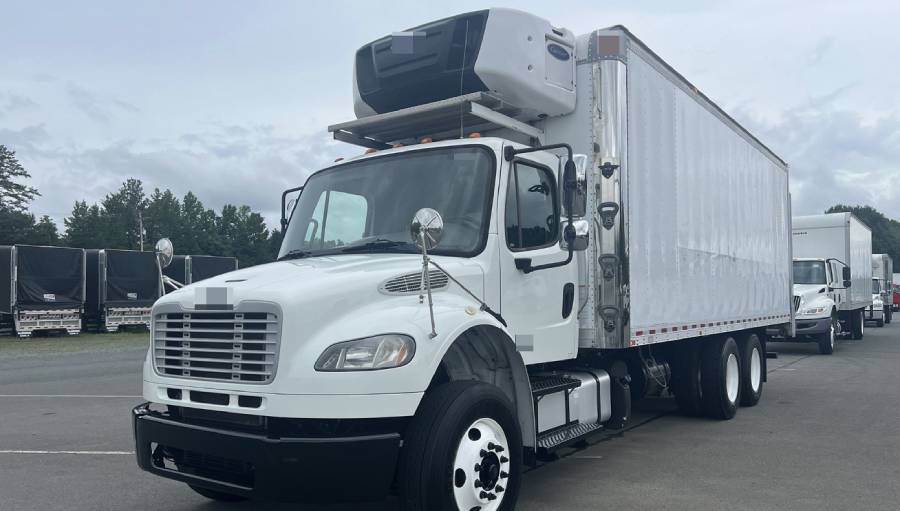
Freightliner M2 air conditioning problems commonly involve refrigerant leaks, compressor failures, electrical faults, and restricted airflow. These issues can cause the AC system to blow warm air, stop cooling intermittently, produce weak airflow, or fail to operate entirely. Identifying the specific symptom is the first step toward determining which component needs inspection or repair.
The Freightliner Business Class M2 uses an air conditioning system that relies on several interconnected components, including the compressor, condenser, evaporator, refrigerant lines, blower motor, and electrical controls. A refrigerant leak can reduce cooling capacity, while a faulty compressor or electrical connection can prevent the system from operating correctly. Blower motor failures can also disrupt cabin airflow even when the refrigeration circuit is functioning normally.
Diagnosing Freightliner M2 AC problems requires checking airflow, electrical connections, compressor operation, and refrigerant system performance. The exact diagnostic procedure depends on the truck’s model year and HVAC configuration. This guide explains the most common Freightliner M2 air conditioning problems, their causes, practical troubleshooting methods, repair options, and estimated repair costs to help truck owners identify faults and determine when professional service is necessary.
What Are the Most Common Freightliner M2 Air Conditioning Problems?
The most common Freightliner M2 air conditioning problems include warm air from the vents, weak or no airflow, intermittent cooling, and unusual noises from the AC system. Each symptom points to a different group of potential failures involving the refrigerant circuit, compressor, blower motor, or electrical controls.
Warm air from the vents indicates that the AC system is not removing enough heat from the cabin air. Common causes include low refrigerant levels due to leaks, compressor malfunctions, restricted condenser airflow, and faulty temperature controls. The blower may continue operating normally even when the refrigeration system cannot produce cold air.
Weak or no airflow generally indicates a problem with the cabin air distribution system rather than the refrigerant circuit. A failing blower motor, damaged electrical connection, defective blower control module, or restricted air passage can reduce airflow. If the blower operates at certain fan speeds but not others, its speed control circuit requires inspection.
Intermittent cooling occurs when the AC system alternates between producing cold and warm air. Potential causes include unstable electrical connections, refrigerant pressure irregularities, faulty sensors, and evaporator icing. The timing of the failure helps narrow the diagnosis, particularly when cooling stops after extended operation.
Unusual noises can indicate mechanical wear or interference. Grinding, rattling, or squealing near the compressor may involve its bearings, pulley, or drive belt, while noises inside the dashboard may originate from the blower motor or air distribution components.
| AC Problem | Possible Cause | Initial Diagnostic Check |
|---|---|---|
| AC blows warm air | Refrigerant leak or compressor fault | Check compressor operation |
| Weak cabin airflow | Blower motor or airflow restriction | Test blower speed settings |
| AC stops cooling intermittently | Electrical fault or evaporator icing | Record when cooling stops |
| Grinding or squealing noise | Compressor pulley, belt, or blower fault | Identify the noise location |
What Causes the Freightliner M2 Air Conditioner to Stop Cooling?
A Freightliner M2 air conditioner stops cooling when the refrigeration circuit cannot transfer heat effectively or the HVAC controls fail to direct cooled air into the cabin. The main causes include refrigerant leaks, compressor faults, restricted condenser airflow, and expansion valve malfunctions. Identifying the cause requires checking both refrigerant system performance and electrical operation.
How Do Refrigerant Leaks Affect Freightliner M2 AC Cooling?
Refrigerant leaks reduce the amount of refrigerant circulating through the Freightliner M2 air conditioning system, limiting its ability to absorb heat from cabin air. Leaks can develop at hose connections, O-ring seals, compressor shaft seals, condenser fittings, or damaged refrigerant lines.
As refrigerant escapes, cooling performance can gradually decline. A sufficiently low refrigerant charge may also activate a pressure protection function that prevents compressor operation. Oily residue around refrigerant connections can indicate a leak, although it does not confirm one.
Technicians locate leaks using electronic refrigerant detectors, approved leak-detection methods, and pressure testing procedures appropriate to the system. Repairing the leak before evacuating and recharging the system to the specified refrigerant quantity prevents repeated refrigerant loss.
How Does a Faulty AC Compressor Cause Cooling Failure?
A faulty AC compressor can prevent the Freightliner M2 air conditioning system from maintaining the pressure difference required for refrigerant circulation and effective cooling. Compressor problems include internal mechanical wear, bearing damage, drive-related failures, and electrical control faults.
The compressor raises refrigerant pressure so heat can be released through the condenser. When internal components wear or fail, the compressor may no longer produce the required pressure difference. A compressor that does not engage or operate when commanded may instead have a problem with its electrical supply, control circuit, or pressure protection system.
A blocked condenser can also reduce cooling performance by restricting heat rejection, particularly during low-speed operation. Similarly, a malfunctioning expansion valve can disrupt refrigerant flow into the evaporator, resulting in inadequate cooling or evaporator icing.
Compressor replacement should follow a confirmed diagnosis rather than warm-air symptoms alone. Technicians must evaluate operating pressures, control signals, and the condition of related components before determining whether the compressor requires replacement.
Why Is the Freightliner M2 AC Compressor Not Engaging?
The Freightliner M2 AC compressor may fail to engage because of low refrigerant pressure, a blown fuse, a faulty relay, damaged wiring, or a malfunctioning compressor clutch on systems equipped with one. These faults can interrupt compressor operation even when the dashboard AC switch is turned on and the blower motor operates normally.
Low refrigerant pressure is one possible reason the compressor remains inactive. The HVAC system uses pressure monitoring to protect refrigeration components from operating outside their intended pressure range. When refrigerant pressure falls below the permitted threshold, the control system may disable compressor operation. A refrigerant leak is a common cause of insufficient system pressure, but pressure readings must be evaluated before identifying the fault.
Electrical failures can also prevent the compressor from receiving an operating command or the power required to run. A blown fuse interrupts the electrical circuit, while a defective relay may prevent voltage from reaching the compressor clutch on applicable configurations. Corroded connectors, damaged wiring, and faulty pressure sensors can produce similar symptoms. Because Freightliner M2 electrical layouts vary by model year and configuration, technicians should use the appropriate wiring diagram to identify the correct circuits and test points.
A compressor clutch failure is another possible cause on clutch-equipped systems. The clutch connects the compressor to its belt-driven pulley when cooling is requested. If the clutch coil fails, its air gap is incorrect, or the clutch assembly is damaged, the pulley may rotate without driving the compressor. However, a stationary clutch does not automatically indicate clutch failure because the HVAC control system may intentionally prevent engagement.
To diagnose a Freightliner M2 compressor that is not engaging, first confirm that the AC controls are requesting cooling. Next, inspect the relevant fuses, electrical connections, and compressor drive components. A qualified technician can then verify compressor control signals, refrigerant pressure, and clutch operation where applicable. Replacing the compressor without confirming the underlying fault can leave the original cooling problem unresolved.
Why Is the Freightliner M2 AC Blower Motor Not Working?
The Freightliner M2 AC blower motor may stop working because of a failed motor, blown fuse, defective speed control component, damaged wiring, or a poor ground connection. Unlike compressor problems, blower motor failures primarily affect the movement of air through the cabin vents. The refrigeration circuit may still be capable of cooling, but occupants will receive little or no conditioned airflow.
A failing blower motor can produce several recognizable symptoms. The fan may stop completely, operate intermittently, run at reduced speed, or produce squealing and grinding noises. Worn motor brushes, damaged bearings, and internal electrical faults can interrupt operation. For example, a motor with worn brushes may occasionally start after vibration but stop again when electrical contact is lost.
Electrical supply problems can produce similar failures. A blown blower fuse prevents power from reaching the circuit, while loose connectors or corroded terminals increase electrical resistance and may cause intermittent operation. Technicians can distinguish a motor failure from a supply problem by checking voltage and ground at the blower motor connector while the fan is commanded on. Voltage and ground readings must be interpreted under the appropriate operating conditions.
Can a Faulty Blower Resistor or Control Module Cause Airflow Problems?
A faulty blower resistor or electronic blower control module can cause the Freightliner M2 cabin fan to operate at incorrect speeds or stop working entirely. The exact component depends on the truck’s HVAC configuration and the type of fan speed control installed.
In resistor-controlled systems, different resistance paths regulate the voltage supplied to the blower motor. Damage to the resistor assembly can disable individual fan speed settings while leaving others functional. For example, a blower that operates at its highest setting but fails at lower settings may have a defective resistor or an associated circuit fault.
Systems using an electronic blower control module regulate motor operation through electronic control rather than a conventional stepped resistor arrangement. A malfunctioning module can produce inconsistent fan speeds, intermittent operation, or complete airflow loss. Wiring damage, overheating connectors, and faulty control inputs must also be considered before replacing the module.
Diagnosing the blower speed control system requires checking which fan settings operate, inspecting the relevant electrical connections, and testing the control circuit against the vehicle’s wiring diagram. A blower that fails at every speed requires motor power and ground testing before the resistor or control module is condemned. This approach helps distinguish a failed blower motor from a control system fault and reduces unnecessary component replacement.
Why Does the Freightliner M2 AC Work Intermittently?
The Freightliner M2 AC may work intermittently because of faulty refrigerant pressure sensors, loose electrical connections, evaporator icing, or compressor control problems. These faults can cause the system to alternate between cold and warm air while the blower continues operating. Identifying when cooling stops helps determine whether the problem originates in the electrical controls, refrigerant circuit, or airflow system.
A faulty refrigerant pressure sensor can interrupt cooling by sending incorrect pressure information to the HVAC control system. When the control system detects pressure outside its permitted operating range, it may disable compressor operation to protect the refrigeration circuit. An inaccurate sensor signal or an actual pressure problem can therefore produce similar symptoms. Technicians must compare sensor readings with measured system pressure before replacing the sensor.
Loose wiring connections can also cause intermittent AC operation. Engine vibration, road movement, moisture, and connector corrosion can interrupt electrical signals between the HVAC controls and compressor circuit. For example, cooling that stops after driving over rough roads may indicate a wiring or connector problem. Inspecting connector condition and monitoring circuit voltage while the fault occurs can help identify an intermittent electrical failure.
Evaporator icing is another cause of cooling that stops after extended operation. Ice accumulation restricts airflow through the evaporator, reducing the amount of cooled air reaching the cabin. This condition can result from restricted airflow, incorrect refrigerant flow, or malfunctioning evaporator temperature controls. A typical symptom is strong cooling immediately after startup, followed by gradually weakening airflow and reduced cooling performance. Airflow may return after the AC system is switched off long enough for the ice to melt.
Intermittent cooling should be diagnosed according to its operating pattern. Cooling that stops while airflow remains normal suggests a different fault from cooling accompanied by progressively weaker airflow. Recording ambient temperature, fan speed, driving conditions, and the time required for the problem to appear provides useful evidence for identifying the cause.
How Do You Troubleshoot Freightliner M2 Air Conditioning Problems?
To troubleshoot Freightliner M2 air conditioning problems, check the HVAC controls and airflow first, inspect the electrical system second, and evaluate compressor operation and refrigerant performance third. This sequence separates basic airflow failures from electrical and refrigeration faults before specialized testing begins.
The diagnostic process should follow the truck’s model year, HVAC configuration, and manufacturer service information. Visual inspections and basic control checks can identify obvious problems, while refrigerant pressure measurements, electrical circuit testing, and sealed-system repairs require appropriate equipment and technical knowledge.
How Do You Check the Freightliner M2 AC Controls and Airflow?
Check the Freightliner M2 AC controls by starting the engine under safe operating conditions, selecting the cooling function, setting the temperature control to maximum cooling, and operating the blower through its available speed settings. Confirm that air flows from the selected dashboard vents and that the system responds when the temperature and airflow settings change.
A blower that does not operate at any speed requires inspection of its electrical supply, motor, and ground circuit. A blower that operates only at certain speeds points toward the speed control circuit, although wiring and control input faults can produce similar symptoms. If airflow is strong but the air remains warm, the refrigeration circuit and temperature blend controls require further investigation.
Inspect accessible air intake openings and ventilation passages for debris or restrictions. A blocked intake can reduce airflow even when the blower motor operates normally. Where the vehicle is equipped with a serviceable cabin air filter, inspect its condition and replace it according to the applicable maintenance requirements.
How Do You Check the AC Fuses and Electrical Connections?
Check the Freightliner M2 AC electrical system by identifying the HVAC-related fuses, relays, and connectors using the correct vehicle wiring diagram. Fuse and relay locations vary by model year and electrical configuration, so component identification should be based on the truck’s service documentation rather than a generic fuse layout.
Begin with a visual inspection of accessible wiring and connectors. Look for damaged insulation, loose terminals, corrosion, overheating, and disconnected plugs. A fuse that appears damaged should be tested with an appropriate electrical meter rather than judged solely by appearance.
Technicians can then verify circuit voltage, ground integrity, and control signals while the AC system is commanded to operate. A compressor that does not receive the expected electrical command may have a control circuit problem rather than a mechanical failure. Likewise, a blower motor with the correct power supply and ground but no operation may have an internal motor fault.
Replace blown fuses only with the manufacturer-specified rating. A fuse that blows repeatedly indicates an electrical fault requiring diagnosis. Installing a higher-rated fuse or bypassing a protective circuit can damage wiring and increase fire risk.
How Do Technicians Test AC Refrigerant Pressure and Leaks?
Technicians test Freightliner M2 AC refrigerant pressure using service equipment compatible with the refrigerant specified for the vehicle. Pressure readings help evaluate compressor performance, refrigerant flow, and condenser operation, but they must be interpreted alongside ambient temperature, engine operating conditions, and the manufacturer’s diagnostic specifications.
A pressure reading alone cannot reliably determine the correct refrigerant charge. Low cooling performance can result from insufficient refrigerant, excessive refrigerant, airflow restrictions, compressor faults, or expansion valve problems. For this reason, technicians compare system behavior and pressure measurements with the applicable service procedures before identifying a defective component.
Refrigerant leak testing focuses on connections, hoses, condenser surfaces, compressor seals, and other potential leakage points. Electronic leak detectors and approved leak-detection procedures can identify refrigerant escaping from the sealed circuit. Oily residue around a fitting may justify further inspection, but it does not establish the presence or exact location of a leak.
Once a leak is confirmed, the damaged component or seal must be repaired before the system is evacuated and recharged. The correct refrigerant type and specified charge quantity must be verified from the vehicle’s service information or identification label.
Refrigerant recovery, sealed-system repairs, and charging should be performed by qualified technicians using approved equipment. Refrigerant can cause frostbite, and the system operates under pressure. Bypassing pressure protection devices or releasing refrigerant into the atmosphere is not an acceptable troubleshooting method.
How Do You Fix Common Freightliner M2 Air Conditioning Problems?
Fixing Freightliner M2 air conditioning problems requires repairing refrigerant leaks, replacing confirmed faulty components, and correcting electrical or airflow failures. The appropriate repair depends on the diagnosed cause rather than the symptom alone. For example, warm air from the vents may result from a refrigerant leak, a compressor failure, or a malfunctioning temperature blend door, each requiring a different repair.
Electrical repairs may involve replacing a defective fuse, repairing damaged wiring, restoring corroded connections, or replacing a failed blower motor or speed control module. Restricted airflow may require removing debris from the air intake or servicing the cabin air filter where equipped. Repairs should be followed by an operational test to confirm that airflow, temperature control, and cooling performance have returned to normal.
How Do You Repair a Refrigerant Leak in a Freightliner M2?
Repairing a Freightliner M2 refrigerant leak involves locating the leaking component, replacing the damaged part or seal, evacuating the system, and recharging it with the specified refrigerant quantity. Adding refrigerant without repairing the leak does not resolve the underlying problem and allows refrigerant to escape again.
Common leak locations include refrigerant hose connections, O-ring seals, condenser assemblies, compressor seals, and damaged refrigerant lines. A leaking O-ring may require seal replacement, while a punctured condenser or damaged hose generally requires replacement of the affected component. The repair must use compatible parts and sealing materials specified for the system.
After the leak is repaired, a qualified technician performs the required leak checks, evacuates the system, and recharges it according to the manufacturer’s specifications. The technician then verifies cooling performance and checks for additional leakage. Refrigerant recovery and charging require approved service equipment and appropriate technician qualifications.
When Should You Replace the Freightliner M2 AC Compressor?
Replace the Freightliner M2 AC compressor when diagnostic testing confirms internal mechanical failure, inadequate compression, or damage that cannot be corrected through an approved component-level repair. Warm air or a compressor that does not engage is not sufficient evidence of compressor failure because electrical faults, pressure protection, and refrigerant leaks can produce the same symptoms.
Signs of compressor damage include abnormal mechanical noise, seizure, visible leakage, and an inability to produce the expected pressure difference under specified test conditions. Technicians should inspect the compressor drive system, verify electrical commands, and evaluate refrigerant pressures before recommending replacement.
If the compressor fails internally and contaminates the refrigerant circuit with metal debris, additional repairs may be necessary. These can include cleaning or replacing affected refrigerant lines and components, replacing the receiver-drier or accumulator where required, and servicing the expansion device according to the manufacturer’s repair procedure. Installing a replacement compressor without addressing contamination can cause another failure.
After compressor replacement, the system must receive the correct lubricant quantity and refrigerant charge. A final performance test should confirm stable compressor operation, appropriate operating pressures, and consistent cooling at the cabin vents.
How Much Does It Cost to Fix Freightliner M2 Air Conditioning Problems?
Freightliner M2 air conditioning repair costs depend on the failed component, required labor, refrigerant service, and truck configuration. Minor electrical repairs generally cost less than compressor replacement or major refrigerant system repairs. A complete compressor replacement can exceed $1,000, particularly when internal damage requires additional component replacement and system cleaning.
The following estimates provide general U.S. truck AC repair pricing for budgeting purposes. They are not verified Freightliner M2-specific quotations.
| AC Repair Service | Estimated Cost (USD) |
|---|---|
| AC diagnosis | $100–$150 |
| Refrigerant leak check and recharge | $250–$400 |
| Blower motor replacement | $250–$600 |
| Blower resistor replacement | $70–$300 |
| Condenser replacement | $350–$900 |
| AC compressor replacement | $800–$2,500+ |
AC compressor replacement is among the more expensive repairs because it involves refrigerant recovery, mechanical replacement, evacuation, recharging, and performance testing. Additional costs arise when compressor failure contaminates the refrigerant circuit or damages related components.
Refrigerant leak repair costs depend on the location and severity of the leak. Replacing an accessible seal is generally less labor-intensive than replacing a condenser, evaporator, or refrigerant hose assembly. Leak detection and refrigerant servicing may be billed separately from the component repair.
Blower motor replacement costs depend on component accessibility and whether the failure involves the motor itself or its control circuit. Replacing a faulty resistor is generally less expensive than replacing the complete blower motor assembly.
Freightliner M2 repair estimates also vary with model year, OEM versus aftermarket parts, regional labor rates, and shop type. Truck owners should request a written estimate that separates diagnostic charges, replacement parts, labor, and refrigerant service before authorizing repairs.
Read more: Freightliner M2 SPN 639 FMI 7: Causes & Fixes
How Can You Prevent Freightliner M2 Air Conditioning Problems?
Preventing Freightliner M2 air conditioning problems requires regular condenser cleaning, airflow inspections, electrical connection checks, and refrigerant system maintenance. These practices reduce the risk of restricted cooling, overheating electrical components, and undetected refrigerant leaks.
Keep the AC condenser clean by inspecting its external fins for insects, dirt, road debris, and other obstructions. The condenser releases heat from compressed refrigerant, so restricted airflow reduces cooling efficiency and can increase refrigerant system pressure. Remove accumulated debris using cleaning methods that will not bend or damage the condenser fins.
Inspect the cabin airflow system by checking air intake openings, blower operation, and accessible ventilation passages. Replace the cabin air filter according to the applicable service schedule if the truck is equipped with one. Restricted airflow can reduce cooling performance and contribute to evaporator icing.
Check electrical connections for loose terminals, corrosion, damaged insulation, and signs of overheating. Pay particular attention to accessible blower motor connectors, compressor wiring, and HVAC control circuits. Repairing damaged connections early can prevent intermittent operation and further electrical damage.
Monitor cooling performance during normal operation. Gradually rising vent temperatures, unusual compressor noises, and repeated cooling interruptions warrant inspection before a complete failure occurs. Refrigerant should not require routine topping off in a properly sealed system, so recurring refrigerant loss indicates a problem that needs diagnosis.
Follow the Freightliner maintenance documentation applicable to the truck’s model year and configuration. Regular inspections are particularly useful for vehicles operating in dusty environments, high temperatures, or demanding commercial service conditions.
Do Freightliner M2 AC Problems Vary by Model Year?
Yes, Freightliner M2 air conditioning problems can vary by model year because of differences in HVAC components, electrical controls, refrigerant specifications, and vehicle configurations. Although the basic refrigeration process remains similar, diagnostic procedures and replacement parts are not necessarily interchangeable between older and newer Freightliner Business Class M2 trucks.
Older Freightliner M2 configurations may use different blower speed controls, compressor clutch circuits, and HVAC control arrangements than newer models. Changes in electrical architecture can affect how compressor operation is commanded and how pressure sensor signals are processed. Consequently, a troubleshooting procedure that applies to one model year may not accurately identify a fault in another.
Refrigerant specifications and component locations can also differ between vehicle configurations. Technicians must verify the refrigerant type, charge quantity, compressor design, and electrical circuit layout using the truck’s identification label and applicable service documentation. Using incorrect specifications can reduce cooling performance or damage refrigeration components.
The vehicle identification number (VIN) and model-specific service information are the most reliable starting points for selecting replacement parts and diagnostic procedures. Confirming these details helps prevent incorrect component replacement and ensures repairs match the truck’s original HVAC configuration.