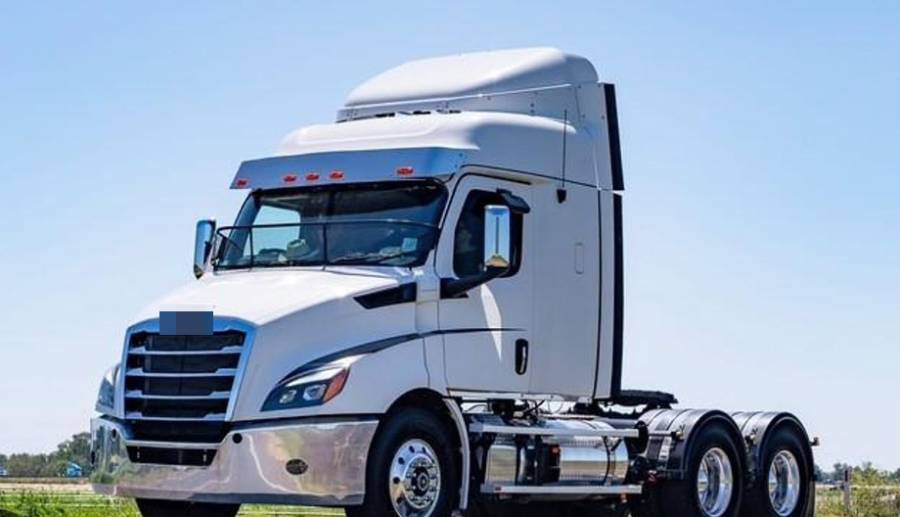
Freightliner Cascadia coolant temperature high warnings indicate that the engine cooling system is detecting excessive coolant temperature, which can lead to engine overheating, reduced performance, and serious engine damage if the problem is not addressed. The most common causes include low coolant levels, a faulty thermostat, a clogged radiator, a malfunctioning water pump, and cooling fan problems. A defective coolant temperature sensor can also trigger an inaccurate warning even when the engine is operating within its normal temperature range.
The Freightliner Cascadia uses a liquid cooling system to regulate engine temperature under different driving conditions. Engines such as the Detroit DD13, DD15, and DD16 generate substantial heat during heavy hauling, uphill driving, and prolonged operation. When coolant circulation or heat dissipation becomes insufficient, engine temperature rises beyond its intended operating range. Severe overheating can damage cylinder head gaskets, engine components, and other parts of the cooling system.
Drivers should respond promptly to a high coolant temperature warning by following the vehicle’s warning instructions and stopping safely when required. Continuing to drive with a severely overheating engine increases the risk of costly mechanical damage. This guide explains normal coolant temperature ranges, common overheating causes, diagnostic procedures, repair options, and preventive maintenance practices for the Freightliner Cascadia.
What Does High Coolant Temperature Mean on a Freightliner Cascadia?
High coolant temperature on a Freightliner Cascadia means the engine coolant has exceeded its intended operating range or the engine control system has detected an abnormal temperature reading. The cooling system regulates engine heat by circulating coolant through the engine, radiator, and thermostat-controlled passages. When heat production exceeds the system’s ability to remove heat, coolant temperature rises and may trigger a dashboard warning.
The Freightliner Cascadia cooling system relies on several components to maintain stable engine temperatures. The water pump circulates coolant through the engine, while the thermostat regulates coolant flow based on temperature. The radiator transfers heat from the coolant to the surrounding air, and the cooling fan increases airflow when additional cooling is required. A failure in any of these components can reduce cooling efficiency and cause engine overheating, particularly during heavy hauling or prolonged uphill driving.
High coolant temperature does not always indicate an actual overheating engine. A faulty engine coolant temperature sensor, damaged wiring, or an electrical communication problem can produce inaccurate temperature readings. Technicians can distinguish a sensor fault from genuine overheating by comparing electronic temperature readings with independent measurements and checking for related diagnostic trouble codes.
Persistent engine overheating can damage cylinder head gaskets, distort engine components, and accelerate the deterioration of coolant hoses and seals. Freightliner Cascadia models equipped with Detroit diesel engines use engine protection strategies that may reduce engine power or initiate a shutdown sequence when critical operating conditions are detected. The exact response depends on the engine configuration, fault severity, and programmed protection settings.
What Is the Normal Coolant Temperature for a Freightliner Cascadia?
The normal coolant temperature for a Freightliner Cascadia equipped with a Detroit DD15 engine is generally around 180–205°F (82–96°C) during typical operating conditions. However, the actual temperature varies with engine configuration, thermostat calibration, ambient temperature, vehicle load, and driving conditions. The applicable Detroit engine documentation should be used to confirm the normal operating range and warning thresholds for a specific truck.
Coolant temperature increases as engine load rises because combustion generates additional heat that must be transferred through the cooling system. During uphill driving or heavy hauling, the engine burns more fuel to produce the required torque, increasing heat transfer to the coolant. The thermostat, radiator, and cooling fan work together to manage this additional thermal load. A temporary temperature increase under heavy load does not necessarily indicate a cooling system malfunction.
A Freightliner Cascadia may display a high coolant temperature warning when the engine reaches a calibrated temperature threshold. Warning activation points are not identical across all Cascadia model years and Detroit engine configurations. The dashboard warning level, engine fault codes, and manufacturer specifications provide a more reliable basis for determining whether a temperature reading requires immediate action than a single universal temperature limit.
Engine overheating becomes a serious concern when coolant temperature continues rising, a high-temperature warning remains active, or the vehicle displays a stop-engine warning. Drivers should follow the vehicle’s warning instructions, reduce exposure to unsafe driving conditions, and stop in a safe location when required. The cooling system must be allowed to cool before inspecting the coolant reservoir or opening any pressurized components, because hot coolant and steam can cause severe burns.
What Causes High Coolant Temperature in a Freightliner Cascadia?
High coolant temperature in a Freightliner Cascadia is primarily caused by low coolant levels, a faulty thermostat, a clogged radiator, a failing water pump, or a malfunctioning cooling fan. These problems interfere with coolant circulation, heat transfer, or airflow through the cooling system. The resulting temperature increase becomes more noticeable during heavy hauling, uphill driving, and extended engine operation.
The Detroit DD13, DD15, and DD16 engines depend on continuous coolant circulation to transfer combustion heat away from critical engine components. When coolant flow decreases or the radiator cannot dissipate heat efficiently, engine temperature rises. Identifying the specific failure requires examining coolant levels, temperature behavior, component operation, and related diagnostic trouble codes.
Can Low Coolant Cause a Freightliner Cascadia to Overheat?
Low coolant levels can cause a Freightliner Cascadia to overheat by reducing the amount of fluid available to absorb and transfer engine heat. Coolant circulates through passages in the engine block and cylinder head, carrying heat to the radiator. When coolant volume drops below the required level, air can enter the cooling circuit, interrupting circulation and creating localized hot spots around critical engine components.
Coolant loss commonly results from leaking radiator hoses, damaged connections, a failing water pump seal, radiator damage, or a defective pressure cap. Internal engine problems, including cylinder head gasket failures, can also cause coolant loss without an obvious external leak. Typical warning signs include a declining coolant reservoir level, visible coolant residue, recurring low-coolant warnings, and increasing engine temperature under load.
Drivers should inspect the coolant reservoir only after the engine has cooled and the system can be checked safely. Coolant levels should be evaluated against the manufacturer’s cold-fill markings. Repeated coolant loss requires a cooling system pressure test and inspection of the source of leakage rather than repeatedly adding coolant without identifying the underlying problem.
Can a Faulty Thermostat Cause High Coolant Temperature?
A faulty thermostat can cause high coolant temperature when it remains closed or fails to open sufficiently, restricting coolant circulation through the radiator. The thermostat regulates coolant flow according to engine temperature, allowing the engine to warm up efficiently while providing additional radiator flow as operating temperature increases.
When the thermostat becomes stuck closed, heated coolant cannot circulate through the radiator at the required rate. Engine temperature may rise rapidly even when the coolant reservoir is full and the cooling fan operates correctly. A thermostat that opens only partially can produce a less obvious problem, allowing acceptable temperatures during light driving but insufficient cooling during heavy engine loads.
Thermostat failures can result from mechanical wear, corrosion, or deposits that interfere with valve movement. Technicians diagnose the problem by examining temperature changes across the cooling circuit and verifying thermostat operation according to the applicable Detroit engine service procedure. Replacing the thermostat is appropriate when testing confirms that it no longer regulates coolant flow correctly.
Can a Clogged Radiator Cause Engine Overheating?
A clogged radiator can cause Freightliner Cascadia engine overheating by restricting coolant flow or reducing heat transfer to the surrounding air. The radiator removes engine heat through a network of coolant passages and cooling fins. Efficient operation requires unrestricted internal coolant circulation and adequate external airflow.
External radiator blockage occurs when road debris, dirt, insects, and other contaminants accumulate across the cooling surfaces. These materials restrict airflow and reduce the radiator’s ability to release heat. Internal restrictions can develop from corrosion, sediment, or incompatible coolant mixtures that produce deposits within the cooling passages.
A partially restricted radiator may provide enough cooling during idling or light driving but struggle when the engine operates under heavy loads. Technicians can inspect the radiator and surrounding heat exchangers for airflow restrictions, examine coolant condition, and evaluate temperature differences across the radiator. Cleaning external surfaces using manufacturer-approved procedures can restore airflow, while severe internal restrictions may require professional servicing or radiator replacement.
Can a Bad Water Pump Cause High Coolant Temperature?
A failing water pump can cause high coolant temperature by reducing coolant circulation between the engine and radiator. The water pump maintains coolant movement through the engine cooling circuit, allowing heat generated during combustion to reach the radiator for dissipation.
Water pump problems include damaged impellers, worn bearings, leaking seals, and drive-related failures. A damaged impeller can reduce coolant flow even when the pump continues rotating. Bearing or seal deterioration may produce coolant leakage, abnormal noise, or visible residue near the pump housing. However, not every water pump failure produces an external leak.
Insufficient coolant circulation becomes particularly problematic during uphill driving and heavy hauling because the engine generates more heat than the reduced coolant flow can effectively remove. Technicians should inspect the pump for leakage, mechanical damage, abnormal shaft movement, and drive-system problems using the engine manufacturer’s diagnostic procedures. Water pump replacement should follow confirmation of a mechanical or circulation-related failure.
Can a Cooling Fan Malfunction Cause Engine Overheating?
A malfunctioning cooling fan can cause Freightliner Cascadia overheating by reducing airflow through the radiator when additional engine cooling is required. The cooling fan supports heat dissipation when natural airflow is insufficient, particularly during low-speed driving, prolonged idling, and high-load operation.
Cooling fan problems can involve a defective fan clutch, damaged fan blades, faulty control components, or electrical and pneumatic faults, depending on the truck’s configuration. A fan that fails to engage when commanded can prevent the radiator from removing enough heat. Conversely, a fan that remains engaged unnecessarily can increase noise and parasitic engine load without necessarily causing overheating.
Fan-related overheating may become more noticeable during slow traffic, extended idling, or uphill operation at reduced vehicle speeds. Technicians can investigate the problem by comparing commanded fan operation with actual fan response, inspecting the fan drive system, and checking related fault codes. Because heavy-duty cooling fans can engage automatically, physical inspections must follow appropriate engine shutdown and safety procedures.
A Freightliner Cascadia experiencing high coolant temperature should undergo a systematic cooling system inspection before components are replaced. Low coolant, thermostat restrictions, radiator blockage, water pump failures, and cooling fan malfunctions can produce similar temperature warnings, but each requires a different corrective action. Confirming the underlying cause prevents unnecessary repairs and reduces the risk of repeated overheating.
What Should You Do When a Freightliner Cascadia Shows a High Coolant Temperature Warning?
When a Freightliner Cascadia displays a high coolant temperature warning, drivers should reduce engine load, assess the warning severity, and stop in a safe location if the temperature continues rising or a stop-engine warning appears. Continuing to operate an overheating diesel engine can damage cylinder head gaskets, pistons, cylinder liners, and other critical components. The appropriate response depends on the dashboard warning, engine protection settings, and actual operating conditions.
A high coolant temperature warning indicates that the engine control system has detected a temperature condition requiring attention. Drivers should avoid hard acceleration, steep climbs, and unnecessary engine load while preparing to stop safely. If the dashboard displays a red stop-engine warning, drivers should follow the vehicle’s shutdown instructions rather than attempting to complete the trip. Detroit engines may activate power derating or engine shutdown protection when operating conditions exceed calibrated limits.
After stopping, drivers should secure the vehicle, apply the parking brake, and follow the applicable Freightliner and Detroit shutdown procedures. Never remove the coolant reservoir pressure cap while the cooling system is hot or pressurized. Hot coolant can escape suddenly and cause severe burns. Visible steam, coolant discharge, or rapidly increasing temperature indicates a potentially serious cooling system failure that requires immediate attention.
Once the engine has cooled sufficiently, drivers can inspect the coolant reservoir level, visible hoses, and surrounding components for obvious leaks or damage. A low coolant level may indicate an external leak, while a normal reservoir level does not eliminate thermostat, radiator, water pump, or cooling fan problems. Drivers should not restart or continue operating the truck when severe overheating, major coolant loss, or an unresolved stop-engine condition is present.
Professional assistance is necessary when the warning persists, coolant loss continues, or the engine shows signs of mechanical damage. A heavy-duty truck technician can examine fault codes, verify coolant circulation, and identify the defective component before additional engine damage occurs.
How Do You Diagnose High Coolant Temperature on a Freightliner Cascadia?
Diagnosing high coolant temperature on a Freightliner Cascadia requires checking coolant level, inspecting the cooling system for leaks, evaluating radiator airflow, verifying cooling fan operation, and reviewing engine temperature sensor data. These checks help determine whether the engine is genuinely overheating or the warning results from inaccurate temperature measurements. A systematic diagnostic process also prevents unnecessary replacement of functioning cooling system components.
The first inspection focuses on the coolant reservoir and visible cooling system connections. With the engine completely cooled, technicians check whether the coolant level falls within the manufacturer’s specified range. They examine radiator hoses, hose clamps, coolant lines, the radiator, and water pump housing for leakage or dried coolant deposits. When external leaks are not visible, a cooling system pressure test can help identify leaks that occur only when the system is pressurized. Pressure testing must follow the specified procedure and pressure limit for the particular cooling system.
The second inspection evaluates radiator condition and coolant circulation. Technicians examine the radiator and surrounding heat exchangers for dirt, debris, damaged fins, or restricted airflow. They also assess whether coolant temperature changes correspond to thermostat operation and engine load. An infrared thermometer or suitable temperature measurement equipment can support the diagnosis, although external surface temperatures do not directly represent internal coolant temperature. Restricted coolant flow, poor heat transfer, and inadequate airflow can produce similar overheating symptoms.
Cooling fan operation is another important diagnostic factor. Depending on the Cascadia configuration, the cooling fan may use an electronically controlled or pneumatically actuated fan drive system. Technicians can use compatible diagnostic software to compare the engine control module’s fan command with actual fan operation. A fan that does not respond when commanded may indicate a fan clutch, actuator, control circuit, or air supply problem. Fan inspections must be performed using approved safety procedures because the fan can engage automatically.
The engine coolant temperature sensor and its electrical circuit should also be evaluated. A defective sensor, corroded connector, damaged wiring harness, or circuit fault can produce readings that do not match actual engine conditions. Technicians can compare live coolant temperature data with independent measurements and check whether the sensor reading changes plausibly as the engine warms. An implausible reading immediately after a cold start, for example, may indicate a measurement problem rather than genuine overheating.
Diagnostic trouble codes provide additional evidence about cooling system faults. Freightliner Cascadia trucks equipped with Detroit engines can be evaluated using compatible diagnostic equipment, such as Detroit Diesel DiagnosticLink where supported. Technicians should review active and stored fault codes, associated operating data, and the manufacturer’s troubleshooting procedures. A high coolant temperature fault confirms that the monitoring system detected an abnormal condition, but it does not independently identify the defective component.
A complete diagnosis should establish whether the overheating results from insufficient coolant, restricted circulation, inadequate heat rejection, or incorrect sensor information. Repair decisions should follow the confirmed failure rather than the dashboard warning alone. After the underlying problem is corrected, technicians should verify coolant level, system integrity, temperature stability, and proper fan operation before returning the truck to service.
How Do You Fix High Coolant Temperature on a Freightliner Cascadia?
Fixing high coolant temperature on a Freightliner Cascadia requires repairing the cooling system component responsible for insufficient coolant circulation, restricted heat transfer, or coolant loss. The appropriate repair depends on whether the problem originates from a coolant leak, faulty thermostat, damaged water pump, clogged radiator, or malfunctioning cooling fan. Technicians should confirm the underlying cause before replacing components because several cooling system failures produce similar overheating symptoms.
Cooling system repairs must follow the specifications for the truck’s model year and engine configuration. Detroit DD13, DD15, and DD16 engines can have different component arrangements, coolant requirements, and service procedures. After completing a repair, technicians must verify coolant level, system pressure integrity, cooling fan operation, and stable engine temperature under appropriate operating conditions.
How Do You Fix Low Coolant Levels and Coolant Leaks?
Low coolant levels are corrected by identifying and repairing the source of coolant loss, then refilling the cooling system with the manufacturer-approved coolant. Adding coolant without fixing an active leak provides only a temporary solution because the system will continue losing fluid during engine operation. Common leakage points include radiator hoses, hose connections, the coolant reservoir, radiator seams, and water pump seals.
Technicians begin by inspecting the cooling system after the engine has cooled and the system is no longer pressurized. Damaged hoses, deteriorated seals, and leaking connections require repair or replacement. A cooling system pressure test can reveal leaks that are difficult to identify visually. If coolant disappears without visible external leakage, further inspection may be necessary to investigate internal coolant loss, including possible cylinder head gasket damage or other engine-related failures.
After repairing the leak, technicians refill the system using coolant that meets the applicable Freightliner and Detroit specifications. Coolant selection must be based on the required formulation and compatibility rather than color alone. The cooling system must also be filled and deaerated according to the engine manufacturer’s procedure because trapped air can interrupt coolant circulation and cause localized overheating.
The repair is complete only after the coolant level remains stable, no additional leakage is detected, and the engine maintains its specified operating temperature. Repeated coolant loss after a repair indicates that another leak or an unresolved internal cooling system problem may still be present.
How Do You Repair a Faulty Thermostat or Water Pump?
A faulty thermostat or water pump is repaired by replacing the defective component after confirming that it restricts coolant circulation or fails to operate correctly. Both components control essential aspects of coolant movement, but they fail through different mechanisms. A thermostat regulates coolant flow according to temperature, while the water pump provides the circulation needed to transfer heat from the engine to the radiator.
A thermostat that remains closed or opens insufficiently can prevent adequate coolant flow through the radiator. Technicians verify thermostat operation using the appropriate temperature measurements and manufacturer-approved diagnostic procedures. Once a malfunction is confirmed, the thermostat and any required seals or gaskets are replaced with components compatible with the specific Detroit engine. The cooling system must then be refilled and checked for proper temperature regulation.
Water pump repairs require an inspection of the pump housing, shaft, bearings, seals, impeller, and associated drive components. Coolant leakage near the pump, abnormal bearing noise, mechanical looseness, or confirmed circulation problems can indicate pump failure. However, overheating alone does not establish that the water pump is defective. A thermostat restriction, low coolant level, or radiator problem can produce similar symptoms.
When water pump replacement is necessary, technicians follow the applicable Detroit service procedure for removing the defective pump, preparing mounting surfaces, installing replacement seals, and securing the new component. Correct installation is important because improper sealing or drive-system alignment can cause additional coolant leakage or mechanical failure.
After thermostat or water pump replacement, the cooling system must be filled, deaerated, and inspected for leaks. Engine temperature should increase normally during warm-up and stabilize within the specified operating range. Continued overheating after component replacement requires further diagnosis rather than additional parts replacement without supporting evidence.
How Do You Fix Radiator and Cooling Fan Problems?
Radiator and cooling fan problems are corrected by restoring unrestricted airflow, adequate coolant heat transfer, and proper fan engagement. The radiator transfers heat from engine coolant to the surrounding air, while the cooling fan increases airflow when vehicle speed and natural ventilation cannot provide sufficient cooling. Failure of either component can cause coolant temperature to rise, especially during heavy hauling, slow-speed driving, and prolonged idling.
External radiator blockage is addressed by removing accumulated dirt, insects, road debris, and other contaminants from the cooling surfaces. Technicians should inspect the radiator and adjacent heat exchangers because debris trapped between these components can restrict airflow even when the visible radiator surface appears clean. Cleaning must follow manufacturer-approved methods to avoid bending cooling fins or damaging the radiator core.
Internal radiator restrictions require a different repair approach. Corrosion, sediment, and coolant contamination can obstruct coolant passages and reduce heat transfer. Technicians evaluate coolant condition, circulation, and radiator temperature distribution to determine whether professional cleaning or replacement is necessary. A radiator with extensive corrosion, damaged passages, or persistent internal restrictions may require replacement rather than cleaning.
Cooling fan repairs begin with verifying whether the fan engages when commanded by the engine control system. A defective fan clutch, actuator, control circuit, or pneumatic component can prevent proper fan operation, depending on the Cascadia configuration. Technicians use compatible diagnostic equipment to evaluate fan commands, inspect related connections, and identify mechanical or control-system failures. Replacing the fan clutch without verifying the control system can leave the original overheating problem unresolved.
Once radiator or cooling fan repairs are complete, technicians should confirm that airflow is unobstructed, the fan responds correctly, and coolant temperature remains stable during appropriate operating tests. The cooling system should also be inspected for leaks and abnormal pressure behavior. Successful repair requires resolving the original overheating condition rather than simply clearing dashboard warnings or diagnostic trouble codes.
Why Does a Freightliner Cascadia Overheat Only Under Heavy Loads?
A Freightliner Cascadia can overheat under heavy loads because increased engine power generates more heat than a weakened cooling system can dissipate. Heavy hauling, steep uphill driving, and sustained high engine output increase combustion heat, placing greater demands on coolant circulation, radiator efficiency, and cooling fan performance. A cooling system that maintains normal temperatures during light driving may struggle when engine load increases.
Detroit DD13, DD15, and DD16 engines generate additional heat as fuel consumption and engine torque increase. During uphill driving, the engine must produce enough power to move the truck and its cargo against gravity. This increases the amount of heat transferred to the engine block, cylinder head, and coolant. The cooling system compensates through increased coolant circulation and heat rejection, supported by thermostat regulation and cooling fan operation.
A partially clogged radiator is one reason coolant temperature may rise during heavy hauling but return to normal under lighter loads. Restricted radiator airflow or internal coolant passages reduce the system’s available cooling capacity. At low engine loads, the remaining capacity may be sufficient to maintain stable temperatures. When engine output increases, however, the radiator cannot remove heat quickly enough, causing coolant temperature to rise progressively.
Cooling fan problems can produce similar symptoms, particularly when climbing hills at reduced vehicle speeds. Lower road speed reduces natural airflow through the radiator, increasing the cooling fan’s importance. A fan clutch that fails to engage properly can allow coolant temperature to increase even when the water pump and thermostat are functioning correctly. Restricted airflow through the charge air cooler and radiator assembly can further reduce cooling performance.
Coolant temperature returning to normal after reducing engine load does not necessarily mean the cooling system is functioning correctly. It may indicate that the system has enough cooling capacity for light operation but insufficient capacity for demanding conditions. Technicians should examine radiator restrictions, cooling fan response, coolant circulation, and engine operating data to determine why overheating occurs specifically under load.
Read more: Freightliner M2 AC Problems: Causes and Fixes
What Type of Coolant Does a Freightliner Cascadia Use?
A Freightliner Cascadia requires engine coolant that meets the specifications approved for its particular engine, model year, and cooling system configuration. Many Cascadia trucks equipped with Detroit diesel engines use heavy-duty extended-life coolant formulations, but the correct coolant specification must be verified using the applicable Detroit maintenance documentation and vehicle service information. Coolant color alone cannot establish whether a product is compatible with the engine.
Heavy-duty diesel engine coolant contains water, glycol, and corrosion-inhibiting additives designed to protect the cooling system while transferring engine heat. Glycol provides freeze protection and raises the coolant mixture’s boiling point, while corrosion inhibitors help protect metal surfaces, seals, and cooling system passages. The coolant must also meet the engine manufacturer’s requirements for material compatibility and long-term protection.
A 50/50 mixture of approved antifreeze concentrate and suitable water is a common coolant concentration for heavy-duty diesel engines. However, the required mixture depends on the approved coolant formulation, environmental conditions, and manufacturer specifications. Using an incorrect concentration can reduce freeze protection or heat-transfer performance. Premixed coolant should not be diluted unless the product instructions and engine specifications permit it.
Mixing incompatible coolant formulations can reduce corrosion protection or cause additive-related problems. Some coolant technologies use different inhibitor packages that are not intended to be combined. Incompatible mixtures may contribute to deposits, contamination, or reduced coolant service life. Drivers should therefore verify coolant specifications before topping off the reservoir, especially when the existing coolant type is unknown.
Coolant replacement intervals also depend on the formulation and Detroit maintenance requirements. Extended-life coolant is designed for longer service intervals than some conventional formulations, but its condition still requires inspection and any specified testing. A coolant maintenance program should include checking concentration, contamination, coolant level, and the condition of hoses and cooling system components.
How Can You Prevent High Coolant Temperature in a Freightliner Cascadia?
Preventing high coolant temperature in a Freightliner Cascadia requires maintaining the correct coolant level, keeping the radiator and cooling system clean, inspecting critical components, and addressing early warning signs before overheating occurs. Preventive maintenance helps preserve the cooling system’s ability to transfer engine heat during heavy hauling, prolonged idling, and demanding road conditions.
Coolant level inspection is one of the most important preventive maintenance practices. Drivers should check the coolant reservoir during pre-trip inspections when the engine is cold and the vehicle is parked safely. The level should remain within the manufacturer’s specified markings. A recurring decrease in coolant level indicates a potential leak that requires investigation. Adding coolant repeatedly without locating the source of fluid loss can allow a minor problem to develop into a serious overheating failure.
Radiator cleanliness directly affects cooling efficiency. Dirt, road debris, insects, and other contaminants can accumulate on radiator fins and adjacent heat exchangers, restricting airflow. Trucks operating in dusty environments or construction areas may require more frequent inspections because airborne debris can accumulate rapidly. Cleaning should follow the manufacturer’s recommendations to prevent damage to delicate cooling fins and surrounding components.
Cooling system hoses, connections, and the water pump should be inspected for deterioration, leakage, and mechanical damage. Rubber hoses can weaken from prolonged heat exposure, vibration, and aging. Damaged hoses or loose connections can allow coolant to escape when system pressure increases. Water pump seal leakage, unusual bearing noise, or visible coolant residue may indicate developing mechanical problems that should be investigated before pump failure occurs.
Thermostat and cooling fan operation also affect long-term temperature stability. A thermostat that does not open correctly can restrict coolant circulation, while a malfunctioning fan clutch can reduce airflow through the radiator. Technicians should investigate unusual temperature fluctuations, delayed fan engagement, and recurring high-temperature warnings. Cooling fan testing should follow approved procedures because the fan may engage automatically during engine operation.
Coolant quality must be maintained according to the applicable Detroit engine maintenance schedule. Incorrect coolant concentration, contamination, or depleted corrosion protection can reduce cooling system reliability. Scheduled coolant inspections and testing help identify deterioration before deposits or corrosion interfere with coolant circulation. Maintenance records should document coolant replacement, system repairs, recurring leaks, and previous overheating events.
Drivers can also reduce overheating risks by monitoring engine temperature during demanding operating conditions. Heavy loads, long uphill grades, high ambient temperatures, and reduced vehicle speed place additional demands on the cooling system. A temperature increase that repeatedly occurs under the same conditions should be investigated rather than treated as normal operation without verification.
A properly maintained Freightliner Cascadia cooling system should regulate engine temperature within the limits specified for its engine and operating conditions. Consistent coolant inspections, radiator maintenance, component testing, and timely repairs reduce the likelihood of unexpected overheating and help protect the engine from avoidable thermal damage.