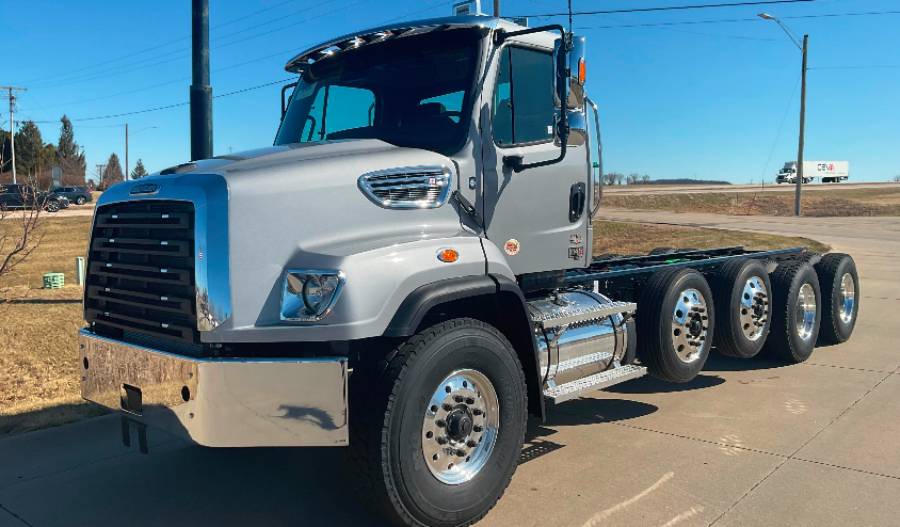
Freightliner DEF pump problems can cause low Diesel Exhaust Fluid (DEF) pressure, dashboard warning lights, SCR system faults, and engine derate. These problems occur when the DEF supply system cannot deliver the required fluid pressure or flow to the exhaust aftertreatment system. Common causes include contaminated DEF, crystallized deposits, electrical failures, damaged wiring, and restrictions in DEF lines.
The DEF pump supplies fluid to the dosing system, which injects DEF into the exhaust stream to help the Selective Catalytic Reduction (SCR) system reduce nitrogen oxide (NOx) emissions. When the pump fails to operate correctly, the system may detect insufficient DEF delivery and trigger diagnostic trouble codes or engine power restrictions. However, a DEF warning does not automatically indicate a failed pump. Faulty sensors, leaking lines, and malfunctioning dosing components can produce similar symptoms.
Diagnosing Freightliner DEF pump problems requires checking warning indicators, reading fault codes, inspecting electrical connections, and testing DEF pressure against the manufacturer’s specifications. This guide explains the symptoms, causes, diagnostic procedures, repair options, replacement costs, and preventive maintenance practices for Freightliner trucks, including Cascadia and M2 models.
What Are the Symptoms of Freightliner DEF Pump Problems?
The main symptoms of Freightliner DEF pump problems include DEF warning lights, low DEF pressure faults, check engine lights, engine derate, and failed DEF dosing system tests. These symptoms appear when the aftertreatment control system detects abnormal DEF delivery, pressure, or electrical operation. However, they can also result from faulty sensors, damaged wiring, or other SCR system components.
DEF warning lights and check engine lights are common indicators of aftertreatment system problems. A Freightliner may display a DEF system warning, illuminate the malfunction indicator lamp, or store diagnostic trouble codes when the system detects a DEF delivery fault. The specific warning depends on the truck’s model year, engine configuration, and fault severity. A warning light alone cannot confirm that the DEF pump has failed.
Low DEF pressure is a more direct indication of a possible pump or supply system malfunction. The pump must establish and maintain the pressure required for proper DEF dosing. When actual pressure remains below the manufacturer’s specified range, the control system may record a pressure-related fault. A worn pump, restricted DEF line, leaking connection, or malfunctioning pressure sensor can produce this condition. Diagnostic testing is necessary to identify which component is responsible.
Engine derate can occur when a DEF delivery problem prevents the SCR system from operating correctly. Freightliner trucks use emissions-related inducement strategies that may reduce available engine power or limit vehicle speed when certain aftertreatment faults remain unresolved. The severity and timing of these restrictions depend on the applicable engine calibration and emissions regulations. A DEF pump malfunction is one possible cause, but DEF quality faults, dosing valve problems, and other SCR failures can trigger similar restrictions.
Failed DEF pump activation or pressure tests provide additional evidence of a malfunction. During a diagnostic test, the pump may fail to respond to an activation command, build insufficient pressure, or lose pressure unexpectedly. These results help technicians distinguish pump failure from electrical supply problems, fluid restrictions, and system leaks.
What Causes Freightliner DEF Pump Failure?
Freightliner DEF pump problems result from five main fault categories: contaminated DEF, crystallized deposits, electrical failures, restricted DEF lines, and internal pump damage. These conditions can prevent the pump from operating, reduce fluid delivery, or cause the DEF system to report abnormal pressure. Identifying the underlying cause is essential because replacing the pump will not correct problems originating elsewhere in the system.
How Does Contaminated DEF Affect the Pump?
Contaminated DEF can damage a Freightliner DEF pump by introducing foreign materials that interfere with fluid movement, internal components, and the DEF supply system. DEF is a precisely formulated solution containing 32.5% high-purity urea and 67.5% purified water. Contamination from diesel fuel, lubricants, dirt, or unsuitable storage containers can compromise its quality and affect system operation.
Solid particles can obstruct pump passages, filters, and dosing components. Petroleum-based contamination can damage materials that are designed for contact with DEF rather than fuel or oil. Contaminated fluid may also cause SCR performance faults even when the pump itself remains functional.
For example, accidentally adding diesel fuel to the DEF tank can contaminate the supply system and require extensive inspection and component servicing. Technicians should identify the contaminant and follow the manufacturer’s service procedures before deciding whether the pump must be replaced.
Can DEF Crystallization Cause Pump Problems?
DEF crystallization can cause Freightliner DEF pump problems when solid urea deposits accumulate in fluid passages, connectors, or other DEF system components. These deposits can form when DEF leaks or remains exposed to air and its water content evaporates. Excessive buildup may restrict fluid flow, interfere with connections, and contribute to pressure-related faults.
White crystalline deposits around DEF fittings, hoses, and pump connections are visible signs of dried DEF. Small deposits at an external connection do not necessarily indicate internal pump damage. However, repeated leakage or substantial buildup can indicate a sealing problem that requires correction.
DEF crystallization must also be distinguished from freezing. DEF normally freezes at approximately 12°F (-11°C). Freightliner DEF systems designed for cold-weather operation use heating and thawing strategies to restore fluid delivery. Frozen DEF does not automatically mean the pump is defective.
For example, a truck parked overnight in freezing temperatures may temporarily have frozen DEF in its tank or lines. A properly functioning system should manage thawing according to its operating strategy. Persistent pressure faults after the system has completed its required thawing process warrant further diagnosis.
How Do Electrical Faults Affect a Freightliner DEF Pump?
Electrical faults can prevent a Freightliner DEF pump from starting, operating consistently, or responding to commands from the aftertreatment control system. Common electrical problems include corroded connectors, damaged wiring, inadequate voltage supply, poor ground connections, and internal motor or control circuit failures.
The pump depends on its electrical connections and control signals to perform the required operating functions. An open circuit can interrupt operation, while excessive resistance or intermittent connections can cause inconsistent performance. Depending on the system design, the controller may detect an electrical fault or a failure to achieve the commanded DEF pressure.
For example, corrosion inside a pump connector can interrupt electrical continuity even when the pump assembly is mechanically functional. Replacing the pump without repairing the connector may leave the original problem unresolved.
Electrical diagnosis should include inspection of the wiring harness, connectors, power supply, and ground circuits according to the appropriate Freightliner and engine manufacturer’s service information. Pump replacement should follow confirmation of an internal failure rather than an assumption based on warning lights alone.
Restricted DEF lines and internal pump damage are two additional causes of delivery problems. A kinked hose, blocked supply passage, damaged seal, or leaking fitting can prevent the system from maintaining the required pressure. Internal pump wear or mechanical failure can also reduce pumping performance. Technicians distinguish these conditions through visual inspection, fault-code analysis, pressure testing, and manufacturer-approved diagnostic procedures.
What Fault Codes Are Associated With Freightliner DEF Pump Problems?
Freightliner DEF pump problems can trigger diagnostic trouble codes related to DEF pressure, pump electrical operation, and reductant delivery performance. These codes help technicians identify the affected circuit or system function before performing physical inspections. The exact codes depend on the truck’s engine, model year, aftertreatment configuration, and diagnostic software.
SPN 4334 is associated with DEF pressure monitoring on applicable heavy-duty diesel aftertreatment systems. When paired with an appropriate Failure Mode Identifier (FMI), it can indicate that DEF pressure is outside the expected operating range. A low-pressure condition may result from a defective pump, restricted fluid supply, leaking DEF line, or pressure-sensing problem. The SPN and FMI must be interpreted together using the engine manufacturer’s diagnostic documentation.
SPN 5394 is associated with DEF dosing system performance on certain engine platforms. A fault involving reductant dosing does not automatically establish that the DEF pump has failed. Dosing valve restrictions, inadequate supply pressure, electrical problems, and other aftertreatment faults may affect the system’s ability to deliver the commanded DEF quantity.
Other diagnostic codes may identify pump motor circuits, power supply faults, communication problems, or SCR system performance issues. Because Detroit Diesel and Cummins engines use different diagnostic implementations, technicians must verify the complete fault description rather than relying on an SPN number alone.
Freightliner trucks equipped with Detroit engines can be diagnosed using Detroit DiagnosticLink, while applicable Cummins-powered trucks use Cummins INSITE. These tools allow qualified technicians to retrieve active and inactive fault codes, review operating data, and perform supported aftertreatment diagnostic tests.
An active pressure-related code provides a starting point for troubleshooting, not a final diagnosis. For example, replacing the pump based only on a low-pressure code may fail to resolve the problem when the actual cause is a leaking DEF connection or damaged wiring harness.
How Do You Troubleshoot Freightliner DEF Pump Problems?
Troubleshooting Freightliner DEF pump problems requires five main checks: retrieving fault codes, inspecting DEF quality and supply, checking electrical connections, testing DEF pressure, and verifying pump operation. Following this sequence helps isolate the defective component before replacing expensive parts.
Start by retrieving active and stored diagnostic trouble codes. Connect a compatible diagnostic tool, identify the engine and aftertreatment configuration, and record the complete SPN/FMI combinations. Review available freeze-frame information and operating conditions to determine when the fault occurred. Multiple related codes may indicate a shared electrical or supply problem rather than separate component failures.
Next, inspect the DEF tank, fluid condition, supply lines, and visible connections. DEF should meet ISO 22241 requirements and remain free from fuel, oil, dirt, and other contaminants. Check the tank for an adequate fluid level and examine accessible lines for leaks, kinks, damage, or crystalline deposits. A DEF refractometer designed for diesel exhaust fluid can help evaluate urea concentration, although concentration testing alone cannot identify every type of contamination.
For example, a Freightliner with an active low DEF pressure fault and visible fluid leakage near a supply-line fitting should have the leaking connection investigated before the pump is condemned. A functioning pump cannot maintain the required pressure when the system has a significant leak.
How Do You Check DEF Pump Wiring and Connectors?
Checking Freightliner DEF pump wiring requires inspecting the harness, connector terminals, power supply, and ground circuits according to the manufacturer’s electrical specifications. Electrical failures can prevent pump activation even when its internal mechanical components remain operational.
Begin with a visual inspection of the pump connector and surrounding wiring. Look for corrosion, moisture intrusion, loose terminals, damaged insulation, and harness sections that contact sharp edges or hot components. Pay particular attention to wiring near the DEF tank and chassis, where road debris, vibration, and moisture can damage connections.
Use the appropriate wiring diagram to identify the pump’s electrical circuits. A digital multimeter can verify voltage and ground integrity when the manufacturer’s diagnostic procedure calls for these measurements. Voltage-drop testing under the specified operating conditions can help identify excessive resistance that a basic continuity check may miss.
Do not apply battery voltage directly to unidentified pump terminals. Some DEF pump assemblies contain electronic control components that require specific operating signals, and incorrect electrical testing can damage the assembly.
For example, a pump that fails to respond during an activation test may have a corroded ground connection rather than a failed motor. Repairing the electrical connection and repeating the diagnostic test can confirm whether the original malfunction has been corrected.
How Do You Test Freightliner DEF Pump Pressure?
Testing Freightliner DEF pump pressure requires a compatible diagnostic tool and the pressure-testing procedure specified for the truck’s aftertreatment system. The test determines whether the DEF supply system can achieve and maintain the commanded pressure under controlled conditions.
Connect the appropriate diagnostic software and locate the supported DEF pressure or pump activation test. Follow the manufacturer’s prerequisites, including any requirements for fluid temperature, DEF level, engine operating state, and system readiness. During the test, compare commanded pump operation with actual pressure readings and the specified acceptance criteria.
Low pressure during pump activation does not automatically indicate pump failure. A restricted supply line, leaking connection, faulty pressure sensor, or inadequate electrical supply can produce similar results. Pressure readings must therefore be interpreted alongside electrical test results and a physical inspection of the fluid delivery system.
Pressure that builds but falls outside the manufacturer’s allowable range may indicate leakage, an internal pump problem, or another fault in the pressure-control system. The correct interpretation depends on the system’s operating strategy and the specific test being performed.
For example, if the diagnostic tool commands pump operation but the reported pressure remains low, technicians should verify electrical operation, fluid supply, and pressure-sensor accuracy before replacing the pump.
DEF systems can retain pressure after operation. Follow the manufacturer’s depressurization and safety procedures before disconnecting any pressurized line or component.
How Do You Determine Whether the DEF Pump Needs Replacement?
A Freightliner DEF pump needs replacement when diagnostic testing confirms that the pump assembly cannot perform its required function and external causes have been ruled out. Relevant evidence includes confirmed internal electrical failure, mechanical damage, or inability to achieve the manufacturer’s specified pressure despite proper fluid supply and electrical operation.
The decision should be based on three diagnostic findings.
First, verify electrical integrity. Confirm that the pump receives the required power, ground, and control signals under the specified test conditions. Repair damaged wiring or connectors before evaluating the pump itself.
Second, verify the DEF supply system. Check for contamination, blocked passages, leaks, and other conditions that can prevent normal pressure generation. Correct these problems and repeat the relevant tests.
Third, evaluate pump performance. Use the manufacturer’s diagnostic procedure to determine whether the pump responds correctly and meets its operating specifications. A confirmed internal fault supports replacement when the affected component is not separately serviceable.
For example, a pump that receives the correct electrical inputs, has an unobstructed DEF supply, and repeatedly fails the manufacturer-approved pressure test is a stronger replacement candidate than a pump associated only with a dashboard warning.
After any corrective action, repeat the applicable diagnostic tests and verify that the original fault condition has been resolved. Clearing diagnostic codes without correcting the underlying failure does not constitute a successful repair.
How Do You Fix Freightliner DEF Pump Problems?
Fixing Freightliner DEF pump problems requires repairing the component responsible for the failure, which may involve electrical connections, DEF supply lines, contaminated fluid, or the pump assembly itself. The correct repair depends on diagnostic results because low DEF pressure and aftertreatment warnings do not always indicate a defective pump.
Electrical repairs involve correcting damaged wiring, corroded terminals, loose connectors, or faulty power and ground circuits. Technicians should inspect the pump wiring harness and repair damaged sections using manufacturer-approved procedures and compatible components. After restoring electrical integrity, repeat the pump activation test to confirm that the assembly responds correctly.
DEF supply restrictions and leaks require inspection of the fluid lines, fittings, seals, and applicable filtration components. Replace damaged hoses or fittings and address blockages according to the manufacturer’s service instructions. Crystalline deposits around a connection may indicate DEF leakage, so cleaning visible residue without repairing the leak will not prevent the problem from returning.
Contaminated DEF requires a different repair approach. If diesel fuel, oil, or other incompatible substances enter the DEF tank, stop using the contaminated fluid and follow the manufacturer’s contamination procedure. Depending on the contaminant and its distribution, repairs may require draining and cleaning the tank, replacing affected components, and flushing or servicing approved sections of the system. Simply adding fresh DEF does not reliably eliminate contamination.
When Should You Replace a Freightliner DEF Pump?
Replace a Freightliner DEF pump when manufacturer-approved diagnostic tests confirm internal electrical or mechanical failure that cannot be corrected through an authorized component-level repair. Replacement is appropriate when the pump fails to operate despite verified electrical inputs and proper DEF supply, or when its pressure performance remains outside specifications after external faults have been eliminated.
Before replacement, identify the truck’s model year, engine configuration, and correct pump assembly part number. Freightliner Cascadia and M2 trucks can use different aftertreatment configurations, so pump compatibility must be verified using the vehicle identification number and applicable parts information.
The replacement process generally involves safely depressurizing the DEF system, disconnecting the required electrical and fluid connections, removing the defective assembly, and installing the correct replacement component. Exact removal procedures, sealing requirements, and installation specifications depend on the vehicle and pump design.
After installation, technicians should perform any required priming or initialization procedures using compatible diagnostic software. The system must then be checked for leaks, electrical faults, and proper DEF pressure. Clear diagnostic codes only after completing the necessary repairs and follow the manufacturer’s verification procedure to confirm that the original fault does not return.
A successful repair restores the DEF supply system to its specified operating condition. Replacing the pump without confirming the underlying failure can result in unnecessary repair costs and recurring aftertreatment faults.
How Much Does It Cost to Replace a Freightliner DEF Pump?
Freightliner DEF pump replacement costs depend on the truck model, engine configuration, pump assembly, labor requirements, and diagnostic work. The total repair bill includes the replacement component, installation labor, and any additional repairs needed to restore normal DEF system operation. An exact estimate requires the vehicle identification number (VIN), the correct part number, and a quote from the repair facility.
Replacement pump pricing varies according to whether the truck requires a standalone pump, a pump module, or a larger integrated assembly. Original Equipment Manufacturer (OEM) components generally carry different pricing and warranty terms than aftermarket alternatives. Some assemblies also include components that are not supplied with a standalone replacement pump, making direct price comparisons misleading.
Labor costs depend on pump accessibility, the mounting location, and the procedures required for removal and installation. A pump mounted in an accessible location may require less labor than an assembly that requires additional components to be removed. Labor rates also vary between Freightliner dealerships, independent diesel repair shops, and mobile service providers.
Diagnostic fees and additional repairs can increase the total cost. Technicians may need to perform electrical testing, DEF pressure checks, system priming, or post-repair verification. Contaminated DEF, damaged wiring, and leaking supply lines can require separate repairs beyond pump replacement.
For example, replacing a confirmed defective pump is a different repair from replacing a pump and cleaning a DEF system contaminated with diesel fuel. The second job involves additional inspection, components, and labor.
OEM replacement pumps offer manufacturer-specified compatibility when selected for the correct vehicle configuration. Aftermarket pumps may provide an alternative, but their specifications, warranty coverage, and compatibility must be verified before installation. Choosing a replacement solely by price can result in incorrect fitment or recurring system faults.
Do Freightliner DEF Pump Problems Differ by Truck Model?
Freightliner DEF pump problems can differ between truck models because DEF system components, mounting locations, electronic controls, and diagnostic procedures vary by engine and aftertreatment configuration. Freightliner Cascadia and M2 trucks both use DEF systems on applicable SCR-equipped diesel engines, but their pump assemblies and service requirements are not necessarily interchangeable.
Freightliner Cascadia DEF pump problems may involve pressure faults, electrical malfunctions, contaminated DEF, or restricted fluid delivery. Cascadia trucks equipped with Detroit DD13, DD15, or DD16 engines use aftertreatment systems matched to their engine and emissions configuration. Technicians should identify the engine model and production year before selecting diagnostic procedures or replacement components.
For example, a Cascadia displaying a DEF pressure fault requires verification of the applicable Detroit aftertreatment system and diagnostic code. A pressure-related warning does not establish that every Cascadia model uses the same pump or experiences the same component failure.
Freightliner M2 DEF pump problems can produce similar symptoms, including aftertreatment warnings, abnormal DEF pressure, and engine power restrictions. However, M2 trucks are available with different diesel engine configurations, including certain Cummins applications. These differences affect diagnostic software, component locations, wiring diagrams, and replacement part selection.
A Cummins-powered Freightliner M2 may require Cummins INSITE for supported engine and aftertreatment diagnostics, while a Detroit-powered Freightliner generally uses Detroit DiagnosticLink for applicable functions. The correct software and test procedures depend on the installed engine and control system.
Model year and engine configuration are more important than the Freightliner model name alone when identifying the correct DEF pump. Emissions-system designs and service procedures can change between production years, even within the same truck series.
Before ordering a replacement pump, verify the VIN, engine serial number, emissions configuration, and OEM part number. These details help prevent incorrect component selection and ensure that diagnostic and repair procedures match the truck’s actual DEF system.
Can You Drive a Freightliner With a Bad DEF Pump?
A Freightliner with a bad DEF pump may remain drivable temporarily, but continued operation can trigger engine derate, vehicle speed restrictions, or other emissions-related inducements. The severity depends on the detected fault, engine calibration, and applicable emissions regulations. A truck that still operates normally may already have an active aftertreatment fault requiring immediate diagnosis.
Engine derate is one of the primary consequences of an unresolved DEF delivery problem. When the SCR system cannot receive the required DEF supply, the engine control system may activate an inducement strategy to address the emissions malfunction. Depending on the fault and applicable calibration, restrictions can progressively reduce available engine performance or vehicle speed. The warning sequence and operating limitations are not identical across all Freightliner models.
For example, a Freightliner Cascadia with an active DEF pressure fault may initially display an aftertreatment warning while retaining normal driving performance. If the underlying problem remains unresolved, the truck may enter a more restrictive operating condition. The exact progression must be determined from the applicable engine documentation and dashboard messages.
Stop driving when the truck displays a critical warning, experiences a severe power reduction, or cannot be operated safely. Move to a safe location and arrange professional diagnosis or roadside assistance. Continuing a trip without understanding the fault can increase the risk of an unexpected interruption, particularly during commercial hauling operations.
A malfunctioning DEF pump should be repaired rather than bypassed. Disabling DEF dosing, modifying emissions controls, or using software to defeat aftertreatment functions can violate emissions regulations and does not correct the underlying mechanical or electrical problem.
Read more: Freightliner Cascadia Losing Power When Accelerating
How Can You Prevent Freightliner DEF Pump Problems?
Preventing Freightliner DEF pump problems requires maintaining DEF quality, protecting the supply system from contamination, inspecting electrical connections, and addressing leaks before they affect pump operation. These practices reduce avoidable restrictions, corrosion, and fluid-related failures, although they cannot eliminate normal component wear or every electrical malfunction.
How Does DEF Quality Affect Pump Reliability?
DEF quality affects Freightliner DEF pump reliability because the supply system is designed to operate with fluid that meets ISO 22241 specifications. Standard DEF contains 32.5% high-purity urea and 67.5% purified water. Using contaminated or improperly formulated fluid can damage system components, obstruct fluid passages, and interfere with SCR operation.
Use DEF that meets ISO 22241 specifications and store it in clean, compatible containers. Keep filling equipment free from diesel fuel, engine oil, dirt, and other contaminants. Avoid transferring DEF through containers previously used for petroleum products because residual contamination can enter the tank and damage the supply system.
DEF storage conditions also affect fluid quality. Excessive heat accelerates degradation, while prolonged storage can reduce the remaining usable shelf life. Follow the DEF supplier’s storage instructions and avoid using fluid that is past its recommended storage period or shows signs of contamination.
For example, a fleet operator who uses dedicated DEF dispensing equipment and properly sealed storage containers reduces the risk of introducing foreign substances into multiple trucks. Consistent handling procedures are particularly important for fleets that purchase DEF in bulk.
Routine maintenance should include inspecting accessible DEF lines, fittings, electrical connectors, and mounting points for leaks, corrosion, or physical damage. Repairing a small fluid leak promptly can prevent repeated crystallized deposits and more extensive system problems.
How Does Cold Weather Affect DEF Pump Operation?
Cold weather affects Freightliner DEF pump operation because diesel exhaust fluid freezes at approximately 12°F (-11°C). Frozen DEF cannot circulate normally until it thaws, so SCR-equipped trucks use heating and thawing systems to restore fluid delivery under freezing conditions. DEF freezing is a normal physical process and does not automatically indicate pump failure.
DEF expands when it freezes, which makes proper system design and fluid handling important. Vehicle DEF tanks and related components are designed with freezing conditions in mind, while applicable heating systems help restore operation after cold starts. Drivers should not add water, antifreeze, or other chemicals to prevent DEF freezing because these substances change the required fluid composition.
For example, a Freightliner parked overnight at 5°F (-15°C) may have frozen DEF in its tank. During startup, the vehicle’s DEF heating system should begin managing the thawing process according to its programmed operating strategy. A temporary frozen condition should not be confused with a confirmed mechanical pump failure.
Persistent DEF pressure faults after the required thawing process may indicate a malfunctioning heater, damaged electrical connection, restricted line, or defective pump. Technicians should inspect the relevant heating and supply components before deciding which part requires replacement.
Regular inspections, correct DEF handling, and timely diagnostic testing provide the most practical protection against preventable Freightliner DEF pump problems. These measures help maintain reliable fluid delivery, support proper SCR operation, and reduce the likelihood of unexpected aftertreatment-related downtime.