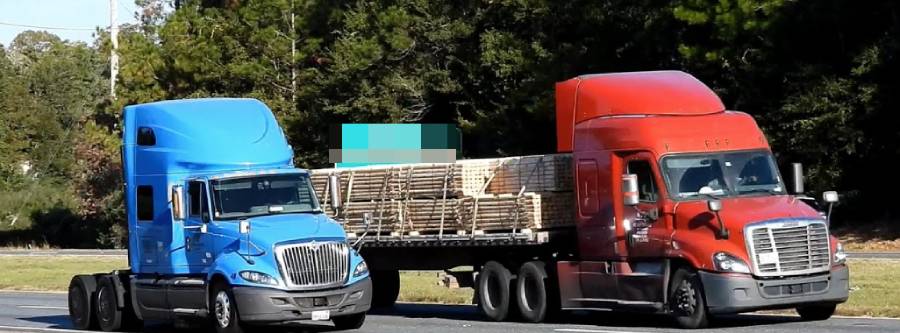
The Freightliner Cascadia and International LT are two Class 8 semi-trucks designed for long-haul transportation, but they differ in powertrain options, fuel efficiency strategies, driver comfort, and ownership considerations. The Freightliner Cascadia is known for its aerodynamic design, Detroit engine options, and integrated drivetrain technology. The International LT offers an alternative approach with its S13 Integrated Powertrain, driver-focused cab design, and configurations suited to highway freight operations.
Choosing between these trucks depends on more than horsepower or purchase price. Fuel consumption, maintenance requirements, parts availability, and long-term reliability directly affect operating expenses and vehicle downtime. For owner-operators, these differences influence profitability over thousands of miles. Fleet managers must also consider service network coverage, driver satisfaction, and total cost of ownership when selecting trucks for their operations.
This Freightliner Cascadia vs International LT comparison examines engine performance, fuel economy, reliability, maintenance costs, sleeper comfort, pricing, and resale value. It also evaluates which truck better suits independent owner-operators and commercial fleets, helping buyers identify the most practical option for their operating requirements and budget.
What Are the Main Differences Between the Freightliner Cascadia and International LT?
The main differences between the Freightliner Cascadia and International LT are their powertrain configurations, aerodynamic designs, cabin layouts, and manufacturer-specific technologies. Both are Class 8 heavy-duty trucks designed for long-haul freight transportation, but they use different engineering approaches to balance fuel efficiency, performance, and operating costs.
The Freightliner Cascadia emphasizes aerodynamic efficiency and powertrain integration through Detroit engines, automated transmissions, and electronic vehicle management systems. The International LT focuses on highway efficiency, driver ergonomics, and integrated powertrain technology, particularly in configurations equipped with the International S13 engine and T14 automated manual transmission.
The following table compares key characteristics of the two trucks. Specifications vary by model year and configuration.
| Feature | Freightliner Cascadia | International LT |
|---|---|---|
| Manufacturer | Freightliner (Daimler Truck North America) | International Motors |
| Truck classification | Class 8 heavy-duty truck | Class 8 heavy-duty truck |
| Primary application | Long-haul and regional freight | Long-haul and regional freight |
| Engine options | Detroit DD13, DD15; other options vary by year | International S13; Cummins options on certain model years |
| Transmission | Detroit DT12 automated manual; other options vary | International T14 automated manual; other options vary |
| Aerodynamic design | Streamlined hood, integrated fairings, aerodynamic enhancements | Aerodynamic hood, roof fairings, and airflow management |
| Sleeper configurations | Multiple sleeper cab options | Multiple sleeper cab options |
| Driver-assistance technology | Detroit Assurance systems on equipped models | International safety systems on equipped models |
| Service network | Freightliner dealer and service network | International dealer and service network |
One important distinction is the relationship between the engine and transmission. Detroit-powered Cascadia configurations use integrated powertrain controls designed to coordinate shifting, engine speed, and fuel consumption. The International S13 Integrated Powertrain combines the S13 engine, T14 transmission, and aftertreatment system into a coordinated package. These systems influence how each truck accelerates, maintains highway speed, and manages engine load.
For truck buyers, the practical difference depends on the specific configuration rather than the manufacturer alone. Two Cascadia trucks with different engines, axle ratios, and sleeper packages can deliver different operating characteristics. The same applies to International LT models equipped with different powertrains. Comparing equivalent model years and specifications is essential when evaluating either truck.
How Do the Freightliner Cascadia and International LT Compare in Engine Performance?
The Freightliner Cascadia and International LT both offer engine configurations capable of handling demanding Class 8 freight operations, but their horsepower, torque delivery, and transmission characteristics differ by powertrain. The Cascadia is closely associated with Detroit’s DD13 and DD15 engines, while newer International LT configurations feature the International S13 Integrated Powertrain.
The Detroit DD13 is a 12.8-liter diesel engine designed for commercial trucking applications that require a balance of pulling power and operating efficiency. The larger Detroit DD15 has a displacement of 14.8 liters and is commonly used in long-haul applications involving sustained highway operation and heavy freight loads. Both engines are available in different power ratings, allowing buyers to match engine output to their routes and hauling requirements.
The International S13 is a 12.7-liter diesel engine developed as part of International’s integrated powertrain system. It delivers up to 515 horsepower and 1,850 lb-ft of torque, depending on configuration. Unlike older International LT configurations that used other engine families, S13-equipped trucks combine the engine with the T14 automated manual transmission and a coordinated aftertreatment system.
The table below summarizes representative engine specifications. Actual availability depends on the truck’s model year and factory configuration.
| Engine | Displacement | Horsepower | Peak Torque |
|---|---|---|---|
| Detroit DD13 | 12.8 L | 370–525 hp | Up to 1,850 lb-ft |
| Detroit DD15 | 14.8 L | 425–505 hp | Up to 1,850 lb-ft |
| International S13 | 12.7 L | 370–515 hp | Up to 1,850 lb-ft |
Horsepower determines how quickly an engine can perform work, while torque contributes to the pulling force available through the drivetrain. For long-haul trucks, torque delivery across the operating RPM range is particularly important when climbing grades, accelerating with heavy loads, or maintaining speed on uneven terrain. However, peak torque alone does not determine actual pulling performance. Transmission ratios, rear axle gearing, gross combination weight, and engine calibration also affect how effectively power reaches the wheels.
Transmission design creates another distinction between these trucks. The Detroit DT12 is an automated manual transmission that coordinates gear selection with engine operating conditions. Its electronic controls are designed to maintain efficient engine speeds while reducing unnecessary shifts. The International T14 is a 14-speed automated manual transmission developed for the S13 Integrated Powertrain, using coordinated engine and transmission management to support smooth shifting and efficient highway operation.
Both powertrain systems reduce the need for manual gear changes and support consistent operation across varying road conditions. Their real-world performance depends on transmission programming, vehicle weight, terrain, and driving speed rather than gear count alone.
Neither truck has a universal performance advantage across all configurations. A Cascadia equipped with a DD15 may suit operators who prioritize a larger-displacement engine and Detroit powertrain familiarity. An International LT equipped with the S13 Integrated Powertrain offers a coordinated engine and transmission package designed for efficient long-haul operation. Buyers should compare actual engine ratings, axle ratios, and intended payloads before determining which truck better meets their hauling requirements.
Which Truck Gets Better Fuel Economy, the Freightliner Cascadia or International LT?
Neither the Freightliner Cascadia nor the International LT has a proven fuel economy advantage across every configuration. Both trucks incorporate aerodynamic improvements, automated transmissions, and engine management technologies designed to reduce diesel consumption during long-haul operations. Actual fuel efficiency depends on engine selection, axle ratio, vehicle weight, cruising speed, terrain, and driving conditions.
The Freightliner Cascadia uses aerodynamic features such as an optimized hood, roof fairings, chassis side fairings, and airflow management components to reduce drag at highway speeds. Detroit-powered configurations also integrate engine and transmission controls to maintain efficient operating speeds. Features such as predictive cruise control and automated gear selection can further support fuel-efficient driving when available and properly configured.
The International LT follows a similar approach to aerodynamic efficiency, combining a streamlined exterior with powertrain technologies designed for highway transportation. Models equipped with the International S13 Integrated Powertrain use coordinated engine and T14 transmission controls to manage fuel consumption. The S13 also uses a simplified exhaust aftertreatment approach that eliminates the need for active diesel particulate filter regeneration under its intended operating conditions, although the truck still requires emissions-system maintenance.
Aerodynamic drag becomes increasingly important as highway speed rises because the power required to overcome aerodynamic resistance increases approximately with the cube of vehicle speed. As a result, maintaining 65 mph instead of 75 mph can substantially reduce the aerodynamic power demand of either truck. However, the actual reduction in fuel consumption also depends on rolling resistance, engine efficiency, vehicle weight, and road conditions.
For a practical comparison, consider two trucks traveling 120,000 miles annually. The following calculations use hypothetical fuel economy figures rather than verified MPG ratings for either model.
| Fuel Economy | Annual Diesel Consumption | Annual Fuel Cost at $4/Gallon |
|---|---|---|
| 6.5 MPG | 18,462 gallons | $73,846 |
| 7.0 MPG | 17,143 gallons | $68,571 |
| 7.5 MPG | 16,000 gallons | $64,000 |
| 8.0 MPG | 15,000 gallons | $60,000 |
Improving fuel economy from 7.0 to 7.5 MPG saves approximately 1,143 gallons annually, equivalent to $4,571 at the assumed diesel price. Over five years, that difference represents approximately $22,855 in fuel expenses, excluding changes in diesel prices, mileage, and operating conditions.
These calculations demonstrate why even a modest MPG difference matters for commercial truck ownership. However, they do not establish that one model consistently achieves higher fuel economy than the other.
The better fuel-efficient choice is the truck that delivers lower verified fuel consumption under comparable operating conditions. Buyers should compare similarly equipped Cascadia and International LT models using fleet fuel records, standardized testing where available, or actual route performance. Engine specifications alone cannot establish which truck will consume less diesel over its service life.
Which Is More Reliable, the Freightliner Cascadia or International LT?
Neither the Freightliner Cascadia nor the International LT can be declared universally more reliable without comparing specific model years, engines, maintenance histories, and operating conditions. Both trucks are engineered for demanding commercial transportation, but long-term reliability depends on the condition of major mechanical systems, electronic components, emissions equipment, and the quality of preventive maintenance.
A truck’s reliability should be evaluated through its frequency of unscheduled repairs, severity of mechanical failures, and resulting downtime. For example, a minor sensor replacement and an engine failure have very different consequences for an owner-operator, even though both count as repair events. Maintenance records and verified service data therefore provide stronger evidence of reliability than brand reputation alone.
What Are the Common Reliability Problems With the Freightliner Cascadia?
Freightliner Cascadia buyers should pay particular attention to emissions-system faults, cooling-system condition, electrical components, and transmission operation. These are important inspection areas on modern diesel trucks, although their inclusion does not mean that every Cascadia experiences these problems or that they occur more frequently than on competing models.
Emissions-related concerns can involve diesel exhaust fluid components, nitrogen oxide sensors, selective catalytic reduction equipment, and diesel particulate filter systems. Faults within these systems may activate dashboard warnings or engine derating when emissions controls cannot operate correctly. The exact failure mechanisms and repair requirements depend on engine generation, diagnostic codes, and operating history.
Cooling-system maintenance is another important consideration for Cascadia models equipped with Detroit diesel engines. Radiator condition, coolant hoses, water pumps, thermostats, and cooling-system connections should be inspected for leaks, deterioration, or evidence of overheating. Insufficient cooling can affect engine performance and increase the risk of expensive mechanical damage under sustained heavy loads.
Electrical and electronic components also deserve attention because modern Cascadia trucks rely on interconnected control modules and sensors. Wiring damage, corroded connectors, weak batteries, and faulty sensors can cause intermittent warnings or operational problems. These symptoms require proper diagnostics rather than automatically indicating a major engine defect.
Transmission inspection should include shift quality, clutch operation where applicable, fault-code history, and evidence of fluid leakage. On trucks equipped with the Detroit DT12 automated manual transmission, abnormal shifting or repeated transmission warnings warrant investigation by a qualified technician.
For used Cascadia buyers, documented maintenance history and a professional diagnostic inspection are more useful than mileage alone. A high-mileage truck with consistent servicing and documented repairs may represent a better purchase than a lower-mileage unit with incomplete records and unresolved fault codes.
What Are the Common Reliability Problems With the International LT?
International LT buyers should inspect emissions components, engine cooling systems, electrical equipment, and transmission performance, while accounting for substantial differences between older powertrain configurations and newer S13-equipped models.
Earlier International LT configurations equipped with Cummins engines use emissions-control systems that require regular monitoring and maintenance. Depending on engine generation, faults involving diesel exhaust fluid delivery, NOx sensors, particulate filter operation, or exhaust aftertreatment components can affect performance and vehicle availability. These issues are not exclusive to International trucks and should be assessed through service records and diagnostic testing.
The International S13 Integrated Powertrain uses a different emissions architecture from many older diesel configurations. Its aftertreatment strategy is designed to avoid active DPF regeneration and reduce certain maintenance requirements. However, eliminating active regeneration does not eliminate all emissions-system components or guarantee freedom from related repairs. Long-term reliability should be assessed using service data specific to S13-equipped trucks rather than assumptions based on older International LT engines.
Cooling-system inspections remain essential. Technicians should check coolant levels, hoses, radiators, water pumps, and evidence of previous overheating. The cooling system must maintain appropriate engine temperatures during prolonged highway operation and demanding grades. Neglected coolant leaks or overheating problems can lead to mechanical damage regardless of engine manufacturer.
Electrical reliability also depends on wiring integrity, sensors, batteries, connectors, and electronic control systems. Warning lights, communication faults, and intermittent starting problems should be investigated using manufacturer-compatible diagnostic equipment.
For International LT models equipped with the T14 automated manual transmission, buyers should evaluate shifting behavior, transmission fault history, and drivetrain operation during a road test. Older configurations with different transmissions require inspection procedures appropriate to their specific equipment.
Long-term durability depends more on the truck’s powertrain generation, maintenance quality, and operating history than on the International LT nameplate alone. Buyers comparing used models should prioritize complete service documentation, diagnostic results, and evidence of consistent preventive maintenance.
The same principle applies when comparing overall Cascadia and International LT reliability. A meaningful evaluation requires equivalent model years, similar mileage, comparable operating conditions, and documented repair histories. Without controlled failure-rate data, claiming that either model lasts longer or experiences fewer breakdowns would be unsupported.
For owner-operators, reliability also includes access to qualified technicians and replacement parts. A truck that can be repaired promptly within its regular operating region may produce less downtime than a mechanically similar truck requiring longer service delays. Fleet managers should additionally examine maintenance consistency across multiple vehicles, repair frequency per mile, and unscheduled out-of-service time before selecting a platform.
Which Truck Has Lower Maintenance and Repair Costs?
Neither the Freightliner Cascadia nor the International LT consistently has lower maintenance and repair costs across all model years and configurations. Both trucks require scheduled engine servicing, transmission maintenance, brake inspections, tire replacement, and emissions-system upkeep. Their actual maintenance expenses depend on engine type, service intervals, replacement part prices, labor rates, and the frequency of unscheduled repairs.
Routine maintenance represents a predictable portion of operating expenses for both trucks. Oil changes, fuel filter replacements, air filter servicing, coolant inspections, and chassis lubrication help prevent premature component wear. Freightliner Cascadia models equipped with Detroit DD13 or DD15 engines follow Detroit-specific maintenance schedules, while International LT trucks use service requirements determined by their installed engines, including the International S13 or Cummins powertrains. Maintenance intervals should be determined from the applicable manufacturer’s schedule rather than a universal mileage recommendation.
Engine and emissions-system repairs can create substantial differences in ownership costs. Detroit-powered Cascadia configurations use exhaust aftertreatment components that require proper diesel exhaust fluid quality, sensor operation, and emissions-system maintenance. International LT configurations equipped with older Cummins powertrains have their own aftertreatment requirements. The International S13 Integrated Powertrain uses a different aftertreatment architecture designed to operate without active diesel particulate filter regeneration, potentially reducing maintenance associated with that process. However, this design does not eliminate emissions-system inspections, component replacement, or the possibility of unexpected repairs.
Transmission maintenance also varies by configuration. The Detroit DT12 and International T14 are automated manual transmissions that reduce manual shifting requirements but still contain mechanical components, electronic controls, and actuators requiring inspection and servicing. Transmission repairs may involve specialized diagnostic equipment and technicians familiar with the installed system. Buyers should therefore evaluate local service capabilities alongside the transmission’s operating characteristics.
The following table identifies the main maintenance considerations for both trucks.
| Maintenance Category | Freightliner Cascadia | International LT |
|---|---|---|
| Engine oil and filters | Detroit-specific schedules on DD13/DD15 models | S13 or Cummins-specific schedules |
| Emissions maintenance | Depends on Detroit engine and aftertreatment generation | Depends on S13 or earlier engine configuration |
| Transmission service | DT12 or installed transmission requirements | T14 or installed transmission requirements |
| Brake maintenance | Depends on brake system, load, and operating conditions | Depends on brake system, load, and operating conditions |
| Cooling system | Coolant, hoses, radiator, and pump inspections | Coolant, hoses, radiator, and pump inspections |
| Electrical diagnostics | Freightliner and Detroit-compatible diagnostic systems | International and engine-specific diagnostic systems |
| Replacement parts | Freightliner and Detroit distribution channels | International and applicable engine distribution channels |
Parts availability can influence repair expenses as much as the price of individual components. Freightliner maintains a North American dealer and service network that supports Cascadia trucks and Detroit powertrains. International operates its own dealer network, with additional engine-specific support depending on the configuration. Actual repair accessibility depends on the operating region, local inventory, technician availability, and the type of repair required.
Downtime is another major cost that buyers should calculate separately from repair bills. Consider an owner-operator whose truck generates $1,200 in gross revenue per operating day. A three-day unscheduled repair could interrupt $3,600 in potential revenue, excluding the direct repair expense. This is an illustrative revenue scenario, not an estimate of lost profit, because avoided fuel expenses and other variable costs must also be considered.
Preventive maintenance reduces the risk of avoidable failures by identifying worn components, fluid leaks, and developing mechanical problems before they interrupt operations. For both the Cascadia and International LT, a consistent maintenance program should include documented inspections, manufacturer-recommended fluid changes, diagnostic monitoring, and timely replacement of deteriorating components.
The truck with lower maintenance costs is the one that combines predictable service requirements, affordable local repairs, and fewer costly interruptions under comparable operating conditions. Owner-operators should request maintenance records and estimates from service providers familiar with the exact engine and transmission configuration. Fleet managers should compare repair costs per mile and unscheduled downtime across similarly equipped vehicles before choosing either platform.
Which Truck Offers Better Driver Comfort and Sleeper Features?
The Freightliner Cascadia and International LT both offer driver-focused interiors and sleeper configurations designed for long-haul transportation, but neither provides universally better comfort across every trim and equipment package. Cab ergonomics, seat quality, sleeping arrangements, storage capacity, climate control, and interior noise all influence the driver’s experience. The better choice depends on the selected configuration and how the truck will be used.
The Freightliner Cascadia features a cab layout designed to keep frequently used controls within the driver’s reach. Depending on model year and equipment, Cascadia interiors include multifunction steering wheel controls, digital vehicle information displays, adjustable seating, and integrated storage compartments. These features support driver convenience during extended highway operation by reducing unnecessary movement and making essential information easier to access.
The International LT also emphasizes driver ergonomics through its dashboard layout, seating adjustments, and accessible vehicle controls. Its interior is designed around commercial driving requirements, including forward visibility, instrument readability, and access to commonly used switches. Interior technology and display configurations vary by model year, so buyers should compare the specific trucks rather than assuming every LT includes identical features.
Seat design is particularly important for drivers spending eight or more hours behind the wheel. Both trucks can be equipped with air-suspension seats and adjustable seating features, depending on specification. Seat support, cushion design, lumbar adjustment, and driving position influence comfort during extended trips. A properly adjusted seat helps distribute body weight and supports a more stable driving posture, although individual comfort varies with body dimensions and personal preferences.
Sleeper configurations create additional differences between the two models. Freightliner Cascadia sleeper models are available in multiple cab and sleeper arrangements, with interior equipment varying by configuration. Depending on the selected package, amenities may include sleeping bunks, storage cabinets, climate controls, refrigerator provisions, and electrical connections for personal equipment.
International LT sleeper configurations likewise provide accommodations for drivers spending multiple nights away from home. Available equipment can include sleeping areas, overhead storage, climate-control features, and provisions for electrical appliances. The amount of usable living space depends on sleeper dimensions, interior layout, and installed equipment rather than the truck’s exterior appearance alone.
The table below summarizes the main comfort features buyers should compare.
| Comfort Feature | Freightliner Cascadia | International LT |
|---|---|---|
| Driver seating | Adjustable commercial truck seating; options vary | Adjustable commercial truck seating; options vary |
| Dashboard | Driver-oriented controls and displays | Driver-oriented controls and displays |
| Sleeper options | Multiple configurations depending on model year | Multiple configurations depending on model year |
| Storage | Cab and sleeper storage options | Cab and sleeper storage options |
| Climate control | Cab and sleeper climate features by configuration | Cab and sleeper climate features by configuration |
| Ride comfort | Influenced by suspension, wheelbase, tires, and load | Influenced by suspension, wheelbase, tires, and load |
| Noise insulation | Depends on cab design, engine, and equipment | Depends on cab design, engine, and equipment |
Ride quality is determined by more than cabin equipment. Suspension design, wheelbase, tire condition, seat suspension, vehicle loading, and road surfaces influence the vibrations transmitted to the driver. A longer wheelbase may change how a truck responds to road irregularities, while worn suspension components or improperly inflated tires can reduce comfort regardless of manufacturer.
Cabin noise also affects the long-haul driving experience. Engine operation, aerodynamic turbulence, tire noise, and vibration contribute to sound levels inside the cab. Both manufacturers incorporate design features intended to manage noise and vibration, but a reliable comparison requires measurements from similarly equipped trucks operating under equivalent conditions. Without such testing, declaring either cabin quieter would be unsupported.
Visibility and maneuverability deserve attention during a test drive. Mirror placement, windshield design, seating position, and available camera or driver-assistance equipment influence the driver’s ability to monitor surrounding traffic. Buyers should evaluate forward visibility, blind spots, and control accessibility in the actual vehicle configuration they intend to purchase.
For owner-operators who regularly sleep in their trucks, sleeper layout and storage may be more important than dashboard appearance. Fleet operators should also consider whether cab features accommodate drivers of different heights and preferences. Standardizing suitable seating, climate control, and storage equipment can improve consistency across a fleet.
The better truck for driver comfort is the one whose cab and sleeper configuration matches the driver’s physical needs and daily operating routine. A Freightliner Cascadia may be preferable for a driver who favors its seating position, controls, and available sleeper layout, while another driver may find the International LT more comfortable. A direct cab inspection and extended test drive provide stronger evidence than comparing equipment lists alone.
How Do Freightliner Cascadia and International LT Purchase Prices Compare?
Freightliner Cascadia and International LT purchase prices depend on model year, engine configuration, sleeper size, mileage, and optional equipment rather than a fixed price difference between the two trucks. Both compete in the Class 8 heavy-duty truck market, where vehicle specifications and condition significantly influence the amount buyers pay.
New Freightliner Cascadia prices vary according to the selected Detroit engine, transmission, axle configuration, cab design, and technology package. A truck equipped with a larger sleeper, additional driver-assistance systems, and premium interior features generally costs more than a basic day cab configuration. Factory specifications and dealer pricing also influence the final purchase amount.
International LT pricing follows a similar structure. Models equipped with the International S13 Integrated Powertrain may have different acquisition costs from older configurations featuring Cummins engines. Sleeper dimensions, axle specifications, safety equipment, and optional interior amenities further affect pricing. Buyers should request itemized dealer quotations to compare equivalent configurations.
Used truck prices introduce additional variables, particularly accumulated mileage, maintenance history, emissions-system condition, and previous operating conditions. A used Cascadia with documented engine servicing and recent major component replacements may command a higher price than a similar truck with incomplete records. The same applies to an International LT with verified maintenance and a well-maintained drivetrain.
The following table identifies the primary factors affecting purchase prices.
| Pricing Factor | Freightliner Cascadia | International LT |
|---|---|---|
| Model year | Newer generations and updated equipment affect pricing | Newer generations and updated equipment affect pricing |
| Engine configuration | Detroit engine selection influences cost | S13 or other engine configurations influence cost |
| Sleeper configuration | Sleeper size and amenities affect price | Sleeper size and amenities affect price |
| Mileage | Higher mileage generally reduces used vehicle value | Higher mileage generally reduces used vehicle value |
| Maintenance history | Documented servicing supports valuation | Documented servicing supports valuation |
| Optional equipment | Safety, technology, and comfort packages affect cost | Safety, technology, and comfort packages affect cost |
| Vehicle condition | Mechanical and cosmetic condition affect resale pricing | Mechanical and cosmetic condition affect resale pricing |
Purchase price alone does not determine which truck offers better value. Consider two hypothetical used trucks: a Cascadia priced at $75,000 and an International LT priced at $68,000. The International initially costs $7,000 less. However, if it requires $10,000 in immediate repairs while the Cascadia requires $2,000, their initial purchase and repair costs become $78,000 and $77,000, respectively. In this example, the Cascadia has a $1,000 lower initial outlay despite its higher advertised price.
Financing also changes the effective acquisition cost. Interest rates, loan duration, down payments, and lender requirements influence the total amount paid. A lower monthly payment does not necessarily mean lower overall financing expenses, particularly when the repayment period is extended.
The better-priced truck is the one offering the lowest justified acquisition cost for its condition, equipment, and intended use. Buyers should compare equivalent specifications, obtain maintenance records, arrange independent inspections, and calculate financing expenses before deciding whether the Freightliner Cascadia or International LT represents better purchase value.
Which Truck Has a Lower Total Cost of Ownership?
Neither the Freightliner Cascadia nor the International LT has a universally lower total cost of ownership (TCO), because ownership expenses depend on fuel consumption, purchase price, maintenance, repairs, financing, depreciation, and vehicle utilization. The most economical truck is the one that produces the lowest overall cost for a defined operating period under comparable conditions.
Fuel represents a major variable expense in long-haul trucking. A truck traveling 120,000 miles annually consumes approximately 17,143 gallons of diesel at 7.0 MPG. At an assumed fuel price of $4 per gallon, annual fuel expenses reach approximately $68,571. Improving efficiency to 7.5 MPG reduces annual consumption to 16,000 gallons and fuel expenses to $64,000. This creates an annual difference of approximately $4,571.
Over five years, the same fuel economy difference produces approximately $22,857 in savings, assuming constant annual mileage and diesel prices. These figures illustrate the financial impact of fuel efficiency rather than establish actual MPG differences between the Cascadia and International LT.
Maintenance and repairs form another important ownership expense. Routine servicing includes engine oil, filters, brake components, tires, and scheduled inspections. Unexpected repairs may involve emissions equipment, cooling systems, electronic components, or drivetrain parts. The cost of these events depends on component prices, labor rates, repair frequency, and warranty coverage.
Downtime adds an operational dimension to maintenance costs. A truck requiring unscheduled repairs may lose revenue opportunities while remaining unavailable for freight assignments. For an owner-operator, this interruption can affect cash flow and delivery commitments. Fleet operators may also incur additional expenses when arranging replacement vehicles or redistributing loads.
Depreciation determines how much vehicle value is lost during ownership. Both Cascadia and International LT resale values depend on age, mileage, engine configuration, maintenance documentation, market demand, and mechanical condition. A truck purchased at a lower price does not automatically have lower depreciation if its resale value declines more rapidly.
A simplified ownership-cost calculation combines acquisition cost, fuel, maintenance, repairs, financing, and other operating expenses before subtracting the vehicle’s remaining resale value.
Total Cost of Ownership = Purchase Price + Fuel Costs + Maintenance and Repairs + Financing Costs + Other Ownership Expenses − Resale Value
The following example compares two hypothetical five-year ownership scenarios. The figures are illustrative assumptions, not verified ownership data for either truck model.
| Cost Category | Truck A | Truck B |
|---|---|---|
| Purchase price | $160,000 | $150,000 |
| Fuel expenses | $320,000 | $340,000 |
| Maintenance and repairs | $65,000 | $70,000 |
| Financing costs | $20,000 | $18,000 |
| Other ownership expenses | $45,000 | $45,000 |
| Resale value | −$65,000 | −$55,000 |
| Five-year TCO | $545,000 | $568,000 |
In this example, Truck A costs $10,000 more initially but has a five-year ownership cost that is $23,000 lower. Its fuel savings, lower maintenance expenses, and higher residual value outweigh the additional purchase expense.
For a vehicle covering 600,000 miles over five years, Truck A has an estimated ownership cost of approximately $0.91 per mile, compared with $0.95 per mile for Truck B. This difference illustrates why commercial truck buyers should evaluate long-term operating economics instead of focusing exclusively on acquisition price.
The example excludes driver compensation and other business expenses not directly associated with vehicle ownership. Actual TCO calculations should also account for insurance, registration, taxes, permits, and applicable warranty benefits without counting the same expense twice.
For Freightliner Cascadia buyers, Detroit powertrain service requirements, local repair access, and verified fuel economy should be incorporated into the ownership model. International LT buyers should evaluate the same factors using the appropriate S13 or other installed powertrain specifications. Both vehicles require calculations based on actual operating routes and maintenance expectations.
The truck with the lower TCO is the one that minimizes cost per mile while maintaining the reliability and availability required for commercial operations. Owner-operators should calculate expenses using their expected annual mileage, financing terms, and maintenance budget. Fleet managers should compare standardized cost-per-mile records across similarly equipped vehicles to determine whether the Cascadia or International LT offers better long-term financial performance.
Which Is Better for Owner-Operators, the Freightliner Cascadia or International LT?
The Freightliner Cascadia is a strong choice for owner-operators who prioritize Detroit powertrain familiarity and access to Freightliner service facilities, while the International LT is a competitive alternative for drivers seeking the S13 Integrated Powertrain and its associated operating characteristics. Neither truck is automatically more profitable because fuel consumption, maintenance costs, financing, and downtime depend on the specific vehicle and operating conditions.
For independent owner-operators, fuel efficiency directly affects operating margins. A driver covering 120,000 miles annually can save approximately $4,571 per year by improving fuel economy from 7.0 to 7.5 MPG at an assumed diesel price of $4 per gallon. This calculation applies equally to either truck and demonstrates why verified fuel consumption matters more than manufacturer claims or engine displacement alone.
The Freightliner Cascadia offers Detroit engine and transmission configurations designed for highway freight operations. Owner-operators familiar with Detroit DD13 or DD15 engines may benefit from established maintenance procedures, diagnostic familiarity, and access to technicians experienced with these powertrains. However, service costs and repair turnaround times still depend on the individual facility, replacement parts, and the nature of the mechanical problem.
The International LT provides another option, particularly in configurations equipped with the International S13 Integrated Powertrain. Its coordinated engine, T14 transmission, and aftertreatment system are designed to support efficient highway operation. The S13’s aftertreatment architecture eliminates active DPF regeneration under its intended operating conditions, reducing the need for that specific maintenance process. Buyers should still evaluate actual service requirements, warranty coverage, and the availability of qualified technicians along their regular routes.
Purchase price and financing can influence the choice just as strongly as powertrain design. An owner-operator with limited available capital may prefer a well-maintained used truck with a lower acquisition cost, provided an independent inspection identifies no significant mechanical concerns. A newer vehicle may offer warranty coverage and updated equipment, but higher monthly payments can place additional pressure on cash flow during periods of reduced freight demand.
Driver comfort is another important consideration because independent operators frequently spend extended periods inside their vehicles. Seat support, sleeper dimensions, storage space, climate control, and cab ergonomics affect daily usability. A driver who regularly spends several nights away from home should evaluate the sleeper layout and available amenities before choosing either model.
The following table summarizes the purchasing priorities for different owner-operator situations.
| Owner-Operator Priority | Recommended Approach |
|---|---|
| Detroit engine familiarity | Evaluate a Detroit-powered Freightliner Cascadia |
| Interest in the S13 Integrated Powertrain | Evaluate an S13-equipped International LT |
| Lowest fuel expenses | Compare verified MPG under similar operating conditions |
| Limited purchase budget | Compare inspected used trucks and financing costs |
| Frequent overnight trips | Compare sleeper layouts and driver comfort |
| Reduced downtime | Prioritize local service access and documented reliability |
| Long-term profitability | Calculate total cost per mile for each configuration |
The better owner-operator truck is the one that provides the strongest combination of operating efficiency, service accessibility, driver comfort, and manageable financial commitments. A Cascadia may be preferable when Detroit service support and the driver’s preferred configuration align with regular routes. An International LT may be the better purchase when its powertrain, equipment, local service access, and acquisition cost produce more favorable ownership economics.
Before purchasing, owner-operators should compare actual vehicle specifications, maintenance records, financing terms, and expected cost per mile. These factors provide a more reliable basis for selecting a profitable truck than choosing solely by brand.
Which Is Better for Fleet Operations, the Freightliner Cascadia or International LT?
The Freightliner Cascadia and International LT are both suitable for commercial fleet operations, but the better fleet truck depends on standardized maintenance requirements, vehicle availability, fuel efficiency, and total operating cost across multiple units. Fleet managers should evaluate how each model performs within an established maintenance and logistics system rather than judging individual vehicle specifications alone.
Fleet standardization is one of the most important purchasing considerations. Operating trucks with similar engines, transmissions, and electronic systems can simplify technician training, diagnostic procedures, spare parts inventory, and preventive maintenance scheduling. A fleet already operating Detroit-powered Cascadia trucks may gain operational advantages by adding similarly configured vehicles. Likewise, a fleet with established International service procedures may find it more practical to expand with International LT models.
Maintenance consistency affects both repair expenses and vehicle availability. Standardized service intervals allow fleet managers to schedule inspections, oil changes, filter replacements, and component servicing around planned vehicle downtime. Differences in engine generations, emissions systems, and transmission configurations can increase the complexity of maintaining a mixed fleet. However, standardization should not override evidence that an alternative truck provides lower operating costs or better support in a particular region.
Fuel consumption becomes especially significant when evaluated across dozens or hundreds of trucks. Consider a fleet of 50 vehicles, each traveling 120,000 miles annually. An improvement from 7.0 to 7.5 MPG would reduce annual diesel consumption by approximately 57,143 gallons across the fleet. At an assumed fuel price of $4 per gallon, the resulting savings would be approximately $228,571 annually.
This hypothetical example does not establish a fuel economy advantage for either the Cascadia or International LT. It demonstrates why fleet managers should conduct controlled comparisons using similar routes, payloads, driver behavior, and operating conditions before making large purchasing commitments.
Dealer and service network coverage also influence fleet performance. Freightliner and International maintain commercial vehicle service networks, but the accessibility of individual facilities differs by operating region. Fleet managers should evaluate workshop capacity, technician qualifications, replacement parts availability, and service turnaround times along their primary freight corridors.
Driver satisfaction creates another operational consideration. Cab ergonomics, sleeper accommodations, visibility, and ride comfort influence how drivers experience long-haul assignments. Fleets should assess these characteristics through structured driver feedback and comparable road tests. A vehicle that meets operational requirements but receives consistently poor driver feedback may create additional challenges for driver acceptance and fleet standardization.
Vehicle uptime should be measured using documented operational data. Useful indicators include unscheduled repair events per 100,000 miles, average repair duration, maintenance cost per mile, and the percentage of scheduled operating time that vehicles remain available. These measurements allow fleet managers to distinguish between inexpensive maintenance and genuinely reliable operations.
The following table compares the main fleet purchasing considerations.
| Fleet Evaluation Factor | Freightliner Cascadia | International LT |
|---|---|---|
| Fleet standardization | Advantage when aligned with existing Freightliner and Detroit equipment | Advantage when aligned with existing International equipment |
| Powertrain integration | Detroit engine and transmission systems on applicable configurations | S13 Integrated Powertrain on applicable configurations |
| Maintenance planning | Detroit and Freightliner service schedules | International and installed-engine service schedules |
| Fuel management | Requires fleet-specific MPG verification | Requires fleet-specific MPG verification |
| Service coverage | Depends on Freightliner support along operating routes | Depends on International support along operating routes |
| Driver acceptance | Requires cab evaluation and driver feedback | Requires cab evaluation and driver feedback |
| Cost control | Evaluate maintenance, fuel, downtime, and depreciation | Evaluate maintenance, fuel, downtime, and depreciation |
Fleet purchasing decisions should also consider vehicle replacement cycles and resale value. A truck that remains reliable but depreciates rapidly may have a higher lifecycle cost than an alternative with stronger residual value. Conversely, a higher resale price does not guarantee better economics when acquisition costs, maintenance, and fuel expenses are included.
The Freightliner Cascadia is a practical fleet choice when its powertrain configurations and service network complement existing operations, while the International LT can be equally suitable when its equipment and support infrastructure align with fleet requirements. Neither model should be selected solely on advertised fuel efficiency or purchase price.
For larger fleets, a controlled pilot program offers a stronger basis for purchasing decisions. Operating a small number of similarly configured Cascadia and International LT trucks on comparable routes allows managers to collect fuel consumption, maintenance, uptime, and driver feedback data before committing to a broader fleet purchase. This approach connects vehicle selection directly to measurable operating performance and long-term profitability.
How Do the Freightliner Cascadia and International LT Safety Features Compare?
Both the Freightliner Cascadia and International LT offer advanced driver-assistance technologies designed to reduce collision risks and support safer highway operations. Their safety capabilities differ according to model year, installed equipment, and the generation of their electronic safety systems.
The Freightliner Cascadia offers Detroit Assurance, a suite of driver-assistance technologies that can include active brake assist, adaptive cruise control, lane departure warnings, and other collision mitigation features. Depending on the vehicle generation and equipment package, these systems use radar, cameras, and electronic controls to monitor surrounding traffic and provide warnings or braking assistance when specific hazards are detected.
The International LT offers safety technologies that may include Bendix collision mitigation systems, adaptive cruise control, lane departure warnings, and electronic stability control. Equipment availability varies by model year and configuration. These systems are designed to assist drivers with maintaining safe operating conditions, particularly during highway travel and changing traffic situations.
Collision mitigation systems are particularly relevant for heavy-duty trucks because their stopping distances depend on vehicle weight, speed, road conditions, and brake performance. Forward collision warning systems alert drivers to potential hazards, while automatic emergency braking can apply braking force under certain conditions. However, these technologies have operating limitations and cannot prevent every collision.
Lane departure warning systems provide another layer of assistance by identifying unintended movement outside marked traffic lanes. Camera-based systems monitor road markings and issue alerts when their operating conditions are met. Their effectiveness depends on factors such as lane visibility, weather, sensor condition, and system calibration.
The following table summarizes the safety technologies buyers should examine.
| Safety Feature | Freightliner Cascadia | International LT |
|---|---|---|
| Collision mitigation | Detroit Assurance on applicable models | Bendix-based systems on applicable models |
| Adaptive cruise control | Available on equipped configurations | Available on equipped configurations |
| Lane departure warning | Available depending on model year | Available depending on model year |
| Electronic stability control | Available or standard depending on configuration and applicable requirements | Available or standard depending on configuration and applicable requirements |
| Automatic emergency braking | Included in applicable safety packages | Included in applicable safety packages |
| Driver visibility aids | Mirrors and available electronic assistance features | Mirrors and available electronic assistance features |
Safety equipment should be evaluated by its actual functionality rather than the number of advertised features. A truck equipped with automatic emergency braking requires properly functioning sensors, calibrated components, and compatible electronic controls. Damaged radar equipment, obstructed cameras, or unresolved diagnostic faults can reduce system availability.
Neither truck has a demonstrated overall safety advantage without comparing equivalent equipment and independent performance data. Buyers should verify the installed safety package, inspect warning indicators, review maintenance records, and test applicable features according to manufacturer guidance. Fleet operators should also combine vehicle technology with driver training, preventive maintenance, and established safety procedures.
Which Truck Has Better Parts Availability and Dealer Support?
Freightliner Cascadia and International LT parts availability depends on the operating region, installed powertrain, component inventory, and accessibility of qualified service facilities. Both manufacturers maintain commercial truck dealer networks across North America, but neither network guarantees immediate access to every replacement component or repair service.
Freightliner Cascadia owners can obtain manufacturer-supported service through Freightliner dealerships and authorized facilities. Detroit-powered models also benefit from service resources associated with Detroit engines, transmissions, and related components. This integration can simplify certain diagnostic and repair procedures when technicians have the appropriate equipment and training.
International LT owners receive support through International’s commercial truck dealer network. Trucks equipped with the International S13 Integrated Powertrain require technicians and diagnostic resources appropriate to that system. Older LT configurations using Cummins engines may also have access to compatible Cummins service providers, depending on the repair and warranty requirements.
Parts availability varies significantly by component type. Routine maintenance items such as filters, belts, and commonly replaced brake components may be easier to obtain than specialized electronic modules, emissions equipment, or transmission assemblies. A dealership may stock frequently requested components while requiring additional delivery time for less common parts.
Service accessibility also depends on geography. An owner-operator traveling primarily along established interstate freight corridors may have access to several authorized repair facilities. A truck operating in remote regions may face longer travel distances or extended waiting periods for specialized repairs.
The following factors determine the practical value of a service network:
- Dealer accessibility: Distance between regular freight routes and qualified service facilities.
- Parts inventory: Local availability of routine and specialized replacement components.
- Technician expertise: Experience with the truck’s specific engine, transmission, and electronic systems.
- Repair turnaround time: Time required for diagnosis, parts delivery, and completed repairs.
- Warranty support: Availability of authorized repairs under applicable manufacturer or extended warranty coverage.
Repair turnaround time can directly affect operating income. For example, a truck waiting four days for a specialized component may experience greater revenue disruption than a vehicle repaired within one day, even when the actual replacement part costs less. This illustrates why parts availability and service scheduling should be evaluated alongside repair prices.
Fleet managers should map authorized service locations against their primary transportation routes and distribution facilities. They should also determine whether existing maintenance shops have the diagnostic equipment, technician training, and parts supply arrangements needed to support either vehicle platform.
The better-supported truck is the one with more accessible qualified service and reliable parts availability within the buyer’s actual operating area. Freightliner may offer a practical advantage for operators already using Detroit service infrastructure, while International may be preferable where its dealerships and engine support resources are more accessible. Buyers should verify local capabilities rather than assuming nationwide network size determines individual repair convenience.
Which Truck Has Better Resale Value?
Neither the Freightliner Cascadia nor the International LT consistently delivers a higher resale value across all model years, mileage levels, and market conditions. Used truck values depend on vehicle age, accumulated mileage, engine configuration, maintenance history, mechanical condition, and demand within the secondary commercial truck market.
Freightliner Cascadia resale prices are influenced by the model’s specifications, Detroit powertrain configuration, sleeper type, and service history. Trucks with documented maintenance, functioning emissions systems, and desirable long-haul equipment may attract stronger buyer interest than comparable units requiring significant repairs. However, a higher asking price does not necessarily indicate better value retention.
International LT resale prices are affected by similar factors. Engine generation is particularly relevant because older Cummins-equipped models and newer S13-equipped configurations have different technical characteristics and maintenance requirements. Buyers may evaluate these powertrains differently based on service familiarity, warranty coverage, operating costs, and available reliability data.
Mileage is a major valuation factor because it provides a general indication of accumulated vehicle use. However, mileage should be interpreted alongside engine hours, maintenance records, operating conditions, and previous repairs. A truck used primarily for steady highway transportation may have a different wear profile from one operating frequently in stop-and-go conditions, even when both display similar odometer readings.
Maintenance documentation also influences resale confidence. Records showing regular oil changes, emissions-system servicing, transmission maintenance, and completed repairs help prospective buyers evaluate mechanical condition. Missing records increase uncertainty and may lead buyers to request additional inspections or negotiate lower prices.
Depreciation measures the reduction in vehicle value over time. It should be distinguished from resale price because two trucks purchased at different prices can have different depreciation rates even when their final selling prices are similar.
For example, consider two hypothetical trucks purchased for $160,000 and $150,000. After five years, the first sells for $65,000 and the second for $55,000. Both lose $95,000 in absolute value, but their percentage depreciation differs.
| Resale Metric | Truck A | Truck B |
|---|---|---|
| Original purchase price | $160,000 | $150,000 |
| Resale price after five years | $65,000 | $55,000 |
| Total depreciation | $95,000 | $95,000 |
| Percentage depreciation | 59.4% | 63.3% |
| Value retained | 40.6% | 36.7% |
In this hypothetical example, Truck A retains a larger percentage of its original purchase price, although both vehicles lose the same dollar amount. The figures illustrate depreciation calculations and do not represent verified Freightliner Cascadia or International LT market values.
Used truck market conditions also influence resale outcomes. Freight demand, financing availability, diesel prices, emissions regulations, and the supply of used commercial vehicles can affect buyer demand. Consequently, resale estimates should reflect current market conditions rather than historical prices alone.
The truck with better resale value is the one that retains a greater proportion of its acquisition cost under comparable ownership conditions. Buyers should compare actual transaction prices or reliable market valuations for equivalent Cascadia and International LT configurations, accounting for model year, mileage, engine type, sleeper equipment, and maintenance history.
For owner-operators and fleet managers, resale value should be incorporated into total cost of ownership rather than evaluated independently. A truck with stronger residual value may still be more expensive to own if its initial purchase price, fuel consumption, and maintenance expenses outweigh the depreciation advantage.
Read more: Freightliner Cascadia Common Problems and Fixes
Should You Buy a Used Freightliner Cascadia or International LT?
A used Freightliner Cascadia or International LT can be a worthwhile purchase when its mechanical condition, maintenance history, and total acquisition cost match the buyer’s operating requirements. Neither model is automatically the better used truck. Engine condition, transmission performance, emissions-system health, mileage, and documented repairs provide a stronger basis for purchasing decisions than brand preference.
The first consideration is the truck’s model year and powertrain configuration. Used Freightliner Cascadia trucks may feature different generations of Detroit DD13 or DD15 engines, while International LT models can have Cummins engines or the newer International S13 Integrated Powertrain. These differences affect maintenance procedures, diagnostic requirements, replacement parts, and the availability of technicians familiar with each system. Buyers should identify the exact engine and transmission before comparing service costs or reliability expectations.
Maintenance records are essential for evaluating a used semi-truck. Service documentation should include engine oil changes, filter replacements, cooling-system maintenance, transmission servicing, and emissions-related repairs. Records of major component replacements provide additional information about the vehicle’s condition and previous operating expenses. Missing documentation does not automatically indicate mechanical failure, but it increases purchasing uncertainty.
A professional pre-purchase inspection should evaluate the engine, transmission, drivetrain, suspension, brakes, electrical systems, and emissions equipment. Diagnostic scans can identify active and stored fault codes, while physical inspections can reveal fluid leaks, worn components, corrosion, and evidence of previous damage. Engine performance should also be assessed under appropriate operating conditions.
The following table identifies the main inspection priorities for both trucks.
| Inspection Area | What Buyers Should Check |
|---|---|
| Engine | Oil leaks, abnormal noises, operating temperatures, and diagnostic history |
| Transmission | Shift quality, fault codes, fluid leaks, and clutch operation where applicable |
| Emissions system | DEF components, sensors, aftertreatment condition, and related fault codes |
| Cooling system | Radiator, hoses, coolant condition, water pump, and evidence of overheating |
| Brakes and suspension | Component wear, air system condition, and suspension damage |
| Electrical system | Batteries, wiring, sensors, control modules, and warning indicators |
| Maintenance records | Service intervals, major repairs, and documented component replacements |
| Vehicle history | Ownership, accident history, mileage, and previous operating conditions |
Mileage should be evaluated alongside engine hours and service history. A truck with 500,000 highway miles and consistent maintenance may be in better mechanical condition than a lower-mileage vehicle subjected to severe operating conditions or neglected servicing. However, mileage alone cannot establish remaining engine life or predict future repair costs.
Purchase price must also account for immediate maintenance requirements. For example, a used International LT priced at $60,000 may appear more attractive than a Cascadia priced at $68,000. If the International requires $12,000 in necessary repairs while the Cascadia requires $2,000, their initial acquisition and repair costs become $72,000 and $70,000, respectively. These hypothetical figures demonstrate why advertised prices should not be compared without considering vehicle condition.
Warranty coverage deserves separate attention. Buyers should verify whether any manufacturer warranty, extended service agreement, or dealer-provided protection remains valid. Coverage may depend on vehicle age, mileage, component type, and maintenance compliance. A warranty should be reviewed for exclusions and claim requirements rather than treated as a guarantee against all repair expenses.
Choose the used Freightliner Cascadia when its condition, Detroit powertrain service history, and available support justify the purchase price. Choose the used International LT when its engine configuration, documented maintenance, and expected operating expenses offer better value. In either case, an independent inspection and realistic repair budget are essential before completing the purchase.
Is the Freightliner Cascadia or International LT the Better Overall Choice?
The Freightliner Cascadia is a strong overall choice for buyers who prioritize Detroit powertrain integration and established Freightliner service support, while the International LT is a competitive alternative for operators interested in the S13 Integrated Powertrain and International’s vehicle configurations. Neither truck has a demonstrated universal advantage in fuel economy, reliability, maintenance expenses, or total cost of ownership across all model years.
The Cascadia’s primary strengths include its Detroit engine options, coordinated engine and transmission technology, aerodynamic design, and range of sleeper configurations. These characteristics make it a practical option for long-haul owner-operators and fleets that already have experience maintaining Detroit-powered vehicles. Its suitability increases when qualified Freightliner service facilities are accessible along the buyer’s regular routes.
The International LT offers a different combination of powertrain technology, highway-oriented design, and driver-focused equipment. S13-equipped models integrate the engine, T14 transmission, and emissions architecture into a coordinated system intended to support efficient commercial transportation. The LT is particularly relevant for operators whose existing maintenance infrastructure supports International vehicles or whose purchasing priorities align with the available S13 configurations.
The following table summarizes which truck deserves consideration under different purchasing priorities.
| Buying Priority | Recommended Choice |
|---|---|
| Detroit engine and transmission familiarity | Freightliner Cascadia |
| International S13 Integrated Powertrain | International LT |
| Best fuel economy | Compare verified MPG for equivalent configurations |
| Long-term reliability | Compare model-specific service and repair records |
| Lower maintenance expenses | Evaluate actual maintenance costs and local service rates |
| Driver comfort | Test comparable cab and sleeper configurations |
| Lower purchase price | Compare current quotations or equivalent used vehicles |
| Better resale value | Compare market valuations for similar model years and mileage |
| Owner-operator profitability | Select the truck with lower projected cost per mile |
| Fleet operations | Prioritize standardization, uptime, and service accessibility |
For independent owner-operators, the final decision should emphasize fuel expenses, financing commitments, maintenance accessibility, and driver comfort. A truck that costs less to purchase may become more expensive to operate if it experiences frequent downtime or requires costly repairs. Conversely, a higher-priced vehicle may justify its acquisition cost through lower verified operating expenses and stronger resale value.
Fleet managers should prioritize measurable performance across multiple vehicles. Fuel consumption per mile, unscheduled repair frequency, service turnaround time, and driver feedback provide practical indicators of fleet suitability. Standardizing around an existing powertrain and service network can simplify operations, but any purchasing decision should be supported by comparable cost and reliability data.
The better truck is the one that delivers the lowest sustainable operating cost while meeting the buyer’s hauling, comfort, and service requirements. The Freightliner Cascadia deserves consideration for its Detroit powertrain ecosystem and long-haul configurations. The International LT deserves equal evaluation for its integrated powertrain options and commercial operating capabilities. Comparing equivalent model years, reviewing maintenance records, and calculating total cost of ownership will provide the most reliable basis for choosing between them.