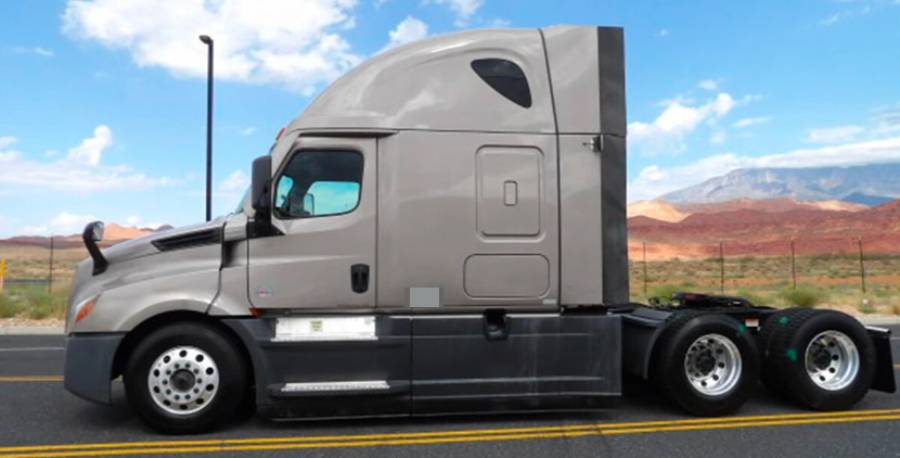
Freightliner Cascadia fault codes are diagnostic trouble codes (DTCs) that identify problems detected by the truck’s electronic control systems, including the engine, transmission, braking system, and emissions equipment. These codes help drivers and technicians locate malfunctioning systems, evaluate warning conditions, and determine the appropriate diagnostic procedures.
Most Freightliner Cascadia trucks use the SAE J1939 diagnostic standard, which identifies faults through Suspect Parameter Numbers (SPNs) and Failure Mode Identifiers (FMIs). An SPN identifies the affected parameter or operating condition, while an FMI describes the type of detected failure. For example, an FMI 3 generally indicates voltage above normal or a short to a high-voltage source, while an FMI 4 indicates voltage below normal or a short to a low-voltage source. The complete fault meaning also depends on the reporting control module and vehicle configuration.
Freightliner Cascadia fault codes can indicate issues ranging from sensor circuit malfunctions to engine protection events, diesel exhaust fluid (DEF) system failures, and transmission problems. Some faults trigger dashboard warnings or reduced engine power, while others remain stored as inactive diagnostic records.
This guide explains common Freightliner Cascadia fault codes, SPN/FMI meanings, dashboard warning indicators, diagnostic procedures, and troubleshooting methods. It also covers how to retrieve fault codes, identify problems requiring immediate attention, and verify repairs using compatible diagnostic tools.
What Are Freightliner Cascadia Fault Codes?
Freightliner Cascadia fault codes are diagnostic identifiers generated by electronic control modules when monitored vehicle parameters fall outside their programmed operating limits. These codes help identify problems in major truck systems, including the engine, transmission, anti-lock braking system (ABS), and exhaust aftertreatment system. Each fault record provides information that technicians use to locate the affected system and determine which diagnostic tests are required.
The Freightliner Cascadia uses multiple electronic control modules to monitor vehicle operation. The Engine Control Module (ECM) monitors engine-related parameters such as fuel pressure, coolant temperature, and boost pressure. The Aftertreatment Control Module (ACM) monitors emissions-related components, while transmission and ABS controllers monitor their respective systems. When a controller detects a condition that meets its fault criteria, it records a diagnostic trouble code (DTC). Many heavy-duty diagnostic messages use the SAE J1939 communication standard to report fault information across the vehicle network.
Freightliner Cascadia fault codes can be active or inactive. An active fault indicates that the controller currently detects the specified malfunction. An inactive fault indicates that the fault was previously detected but is no longer present under the controller’s current monitoring conditions. For example, an intermittent electrical connection may trigger an active sensor circuit fault that becomes inactive when the connection is restored. Inactive codes remain useful because they can reveal recurring electrical or mechanical problems that are difficult to reproduce during inspection.
Fault codes are different from dashboard warning lights. A Check Engine or Stop Engine warning alerts the driver to a condition requiring attention, while the associated diagnostic codes provide more specific information about the detected problem. Accurate fault interpretation requires the complete SPN/FMI combination, reporting control module, and applicable vehicle configuration, because Freightliner Cascadia trucks differ by model year, engine type, and electronic system architecture.
What Do SPN and FMI Numbers Mean on a Freightliner Cascadia?
SPN (Suspect Parameter Number) and FMI (Failure Mode Identifier) are two diagnostic identifiers used to describe faults in Freightliner Cascadia trucks operating with the SAE J1939 diagnostic standard. The SPN identifies the affected parameter or condition, while the FMI specifies the type of failure detected by the electronic control module. Together, these identifiers help technicians interpret diagnostic trouble codes and select appropriate troubleshooting procedures.
An SPN identifies a specific vehicle parameter, component-related measurement, or operating condition monitored by an electronic control system. For example, SPN 110 identifies engine coolant temperature, SPN 100 identifies engine oil pressure, and SPN 190 identifies engine speed. However, an SPN alone does not establish whether the monitored value is too high, too low, or affected by an electrical malfunction. The accompanying FMI provides that information.
An FMI describes the failure mode associated with an SPN. SAE J1939 defines FMI values from 0 through 31, although their meanings and applications differ. FMI 0 indicates that valid data is above its normal operating range at the most severe level, while FMI 1 indicates valid data below its normal operating range at the most severe level. FMI 3 and FMI 4 identify electrical conditions involving voltage above or below normal, respectively.
The following table lists commonly encountered FMI identifiers and their general diagnostic meanings.
| FMI | Diagnostic Meaning |
|---|---|
| 0 | Data valid but above normal operating range — most severe level |
| 1 | Data valid but below normal operating range — most severe level |
| 2 | Data erratic, intermittent, or incorrect |
| 3 | Voltage above normal or shorted to high source |
| 4 | Voltage below normal or shorted to low source |
| 5 | Current below normal or open circuit |
| 6 | Current above normal or grounded circuit |
| 7 | Mechanical system not responding properly |
| 8 | Abnormal frequency, pulse width, or period |
| 9 | Abnormal update rate |
| 10 | Abnormal rate of change |
| 11 | Root cause not known |
| 12 | Bad intelligent device or component |
| 13 | Out of calibration |
| 14 | Special instructions |
| 15 | Data valid but above normal operating range — least severe level |
| 16 | Data valid but above normal operating range — moderately severe level |
| 17 | Data valid but below normal operating range — least severe level |
| 18 | Data valid but below normal operating range — moderately severe level |
| 19 | Received network data in error |
| 31 | Condition exists |
To interpret a Freightliner Cascadia fault code, identify the SPN, read the FMI, and confirm which control module reported the fault. For example, SPN 110 FMI 0 indicates that the engine coolant temperature parameter is above its normal operating range at the most severe level. This combination points to a critical temperature condition, but the code alone does not establish whether the underlying cause is low coolant, restricted coolant circulation, a cooling fan problem, or another malfunction.
Freightliner Cascadia diagnostic displays and compatible scan tools may also provide an occurrence count (OC), which records how many times a controller has registered a fault according to its monitoring logic. The source address (SA) identifies the reporting electronic control unit on the J1939 network. Technicians should use these details alongside the truck’s model year, engine configuration, and manufacturer-specific diagnostic procedures to determine the correct repair.
What Are the Common Freightliner Cascadia Fault Codes and Their Meanings?
Common Freightliner Cascadia fault codes identify problems involving engine operation, exhaust aftertreatment, transmission control, and anti-lock braking systems. Many codes use SPN and FMI combinations to describe the monitored parameter and detected failure mode. However, the exact diagnostic definition depends on the reporting control module, engine configuration, model year, and software calibration.
The following sections organize representative diagnostic codes and monitored parameters by vehicle system. These tables are intended for initial fault identification rather than as a complete Freightliner manufacturer fault-code database.
What Are the Common Engine Fault Codes?
Freightliner Cascadia engine fault codes identify abnormal operating conditions involving oil pressure, coolant temperature, engine speed, fuel delivery, and air management. On trucks equipped with Detroit DD13, DD15, or DD16 engines, the Engine Control Module (ECM) monitors sensor signals and operating parameters to detect conditions that could affect engine performance, reliability, or protection functions.
The following table provides representative engine-related SPN/FMI combinations and initial diagnostic checks. The listed FMI meanings follow the general SAE J1939 failure-mode definitions; vehicle-specific diagnostic procedures must be used to confirm the actual fault.
| SPN/FMI | Diagnostic Meaning | Initial Diagnostic Check |
|---|---|---|
| 100/1 | Engine oil pressure below normal, most severe level | Verify oil pressure and inspect the lubrication system |
| 100/3 | Engine oil pressure signal voltage above normal | Inspect sensor wiring, connector, and voltage |
| 110/0 | Engine coolant temperature above normal, most severe level | Check coolant level and cooling system operation |
| 110/3 | Engine coolant temperature signal voltage above normal | Inspect temperature sensor circuit |
| 190/2 | Engine speed data erratic, intermittent, or incorrect | Inspect engine speed signal and related wiring |
Engine oil pressure faults require particular attention because insufficient lubrication can damage bearings, crankshaft surfaces, and other moving components. For example, SPN 100 FMI 1 identifies a severe low-oil-pressure condition, but the underlying cause may involve oil supply, lubrication-system operation, or inaccurate sensor information. Technicians must verify the actual oil pressure using the approved procedure before deciding which component requires repair. A Stop Engine warning associated with low oil pressure requires following the vehicle’s immediate shutdown instructions.
Coolant temperature faults indicate a different category of engine protection concern. SPN 110 FMI 0 represents an engine coolant temperature condition above the most severe threshold. Possible causes include coolant loss, restricted circulation, cooling fan malfunction, or excessive engine load. A technician should compare reported coolant temperature with actual operating conditions and inspect the cooling system after allowing it to cool safely.
What Are the Common DEF and DPF Fault Codes?
Freightliner Cascadia DEF and DPF fault codes identify abnormal conditions in the exhaust aftertreatment system, including selective catalytic reduction (SCR) performance, diesel exhaust fluid delivery, particulate filter operation, and exhaust sensor measurements. These systems control nitrogen oxide (NOx) and particulate emissions. Depending on the detected condition and vehicle calibration, aftertreatment faults may activate the malfunction indicator lamp or trigger engine power restrictions.
The following table identifies representative aftertreatment-related diagnostic parameters. Only the SPN/FMI combination with a specifically documented Detroit application is presented as a confirmed combination; the other entries identify SPNs that require their accompanying FMI for complete interpretation.
| SPN/FMI | Monitored Parameter or Fault Meaning | Initial Diagnostic Check |
|---|---|---|
| 1761 / FMI varies | Aftertreatment DEF tank level | Check DEF level and level-sensor data |
| 3031 / FMI varies | Aftertreatment DEF tank temperature | Inspect DEF temperature readings and sensor circuit |
| 3251 / FMI varies | DPF differential pressure | Inspect pressure sensor readings, hoses, and exhaust restrictions |
| 3719 / FMI varies | DPF soot load percentage | Check calculated soot loading and related faults |
| 4364/18 | SCR NOx conversion efficiency low on documented Detroit applications | Check DEF quality, NOx sensor data, and SCR operation |
SPN 4364 FMI 18 is a documented Detroit aftertreatment fault indicating that SCR NOx conversion efficiency has fallen below the calibrated threshold. The Aftertreatment Control Module evaluates NOx sensor information to determine whether the SCR system is reducing emissions as expected. Detroit diagnostic documentation identifies contaminated DEF, incorrect urea concentration, biased NOx sensor readings, and excessive DEF deposits as possible causes. Therefore, replacing the SCR catalyst without testing these conditions can result in an unnecessary repair.
DPF-related faults require a different diagnostic approach because the diesel particulate filter collects soot from engine exhaust. SPN 3251 concerns DPF differential pressure, while SPN 3719 concerns calculated soot loading. Excessive exhaust restriction, incorrect pressure measurements, or abnormal soot accumulation can affect aftertreatment operation. Technicians should inspect associated fault codes and sensor data before determining whether a manufacturer-approved regeneration, sensor repair, or further exhaust-system inspection is required.
What Are the Common Transmission and ABS Fault Codes?
Freightliner Cascadia transmission and ABS fault codes identify problems involving gear selection, transmission control, wheel-speed monitoring, and electronic braking functions. Trucks equipped with the Detroit DT12 automated manual transmission use electronic control systems to coordinate shifting and drivetrain operation. The ABS controller separately monitors wheel-speed information and braking-system components to detect faults that may affect anti-lock braking functionality.
Transmission faults can involve shift actuators, clutch control, speed sensors, wiring connections, or communication between electronic controllers. For example, an abnormal transmission speed signal may interfere with shift timing or gear engagement. However, the exact SPN/FMI definition and diagnostic sequence depend on the installed transmission and controller software. Technicians should retrieve the complete transmission fault record with a compatible diagnostic tool rather than assume that every shifting problem has the same cause.
ABS faults commonly involve wheel-speed sensors, sensor wiring, connectors, or ABS control components. A damaged wheel-speed sensor cable can interrupt the signal sent to the ABS controller, while excessive sensor-to-tone-ring clearance or a damaged tone ring can produce irregular wheel-speed readings. These conditions may illuminate the ABS warning lamp and disable anti-lock functionality until the underlying problem is corrected.
The following table summarizes the main diagnostic categories for these systems.
| System | Fault Category | Initial Diagnostic Check |
|---|---|---|
| DT12 transmission | Gear selection or shift actuator fault | Read transmission controller faults and check actuator operation |
| DT12 transmission | Transmission speed signal fault | Inspect speed sensor data and wiring |
| DT12 transmission | Clutch control fault | Check clutch actuator status and related diagnostic records |
| ABS | Wheel-speed sensor signal fault | Inspect sensor wiring, mounting, and tone ring |
| ABS | ABS controller communication fault | Check power supply, grounds, and vehicle network communication |
Transmission and ABS faults should be diagnosed using controller-specific fault information rather than generic engine code descriptions. A transmission warning accompanied by failure to engage a gear requires checking the transmission control system, while an ABS warning requires evaluating braking-system diagnostics. An illuminated ABS lamp can indicate reduced anti-lock braking capability even when conventional service braking remains available. Drivers should follow the vehicle operator manual and arrange professional inspection when braking behavior is abnormal.
How Do You Read Freightliner Cascadia Fault Codes?
To read Freightliner Cascadia fault codes, access the truck’s diagnostic information through the instrument cluster or connect a compatible heavy-duty diagnostic scanner to the vehicle’s diagnostic port. The instrument cluster can display available fault information, while diagnostic software provides more detailed data, including SPN/FMI combinations, reporting control modules, fault status, and occurrence counts. The available functions depend on the Cascadia model year and electronic system configuration.
1. Turn on the ignition and access the diagnostic menu. Park the truck safely, apply the parking brake, and switch the ignition to the ON position without starting the engine. On Cascadia models equipped with a diagnostic-capable instrument display, use the steering wheel controls or dashboard navigation buttons to locate the diagnostics or fault information menu. Menu names and navigation procedures vary between instrument cluster generations.
2. Locate the active and inactive fault codes. Select the available fault information screen and record each displayed SPN and FMI combination. For example, SPN 110 FMI 0 identifies an engine coolant temperature condition above its normal operating range at the most severe level. Record the complete code rather than the SPN alone because different FMI values describe different failure modes for the same monitored parameter.
3. Identify the reporting control module. Freightliner Cascadia fault records may include a source address (SA) or electronic control unit identifier. This information helps determine whether the fault originated from the engine controller, aftertreatment controller, transmission controller, or another electronic system. The reporting module matters because identical SPN/FMI values can require different diagnostic procedures depending on their application.
4. Connect a compatible diagnostic scanner for additional information. Locate the truck’s diagnostic connector and attach a scanner or communication adapter compatible with its vehicle network. Many Cascadia configurations use heavy-duty diagnostic connections supporting SAE J1939 communication. Detroit DiagnosticLink, when used with supported vehicles and appropriate hardware, can retrieve fault records, display live operating parameters, and provide access to supported diagnostic functions.
5. Record the fault status and associated operating data. Check whether each fault is active or inactive, review its occurrence count, and examine available operating information such as engine speed, coolant temperature, battery voltage, or aftertreatment sensor readings. For example, an active coolant temperature fault accompanied by an abnormally high temperature reading requires a different investigation from an inactive temperature sensor circuit fault with intermittent electrical symptoms.
6. Match the code to the correct diagnostic procedure. Use the complete SPN/FMI combination, reporting controller, engine model, and vehicle configuration to locate the applicable manufacturer troubleshooting instructions. Avoid clearing fault codes before recording their details because stored diagnostic information can help identify intermittent problems and verify whether a repair has resolved the original malfunction.
Reading a Freightliner Cascadia fault code identifies the detected condition, but it does not automatically identify the failed component. Accurate diagnosis requires comparing the code with sensor measurements, operating conditions, related faults, and manufacturer-specific testing procedures. A scanner provides more complete diagnostic information than the dashboard alone, particularly when multiple electronic controllers report related faults.
How Do You Troubleshoot Freightliner Cascadia Fault Codes?
To troubleshoot Freightliner Cascadia fault codes, identify the active SPN/FMI combination, verify the affected system, inspect related components, and perform the manufacturer-recommended diagnostic tests before replacing parts. A systematic diagnostic process helps distinguish electrical failures, sensor malfunctions, mechanical problems, and communication faults. The correct procedure depends on the truck’s model year, engine configuration, reporting control module, and fault severity.
1. Retrieve and document all diagnostic trouble codes. Connect a compatible heavy-duty diagnostic scanner and record the SPN, FMI, source address, fault status, and occurrence count. Review active and inactive codes together because multiple faults may share an underlying cause. For example, several sensor voltage faults appearing simultaneously may indicate a shared power supply or ground problem rather than multiple failed sensors.
2. Identify the affected system and review operating data. Determine whether the fault originates from the Engine Control Module (ECM), Aftertreatment Control Module (ACM), transmission controller, or ABS controller. Compare available live data with the expected operating conditions specified in the appropriate service documentation. For an engine coolant temperature fault, examine reported temperature, engine operating conditions, and related cooling-system information before deciding whether the problem involves overheating or an electrical signal.
3. Inspect the relevant components and electrical connections. Check wiring harnesses, connectors, terminals, fuses, and accessible system components for visible damage. Corrosion, loose connections, damaged insulation, and poor grounding can interrupt sensor signals or cause abnormal voltage readings. Electrical testing should follow the manufacturer-approved procedure to avoid damaging electronic controllers.
4. Perform the required diagnostic tests. Use the applicable Freightliner, Detroit, or component-manufacturer troubleshooting procedure to measure circuit voltage, resistance, pressure, or other relevant parameters. For example, an engine oil pressure fault may require verifying actual oil pressure with approved testing equipment, while a DEF system fault may require checking fluid quality, dosing operation, and aftertreatment sensor readings.
5. Repair the confirmed problem and verify system operation. Replace or repair components only after diagnostic testing identifies the cause. After completing the repair, review active fault status, perform any required calibration or service procedure, and confirm that the original malfunction no longer occurs. Clear stored fault records only when permitted by the applicable diagnostic procedure.
What Should You Check Before Replacing a Faulty Component?
Before replacing a component associated with a Freightliner Cascadia fault code, check its electrical supply, ground connection, wiring integrity, sensor readings, and related mechanical conditions. A diagnostic code identifies a detected failure condition, but it does not necessarily prove that the component named in the fault description is defective.
Electrical faults provide a common example. An FMI 3 generally indicates voltage above normal or a short to a high-voltage source, while FMI 4 indicates voltage below normal or a short to a low-voltage source. These conditions may result from damaged wiring, connector corrosion, an incorrect supply voltage, or a failed sensor. Replacing the sensor without inspecting its circuit may leave the original fault unresolved. Technicians should compare measurements with the applicable wiring diagram and diagnostic specifications.
Mechanical and fluid-system problems require additional verification. For example, a low engine oil pressure fault may result from insufficient oil, internal lubrication problems, or inaccurate pressure sensor information. Similarly, a DPF differential pressure fault may involve restricted exhaust flow, blocked pressure lines, or incorrect sensor readings. The correct repair depends on testing the actual operating condition rather than interpreting the code as a direct replacement instruction.
Professional diagnosis is necessary when a fault involves critical engine protection, abnormal braking behavior, persistent transmission malfunction, or specialized aftertreatment testing. A Stop Engine warning requires following the operator manual’s shutdown instructions, while ABS-related warnings require prompt evaluation of braking-system functionality. Technicians should also use appropriate diagnostic equipment for high-pressure fuel systems, electronic controllers, and emissions components.
A successful repair must address the underlying failure and restore normal system operation. Confirming that the fault remains inactive under the manufacturer’s specified verification conditions provides stronger evidence of a completed repair than simply deleting the diagnostic record.
Which Freightliner Cascadia Fault Codes Require Immediate Attention?
Freightliner Cascadia fault codes require immediate attention when they indicate critical engine conditions, braking system malfunctions, severe transmission problems, or faults that activate a Stop Engine warning. The urgency depends on the specific SPN/FMI combination, reporting control module, dashboard warning, and actual vehicle operating conditions. A fault code alone does not always establish whether the truck is safe to continue driving.
The red Stop Engine warning indicates a condition requiring urgent action to protect the engine or vehicle systems. Drivers should safely pull over as soon as possible, stop the engine according to the operator manual, and investigate the associated fault information. For example, SPN 100 FMI 1 identifies engine oil pressure below its normal operating range at the most severe level, while SPN 110 FMI 0 identifies engine coolant temperature above its normal operating range at the most severe level. Both conditions can indicate serious engine protection concerns and require prompt evaluation.
A Check Engine warning indicates that an electronic control system has detected a malfunction requiring diagnosis. Depending on the fault, the truck may continue operating normally, experience reduced performance, or develop additional symptoms. The warning does not identify a specific failed component. Drivers should retrieve the associated diagnostic codes and assess their severity using the applicable Freightliner or Detroit service information. A flashing or additional warning indication must be interpreted according to the specific instrument cluster and vehicle documentation.
Engine derate is a protective or regulatory operating condition that reduces available engine power when certain faults or operating limits are detected. Freightliner Cascadia trucks may enter reduced-power operation because of engine protection conditions or emissions-related malfunctions involving DEF delivery, SCR performance, or aftertreatment monitoring. For example, persistent SCR efficiency faults can contribute to emissions-related inducement procedures on applicable vehicle configurations. The amount of power reduction and conditions for restoring normal operation depend on the engine calibration and applicable emissions requirements.
ABS and transmission warnings also require careful evaluation. An illuminated ABS warning can indicate that anti-lock braking functionality is unavailable, even when conventional braking remains operational. Transmission faults accompanied by unexpected gear engagement, loss of drive, or abnormal shifting can create additional driving hazards. Drivers should stop operating the truck when braking performance is abnormal or a drivetrain malfunction makes continued operation unsafe, and arrange qualified inspection before returning the vehicle to service.
The safest response is to evaluate fault codes together with dashboard warnings and observable symptoms. Critical engine protection warnings require immediate action, while other faults require diagnosis within a timeframe appropriate to their severity. Clearing a warning without correcting the underlying condition does not restore vehicle safety or resolve the original malfunction.
Which Diagnostic Tools Can Read Freightliner Cascadia Fault Codes?
Freightliner Cascadia fault codes can be read using Detroit DiagnosticLink, compatible heavy-duty diagnostic scanners, and SAE J1939 diagnostic interfaces. These tools retrieve diagnostic trouble codes from electronic control modules and help technicians identify engine, transmission, ABS, and aftertreatment problems. The available diagnostic functions depend on the truck’s model year, electronic architecture, and the scanner’s supported communication protocols.
Detroit DiagnosticLink is a manufacturer-supported diagnostic software platform used to diagnose compatible Detroit engines and electronic control systems. When connected through an approved communication adapter, it can retrieve active and inactive fault codes, display SPN/FMI combinations, monitor live sensor data, and perform supported diagnostic tests. For example, technicians investigating an SCR efficiency fault can examine available NOx sensor readings and aftertreatment operating parameters before following the appropriate Detroit troubleshooting procedure. Advanced service functions may require specific software versions, permissions, or subscriptions.
Heavy-duty diagnostic scanners provide another method for reading Freightliner Cascadia fault codes. Compatible tools from manufacturers such as NEXIQ, TEXA, and Jaltest support various commercial vehicle diagnostic applications, although coverage differs by product and software version. A scanner with SAE J1939 support can retrieve standardized diagnostic information from compatible controllers. More advanced tools may provide manufacturer-specific fault descriptions, live data, component tests, and service procedures. Buyers should verify coverage for the truck’s engine, transmission, ABS system, and model year before selecting a diagnostic tool.
Generic passenger-car OBD2 scanners are not equivalent to comprehensive heavy-duty diagnostic equipment. Although some adapters and multi-protocol scanners support commercial vehicles, a basic OBD2 reader may not communicate with every Freightliner Cascadia controller or display manufacturer-specific SPN/FMI information. A diagnostic tool with verified SAE J1939 and vehicle-specific coverage is the appropriate choice for comprehensive Cascadia fault-code diagnosis.
Read more: Freightliner Cascadia Aftertreatment Problems & Fixes
How Do You Clear Freightliner Cascadia Fault Codes?
To clear Freightliner Cascadia fault codes, diagnose and repair the underlying malfunction, connect a compatible diagnostic scanner, and use the supported fault-clearing function for the affected electronic control module. Detroit DiagnosticLink and compatible heavy-duty diagnostic tools can clear certain stored diagnostic records after the fault condition has been corrected. However, clearing a code does not repair the problem that originally triggered it.
The fault-clearing procedure begins with retrieving and recording all active and inactive diagnostic trouble codes. Technicians should document the SPN/FMI combination, reporting control module, occurrence count, and available operating data before making repairs. After correcting the identified problem, connect the diagnostic tool, select the appropriate controller, and follow its supported procedure for clearing stored faults. Some controllers require specific operating conditions or additional service procedures before fault records can be cleared.
Some Freightliner Cascadia fault codes become inactive automatically when the electronic control module no longer detects the malfunction. For example, an intermittent sensor circuit fault may change from active to inactive after the electrical connection is restored. However, the historical diagnostic record may remain stored until it is cleared through an approved procedure or removed according to the controller’s internal fault-management logic. Disconnecting the battery is not a reliable fault-clearing method and may disrupt stored information or electronic system settings.
A Freightliner Cascadia fault code returns after clearing when the controller detects the same malfunction again. Common causes include damaged wiring, loose electrical connectors, defective sensors, unresolved mechanical problems, and operating conditions that continue to exceed programmed limits. For example, clearing an engine coolant temperature fault will not prevent it from returning if the cooling system still allows the engine to overheat. Similarly, an SCR efficiency fault may recur when the underlying DEF delivery or aftertreatment performance problem remains unresolved.
After clearing eligible fault records, technicians should verify the repair by monitoring live operating data and completing the manufacturer-specified confirmation procedure. Some faults require a particular operating temperature, driving condition, or diagnostic test before the controller can determine whether the problem has been resolved. A successful repair is confirmed when the affected system operates within specifications and the original fault does not recur under the required test conditions, rather than simply when the dashboard warning disappears.
Certain emissions-related faults and inducement conditions require manufacturer-defined recovery procedures and cannot be resolved through ordinary code clearing alone. Technicians should follow the applicable Detroit or Freightliner service instructions instead of attempting to bypass emissions monitoring or engine protection functions.
How Can You Reduce Recurring Freightliner Cascadia Fault Codes?
To reduce recurring Freightliner Cascadia fault codes, maintain the truck’s electrical system, follow scheduled engine and aftertreatment maintenance, inspect critical sensors and wiring, and address intermittent faults before they develop into persistent malfunctions. Preventive maintenance reduces the likelihood of faults caused by deteriorating components, contaminated fluids, unstable electrical connections, and neglected service requirements. However, maintenance cannot eliminate every diagnostic fault because electronic components and mechanical systems can still fail unexpectedly.
Maintaining the battery, charging system, and electrical connections helps prevent recurring voltage-related and communication faults. Freightliner Cascadia electronic control modules depend on stable electrical power and reliable network communication. Weak batteries, loose ground connections, corroded terminals, and damaged wiring can produce intermittent sensor readings or disrupt communication between controllers. Technicians should inspect battery terminals, charging-system performance, wiring harnesses, and electrical connectors during scheduled maintenance. For example, multiple sensor voltage faults appearing together may indicate a shared electrical supply problem rather than several independent sensor failures.
Following the recommended engine maintenance schedule helps prevent operating conditions associated with oil pressure, coolant temperature, and fuel-system faults. Engine oil and filters should be serviced according to the applicable Detroit maintenance specifications, while coolant condition, fluid level, hoses, and cooling-system components require periodic inspection. A restricted cooling system or deteriorated coolant hose can contribute to abnormal engine temperatures, potentially triggering SPN 110-related faults. Maintenance intervals must match the engine model, operating conditions, and manufacturer requirements rather than a universal mileage recommendation.
Proper DEF handling and exhaust aftertreatment maintenance reduce the risk of recurring emissions-related diagnostic faults. Diesel exhaust fluid should meet ISO 22241 specifications and be stored in clean, suitable containers to minimize contamination. Technicians should inspect DEF delivery components, exhaust connections, and aftertreatment sensors when symptoms or diagnostic records indicate a problem. DPF regeneration and cleaning must follow the applicable Detroit service procedures because unnecessary or incorrectly performed regeneration can damage exhaust components or leave the underlying malfunction unresolved.
Tracking inactive fault codes helps identify intermittent problems before they cause repeated breakdowns. Fleet operators and technicians should maintain diagnostic records containing the SPN/FMI combination, reporting controller, occurrence count, vehicle mileage, operating conditions, and completed repairs. For example, a wheel-speed sensor fault that repeatedly becomes inactive after inspection may indicate intermittent wiring damage or connector movement. Comparing historical records helps technicians recognize recurring patterns and determine whether previous repairs addressed the actual cause.
A consistent maintenance program should combine manufacturer-recommended service intervals with regular diagnostic inspections and repair verification. The most effective way to reduce recurring Freightliner Cascadia fault codes is to correct their underlying causes, document diagnostic findings, and confirm that repaired systems operate within manufacturer specifications. This approach supports vehicle reliability, reduces unnecessary component replacement, and helps prevent avoidable downtime.