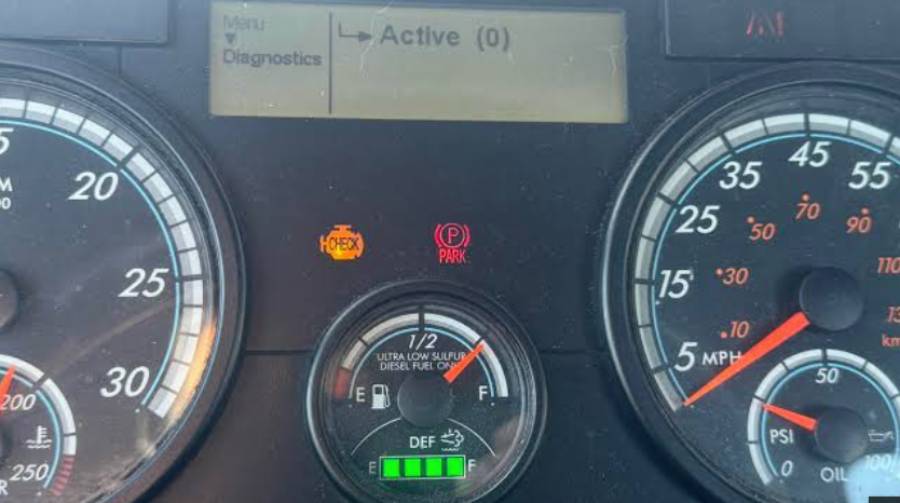
The Freightliner Cascadia DEF light turns on when the truck’s diesel exhaust fluid (DEF) level is low or reaches a critical warning threshold. DEF-related warnings can also appear because of contaminated fluid, faulty sensors, or problems with the selective catalytic reduction (SCR) system. The exact cause depends on the warning indicator, dashboard messages, and active diagnostic trouble codes.
A solid DEF light generally indicates a low fluid level, while a flashing warning can signal a more urgent condition. If the underlying problem remains unresolved, the truck may enter an engine derate condition that reduces engine power or limits vehicle speed. The warning sequence and severity vary by model year, engine configuration, and fault type.
To identify the problem, drivers should first check the DEF level, inspect the fluid for visible contamination, and review any accompanying dashboard warnings. If the tank is full but the light remains on, a DEF level sensor malfunction, an active aftertreatment fault, or another system issue may require diagnostic testing. Simply adding DEF or disconnecting the battery will not resolve every warning.
This guide explains what the Freightliner Cascadia DEF light means, why it comes on, how to diagnose common faults, and which repairs address the underlying causes. It also covers engine derate risks and when continued driving may be unsafe.
What Does the DEF Light Mean on a Freightliner Cascadia?
The DEF light on a Freightliner Cascadia indicates that the diesel exhaust fluid level has reached a warning threshold, requiring the driver to check the DEF supply. The light is part of the truck’s emissions monitoring system, which helps maintain the fluid supply needed for selective catalytic reduction (SCR). The meaning of the warning depends on whether the indicator is solid, flashing, or accompanied by other dashboard alerts.
A solid DEF light generally indicates a low DEF level and signals that the tank needs refilling. As the fluid level decreases, the warning may become more urgent. A flashing DEF light generally indicates a more critical low-fluid condition that requires prompt attention. Depending on the vehicle’s model year and engine configuration, continued operation without sufficient DEF can trigger engine power reduction or vehicle speed restrictions.
The DEF level indicator should not be confused with other aftertreatment warnings. A Freightliner Cascadia may display a check engine light, an emissions-related message, or an SCR system fault when components such as NOx sensors, DEF dosing equipment, or fluid quality monitoring systems malfunction. These faults may occur even when the DEF tank contains enough fluid.
Drivers should examine the DEF indicator alongside the dashboard messages and other active warning lights. A low-fluid warning calls for checking and replenishing the DEF supply, while a warning accompanied by an engine fault or derate message requires additional diagnosis. The specific warning sequence should be confirmed using the operator’s manual for the truck’s model year.
Why Is the DEF Light On in a Freightliner Cascadia?
The most common reasons a Freightliner Cascadia DEF light turns on include low DEF level, faulty level sensing, and DEF system malfunctions. Poor fluid quality and SCR system faults can also produce related aftertreatment warnings. Identifying the exact cause requires distinguishing a DEF level warning from a broader emissions-system fault.
1. Low DEF level. Insufficient diesel exhaust fluid is the primary condition monitored by the DEF level warning indicator. The SCR system uses DEF to help convert nitrogen oxides (NOx) in diesel exhaust into nitrogen and water vapor. As the tank level drops, the dashboard provides progressively more urgent warnings. Refilling the tank with DEF that meets ISO 22241 specifications addresses the problem when low fluid is the only cause.
2. Poor or contaminated DEF. DEF contains 32.5% high-purity urea and 67.5% deionized water. Contamination with diesel fuel, dirt, or other liquids can interfere with DEF dosing and SCR operation. Incorrect fluid concentration can also trigger quality-related diagnostic faults. A contaminated tank requires proper inspection and corrective service rather than simply adding fresh DEF to the existing mixture.
3. Faulty DEF level sensor. The DEF level sensor measures the fluid supply and sends information to the vehicle’s electronic control systems. A malfunctioning sensor, damaged wiring, or poor electrical connection can produce an inaccurate level reading. For example, the dashboard may continue displaying a low DEF warning after the tank has been filled. Comparing the reported level with the actual tank level and checking relevant fault codes helps identify the problem.
4. DEF pump or dosing system malfunction. The DEF pump supplies fluid to the dosing system, which meters DEF into the exhaust stream. Pump failures, blocked lines, damaged dosing components, or pressure regulation problems can prevent the system from delivering the required amount of fluid. These conditions generally produce aftertreatment fault codes or engine warnings rather than a simple low-level indication.
5. SCR system or NOx sensor faults. The SCR system relies on NOx sensor feedback to monitor emissions-control performance. A defective NOx sensor, wiring fault, or SCR efficiency problem can activate the check engine light and other aftertreatment warnings. Some faults may eventually lead to engine derate if the emissions system cannot operate correctly.
The most reliable way to distinguish these causes is to check the actual DEF level and retrieve active diagnostic trouble codes. A low DEF reading with an otherwise normal system points toward a refill requirement, while sensor, dosing, or SCR-related codes indicate the need for targeted diagnostic testing. Replacing components without confirming the fault can result in unnecessary repair costs.
How Do You Diagnose a DEF Warning Light on a Freightliner Cascadia?
To diagnose a DEF warning light on a Freightliner Cascadia, check the DEF level and fluid condition, retrieve active diagnostic trouble codes, and inspect the components associated with those codes. This sequence helps distinguish a simple low-fluid warning from a malfunction involving the DEF sensors, dosing system, or selective catalytic reduction (SCR) system.
How Do You Check the DEF Level and Fluid Quality?
Check the DEF level using the dashboard gauge and compare the reading with the actual amount of fluid in the tank. Park the truck on level ground, switch off the engine, and locate the DEF tank, which typically has a blue filler cap. A low reading indicates that the tank may need refilling, while an inaccurate reading after refilling suggests a possible level sensor or electrical problem.
Inspect the DEF for visible contamination before adding more fluid. Proper DEF is a clear, colorless liquid containing 32.5% high-purity urea and 67.5% deionized water. Cloudiness, unusual discoloration, or visible particles can indicate contamination, although fluid that looks normal is not necessarily within specification. A DEF refractometer designed for ISO 22241 fluid provides a more reliable concentration check. If diesel fuel or another foreign substance has entered the DEF tank, the contaminated fluid and affected components require appropriate service.
How Do You Read DEF System Fault Codes?
Read DEF system fault codes using a diagnostic tool compatible with the Freightliner Cascadia’s engine and electronic control systems. Detroit-powered Cascadia trucks can be diagnosed with Detroit DiagnosticLink, which provides access to fault information, operating parameters, and supported diagnostic procedures.
Heavy-duty trucks commonly identify faults using Suspect Parameter Number (SPN) and Failure Mode Identifier (FMI) combinations. The SPN identifies the affected parameter or system, while the FMI describes the type of detected failure. For example, a fault may indicate an implausible DEF level reading, insufficient DEF pressure, or an SCR performance problem. The exact SPN/FMI combination must be interpreted using the applicable engine service information.
Record active and previously logged fault codes before clearing anything. Active codes indicate conditions currently detected by the control system, while previously logged codes provide diagnostic history. Freeze-frame information and live sensor readings can help determine whether a fault results from low fluid, an electrical problem, or an aftertreatment malfunction.
How Do You Check DEF Sensors and Wiring?
Check DEF sensors and wiring by inspecting accessible electrical connectors, harnesses, and sensor readings associated with the active fault codes. The DEF tank assembly may contain level, temperature, and quality monitoring components, depending on the vehicle configuration. These components communicate information used by the aftertreatment control system.
Look for damaged insulation, loose connectors, corrosion, and wiring exposed to excessive heat or vibration. DEF leaks can also leave white crystalline deposits around fittings and connections. Such deposits indicate where fluid has dried but do not independently confirm that a sensor has failed.
Compare live diagnostic readings with actual operating conditions. For example, a DEF level reading that remains unchanged after a substantial refill may indicate a faulty sensor, damaged wiring, or a communication problem. Electrical measurements and component tests should follow the manufacturer’s service procedures to avoid damaging electronic control modules.
How Do You Fix the DEF Light on a Freightliner Cascadia?
To fix the DEF light on a Freightliner Cascadia, correct the condition responsible for the warning and verify that the vehicle’s monitoring system recognizes the repair. A low DEF level requires refilling, contaminated fluid requires appropriate system service, and failed sensors or dosing components require diagnosis and repair. There is no single reset procedure that fixes every DEF-related warning.
How Do You Fix DEF Fluid and Sensor Problems?
Low DEF level: Refill the tank with fresh diesel exhaust fluid meeting ISO 22241 specifications. Use a clean dispensing nozzle and avoid introducing dirt, water, or diesel fuel into the tank. After refilling, follow the vehicle’s normal startup procedure and check whether the DEF gauge updates and the warning clears. A warning that remains active requires further investigation.
Contaminated or incorrect DEF: Remove the unsuitable fluid and inspect the affected DEF supply components according to the manufacturer’s service instructions. Depending on the type and extent of contamination, the repair may require cleaning or replacing the tank, pump, lines, or dosing equipment. Adding fresh DEF to contaminated fluid does not reliably restore the required concentration or remove harmful substances.
Faulty DEF level sensor: Verify the sensor fault using diagnostic readings and electrical tests before replacing components. On certain Cascadia configurations, the level sensor is integrated into a larger DEF tank header assembly, so the replacement procedure depends on the installed system. Repair damaged wiring or connectors when they are the actual cause, then confirm that the dashboard reports the correct fluid level.
DEF pump or dosing malfunction: Diagnose the supply pressure, electrical controls, and dosing performance using the applicable service procedures. A failed pump, blocked supply line, or malfunctioning dosing valve can prevent proper DEF delivery. Repairs may involve replacing defective components, correcting leaks, or restoring fluid flow. These procedures generally require specialized diagnostic equipment and should be performed by a qualified technician.
How Do You Clear the DEF Warning After Repair?
Clear the DEF warning by confirming that the underlying problem has been corrected and completing any required system verification procedures. A low-level warning may disappear after the vehicle recognizes a sufficient DEF level, while an aftertreatment fault may require a successful diagnostic monitor, a service procedure, or additional operating conditions before the warning turns off.
Use a compatible diagnostic tool to review the fault status after completing the repair. Some inactive fault codes can be cleared using the appropriate service software, but clearing fault memory does not eliminate an active malfunction. If the system continues detecting the same problem, the warning can return.
Certain SCR-related faults and inducement conditions require manufacturer-specified verification or recovery procedures before normal engine operation is restored. These procedures vary by engine calibration, emissions configuration, and model year. Disconnecting the battery is not a reliable substitute for proper diagnosis and should not be used to bypass an unresolved emissions fault.
Finally, restart the truck as directed by the applicable service procedure, check the dashboard indicators, and verify that no relevant active faults remain. Confirm that DEF level readings, aftertreatment operating parameters, and engine performance are consistent with normal operation. A successful repair resolves the fault that caused the warning, not merely the illuminated indicator.
Why Is the Freightliner Cascadia DEF Light Still On After Refilling?
The Freightliner Cascadia DEF light may stay on after refilling because the DEF level sensor has not registered the new fluid level, the sensor is malfunctioning, or an active aftertreatment fault remains unresolved. Adding DEF corrects a low-fluid condition, but it does not repair electrical faults, contaminated fluid, or SCR system malfunctions.
Delayed DEF level recognition is one possible explanation. The vehicle’s electronic control system monitors fluid level information and uses it to determine when a low-level warning should clear. Depending on the model year and system configuration, the updated reading may not appear immediately after refilling. Check the dashboard gauge after completing the normal startup procedure and allow the system to update according to the manufacturer’s instructions. There is no universal waiting period that applies to every Cascadia.
A faulty DEF level sensor can also cause the warning to remain active despite a full tank. The sensor may report an incorrect fluid level because of an internal failure, damaged wiring, or a poor electrical connection. For example, if the tank is full but the dashboard continues displaying an empty or critically low reading, the sensor circuit requires inspection. A compatible diagnostic tool can help compare the reported DEF level with the actual tank condition.
Active aftertreatment faults are another reason a warning may persist after refilling. Problems involving DEF quality, dosing pressure, NOx sensors, or SCR performance are not resolved simply by increasing the fluid level. These conditions can trigger separate emissions-related warnings and may require component repairs or manufacturer-specified verification procedures.
If the warning remains on after the DEF level has been confirmed, retrieve the active fault codes before replacing components or attempting to clear the warning. The diagnostic results will help determine whether the problem involves level measurement, fluid quality, or another part of the aftertreatment system.
Can You Drive a Freightliner Cascadia With the DEF Light On?
You may be able to drive a Freightliner Cascadia with the DEF light on when the warning indicates a low fluid level and no critical engine or aftertreatment warnings are active. However, continued operation depends on the warning severity, available DEF, dashboard messages, and whether the truck has entered an engine derate condition. A flashing warning or an accompanying stop-engine alert requires a more urgent response than an initial low-level indication.
A solid low-DEF warning generally means the driver should replenish the fluid supply promptly. If the DEF level continues falling, the warning system may escalate and eventually activate operating restrictions. Drivers should not assume that a truck can complete a long trip simply because it still operates normally when the warning first appears.
The correct response is to check the dashboard messages, verify the DEF level, and determine whether additional engine or emissions-system faults are present. If the warning is accompanied by significant power loss, a critical engine alert, or abnormal operating conditions, stop in a safe location and follow the applicable operator’s manual.
Can a DEF Warning Cause Engine Derate?
A DEF-related warning can cause engine derate when the vehicle detects certain unresolved emissions-system conditions or a critically low DEF supply. Engine derate reduces available engine performance or imposes operating restrictions as part of the vehicle’s emissions compliance strategy. The exact restrictions depend on the engine calibration, applicable emissions requirements, and detected fault.
A Freightliner Cascadia equipped with a Detroit diesel engine uses electronic control systems to monitor DEF availability and aftertreatment performance. When qualifying faults remain active, the control system can progress through warning and inducement stages. Depending on the configuration and fault condition, these stages may involve reduced engine torque, limited vehicle speed, or other restrictions.
For example, a truck operating with an insufficient DEF supply may initially display a level warning. If the driver continues operating without correcting the condition, additional warnings and inducement restrictions may follow. Restoring the proper DEF level can resolve a fluid shortage, but an active SCR or sensor malfunction may require diagnostic repair and verification before restrictions are removed.
Engine derate should not be confused with a complete engine shutdown. Derate refers to a reduction or limitation in engine operation, while a stop-engine warning can indicate a separate critical condition requiring immediate attention. Drivers should use the specific dashboard message and vehicle documentation to determine the appropriate response.
When Should You Stop Driving Because of a DEF Warning?
Stop driving as soon as it is safe when a DEF-related warning is accompanied by a red stop-engine warning, severe engine performance problems, or an operating condition that makes continued travel unsafe. A routine low-fluid warning does not necessarily require an immediate roadside stop, but critical alerts and major performance restrictions should never be ignored.
A flashing DEF warning indicates a more urgent fluid-level condition on configurations that use this indicator sequence. The driver should arrange to replenish DEF promptly and check for additional dashboard messages. If the truck has already entered an emissions-related derate, assess whether it can safely reach an appropriate service location without creating a traffic hazard.
Reduced engine power can be particularly dangerous when climbing steep grades, merging onto highways, or operating with a heavy trailer. A truck that cannot maintain a safe speed under current road conditions should be moved to a suitable stopping location rather than driven until the restriction becomes more severe.
When a red stop-engine warning appears, follow the vehicle’s specified shutdown instructions after stopping safely. If the warning is accompanied by overheating, abnormal engine noise, or other serious mechanical symptoms, do not continue operating the truck until the condition has been evaluated.
Before resuming normal service, identify the warning’s cause and complete the necessary corrective action. The decision to continue driving should be based on the actual warning severity and vehicle operating condition, not simply on whether the engine still runs.
Read more: Freightliner Cascadia Stuck in Gear: Causes & Fixes
How Can You Prevent DEF Warning Lights on a Freightliner Cascadia?
Preventing DEF warning lights on a Freightliner Cascadia requires maintaining an adequate DEF level, using fluid that meets ISO 22241 specifications, preventing contamination, and inspecting the aftertreatment system during routine maintenance. These practices reduce avoidable low-fluid warnings and fluid-related malfunctions, although they cannot eliminate every sensor or SCR system fault.
Maintain an adequate DEF level. Check the DEF gauge before long trips and refill the tank before the fluid reaches a critical warning threshold. DEF consumption varies with engine load, driving conditions, and fuel consumption. Long-haul operations, heavy loads, and demanding routes can affect how quickly the supply is depleted. Monitoring the gauge during pre-trip inspections helps drivers plan refills before low-fluid warnings escalate into operating restrictions.
Use properly specified DEF. Freightliner Cascadia trucks equipped with SCR systems require diesel exhaust fluid that meets ISO 22241 requirements. DEF contains 32.5% high-purity urea and 67.5% deionized water. Using agricultural urea solutions, diluted DEF, or other substitute liquids can introduce impurities that damage dosing components or interfere with SCR performance. Purchase DEF from reliable suppliers and check container seals before use.
Prevent contamination during refilling and storage. Keep the DEF filler cap closed when the tank is not being filled, and use dispensing equipment intended for DEF. Diesel fuel, engine oil, dirt, and incompatible materials can contaminate the fluid. Store DEF in compatible containers away from unnecessary heat and direct sunlight, following the manufacturer’s storage guidance. DEF freezes at approximately 12°F (-11°C), but properly stored fluid generally remains usable after thawing if it has not been contaminated or degraded.
Inspect DEF system components during scheduled maintenance. Examine accessible DEF lines, tank connections, and electrical harnesses for leaks, damage, and loose connectors. White crystalline deposits around fittings can indicate dried DEF from a leak. Addressing leaks and electrical damage early helps prevent fluid delivery problems and inaccurate sensor readings. Follow the maintenance procedures specified for the truck’s engine and aftertreatment configuration rather than replacing components at arbitrary intervals.
What Are the Most Common Questions About Freightliner Cascadia DEF Warnings?
Can Cold Weather Cause DEF System Warnings?
Cold weather can contribute to DEF system warnings when frozen fluid, heater malfunctions, or temperature sensor faults interfere with normal DEF delivery. Diesel exhaust fluid freezes at approximately 12°F (-11°C), so Freightliner Cascadia trucks operating in freezing conditions rely on DEF heating and thawing functions to support SCR operation.
DEF freezing alone does not necessarily indicate a malfunction. The system is designed to accommodate normal freezing and thawing conditions. However, a defective tank heater, damaged heating circuit, or temperature sensor problem can prevent proper thawing and trigger diagnostic faults. If a DEF-related warning appears during cold weather, check for active heater and temperature-related fault codes before assuming that the fluid itself is defective.
Does Disconnecting the Battery Reset the Freightliner Cascadia DEF Light?
Disconnecting the battery is not a reliable method for resetting a Freightliner Cascadia DEF warning. The vehicle’s electronic control modules store diagnostic information, and active faults can remain present or return when the system resumes monitoring. Battery disconnection does not correct low DEF, defective sensors, contaminated fluid, or SCR malfunctions.
The appropriate approach is to identify and repair the underlying fault, then follow the applicable warning-clearance or diagnostic verification procedure. Some warnings clear automatically after the system recognizes normal operation, while others require service software or specific operating conditions.
Can a Bad NOx Sensor Cause a DEF System Warning?
A faulty NOx sensor can trigger SCR-related diagnostic faults and aftertreatment warnings on a Freightliner Cascadia. NOx sensors monitor nitrogen oxide levels in the exhaust system and provide feedback used to evaluate emissions-control performance. Incorrect sensor readings can interfere with SCR monitoring and cause the engine control system to detect an emissions-related malfunction.
A failed NOx sensor does not necessarily activate the dedicated low-DEF level indicator. Instead, it commonly produces a check engine warning or another aftertreatment-related alert. Diagnosing the problem requires reviewing fault codes, sensor readings, wiring condition, and relevant SCR operating parameters before replacing the sensor.
Do DEF Warning Lights Work the Same on Every Cascadia Model Year?
DEF warning lights do not operate identically on every Freightliner Cascadia model year. Warning messages, indicator behavior, diagnostic functions, and engine derate strategies depend on the vehicle’s engine, emissions-system configuration, and electronic control software.
For example, Cascadia trucks equipped with different generations of Detroit diesel engines may use different dashboard displays and aftertreatment diagnostic procedures. A warning sequence described for one configuration should not automatically be applied to another. Consult the operator’s manual and the appropriate Detroit service documentation for the specific vehicle when interpreting warnings or performing repairs.