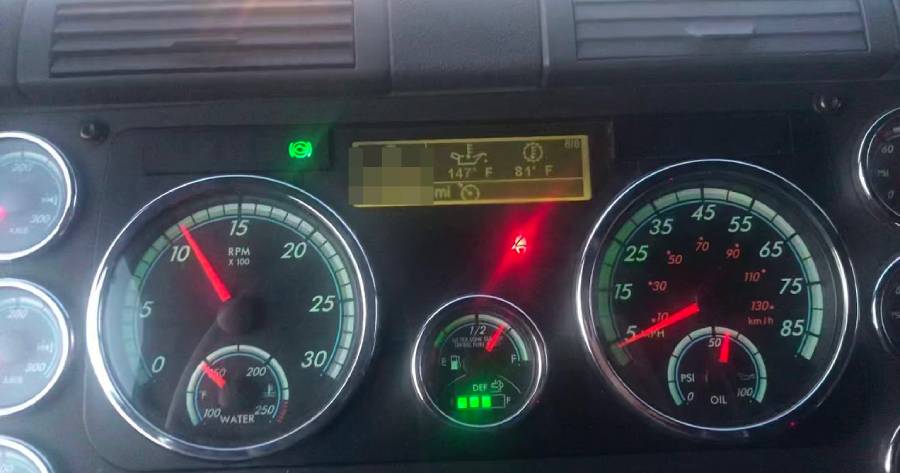
Freightliner Cascadia automatic transmission problems can include difficulty shifting gears, delayed or failed gear engagement, jerking during shifts, getting stuck in gear, and transmission fault warnings. These symptoms do not automatically mean the transmission itself has failed. Depending on the Cascadia model year and transmission configuration, the source of the problem may be the clutch or clutch actuator, shift actuator, sensors, electrical connections, low system voltage, transmission controls, or internal mechanical components.
The correct repair depends on identifying the symptom and confirming its underlying cause. For example, a Cascadia that refuses to go into gear may have an actuator or electrical control problem rather than internal transmission damage. Likewise, a transmission fault warning provides diagnostic evidence but does not prove that a specific component needs replacement. Fault codes, electrical supply, wiring, related sensors, and mechanical components should be checked systematically before major repairs are considered.
This guide explains the most common Freightliner Cascadia automatic transmission problems, what causes them, how they are diagnosed and fixed, whether the truck is safe to drive, expected repair costs, prevention, and the factors that affect transmission lifespan.
What Are the Most Common Freightliner Cascadia Automatic Transmission Problems?
The most common Freightliner Cascadia automatic transmission problems involve difficulty shifting, delayed or failed gear engagement, jerking during shifts, getting stuck in gear, and transmission fault warnings. The exact symptoms depend on the transmission configuration and the component causing the fault, so the same shifting problem can have several possible causes.
Difficulty shifting gears can appear as hard shifts, missed shifts, unusually slow shifts, or failure to complete a shift. An automated transmission depends on coordinated operation between the transmission controls, clutch system, actuators, sensors, and electrical system. A fault in one part of this process can prevent the transmission from selecting or engaging the expected gear even when the internal gears are not damaged.
A Cascadia that will not go into gear or remains in neutral requires particular attention because the problem can prevent the truck from moving. Possible fault areas include the clutch or actuator system, transmission controls, sensors, electrical connections, and other components involved in gear engagement. The diagnostic process should determine which system is responsible before an actuator, clutch, or transmission assembly is replaced.
Jerking during gear changes is another sign that the engagement or shifting process is not operating correctly. The truck may hesitate and then engage abruptly instead of completing a controlled shift. Clutch operation, actuator performance, calibration, and transmission control inputs are relevant areas to inspect when this symptom occurs. The symptom alone is not enough to identify which component has failed.
Getting stuck in one gear or repeatedly failing to complete shifts can indicate a more significant control or mechanical problem. Drivers should pay attention to accompanying symptoms such as a transmission warning, inability to select another gear, unusual noises, or loss of normal vehicle response. These additional symptoms help distinguish an intermittent control fault from a problem requiring immediate mechanical inspection.
A transmission fault warning indicates that the transmission control system has detected an abnormal condition, but the warning does not identify the failed component by itself. The associated diagnostic trouble codes should be retrieved and interpreted before repairs begin. Replacing a transmission component solely because a warning appears can lead to unnecessary repairs when the actual fault is electrical, sensor-related, or elsewhere in the control system.
What Causes Freightliner Cascadia Automatic Transmission Problems?
Freightliner Cascadia transmission problems can originate from the clutch and actuator system, sensors, electrical supply, wiring and connectors, transmission controls, or internal mechanical components. The correct cause depends on the transmission installed in the truck and the diagnostic evidence associated with the symptom.
Clutch and actuator faults can cause problems when the transmission cannot engage or disengage the drivetrain correctly during a shift. The driver may experience poor gear engagement, abnormal shifting, hesitation, or failure to select a gear. An actuator-related symptom should still be confirmed through diagnosis because electrical supply, wiring, sensor information, and control commands can affect actuator operation.
Sensor faults can disrupt shifting when the transmission control system receives incorrect or missing information. Automated shifting relies on electronic inputs to determine operating conditions and coordinate gear changes. A sensor or its circuit can therefore produce symptoms that resemble a mechanical transmission problem. Diagnostic trouble codes and live operating data, where available, help identify whether the sensor itself or its electrical circuit is responsible.
Low system voltage and electrical faults can also interfere with electronically controlled transmission operation. Weak batteries, poor electrical connections, damaged wiring, corroded connectors, or grounding problems can affect communication and component operation. Checking the electrical system is therefore an important part of diagnosis before assuming that an expensive mechanical component has failed.
Transmission control or calibration problems form another potential cause category. The transmission’s electronic controls coordinate shifting with information from multiple systems, while some service procedures can require appropriate calibration or adaptation. When the control system does not receive the correct information or a related component is not operating as expected, shifting behavior can become abnormal.
Internal mechanical damage is the more serious possibility, but mechanical transmission failure should be confirmed rather than inferred from a shifting symptom alone. Internal wear or damage becomes more likely when diagnostic evidence and physical symptoms rule out external electrical, control, sensor, clutch, or actuator faults. This distinction matters because replacing or rebuilding a transmission is substantially different from repairing an external component.
The Cascadia model year and installed transmission must also be identified before diagnosis. Not every Freightliner Cascadia uses the same transmission configuration, so fluid requirements, components, maintenance procedures, calibration processes, and potential failure points should be matched to the specific transmission rather than generalized across every Cascadia.
How Do You Diagnose Freightliner Cascadia Transmission Problems?
Diagnose Freightliner Cascadia transmission problems by identifying the exact symptom, retrieving transmission fault codes, checking the electrical supply, inspecting related components, and determining whether the fault is electronic or mechanical. This sequence reduces the risk of replacing expensive transmission components before the actual source of the problem has been identified.
Start by defining the symptom precisely. A truck that will not go into gear requires a different diagnostic path from one that shifts normally but occasionally displays a transmission warning. Record whether the problem involves neutral, forward gears, reverse, delayed engagement, hard shifting, missed shifts, jerking, or a specific warning message. Also note whether the fault occurs continuously or only after startup, under load, or after the drivetrain reaches operating temperature.
Next, check the truck’s electrical condition. Electronically controlled and automated transmission systems depend on stable voltage, reliable grounds, intact wiring, and secure connectors. Inspect the relevant batteries, power supply, grounds, harnesses, and connectors when electrical symptoms or fault codes indicate these areas. A voltage or connection problem should be corrected before condemning an actuator, control module, or mechanical transmission component.
The next step is to compare the recorded fault codes with the physical symptoms. A fault code identifies the system or condition detected by the controller; it does not automatically prove that the named component has mechanically failed. For example, a component-related fault can result from the component itself, its wiring, a connector, its power supply, or another condition that prevents the expected signal or operation.
Component testing should follow the diagnostic evidence. Depending on the installed transmission and retrieved codes, this can include inspection of the clutch system, actuators, sensors, wiring, connectors, control system, and internal mechanical components. The transmission model should be identified before applying a diagnostic procedure because Cascadia trucks can have different transmission configurations.
Mechanical diagnosis becomes more important when electrical and control checks do not explain the problem or when the truck shows physical evidence of internal damage. Abnormal noises, persistent failure to engage or shift, or other severe symptoms can justify deeper inspection. Major transmission repair or replacement should therefore be the result of diagnosis rather than the first response to a transmission warning.
How Do You Check Freightliner Cascadia Transmission Fault Codes?
Check Freightliner Cascadia transmission fault codes with a compatible diagnostic system that can communicate with the truck’s transmission and related electronic control modules. The retrieved codes provide a starting point for identifying which system detected the abnormal condition and determining the next diagnostic test.
Record all active and stored codes before clearing them. Active codes indicate faults currently detected by the system, while stored or previously recorded faults can provide context for intermittent problems. Information associated with a code can help connect a driver’s complaint, such as failure to shift, with an electrical circuit, sensor, actuator, communication issue, or another monitored condition.
Fault codes should then be interpreted according to the specific Cascadia model year, transmission model, and applicable service information. A generic description is not enough when different transmission systems use different components and diagnostic procedures. This is particularly important when a truck has an automated manual transmission rather than a conventional automatic transmission.
Do not replace a component based only on the name appearing in a fault-code description. Confirm the fault through the required circuit, voltage, wiring, connector, sensor, actuator, or mechanical tests first. For example, an actuator-related code does not distinguish by itself between a failed actuator and a wiring or power-supply problem that prevents the actuator from operating correctly.
Clearing a code without correcting its cause is also not a repair. After the underlying problem has been repaired, the transmission should be checked again according to the applicable service procedure. If the system requires calibration, adaptation, or another post-repair procedure, that process must also be completed before normal operation is confirmed.
How Do You Fix Freightliner Cascadia Automatic Transmission Problems?
Fix Freightliner Cascadia automatic transmission problems by repairing the specific electrical, sensor, actuator, clutch, control, or mechanical fault identified during diagnosis. There is no single reset or component replacement that correctly fixes every Cascadia transmission problem.
Electrical faults should be corrected at their source. This can mean restoring proper system voltage, repairing damaged wiring, cleaning or repairing connections, or correcting grounding problems. Electrical checks are especially important when several electronic faults appear together or when transmission behavior changes with system voltage.
Sensor-related problems require confirmation of both the sensor and its circuit. A replacement sensor will not solve the problem when damaged wiring, a poor connector, or another electrical condition is responsible for the incorrect signal. The repaired system should provide the expected input to the transmission controller before the repair is considered complete.
Clutch and actuator problems require diagnosis of the affected system before parts are replaced. Repair or replacement should target the component proven to be faulty, followed by any required setup, calibration, or adaptation procedure specified for that transmission. Skipping these procedures can leave the truck with abnormal shifting even after a component has been replaced.
Transmission control and calibration issues should likewise be handled according to the installed transmission and manufacturer service procedures. Software, calibration, and electronic control faults should not be treated as interchangeable with mechanical damage. Confirming which type of failure exists prevents unnecessary mechanical work.
Internal repair or transmission replacement becomes appropriate when testing confirms mechanical damage that cannot be corrected through external component repair. This is the highest-cost repair category and should come after the relevant electrical, control, sensor, clutch, and actuator causes have been evaluated. A truck that will not shift does not, by that symptom alone, prove that the complete transmission needs replacement.
Can You Drive a Freightliner Cascadia With a Transmission Problem?
You should not continue driving a Freightliner Cascadia when the transmission problem prevents reliable gear engagement, causes severe or unpredictable shifting, or affects your ability to control the truck. Minor or intermittent symptoms may still allow the truck to move, but continued operation without diagnosis can turn an existing fault into a roadside breakdown or contribute to additional drivetrain damage.
Stop driving when the Cascadia will not reliably go into gear, unexpectedly drops out of gear, becomes stuck in a gear, or develops severe shifting behavior that makes vehicle response unpredictable. These symptoms directly affect the driver’s ability to control acceleration and drivetrain response. Moving a loaded commercial truck with unreliable gear engagement creates a different level of risk from driving a passenger vehicle with a minor shift-quality complaint.
A transmission fault warning also requires attention, but the warning alone does not determine whether the truck is safe to continue driving. Its significance depends on the associated fault code and the truck’s behavior. A warning accompanied by loss of gear engagement or severe shifting requires a more cautious response than a stored fault with no current drivability symptoms.
Intermittent hard shifting, delayed engagement, or recurring transmission warnings should be diagnosed promptly even when the Cascadia remains drivable. Continuing to operate the truck without identifying the cause can place additional stress on the clutch, actuators, or other drivetrain components if one of these systems is already operating incorrectly.
The safest decision should therefore be based on fault severity rather than whether the truck can physically move. A truck that still moves can have a transmission problem serious enough to require immediate service. If normal gear selection or predictable drivetrain response cannot be maintained, the truck should be inspected rather than driven until the fault becomes worse.
How Much Does It Cost to Fix Freightliner Cascadia Transmission Problems?
The cost to fix a Freightliner Cascadia transmission problem depends primarily on whether the fault involves diagnosis and electrical work, a sensor, an actuator, the clutch system, or internal transmission damage. There is no accurate single repair price for every Cascadia because these repairs differ substantially in parts, labor, diagnostic time, and transmission configuration.
Electrical and wiring problems can involve troubleshooting batteries, power supplies, grounds, harnesses, connectors, and communication circuits. The final cost depends on how quickly the fault can be located and whether the repair requires a simple connection repair or replacement of a larger section of the electrical system. Diagnostic labor can therefore represent a significant part of the bill even when the failed part itself is inexpensive.
Sensor-related repairs are also determined by more than the price of the sensor. Technicians must first confirm that the sensor is faulty rather than responding incorrectly because of damaged wiring, a connector problem, or another system fault. Accurate diagnosis can reduce total repair cost by preventing unnecessary parts replacement.
Clutch and actuator repairs can become more expensive because they may involve substantial parts and labor as well as calibration or setup procedures after installation. The exact procedure depends on the transmission installed in the Cascadia. A quote for an actuator or clutch repair should therefore identify the transmission configuration and the work included rather than relying on a generic Cascadia transmission estimate.
Internal transmission repair or complete replacement generally represents the most extensive repair category. The total expense can depend on the damaged components, labor requirements, whether the transmission is repaired or replaced, and whether new, remanufactured, or other appropriate replacement components are used. Additional drivetrain problems discovered during inspection can further change the final cost.
For this reason, obtaining a diagnosis before comparing repair prices is more useful than starting with an average transmission replacement figure. Two Cascadia trucks displaying similar symptoms can require completely different repairs. One may need an electrical or external component repair, while another may have confirmed internal mechanical damage requiring major transmission work.
Read more: Freightliner Shuts Off While Driving: Causes & Fixes
How Can You Prevent Freightliner Cascadia Transmission Problems?
Prevent Freightliner Cascadia transmission problems by following the maintenance requirements for the installed transmission, correcting electrical faults early, responding to abnormal shifting promptly, and repairing related drivetrain problems before they affect transmission operation. Preventive maintenance should be based on the truck’s specific transmission configuration rather than a single service schedule applied to every Cascadia.
Follow the transmission manufacturer’s specified maintenance intervals for the exact model installed in the truck. Service requirements can differ in fluid specifications, fluid-change intervals, clutch-related procedures, inspections, and calibration requirements. Using an incorrect fluid or applying a maintenance procedure intended for another transmission configuration can create additional problems rather than prevent them.
Maintain the truck’s electrical system because electronically controlled transmission operation depends on stable power and reliable communication. Batteries, grounds, wiring harnesses, and connectors should be inspected when the truck develops voltage-related faults or intermittent electrical symptoms. Correcting a weak connection or unstable power supply early can prevent repeated transmission faults caused by unreliable electronic operation.
Respond to changes in shifting behavior instead of waiting for the truck to stop moving. Delayed engagement, repeated hard shifts, missed shifts, jerking, difficulty selecting a gear, and recurring transmission warnings are early reasons to perform diagnosis. These symptoms provide an opportunity to locate a sensor, actuator, clutch, electrical, or control problem before the fault develops into a more disruptive failure.
Do not treat clearing a transmission fault code as preventive maintenance. Clearing the code removes the recorded warning but does not correct the condition that triggered it. The underlying circuit, component, calibration, or mechanical problem should be identified and repaired before the truck returns to normal service.
Driving conditions also matter. A Cascadia used for heavy hauling, frequent stop-and-go operation, steep grades, or other demanding duty cycles can place different loads on drivetrain components than a truck operating primarily at steady highway speeds. Maintenance planning should therefore consider manufacturer requirements, vehicle application, operating conditions, mileage, and existing diagnostic history together.
How Long Does a Freightliner Cascadia Transmission Last?
There is no single mileage at which every Freightliner Cascadia transmission will fail. Transmission lifespan depends on the transmission model, maintenance history, duty cycle, vehicle load, operating environment, driving conditions, and whether developing faults are repaired before they affect other components.
Transmission configuration is one of the first factors to consider. Freightliner Cascadia trucks have been produced across different model years and drivetrain configurations, so a lifespan estimate for one transmission should not automatically be applied to another. Maintenance procedures and potential wear points can also differ between transmission designs.
Duty cycle can significantly change component wear. A long-haul truck that spends much of its operating time at stable highway speeds places different demands on its transmission and clutch system than a Cascadia that repeatedly starts, stops, maneuvers, or shifts under demanding conditions. Vehicle load and terrain further change the stress placed on drivetrain components.
Maintenance history is equally important. A transmission that receives the correct scheduled service and has developing faults diagnosed early has a different risk profile from one operated with recurring shifting problems or unresolved fault codes. Maintenance records therefore provide more useful information about an individual truck than mileage alone.
The condition of related components must also be considered when evaluating transmission life. Clutch, actuator, sensor, wiring, electrical, and control problems can affect shifting without proving that the internal transmission has reached the end of its service life. This distinction is particularly important when evaluating a high-mileage Cascadia for repair or replacement.
For this reason, transmission condition should be evaluated through service history, diagnostic results, shift quality, fault history, and physical inspection rather than mileage alone. A high odometer reading is a reason for closer evaluation, not by itself evidence that the transmission requires replacement.