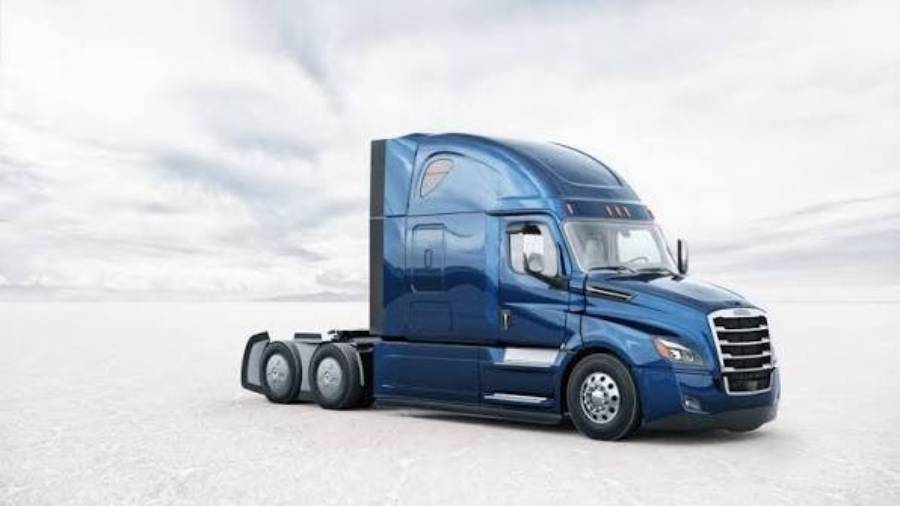
Freightliner Cascadia AC not working can result from refrigerant loss, compressor problems, electrical faults, blower motor failure, restricted airflow, or HVAC control issues. The exact cause depends heavily on the symptom. An AC system that blows air but does not cool points toward a different group of problems than a system that produces no airflow from the vents.
When the vents produce normal airflow but the air stays warm, the diagnosis should focus on the cooling circuit. Low refrigerant, a refrigerant leak, a compressor that does not engage, pressure sensor faults, and condenser-related problems are possible causes. When little or no air comes from the vents, the blower motor, fuse, relay, wiring, cabin air filter, and HVAC controls become more relevant.
A systematic diagnosis prevents unnecessary parts replacement. Start by identifying whether the problem involves cooling, airflow, or both. Then check the simpler electrical and airflow components before moving to refrigerant pressure, compressor, sensor, and HVAC control diagnosis. This guide explains the main causes of Freightliner Cascadia AC failure, how to narrow down the faulty component, which repairs may be handled through basic troubleshooting, and when professional AC service is necessary.
Why Is My Freightliner Cascadia AC Not Working?
A Freightliner Cascadia AC can stop working because of faults in 5 main areas: the refrigerant circuit, compressor system, electrical circuit, airflow system, or HVAC controls. The exact fault should be narrowed down from the symptoms before any component is replaced. An AC system that blows warm air requires a different diagnostic path from one that produces no airflow at all.
Refrigerant-related problems primarily affect cooling performance. A refrigerant leak can reduce system pressure until the AC can no longer cool the cab effectively. Depending on the system configuration and operating conditions, pressure protection can also prevent compressor operation when refrigerant pressure is outside the permitted range. Recharging the system without identifying a leak does not correct the underlying fault because the refrigerant can escape again.
Compressor and electrical faults can produce similar symptoms. A compressor that does not operate may result from a problem with the compressor itself, but the cause can also be a fuse, relay, wiring connection, pressure sensor, or HVAC control command. For this reason, a non-operating compressor should not automatically be diagnosed as a failed compressor.
Airflow problems form a separate category. A failed blower motor or fault in its electrical circuit can prevent air from reaching the vents even when other parts of the AC system are functional. A restricted cabin air filter can also reduce airflow, although it is more likely to cause weak airflow than a complete loss of blower operation.
What Causes a Freightliner Cascadia AC to Stop Blowing Cold Air?
A Freightliner Cascadia AC that blows air but does not blow cold air most directly points to a cooling-system problem rather than a basic airflow problem. The main areas to investigate are refrigerant charge and leakage, compressor operation, condenser performance, pressure sensing, and HVAC controls.
Low refrigerant is an important possibility because the AC needs the correct refrigerant charge and operating pressures to transfer heat effectively. Refrigerant does not normally disappear simply because the AC has been used for a long time. A system that repeatedly becomes low therefore needs to be inspected for a leak instead of being treated only with repeated recharging.
Compressor operation is another key diagnostic point. The compressor circulates refrigerant through the AC circuit, so a compressor that is not operating can leave the blower pushing ambient or warm air through the vents. However, compressor inactivity does not prove mechanical compressor failure. An electrical fault, pressure-related protection, control fault, or another input preventing compressor activation can produce the same symptom.
Condenser performance can also reduce cooling. The condenser must reject heat from the refrigerant to the surrounding air. Restricted airflow through the condenser, contamination, physical damage, or another condenser-related problem can interfere with heat rejection and reduce AC performance, particularly under demanding operating conditions.
The symptom should therefore be diagnosed as a system rather than by replacing the first component associated with cooling. Confirm that the blower produces adequate airflow, determine whether the compressor is operating as commanded, inspect the electrical circuit, and evaluate the refrigerant system before deciding which component requires repair.
Why Is My Freightliner Cascadia AC Not Blowing Air?
A Freightliner Cascadia AC that produces no airflow from the vents should first be checked for a blower motor or blower electrical-circuit problem. Refrigerant problems affect the temperature of the air, but they do not normally explain why the cabin blower produces no airflow at all.
Start by checking whether the blower works at any fan-speed setting. A blower that remains completely inactive can point toward loss of electrical power, a blown fuse, a faulty relay where applicable, damaged wiring, a failed blower motor, or a problem within the blower/HVAC control circuit. A blower that operates only under certain settings can indicate a different electrical or control fault and should be diagnosed according to the circuit used by that Cascadia configuration.
Weak airflow requires a different approach from zero airflow. A restricted cabin air filter can reduce the volume of air reaching the cab even though the blower motor is still operating. Airflow restrictions elsewhere in the HVAC path can create similar symptoms. Checking the filter and accessible air passages helps separate a restriction from an electrical failure.
The distinction between “not blowing cold” and “not blowing air” is therefore one of the most important early diagnostic steps. If airflow is normal but warm, investigate the cooling circuit. If airflow is absent, investigate the blower and its electrical controls first. If airflow is weak, check both blower performance and restrictions before moving deeper into the AC system.
How Do You Diagnose a Freightliner Cascadia AC That Is Not Working?
To diagnose a Freightliner Cascadia AC that is not working, identify the exact symptom first, then check airflow, the electrical supply, compressor operation, refrigerant condition, wiring, sensors, and HVAC controls in that order. This sequence separates basic airflow and electrical faults from faults that require refrigerant-system testing or more advanced HVAC diagnostics.
Start by determining whether the AC has no airflow, weak airflow, warm airflow, or intermittent cooling. No airflow directs the diagnosis toward the blower motor and its electrical circuit. Weak airflow makes a restricted cabin air filter, blower performance, or another airflow restriction more relevant. Normal airflow that remains warm shifts attention toward refrigerant, compressor operation, condenser performance, pressure sensing, and HVAC controls.
Next, check the basic electrical components associated with the affected circuit. Inspect the appropriate fuse and relay where applicable, then look for loose connectors, damaged wiring, corrosion, or other visible electrical problems. A blown fuse should be treated as a symptom when it fails repeatedly. Installing another fuse without finding the cause does not repair an underlying short circuit, overloaded component, or wiring fault.
Check compressor operation after basic electrical faults have been considered. Determine whether the compressor is being commanded to operate and whether it responds correctly. A compressor that does not engage should not immediately be replaced because low refrigerant pressure, an electrical fault, a sensor input, or an HVAC control problem can prevent operation.
Refrigerant-system diagnosis becomes necessary when airflow and basic electrical operation appear normal but cooling remains poor. Refrigerant pressure testing and leak diagnosis can determine whether the system has lost refrigerant or has another pressure-related problem. These tests require the correct AC service equipment and specifications for the truck being diagnosed.
The final stage is checking sensors and HVAC controls when the mechanical and basic electrical components do not explain the failure. Diagnostic trouble codes, circuit testing, pressure readings, and commanded-versus-actual component operation can help isolate a control problem. This step-by-step approach reduces unnecessary component replacement because each test narrows the number of possible causes.
How Do You Check the Freightliner Cascadia AC Fuse and Relay?
Check the Freightliner Cascadia AC fuse and relay by first identifying the correct circuit for the truck’s model year and configuration, then inspecting and electrically testing the relevant components. Do not assume that every Cascadia uses the same fuse number, relay position, or electrical layout.
Start with the fuse information provided for the specific truck. Locate the circuit associated with the HVAC, blower, compressor, or related AC component that has stopped operating. A visual inspection can identify an obviously broken fuse element, but an electrical test provides a more reliable confirmation of whether the fuse has continuity and power where expected.
A blown fuse should be replaced only with the specified fuse rating. Installing a higher-amperage fuse to prevent repeated failure can leave the circuit without its intended protection. More importantly, a replacement fuse that blows again indicates that another fault remains in the circuit. Damaged wiring, a short to ground, a failing motor, or another electrical problem should then be investigated rather than continuing to replace fuses.
The relay should also be tested when the affected circuit uses one and the symptoms indicate that the controlled component is not receiving power. A relay can fail internally even when there is no obvious external damage. Diagnosis should confirm the relay’s power supply, control signal, ground where applicable, and switched output rather than relying only on appearance.
Fuse and relay checks are especially valuable early in the diagnostic process because they can identify a relatively simple electrical fault before more expensive components are investigated. However, a good fuse and relay do not prove that the compressor, blower motor, wiring, sensors, or HVAC controls are functioning correctly. They only eliminate specific electrical components from the list of likely causes.
Why Is the Freightliner Cascadia AC Compressor Not Engaging?
A Freightliner Cascadia AC compressor may not engage because of an electrical supply fault, incorrect refrigerant pressure, sensor or control problems, wiring faults, or a problem with the compressor or its engagement mechanism where applicable. Compressor inactivity is therefore a symptom that requires diagnosis rather than proof that the compressor itself has failed.
Low refrigerant pressure is one condition that can affect compressor operation. The AC system uses pressure information and protective logic to prevent operation under conditions that could damage components. If refrigerant has escaped through a leak and system pressure falls outside the permitted range, compressor operation may be inhibited. The appropriate repair is then to identify the leak and restore the system correctly rather than replacing the compressor solely because it is not operating.
Electrical faults can create the same symptom. A blown fuse, faulty relay where used, damaged connector, broken wire, poor connection, or control-circuit fault can prevent the compressor from receiving the required command or electrical supply. Testing the circuit establishes whether the compressor is receiving what it needs to operate.
Sensor and HVAC control problems should also be considered. The compressor depends on system inputs and control decisions rather than operating continuously whenever the AC button is selected. An incorrect pressure input or control fault can therefore stop compressor operation even when the compressor itself remains mechanically functional.
How Can You Tell if the Freightliner Cascadia AC Compressor Is Bad?
A Freightliner Cascadia AC compressor should be considered faulty only after testing separates an actual compressor failure from the electrical, refrigerant-pressure, sensor, and control problems that can prevent it from operating. The key distinction is between a compressor that cannot operate correctly and a functional compressor that is simply not being commanded or permitted to run.
A compressor-related fault becomes more likely when the required operating conditions and electrical inputs are present but the compressor fails to respond correctly. Abnormal compressor noise, evidence of mechanical damage, or pressure behavior inconsistent with correct compressor operation can provide additional diagnostic evidence. One symptom by itself is not enough to establish the diagnosis.
This distinction matters because compressor replacement is substantially more involved than replacing a fuse or correcting a connection. Confirming the failed component before repair prevents a functional compressor from being replaced while the original electrical, pressure, or control fault remains unresolved.
Can Low Refrigerant Cause the Freightliner Cascadia AC to Stop Working?
Low refrigerant can cause a Freightliner Cascadia AC to stop cooling properly and can contribute to conditions that prevent compressor operation. The AC system depends on the correct refrigerant charge and pressure range to absorb heat inside the cab and release it through the condenser. When refrigerant is insufficient, cooling capacity decreases and the system may eventually blow air that feels warm instead of cold.
Low refrigerant should be treated as a condition to diagnose rather than the final cause of the problem. An automotive AC system is a closed circuit, so a significant refrigerant loss indicates that refrigerant has escaped somewhere in the system. Potential leak points include connections, hoses, seals, service ports, condenser components, evaporator components, and compressor-related seals or fittings.
Refrigerant pressure can also influence compressor operation. The HVAC system uses pressure information to determine whether operating conditions are acceptable. When pressure falls outside the permitted operating range, compressor operation may be restricted to protect the system. This means a Cascadia with low refrigerant can present two related symptoms: poor cooling and a compressor that does not operate as expected.
Adding refrigerant without diagnosing the reason for refrigerant loss can provide only a temporary result. If a leak remains, system performance will decline again as refrigerant escapes. The correct repair sequence is to confirm the refrigerant condition, locate and repair the leak when present, verify system integrity, and then restore the specified refrigerant charge using the appropriate AC service procedure.
How Can You Tell if a Freightliner Cascadia Has an AC Refrigerant Leak?
A Freightliner Cascadia may have an AC refrigerant leak when cooling performance progressively decreases, the system repeatedly requires refrigerant, or testing identifies refrigerant escaping from the AC circuit. Repeated loss of cooling after recharge is particularly important because it indicates that simply adding refrigerant has not corrected the underlying problem.
Visual inspection can identify evidence around accessible AC components and connections. Refrigerant itself can escape without leaving an obvious visible trail, but refrigerant oil circulating through the system may leave oily residue near certain leak points. Physical damage to the condenser, hoses, fittings, or other accessible components can provide additional evidence that further leak testing is required.
Pressure measurements help evaluate system operation but should not be treated as a complete leak test by themselves. AC pressures change with system conditions, ambient temperature, compressor operation, and other variables. Proper diagnosis combines pressure information with the appropriate leak-detection method and vehicle-specific service specifications.
A confirmed leak should be repaired before the system is returned to normal service. This prevents repeated refrigerant loss and avoids confusing a refrigerant problem with compressor, sensor, or HVAC control faults that can produce similar cooling symptoms.
Can a Bad Blower Motor Cause the Freightliner Cascadia AC Not to Work?
A bad blower motor can make a Freightliner Cascadia AC appear not to work because the blower is responsible for moving conditioned air through the HVAC ducts and into the cab. The refrigeration circuit may still be capable of cooling, but the driver receives little or no conditioned air when the blower cannot move air through the vents.
A completely failed blower commonly produces no airflow at any selected fan speed. Before condemning the motor, however, the blower circuit should be checked for electrical power and control. A fuse, wiring fault, connector problem, control-circuit issue, or another electrical component can stop a functional blower motor from operating.
The fan-speed behavior also provides useful diagnostic information. A blower that never operates presents a different electrical pattern from one that works intermittently or operates only under certain settings. Testing the relevant blower circuit under the conditions in which the failure occurs helps determine whether the problem originates in the motor or in its power and control system.
Blower failure should also be separated from poor cooling. No airflow points primarily toward the blower or airflow system, while normal airflow that remains warm points primarily toward the cooling system. Making this distinction early prevents unnecessary refrigerant service when the actual problem is that air is not being moved through the HVAC system.
Can a Dirty Cabin Air Filter Cause Weak AC Airflow in a Freightliner Cascadia?
A dirty or heavily restricted cabin air filter can cause weak airflow from a Freightliner Cascadia HVAC system by reducing the volume of air that can pass through the ventilation path. The blower must move air through the filter before conditioned air reaches the cab, so accumulated dirt and debris can create resistance to airflow.
A restricted filter is most relevant when the blower can be heard operating but airflow from the vents is weaker than expected. Depending on the condition of the filter and HVAC system, the driver may notice reduced air volume even after selecting a higher fan setting. Inspecting the filter is therefore a logical early step when weak airflow is the primary symptom.
The cabin air filter should not, however, become a catch-all diagnosis for every AC problem. A dirty filter does not explain why the compressor fails to operate, why refrigerant has leaked, or why a blower motor receives no electrical power. Likewise, replacing the filter will not repair a failed blower motor or an electrical open circuit.
The diagnostic distinction is straightforward: check the cabin air filter when airflow is restricted, check the blower circuit when airflow is absent, and investigate the refrigerant and compressor systems when airflow is normal but not cold. Separating these symptoms keeps the troubleshooting process focused on the components most capable of producing the observed failure.
Why Does the Freightliner Cascadia AC Work Intermittently?
A Freightliner Cascadia AC that works intermittently can have a fault involving an electrical connection, relay, sensor, refrigerant pressure, compressor operation, or HVAC control system. Intermittent problems require diagnosis while the failure is occurring because a component may test normally after the AC begins working again.
Electrical connections are one area to inspect. A loose connector, damaged wire, corrosion, or another poor connection can interrupt power or control signals under specific conditions. Vibration and changes in component temperature can also make an existing connection problem appear and disappear. Inspecting accessible wiring and connectors can identify visible damage, but electrical testing is required to confirm whether the circuit loses power, ground, or a control signal when the AC stops operating.
A relay or other electrical control component can also produce intermittent operation. For example, a component may function when cold but stop operating after its temperature changes. The useful diagnostic evidence is not simply that the AC stopped cooling; it is whether electrical supply or the control command disappeared at the same time.
Refrigerant pressure and sensor inputs can create another pattern of intermittent cooling. The compressor operates according to system conditions and HVAC commands rather than running continuously whenever AC is selected. If pressure moves outside the permitted operating range or a sensor provides an incorrect input, compressor operation may be interrupted. Pressure measurements and diagnostic data can help distinguish this condition from an actual compressor failure.
Compressor problems themselves should be considered after the supporting systems have been checked. If the compressor repeatedly stops operating despite correct electrical inputs and acceptable operating conditions, further compressor diagnosis is justified. Replacing it before verifying those conditions risks leaving the actual intermittent fault unresolved.
The most effective approach is to record what stops working when the fault occurs. Determine whether the blower stops, airflow remains but becomes warm, the compressor stops operating, or the entire HVAC control system behaves abnormally. That observation substantially narrows the diagnostic path.
How Do You Fix a Freightliner Cascadia AC That Is Not Working?
Fix a Freightliner Cascadia AC by repairing the specific fault identified during diagnosis rather than replacing components based only on symptoms. The correct repair depends on whether the failure originates in the electrical circuit, refrigerant system, compressor, blower system, airflow path, sensors, or HVAC controls.
Replace a blown fuse with the specified rating after checking why it failed. A single failed fuse may restore the affected circuit after replacement, but repeated fuse failure requires electrical diagnosis. Wiring damage, a short circuit, or a failing electrical component must be corrected before the circuit can be considered repaired.
Repair refrigerant leaks before restoring the correct refrigerant charge. If testing confirms that refrigerant has escaped, locate the leak and repair or replace the affected component as required. The system can then be serviced according to the appropriate specifications. Repeatedly adding refrigerant without repairing the leak addresses the symptom rather than the failure.
Repair blower-related problems according to the result of circuit testing. A restricted cabin air filter requires filter replacement, while a blower motor that has failed requires a different repair. When the blower itself tests correctly but does not receive the required power or control, the electrical or HVAC control fault should be repaired instead of replacing the motor.
Replace or repair the compressor only after compressor failure has been confirmed. If the compressor does not operate because of low refrigerant pressure, a wiring fault, relay problem, sensor input, or HVAC command, correcting that underlying problem may restore compressor operation without compressor replacement.
Sensor and HVAC control faults also require confirmation before parts are replaced. Diagnostic trouble codes can provide useful direction, but a code should be evaluated together with circuit conditions and component operation. The goal is to identify the failed part or circuit responsible for the abnormal input instead of treating every stored code as proof that the named component must be replaced.
Which Freightliner Cascadia AC Problems Can You Fix Yourself?
Basic Freightliner Cascadia AC inspections can be performed without opening the refrigerant circuit, while refrigerant service, advanced electrical diagnosis, and compressor repairs are better handled with the correct equipment and technical knowledge. The practical boundary depends on the repair being attempted and the tools available.
A basic inspection can start with the symptoms. Check whether air comes from the vents, compare airflow across fan settings, determine whether the air becomes cold, and note whether the failure is constant or intermittent. These observations require no HVAC service equipment but provide useful information for the next diagnostic step.
Accessible fuses and the cabin air filter are also reasonable inspection points when the truck’s service information identifies their correct locations and procedures. Visible wiring and connectors can be checked for obvious looseness, damage, or corrosion without immediately replacing components. These checks can reveal straightforward problems or provide evidence that deeper electrical testing is needed.
Refrigerant diagnosis is different because system pressure and refrigerant charge cannot be accurately determined from vent temperature alone. Opening or servicing the refrigerant circuit also requires appropriate equipment and procedures. Guessing at the refrigerant charge or repeatedly adding refrigerant can hide a leak without establishing why cooling performance deteriorated.
Compressor and advanced electrical problems similarly require evidence before repair. Pressure measurements, electrical measurements, control signals, diagnostic data, and component-specific tests may all be necessary to isolate the fault. DIY troubleshooting is most useful for identifying symptoms and checking basic accessible components; it should not replace proper testing when the fault involves the sealed refrigerant circuit or complex electrical controls.
Read more: Freightliner Cascadia AC Compressor Not Engaging: Fix
When Should You Take a Freightliner Cascadia to a Repair Shop for AC Problems?
Take a Freightliner Cascadia to a repair shop when the AC problem requires refrigerant-system service, compressor diagnosis, advanced electrical testing, or specialized HVAC diagnostic equipment. Professional diagnosis is also appropriate when basic checks do not identify the fault or the AC stops working again after an attempted repair.
A suspected refrigerant leak is one reason to seek professional service. Low refrigerant should not be treated only by adding more refrigerant because the system needs to be checked for the point of loss. Proper service can involve pressure evaluation, leak detection, repair of the leaking component, system evacuation, and restoration of the specified refrigerant charge.
Repeated fuse failure also requires deeper diagnosis. A fuse that blows again after replacement can indicate an electrical short, damaged wiring, excessive current draw, or a failing component. Continuing to install new fuses does not remove the fault and can delay identification of the affected circuit.
Compressor problems should receive professional attention when basic electrical checks cannot explain why the compressor is not operating. A technician can determine whether the compressor is receiving the required inputs and evaluate refrigerant pressures and system operation. This prevents a functional compressor from being replaced when the actual problem is a sensor, wiring, pressure, or control fault.
Professional diagnosis is also appropriate when the AC operates intermittently and the cause cannot be reproduced through basic checks. Electrical measurements, diagnostic data, pressure readings, and component commands can be observed while the fault occurs. This provides stronger evidence than replacing components based on an intermittent symptom alone.
The same rule applies when an earlier repair does not solve the problem. An AC system that continues to fail after a fuse, relay, filter, refrigerant service, or another component has been addressed needs a complete diagnosis rather than another trial-and-error replacement.
How Can You Prevent Freightliner Cascadia AC Problems?
Prevent Freightliner Cascadia AC problems by monitoring cooling performance, maintaining unrestricted cabin airflow, addressing refrigerant loss early, inspecting electrical problems when symptoms appear, and repairing abnormal system operation before it develops into a larger failure. Preventive attention is especially useful before periods when the truck will depend heavily on cab cooling.
Pay attention to changes in cooling rather than waiting for the AC to stop working completely. A system that takes progressively longer to cool the cab or begins producing warmer air can indicate a developing refrigerant, compressor, condenser, or control problem. Early diagnosis provides an opportunity to identify the fault before cooling performance is lost entirely.
Maintain the cabin airflow path as part of HVAC maintenance. Inspect and service the cabin air filter according to the maintenance requirements applicable to the truck. A heavily restricted filter increases resistance to airflow and can make AC performance appear weak even when the refrigeration circuit is still producing cooling.
Investigate repeated refrigerant loss instead of treating recharge as routine maintenance. A sealed AC system should not require repeated refrigerant additions simply to maintain normal cooling. When cooling repeatedly improves after refrigerant service and then deteriorates again, leak diagnosis should become part of the repair process.
Electrical symptoms should also be addressed early. Intermittent blower operation, repeated fuse failure, loose or damaged connectors, and inconsistent compressor operation can indicate faults that will not be corrected through refrigerant service. Recording when the problem occurs and which AC functions stop working can make subsequent diagnosis more precise.
Finally, treat unusual compressor behavior as a diagnostic signal rather than immediately replacing the compressor. The compressor operates as part of a system that includes electrical controls, pressure inputs, refrigerant, and other HVAC components. Maintaining a Freightliner Cascadia AC therefore depends on diagnosing the complete system according to the symptom instead of treating every loss of cooling as the same problem.
1 thought on “Freightliner Cascadia AC Not Working: Causes & Fixes”