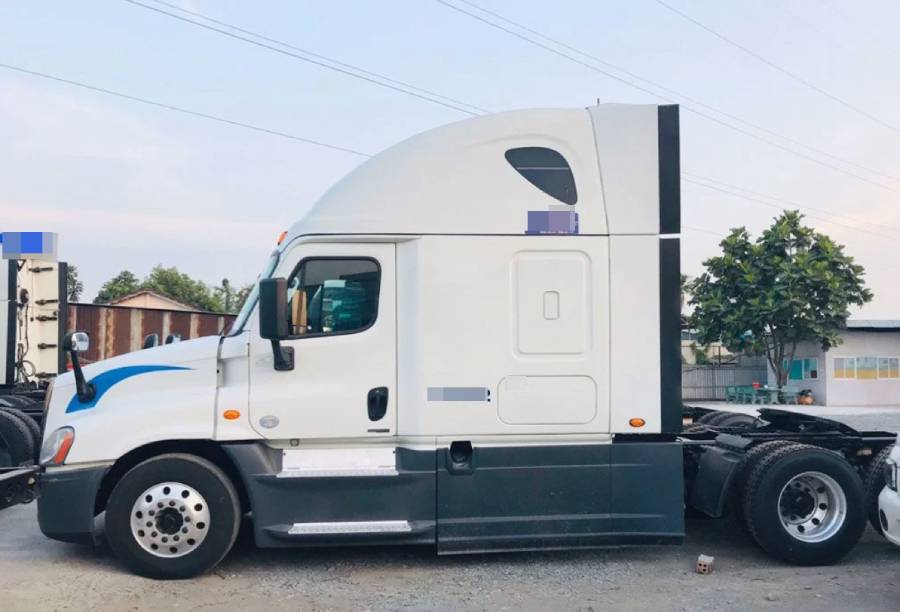
A Freightliner Cascadia AC compressor may not engage because the A/C system is preventing compressor operation or because the compressor circuit or compressor itself has failed. The main causes include low or incorrect refrigerant pressure, a blown fuse or faulty relay, damaged wiring or connectors, a faulty pressure sensor, an electrical control problem, and compressor or clutch failure.
Do not replace the compressor based on this symptom alone. A compressor that does not engage may still be functional but receive no power or command because another part of the A/C system has detected an abnormal condition. The most effective diagnosis follows the engagement path: confirm the symptom, inspect the fuse, relay, wiring, and connectors, check refrigerant pressure, verify power or command at the compressor, and then determine whether the fault is upstream or inside the compressor assembly.
This guide explains why a Freightliner Cascadia AC compressor stops engaging, what to check first, and how to isolate the failed component. It also covers when the problem can be diagnosed with basic electrical checks and when refrigerant or control-system testing requires professional A/C diagnostic equipment.
Why Is the Freightliner Cascadia AC Compressor Not Engaging?
A Freightliner Cascadia AC compressor may not engage because of 7 main problems: incorrect refrigerant pressure, a blown fuse, a faulty relay, damaged wiring or connectors, a faulty pressure sensor or related input, an electrical control problem, or compressor/clutch failure. The symptom alone does not identify which component has failed because several faults can interrupt the compressor engagement path.
Incorrect refrigerant pressure is one possible cause. The A/C system relies on refrigerant pressure information to determine whether compressor operation is within an acceptable range. If the system detects an abnormal pressure condition, compressor operation may be inhibited to protect the A/C system. This means a compressor that remains off does not automatically need replacement. Refrigerant pressure and the related sensing circuit should be evaluated before condemning the compressor.
A blown fuse, faulty relay, damaged wire, loose connector, poor ground, or another circuit fault can also prevent compressor operation. These faults interrupt the electrical path required for engagement. For example, a compressor may be mechanically functional but remain inactive because the required electrical supply or control signal never reaches it. Electrical diagnosis should therefore establish whether the compressor receives the expected power or command under conditions in which the A/C system is requesting cooling.
A pressure sensor, switch, or related input can create a similar symptom. The control system uses input information to decide whether compressor operation should be permitted. An incorrect signal can therefore prevent engagement even when refrigerant and the compressor itself are not the primary faults. This is why replacing a compressor without testing the upstream circuit can result in an unnecessary repair.
The compressor or its engagement mechanism can be the problem when the required electrical conditions are present but the compressor still fails to operate. Depending on the specific Cascadia configuration, diagnosis may involve checking the compressor connector, ground, engagement mechanism, and compressor assembly. Appropriate power or command reaching the compressor without the expected response shifts the diagnosis toward a compressor-side fault.
Control-side faults are another possibility when the compressor, basic wiring, and refrigerant conditions do not explain the symptom. In this situation, diagnosis should follow the A/C request and compressor-control path rather than replacing components by trial and error. The exact circuit arrangement can vary by Freightliner Cascadia model year and configuration, so vehicle-specific wiring and service information should be used for deeper electrical diagnosis.
What Should You Check First When the Freightliner Cascadia AC Compressor Will Not Engage?
Check the compressor engagement problem in 6 stages: confirm the symptom, inspect the electrical circuit, evaluate refrigerant pressure, verify the compressor power or command, test the compressor side, and investigate the control side if the earlier checks pass. Following this sequence separates upstream A/C problems from an actual compressor failure and reduces unnecessary parts replacement.
First, confirm that the compressor is actually failing to engage while the A/C system is requesting cooling. Check whether the problem is consistent and note related symptoms, such as no cold air, intermittent operation, abnormal noises, or a compressor that engages and then stops. These observations establish the symptom before electrical or refrigerant tests begin.
Second, inspect the basic electrical path. Check the applicable fuse, relay or control circuit, wiring, connectors, and visible signs of corrosion, looseness, overheating, or physical damage. A failed electrical connection can produce the same no-engagement symptom as a failed compressor, so these checks should occur before compressor replacement.
Third, evaluate refrigerant pressure using the correct A/C diagnostic procedure and equipment. Do not treat adding refrigerant as a diagnostic test. An abnormal pressure condition can have different causes, and charging the system without identifying the underlying condition can produce an incorrect charge or leave the original fault unresolved.
Fourth, determine whether the compressor receives the appropriate electrical supply or control when engagement is requested. This test creates an important diagnostic split. No appropriate power or command points toward an upstream electrical, sensor, or control problem, while appropriate power or command with no compressor response points toward the compressor side of the system.
Fifth, inspect and test the compressor-side circuit if the required electrical conditions are present. The connector, ground, engagement mechanism where applicable, and compressor assembly become more relevant at this stage. The goal is to confirm the failed component rather than assume the entire compressor assembly must be replaced.
Finally, investigate the control side when the basic electrical circuit, refrigerant condition, and compressor do not explain the failure. Vehicle-specific service information becomes especially important at this stage because Cascadia configurations and electrical architectures can differ by model year and powertrain. Following the diagnostic path from the A/C request to the compressor provides a more reliable result than replacing a fuse, relay, pressure sensor, or compressor based only on the no-engagement symptom.
How Do You Check the AC Compressor Fuse and Relay on a Freightliner Cascadia?
Check the Freightliner Cascadia AC compressor fuse and relay by identifying the correct circuit for the truck, testing the fuse electrically, checking the relay or control circuit where applicable, and inspecting the associated wiring and connectors. A visual inspection alone is not enough because a fuse can appear intact while an electrical fault elsewhere prevents the compressor from receiving the required power or command.
Start with the wiring diagram, fuse information, or service documentation for the specific Cascadia model year and configuration. Freightliner Cascadia electrical systems vary across generations, engines, and HVAC configurations, so the fuse or circuit information for one truck should not automatically be applied to another. Identify the circuit responsible for compressor operation before removing or replacing electrical components.
Test the applicable fuse rather than replacing it simply because the compressor does not engage. A multimeter or suitable circuit tester can establish whether voltage is available on the circuit and whether the fuse provides electrical continuity. If a fuse is open, replacing it may restore operation temporarily, but the diagnosis should continue if it blows again. A repeatedly blown fuse indicates that the circuit may have excessive current draw, damaged wiring, a short to ground, or another electrical fault that must be located.
Check the relay or compressor-control circuit where the specific system uses one. A relay must receive the correct inputs and successfully pass current to the controlled circuit. A compressor that does not operate therefore does not automatically prove that the relay itself has failed. Verify the relay circuit and its inputs before replacing the relay.
Inspect the wiring and connectors while checking the fuse and control circuit. Look for loose terminals, corrosion, damaged insulation, overheated connectors, broken wires, and poor ground connections. Truck vibration, heat, moisture, and previous repairs can damage electrical connections. A high-resistance or intermittent connection may also explain why the compressor operates at some times but fails to engage at others.
The result of these tests determines the next diagnostic step. A confirmed electrical supply problem should be traced upstream or repaired before the compressor is condemned. If the basic electrical circuit checks correctly but the compressor still does not engage, refrigerant pressure, compressor command, and compressor-side operation need to be evaluated.
Can Low Refrigerant Keep a Freightliner Cascadia AC Compressor From Engaging?
Low refrigerant can keep a Freightliner Cascadia AC compressor from engaging when the resulting pressure condition causes the A/C system to inhibit compressor operation. The compressor depends on acceptable system conditions rather than operating continuously whenever the driver selects A/C. Refrigerant pressure is therefore an important part of a no-engagement diagnosis.
Refrigerant carries heat through the A/C system and operates within a pressure range that changes with system conditions. Pressure information allows the system to determine whether compressor operation is appropriate. When pressure is outside the expected range, the compressor may remain off instead of operating under a condition that could damage the system or prevent effective cooling.
Low refrigerant is commonly associated with refrigerant loss rather than refrigerant being consumed during normal A/C operation. If the charge is low because refrigerant has escaped, simply adding more refrigerant does not repair the source of the loss. The system should be evaluated for the underlying problem rather than repeatedly recharged.
Do not diagnose low refrigerant solely because the compressor does not engage or because the vents blow warm air. Both symptoms can result from electrical, sensor, control, or compressor faults. Pressure readings must be interpreted in the context of system state and operating conditions. A static pressure reading, for example, does not provide the same diagnostic information as pressure measurements taken while evaluating an operating A/C system.
Adding refrigerant until the compressor engages is also not a reliable diagnostic procedure. An incorrect charge can create additional performance or pressure problems, while an electrical fault will remain unresolved regardless of the amount of refrigerant in the system. Refrigerant type, charge quantity, pressure, ambient conditions, and the appropriate service procedure all matter when servicing the system.
A refrigerant-related diagnosis should therefore answer two questions: Is the pressure condition preventing compressor operation, and why is that pressure condition present? If the refrigerant charge or pressure cannot be evaluated correctly with the available equipment, professional A/C service is safer and more useful than replacing the compressor based on the no-engagement symptom.
How Do You Test Whether the Freightliner Cascadia AC Compressor Is Getting Power?
Test whether the Freightliner Cascadia AC compressor is getting power by checking the compressor electrical circuit while the A/C system is requesting compressor operation. The purpose of this test is to separate an upstream electrical or control problem from a fault at the compressor itself. The exact connector, circuit, and expected electrical values should be confirmed with service information for the specific Cascadia model year and configuration.
Start by confirming that the operating conditions actually call for A/C compressor engagement. Turn on the A/C and verify that the system is requesting cooling before measuring the compressor circuit. Testing the circuit when compressor operation is not being requested can produce a no-voltage result even when the system is functioning as designed.
Next, inspect the compressor connector and nearby wiring before taking electrical measurements. Look for loose terminals, corrosion, damaged insulation, broken wiring, overheated connectors, and evidence of previous repairs. A connector that looks attached can still have poor terminal contact, so visible condition and electrical integrity should both be considered.
Use a suitable multimeter or electrical test procedure to determine whether the compressor receives the expected electrical supply or control when operation is requested. Check the ground side of the circuit where applicable as well. Voltage on a supply circuit does not prove that the complete circuit can operate correctly if the ground, connector, wiring, or control path has excessive resistance or another fault.
The test result creates two different diagnostic paths. If the appropriate power or command is absent, continue diagnosing the fuse, relay or control circuit, wiring, pressure-related inputs, and other upstream controls. If the appropriate electrical conditions are present but the compressor does not respond, shift the diagnosis toward the compressor, its connector or ground, and its engagement mechanism where applicable.
Avoid applying battery voltage directly to unidentified compressor terminals as a shortcut. Cascadia A/C configurations can differ, and bypassing the normal control circuit without the correct wiring information can damage components or create a misleading diagnosis. Electrical testing should follow the circuit design for the specific truck.
What Does It Mean if the AC Compressor Has Power but Does Not Engage?
An AC compressor that receives the appropriate power or command but does not engage points toward a compressor-side electrical, engagement, ground, connector, or internal component fault. This finding narrows the diagnostic path, but it should not be treated as automatic proof that the complete compressor assembly requires replacement.
Check the electrical connection at the compressor first. A poor terminal fit, corrosion, damaged connector, or inadequate ground can prevent the component from operating even when voltage is detected during a basic measurement. Testing the circuit under the correct operating conditions provides more useful information than relying on an unloaded voltage reading alone.
The engagement mechanism should then be evaluated according to the compressor design installed on the truck. If the system uses a clutch or another electrically controlled engagement mechanism, determine whether that mechanism responds correctly to the control input. A failure at this stage can leave the compressor inactive even though the upstream A/C controls are requesting operation.
Internal compressor failure becomes more likely after the required refrigerant conditions, electrical supply, control inputs, connector, ground, and engagement mechanism have been verified. Mechanical resistance, abnormal noise, visible damage, or failure to operate despite verified inputs can strengthen the compressor-side diagnosis. The component should still be tested according to the applicable service procedure before replacement.
How Do You Tell if the Freightliner Cascadia AC Compressor Is Bad?
A Freightliner Cascadia AC compressor is more likely to be bad when the system conditions and required electrical inputs have been verified but the compressor still fails to operate correctly. Compressor non-engagement by itself is not enough to make this diagnosis because low refrigerant pressure, electrical faults, sensor problems, wiring faults, and control-side conditions can all produce the same symptom.
One useful indicator is the relationship between compressor command and compressor response. If testing confirms that the A/C system is requesting compressor operation and the appropriate electrical conditions reach the compressor, but the component does not respond, the fault has been narrowed substantially. The compressor-side circuit, engagement mechanism, and compressor assembly should then be tested.
Abnormal mechanical symptoms provide additional evidence. Grinding, binding, unusual pulley or compressor noise, visible damage, or other abnormal operation can indicate a mechanical problem. These symptoms are more diagnostically useful when combined with electrical and refrigerant tests because noise alone can originate from components near the compressor rather than from the compressor internally.
Poor cooling does not independently prove compressor failure either. A Freightliner Cascadia can lose A/C cooling because of an incorrect refrigerant charge, leak, airflow problem, pressure-related fault, electrical problem, or another A/C system condition. The compressor should therefore be evaluated as part of the complete refrigeration and control system rather than diagnosed only from vent temperature.
The most reliable distinction is command versus response. A compressor that is not being commanded to operate requires upstream diagnosis. A compressor that receives the required input but does not produce the expected response requires compressor-side diagnosis. Following this distinction prevents a functional compressor from being replaced when the actual fault is elsewhere in the Freightliner Cascadia A/C system.
How Do You Fix a Freightliner Cascadia AC Compressor That Is Not Engaging?
Fix a Freightliner Cascadia AC compressor that is not engaging by repairing the specific refrigerant, electrical, control, or compressor-side fault identified during diagnosis. Compressor replacement is only the correct repair when testing confirms that the compressor or its engagement mechanism has failed. If the compressor is being prevented from operating by another part of the system, replacing it will not correct the underlying problem.
Repair an electrical supply problem at its source. A blown fuse should be replaced only after checking why it failed, especially if the replacement fuse opens again. A recurring fuse failure can indicate damaged wiring, a short circuit, excessive current draw, or another electrical defect. Likewise, a faulty relay or related control circuit should be confirmed through testing rather than replaced solely because the compressor is not operating.
Repair damaged wiring and connections when the compressor circuit has excessive resistance, an open circuit, poor ground, corrosion, or loose terminals. Connector repairs should restore reliable electrical contact rather than temporarily forcing a loose terminal into position. After the repair, operate the A/C system again and verify that the compressor receives the expected electrical input and responds correctly.
Correct a refrigerant-system problem according to the condition found during pressure and system testing. If refrigerant loss has resulted in an inadequate charge, identify and repair the leak before restoring the specified refrigerant charge. Adding refrigerant without correcting a leak only addresses the immediate pressure condition and allows the same problem to return. Refrigerant recovery, evacuation, leak repair, and charging should use the appropriate equipment and specifications for the truck.
Replace a pressure sensor, switch, or related input component only when diagnosis confirms that it is providing an incorrect signal or otherwise failing its specified test. A pressure-related fault code or compressor shutdown does not automatically prove the sensor is defective because an actual abnormal pressure condition can produce a similar result. Verify the system condition and circuit before installing a new sensor.
Repair or replace the compressor-side component when appropriate power or command reaches the compressor but the expected engagement does not occur. Depending on the compressor design and confirmed failure, the repair may involve an electrical connection, engagement mechanism, or compressor assembly. If the compressor has suffered an internal mechanical failure, the rest of the A/C system may also require inspection for contamination before the system is returned to service.
After any repair, verify the result instead of treating compressor engagement alone as proof of a complete fix. Confirm that the compressor operates as expected, the A/C produces appropriate cooling, electrical faults do not return, and refrigerant-system conditions remain within the applicable specifications. This final verification distinguishes a completed repair from a temporary restoration of compressor operation.
Read more: Freightliner RV Chassis Problems: Causes & Fixes
Can You Drive a Freightliner Cascadia if the AC Compressor Is Not Engaging?
A Freightliner Cascadia can sometimes continue to be driven when the AC compressor is not engaging, but whether continued operation is appropriate depends on the cause of the failure. A compressor that remains off because of an A/C control or refrigerant-related problem presents a different situation from a compressor or pulley assembly producing severe mechanical noise.
If the only symptom is loss of cabin cooling and there are no abnormal noises, burning smells, damaged wiring, or other mechanical symptoms, the immediate effect may be limited primarily to loss of A/C performance. The fault should still be diagnosed because a non-engaging compressor can indicate a refrigerant leak, electrical failure, sensor problem, or compressor fault that will not correct itself.
Stop treating the problem as a simple comfort issue when there is grinding, binding, smoke, a burning smell, severe belt-related noise, or visible damage around the compressor area. These symptoms can indicate a mechanical or electrical problem that requires inspection before continued operation. A failing rotating component can create consequences beyond the loss of cold air.
A repeatedly blown A/C-related fuse also requires diagnosis rather than repeated fuse replacement. The fuse is protecting the circuit from an abnormal electrical condition. Installing new fuses without locating the cause can leave damaged wiring, a short circuit, or an overloaded component unresolved.
Cabin cooling can also have an operational role beyond comfort. In hot conditions, extended driving without effective A/C can increase heat exposure inside the cab, particularly during long periods on the road or while the truck is stationary. Defogging and moisture management can also be affected when the HVAC system cannot operate as expected.
The decision to continue driving should therefore be based on the symptoms accompanying the compressor failure. Loss of cooling without mechanical or electrical warning signs calls for timely diagnosis, while abnormal noise, smoke, burning odors, belt problems, or obvious electrical damage call for prompt inspection before continued operation.
When Should a Mechanic Diagnose a Freightliner Cascadia AC Compressor Problem?
A mechanic should diagnose a Freightliner Cascadia AC compressor problem when basic fuse, wiring, connector, and visual checks do not identify the cause or when the repair requires refrigerant, advanced electrical, control-system, or compressor testing. Professional diagnosis is especially appropriate when the compressor receives inconsistent commands, a fuse repeatedly fails, refrigerant pressure is abnormal, or compressor failure is suspected.
Refrigerant diagnosis is one situation where proper A/C service equipment becomes important. Accurate diagnosis may require pressure measurements, refrigerant recovery, leak detection, evacuation, and recharging according to the specifications for the truck. Adding refrigerant without confirming the system condition can result in an incorrect charge and does not repair a refrigerant leak.
Repeated electrical failures also require deeper diagnosis. If an A/C-related fuse blows again after replacement, the circuit should be tested for a short, damaged wiring, excessive current draw, or a failing component. The same applies when compressor operation is intermittent despite apparently intact fuses and connectors. Electrical measurements taken under operating conditions can reveal faults that a visual inspection cannot identify.
Professional diagnosis is also appropriate when the compressor is not receiving the expected power or command even though the basic electrical circuit appears functional. The technician may need to trace the compressor-control path, verify relevant sensor inputs, inspect wiring continuity, and determine why the system is withholding compressor operation. Vehicle-specific wiring information is important because the control strategy and electrical configuration can differ between Cascadia model years and powertrain configurations.
Have the compressor inspected promptly when it produces grinding, binding, unusual mechanical noise, burning odors, or other signs of physical failure. These symptoms require more than a refrigerant recharge or fuse replacement. If an internal compressor failure is confirmed, the technician should determine whether additional A/C system inspection or service is required before a replacement compressor is installed.
The diagnostic objective is to identify where the compressor engagement path stops working. If the compressor is not receiving the required input, the fault is upstream and the circuit or control system should be traced. If the correct operating conditions and electrical inputs are present but the compressor does not respond, the diagnosis shifts toward the compressor side. Confirming that distinction before replacing parts provides a more reliable repair and reduces unnecessary component replacement on the Freightliner Cascadia.
1 thought on “Freightliner Cascadia AC Compressor Not Engaging: Fix”