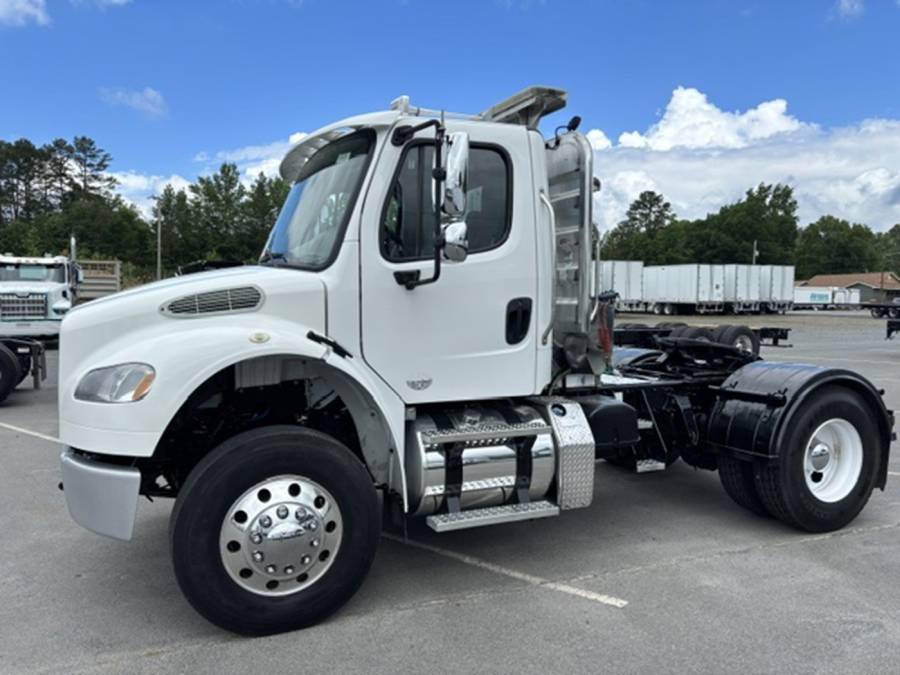
A Freightliner M2 dashboard may stop working because of a blown fuse, faulty instrument cluster, damaged wiring, poor ground connection, or J1939 communication failure. These problems can cause the entire dashboard to go blank, prevent gauges from displaying accurate readings, or make warning lights operate intermittently. Identifying the specific symptoms is the first step toward determining which electrical components need inspection.
The Freightliner M2 instrument cluster displays essential vehicle information, including engine speed, vehicle speed, fuel level, and warning indicators. Depending on the truck’s configuration, it also provides information about air pressure and engine temperature. When the dashboard loses power or communication with vehicle control modules, drivers may lose access to critical operating information. A dashboard with nonfunctional gauges or warning indicators requires prompt diagnosis before the truck returns to service.
Fixing a Freightliner M2 dashboard starts with checking the battery voltage, dashboard fuses, power supply, ground connections, and wiring harness. If these components operate correctly, further testing of the instrument cluster and J1939 communication network can help isolate the fault. This guide explains the common causes, failure symptoms, diagnostic procedures, repair methods, and potential costs of restoring dashboard operation.
Why Is My Freightliner M2 Dashboard Not Working?
A Freightliner M2 dashboard stops working when the instrument cluster loses electrical power, develops an internal fault, or fails to receive vehicle data through its communication network. The five main causes are blown fuses, poor ground connections, damaged wiring, instrument cluster failure, and J1939 communication problems. Each fault produces different symptoms depending on which circuits or electronic components are affected.
Blown dashboard fuses can interrupt the electrical supply to the Freightliner M2 instrument cluster, causing the display, gauges, or warning indicators to stop functioning. A fuse opens when excessive current flows through its circuit, protecting electrical components from overheating and damage. Dashboard power circuits may receive electricity through battery-fed or ignition-controlled connections, depending on the truck’s model year and electrical configuration. A blown fuse may indicate a temporary electrical overload or an underlying short circuit. Replacing the fuse without identifying the cause of repeated failures can leave the dashboard problem unresolved.
Poor ground connections and damaged wiring can cause complete or intermittent dashboard failures by disrupting the electrical circuits required for instrument cluster operation. Corrosion, loose terminals, damaged insulation, and broken conductors increase electrical resistance or interrupt current flow. For example, a loose ground connection behind the dashboard may cause the instrument cluster to restart when the truck encounters road vibrations. Damaged wiring near connectors or harness mounting points can produce similar symptoms. These faults may affect individual dashboard functions or disable the entire cluster, depending on the circuit involved.
A faulty instrument cluster can prevent dashboard gauges, warning indicators, or digital displays from operating even when the correct power and ground supplies are present. The cluster contains electronic circuits that process vehicle information and control instrument readings. Internal circuit board damage, defective electronic components, or connector failures can interfere with these functions. For example, an instrument cluster with an internal power regulation fault may remain completely blank despite receiving the required supply voltage. Confirming cluster failure requires testing its electrical inputs and communication connections before considering replacement.
J1939 communication problems can also cause Freightliner M2 dashboard malfunctions by interrupting data transmission between vehicle control modules and the instrument cluster. The SAE J1939 network carries information such as engine speed, engine temperature, and other operating parameters from compatible electronic control units. Damaged communication wiring, poor connector contacts, network termination faults, or malfunctioning control modules can prevent the cluster from receiving valid data. As a result, gauges may stop updating, display incorrect readings, or show communication-related warnings while other dashboard functions remain operational. The exact behavior depends on the Freightliner M2 model year, instrument cluster design, and affected network circuits.
What Are the Symptoms of a Freightliner M2 Dashboard Failure?
The four main symptoms of a Freightliner M2 dashboard failure are a completely blank instrument cluster, nonresponsive gauges, flickering dashboard lights, and intermittent instrument operation. These symptoms help distinguish electrical power failures from wiring defects, internal cluster problems, and communication faults. Identifying which dashboard functions remain operational provides a starting point for diagnosis.
A completely blank dashboard indicates that the instrument cluster may have lost its power supply or ground connection, although an internal electronic failure can produce the same result. The digital display, warning indicators, and gauges may remain inactive after the ignition is switched on. In contrast, a dashboard with working illumination but nonresponsive gauges may have an instrument cluster processing fault or a communication problem involving the vehicle’s electronic control modules.
Flickering lights and intermittent gauge operation frequently indicate unstable electrical connections or interrupted power delivery. Loose connectors, corroded terminals, and damaged wiring can temporarily disconnect circuits when the truck vibrates or encounters uneven road surfaces. For example, a speedometer that stops responding while other instruments remain functional may indicate a signal or communication problem rather than complete dashboard power loss.
The following table summarizes common dashboard symptoms and their possible causes.
| Dashboard Symptom | Possible Cause | Diagnostic Priority |
|---|---|---|
| Entire dashboard is blank | Blown fuse, missing power, poor ground, or cluster failure | Check power and ground |
| Gauges stop responding | Communication fault or instrument cluster defect | Check fault codes and network data |
| Dashboard lights flicker | Loose connector, unstable voltage, or poor ground | Inspect electrical connections |
| Dashboard works intermittently | Damaged wiring or intermittent electrical contact | Test circuits while reproducing the fault |
| Backlighting works but gauges do not | Cluster processing or communication fault | Verify cluster power and data communication |
How Do You Diagnose a Freightliner M2 Dashboard That Is Not Working?
Diagnosing a Freightliner M2 dashboard requires checking the electrical power supply, fuse circuits, ground connections, wiring harness, and communication network before replacing components. A digital multimeter, the correct vehicle wiring diagram, and a compatible heavy-duty diagnostic scanner help identify the source of the malfunction. The diagnostic sequence should begin with basic electrical tests and progress to instrument cluster and network testing when necessary.
How Do You Check the Dashboard Fuses and Power Supply?
Check the Freightliner M2 dashboard fuses and power supply by verifying battery voltage, locating the instrument cluster power circuits, and testing the relevant fuses for electrical continuity and voltage. Fuse panel locations and circuit assignments vary by model year and vehicle configuration, so the appropriate Freightliner electrical documentation is required to identify the correct circuits.
Begin by measuring battery voltage with a digital multimeter while the engine is off. A fully charged conventional 12-volt lead-acid battery typically measures approximately 12.6 volts at rest. A significantly lower reading may indicate a discharged battery, although battery voltage alone does not establish whether the dashboard circuit is receiving adequate power.
Next, inspect the instrument cluster fuses using the vehicle’s fuse diagram. With the circuit energized as specified by the service procedure, test both accessible fuse terminals for voltage relative to a verified ground. Voltage on only one side of a fuse indicates an open fuse element. No voltage on either side may indicate that the circuit is not energized or that an upstream power supply problem exists.
Replace a defective fuse only with one matching the specified amperage and type. A replacement fuse that blows repeatedly indicates an electrical fault requiring further investigation.
How Do You Test Dashboard Ground Connections and Wiring?
Test Freightliner M2 dashboard ground connections and wiring by inspecting electrical connectors, measuring circuit voltage drops, and checking for damaged conductors. Poor grounding and excessive circuit resistance can interrupt instrument cluster operation even when battery voltage and fuses appear normal.
Start by inspecting accessible wiring harnesses and connectors associated with the instrument cluster. Look for loose terminals, corrosion, damaged insulation, overheated connector housings, and broken wires. Pay particular attention to harness sections exposed to vibration, movement, or moisture. A connector with corroded terminals may create enough resistance to cause intermittent gauge operation or unexpected cluster restarts.
Use a digital multimeter to measure voltage drop across the ground circuit while the instrument cluster is operating or the circuit is appropriately loaded. A voltage drop outside the manufacturer’s specification indicates excessive resistance in the ground path. Testing an unloaded circuit may fail to reveal a poor connection, making loaded voltage-drop testing more useful than a simple continuity check.
Power and ground measurements at the instrument cluster connector must follow the correct wiring diagram and connector pin assignments. Avoid probing unidentified terminals because an incorrect connection can damage electronic components.
How Do You Diagnose Instrument Cluster and J1939 Communication Faults?
Diagnose Freightliner M2 instrument cluster and J1939 communication faults by retrieving diagnostic trouble codes, checking module communication, and verifying network wiring integrity. These tests help determine whether the dashboard is failing internally or receiving incomplete vehicle data.
Connect a compatible heavy-duty diagnostic scanner to the truck’s diagnostic connector and check for active or stored fault codes. Communication-related codes, missing module responses, or invalid vehicle data can indicate problems with the J1939 network or its connected electronic control units. Record the codes and their descriptions before clearing any diagnostic information.
The J1939 communication network uses differential signaling through CAN High and CAN Low conductors. Damaged wiring, short circuits, poor connector contacts, and incorrect network termination can disrupt communication between electronic modules. On a conventional high-speed CAN segment with two 120-ohm terminating resistors, resistance measured between CAN High and CAN Low is approximately 60 ohms when the network is fully powered down. However, the correct measurement procedure and expected resistance depend on the specific Freightliner M2 network architecture.
If the instrument cluster receives the required power and ground supplies but fails to communicate or operate correctly, further testing is necessary to distinguish an internal cluster defect from a network or module fault. Use manufacturer-specific diagnostic procedures before replacing the instrument cluster or electronic control modules.
How Do You Fix a Freightliner M2 Dashboard That Is Not Working?
Fixing a Freightliner M2 dashboard requires repairing the electrical circuit, instrument cluster, or communication system responsible for the malfunction. The appropriate repair depends on diagnostic results, including fuse condition, power supply voltage, ground integrity, wiring continuity, and J1939 communication status. Replacing components without confirming the underlying fault can result in unnecessary repair costs and recurring dashboard failures.
How Do You Fix Dashboard Fuse and Wiring Problems?
Fix Freightliner M2 dashboard fuse and wiring problems by replacing defective fuses, repairing damaged conductors, and restoring secure electrical connections. Begin by disconnecting electrical power according to the manufacturer’s service instructions before performing wiring repairs. Identify the damaged circuit using the correct wiring diagram for the truck’s model year and configuration.
Replace a blown dashboard fuse with a new fuse of the specified amperage and type. Never install a higher-rated fuse to prevent repeated failures because excessive current can overheat wiring and damage electronic components. A fuse that blows again after replacement indicates a possible short circuit or excessive electrical load that must be diagnosed before the circuit is returned to service.
Repair damaged wiring using automotive-grade conductors, compatible terminals, and manufacturer-approved connection methods. For example, a wire with broken strands near an instrument cluster connector may require replacement of the affected harness section or installation of an approved repair terminal. Secure the repaired harness to prevent contact with sharp edges, moving components, and excessive vibration.
Clean or replace corroded electrical terminals and restore loose ground connections. After completing the repair, verify that the instrument cluster receives the specified voltage and that the affected circuits operate correctly under normal electrical load.
How Do You Repair or Replace a Faulty Instrument Cluster?
Repair or replace a Freightliner M2 instrument cluster only after confirming that its power supply, ground circuits, and required communication connections are functioning correctly. Internal electronic failures can prevent gauges, warning indicators, and digital displays from operating even when the external electrical circuits are intact.
Start by inspecting the instrument cluster connectors for damaged pins, corrosion, and loose terminal contacts. If the connections are secure and diagnostic tests confirm an internal cluster malfunction, determine whether the unit is serviceable according to Freightliner repair procedures. Certain internal electronic defects require specialized repair equipment, while others require replacement of the complete instrument cluster assembly.
Select a replacement cluster compatible with the truck’s model year, electrical architecture, and equipment configuration. Instrument clusters can differ in connector design, supported gauges, software configuration, and communication requirements. Installing an incompatible unit may cause missing instrument readings, warning messages, or communication faults.
Some replacement clusters require configuration, calibration, or programming using manufacturer-compatible diagnostic equipment. Odometer information and other vehicle-specific data must be handled according to applicable regulations and manufacturer procedures. After installation, verify gauge operation, warning indicator functionality, display readings, and communication with the relevant vehicle control modules.
How Do You Fix Dashboard Communication Problems?
Fix Freightliner M2 dashboard communication problems by identifying and repairing faults in the J1939 network, electrical connectors, or communicating control modules. A communication failure can prevent the instrument cluster from receiving engine speed, temperature, and other vehicle operating data even when the dashboard has a functioning electrical power supply.
Begin by reviewing the diagnostic trouble codes retrieved from the vehicle’s electronic control modules. Identify which modules are reporting communication errors and determine whether the fault affects one module or multiple network devices. For example, an instrument cluster that loses engine speed and temperature information simultaneously may have an interrupted communication path rather than two separate gauge failures.
Inspect the relevant CAN High and CAN Low wiring for damaged insulation, loose connectors, corrosion, and short circuits. Test network resistance and electrical signals according to the manufacturer’s diagnostic procedure. Network resistance measurements must be performed only under the specified power-down conditions, while signal testing requires appropriate equipment and procedures.
Repair damaged communication wiring using methods that preserve the network’s electrical characteristics, including the specified conductor type, twisted-pair construction, and termination arrangement. Avoid adding unnecessary wire length or installing unapproved connectors because these changes can affect signal integrity.
If wiring and network termination tests are satisfactory, investigate the control modules associated with the communication fault. Module replacement or software programming should be performed only after confirming the defective component through manufacturer-specific diagnostics.
Complete the dashboard repair by verifying that all gauges, warning indicators, and digital displays operate correctly and that the original fault no longer occurs. Check for remaining active diagnostic trouble codes and confirm stable instrument cluster operation under the conditions that previously triggered the malfunction. A successful repair restores both dashboard functionality and reliable access to essential vehicle operating information.
Why Does the Freightliner M2 Dashboard Stop Working Intermittently?
A Freightliner M2 dashboard may stop working intermittently because of loose electrical connectors, damaged wiring, poor ground connections, unstable voltage, or interrupted J1939 communication. These faults temporarily disrupt the instrument cluster’s power supply or data signals, causing gauges, warning lights, and digital displays to turn off and return without warning.
Loose electrical connections are a common source of intermittent dashboard malfunctions. Freightliner M2 trucks experience continuous vibration during operation, which can expose existing problems with connector terminals, wiring harnesses, and ground connections. For example, a loose instrument cluster connector may temporarily lose electrical contact when the truck travels over uneven pavement, causing the dashboard to restart or individual gauges to stop responding. Corrosion and weakened terminal tension can produce similar symptoms by increasing electrical resistance.
Unstable electrical voltage can also cause intermittent instrument cluster operation. Loose battery terminals, deteriorated ground cables, charging system problems, and damaged power supply wiring can interrupt the voltage required by dashboard electronics. A temporary voltage drop may cause the cluster to reset while other vehicle systems continue operating. Checking battery connections, charging voltage, and circuit voltage drops under electrical load helps identify these problems.
Intermittent J1939 communication faults can cause gauges to freeze, display incorrect values, or stop updating while the instrument cluster remains powered. Damaged twisted-pair wiring, loose network connectors, or faults in connected electronic control modules can interrupt data transmission. Diagnosing these problems requires checking communication fault codes and monitoring network operation when the malfunction occurs.
To identify an intermittent dashboard fault, record the conditions under which it appears, including engine operation, road vibration, electrical accessory use, and ambient temperature. A qualified technician can use these observations with voltage monitoring, wiring inspections, and diagnostic equipment to reproduce the malfunction and isolate the defective circuit.
Can You Reset a Freightliner M2 Dashboard That Is Not Working?
A Freightliner M2 dashboard may resume normal operation after an ignition cycle if the malfunction results from a temporary electronic or communication interruption. However, resetting the dashboard does not repair blown fuses, damaged wiring, poor ground connections, or defective instrument cluster components. The correct reset procedure depends on the truck’s model year, instrument cluster configuration, and electrical system.
The simplest initial check is to park the truck safely, switch off the ignition, allow the electronic systems to complete their normal shutdown, and restart the vehicle. Observe whether the instrument cluster performs its normal startup sequence and whether the gauges, digital display, and warning indicators respond correctly. If the dashboard begins working again, the original problem may still be present, particularly when the failure occurs intermittently.
Some Freightliner M2 configurations support instrument cluster tests or diagnostic functions through manufacturer-specified procedures. These functions should not be confused with a universal dashboard reset. Consult the applicable Freightliner operator’s manual or service documentation before attempting a model-specific procedure, because controls and supported functions vary between vehicle configurations.
Disconnecting the battery is not a recommended universal dashboard reset method. Removing electrical power without following the manufacturer’s shutdown and reconnection procedures can affect electronic systems and may erase diagnostic information needed to identify the original malfunction. Battery disconnection should be performed only when required by an approved service procedure.
If the dashboard remains blank after restarting the truck, inspect the instrument cluster power supply, fuses, ground circuits, and wiring connections. A dashboard that repeatedly stops working after an ignition cycle requires further electrical or communication diagnostics rather than repeated resets.
A successful restart confirms only that the instrument cluster is currently operating. The underlying fault should be considered resolved only after the affected circuits have been tested, necessary repairs completed, and normal dashboard operation verified.
Is It Safe to Drive a Freightliner M2 With a Nonworking Dashboard?
Driving a Freightliner M2 with a completely nonworking dashboard is unsafe because the driver may lose access to essential vehicle information, including speed, engine temperature, air brake pressure, and critical warning indicators. These instruments help drivers monitor vehicle operation and identify mechanical or electrical problems before they become serious safety hazards.
A malfunctioning speedometer prevents the driver from accurately monitoring vehicle speed, increasing the risk of exceeding speed limits or operating at inappropriate speeds for road conditions. If the engine temperature gauge stops working, the driver may not recognize an overheating condition until the engine experiences reduced performance or mechanical damage. A defective instrument cluster can also prevent warning indicators from displaying problems involving the charging system, engine management system, or other monitored components.
Loss of air pressure information is particularly dangerous on Freightliner M2 trucks equipped with air brakes. Air pressure gauges allow drivers to monitor the compressed air available for braking. If the dashboard fails and the driver cannot verify air system pressure, continuing to operate the truck creates a significant safety risk. Air brake warning systems and pressure indicators must function correctly before the vehicle returns to service.
The severity of a dashboard malfunction depends on which functions are affected. A failed dashboard backlight with otherwise functional instruments is different from a complete instrument cluster failure. However, unreadable gauges during nighttime driving can also prevent the driver from monitoring essential information. Electrical faults affecting multiple dashboard functions may indicate a broader problem that requires immediate attention.
Stop the truck in a safe location when essential gauges or warning indicators become unavailable while driving. Do not continue normal operation until the malfunction has been evaluated and the vehicle’s critical monitoring systems are confirmed to function correctly. A qualified technician should inspect the dashboard electrical system, instrument cluster, and communication network before the truck returns to service.
Read more: Freightliner M2 Fuel Pump Problems: Causes & Fixes
How Much Does It Cost to Fix a Freightliner M2 Dashboard?
Freightliner M2 dashboard repair costs depend on the failed component, diagnostic labor, replacement part requirements, and whether instrument cluster programming is necessary. Replacing a fuse or repairing a loose electrical connection generally involves less labor and fewer parts than replacing an instrument cluster or diagnosing a complex J1939 communication problem. There is no single repair price that applies to every Freightliner M2 model year and configuration.
Minor electrical repairs involve identifying and correcting faults such as blown fuses, loose terminals, corroded connectors, or damaged ground connections. The total cost depends on how quickly the defective circuit can be located and whether additional wiring repairs are required. For example, replacing an accessible fuse is relatively straightforward, while locating an intermittent short circuit inside a dashboard wiring harness can require extensive diagnostic time.
Instrument cluster replacement is a more involved repair because the replacement unit must match the truck’s electrical configuration and supported dashboard functions. The final expense may include the cluster assembly, installation labor, compatibility checks, and programming or calibration. A replacement unit that requires vehicle-specific configuration can increase both repair time and total cost.
What Factors Affect Freightliner M2 Dashboard Repair Costs?
The five main factors affecting Freightliner M2 dashboard repair costs are diagnostic labor, component prices, wiring accessibility, instrument cluster compatibility, and programming requirements. Each factor influences the amount of work needed to restore reliable dashboard operation.
Diagnostic labor depends on the complexity of the malfunction. A completely blank instrument cluster with a confirmed blown fuse may be easier to diagnose than an intermittent communication fault that occurs only during road vibration. Wiring accessibility also affects labor because damaged conductors behind the dashboard may require removal of interior panels or instrument cluster components.
Replacement component prices vary according to model year, part number, supplier, and whether the part is new, remanufactured, or used. Instrument cluster compatibility is particularly important because differences in electrical architecture, gauges, and software configuration can prevent an otherwise similar replacement unit from operating correctly.
Programming requirements can add expense when replacement components require configuration or calibration using compatible diagnostic equipment. Some repairs also involve additional verification to confirm that the dashboard communicates correctly with the truck’s electronic control modules.
Obtain a written repair estimate after the electrical fault has been diagnosed. The estimate should separate diagnostic labor, replacement parts, installation, and programming charges. Comparing these items helps truck owners and fleet operators evaluate repair options without replacing functioning components unnecessarily.
When Should You Take a Freightliner M2 to a Professional Mechanic for Dashboard Repair?
Take a Freightliner M2 to a professional mechanic when the dashboard remains inoperative after basic electrical checks, repeatedly loses power, displays communication faults, or requires instrument cluster replacement and programming. These problems require specialized diagnostic equipment and access to manufacturer-specific electrical information to identify the defective components accurately.
Professional diagnosis is necessary when dashboard fuses repeatedly blow, power and ground circuits test correctly but the instrument cluster remains inactive, or multiple gauges stop responding simultaneously. These symptoms may indicate concealed wiring damage, internal cluster defects, or faults involving the J1939 communication network. A qualified diesel technician can use heavy-duty diagnostic software, electrical wiring diagrams, and circuit testing equipment to locate problems that cannot be identified through visual inspection alone.
Instrument cluster replacement and electronic module programming should be handled by technicians familiar with Freightliner M2 electrical systems. Replacement components may require configuration, calibration, or vehicle-specific programming to communicate correctly with other control modules. Incorrect installation or incompatible components can cause additional warning messages, inaccurate gauge readings, or persistent communication errors.
Immediate professional attention is particularly important when dashboard failure affects the speedometer, engine temperature display, air pressure gauges, or critical warning indicators. A truck with unavailable essential operating information should remain out of service until the affected systems have been inspected and verified.
Before returning the vehicle to normal operation, the technician should confirm that all required gauges and warning indicators function correctly, relevant diagnostic trouble codes have been addressed, and the dashboard remains stable under the conditions that previously caused the malfunction.