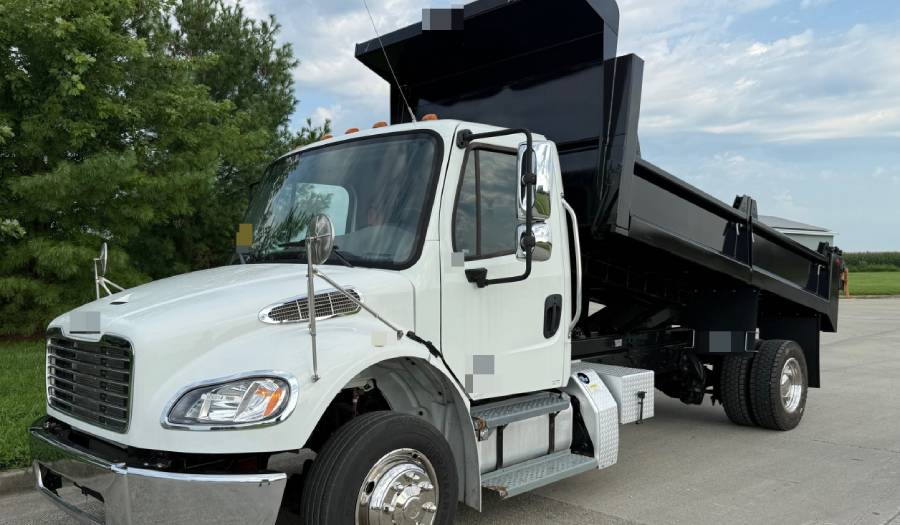
A Freightliner M2 with no power to the dash typically has an interrupted electrical supply caused by a blown fuse, loose battery connection, faulty ignition switch, poor ground connection, damaged wiring, or a malfunctioning electrical module. These faults can prevent the instrument cluster from illuminating, displaying vehicle information, or operating its gauges even when other electrical components continue working.
The cause depends on whether the entire dashboard is dead or only specific instruments have stopped functioning. A completely unresponsive dashboard points toward a power supply or ground circuit problem, while illuminated warning lights with nonfunctional gauges may indicate an instrument cluster or communication network fault. The Freightliner M2 uses electrical control modules, including the Bulkhead Module (BHM) on applicable configurations, to manage vehicle electrical functions. A fault in the module’s power supply, connections, or related circuits can contribute to dashboard problems.
Start troubleshooting by checking battery voltage, battery cable connections, and dashboard-related fuses. Next, verify ignition-switched power and ground connections before testing the instrument cluster and associated wiring. This guide explains the common causes of Freightliner M2 dashboard power loss, the diagnostic steps needed to identify the fault, and the appropriate repairs based on test results. Fuse locations, wiring connections, and module configurations vary by model year, so use the correct vehicle-specific wiring diagram when performing electrical tests.
Why Does a Freightliner M2 Have No Power to the Dash?
A Freightliner M2 dashboard loses power when its instrument cluster cannot receive the electrical voltage or ground connection required for operation. The most common causes to investigate are blown fuses, disconnected battery cables, faulty ignition-switched circuits, corroded ground connections, and damaged wiring. Electrical control module faults can also affect dashboard operation, depending on the truck’s model year and configuration.
The dashboard relies on both constant battery power and ignition-switched power where specified by the vehicle’s electrical design. Constant power supports circuits that require voltage regardless of ignition position, while switched power activates designated components when the ignition is turned on. An interruption in either required supply can prevent the instrument cluster from illuminating or completing its startup sequence. A poor ground connection can produce similar symptoms because electrical current needs a complete return path to the battery.
A Freightliner M2 can also start and run while the dashboard remains completely dark. The engine starting circuit and instrument cluster power circuits do not depend on exactly the same electrical connections. Consequently, a working starter motor or running engine does not confirm that the dashboard is receiving power. Technicians must test the instrument cluster’s supply and ground circuits independently rather than assuming the battery or ignition system is functioning correctly.
Dashboard power loss must also be distinguished from instrument communication failure. A cluster that receives proper voltage but displays missing gauge readings may have an internal malfunction or a problem with vehicle data communication. Checking the cluster’s electrical supply first helps determine whether further instrument cluster or network diagnostics are necessary.
What Are the Common Causes of Freightliner M2 Dashboard Power Loss?
Six electrical fault categories can cause a Freightliner M2 dashboard to lose power: blown fuses, battery connection problems, ignition circuit failures, faulty grounds, damaged wiring, and electrical module malfunctions. Each fault interrupts electrical supply or affects the operation of components responsible for dashboard functions.
1. Blown dashboard fuse. A blown fuse opens the protected electrical circuit and prevents current from reaching the connected components. If the affected fuse supplies the instrument cluster or a required control circuit, the dashboard may remain dark when the ignition is switched on. A fuse can fail because of excessive current caused by a short circuit or an overloaded component. Replacing it without identifying the underlying fault can result in another blown fuse.
2. Loose or corroded battery connections. Battery terminals and cable connections must provide a reliable electrical path between the battery and the vehicle’s power distribution system. Corrosion increases electrical resistance, while loose terminals can interrupt voltage during vibration or changes in electrical load. A Freightliner M2 with poor battery connections may experience intermittent dashboard illumination, flickering displays, or complete instrument cluster shutdown. Battery voltage should be checked at both the battery posts and the relevant downstream connections.
3. Faulty ignition switch or switched-power circuit. The ignition switch and associated electrical circuits control power delivery to designated vehicle systems. A worn switch contact, damaged connector, or interrupted ignition feed can prevent the instrument cluster from receiving the required switched voltage. The dashboard may remain unresponsive even though other battery-powered accessories operate normally. Confirming voltage at the relevant ignition circuit helps distinguish a switch-related fault from a downstream wiring problem.
4. Poor dashboard ground connection. A corroded, loose, or damaged ground connection increases resistance in the electrical return path. This can cause unstable voltage across the instrument cluster, leading to flickering displays, intermittent gauge operation, or complete shutdown. Ground faults may become more noticeable when additional electrical loads are activated. A loaded voltage-drop test provides more useful evidence of excessive ground resistance than visual inspection alone.
5. Damaged dashboard wiring harness. Broken conductors, loose connectors, moisture intrusion, and chafed insulation can interrupt power delivery to the dashboard. Wiring damage can occur where harnesses pass through bulkheads, contact metal brackets, or experience repeated vibration. An open circuit prevents current from reaching the instrument cluster, while a short circuit may blow the corresponding fuse. Inspecting the harness and testing circuit continuity with power disconnected can help locate damaged sections.
6. Electrical module malfunction. The Freightliner M2 uses electronic control modules to manage various vehicle electrical functions. On configurations equipped with a Bulkhead Module (BHM), faults involving module power, ground, connectors, or internal electronics can affect related dashboard functions. However, a dead dashboard does not automatically indicate a defective BHM. Technicians should verify the instrument cluster’s power and ground connections, inspect applicable module circuits, and evaluate diagnostic information before considering module replacement.
How Do You Diagnose a Freightliner M2 Dashboard With No Power?
Diagnosing a Freightliner M2 dashboard with no power requires checking battery voltage, dashboard fuses, ignition-switched circuits, ground connections, and instrument cluster power. A digital multimeter and the correct vehicle-specific wiring diagram are the primary tools for identifying where electrical power is interrupted. Testing should begin at the battery and follow the power distribution circuit toward the instrument cluster.
Before performing electrical tests, park the truck safely, engage the parking brake, and secure the vehicle against movement. Keep the ignition off when disconnecting electrical connectors or inspecting damaged wiring. Live voltage measurements should only be performed with the circuit in the specified operating condition. Avoid probing unidentified terminals or using an unfused jumper wire, as incorrect connections can damage electronic control modules.
How Do You Check the Battery and Power Connections?
Check the Freightliner M2 battery voltage with a digital multimeter and inspect the battery cables for loose, corroded, or damaged connections. The instrument cluster requires a stable electrical supply, and excessive resistance in the main power connections can prevent the dashboard from operating correctly.
For a typical 12-volt lead-acid electrical system, a fully charged battery at rest measures approximately 12.6–12.8 volts after surface charge has dissipated. A reading near 12.2 volts indicates a substantially discharged battery under typical conditions, while a reading below 12.0 volts warrants further charging and testing. These values are reference ranges rather than universal pass-or-fail limits, particularly for trucks equipped with multiple batteries.
Measure voltage directly across the battery posts with the engine off. Next, inspect the positive and negative cable terminals, battery interconnections, and main power distribution connections. A voltage reading at the battery posts does not establish that the same voltage reaches the dashboard. Corroded terminals and loose connections can produce a significant voltage drop when electrical loads are applied.
If the batteries have adequate voltage but the dashboard remains dark, measure voltage at the appropriate downstream power distribution points. A substantial difference between battery voltage and voltage at the distribution circuit indicates resistance or an interruption along the supply path. Repair damaged connections before continuing with instrument cluster diagnostics.
How Do You Test the Dashboard Fuses?
Test the Freightliner M2 dashboard-related fuses by measuring voltage at both fuse test points with the circuit energized. This determines whether the fuse is conducting electricity and whether its supply circuit receives power.
Locate the appropriate fuse panel using the truck’s electrical documentation. Freightliner M2 fuse assignments and power distribution arrangements vary by production year and equipment configuration. Identify the fuses associated with the instrument cluster, ignition supply, and applicable electrical control modules rather than relying on a fuse number from another truck.
Set the multimeter to DC voltage and connect its negative lead to a verified ground. With the circuit energized as specified by the wiring diagram, touch the positive probe to each exposed fuse test point. A functioning fuse in a powered circuit should show approximately the same voltage on both sides. Voltage on only one side indicates an open fuse, while no voltage on either side indicates that the circuit is not currently receiving power.
A fuse that repeatedly blows indicates an unresolved electrical fault, such as a shorted wire or component. Replace a failed fuse only with the specified amperage rating. Never install a higher-rated fuse to prevent repeated failures because doing so can expose wiring to excessive current.
How Do You Check Ignition Power and Ground Connections?
Verify ignition-switched power by measuring voltage at the designated dashboard supply circuit with the ignition in the required position. Then test the ground circuit for excessive resistance using a loaded voltage-drop measurement.
Begin by identifying the ignition-switched supply wire from the correct Freightliner M2 wiring diagram. With the ignition off, record the voltage at the designated test point. Turn the ignition on and measure again. A properly functioning switched supply should deliver the specified system voltage when activated. If voltage is missing, inspect the associated fuse, ignition switch circuit, connectors, and upstream power distribution path.
Ground testing requires a different approach. A connection may appear intact but still contain enough resistance to interfere with instrument cluster operation. With the relevant circuit energized and carrying current, connect the multimeter between the component’s ground terminal and the battery negative post. The reading represents voltage lost across the ground path.
An ideal ground connection has minimal voltage drop. A reading approaching or exceeding 0.2 volts across a short, low-current ground path warrants further investigation, although the acceptable limit depends on the circuit and manufacturer specifications. A voltage-drop test is meaningful only when the tested ground path is carrying current. If the cluster is completely inactive, an appropriate approved test load or an alternative service-manual procedure may be required.
Inspect accessible ground terminals for corrosion, loose fasteners, damaged conductors, and poor contact with the chassis. Repair confirmed ground faults and repeat the voltage measurement before moving to module diagnostics.
How Do You Test Power at the Instrument Cluster?
Test the Freightliner M2 instrument cluster by verifying its required battery supply, ignition-switched supply, and ground connections at the appropriate connector terminals. These measurements establish whether the cluster is receiving the electrical inputs necessary for operation.
First, obtain the instrument cluster connector diagram for the truck’s exact model year and electrical configuration. Identify the designated power and ground terminals before making measurements. Connector pin assignments and wire colors must not be assumed from another Freightliner M2 model.
With the connector accessible and the circuit in the specified operating condition, measure voltage between each required power terminal and a verified ground. Compare the readings with the battery voltage and the specifications in the service documentation. If the supply voltage is missing, trace the affected circuit toward its fuse, connector, or power distribution source.
Next, verify the instrument cluster ground using an appropriate loaded voltage-drop test. A cluster receiving adequate voltage but lacking a reliable ground may remain completely unresponsive. If all required power and ground circuits test correctly, the next diagnostic stage involves evaluating instrument cluster operation, applicable control module faults, and vehicle communication signals.
A functioning power supply does not automatically confirm that the instrument cluster itself is defective. Some dashboard failures result from missing network messages or other electronic control problems. Use a compatible diagnostic scan tool to check module communication and retrieve relevant diagnostic trouble codes before replacing the cluster.
Where Is the Freightliner M2 Dashboard Fuse Located?
The Freightliner M2 dashboard fuse is located in the vehicle’s electrical power distribution system, with the exact fuse position depending on the model year and configuration. On many Business Class M2 trucks, the main cab fuse and relay panel is located behind a removable panel on the passenger side of the dashboard. Additional electrical protection devices may be installed elsewhere, including the engine compartment or battery area.
The instrument cluster may depend on multiple protected circuits rather than a single dashboard fuse. These circuits can include battery power, ignition-switched power, and supplies associated with electronic control modules. A failed fuse in one of these circuits can prevent the dashboard from illuminating or communicating correctly, even when other electrical accessories continue operating.
To identify the correct fuse, consult the fuse panel identification label and the wiring diagram for the truck’s specific model year. Look for circuit descriptions associated with the instrument cluster, ignition power, or relevant electronic modules. Fuse labels, amperage ratings, and circuit assignments vary across Freightliner M2 configurations, so a fuse identified on one truck should not automatically be treated as the correct fuse on another.
A blown dashboard fuse must be confirmed through electrical testing rather than visual inspection alone. With the circuit energized, measure voltage at both fuse test points using a digital multimeter. Voltage on one side but not the other indicates an open fuse. If the fuse has failed, replace it with one of the same specified amperage rating.
If the replacement fuse blows immediately or shortly after the ignition is switched on, inspect the protected circuit for shorted wiring, damaged insulation, moisture intrusion, or a defective electrical component. Repeatedly replacing the fuse without locating the fault risks additional electrical damage.
How Do You Fix a Freightliner M2 Dashboard With No Power?
Fixing a Freightliner M2 dashboard with no power requires repairing the electrical fault identified during voltage, fuse, ground, and wiring tests. The appropriate repair depends on whether the dashboard has lost its power supply, ground connection, or an essential electronic control function. Replacing the instrument cluster before verifying its electrical inputs can result in unnecessary repair costs without restoring dashboard operation.
How Do You Fix Blown Fuses and Loose Electrical Connections?
Replace a blown dashboard fuse with the manufacturer-specified rating and repair any loose or corroded connections that interrupt electrical power. A fuse replacement restores circuit continuity only when the underlying condition that caused the fuse to open has been resolved.
Start by switching off the ignition and locating the failed fuse using the correct electrical diagram. Remove the fuse with an appropriate fuse puller and inspect its terminals for discoloration, overheating, or corrosion. Install a replacement with the specified amperage rating, then turn on the ignition and verify dashboard operation. If the fuse fails again, stop replacing it and diagnose the protected circuit for excessive current or a short to ground.
Loose battery connections require a separate repair procedure. Disconnect and reconnect battery cables according to the manufacturer’s service instructions, following the specified isolation sequence. Clean accessible corrosion from battery terminals and cable contact surfaces using approved cleaning methods. Replace terminals or cables that show severe corrosion, damaged conductors, or excessive resistance. Tighten connections to the manufacturer’s specified torque rather than overtightening them.
After repairing the connections, measure voltage at the battery and relevant dashboard power supply points. The voltage should remain stable under the applicable electrical load. If the dashboard still has no power, continue tracing the supply circuit instead of replacing unrelated components.
How Do You Repair Dashboard Wiring and Ground Problems?
Repair Freightliner M2 dashboard wiring by locating damaged conductors, restoring secure electrical connections, and correcting excessive resistance in the ground circuit. Wiring repairs must preserve the circuit’s electrical capacity, insulation, and protection against vibration and moisture.
Inspect the dashboard wiring harness for abrasion, broken insulation, pinched wires, loose connectors, and signs of overheating. Pay particular attention to areas where the harness passes through metal openings or contacts mounting brackets. Truck vibration can gradually damage wiring insulation, while moisture intrusion can corrode connector terminals and increase electrical resistance.
When a damaged wire is identified, disconnect the appropriate electrical power source before performing the repair. Replace the affected wire section with automotive-grade wiring of the correct gauge and insulation specification. Use manufacturer-approved terminals, splices, and sealing methods. Secure the repaired harness away from sharp edges, moving components, and high-temperature surfaces. Avoid temporary twisted-wire connections or unprotected splices because they can create additional resistance and intermittent faults.
Ground connections should be repaired when testing confirms excessive voltage drop or physical damage. Remove corrosion from the approved grounding contact surfaces, inspect the terminal and fastener, and replace damaged components. Reinstall the connection according to the service specifications and restore any required corrosion protection.
After completing the repair, repeat the loaded voltage-drop test and verify instrument cluster operation. A successful repair should restore a reliable electrical path without excessive voltage loss. If dashboard power remains intermittent, inspect nearby connectors and harness sections for additional faults.
When Should You Replace the Instrument Cluster or Bulkhead Module?
Replace the Freightliner M2 instrument cluster only after confirming that its required power, ground, and applicable communication circuits operate correctly and diagnostic testing identifies an internal cluster failure. A completely dark cluster is not sufficient evidence of a defective instrument assembly.
An instrument cluster may require replacement when internal electronics fail, the display remains unresponsive despite verified electrical inputs, or manufacturer diagnostic procedures identify a nonrepairable cluster fault. Before replacement, inspect connector terminals for corrosion, loose contact tension, or damage. Where applicable, use a compatible diagnostic tool to check whether the cluster communicates with other vehicle modules.
The Bulkhead Module requires a different diagnostic approach. On applicable Freightliner M2 configurations, the BHM manages designated electrical functions and communicates with other electronic control modules. Problems involving its power supply, ground connections, internal circuitry, or communication network can affect dashboard-related functions. However, a malfunctioning dashboard does not establish that the BHM itself has failed.
Module diagnosis should include verification of battery and ignition supplies, ground integrity, relevant diagnostic trouble codes, and communication network operation. A failed wiring connection or missing module supply can produce symptoms resembling an internal module malfunction.
Professional module replacement is appropriate when the manufacturer’s diagnostic procedure confirms an internal failure. Replacement modules may require vehicle-specific programming, parameter configuration, or compatibility checks before they operate correctly. After installation, the technician should verify instrument cluster illumination, gauge response, warning indicators, and communication with relevant control modules.
Why Does the Freightliner M2 Dash Have Power but the Gauges Do Not Work?
A Freightliner M2 dashboard with working illumination but nonfunctional gauges may have an instrument cluster fault, a J1939 communication problem, a missing electrical supply, or an issue with the module providing gauge data. Unlike a completely dead dashboard, this condition indicates that at least part of the instrument cluster’s electrical system is operating. However, illuminated dashboard lights do not confirm that every required power circuit, ground connection, or communication signal is functioning correctly.
The Freightliner M2 instrument cluster receives vehicle operating information from electronic control modules through the vehicle’s communication network. Depending on the truck’s configuration, information such as engine speed, coolant temperature, and other operating parameters is transmitted electronically rather than through individual sensor wires connected directly to each gauge. If the cluster stops receiving required messages, affected gauges may remain at zero, freeze at their last displayed values, or show abnormal readings.
J1939 communication faults are an important cause of multiple gauges failing simultaneously. The SAE J1939 network allows electronic control modules to exchange operating information over a controller area network (CAN). Damaged network wiring, corroded connectors, missing termination, or a malfunctioning control module can interrupt this communication. A network fault may also produce warning messages, communication-related diagnostic trouble codes, or failures in other electronically controlled functions.
A compatible diagnostic scan tool helps distinguish communication problems from instrument cluster failures. If the scan tool can communicate with the engine control module and retrieve live engine data while the dashboard gauges remain inactive, the technician should investigate whether the instrument cluster receives the corresponding network messages. However, successful communication with one module does not establish that the entire J1939 network is functioning correctly.
The instrument cluster itself may also malfunction because of internal circuit board damage, failed electronic components, or defective connector terminals. Before replacing the assembly, verify all required power supplies, ignition inputs, and ground connections using the vehicle-specific wiring diagram. Inspect the cluster connector for loose terminals, corrosion, and signs of overheating. An intermittent supply connection can allow dashboard illumination to operate while other instrument functions fail.
The correct repair depends on whether the fault originates in the instrument cluster, its electrical connections, or the vehicle communication network. A confirmed wiring fault requires circuit repair, while an internal cluster failure may require replacement and configuration. If J1939 communication is disrupted, the affected network segment and connected modules must be diagnosed before replacing dashboard components.
Does Freightliner M2 Dashboard Troubleshooting Vary by Model Year?
Freightliner M2 dashboard troubleshooting varies by model year because electrical distribution layouts, instrument cluster designs, control modules, and wiring configurations are not identical across all trucks. The Business Class M2 platform includes multiple vehicle variants, such as the M2 106 and M2 112, with electrical equipment that also depends on production date, engine configuration, and installed options.
Older and newer Freightliner M2 trucks may use different instrument cluster assemblies, module configurations, and electrical connectors. Changes to the vehicle’s electrical architecture can affect how dashboard power is supplied and how instrument information is communicated. Consequently, a fuse location, connector pin assignment, or wiring color identified on one Freightliner M2 should not be assumed to apply to another model year.
The Bulkhead Module is another component that requires configuration-specific diagnosis. Its electrical functions, associated circuits, and interaction with other modules depend on the vehicle’s electrical architecture. A troubleshooting procedure developed for one M2 configuration may not correctly identify the source of dashboard power loss on another. Technicians must verify which module and circuit actually supply the affected dashboard function.
The most reliable way to identify the correct Freightliner M2 dashboard wiring diagram is to use the truck’s Vehicle Identification Number (VIN) and manufacturer service documentation. The VIN helps identify the vehicle configuration, while the applicable electrical schematic provides circuit paths, connector identification, fuse assignments, and ground locations. Freightliner service resources and authorized service centers can provide configuration-specific information.
Before testing an instrument cluster connector, confirm the relevant power supply terminals, ground terminals, and communication connections in the correct schematic. This prevents incorrect voltage measurements and reduces the risk of damaging sensitive electronic components. It also helps technicians distinguish an open power circuit from a communication failure without replacing functioning parts.
For trucks with aftermarket accessories or previous electrical repairs, compare the existing wiring with the original configuration. Added equipment, modified connectors, or improperly installed accessories can introduce faults that are not represented in the factory wiring diagram. Identifying these modifications is especially important when dashboard power loss occurs after maintenance, accessory installation, or other electrical work.
Read more: Freightliner M2 Dashboard Not Working: Causes & Fixes
How Much Does It Cost to Fix a Freightliner M2 Dashboard With No Power?
The cost to fix a Freightliner M2 dashboard with no power depends on the failed component, diagnostic labor, replacement parts, and whether electronic module programming is required. Replacing a blown fuse or cleaning a corroded connection generally costs less than repairing a damaged wiring harness or replacing an instrument cluster. Electrical faults that require extensive circuit tracing increase labor costs even when the replacement component is inexpensive.
A basic electrical diagnosis involves checking battery voltage, inspecting fuses, testing ignition-switched circuits, and verifying ground connections. More complicated failures require connector testing, wiring continuity checks, voltage-drop measurements, and electronic module diagnostics. Commercial truck repair shops generally charge for diagnostic time separately from replacement parts, although billing practices vary by service provider.
The following table summarizes the main repair categories and their cost considerations. Actual prices require a current quote based on the truck’s model year, location, parts availability, and labor rates.
| Repair Type | Main Cost Factors |
|---|---|
| Dashboard fuse replacement | Fuse cost and time needed to identify the cause of failure |
| Battery terminal or cable repair | Terminal condition, replacement cable requirements, and labor |
| Ground connection repair | Ground location, corrosion severity, and accessibility |
| Dashboard wiring repair | Harness accessibility, number of damaged conductors, and repair time |
| Instrument cluster replacement | Cluster compatibility, part availability, and configuration requirements |
| Bulkhead Module replacement | Module cost, diagnostic labor, programming, and configuration |
Instrument cluster replacement is generally more expensive than basic fuse or connection repairs because it involves a complete electronic assembly. The final cost depends on whether a compatible replacement is available, whether the existing unit can be repaired, and whether the replacement requires vehicle-specific configuration. Some cluster replacements also require procedures related to stored vehicle information and instrument calibration.
Bulkhead Module replacement can involve additional expenses because the module must match the vehicle’s electrical configuration. A replacement may require programming or parameter setup using compatible diagnostic equipment. Installing an incorrect or improperly configured module can leave dashboard functions inoperative even when the hardware is functional.
The most effective way to control repair costs is to complete electrical testing before authorizing major component replacement. For example, a missing ignition feed caused by a damaged connector should be repaired at the affected circuit rather than addressed by replacing the instrument cluster. Request a written estimate that separates diagnostic labor, replacement parts, programming, and repair labor before approving expensive electrical work.
How Can You Prevent Freightliner M2 Dashboard Power Problems?
Preventing Freightliner M2 dashboard power problems requires maintaining battery connections, protecting wiring harnesses, inspecting electrical grounds, and addressing intermittent dashboard faults before they cause complete power loss. These maintenance practices reduce the risk of electrical interruptions caused by corrosion, vibration, damaged insulation, and deteriorating connectors.
Battery connections should be inspected during routine vehicle maintenance and whenever electrical symptoms appear. Check the terminals for corrosion, loose clamps, damaged cable insulation, and signs of overheating. Battery cables must remain securely connected because increased resistance can reduce voltage available to dashboard components. Clean or replace damaged connections according to the manufacturer’s maintenance procedures.
Ground connections also require attention, particularly on commercial trucks exposed to moisture, road salt, and vibration. Corrosion between a ground terminal and its mounting surface increases electrical resistance and can produce intermittent instrument cluster operation. Inspect accessible grounding points for loose fasteners, damaged conductors, and contamination. Repair connections showing excessive voltage drop rather than relying on visual appearance alone.
Dashboard wiring harness inspections help prevent electrical faults caused by abrasion, vibration, and moisture intrusion. Examine accessible harness sections near bulkhead openings, mounting brackets, and areas affected by previous repairs. Look for damaged protective coverings, loose connectors, exposed conductors, and signs of overheating. Secure wiring with appropriate supports and maintain clearance from sharp edges and moving components.
Electrical accessories should be installed using properly protected circuits and manufacturer-approved connection methods. Connecting aftermarket equipment to an unsuitable dashboard power circuit can overload wiring, damage connectors, or cause repeated fuse failures. Accessories such as tracking devices, communication equipment, and auxiliary displays should have appropriate circuit protection and should not interfere with factory electrical connections.
Drivers should also respond promptly to early warning signs, including flickering dashboard lights, gauges that reset unexpectedly, intermittent warning indicators, or a dashboard that temporarily loses power over rough roads. These symptoms can indicate loose connections, wiring damage, or unstable electrical supply. Recording when the problem occurs helps technicians identify faults that may not appear during a stationary inspection.
Routine electrical maintenance cannot prevent every instrument cluster or control module failure, but it can reduce failures caused by deteriorating connections and damaged wiring. Following the Freightliner maintenance schedule, using the correct electrical documentation, and repairing confirmed faults promptly helps maintain reliable dashboard operation and reduces the likelihood of unexpected instrument failure.