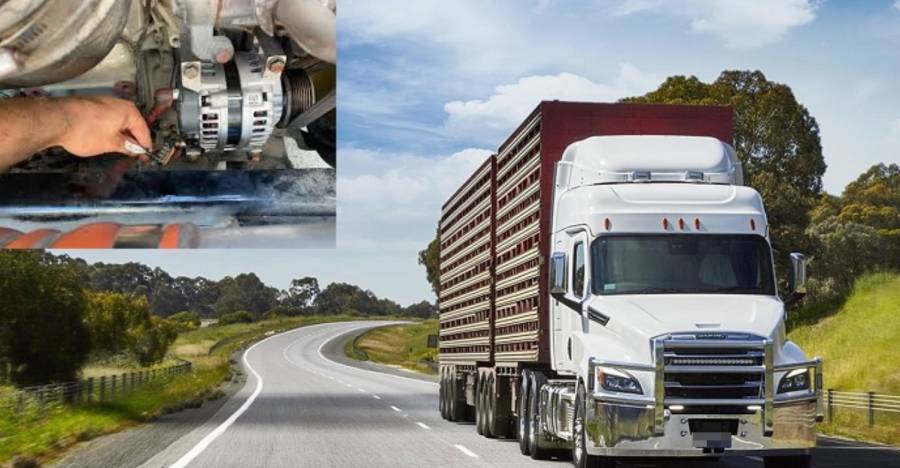
A Freightliner Cascadia losing power while driving can result from a clogged fuel filter, low fuel pressure, turbocharger problems, DPF or DEF system faults, faulty engine sensors, or electrical issues. These problems can reduce engine torque, limit acceleration, or trigger engine derate mode, which restricts engine power to protect critical components or respond to emissions system faults.
The cause often depends on when and how the power loss occurs. A Cascadia that struggles to accelerate or climb hills may have restricted fuel delivery or insufficient turbo boost. Sudden power loss accompanied by a Check Engine light, Stop Engine warning, or reduced engine performance may indicate an electronic control or aftertreatment system fault. Intermittent power loss that disappears and returns can also point to unstable sensor signals, loose electrical connections, or inconsistent fuel supply.
Diagnosing the problem requires checking dashboard warnings, retrieving engine fault codes, and inspecting the fuel, air intake, emissions, and electronic control systems. The correct repair depends on identifying the underlying fault rather than replacing components based on symptoms alone.
This guide explains the common causes of Freightliner Cascadia power loss, how to distinguish them through specific symptoms, which diagnostic steps to follow, and when professional diesel engine repair is necessary.
What Causes a Freightliner Cascadia to Lose Power While Driving?
A Freightliner Cascadia can lose power while driving because of five main problem categories: restricted fuel delivery, turbocharger or air intake faults, DPF or DEF system malfunctions, faulty engine sensors, and electrical control issues. Each problem affects engine performance differently, from reducing the fuel and air available for combustion to electronically limiting engine torque.
Fuel delivery and turbocharger problems commonly become noticeable during acceleration, uphill driving, or heavy-load operation because the engine requires more fuel and air to maintain power. Emissions system faults can trigger engine derate, while sensor and electrical problems can cause sudden or intermittent reductions in engine output. Identifying the operating conditions and accompanying warning signs helps narrow down the cause before mechanical testing begins.
Can a Clogged Fuel Filter Cause a Freightliner Cascadia to Lose Power?
A clogged fuel filter can cause a Freightliner Cascadia to lose power by restricting the amount of diesel fuel reaching the engine. As dirt, sediment, or other contaminants accumulate in the filter, fuel flow becomes restricted. The engine may receive enough fuel to idle or operate under light loads but struggle to maintain the required fuel supply during acceleration or uphill driving.
Detroit DD13, DD15, and DD16 engines rely on a consistent fuel supply to support high-pressure fuel injection. When the supply side becomes restricted, the fuel system may be unable to maintain the pressure or flow required under heavy engine demand. This can produce sluggish acceleration, reduced pulling power, hesitation, or engine fault codes associated with fuel pressure.
For example, a Cascadia may maintain highway speed on level ground but lose acceleration when climbing a steep grade with a loaded trailer. The increased engine load raises fuel demand, making an existing restriction more noticeable. However, similar symptoms can result from a weak fuel pump, contaminated diesel, air entering the fuel system, or other fuel delivery faults.
Diagnosing a suspected clogged fuel filter involves reviewing maintenance history, inspecting the fuel system for contamination or leaks, and measuring fuel supply pressure or restriction according to the engine manufacturer’s procedures. Replacing a restricted filter can restore normal fuel delivery, but persistent low fuel pressure requires further testing rather than repeated filter replacement.
Can Turbocharger Problems Cause Power Loss in a Freightliner Cascadia?
Turbocharger problems can cause Freightliner Cascadia power loss by reducing the compressed air supplied to the engine during acceleration and heavy-load operation. Diesel engines require sufficient air to burn the injected fuel efficiently. When turbo boost pressure falls below the engine’s required level, the engine control module may limit fuel injection and available torque.
Several components can contribute to insufficient boost, including the turbocharger, charge air cooler, intake piping, hose connections, and boost control system. A leaking charge air cooler or damaged connection allows compressed air to escape before reaching the engine. Turbocharger control faults can also prevent the system from producing the requested boost pressure.
For example, a Cascadia with a leaking charge air hose may accelerate normally under light loads but struggle to maintain speed while pulling a heavy trailer uphill. Depending on the location and severity of the leak, the driver may notice a hissing sound, reduced acceleration, increased fuel consumption, or an engine warning light. These symptoms indicate a possible air management problem but do not confirm turbocharger failure.
Technicians diagnose turbo-related power loss by comparing commanded and actual boost pressure, inspecting intake connections, checking for charge air leaks, and evaluating turbocharger operation. Replacing the turbocharger without confirming the fault can leave the original problem unresolved, especially when the actual cause is a leaking hose, damaged charge air cooler, or faulty pressure sensor.
Can DPF or DEF Problems Cause Freightliner Cascadia Power Loss?
DPF and DEF system problems can cause a Freightliner Cascadia to lose power when the engine control system activates a derate in response to certain aftertreatment faults. The diesel particulate filter (DPF) captures soot from exhaust gases, while the selective catalytic reduction (SCR) system uses diesel exhaust fluid (DEF) to reduce nitrogen oxide emissions. These systems operate differently, but faults in either can affect engine performance.
A DPF with excessive soot loading can increase exhaust backpressure and interfere with normal engine operation. Failed regeneration attempts, exhaust temperature sensor problems, and differential pressure sensor faults can also produce aftertreatment warnings. The engine control module uses sensor information and programmed protection strategies to determine whether operating restrictions are necessary.
DEF-related problems involve a separate set of components, including the DEF tank, pump, dosing system, SCR catalyst, and NOx sensors. Incorrect DEF quality, inadequate dosing, or SCR efficiency faults can trigger emissions-related warnings and, under applicable control strategies, progressive engine derate. The exact warning sequence and power limitation depend on the vehicle’s model year, engine calibration, and detected fault.
For example, a Cascadia experiencing an SCR system malfunction may initially display an emissions warning before entering a reduced-power operating condition. Continuing to operate without addressing the underlying fault can result in additional restrictions under the applicable emissions control strategy.
Diagnosing DPF or DEF-related power loss requires retrieving active fault codes and examining aftertreatment operating data. Technicians may evaluate DPF soot loading, exhaust backpressure, regeneration history, DEF quality, dosing performance, and NOx sensor readings. A forced regeneration is not appropriate for every aftertreatment fault and should only be performed when the manufacturer’s diagnostic procedure permits it.
Faulty engine sensors and electrical connections are two additional causes of Freightliner Cascadia power loss. Accelerator pedal position sensors, manifold pressure sensors, fuel pressure sensors, damaged wiring, and poor electrical connections can provide incorrect or interrupted signals to the engine control module. These faults can cause reduced throttle response, inconsistent engine torque, or intermittent power loss without a mechanical fuel or turbocharger failure.
The most reliable way to distinguish these causes is to combine the driving symptoms with diagnostic fault codes and measured operating data. Power loss during heavy engine load suggests checking fuel delivery and boost performance, while power loss accompanied by emissions warnings requires investigation of the aftertreatment system. Neither symptom pattern confirms a specific failed component without further testing.
Why Does a Freightliner Cascadia Lose Power When Accelerating?
A Freightliner Cascadia loses power when accelerating primarily because of insufficient fuel delivery, low turbo boost pressure, faulty accelerator pedal signals, or engine control restrictions. Acceleration increases the engine’s demand for fuel and compressed air. When either supply cannot meet the required operating conditions, the engine produces less torque, resulting in sluggish throttle response, hesitation, or difficulty reaching highway speed.
Fuel delivery restrictions become particularly noticeable when the driver presses the accelerator to increase engine load. A partially clogged fuel filter, weak fuel supply pump, or air entering the fuel system can prevent the engine from receiving sufficient diesel fuel. For example, a Cascadia equipped with a Detroit DD15 engine may idle smoothly and maintain a steady speed but hesitate when accelerating with a loaded trailer. This pattern indicates that the fuel system should be tested under load, although it does not establish fuel restriction as the cause.
Insufficient turbo boost produces similar symptoms because the engine needs additional compressed air to support increased fuel injection. A leaking charge air cooler, damaged intake hose, or malfunctioning turbocharger control system can prevent actual boost pressure from reaching the requested level. The engine control module may respond by limiting injected fuel to maintain appropriate combustion conditions. Drivers may notice slow acceleration, reduced pulling power, or an inability to maintain speed as engine demand increases.
A faulty accelerator pedal position sensor can also cause poor acceleration even when fuel delivery and turbocharger operation are normal. The sensor communicates the driver’s requested torque to the engine control module through electrical signals. Incorrect or intermittent signals can prevent the ECM from interpreting accelerator input correctly, resulting in delayed throttle response or reduced engine output. Damaged wiring, loose connectors, and sensor circuit faults can produce similar behavior.
Engine derate is another possible explanation, especially when reduced acceleration occurs alongside dashboard warnings. The ECM can restrict available torque in response to specific engine protection or emissions-related faults. Unlike a mechanical fuel restriction, an electronically commanded derate deliberately limits engine output according to programmed operating conditions.
To diagnose acceleration-related power loss, technicians should examine active and inactive fault codes, compare requested and actual boost pressure, evaluate fuel pressure under load, and inspect accelerator pedal sensor data. Engine RPM, vehicle speed, and transmission behavior also help distinguish reduced engine torque from drivetrain problems. The key diagnostic step is determining whether the engine cannot produce the requested power or whether the control system is intentionally limiting it.
Why Does a Freightliner Cascadia Lose Power Going Uphill?
A Freightliner Cascadia loses power going uphill when the engine cannot maintain the torque required to overcome increased vehicle load, or when an electronic control restriction limits available power. The most relevant causes include restricted fuel delivery, insufficient turbo boost, excessive exhaust restriction, and engine derate. A loaded semi-truck requires substantially more tractive effort on an incline than on level ground, making existing performance problems easier to detect.
Fuel supply problems are a major consideration when a Cascadia operates normally on flat roads but struggles during sustained climbs. As engine load increases, the fuel injection system requires sufficient fuel flow and pressure to maintain torque. A restricted fuel filter, weak supply pump, or contaminated fuel can prevent the system from meeting this demand. The resulting symptoms may include declining road speed, weak acceleration, hesitation, or difficulty maintaining engine output under load.
For example, a Freightliner Cascadia pulling a heavily loaded trailer may maintain 65 mph on level highway sections but experience an unusually large speed reduction when climbing a grade. Some speed loss is normal for a heavy truck because climbing requires additional power. However, a significant change from the vehicle’s previous performance under comparable load and road conditions can indicate a developing engine or fuel system problem.
Turbocharger and charge air system faults also become more noticeable during uphill driving. Higher engine load requires adequate airflow to support combustion and maintain torque. A damaged charge air hose, leaking intercooler, or boost control malfunction can reduce the amount of compressed air entering the engine. The ECM may limit fuel delivery when available airflow is insufficient, further reducing pulling power.
Exhaust aftertreatment problems can contribute to reduced uphill performance through excessive exhaust restriction or electronically commanded engine derate. A DPF with excessive soot accumulation may increase exhaust backpressure, while certain DPF, DEF, or SCR faults can trigger power limitations. These conditions should be investigated when uphill power loss occurs alongside Check Engine, aftertreatment, or engine derate warnings.
Transmission operation must also be considered before concluding that the engine has lost power. Freightliner Cascadia trucks equipped with the Detroit DT12 automated manual transmission select gears according to operating conditions, vehicle load, and control inputs. A downshift accompanied by higher engine RPM does not automatically indicate an engine problem. However, abnormal gear engagement, transmission fault messages, or a mismatch between engine RPM and vehicle acceleration may require drivetrain diagnosis.
Diagnosing uphill power loss requires comparing engine performance under similar loads and operating conditions. Technicians can review fault codes, monitor fuel pressure and boost pressure, examine engine load and torque-related data, and check transmission operation. These measurements help determine whether the truck is experiencing normal load-related speed reduction, inadequate engine output, or an electronically imposed power limitation.
A Freightliner Cascadia that repeatedly loses power on hills should be inspected before continued heavy-load operation, particularly when the symptoms are worsening or accompanied by warning lights, abnormal engine temperatures, or unusual mechanical noises. Identifying the underlying fault early helps prevent additional component damage and reduces the risk of losing propulsion in demanding driving conditions.
Why Does a Freightliner Cascadia Lose Power and Then Regain It?
A Freightliner Cascadia that loses power and then regains it may have intermittent fuel delivery problems, unstable sensor signals, loose electrical connections, or temporary engine control restrictions. These faults can interrupt normal engine performance for several seconds or minutes before the truck returns to its expected power output. The problem may occur during acceleration, steady highway driving, or changes in engine load.
Intermittent fuel delivery is one possible cause because diesel engines require a continuous fuel supply to maintain combustion and torque. A partially restricted fuel filter, air entering the fuel system, or an inconsistent fuel supply pump can create pressure fluctuations under changing operating conditions. For example, a Cascadia may hesitate while accelerating, recover when the driver reduces throttle input, and lose power again when engine demand increases. This pattern warrants fuel system testing, particularly when the problem becomes more noticeable under heavy loads.
Faulty engine sensors can also produce temporary power loss by sending inaccurate or interrupted information to the engine control module. The accelerator pedal position sensor, manifold pressure sensor, and fuel pressure sensors provide data used to calculate and regulate engine output. When a signal becomes unreliable, the ECM may reduce available torque or apply a protective control strategy. Normal performance can return when the signal stabilizes, although the underlying fault may remain.
Electrical connection problems are another important consideration, particularly when power loss occurs unpredictably. Loose connectors, damaged wiring harnesses, corroded terminals, and poor grounding connections can interrupt communication between sensors, control modules, and engine components. Engine vibration, temperature changes, and vehicle movement can influence an already damaged connection, causing symptoms that appear and disappear without a consistent pattern.
For example, a damaged wiring harness near an engine-mounted sensor may temporarily lose electrical continuity when the truck encounters road vibration. The ECM can receive an invalid signal, reduce engine output, and restore normal operation when the connection stabilizes. Depending on the fault and control strategy, a diagnostic trouble code may be recorded even when the dashboard warning disappears.
Temporary engine derate conditions can also explain power loss followed by recovery. Certain engine protection strategies adjust available torque in response to monitored operating conditions, including temperature and other engine parameters. However, not every derate automatically clears when the original condition improves. Some faults remain active or require specific operating conditions, repairs, or diagnostic procedures before normal power becomes available.
Diagnosing intermittent power loss requires examining both active and previously recorded fault codes. Technicians should review freeze-frame or event data when available, monitor fuel pressure and sensor readings, and inspect electrical connections associated with relevant faults. Capturing operating data while the symptom occurs is especially valuable because a component may appear to function normally during a stationary inspection.
Intermittent power recovery does not confirm that the problem has been resolved. A Cascadia that repeatedly loses and regains power should undergo diagnostic testing before continued operation, especially when the interruptions affect highway merging, hill climbing, or maintaining speed in traffic.
Why Does a Freightliner Cascadia Go Into Engine Derate Mode?
A Freightliner Cascadia enters engine derate mode when its electronic control system deliberately reduces available engine power in response to certain engine protection, emissions, or control system faults. Engine derate is a programmed operating restriction rather than a single mechanical failure. Its purpose depends on the detected condition and may involve protecting engine components, maintaining controlled operation, or enforcing emissions-related requirements.
The engine control module continuously evaluates information from sensors and connected vehicle systems. Depending on the engine configuration, monitored parameters include coolant temperature, oil pressure, fuel system performance, exhaust conditions, and aftertreatment system operation. When a monitored condition exceeds a programmed threshold or a qualifying fault becomes active, the control system may limit engine torque or speed according to its calibration.
For example, an engine protection fault associated with excessive coolant temperature can result in reduced available power. The restriction helps limit engine loading while the condition is addressed. Emissions-related derates operate through different control strategies and may become progressively more restrictive when qualifying aftertreatment faults remain unresolved.
Drivers may recognize engine derate through reduced acceleration, limited engine response, difficulty maintaining speed under load, or dashboard messages indicating an engine or emissions system problem. The exact symptoms depend on the fault severity, engine calibration, and vehicle configuration. A truck operating under derate may continue running smoothly while producing substantially less power than expected.
Engine derate should not be confused with every instance of reduced engine performance. A clogged fuel filter or leaking charge air hose can reduce available torque without the ECM intentionally commanding a derate. Diagnostic data is necessary to determine whether the control module is restricting output or whether the engine cannot achieve the requested performance because of a mechanical or fuel delivery problem.
Can DPF or SCR Problems Trigger Engine Derate?
DPF and SCR system problems can trigger engine derate in a Freightliner Cascadia when qualifying aftertreatment faults activate emissions-related control restrictions. The diesel particulate filter captures particulate matter from exhaust gases, while the selective catalytic reduction system uses diesel exhaust fluid to reduce nitrogen oxide emissions. Both systems depend on sensors and electronic controls to monitor operating performance.
DPF-related problems include excessive soot accumulation, unsuccessful regeneration, abnormal exhaust pressure readings, and certain exhaust temperature sensor faults. A heavily loaded DPF can increase exhaust restriction, while faults involving the regeneration system may prevent the filter from operating within its intended conditions. Depending on the detected problem, the engine control system can activate warnings or apply an operating restriction.
SCR-related derates can occur when the system detects qualifying problems with DEF quality, DEF delivery, NOx sensor readings, or emissions conversion performance. The control system monitors whether the aftertreatment equipment is functioning according to its programmed requirements. Faults that remain unresolved may lead to additional warnings and increasingly restrictive operating conditions.
For example, a Cascadia with an SCR-related fault may initially display a dashboard warning while maintaining normal driving performance. Under the applicable emissions inducement strategy, an unresolved fault can subsequently result in reduced engine power or vehicle speed restrictions. The timing and severity of these restrictions depend on the engine model, emissions certification, calibration, and specific fault.
Diagnosing an aftertreatment derate requires retrieving the relevant fault codes and examining system data. Technicians may need to inspect DPF soot loading, regeneration status, exhaust pressure, DEF quality, dosing operation, and NOx sensor performance. Each diagnostic procedure should follow the specifications for the installed engine and aftertreatment system.
Replacing a DPF, NOx sensor, or DEF pump without confirming the fault can result in unnecessary repair costs. Similarly, clearing diagnostic codes without correcting the underlying malfunction does not provide a reliable repair. The correct solution is to identify the specific aftertreatment fault, repair its cause, and complete any manufacturer-required verification procedures.
What Warning Lights Indicate Engine Derate on a Freightliner Cascadia?
The Check Engine light, Stop Engine warning, and certain aftertreatment system warnings can indicate conditions associated with engine derate on a Freightliner Cascadia. However, a warning light alone does not confirm that engine power is being limited. The meaning depends on the active fault, the warning message, and the vehicle’s engine control strategy.
The Check Engine light indicates that the vehicle has detected a fault requiring attention. Depending on the problem, the truck may continue operating normally, experience reduced performance, or enter a restricted operating mode. For example, a fault involving an engine sensor may illuminate the Check Engine light while causing inconsistent acceleration. Other faults may produce a warning without an immediate reduction in engine torque.
The Stop Engine warning indicates a potentially serious operating condition requiring prompt action according to the vehicle’s operator manual. It may be associated with critical engine protection parameters, including certain oil pressure or coolant temperature conditions. Drivers should move to a safe location and follow the manufacturer’s shutdown instructions rather than continuing to operate the truck under heavy load.
Aftertreatment warnings can identify problems involving the DPF, DEF, or SCR system. A DPF warning may indicate that regeneration or service attention is required, while a DEF or SCR-related message may identify a condition that can lead to emissions-related operating restrictions. The dashboard may also display messages describing reduced engine performance or the need for service.
The exact warning symbols and messages differ across Freightliner Cascadia model years, instrument cluster configurations, and engine calibrations. For this reason, drivers should consult the vehicle-specific operator manual rather than assuming that a particular warning always indicates the same component failure.
Technicians confirm the relationship between warning lights and engine derate by retrieving diagnostic trouble codes and reviewing available engine control data. Heavy-duty vehicle fault information commonly uses Suspect Parameter Number (SPN) and Failure Mode Identifier (FMI) values, although additional manufacturer-specific diagnostic information may be required to identify the cause accurately.
A Freightliner Cascadia displaying reduced power and an engine warning should be diagnosed before the condition worsens. A Stop Engine warning requires particular attention because continued operation under a critical engine protection condition can increase the risk of mechanical damage or unsafe vehicle operation.
How Do You Diagnose a Freightliner Cascadia That Loses Power While Driving?
Diagnosing a Freightliner Cascadia that loses power while driving requires checking diagnostic trouble codes, fuel pressure, turbo boost, engine sensor data, and transmission operation. The diagnostic process should begin with dashboard warnings and the conditions under which power loss occurs. These observations help determine which systems require testing and prevent unnecessary component replacement.
Start by identifying whether the truck loses power during acceleration, uphill driving, steady cruising, or at irregular intervals. Power loss under heavy load suggests investigating fuel delivery and air intake performance, while reduced power accompanied by emissions warnings requires checking the aftertreatment system. A sudden reduction in throttle response may also involve accelerator pedal signals, electrical connections, or an electronically commanded engine derate.
Inspect the vehicle for visible problems before performing advanced diagnostic tests. Check accessible fuel lines for leaks, examine air intake hoses for loose connections or damage, and look for disconnected electrical connectors. Inspect the dashboard for active warnings and record any fault messages. These preliminary checks can identify obvious defects, but a normal visual inspection does not rule out internal fuel system problems or electronic faults.
Fuel pressure testing helps determine whether the engine receives adequate diesel fuel under different operating conditions. Technicians should compare measured supply pressure and other applicable fuel system parameters against specifications for the installed engine. A restriction or supply problem may become more apparent under load than at idle. If the measurements indicate inadequate fuel delivery, the next steps include checking fuel filters, supply lines, fuel contamination, and the relevant pump components.
Turbocharger diagnosis requires comparing requested and actual boost pressure while examining charge air system integrity. A pressure difference may indicate an air leak, intake restriction, turbocharger control problem, or inaccurate sensor reading. Technicians can inspect the charge air cooler, hose connections, and turbocharger-related components before determining whether a major component requires replacement.
Electrical diagnosis involves reviewing live sensor data and checking wiring associated with relevant fault codes. An accelerator pedal position sensor that produces inconsistent readings can affect throttle response, while an unreliable manifold pressure signal can interfere with engine control calculations. Electrical testing should include connector condition, circuit continuity, supply voltage, and ground integrity when indicated by the diagnostic procedure.
Transmission performance should also be evaluated when the truck has difficulty accelerating despite apparently normal engine operation. A Freightliner Cascadia equipped with a Detroit DT12 automated manual transmission may experience shifting or clutch-related faults that affect power transfer to the wheels. Transmission fault codes, abnormal gear engagement, and the relationship between engine RPM and vehicle speed help distinguish drivetrain problems from reduced engine output.
Diagnostic measurements should be collected using appropriate heavy-duty vehicle equipment and manufacturer procedures. Testing under driving conditions must be performed safely, with a qualified technician monitoring recorded data rather than distracting the driver.
How Do You Read Freightliner Cascadia Fault Codes?
Freightliner Cascadia fault codes are read through the vehicle’s diagnostic interface using compatible heavy-duty diagnostic equipment or, where supported, the instrument cluster’s diagnostic information display. These codes identify detected operating abnormalities and provide a starting point for determining why the truck is losing power.
Heavy-duty vehicle diagnostic information commonly includes a Suspect Parameter Number (SPN) and Failure Mode Identifier (FMI). The SPN identifies the affected parameter or system, while the FMI describes the detected failure condition, such as an abnormal signal, voltage problem, or parameter outside its expected range. Additional information may identify the reporting control module and whether the fault is currently active.
For example, a fault associated with fuel pressure directs the diagnostic process toward fuel delivery measurements, pressure sensor operation, and related electrical circuits. A fault associated with turbo boost requires evaluating charge air pressure, intake system integrity, and sensor readings. The fault code identifies the area requiring investigation rather than proving that a particular component has failed.
Diagnostic software such as Detroit Diesel DiagnosticLink can provide access to engine fault information, operating parameters, and supported diagnostic procedures on compatible Detroit-powered vehicles. Trucks equipped with other engine configurations require diagnostic tools and service information appropriate to their installed systems.
Technicians should record active and inactive codes before clearing anything. Active codes identify currently detected conditions, while inactive codes can provide evidence of intermittent problems. Freeze-frame or event information, when available, helps establish the engine speed, load, temperature, and operating conditions associated with a fault.
Fault codes should be interpreted alongside actual engine measurements and symptoms. Clearing codes without correcting the underlying problem can temporarily remove diagnostic information while leaving the cause of power loss unresolved.
How Do You Fix a Freightliner Cascadia That Keeps Losing Power?
Fixing a Freightliner Cascadia that keeps losing power requires repairing the confirmed fault in the fuel system, turbocharger, emissions equipment, engine sensors, electrical circuits, or drivetrain. The appropriate repair depends on diagnostic findings because different failures can produce nearly identical symptoms. Replacing components without testing can increase repair costs without restoring normal performance.
Fuel-related power loss should be corrected by identifying and removing the restriction or supply problem. If testing confirms a clogged fuel filter, replace it with a filter meeting the engine manufacturer’s specifications and complete the required fuel system priming procedure. Inspect the removed filter and fuel for signs of contamination, water, or abnormal debris. Persistent low fuel pressure after filter replacement requires additional investigation of the fuel supply pump, lines, and other relevant components.
Turbo-related power loss requires restoring proper airflow and boost pressure. A damaged charge air hose or leaking connection should be repaired or replaced, while a leaking charge air cooler requires appropriate service. If diagnostic testing identifies a turbocharger control fault, the affected control components should be inspected according to the engine manufacturer’s procedures. Turbocharger replacement is justified only when testing confirms a failure that cannot be corrected through an approved repair.
Emissions-related power loss must be addressed according to the specific DPF, DEF, or SCR fault. A DPF problem may require correcting a regeneration-related malfunction, repairing an exhaust sensor circuit, or servicing the filter when diagnostic measurements establish that service is necessary. DEF system repairs may involve contaminated fluid, defective dosing equipment, supply problems, or failed sensors. The technician must verify the actual failure before replacing expensive aftertreatment components.
Engine sensor problems require checking both the sensor and its electrical circuit. For example, an accelerator pedal position fault may result from a defective sensor assembly, damaged wiring, poor connector contact, or an electrical supply problem. Replacing the sensor will not resolve a broken wire or unstable ground connection. Technicians should verify the circuit condition and compare live readings with the manufacturer’s diagnostic criteria before selecting a repair.
Electrical faults require restoring reliable connections and communication between the engine control module and associated components. Damaged wiring should be repaired using appropriate automotive electrical procedures, while corroded terminals and loose connectors require proper service. Any replacement wiring or connectors must be suitable for the truck’s operating environment, including engine vibration, moisture exposure, and temperature changes.
Transmission-related power loss requires a separate diagnostic approach. If the engine produces normal torque but the truck does not accelerate as expected, technicians should investigate transmission fault codes, clutch operation, gear engagement, and applicable control system functions. Repairs may involve electrical components, transmission actuators, clutch-related systems, or mechanical components, depending on the confirmed failure.
After completing repairs, verify that the original fault has been corrected. This includes reviewing diagnostic codes, checking relevant live data, and confirming normal engine performance under appropriate operating conditions. A controlled road test may be necessary to reproduce the original driving conditions and establish that fuel delivery, turbo boost, engine torque, and transmission response have returned to expected operation.
A Freightliner Cascadia should be inspected by a qualified diesel technician when power loss persists, engine derate remains active, or warning messages indicate a serious engine or aftertreatment fault. Professional diagnosis is particularly important when repairs involve high-pressure fuel systems, turbocharger assemblies, electronic control modules, or emissions equipment. These systems require specialized tools, technical specifications, and safe service procedures to prevent additional damage.
What Should You Do If Your Freightliner Cascadia Suddenly Loses Power While Driving?
If your Freightliner Cascadia suddenly loses power while driving, maintain control of the truck, activate the hazard lights when appropriate, and move to a safe stopping location as soon as conditions allow. Avoid sudden braking or steering movements that could destabilize the truck, especially when pulling a loaded trailer. The next action depends on whether the engine is still running, which dashboard warnings appear, and whether the vehicle can maintain a safe speed.
A sudden reduction in engine power can make it difficult to accelerate, merge into traffic, or maintain highway speed. If the engine continues running but produces limited torque, avoid demanding additional power through aggressive acceleration. Check the instrument cluster for Check Engine, Stop Engine, engine temperature, oil pressure, or aftertreatment warnings without taking attention away from the road. These indicators help determine whether the truck is experiencing a mechanical performance problem or an electronically commanded engine restriction.
A Stop Engine warning requires immediate attention because it can indicate a critical engine protection condition. Follow the vehicle-specific operator manual and stop as soon as it is safe to do so. Do not continue driving to a distant repair facility when the warning indicates that shutdown is required. Low oil pressure, severe overheating, and other critical operating conditions can cause substantial engine damage if operation continues.
If the Cascadia loses power while climbing a hill, avoid stopping in an active traffic lane whenever possible. Use the available engine power to reach a safe stopping area only when doing so does not conflict with a critical shutdown warning or create additional danger. A heavily loaded truck that cannot maintain a safe climbing speed may require roadside assistance rather than attempting to continue uphill. If the vehicle becomes disabled in an unsafe location, follow applicable roadside emergency procedures and contact the appropriate assistance or emergency service.
Once the truck is safely parked, record the dashboard warning messages, fault codes displayed by the instrument cluster, and the conditions preceding the power loss. Note whether the problem occurred during acceleration, uphill driving, steady cruising, or immediately after a warning appeared. Also record unusual engine noises, smoke, overheating, or changes in transmission behavior. This information helps a diesel technician reproduce the problem and identify the affected system.
A basic visual inspection can identify accessible problems such as disconnected intake hoses, visible fluid leaks, or damaged electrical connections. However, do not open a hot cooling system, loosen high-pressure fuel components, or approach moving engine parts. More advanced inspections should be performed by qualified personnel using appropriate safety procedures.
Do not assume that restarting the engine has repaired the problem simply because normal power returns. Some intermittent faults disappear temporarily when operating conditions change or control modules restart. The original fault may remain stored in diagnostic memory and can cause another loss of power during highway driving.
Roadside assistance or professional diesel repair is necessary when the truck repeatedly loses power, cannot maintain a safe operating speed, displays a critical engine warning, or has an unresolved engine derate. The truck should return to service only after the cause has been assessed and its safe operating condition has been established.
How Can You Prevent a Freightliner Cascadia From Losing Power?
Preventing Freightliner Cascadia power loss requires maintaining five key systems: fuel delivery, air intake and turbocharging, exhaust aftertreatment, engine electronics, and the cooling system. Regular inspections and manufacturer-specified maintenance reduce the likelihood of restrictions, component deterioration, and control system faults that interfere with engine performance. Maintenance intervals should follow the recommendations for the truck’s model year, engine configuration, operating conditions, and service history.
Fuel system maintenance is essential because restricted or contaminated diesel fuel can reduce engine performance under load. Replace fuel filters according to the applicable service schedule and inspect the fuel system when contamination, water, or abnormal restriction is suspected. Use diesel fuel that meets the engine manufacturer’s requirements and monitor the condition of fuel lines, connections, and water-separating components where equipped. For example, a Cascadia operating in dusty environments or receiving contaminated fuel may develop fuel filter restrictions earlier than expected, making condition-based inspection important.
Air intake and turbocharger maintenance helps the engine maintain sufficient airflow during acceleration and heavy-load operation. Inspect air filters, intake piping, charge air hoses, and accessible connections for damage or restrictions. A loose clamp or deteriorated charge air hose can allow compressed air to escape, reducing boost pressure even when the turbocharger itself operates correctly. Addressing small air leaks before they become severe helps maintain consistent engine response.
Exhaust aftertreatment maintenance reduces the risk of DPF, DEF, and SCR-related operating restrictions. Monitor aftertreatment warnings, use DEF that meets the required quality specifications, and address regeneration-related faults promptly. Repeatedly interrupted or unsuccessful regeneration events can contribute to DPF soot accumulation under certain operating conditions. Drivers should follow the vehicle manufacturer’s regeneration instructions rather than attempting unnecessary parked regenerations or ignoring persistent warning messages.
Engine electronics and electrical connections should be inspected when maintenance or diagnostic findings indicate deterioration. Damaged wiring insulation, corroded terminals, loose connectors, and unreliable grounding can interfere with sensor signals and control module communication. For example, an intermittent accelerator pedal position signal may produce inconsistent throttle response even when the engine’s mechanical components remain functional. Identifying electrical problems before they become persistent can prevent unexpected interruptions during operation.
Cooling system maintenance is equally important because excessive engine temperature can activate protective control strategies that reduce available power. Monitor coolant levels when the engine is cool, inspect hoses and connections for leaks, and maintain the cooling system according to the manufacturer’s specifications. Radiator airflow restrictions, cooling fan problems, and coolant leaks can reduce cooling capacity, especially during prolonged uphill driving or heavy-load operation.
Routine diagnostic monitoring provides another opportunity to identify developing problems. Reviewing stored fault codes during scheduled maintenance can reveal intermittent sensor faults, aftertreatment abnormalities, or fuel system concerns before they cause noticeable power loss. Fault codes should be evaluated in context because an inactive code does not automatically indicate that a component requires replacement.
Driver observations also contribute to preventive maintenance. Changes in acceleration, pulling power, fuel consumption, engine temperature, or dashboard warning behavior should be documented and reported. A Cascadia that gradually becomes slower on familiar uphill routes may be developing a fuel delivery or air management problem, although changes in trailer weight, road grade, weather, and operating conditions must also be considered.
The most effective preventive approach combines scheduled maintenance, early fault diagnosis, and timely repairs based on confirmed findings. Maintaining the truck’s fuel, air, emissions, electrical, and cooling systems helps preserve consistent engine performance and reduces the likelihood of unexpected power loss during commercial operation.
Read more: Freightliner Cascadia Shuts Off While Driving: Fixes
Do Different Freightliner Cascadia Engines Have Different Power Loss Problems?
Different Freightliner Cascadia engines can experience different power loss problems because their fuel injection systems, turbocharger controls, emissions equipment, and electronic management strategies vary by engine model and production year. Detroit DD13, DD15, and DD16 engines share several operating principles, while Cascadia trucks equipped with Cummins engines may require different diagnostic procedures and components. Identifying the installed engine is essential before interpreting fault codes or performing repairs.
The Detroit DD13 is designed for heavy-duty applications that require a balance of torque, fuel efficiency, and operating performance. Power loss in a DD13-equipped Cascadia can result from fuel supply restrictions, charge air system leaks, sensor malfunctions, or aftertreatment faults. For example, a DD13 that struggles to accelerate under load may require fuel pressure testing and a comparison of requested versus actual boost pressure. These measurements help distinguish inadequate fuel delivery from insufficient airflow without assuming that either system has failed.
The Detroit DD15 is another engine commonly associated with Freightliner Cascadia trucks. Its electronically controlled fuel injection, turbocharging, and emissions systems depend on accurate sensor information to maintain engine performance. A DD15 experiencing reduced pulling power may have a fuel delivery problem, boost pressure fault, or electronically commanded derate. A truck that loses power while climbing hills but operates normally at lighter loads should be evaluated for fuel and air supply limitations before replacing major engine components.
Detroit DD16 engines, where fitted to applicable Cascadia configurations, can experience similar categories of power loss. However, their operating specifications, calibration, and component configurations must be evaluated using DD16-specific service information. Fuel system restrictions, air management faults, and engine protection conditions can affect available torque, particularly during sustained heavy-load operation. Diagnostic measurements from another engine model should not be treated as interchangeable unless the manufacturer specifies the same test requirements.
Freightliner Cascadia trucks equipped with compatible Cummins engines, including certain Cummins X15 configurations, require diagnosis using the corresponding Cummins service procedures. These engines have their own electronic control strategies, fuel system components, turbocharger arrangements, and aftertreatment calibrations. For example, a Cummins-powered Cascadia displaying reduced engine performance may require analysis through Cummins INSITE or another compatible diagnostic platform to identify relevant faults and evaluate operating data.
The differences between engines become particularly important when diagnosing engine derate. Detroit and Cummins control systems can apply power restrictions in response to engine protection conditions and qualifying emissions faults, but the thresholds, fault descriptions, and required service procedures depend on the installed engine and calibration. A diagnostic code or warning message should therefore be interpreted using the correct engine-specific documentation.
Model year also affects troubleshooting because Freightliner Cascadia engine configurations, emissions systems, electronic controls, and dashboard warning displays have changed across production generations. A power loss problem on an older Cascadia may involve different hardware or diagnostic procedures from a similar symptom on a newer truck. Even vehicles using the same engine family can have differences in sensors, aftertreatment components, and control software.
The correct diagnostic approach is to identify the truck’s model year, engine model, and relevant fault codes before testing or replacing components. Engine-specific service information provides the applicable fuel pressure specifications, boost pressure expectations, electrical testing procedures, and repair requirements. This prevents technicians from applying incorrect specifications or assuming that a problem associated with one engine configuration affects every Freightliner Cascadia.
Can a Freightliner Cascadia Lose Power Without a Check Engine Light?
A Freightliner Cascadia can lose power without a Check Engine light when the underlying problem does not trigger an active dashboard warning or when the fault occurs intermittently. Mechanical restrictions, charge air leaks, fuel delivery problems, and certain electrical faults can reduce engine performance before the control system detects a condition that meets its warning criteria. The absence of a warning light does not establish that the engine and its supporting systems are operating correctly.
A partially clogged fuel filter is one possible explanation. Fuel may flow adequately during idle and light-load operation but become insufficient when the engine requires additional fuel for acceleration or uphill driving. Depending on the engine configuration and severity of the restriction, the truck may experience reduced pulling power without immediately displaying a Check Engine light. Fuel supply pressure and restriction testing can help determine whether the problem originates in the fuel delivery system.
Charge air system leaks can also produce reduced engine performance without an obvious dashboard warning. A loose hose connection, damaged charge air cooler, or deteriorated intake pipe can allow compressed air to escape before reaching the engine. Small leaks may become more noticeable during heavy-load operation when boost demand increases. The driver may experience sluggish acceleration or difficulty maintaining speed, even when no warning appears on the instrument cluster.
Intermittent electrical problems provide another explanation for power loss without a persistent Check Engine light. A loose sensor connector, damaged wiring harness, or unstable ground connection can temporarily interrupt engine control signals. If the signal returns to normal, the visible warning may disappear or may never appear, depending on the fault detection criteria. Diagnostic memory may still contain an inactive fault code that helps identify the affected circuit.
For example, a Cascadia may briefly hesitate when the driver presses the accelerator and then return to normal performance. If the accelerator pedal position signal is interrupted by a poor electrical connection, the ECM may receive inconsistent driver demand information. Reviewing live sensor data and inspecting the relevant wiring can help establish whether the symptom is related to the accelerator input circuit.
Transmission problems can also create the impression of engine power loss without illuminating the engine’s Check Engine light. A Detroit DT12 transmission experiencing abnormal clutch operation, gear engagement problems, or transmission control faults may prevent engine torque from being transferred to the wheels as expected. The driver may notice poor acceleration, unexpected shifting behavior, or a mismatch between engine RPM and vehicle speed. Transmission-related warnings or diagnostic codes may be present even when the engine warning light remains off.
Some drivers interpret normal changes in vehicle performance as engine power loss. Heavy trailer loads, steep grades, strong headwinds, and changes in road conditions increase the power required to maintain speed. A Cascadia carrying a heavier load than usual may accelerate more slowly without having a mechanical fault. Comparing performance under similar operating conditions helps distinguish normal load-related behavior from an actual deterioration in engine output.
Diagnosing power loss without a Check Engine light requires evaluating symptoms rather than relying exclusively on dashboard warnings. Technicians should retrieve active and inactive diagnostic codes, inspect fuel and air delivery systems, monitor engine operating data, and evaluate transmission performance when appropriate. Fuel pressure, actual versus requested boost pressure, accelerator pedal signals, and engine load information can provide evidence of problems that are not immediately visible to the driver.
A Freightliner Cascadia that repeatedly loses power should undergo diagnostic inspection even when no Check Engine light appears. Persistent hesitation, reduced pulling power, or unexpected speed loss can indicate a developing mechanical, electrical, or drivetrain fault. Identifying the cause before the symptoms worsen helps maintain reliable engine performance and reduces the risk of unexpected power loss during commercial driving.