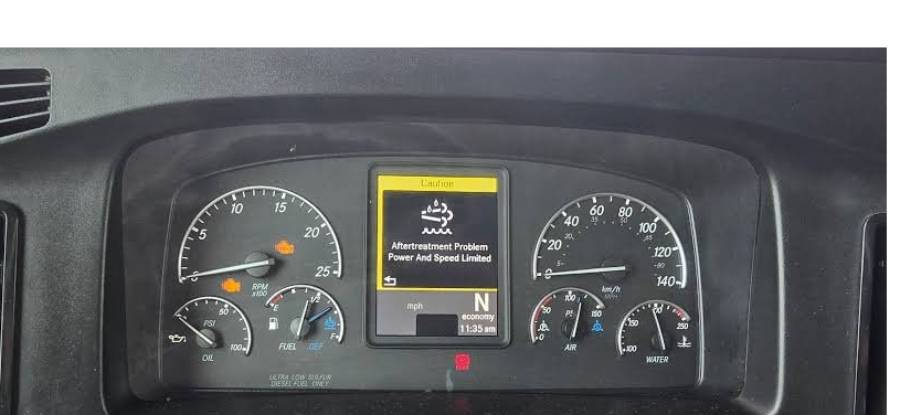
A Freightliner Cascadia shuts off while driving due to fuel delivery problems, electrical system failures, engine control module (ECM) faults, or engine protection system activation. These problems can interrupt fuel injection, disrupt electronic engine controls, or trigger a protective shutdown when critical operating conditions exceed safe limits. Identifying the cause requires checking dashboard warnings, diagnostic trouble codes, and the truck’s behavior before the engine stops.
Fuel system problems, including clogged fuel filters, low fuel pressure, and air entering the fuel lines, can interrupt the fuel supply and cause the engine to stall. Electrical faults, such as loose battery connections, damaged wiring, or poor ground connections, can disrupt power to essential engine control components. ECM or Common Powertrain Controller (CPC) communication problems can also affect engine operation. In addition, certain Detroit Diesel engine configurations can initiate protective shutdowns in response to critical conditions such as low oil pressure or excessive coolant temperature.
An unexpected engine shutdown creates a serious safety risk, particularly at highway speeds or in heavy traffic. Drivers should move the truck to a safe location and investigate critical warning indicators before attempting to restart it. This guide explains the causes of Freightliner Cascadia engine shutdowns, how to diagnose the underlying problem, which repairs address specific failures, and how to prevent recurring shutdowns.
Why Does a Freightliner Cascadia Shut Off While Driving?
A Freightliner Cascadia shuts off while driving when fuel delivery is interrupted, electrical power to engine controls is lost, electronic control systems malfunction, or an engine protection system commands a shutdown. These four categories affect the engine’s ability to maintain combustion, regulate fuel injection, and operate within safe temperature and pressure limits. The exact cause depends on the engine configuration, operating conditions, and diagnostic faults recorded before the shutdown.
Fuel delivery interruptions can stop a Freightliner Cascadia engine when insufficient diesel reaches the fuel injection system. Restricted fuel filters, damaged fuel lines, air entering the fuel supply, or a malfunctioning fuel pump can reduce fuel pressure below the level required for normal operation. For example, a severely restricted fuel filter may cause the engine to lose power under heavy acceleration or while climbing a hill before eventually stalling.
Electrical system failures can cause sudden engine shutdowns by interrupting power to essential electronic components. Loose battery terminals, corroded ground connections, damaged wiring harnesses, or faulty power distribution circuits can disrupt the engine control module (ECM). Unlike gradual fuel starvation, an electrical interruption may stop the engine abruptly without noticeable hesitation. The dashboard may also lose power or display communication warnings, depending on the affected circuit.
Engine control faults can interfere with communication between the ECM and the Common Powertrain Controller (CPC) on applicable Freightliner Cascadia configurations. The ECM manages engine functions such as fuel injection, while the CPC coordinates driver inputs and powertrain communication. A loss of required power, ground, or communication signals can disrupt engine operation. However, a communication fault does not automatically indicate that either control module needs replacement.
Engine protection shutdowns occur when the engine management system detects certain critical operating conditions and the vehicle’s programmed protection strategy permits automatic shutdown. Low engine oil pressure, excessive coolant temperature, and other monitored conditions may trigger warnings, power reduction, or shutdown commands. For example, a Detroit DD15 engine experiencing critically low oil pressure may activate an engine protection response, depending on its configuration.
The shutdown pattern provides an important diagnostic clue. Gradual power loss suggests investigating fuel delivery and engine derating, while an immediate stall suggests checking electrical power and engine controls. A Stop Engine warning requires particular attention to engine protection faults. These patterns help narrow the investigation, but diagnostic trouble codes and system testing are necessary to confirm the underlying cause.
What Are the Most Common Causes of a Freightliner Cascadia Shutting Off?
The most common causes to investigate when a Freightliner Cascadia shuts off while driving fall into four categories: fuel system problems, electrical failures, ECM or CPC faults, and engine protection system activation. Each category interrupts engine operation differently, producing symptoms such as gradual power loss, sudden stalling, dashboard warnings, or intermittent restarting. Identifying the affected system requires matching these symptoms with diagnostic trouble codes and component test results.
Can Fuel System Problems Cause a Freightliner Cascadia to Shut Off?
Fuel system problems can cause a Freightliner Cascadia to shut off when the engine cannot maintain the fuel supply and pressure required for combustion. Restricted fuel filters, malfunctioning fuel pumps, air leaks in fuel lines, and contaminated diesel are potential causes. These problems can become more noticeable during acceleration or uphill driving because engine fuel demand increases under load.
A clogged fuel filter restricts diesel flow, while air entering the fuel system can interfere with consistent fuel delivery. For example, a truck that loses power while climbing a hill but runs normally at idle may have a fuel supply restriction that becomes more severe under increased engine load. Technicians should inspect fuel filters, check for leaks, and measure fuel pressure according to the applicable Detroit Diesel service procedures before replacing components.
Can Electrical Problems Cause a Freightliner Cascadia to Shut Off?
Electrical problems can shut down a Freightliner Cascadia by interrupting power to the engine control module or other essential engine management components. Loose battery cables, corroded ground connections, damaged wiring harnesses, and faulty power distribution circuits can cause intermittent voltage loss. Unlike fuel starvation, an electrical interruption can stop the engine immediately without a gradual reduction in power.
For example, a loose ground connection may temporarily lose electrical continuity when the truck encounters road vibrations. This can interrupt ECM operation and cause the engine to stall, even when the batteries and alternator are functioning normally. Technicians can identify these faults by inspecting electrical connections, checking circuit integrity, and performing voltage-drop tests under appropriate operating conditions.
Can ECM or CPC Problems Cause a Freightliner Cascadia to Shut Off?
ECM or CPC problems can contribute to Freightliner Cascadia engine shutdowns when essential engine control functions or communication signals are interrupted. The Engine Control Module (ECM) manages fuel injection and engine operating parameters, while the Common Powertrain Controller (CPC) processes driver inputs and coordinates powertrain communication on applicable configurations.
A malfunctioning controller, unstable power supply, damaged connector, or communication network fault can interfere with engine operation. For example, an intermittent CPC power or communication problem may coincide with engine stalling, accelerator response problems, or diagnostic communication faults. However, these symptoms do not establish that the CPC itself has failed. Technicians should verify power, ground, wiring integrity, and communication data using compatible diagnostic equipment before considering module replacement or programming.
Can Engine Protection Systems Shut Down a Freightliner Cascadia?
Engine protection systems can shut down a Freightliner Cascadia when critical operating conditions exceed programmed safety thresholds and the engine configuration supports automatic shutdown. Detroit Diesel engines monitor parameters such as oil pressure and coolant temperature to help prevent severe mechanical damage. Depending on the detected fault and calibration, the system may activate warning lights, reduce engine power, or command a shutdown.
For example, critically low engine oil pressure can indicate insufficient lubrication of internal components such as crankshaft bearings and camshaft surfaces. Continued operation under these conditions can cause extensive engine damage. A Stop Engine warning associated with low oil pressure or overheating requires the driver to stop safely and have the underlying condition evaluated. Restarting repeatedly or bypassing engine protection functions can worsen mechanical damage rather than resolve the shutdown problem.
What Symptoms Indicate a Freightliner Cascadia Is About to Shut Off?
The main symptoms of a Freightliner Cascadia engine shutdown include sudden power loss, engine hesitation, dashboard warning lights, irregular engine operation, and unexpected stalling. These symptoms help distinguish fuel delivery problems, electrical interruptions, and engine protection faults. However, some shutdowns occur without noticeable warning, making diagnostic trouble codes and operating conditions essential for identifying the cause.
Gradual power loss can indicate restricted fuel delivery, inadequate fuel pressure, or an engine derate condition. A Freightliner Cascadia may struggle to accelerate, lose speed while climbing hills, or respond poorly to throttle input before the engine stops. For example, a restricted fuel filter may supply enough diesel for idling but fail to maintain adequate flow under heavy engine load. Similar symptoms can result from electronically commanded power reduction, so fuel pressure and diagnostic data must be checked before determining the cause.
Sudden engine stalling without warning can indicate an interruption in electrical power, engine control signals, or fuel delivery. The engine may stop immediately without hesitation, particularly when an intermittent wiring or ground connection disrupts ECM operation. A truck that shuts off after hitting bumps or driving over uneven pavement warrants inspection of electrical connections and wiring harnesses. Nevertheless, the absence of dashboard warnings does not confirm an electrical failure.
Dashboard warning lights provide additional information about potential shutdown conditions. A Check Engine light indicates that an engine-related fault has been detected, while a Stop Engine warning can indicate a condition requiring immediate action. Low oil pressure and excessive coolant temperature are examples of critical operating conditions that may trigger engine protection responses. Drivers should pull over safely when a Stop Engine warning appears and avoid continued operation until the condition has been assessed.
Engine hesitation and irregular operation can occur before shutdown when fuel supply or electronic engine control becomes unstable. Symptoms may include fluctuating engine speed, rough running, delayed accelerator response, or repeated brief power interruptions. Recording when these symptoms occur, including engine temperature, vehicle speed, and load conditions, helps technicians narrow the diagnosis and identify intermittent faults that may not appear during a stationary inspection.
How Do You Diagnose a Freightliner Cascadia That Shuts Off While Driving?
To diagnose a Freightliner Cascadia that shuts off while driving, inspect dashboard warnings, retrieve diagnostic trouble codes, check fuel delivery, and test the electrical circuits supplying the engine control system. These checks help distinguish fuel starvation, electrical interruptions, communication faults, and engine protection shutdowns. The diagnostic sequence should begin only after the truck is safely parked, with the engine turned off if critical oil pressure or temperature warnings are present.
The first diagnostic step is to document the shutdown conditions. Record whether the engine stopped suddenly, lost power gradually, displayed warning lights, or restarted after stalling. Check the instrument cluster for Stop Engine, Check Engine, low oil pressure, and coolant temperature warnings. For example, an engine that loses power during acceleration requires a different diagnostic approach from one that stops immediately after hitting a bump. Visible fuel leaks, damaged electrical connections, and abnormal fluid levels should also be checked before attempting further operation.
How Do You Check Freightliner Cascadia Fault Codes?
To check Freightliner Cascadia fault codes, connect a compatible heavy-duty diagnostic scanner to the truck’s diagnostic port and retrieve active and previously recorded faults. Detroit Diesel-powered Cascadia trucks can be diagnosed using Detroit DiagnosticLink when the software and vehicle configuration are supported. Diagnostic data helps identify the affected system and determine whether a fault occurred during the reported shutdown.
Freightliner Cascadia diagnostic trouble codes commonly use Suspect Parameter Number (SPN) and Failure Mode Identifier (FMI) information. The SPN identifies the monitored parameter or component, while the FMI describes the type of reported failure, such as abnormal voltage, an out-of-range reading, or a communication problem. For example, a fault associated with engine oil pressure should lead to verification of actual oil pressure and the related sensor circuit rather than immediate sensor replacement.
Technicians should examine fault occurrence counts, available operating-condition records, and the relationship between recorded faults and the shutdown event. An inactive code may provide evidence of an intermittent problem, while an active code indicates a currently detected fault. However, fault codes identify diagnostic starting points rather than automatically confirming defective components.
How Do You Test the Fuel and Electrical Systems?
To test the fuel system, inspect fuel supply components and measure fuel pressure using procedures specified for the installed engine. Begin by verifying the fuel level, checking the fuel filters for restrictions, and examining accessible fuel lines for leaks or damage. Air entering the fuel supply or insufficient fuel pressure can interrupt injection and cause the engine to stall, particularly during periods of high fuel demand.
Fuel pressure testing helps determine whether the engine receives an adequate fuel supply under the conditions associated with shutdown. A technician can compare measured pressure and other relevant fuel-system data with the manufacturer’s specifications for the particular Detroit DD13, DD15, or DD16 engine. For example, pressure that falls outside specification during increased engine load may indicate a supply restriction, air intrusion, or a pump-related problem requiring further testing.
Electrical diagnosis begins with battery terminals, ground connections, fuses, power distribution circuits, and wiring harnesses supplying the ECM and CPC. Inspect connections for corrosion, looseness, overheating, or physical damage. Technicians should then perform voltage and voltage-drop tests under appropriate conditions to identify excessive resistance or intermittent power loss.
ECM and CPC power supply testing is particularly important when the engine shuts off abruptly without gradual power loss. An unstable ground circuit or damaged wiring connection can interrupt controller operation even when battery voltage appears normal during a basic inspection. For example, a connection affected by vibration may function while the truck is stationary but fail during road operation. Qualified technicians can use wiring diagrams, diagnostic communication data, and controlled circuit testing to locate these faults without replacing functioning electronic modules.
The diagnosis is complete only when test results establish a cause consistent with the shutdown symptoms. Fault codes, fuel pressure measurements, electrical test results, and engine operating data should support the repair decision. Critical engine protection warnings require evaluation of the underlying mechanical condition before the truck is returned to service.
How Do You Fix a Freightliner Cascadia That Shuts Off While Driving?
To fix a Freightliner Cascadia that shuts off while driving, repair the fuel delivery, electrical, engine control, or engine protection problem identified during diagnosis. The correct repair depends on the underlying fault rather than the shutdown symptom alone. Replacing fuel filters, repairing damaged wiring, restoring controller power, and correcting critical engine operating conditions are possible solutions when diagnostic testing confirms those problems.
Fuel system repairs involve restoring the fuel supply and pressure required for normal engine operation. Replace restricted fuel filters, repair leaking fuel lines, and correct air intrusion when these conditions are confirmed. A malfunctioning fuel pump requires additional testing before replacement because inadequate fuel pressure can also result from supply restrictions or leaks. For example, a Cascadia that stalls under heavy acceleration because of a severely clogged fuel filter may operate normally after the filter is replaced and the fuel system is properly primed according to Detroit Diesel service procedures.
Electrical system repairs focus on restoring reliable power and ground connections to essential engine management components. Tighten loose battery terminals to manufacturer specifications, clean or replace corroded connections, and repair damaged wiring harnesses using approved electrical repair methods. Faulty relays, fuses, or power distribution components should be replaced only after their circuits have been tested. For example, repairing a loose ECM ground connection can eliminate intermittent shutdowns caused by vibration-related electrical interruptions. The repaired circuit should undergo voltage-drop and operational testing to confirm that the fault has been resolved.
ECM and CPC repairs require verification of controller power, ground, communication circuits, and diagnostic data before replacing electronic modules. A communication fault does not necessarily indicate an internal ECM or CPC failure because damaged wiring, unstable voltage, and defective connectors can produce similar symptoms. If testing confirms a failed controller, a qualified technician must install and configure the correct replacement according to the vehicle’s specifications. Module programming, parameter configuration, and applicable calibration procedures may be necessary to restore proper engine operation.
Engine protection repairs require correcting the critical operating condition responsible for the warning or shutdown. Low oil pressure may result from insufficient oil, lubrication system faults, or internal engine damage, while excessive coolant temperature can indicate coolant loss, cooling system restrictions, or malfunctioning cooling components. For example, a Cascadia that shuts down after a critical low oil pressure warning requires verification of actual oil pressure and investigation of the lubrication system before restarting. Disabling the engine protection system does not repair the mechanical problem and can expose the engine to severe damage.
Repair verification is the final step before returning the truck to service. Technicians should confirm that the original fault has been corrected, inspect for recurring diagnostic codes, and verify normal fuel pressure, electrical supply, and engine operating parameters. A controlled operational test may be necessary to confirm that the engine remains stable under the conditions that previously caused the shutdown. The truck should not return to highway operation until the repair has been validated and no unresolved safety-critical faults remain.
Why Does a Freightliner Cascadia Shut Off and Then Restart?
A Freightliner Cascadia shuts off and then restarts when an intermittent fuel supply, electrical, or engine control problem temporarily interrupts engine operation before normal conditions return. Common diagnostic possibilities include loose electrical connections, unstable ECM or CPC power supply, intermittent fuel delivery restrictions, and temperature-sensitive electronic faults. The ability to restart indicates that the engine can resume operation, but it does not confirm that the underlying problem has been resolved.
Intermittent electrical faults can cause a Cascadia to stall and restart when vibration or temperature changes affect a damaged connection. Loose battery terminals, corroded ground circuits, and damaged wiring harnesses can temporarily interrupt power to engine control components. For example, a truck may shut off after hitting a road bump and restart several minutes later when the affected connection regains electrical continuity. Inspecting power and ground circuits under appropriate test conditions helps identify these faults.
Temporary fuel delivery problems can produce similar symptoms when fuel pressure drops below the level required for stable engine operation. Restricted fuel filters, air entering the fuel system, or intermittent fuel pump problems can disrupt fuel supply during acceleration or heavy engine loads. Once fuel delivery recovers, the engine may restart. A Cascadia that repeatedly stalls while climbing hills but restarts after stopping requires fuel pressure and supply system testing under the relevant operating conditions.
ECM or CPC communication problems can also contribute to intermittent shutdowns when essential control signals or module power supplies are disrupted. Heat-sensitive electronic components, unstable voltage, or damaged communication wiring may produce faults that disappear after the truck cools down or is restarted. Technicians should examine stored fault codes, controller power and ground circuits, and communication data before determining whether an electronic module has failed.
A Freightliner Cascadia that repeatedly shuts off and restarts should not continue normal highway operation until the cause is identified. Unexpected stalling can result in loss of propulsion and reduced steering or braking assistance, creating a serious traffic hazard. Recording the engine temperature, vehicle speed, dashboard warnings, and driving conditions at the time of each shutdown helps technicians reproduce the problem and confirm the necessary repair.
What Fault Codes Can Cause a Freightliner Cascadia to Shut Off?
Freightliner Cascadia fault codes associated with engine shutdowns include those indicating low oil pressure, excessive coolant temperature, fuel pressure abnormalities, electrical supply problems, and engine control communication failures. These faults can identify conditions that interrupt engine operation or trigger protective actions. However, a diagnostic trouble code does not necessarily cause an engine shutdown by itself. The actual response depends on the detected condition, engine calibration, and vehicle configuration.
SPN and FMI codes provide information about the system reporting a malfunction. The Suspect Parameter Number (SPN) identifies a monitored parameter, while the Failure Mode Identifier (FMI) describes the reported fault condition. For example, SPN 100 relates to engine oil pressure, and SPN 110 relates to engine coolant temperature. A fault involving either parameter may indicate a condition associated with engine protection, but the complete SPN/FMI combination and actual sensor readings must be evaluated before determining the cause.
Fuel system fault codes can help identify abnormal fuel pressure readings or fuel control problems that contribute to stalling. Electrical and communication fault codes may indicate unstable controller power, damaged wiring, or interrupted data communication between engine management components. Technicians should compare these codes with fuel pressure measurements, electrical test results, and the symptoms reported during the shutdown.
Active and inactive fault codes provide different diagnostic information. An active fault indicates a condition currently detected by the control system, while an inactive fault records a previously detected problem that is no longer active. For example, an intermittent electrical connection may generate a fault during engine shutdown and become inactive after the connection is restored. Reviewing fault occurrence counts and available event data helps determine whether the recorded fault corresponds to the shutdown.
Detroit DiagnosticLink or another compatible heavy-duty diagnostic tool can retrieve fault information from supported Freightliner Cascadia systems. Technicians should verify code definitions against the correct engine and model-year service documentation, investigate the affected circuit or component, and confirm the repair through appropriate testing. Clearing fault codes without correcting their underlying causes does not prevent recurring engine shutdowns.
Read more: Freightliner Cascadia Coolant Temperature High: Fixes
Do Freightliner Cascadia Shutdown Problems Vary by Model Year?
Freightliner Cascadia shutdown problems can vary by model year because engine configurations, electronic control systems, wiring architecture, and engine protection calibrations have changed across different generations. Although fuel delivery failures, electrical interruptions, and engine control faults remain potential causes, the components involved and the diagnostic procedures required depend on the truck’s specific configuration.
Older Freightliner Cascadia models may use different engine control hardware, wiring layouts, and communication systems than newer trucks. For example, a Cascadia equipped with an earlier Detroit DD15 engine may have different controller configurations, sensor arrangements, and diagnostic requirements than a newer Cascadia with an updated Detroit powertrain. Technicians must identify the engine model, production year, and installed electronic systems before selecting wiring diagrams or diagnostic procedures.
Newer Freightliner Cascadia models incorporate updated electronic control systems, communication networks, and engine management software. These systems coordinate engine performance, emissions controls, and powertrain operation through interconnected electronic modules. A communication interruption or power supply fault may affect multiple systems, making fault-code analysis and controller communication testing important for identifying the source of an unexpected shutdown.
Engine configuration also influences shutdown behavior. Detroit DD13, DD15, and DD16 engines have application-specific components, operating specifications, and protection strategies. For example, a low oil pressure warning may lead to different protective responses depending on the engine calibration and vehicle settings. Technicians should use the vehicle identification number (VIN), engine serial number, and applicable manufacturer service information to confirm the correct diagnostic procedures and repair specifications.
How Can You Prevent a Freightliner Cascadia From Shutting Off While Driving?
To prevent a Freightliner Cascadia from shutting off while driving, maintain the fuel system, inspect electrical connections, monitor engine operating conditions, and address diagnostic trouble codes before they develop into serious failures. Preventive maintenance reduces the risk of unexpected stalling by identifying fuel restrictions, unstable electrical connections, and engine protection problems before they interrupt normal operation.
Regular fuel system maintenance helps prevent shutdowns caused by restricted fuel delivery and contaminated diesel. Replace fuel filters according to the engine manufacturer’s maintenance schedule, inspect fuel lines for leaks, and use diesel fuel that meets the applicable engine specifications. Water contamination and accumulated debris can restrict fuel flow or damage fuel system components. For example, replacing a restricted fuel filter before it causes a significant pressure drop can prevent engine hesitation and stalling during heavy acceleration.
Electrical system inspections help identify connections that could interrupt power to the ECM, CPC, or other essential components. Check battery terminals, ground connections, wiring harnesses, and accessible power distribution components for corrosion, looseness, or physical damage. Road vibration, moisture, and repeated temperature changes can contribute to connection deterioration. Repairing damaged wiring and maintaining secure electrical connections reduces the risk of intermittent engine control interruptions.
Monitoring engine operating conditions helps detect mechanical problems that may activate engine protection systems. Drivers should pay attention to oil pressure, coolant temperature, fluid levels, and dashboard warnings during operation. For example, an unexplained increase in coolant temperature may indicate a cooling system problem that requires inspection before overheating triggers a protective response. A Stop Engine warning requires immediate attention rather than continued driving.
Routine diagnostic inspections can identify intermittent faults before they cause repeated shutdowns. Technicians should investigate recurring active or inactive fault codes, particularly those associated with fuel pressure, electrical supply, engine communication, and critical operating conditions. Maintenance intervals and inspection procedures should follow the recommendations for the truck’s model year, engine configuration, and operating environment.
Preventive maintenance cannot eliminate every unexpected engine shutdown, but it reduces avoidable failures and helps identify developing problems earlier. A Freightliner Cascadia with recurring stalling symptoms should undergo a complete diagnosis before returning to regular highway operation, even when the engine restarts and appears to run normally.