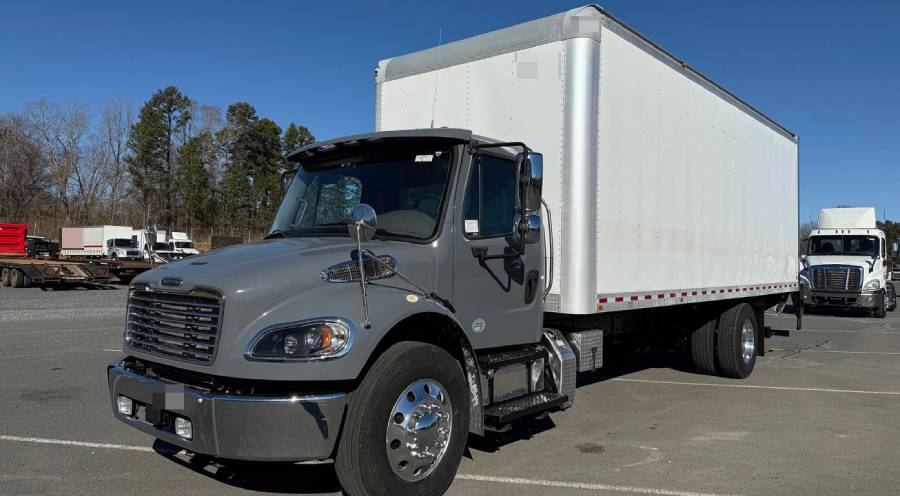
A Freightliner M2 that won’t start may have a weak battery, faulty starter motor, damaged electrical connections, restricted fuel delivery, or an engine control system malfunction. The exact cause depends on whether the engine fails to crank, cranks without starting, or starts intermittently. Identifying the starting symptom is the first step toward diagnosing the problem without replacing unnecessary components.
If your Freightliner M2 won’t crank, inspect the battery, starter circuit, ignition switch, and electrical connections. A clicking sound during a starting attempt may indicate insufficient battery power, excessive resistance in the starter circuit, or a malfunctioning starter solenoid. If the engine cranks normally but fails to start, investigate fuel supply, fuel pressure, engine speed signals, and electronic control faults. These problems can affect Freightliner M2 trucks equipped with Cummins, Detroit Diesel, or other engine configurations, although diagnostic procedures vary by model year and engine type.
Diagnosing a Freightliner M2 starting problem requires checking the symptoms, testing the relevant components, and confirming the underlying failure before making repairs. This guide explains the main causes of starting failures, how to troubleshoot electrical and fuel-related problems, which repairs address specific faults, and how preventive maintenance helps reduce unexpected no-start conditions.
Why Won’t My Freightliner M2 Start?
A Freightliner M2 may fail to start because of five main problems: a weak or discharged battery, a faulty starter circuit, insufficient fuel delivery, an engine control system fault, or a mechanical engine failure. These problems affect different stages of the starting process, from rotating the crankshaft to delivering fuel and initiating combustion.
Battery and starter circuit failures prevent the engine from cranking properly. A discharged battery may supply enough electricity to illuminate the dashboard but not enough current to operate the starter motor. Corroded battery terminals, damaged ground cables, defective starter relays, and worn starter solenoids can produce similar symptoms by interrupting electrical power or increasing circuit resistance.
Fuel delivery and engine control problems generally become more relevant when the engine cranks at normal speed but does not start. A restricted fuel filter, air entering the fuel system, or inadequate fuel pressure can prevent proper fuel injection. Engine control module (ECM) power faults, missing engine speed signals, or communication problems can also interrupt the starting process. Severe mechanical problems, including internal engine seizure, may prevent the crankshaft from rotating altogether.
The following table identifies the main starting symptoms and their possible causes.
| Starting symptom | Possible causes |
|---|---|
| No crank, no clicking | Discharged battery, open starter circuit, ignition switch or interlock fault |
| Rapid clicking | Weak battery, loose terminals, excessive circuit resistance |
| Single click, no crank | Starter solenoid, starter motor, cable resistance, mechanical restriction |
| Cranks but won’t start | Fuel restriction, low fuel pressure, engine speed sensor or ECM fault |
| Starts intermittently | Loose wiring, failing relay, starter connection or control circuit fault |
Identifying the correct symptom narrows the diagnostic process. For example, a Freightliner M2 that cranks normally should not immediately receive a replacement starter motor. Its fuel delivery and engine control systems require investigation first.
Why Does My Freightliner M2 Not Crank?
A Freightliner M2 does not crank when the starter motor cannot rotate the engine’s crankshaft. The problem generally involves insufficient electrical power, an interrupted starter command, a faulty starter motor, or mechanical resistance within the engine. A no-crank condition differs from a cranks-but-won’t-start problem because the engine does not rotate during the starting attempt.
The starting circuit depends on several components working together. Turning the ignition key to the start position initiates a starting request through the applicable electrical and control circuits. Once the required starting conditions are satisfied, the starter solenoid engages and the starter motor turns the engine. A failure anywhere along this sequence can prevent cranking.
Before testing individual components, verify that the transmission is in neutral, the parking brake is applied, and the truck is secured against movement. Start with the battery and cable connections before proceeding to starter circuit testing.
Can a Weak Battery Prevent a Freightliner M2 From Cranking?
Yes, a weak or discharged battery can prevent a Freightliner M2 from cranking because the starter motor requires substantially more current than dashboard lights and other low-power electrical accessories. A battery with insufficient available capacity may illuminate the instrument cluster while failing to rotate the engine.
Freightliner M2 trucks commonly use a 12-volt electrical system with multiple batteries, depending on configuration. A fully charged, rested 12-volt lead-acid battery typically measures approximately 12.6–12.8 volts at moderate temperatures. A reading near 12.2 volts indicates a substantially reduced state of charge, although voltage alone cannot establish whether the battery can deliver sufficient starting current.
Battery voltage should also be evaluated during a starting attempt. A substantial voltage drop under load may indicate a discharged or deteriorated battery, while a battery that maintains adequate voltage but fails to supply the starter can point toward cable resistance or another circuit fault. A battery load tester provides a more reliable assessment of starting capability than an unloaded voltage measurement.
Battery terminals and ground connections require inspection because corrosion increases electrical resistance. For example, a corroded ground cable can limit starter current even when the battery is fully charged. Cleaning and securing the affected connections may restore normal cranking when testing confirms excessive resistance at those points.
Can a Bad Starter Prevent a Freightliner M2 From Cranking?
Yes, a defective starter motor or starter solenoid can prevent a Freightliner M2 from cranking even when its batteries are fully charged. The starter motor converts electrical energy into mechanical rotation, while the solenoid engages the starter drive and switches high-current power to the motor.
A failing starter may produce a single click, intermittent engagement, unusually slow cranking, or no response during a starting attempt. However, these symptoms do not confirm starter failure on their own. A defective relay, damaged cable, poor ground connection, or missing starter command can produce the same result.
Diagnosing the starter requires checking battery power at the starter’s main terminal and verifying whether the solenoid receives the appropriate command during a starting attempt. Voltage-drop testing across the positive and ground circuits helps identify resistance that prevents sufficient current from reaching the motor. These tests should be performed with the truck secured and the manufacturer’s electrical diagram available.
The ignition switch, starter relay, transmission neutral-position circuit, and applicable electronic starting controls must also be considered. For example, a Freightliner M2 with an interrupted neutral-start signal may not send the required starter command even when the battery and starter motor are functional. The exact control sequence depends on the truck’s model year and electrical configuration.
Starter replacement is appropriate only after testing confirms that the motor or solenoid has failed. If the starter receives the correct electrical supply and command but cannot rotate an otherwise free-moving engine, an internal starter fault becomes a stronger diagnosis. Suspected engine seizure or mechanical binding requires separate investigation before attempting further cranking.
Why Does My Freightliner M2 Crank but Not Start?
A Freightliner M2 that cranks but won’t start typically has a fuel delivery problem, insufficient fuel pressure, a missing engine speed signal, or an engine control system fault. In this condition, the starter motor rotates the crankshaft, but the engine cannot establish the fuel injection and combustion required to run independently.
Unlike a no-crank condition, normal cranking indicates that the starter circuit can rotate the engine. However, adequate cranking speed does not guarantee successful starting. The engine control module (ECM) must receive valid sensor information and control fuel injection according to the engine’s operating conditions. If fuel pressure is insufficient or essential control signals are missing, the engine may continue cranking without firing.
The diagnostic process should begin with fuel availability, visible fuel system defects, and electronic fault codes. A truck that stopped running while driving may require different checks from one that failed to start after sitting overnight. For example, a Freightliner M2 that begins cranking without starting immediately after fuel filter replacement may have air trapped in its fuel system.
Can Fuel System Problems Prevent a Freightliner M2 From Starting?
Yes, fuel system problems can prevent a Freightliner M2 from starting by restricting diesel delivery, introducing air into the fuel supply, or preventing the injection system from developing the required operating pressure. The main causes include clogged fuel filters, defective fuel supply pumps, fuel line leaks, and inadequate fuel priming.
A clogged fuel filter restricts the amount of diesel reaching the engine. As contamination accumulates inside the filter, fuel flow decreases and the supply system may struggle to maintain adequate pressure. Severe restriction can cause extended cranking, rough running, power loss, or a complete no-start condition. A truck that previously experienced hesitation or reduced power before refusing to start may have a fuel restriction or another fuel supply problem.
Air entering the fuel system can also interrupt starting. This may occur after replacing a fuel filter, running the tank empty, or developing a leak in a low-pressure fuel connection. Air pockets interfere with consistent fuel delivery and can prevent the system from establishing the conditions required for injection. The correct priming procedure depends on the engine and fuel system installed in the truck.
Fuel pressure testing helps distinguish a supply restriction from a pump or injection control problem. Freightliner M2 trucks equipped with Cummins or Detroit Diesel engines use engine-specific fuel systems, so pressure specifications and testing locations are not interchangeable. Technicians should compare measured values with the applicable manufacturer’s service information rather than relying on a universal diesel fuel pressure specification.
High-pressure common-rail components require particular caution because pressurized diesel can penetrate the skin and cause serious injury. Never loosen high-pressure fuel lines to check for fuel delivery while cranking or running the engine. Use approved diagnostic equipment and manufacturer-specified procedures.
Can a Faulty Engine Sensor Prevent a Freightliner M2 From Starting?
Yes, a faulty engine speed or position sensor can prevent a Freightliner M2 from starting when the ECM cannot obtain the information required to control fuel injection. Crankshaft position sensors are particularly relevant because their signals allow the engine controller to determine crankshaft speed and position.
During cranking, the ECM monitors engine speed and other operating parameters before commanding fuel injection. A missing or invalid crankshaft position signal can prevent the controller from synchronizing injection events. Depending on the engine configuration, the truck may crank continuously without starting, start intermittently, or stall after running.
A diagnostic scanner compatible with the installed engine can help identify these problems. For example, an engine speed reading of zero during actual crankshaft rotation may indicate a missing speed signal, sensor circuit fault, or communication issue. However, a zero reading does not automatically prove that the sensor itself has failed. Damaged wiring, poor electrical connections, incorrect scanner data, and ECM-related problems must also be considered.
Other electronic faults can interrupt starting by affecting ECM power supply, fuel injection authorization, or communication between vehicle control modules. The Freightliner M2 uses different electrical architectures across model years, making engine identification and wiring diagram selection essential before diagnosing these circuits.
A technician should verify active fault codes, live engine speed data, sensor power or signal characteristics where applicable, and wiring integrity before replacing electronic components. This approach reduces unnecessary sensor replacement and helps identify the actual cause of the no-start condition.
Why Does My Freightliner M2 Have Power but Won’t Start?
A Freightliner M2 may have working dashboard lights, headlights, and electrical accessories but still fail to start because accessory power does not confirm that the starting system has sufficient voltage, current capacity, or a complete starter control circuit. The problem may involve weak batteries, high-resistance electrical connections, a defective starter motor, or an interrupted starting command.
The starter motor requires substantially more electrical current than dashboard indicators and most accessories. A battery with reduced capacity may operate low-current devices normally but experience a severe voltage drop when the starter engages. This explains why the instrument cluster can illuminate while the engine produces only a clicking sound or fails to crank.
Battery cables and ground connections are another potential source of failure. Corrosion, loose terminals, and damaged conductors increase circuit resistance and reduce the voltage available at the starter. For example, a poor engine ground connection may allow dashboard lights to function while preventing the starter motor from receiving enough current to rotate the crankshaft. Voltage-drop testing under load can identify these faults more effectively than a visual inspection alone.
The starter control circuit must also deliver the correct command. Depending on the Freightliner M2’s model year and configuration, the ignition switch, starter relay, transmission neutral-position input, and electronic control modules participate in enabling the starting process. A fault in one of these components may prevent starter engagement even when the batteries are fully charged.
The following table identifies electrical symptoms and their appropriate initial checks.
| Electrical symptom | Possible cause | Recommended diagnostic check |
|---|---|---|
| Dashboard lights work, but engine does not crank | Weak battery or interrupted starter command | Battery load test and starter command verification |
| Lights dim significantly during cranking attempt | Battery weakness or excessive current draw | Battery testing and starter circuit inspection |
| Lights remain bright with no starter response | Open control circuit or starter fault | Check relay operation and starter solenoid command |
| Starter clicks but does not rotate | Low voltage, cable resistance, or defective starter | Voltage-drop and starter circuit testing |
| Starting works after moving a cable | Loose or damaged electrical connection | Inspect and test the affected cable and terminals |
Electrical testing should follow a consistent sequence: verify battery condition, inspect the main power and ground connections, check starter circuit voltage, and confirm that the solenoid receives the required starting signal. If these tests show normal electrical conditions, further investigation of the starter motor or mechanical engine resistance is necessary.
Replacing the starter or batteries without completing these checks can leave the original fault unresolved. A confirmed diagnosis identifies whether the problem is inadequate electrical supply, an interrupted control signal, or a failed starting component.
Why Does My Freightliner M2 Click but Not Start?
A Freightliner M2 that clicks but won’t start usually has insufficient battery power, excessive resistance in the starter circuit, a defective starter solenoid, or a failing starter motor. The clicking sound occurs when an electrical relay or starter solenoid attempts to engage but the starting system fails to rotate the engine. The number and frequency of clicks help narrow the possible causes, although neither symptom confirms a specific component failure.
Rapid clicking commonly indicates that the starter solenoid repeatedly engages and disengages because the available voltage drops under load. When the solenoid engages, the starter draws substantial current, causing voltage to fall if the batteries are weak or electrical connections have excessive resistance. The solenoid then releases, voltage recovers, and the cycle repeats. This produces a series of rapid clicks without sustained engine cranking.
A single click indicates that a relay or solenoid may be responding to the starting command, but the starter motor is not rotating the engine. Possible causes include worn starter contacts, damaged motor windings, corroded battery cables, or mechanical resistance. For example, a starter solenoid may engage normally while worn internal contacts prevent sufficient current from reaching the motor.
The location of the clicking sound also matters. A click from a relay inside the cab does not establish that the starter solenoid has received its command. Similarly, a click near the starter does not prove that the starter motor is defective. Technicians must verify voltage at the appropriate terminals and determine whether the starting circuit delivers adequate current.
Start by checking battery condition and inspecting the positive and ground connections. If the batteries pass a load test, measure voltage drop across the starter’s power and ground circuits during a starting attempt. A circuit with excessive resistance requires repair before the starter motor can be evaluated accurately.
Repeated starting attempts should be avoided when the starter produces abnormal grinding noises, overheats, or cannot rotate the engine. Continued operation under these conditions can damage the starter drive, flywheel teeth, or electrical components.
How Do You Troubleshoot a Freightliner M2 That Won’t Start?
To troubleshoot a Freightliner M2 that won’t start, identify the starting symptom, test the battery and starter circuit, inspect fuel delivery, and check engine diagnostic data. This sequence separates electrical cranking failures from fuel injection and engine control problems, reducing unnecessary component replacement.
The diagnostic procedure should begin with basic safety checks. Park the truck on level ground, apply the parking brake, place the transmission in neutral, and secure the vehicle against movement. Keep hands, clothing, and tools away from moving engine components. Electrical testing around high-current starter connections should be performed with appropriate equipment and precautions.
The following table summarizes the recommended diagnostic sequence.
| Step | Diagnostic test | What to identify |
|---|---|---|
| 1 | Observe starting behavior | No crank, slow crank, clicking, or normal crank without starting |
| 2 | Test battery condition | Low charge, reduced capacity, or excessive voltage drop |
| 3 | Inspect starter circuit | Loose connections, damaged wiring, missing starter command |
| 4 | Check fuel delivery | Restricted filter, air intrusion, inadequate fuel supply |
| 5 | Scan engine control modules | Active fault codes, missing engine speed data, control faults |
| 6 | Confirm the failure | Identify the defective component or circuit before repair |
The order of testing depends on the initial symptom. A truck that does not crank requires electrical and starter circuit diagnosis first. A truck that cranks normally but does not start requires greater attention to fuel supply, engine speed signals, and ECM operating conditions.
How Do You Test the Battery and Starter Circuit?
Test the Freightliner M2 battery and starter circuit by measuring battery voltage, evaluating battery performance under load, inspecting electrical connections, and verifying power delivery to the starter motor. These checks establish whether the starting system has sufficient electrical supply and receives the command required to crank the engine.
Begin by measuring battery voltage with a digital multimeter while the engine is off and the batteries have rested. A fully charged 12-volt lead-acid battery generally measures approximately 12.6–12.8 volts at moderate temperatures. A reading near 12.2 volts indicates a reduced state of charge, while substantially lower readings require further charging and battery condition assessment. On trucks with multiple batteries, individual battery testing helps identify differences in condition that a combined system measurement may conceal.
Next, perform a battery load test using equipment suitable for heavy-duty commercial vehicle batteries. Resting voltage alone cannot determine whether a battery can supply the current required for starting. A deteriorated battery may display acceptable open-circuit voltage but experience excessive voltage reduction under a heavy load. Test results should be interpreted according to battery type, temperature, rated capacity, and the testing equipment’s specifications.
Inspect the battery terminals, ground straps, and main starter cables for corrosion, loose connections, damaged insulation, or overheating. High-resistance connections restrict current flow and can produce symptoms similar to a failed starter motor. Voltage-drop testing during a controlled starting attempt helps identify resistance across individual cable connections and circuit sections.
If battery supply and cable connections are satisfactory, verify the starter solenoid command using the correct Freightliner M2 wiring diagram. The starter control circuit may involve relays, ignition switch inputs, transmission interlocks, and electronic modules, depending on the model year. A missing command indicates that upstream circuit diagnosis is required before replacing the starter.
How Do You Check the Fuel System and Engine Fault Codes?
Check the Freightliner M2 fuel system and engine fault codes by verifying fuel availability, inspecting the low-pressure fuel supply, checking for restrictions or air intrusion, and retrieving diagnostic information from the engine control module. These tests are particularly important when the engine rotates at normal cranking speed but fails to start.
Start by confirming that the fuel tank contains sufficient diesel. Do not rely exclusively on the dashboard fuel gauge when its accuracy is uncertain. Inspect accessible low-pressure fuel lines, filter housings, and connections for visible leakage, damaged fittings, or signs of air entering the system. A restricted fuel filter or improperly sealed filter housing can interfere with fuel delivery and cause extended cranking.
If the starting problem appeared after fuel filter replacement or running out of fuel, investigate whether the fuel system requires priming. Cummins and Detroit Diesel engines use different fuel system arrangements and service procedures. Follow the manufacturer’s priming instructions for the installed engine rather than loosening injector lines or repeatedly cranking the engine.
Fuel pressure testing provides additional information when basic inspections do not identify the cause. The required pressure, measurement location, and acceptable cranking values depend on the engine configuration. High-pressure common-rail systems must be tested using approved diagnostic procedures because escaping pressurized fuel can cause severe injection injuries.
Next, connect a compatible heavy-duty diagnostic scanner and retrieve active and stored fault codes. Freightliner M2 trucks may use engine-specific diagnostic protocols and J1939 communication networks, so a generic passenger-vehicle OBD-II scanner may not provide sufficient information.
Review the fault codes alongside live operating data, particularly engine speed during cranking, relevant fuel pressure readings, and ECM communication status. For example, a missing engine speed reading during actual engine rotation may indicate a sensor, wiring, or control system problem. A fuel pressure reading below the manufacturer’s specified starting threshold may direct further testing toward the fuel supply or pressure-control system.
Diagnostic codes identify affected systems or detected operating conditions, not necessarily defective parts. A sensor-related code may result from damaged wiring or poor electrical connections rather than sensor failure. Confirm the fault through circuit testing, live data evaluation, and the applicable engine manufacturer’s troubleshooting procedures before replacing components.
How Do You Fix a Freightliner M2 That Won’t Start?
To fix a Freightliner M2 that won’t start, repair or replace the component responsible for the starting failure after confirming the problem through diagnostic testing. The appropriate repair depends on whether the truck has a battery failure, defective starter motor, damaged electrical connection, fuel delivery restriction, or engine control system malfunction. Replacing parts without identifying the cause can increase repair costs without restoring reliable starting.
For a weak or discharged battery, recharge the battery using equipment compatible with its type and capacity, then perform a load test to determine whether it can still supply sufficient starting current. Replace batteries that fail the appropriate capacity or load tests. On Freightliner M2 trucks equipped with multiple batteries, inspect the entire battery bank because differences in battery condition can affect starting performance. Clean corroded terminals, tighten connections to the manufacturer’s specifications, and repair damaged battery cables when testing identifies excessive electrical resistance.
A defective starter motor or solenoid requires replacement when electrical testing confirms that the starter receives adequate power and the correct starting command but fails to operate. Before installing a replacement, inspect the starter cables, mounting connections, and accessible flywheel ring gear for damage. A starter that fails because of poor electrical connections may develop similar problems after replacement unless the underlying circuit fault is corrected.
Fuel-related starting failures require repairs based on the specific restriction or pressure problem. Replace clogged fuel filters with components approved for the installed engine, repair leaking low-pressure fuel connections, and prime the fuel system according to the engine manufacturer’s instructions. If testing confirms a defective fuel supply pump or pressure-control component, replace the affected part using the applicable service procedure. High-pressure diesel injection repairs should be performed by qualified technicians because the system can retain dangerous pressure.
Engine control faults require a different approach. Repair damaged wiring, restore faulty ECM power or ground connections, or replace failed sensors only after confirming their condition through diagnostic testing. Clearing fault codes alone does not correct an electrical or mechanical failure. After completing the repair, verify that the engine starts normally, inspect for leaks or abnormal noises, and confirm that relevant active fault codes do not return.
Professional diesel repair is necessary when the problem involves high-pressure fuel injection, complex electronic controls, suspected internal engine damage, or electrical faults that cannot be isolated through basic testing. A qualified technician can use engine-specific diagnostic software, wiring diagrams, and manufacturer service procedures to identify the failure accurately.
Why Won’t My Freightliner M2 Start in Cold Weather?
A Freightliner M2 may fail to start in cold weather because of reduced battery performance, diesel fuel gelling, increased engine cranking resistance, or malfunctioning cold-start assistance systems. Low temperatures affect both the electrical power available for starting and the conditions required for diesel combustion. These problems become more noticeable when the truck remains parked outdoors overnight or operates in freezing temperatures.
Cold weather reduces a lead-acid battery’s ability to deliver starting current while increasing the mechanical effort required to crank the engine. At approximately 0°F (-18°C), a lead-acid battery may deliver substantially less starting power than it does at moderate temperatures. Meanwhile, cold engine oil becomes more viscous, increasing resistance against moving engine components. A battery that starts the truck reliably in warm weather may therefore struggle to rotate the engine fast enough during winter.
Diesel fuel gelling is another cause of cold-weather starting failure. As diesel temperature decreases, paraffin wax crystals begin forming in the fuel. These crystals can accumulate in the fuel filter, restricting fuel flow and preventing adequate fuel delivery to the engine. The temperature at which this becomes a problem depends on fuel composition, winter blending, and the fuel’s cold filter plugging point. A Freightliner M2 that cranks normally but refuses to start after exposure to freezing temperatures may have a restricted fuel filter caused by wax formation.
Cold-start assistance systems also influence starting performance. Depending on the installed engine, a Freightliner M2 may use an intake air heater, grid heater, or other electronically controlled starting aids to support combustion at low temperatures. A defective heating element, control relay, temperature sensor, or related circuit can increase cranking time or prevent reliable starting. Because Cummins and Detroit Diesel engines use different starting strategies, diagnostic procedures must match the specific engine model.
To address cold-weather starting problems, test battery condition, verify the correct engine oil viscosity, inspect fuel filtration, and check the applicable cold-start system for faults. Use winter-grade diesel fuel appropriate for the operating climate and follow manufacturer-approved procedures when fuel waxing is suspected. Avoid using starting fluid unless the engine manufacturer explicitly authorizes it, particularly on engines equipped with intake heating devices.
Why Does My Freightliner M2 Start Sometimes but Not Others?
A Freightliner M2 that starts intermittently may have loose electrical connections, a failing starter relay, worn starter components, damaged wiring, or an inconsistent engine control signal. Intermittent starting failures occur when a component or circuit operates normally under certain conditions but fails when temperature, vibration, electrical load, or connection resistance changes.
Loose battery terminals and damaged ground connections are common diagnostic targets because they can interrupt the high-current electrical supply required for starting. A connection may conduct enough current when the truck is stationary but develop excessive resistance after vibration or temperature changes. For example, a corroded battery cable can allow the engine to start normally several times before producing a no-crank condition during a later attempt. Inspecting and voltage-drop testing these connections helps identify faults that are not visible during a basic battery voltage check.
A deteriorating starter motor or solenoid can also produce inconsistent starting behavior. Worn internal contacts may prevent current from reaching the motor during certain starting attempts, while thermal expansion can affect the operation of damaged electrical components. A truck that fails to crank after reaching operating temperature but starts again after cooling may have a heat-sensitive starter or electrical circuit fault. However, this symptom alone does not establish that the starter requires replacement.
Starter relays, ignition switch circuits, and transmission neutral-position signals can create similar problems. If the starter control circuit intermittently loses its command signal, the starter motor may remain inactive even when battery voltage is normal. On Freightliner M2 trucks with electronically managed starting controls, communication interruptions or inconsistent control module inputs may also prevent starter engagement. Capturing circuit voltage and diagnostic data while the failure is occurring is more useful than testing only when the truck starts normally.
Intermittent cranks-but-won’t-start conditions require additional investigation of fuel delivery and engine management. A failing engine speed sensor, damaged sensor wiring, or inconsistent fuel supply may interrupt combustion even when the starter rotates the engine normally. Recording whether the engine cranks, whether warning lights appear, and whether the problem occurs when hot, cold, or after extended parking helps narrow the diagnostic possibilities.
The most effective repair strategy is to reproduce the failure safely and test the affected system while the symptom is present. Inspect electrical connections, retrieve stored and active diagnostic trouble codes, and compare live engine data between successful and unsuccessful starting attempts. Replace components only after confirming the source of the intermittent failure.
What Fault Codes Can Cause a Freightliner M2 Not to Start?
Freightliner M2 no-start problems can be associated with engine speed sensor faults, fuel pressure faults, ECM power supply failures, and communication errors between electronic control modules. These faults can prevent the engine from receiving the information or operating conditions required for fuel injection and combustion. However, a diagnostic trouble code identifies a detected problem rather than proving that a specific component has failed.
Freightliner M2 trucks use different engine management systems depending on their model year and engine configuration. Cummins-powered trucks commonly use Cummins-specific diagnostic information, while Detroit Diesel engines use their corresponding electronic control systems. Heavy-duty diagnostic codes are frequently represented by Suspect Parameter Numbers (SPNs) and Failure Mode Identifiers (FMIs) under the SAE J1939 diagnostic framework. The SPN identifies a monitored parameter or condition, while the FMI describes the type of detected failure.
Several diagnostic fault categories are particularly relevant when investigating a Freightliner M2 that cranks but does not start.
| Fault category | Possible starting problem | Diagnostic focus |
|---|---|---|
| Engine speed signal fault | ECM cannot reliably determine crankshaft speed or position | Crankshaft sensor, wiring, signal data |
| Fuel pressure fault | Injection system cannot achieve required pressure | Fuel supply, pressure sensors, pump controls |
| ECM power supply fault | Engine controller loses necessary electrical power | Fuses, power circuits, ground connections |
| Module communication fault | Required information is unavailable between controllers | J1939 wiring, connectors, module communication |
| Starting authorization fault | Starter engagement or engine operation is inhibited | Neutral-position input, starter control logic |
Not every fault in these categories will prevent starting. The effect depends on the engine configuration, fault severity, and control strategy. For example, a missing crankshaft speed signal may prevent injection synchronization, while an unrelated stored sensor code may have no direct connection to the current starting failure.
A compatible heavy-duty diagnostic scanner should be used to retrieve active and stored codes, review freeze-frame information where available, and monitor live data during cranking. Technicians should prioritize faults directly associated with the observed symptoms and verify them using the manufacturer’s troubleshooting procedures.
Clearing fault codes without repairing the underlying problem does not restore a defective electrical circuit or fuel system. After completing the repair, confirm normal starting operation and check whether the relevant faults return.
Read more: Freightliner M2 Problems: Common Issues and Fixes
How Much Does It Cost to Fix a Freightliner M2 That Won’t Start?
The cost to fix a Freightliner M2 that won’t start depends on the failed component, diagnostic labor, replacement parts, engine configuration, and repair location. Battery and electrical connection repairs generally involve fewer components than major fuel injection or electronic control system repairs. However, an inexpensive component can still produce a substantial repair bill when identifying an intermittent fault requires extensive diagnostic work.
Battery-related repairs include testing, charging, terminal cleaning, cable replacement, or replacing one or more batteries. Trucks equipped with multiple batteries require evaluation of the entire battery bank to determine whether individual batteries or the complete set need replacement. Starter motor repairs involve additional labor because the starter must be accessed, removed, and installed according to the truck’s configuration.
Fuel system repair costs vary according to the failed component. Replacing a clogged fuel filter is a different repair from diagnosing a defective high-pressure fuel pump or replacing damaged injection components. Similarly, repairing a corroded ECM connector generally requires less parts expenditure than replacing and programming an engine control module.
The following table compares common repair categories without assuming a fixed nationwide price.
| Repair type | Main cost factors | Relative cost complexity |
|---|---|---|
| Battery replacement | Battery quantity, capacity, type, labor | Low to moderate |
| Battery cable or ground repair | Cable condition, accessibility, wiring labor | Low to moderate |
| Starter motor replacement | Starter model, accessibility, labor | Moderate |
| Fuel filter replacement | Filter type, quantity, priming procedure | Low to moderate |
| Fuel pump repair | Pump type, engine configuration, diagnostic labor | Moderate to high |
| Engine sensor replacement | Sensor location, testing, component price | Low to moderate |
| ECM diagnosis or replacement | Wiring diagnosis, module price, programming | Moderate to high |
These categories indicate relative repair complexity rather than verified market prices. Actual repair estimates should be obtained from a commercial truck repair facility using the truck’s VIN, engine model, and confirmed diagnosis.
Diagnostic labor is particularly important when the truck starts intermittently or has multiple electronic fault codes. A technician may need to perform voltage-drop measurements, fuel pressure testing, wiring inspections, and electronic data analysis before identifying the defective component.
The most reliable way to control repair costs is to confirm the failure before authorizing replacement parts. For example, replacing a starter motor will not correct a no-crank condition caused by a damaged ground cable. A diagnosis that identifies the actual fault prevents unnecessary repairs and reduces the likelihood of repeated breakdowns.
How Can You Prevent Freightliner M2 Starting Problems?
Freightliner M2 starting problems can be reduced through regular battery testing, electrical connection inspections, fuel system maintenance, starter circuit monitoring, and engine diagnostic checks. These maintenance practices address the electrical, mechanical, and fuel delivery failures responsible for many no-start conditions. Preventive maintenance cannot eliminate every unexpected failure, but it helps identify deteriorating components before they interrupt truck operation.
Battery maintenance should include checking terminal condition, inspecting cables for corrosion or physical damage, and evaluating battery performance under load. Commercial trucks that experience frequent short trips, extended parking, or heavy electrical accessory use require particular attention to battery charge levels. A battery that repeatedly becomes discharged should also prompt inspection of the charging system and possible parasitic electrical loads.
Electrical connections require inspection because vibration, moisture, and corrosion can gradually increase circuit resistance. Battery ground straps, starter power cables, and accessible wiring harness connectors should be checked for looseness, overheating, and damaged insulation. Addressing these defects early helps prevent intermittent starting failures and voltage loss during cranking.
Fuel system maintenance should follow the applicable Freightliner and engine manufacturer’s service schedule. Replace fuel filters at the specified intervals, use diesel fuel appropriate for operating conditions, and inspect accessible fuel connections for leaks. During cold-weather operation, winter-grade diesel and properly maintained fuel filtration help reduce the risk of wax-related fuel restrictions. Fuel system service should also include the correct priming procedure whenever required.
Electronic diagnostics provide another opportunity to identify developing problems. Active or recurring fault codes involving engine speed signals, fuel pressure, power supply, or module communication should be investigated before they cause a complete starting failure. Recording intermittent symptoms and diagnostic codes helps technicians identify faults that may not be present during a scheduled inspection.
A practical preventive maintenance program combines routine inspections with immediate investigation of warning signs such as slow cranking, repeated clicking, extended starting time, and intermittent no-start conditions. Maintaining the battery, starter circuit, fuel system, and engine control connections reduces avoidable downtime and supports reliable Freightliner M2 operation.