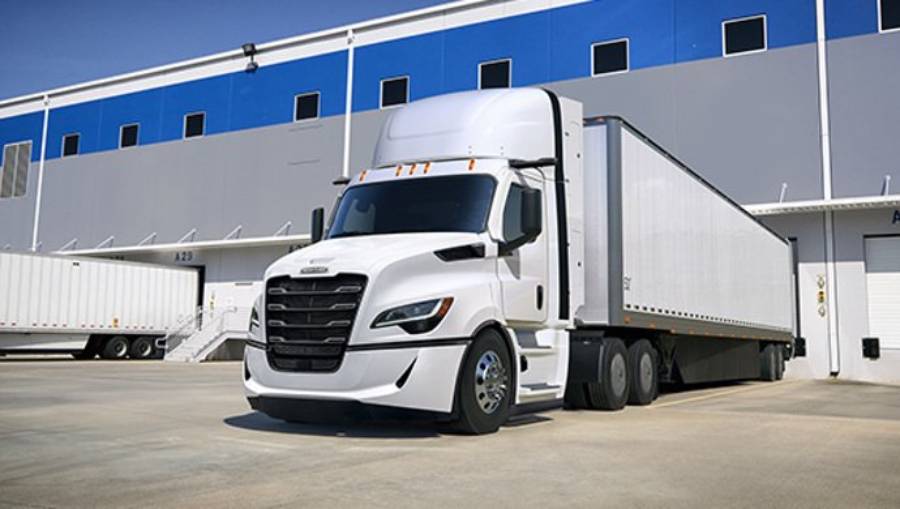
A Freightliner Cascadia can cost tens of thousands of dollars for an older used truck and well into six figures for a new, highly equipped model. The exact purchase price depends primarily on whether the truck is new or used, its model year, mileage, condition, and configuration. A used Cascadia with high mileage can therefore cost substantially less than a late-model sleeper with lower mileage, even when both trucks belong to the same model line.
New and used Freightliner Cascadia prices also vary because buyers can choose different cab and drivetrain configurations. Day cab models are designed primarily for regional and local operations, while sleeper configurations add living space for long-haul drivers. Engine specifications, transmission, axle setup, optional equipment, and sleeper size can further change the final price. For used trucks, maintenance history and mechanical condition become additional pricing factors because they affect both remaining service life and expected repair costs.
This guide explains how much a Freightliner Cascadia truck costs, including new and used prices, pricing by model year, sleeper versus day cab costs, financing, and ownership expenses. It also explains the main factors that determine whether a specific Cascadia represents good value for its asking price.
How Much Does a Freightliner Cascadia Truck Cost?
A Freightliner Cascadia can cost roughly $30,000 to more than $200,000, depending on whether it is used or new, its model year, mileage, condition, and configuration. Older used Cascadias generally occupy the lower end of the price range, while new or nearly new sleeper trucks with higher specifications occupy the upper end. Because Freightliner Cascadia trucks are sold in multiple configurations, there is no single purchase price that represents every truck.
A buyer should distinguish between the advertised price of a used Cascadia and the price of a new truck configured for a specific operation. Used-truck pricing is strongly affected by depreciation and vehicle history. For example, two Cascadias from the same model year can have substantially different asking prices when one has accumulated significantly more mileage or requires mechanical work. New-truck pricing is influenced more heavily by the selected cab, sleeper, engine, drivetrain, axle configuration, and optional equipment.
| Freightliner Cascadia Type | Typical Price Range |
|---|---|
| Older used Cascadia | $30,000–$60,000 |
| Mid-to-late-model used Cascadia | $60,000–$120,000+ |
| New Cascadia | $160,000–$200,000+ |
| Used day cab | Generally lower than comparable sleepers |
| Used sleeper | Generally higher than comparable day cabs |
These figures should be treated as market-oriented price ranges rather than fixed MSRP figures. The asking price for an individual truck can fall outside these ranges because mileage, equipment, maintenance history, geographic market, and seller pricing all affect its value.
How Much Does a New Freightliner Cascadia Cost?
A new Freightliner Cascadia generally costs around $160,000 to more than $200,000 once differences in configuration and equipment are considered. A basic specification intended for regional work can cost less than a long-haul Cascadia equipped with a large sleeper and additional comfort, safety, and drivetrain options.
Configuration is one of the main reasons new Cascadia prices vary. A buyer may select a day cab for local or regional hauling or a sleeper cab for long-distance operations. Sleeper size, engine specification, transmission, axle setup, interior equipment, safety technology, and other options add or remove cost from the final build. As a result, comparing two new Cascadias based only on the model name does not provide an accurate price comparison.
The purchase channel also matters. A dealer quote can include equipment and services that are not reflected in a generalized base price. Taxes, registration, financing expenses, warranties, and other transaction costs can further increase the amount a buyer ultimately spends. Buyers comparing new trucks should therefore compare similarly configured Cascadias rather than advertised starting prices alone.
How Much Does a Used Freightliner Cascadia Cost?
A used Freightliner Cascadia commonly costs about $30,000 to $120,000 or more, with older and higher-mileage trucks generally selling for less than newer, lower-mileage examples. The used market has a much wider price spread than the new market because every truck has a different operating and maintenance history.
Model year and mileage provide the first indication of value, but they do not determine price by themselves. A lower-mileage Cascadia with documented preventive maintenance, a clean history, and a desirable sleeper configuration can command a higher price than another truck of the same year. Conversely, a truck with extensive mileage, mechanical problems, accident damage, or deferred maintenance can sell at a substantial discount because the buyer assumes greater repair risk.
For example, a low purchase price does not necessarily make an older Cascadia the less expensive choice. A $35,000 truck that soon requires major engine, emissions-system, transmission, or aftertreatment repairs can produce a higher effective acquisition cost than a more expensive truck in stronger mechanical condition. Used Cascadia buyers should therefore evaluate purchase price together with mileage, maintenance records, mechanical condition, and expected repair costs.
Note: The price ranges above should be verified against current dealer and used-truck listings before publication because truck market prices change over time.
How Much Does a Freightliner Cascadia Cost by Model Year?
A Freightliner Cascadia generally costs more when it has a newer model year, but model year alone does not determine the truck’s market value. Mileage, mechanical condition, maintenance history, sleeper or day cab configuration, and equipment can create large price differences between Cascadias manufactured in the same year. For this reason, buyers should use model year as the starting point for price comparison rather than as a standalone valuation method.
The largest price difference generally appears between older high-mileage trucks and recent low-mileage models. Older Cascadias have already absorbed a larger portion of their depreciation, which lowers the initial purchase price. However, their age and accumulated mileage can increase exposure to repairs involving the engine, transmission, suspension, emissions system, electrical components, and other high-wear systems. A newer truck costs more upfront because the buyer is purchasing more remaining service life and, depending on the truck, potentially lower immediate repair exposure.
A practical model-year comparison should therefore combine age with mileage and condition. For example, a newer Cascadia that accumulated unusually high mileage in long-haul service does not automatically have a higher value than a slightly older truck with lower mileage and comprehensive maintenance records. Likewise, a well-maintained older sleeper with a desirable specification can command more than an otherwise comparable truck with poor maintenance history.
| Model-Year Category | Expected Price Position | Main Factors to Check |
|---|---|---|
| Recent-model Cascadia | Highest | Mileage, specification, remaining warranty, condition |
| Mid-age Cascadia | Moderate | Mileage, maintenance history, major component condition |
| Older Cascadia | Lowest | Engine condition, emissions system, repairs, accumulated mileage |
Buyers should compare trucks within the same model year, cab type, and approximate mileage range before deciding whether an asking price is competitive. This approach controls for the attributes that create the largest differences between individual used trucks. Comparing an older day cab directly with a recent long-haul sleeper, for example, provides little useful information about whether either truck is priced correctly.
What Factors Affect the Price of a Freightliner Cascadia?
There are 7 main factors that affect the price of a Freightliner Cascadia: model year, mileage, condition, cab configuration, powertrain specification, equipment, and market conditions. These factors interact with each other, so two Cascadias with the same model year can still have significantly different market values.
Model year affects price through age and depreciation. Newer trucks generally retain more value because they have had less time to accumulate wear and may incorporate newer equipment or technology. Age becomes more important when it is combined with usage. A relatively new truck subjected to intensive long-haul operation can accumulate wear faster than its model year initially suggests.
Mileage affects price because it provides an indication of how extensively the truck has been used. Higher mileage generally reduces resale value as major mechanical components move further through their expected service lives. Mileage should not be interpreted in isolation, however. Highway mileage on a consistently maintained tractor and mileage accumulated under severe operating conditions can create different mechanical outcomes.
Vehicle condition affects both purchase price and the amount a buyer may need to spend after purchase. Mechanical problems, body damage, worn tires, interior wear, fault codes, and deferred maintenance can reduce market value. A lower asking price may therefore represent expected repair expenses rather than a genuine bargain. Maintenance documentation helps buyers determine whether the truck’s condition supports its asking price.
Cab configuration affects price because day cabs and sleepers serve different operating requirements. A day cab eliminates the sleeping and living area required for long-haul operations, while sleeper configurations add space, interior equipment, and additional components. Larger and better-equipped sleepers can consequently command a premium over comparable day cabs.
Powertrain specification affects value through the engine, transmission, axle configuration, and related drivetrain components. Specifications suitable for a particular hauling application can make a truck more desirable to one buyer while providing little additional value to another. Buyers should therefore evaluate whether a higher-priced specification actually matches the loads, routes, and operating conditions the truck will encounter.
Equipment and optional features can increase the price of an otherwise comparable Cascadia. Examples include advanced driver-assistance technology, upgraded interior equipment, auxiliary systems, aerodynamic equipment, and sleeper amenities. The value of these features depends on their condition and usefulness to the buyer rather than simply on their presence.
Market conditions affect the final asking and transaction price. Used Class 8 truck supply, demand from fleets and owner-operators, financing conditions, regional availability, and the number of comparable trucks for sale can move prices independently of an individual vehicle’s specifications. A Cascadia that commands one price in a tight used-truck market may sell for less when comparable inventory becomes more abundant.
The most useful valuation therefore combines all seven factors rather than relying on one metric. Model year and mileage establish an initial comparison range, while condition, configuration, specifications, equipment, and current market conditions determine where an individual Freightliner Cascadia should sit within that range.
Does a Freightliner Cascadia Sleeper Cost More Than a Day Cab?
A Freightliner Cascadia sleeper generally costs more than a comparable day cab because it includes a larger cab structure, sleeping accommodations, additional interior equipment, and features designed for long-haul operations. The actual price difference depends on model year, sleeper size, mileage, condition, and specifications, so cab type should be compared alongside these variables rather than independently.
A Cascadia day cab is designed primarily for operations where the driver returns to a terminal or home after a shift. Removing the sleeper compartment reduces the amount of equipment and interior space included with the truck. This makes day cabs particularly relevant for local delivery, regional freight, drayage, and other applications that do not require overnight accommodation.
A Cascadia sleeper is designed for operations where drivers spend extended periods on the road. Depending on configuration, the sleeper can include a bed, storage compartments, additional seating or workspace, climate-control equipment, electrical connections, and other amenities. Larger sleeper configurations generally carry higher acquisition costs because the buyer receives more equipment and usable living space.
The same distinction remains important in the used market. A used sleeper is not automatically worth more than every comparable day cab because condition and mileage can outweigh configuration. For example, a high-mileage sleeper requiring significant repairs may sell for less than a newer, well-maintained day cab. Buyers should first compare model year, mileage, mechanical condition, and specifications before assigning a premium to the sleeper configuration.
The better choice also depends on the truck’s intended operation. A day cab can provide better purchase value when the truck operates locally or regionally and the driver does not sleep in the vehicle. A sleeper can justify its higher price when overnight and long-haul operations require onboard living space. Paying for a sleeper that an operation does not need increases acquisition cost without providing a corresponding operational benefit.
How Much Does It Cost to Finance a Freightliner Cascadia?
The cost to finance a Freightliner Cascadia depends on 5 primary variables: purchase price, down payment, financed amount, interest rate, and loan term. These variables determine both the monthly payment and the total amount paid over the life of the loan. Credit profile, truck age, business history, and lender requirements can also affect the financing terms offered to an individual buyer.
The down payment immediately changes the amount that must be financed. For example, consider a hypothetical Cascadia priced at $180,000. A $36,000 down payment leaves $144,000 to finance before transaction-related expenses. Increasing the down payment to $54,000 reduces the financed principal to $126,000. The larger upfront payment therefore reduces both the loan balance and the amount of interest that can accumulate.
Interest rate determines how much the buyer pays for borrowing the money. Two buyers financing the same $144,000 truck for the same period can have different monthly and total costs when their interest rates differ. For this reason, the advertised truck price does not provide enough information to determine whether a financing offer is competitive.
Loan term creates another trade-off. A longer term generally reduces the required monthly payment but increases the period over which interest is paid. A shorter term increases the monthly obligation but allows the principal to be repaid faster. Buyers should therefore evaluate both monthly cash flow and total financing cost rather than selecting a loan solely because it offers the lowest monthly payment.
Consider a simplified financing example for a $180,000 Cascadia:
| Financing Item | Example |
|---|---|
| Truck purchase price | $180,000 |
| Down payment | $36,000 |
| Amount financed | $144,000 |
| Example interest rate | 8% |
| Loan term | 60 months |
| Estimated monthly payment | About $2,920 |
| Estimated total of 60 payments | About $175,200 |
In this example, financing $144,000 at an assumed 8% annual interest rate for 60 months produces a monthly payment of approximately $2,920. The buyer would pay roughly $175,200 through the loan payments, meaning approximately $31,200 represents financing cost above the $144,000 principal. The figures are illustrative and exclude taxes, registration, insurance, lender fees, and other charges.
Financing a used Cascadia can produce a different equation. The lower purchase price reduces the amount that needs to be borrowed, but an older truck may receive different lending terms and can expose the owner to higher repair expenses while loan payments are still being made. The lowest purchase price and the lowest monthly payment therefore do not automatically produce the lowest total ownership cost.
Before financing a Cascadia, buyers should compare the annual percentage rate, down payment, loan duration, monthly payment, total amount financed, and total interest cost across offers. Evaluating these figures together provides a more accurate picture of what the truck will actually cost than comparing monthly payments alone.
What Additional Costs Come With Buying a Freightliner Cascadia?
Buying a Freightliner Cascadia involves additional costs beyond the advertised truck price, including taxes, registration, insurance, financing charges, inspections, and initial maintenance. These expenses can increase the amount of capital required to put the truck into service, particularly when purchasing a used Cascadia that needs maintenance or repairs immediately after acquisition.
Sales or use taxes can represent a significant upfront expense, but the amount depends on the state, registration structure, and transaction. Registration, title, permits, and other operating requirements can add further costs. A buyer should calculate these expenses before comparing the total acquisition cost of two trucks because a lower advertised price does not necessarily produce a lower final cost.
Insurance is another expense that may be required before the truck begins commercial operation. Premiums depend on factors such as coverage limits, operating authority, cargo, driving history, business experience, location, and the value of the truck. A new $180,000 Cascadia and an older $45,000 Cascadia therefore should not be assumed to carry identical insurance costs.
Used-truck buyers should also budget for a pre-purchase inspection and initial maintenance. An inspection can identify problems involving the engine, transmission, brakes, tires, suspension, emissions equipment, electrical system, and other components before the transaction is completed. After purchase, fluids, filters, tires, brakes, batteries, or other wear items may require attention even when the truck remains operational.
Financing creates an additional cost when the Cascadia is purchased with borrowed money. Interest and lender-related charges increase the total amount paid above the vehicle’s cash purchase price. For example, the financing scenario discussed earlier turns a $144,000 principal balance into approximately $175,200 in payments over five years at the assumed rate. That difference needs to be included when comparing cash and financed purchases.
The effective acquisition cost of a Cascadia is therefore the truck price plus the expenses required to finance, register, insure, inspect, and prepare it for operation. Buyers who budget only for the advertised price risk underestimating the cash required to put the truck on the road.
How Much Does a Freightliner Cascadia Cost to Own?
The total cost of owning a Freightliner Cascadia includes 5 major expense categories: fuel, maintenance and repairs, insurance, financing, and depreciation. For a truck driven commercially over high annual mileage, these recurring expenses can eventually exceed the original purchase price. Purchase price should therefore be evaluated as one component of total cost of ownership rather than the only measure of affordability.
Fuel is one of the largest variable operating expenses because consumption increases directly with mileage. Maintenance and repairs become increasingly important as the truck accumulates miles and major components wear. Insurance creates a recurring fixed or semi-fixed expense, while financing adds interest when borrowed capital is used. Depreciation does not create a monthly invoice, but it reduces the amount of the original purchase price that the owner can recover when the truck is sold.
Operating pattern determines how these expenses combine. A long-haul Cascadia covering 120,000 miles per year has a different cost structure from a regional truck covering 60,000 miles. The long-haul truck consumes more fuel and accumulates mileage twice as quickly, which can accelerate maintenance requirements and depreciation based on mileage. However, its greater utilization can also generate revenue over more loaded miles, so operating cost needs to be considered alongside productivity.
Used and new Cascadias create different ownership-cost profiles. A new truck requires substantially more capital and experiences depreciation from a higher initial value, but it may provide lower near-term repair exposure. A used Cascadia requires less capital upfront but can create greater maintenance uncertainty. The correct comparison is therefore purchase price plus expected operating costs over the intended ownership period.
How Much Does Freightliner Cascadia Maintenance Cost?
Freightliner Cascadia maintenance costs vary with mileage, age, operating conditions, service history, and the specific components requiring service. Routine preventive maintenance is relatively predictable, while major repairs can create much larger and less predictable expenses.
Preventive maintenance includes services such as engine oil and filter changes, fuel filters, inspections, lubrication, brake service, tires, cooling-system maintenance, and other scheduled work. These services protect major components and can reduce the probability of expensive failures. A truck operating at high annual mileage reaches service intervals faster, so its annual maintenance budget will generally be higher than that of a lightly used truck even when both are mechanically healthy.
Repair costs become more important when evaluating older used Cascadias. Engine, transmission, aftertreatment, emissions, suspension, electrical, HVAC, and drivetrain problems can each create costs beyond routine servicing. Tires are another substantial wear expense because a Class 8 tractor uses multiple commercial tires, and replacement cost increases when several need to be changed together.
Maintenance history therefore has direct financial value when purchasing a used Cascadia. A truck with documented preventive maintenance can justify a higher asking price when the records indicate that required services and repairs were completed consistently. A cheaper truck with incomplete records creates greater uncertainty because the buyer cannot easily determine which maintenance has been performed or which major expenses may be approaching.
How Much Does Fuel Cost for a Freightliner Cascadia?
Freightliner Cascadia fuel cost is determined primarily by annual mileage, actual fuel economy, and diesel price. Instead of using one fixed annual figure, buyers can estimate fuel expense with a simple calculation:
Annual mileage ÷ average MPG × diesel price per gallon = estimated annual fuel cost
For example, assume a Cascadia travels 100,000 miles per year, averages 7 MPG, and diesel costs $4.00 per gallon. The truck would consume approximately 14,286 gallons:
100,000 ÷ 7 = 14,286 gallons
At $4.00 per gallon, estimated annual fuel spending would be approximately:
14,286 × $4.00 = $57,144 per year
The same truck averaging 8 MPG under the same assumptions would consume 12,500 gallons and cost approximately $50,000 per year in fuel. Improving fuel economy from 7 MPG to 8 MPG would reduce annual fuel spending by about $7,144 in this example. This demonstrates why relatively small differences in fuel economy can have a substantial financial effect when a Class 8 truck covers high annual mileage.
Actual fuel economy changes with load weight, speed, terrain, idling, aerodynamics, tire pressure, weather, driver behavior, and vehicle specification. Diesel prices also change over time and by location. Buyers should therefore substitute their expected annual mileage, realistic MPG, and current local diesel price into the calculation rather than treating a generic annual fuel estimate as fixed.
For high-mileage operators, this calculation also shows why the purchase price cannot be considered independently from operating efficiency. A cheaper Cascadia that consistently consumes more fuel can erase part of its initial purchase-price advantage through higher operating costs over several years.
How Quickly Does a Freightliner Cascadia Depreciate?
A Freightliner Cascadia generally loses value fastest during the earlier years of ownership, while depreciation tends to become less severe as the truck gets older and its market value decreases. The actual depreciation rate is not fixed because resale value depends on model year, mileage, condition, maintenance history, configuration, and demand in the used Class 8 truck market.
Mileage is particularly important because commercial trucks can accumulate substantial distances within a short period. Two Cascadias purchased in the same year can therefore have different resale values several years later. A truck operated for 120,000 miles per year will accumulate 360,000 miles in three years, while another driven 70,000 miles annually will accumulate 210,000 miles during the same period. Even though both trucks have the same age, the difference of 150,000 miles can affect their market value and expected remaining service life.
Condition and maintenance history can either protect or reduce resale value within the same age and mileage category. A Cascadia with documented preventive maintenance, functioning emissions equipment, good tires, a clean interior, and no major unresolved mechanical problems provides a buyer with less uncertainty. A comparable truck with deferred repairs or incomplete service records creates additional financial risk, which can be reflected in a lower offer.
Configuration also influences depreciation because resale demand differs between truck types. Sleeper tractors appeal to long-haul operators, while day cabs are more closely aligned with local and regional operations. Engine, transmission, axle specifications, sleeper size, and additional equipment can make a used Cascadia more or less desirable to the next buyer.
Depreciation should therefore be evaluated as part of the ownership cost rather than only as a percentage of the original price. For example, a truck purchased for $180,000 and later sold for $90,000 has lost $90,000 of capital value during the ownership period. That $90,000 represents a real economic cost even though the owner did not receive a monthly depreciation bill.
Buyers who plan to resell a Cascadia within several years should consider expected resale value before purchase. Selecting a suitable specification, controlling unnecessary mileage where operationally possible, maintaining the truck consistently, and keeping service records can help preserve value when the truck returns to the used market.
Read more: Where Is ABS Sensor Located on Freightliner Cascadia?
Is a New or Used Freightliner Cascadia a Better Value?
A new Freightliner Cascadia provides better value for buyers who prioritize predictable condition and longer remaining service life, while a used Cascadia can provide better value for buyers who prioritize a lower acquisition cost and can tolerate greater maintenance risk. Neither option is automatically cheaper once depreciation, financing, repairs, and the intended ownership period are included.
| Factor | New Freightliner Cascadia | Used Freightliner Cascadia |
|---|---|---|
| Purchase price | Higher | Lower |
| Initial depreciation exposure | Higher | Lower |
| Mileage at purchase | Very low | Varies |
| Maintenance uncertainty | Lower initially | Higher |
| Remaining service life | Generally longer | Depends on prior use |
| Maintenance history | Minimal prior history | Important to verify |
| Specification choice | Greater flexibility when ordering | Limited to available inventory |
| Upfront capital requirement | Higher | Lower |
A new Cascadia is particularly relevant for an operator who expects to keep the truck for an extended period and place substantial mileage on it. The higher acquisition cost purchases a truck with minimal previous use and reduces uncertainty about how previous owners maintained or operated the vehicle. Depending on the transaction and coverage, a new truck may also provide warranty protection that reduces exposure to qualifying repair costs during the covered period.
The main financial disadvantage is the higher initial investment. Financing a $180,000 truck requires considerably more capital than financing a $70,000 used truck under otherwise similar conditions. The newer truck also begins depreciating from a much higher value, so selling it after a short ownership period can expose the owner to a substantial loss in capital value.
A used Cascadia provides a different financial advantage: someone else has already absorbed part of the truck’s depreciation. This allows an owner-operator or fleet to acquire productive equipment with less upfront capital. A well-maintained used truck purchased at an appropriate price can therefore provide strong value, particularly when the buyer performs a thorough inspection and verifies its service history.
The trade-off is mechanical uncertainty. An inexpensive used truck can become expensive when the purchase is followed by major repairs and downtime. For example, saving $20,000 on the purchase provides little financial advantage if neglected components subsequently create $20,000 in repairs and lost operating time. The condition of the individual truck is therefore more important than simply finding the lowest advertised price.
The better-value Cascadia is the truck that produces the lowest suitable cost over the buyer’s intended operating period, not necessarily the truck with the lowest purchase price. Buyers should compare acquisition cost, financing, expected maintenance, fuel consumption, depreciation, expected mileage, and resale value before choosing between new and used.
Is a Freightliner Cascadia Worth the Cost?
A Freightliner Cascadia can be worth the cost when its configuration, condition, purchase price, and expected operating expenses match the buyer’s freight operation. Value should be measured by what the truck costs to acquire and operate relative to the productive use the owner expects to receive from it.
A new Cascadia makes the strongest financial case when predictable equipment condition and long-term use are priorities. Buyers planning to operate a truck intensively for several years can spread the higher acquisition cost across a larger number of productive miles. The buyer should still account for financing and depreciation because a high purchase price increases both capital requirements and potential value loss.
A used Cascadia makes a stronger case when minimizing initial investment is important. The best candidates are not necessarily the cheapest trucks available. A used Cascadia with an appropriate price, verified maintenance records, acceptable mileage, and strong mechanical condition provides a more defensible purchase than a heavily discounted truck with unknown maintenance needs.
The truck’s configuration must also fit its intended work. Paying extra for a large sleeper provides limited economic value to an operation that runs local routes and returns to the terminal every night. Conversely, selecting a day cab solely because it costs less does not serve an operation that requires drivers to spend nights on long-haul routes. Specifications create value only when the operation can use them.
Before buying, compare at least 7 variables: purchase price, model year, mileage, mechanical condition, maintenance history, configuration, and expected ownership costs. For financed purchases, add the interest rate and total financing cost to that comparison. For used trucks, a professional pre-purchase inspection can also reveal whether an attractive asking price is offset by immediate repair requirements.
Ultimately, the purchase price tells you how much a Freightliner Cascadia costs to buy; total cost of ownership tells you whether that Cascadia is actually worth buying. Evaluating both prevents a low advertised price from being mistaken for low operating cost and provides a more useful basis for choosing between new, used, day cab, and sleeper configurations.