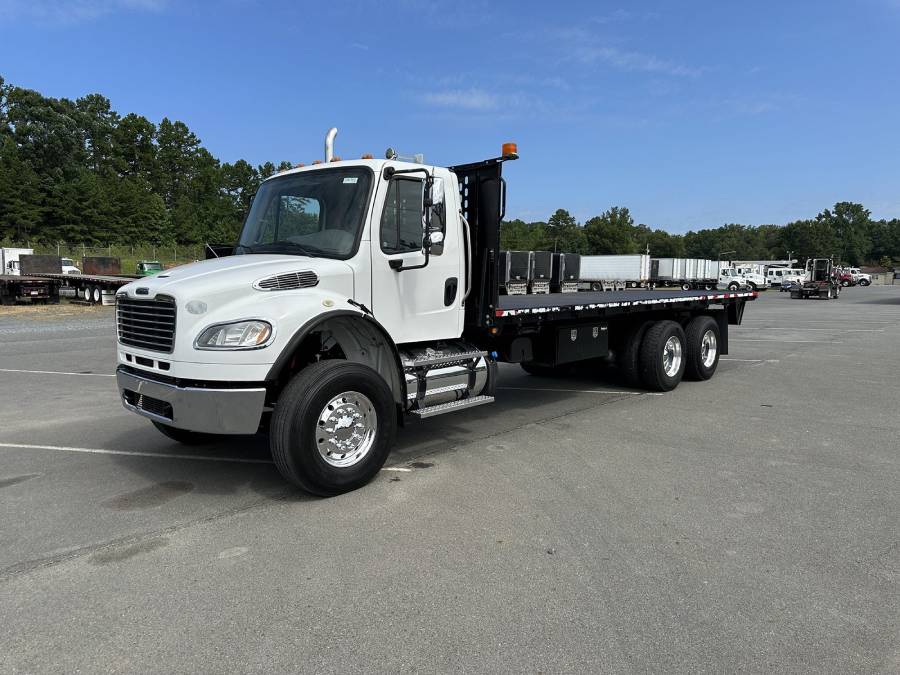
A Freightliner M2 loses power while driving due to fuel delivery restrictions, turbocharger problems, emissions-related engine derates, faulty sensors, or electrical system failures. These problems reduce engine output by limiting fuel supply, restricting airflow, or triggering protective functions in the engine control module (ECM). The exact cause depends on the truck’s engine configuration, operating conditions, and whether the engine loses power gradually or suddenly.
Fuel system problems, including clogged fuel filters and inadequate fuel pressure, can prevent the engine from producing sufficient power during acceleration or heavy-load operation. Turbocharger faults and charge-air leaks reduce available boost pressure, while diesel particulate filter (DPF) and selective catalytic reduction (SCR) system faults can trigger engine derates. Electrical faults, including damaged wiring and unreliable sensor signals, can also interrupt normal engine operation.
The most effective way to diagnose Freightliner M2 power loss is to identify the symptoms, check dashboard warnings, retrieve diagnostic trouble codes, and test the affected systems. A truck that loses power uphill requires a different diagnostic approach from one that shuts off unexpectedly or enters reduced-power mode. Sudden power loss that compromises vehicle control or traffic safety requires pulling over safely before further inspection.
This guide explains the causes, symptoms, diagnostic procedures, repair options, and preventive maintenance practices for Freightliner M2 power loss.
What Causes a Freightliner M2 to Lose Power While Driving?
A Freightliner M2 can lose power while driving because of five main problems: restricted fuel delivery, turbocharger failure, emissions-related engine derate, faulty engine sensors, and electrical system faults. These problems interfere with fuel injection, combustion airflow, or electronic engine management, reducing the torque available for acceleration and maintaining highway speed. The underlying cause varies by engine model, vehicle year, and operating conditions.
Can Fuel System Problems Cause a Freightliner M2 to Lose Power?
Fuel system problems cause Freightliner M2 power loss when the engine cannot receive enough diesel fuel to meet operating demands. A clogged fuel filter, failing fuel supply pump, contaminated diesel, or air entering the fuel lines can restrict fuel delivery. The resulting power loss becomes more noticeable during acceleration, uphill driving, or heavy hauling because the engine requires greater fuel flow to maintain torque.
A clogged fuel filter is a common maintenance-related cause. Dirt, sediment, and water contamination can restrict fuel movement through the filter, reducing the supply available to the injection system. A weakening fuel pump can produce similar symptoms, but replacing the filter will not correct a defective pump. Fuel pressure measurements and filter inspections help distinguish these problems before repairs begin.
Can Turbocharger Problems Cause a Freightliner M2 to Lose Power?
Turbocharger problems reduce Freightliner M2 engine power by limiting the compressed air available for combustion. A damaged turbocharger, leaking charge-air cooler, disconnected intake hose, or faulty boost pressure sensor can prevent the engine from achieving its required boost pressure. When airflow becomes insufficient, the engine control system may limit injected fuel, reducing acceleration and pulling power.
A Freightliner M2 with a charge-air leak may accelerate normally at low engine loads but struggle when climbing hills or carrying heavy cargo. Depending on the failure, drivers may also notice unusual hissing noises, increased exhaust smoke, or poor throttle response. Inspecting charge-air hoses, clamps, intercooler connections, and actual boost pressure helps identify the source of the problem.
Can DPF or DEF Problems Cause Freightliner M2 Engine Derate?
DPF and DEF system faults can trigger an engine derate that deliberately limits Freightliner M2 engine power. On emissions-equipped diesel models, the engine control system monitors exhaust aftertreatment components, including the diesel particulate filter (DPF), diesel exhaust fluid (DEF) dosing system, and selective catalytic reduction (SCR) system. Certain faults activate reduced-power operation to protect equipment or enforce emissions-system requirements.
A severely restricted DPF, failed regeneration process, DEF quality fault, or SCR system malfunction may produce dashboard warnings before engine power is reduced. The severity and timing of a derate depend on the engine and emissions-control configuration. Reading active fault codes is necessary to identify the triggering condition. Simply adding DEF or clearing fault codes will not resolve a derate caused by a defective sensor, dosing component, or blocked filter.
Faulty sensors and electrical connections are two additional causes of Freightliner M2 power loss. Accelerator pedal position sensors, manifold pressure sensors, damaged wiring harnesses, and unstable ECM power connections can send incorrect signals or interrupt engine control. These faults may cause intermittent hesitation, inconsistent throttle response, or unexpected engine shutdown. Confirming sensor readings, electrical continuity, and diagnostic trouble codes helps distinguish electronic failures from mechanical problems.
What Are the Symptoms of Freightliner M2 Power Loss?
The main symptoms of Freightliner M2 power loss include weak acceleration, sudden engine shutdown, reduced engine RPM, intermittent hesitation, and loss of pulling power under heavy loads. These symptoms help distinguish fuel delivery problems, turbocharger faults, engine derates, and electrical failures. Identifying when power loss occurs and how the engine responds provides the first clues for accurate diagnosis.
A Freightliner M2 that struggles to accelerate or maintain highway speed may have restricted fuel delivery, insufficient turbocharger boost, or an active engine derate. Fuel restrictions and boost leaks become more noticeable when engine demand increases, particularly during uphill driving or heavy hauling. An engine derate may produce similar performance problems but is more likely to be accompanied by warning messages or diagnostic fault codes.
The following table identifies common power-loss symptoms and their potential causes.
| Symptom | Potential Cause |
|---|---|
| Weak acceleration | Clogged fuel filter, low fuel pressure, or insufficient boost |
| Engine shuts off while driving | Fuel supply interruption, ECM power loss, or electrical fault |
| Engine runs but produces limited power | Engine derate, fuel restriction, or turbocharger problem |
| Power loss when climbing hills | Inadequate fuel delivery or boost pressure |
| Intermittent hesitation | Loose electrical connections, faulty sensors, or inconsistent fuel supply |
| Check engine light with reduced power | Engine management or emissions-related fault |
| Engine RPM increases without matching road speed | Transmission or drivetrain problem |
A Freightliner M2 that loses power but continues running is experiencing a different failure condition from one that shuts off completely. When the engine remains running, fuel restrictions, reduced boost pressure, and electronic torque limitations are important possibilities. A complete shutdown points more strongly toward interrupted fuel delivery, electrical power loss, or an engine protection shutdown. Checking whether the engine stalls, idles normally, or responds poorly to the accelerator helps narrow the diagnosis.
Power loss can also occur without an illuminated check engine light. Mechanical problems such as restricted fuel flow or charge-air leaks do not always trigger an immediate dashboard warning. Some electronic faults may appear as stored or pending diagnostic codes before a persistent warning becomes visible. Therefore, the absence of a warning light does not confirm that the engine and fuel systems are operating correctly.
How Do You Diagnose a Freightliner M2 That Loses Power While Driving?
Diagnosing a Freightliner M2 that loses power while driving requires five steps: checking dashboard warnings, retrieving engine fault codes, inspecting fuel delivery, testing turbocharger boost pressure, and examining electrical connections. This sequence helps identify whether the problem originates from mechanical restrictions, electronic control faults, or an engine protection derate. Diagnostic procedures and acceptable test values depend on the installed engine, model year, and manufacturer specifications.
Begin by observing the conditions under which power loss occurs. Record whether the truck loses power during acceleration, uphill driving, highway cruising, or after reaching operating temperature. Check the engine temperature gauge, oil pressure warnings, check engine light, and any displayed engine protection messages. If the truck develops a critical oil pressure warning, severe overheating, or an unexpected shutdown, stop in a safe location and follow the manufacturer’s shutdown instructions before attempting further diagnosis.
How Do You Check Freightliner M2 Engine Fault Codes?
Freightliner M2 engine fault codes are checked using a compatible heavy-duty diagnostic scanner connected to the truck’s diagnostic port. Depending on the vehicle configuration, the scanner communicates with engine and vehicle control modules through protocols such as SAE J1939. The retrieved diagnostic trouble codes help identify faults involving fuel pressure, turbocharger boost, emissions controls, sensors, and electrical circuits.
Heavy-duty diagnostic codes commonly use Suspect Parameter Numbers (SPNs) and Failure Mode Identifiers (FMIs). The SPN identifies the affected parameter or system, while the FMI describes the detected failure condition, such as an abnormal voltage, pressure reading, or communication problem. For example, a fault involving intake manifold pressure may indicate an electrical sensor problem or an actual boost pressure issue. The code must be interpreted alongside live sensor readings and the engine manufacturer’s diagnostic instructions.
Active fault codes indicate conditions currently detected by the control module, while previously recorded faults can provide evidence of intermittent failures. A technician should document both active and inactive codes before clearing anything. Clearing codes prematurely can erase useful diagnostic information without correcting the underlying problem. Compatible manufacturer-specific software may also provide engine derate status, operating snapshots, and additional diagnostic tests.
How Do You Test the Freightliner M2 Fuel and Air Systems?
Testing the Freightliner M2 fuel and air systems involves inspecting fuel filters, measuring fuel supply performance, checking intake restrictions, and verifying turbocharger boost pressure. These inspections help determine whether insufficient fuel or airflow is responsible for reduced engine output, especially when power loss occurs during acceleration or heavy-load operation.
Start with the fuel system by inspecting the fuel filter housing, fuel lines, and visible connections for leaks or damage. Check for water contamination, restricted filters, and evidence of air entering the fuel supply. Fuel pressure or supply restriction measurements should be performed at the manufacturer-specified test points using equipment appropriate for the installed engine. A clogged filter may restrict fuel delivery under load, while a failing supply pump can produce inadequate pressure even after filter replacement. High-pressure common-rail fuel components must not be loosened while pressurized because injected fuel can cause serious injury.
Next, inspect the air intake and turbocharger system. Check the air filter, charge-air hoses, clamps, and charge-air cooler for restrictions, cracks, or loose connections. A leak between the turbocharger and intake manifold allows compressed air to escape, reducing the boost pressure available for combustion. Compare commanded and measured boost readings using compatible diagnostic software, accounting for engine speed, load, and operating conditions. A charge-air pressure test can help locate leaks when performed according to the manufacturer’s procedure.
Finally, examine electrical connections and sensor data if fuel and airflow tests do not reveal the problem. Inspect accessible wiring harnesses, ECM connectors, battery terminals, and grounding points for corrosion, loose connections, or physical damage. Compare accelerator pedal position, fuel pressure, and intake pressure readings with expected operating behavior. Intermittent voltage drops or implausible sensor signals can explain power loss that appears and disappears without a consistent mechanical symptom.
How Do You Fix a Freightliner M2 That Loses Power While Driving?
Fixing a Freightliner M2 that loses power while driving requires repairing the specific fuel, turbocharger, emissions, or electrical fault identified during diagnosis. The correct repair depends on diagnostic trouble codes, fuel pressure measurements, boost pressure readings, and the truck’s engine configuration. Replacing components without confirming the failure can increase repair costs and leave the original problem unresolved.
How Do You Fix Fuel, Turbocharger, and Engine Derate Problems?
Fuel system repairs begin by correcting restrictions, contamination, or inadequate fuel supply. Replace clogged fuel filters with components that meet the installed engine’s specifications, following the manufacturer’s priming procedure to prevent air from entering the system. If fuel pressure remains below the specified range after filter replacement, inspect the supply pump, fuel lines, and related components. Contaminated fuel may require draining and cleaning affected parts of the fuel system. Fuel injectors or pumps should only be replaced after testing confirms a defect.
Turbocharger-related power loss is corrected by restoring proper airflow and boost pressure. Replace cracked charge-air hoses, secure loose clamps, repair leaking charge-air cooler connections, and remove intake restrictions. If boost pressure remains insufficient, inspect turbocharger operation and its control components using engine-specific diagnostic procedures. A turbocharger should not be replaced solely because the truck accelerates poorly, since fuel restrictions, sensor faults, and charge-air leaks can produce similar symptoms.
Engine derate repairs require identifying and correcting the condition that triggered reduced-power operation. For DPF-related faults, inspect exhaust restriction measurements, regeneration status, and relevant temperature or pressure sensors. A manufacturer-approved regeneration procedure may resolve certain soot-loading conditions, but a damaged or ash-loaded DPF may require professional cleaning or replacement. DEF and SCR faults require inspection of DEF quality, dosing components, sensors, and related electrical circuits. Regeneration must not be forced when the engine manufacturer lists an active condition that prohibits it.
Electrical repairs involve testing accelerator pedal sensors, engine sensors, wiring harnesses, ECM power connections, and grounding points. Replace damaged wiring or defective components only after confirming the failure through circuit testing or diagnostic data. Following repairs, retrieve fault codes again, verify normal sensor readings, and confirm that engine power has returned under safe operating conditions. A controlled road test or manufacturer-approved performance test helps establish whether the original power-loss problem has been resolved.
Why Does a Freightliner M2 Lose Power When Going Uphill?
A Freightliner M2 loses power when going uphill because increased engine load exposes fuel delivery restrictions, insufficient turbocharger boost, or engine performance limitations. Climbing a grade requires greater torque than driving on level ground, increasing the demand for diesel fuel and compressed intake air. When the fuel or air system cannot meet this demand, the truck may struggle to accelerate, lose road speed, or respond poorly to the accelerator.
A restricted fuel filter or weakening fuel supply pump can cause power loss primarily under heavy loads. During uphill driving, the engine requires more fuel to maintain torque, but a restricted supply system may fail to deliver the necessary volume or pressure. The truck may operate normally on flat roads yet lose power on steep grades. Checking fuel supply pressure or restriction under the appropriate operating conditions helps determine whether inadequate fuel delivery is responsible.
Turbocharger problems can produce similar symptoms because boost pressure becomes increasingly important as engine load rises. A leaking charge-air cooler, damaged intake hose, or malfunctioning turbocharger control component can reduce the amount of compressed air reaching the engine. Insufficient airflow limits combustion efficiency and available torque, particularly during sustained climbs. Comparing actual boost pressure with manufacturer-specified performance data helps identify whether the air system is operating correctly.
Not every reduction in uphill speed indicates a mechanical failure. A heavily loaded Freightliner M2 may slow on steep grades because of vehicle weight, road gradient, available engine torque, and transmission gear selection. Abnormal power loss is more likely when the truck performs noticeably worse than usual under comparable conditions, especially when accompanied by hesitation, warning lights, unusual exhaust smoke, or engine derate messages.
Why Does a Freightliner M2 Lose Power Intermittently?
A Freightliner M2 loses power intermittently when fuel delivery, electronic sensor signals, or electrical connections become unstable under specific operating conditions. Unlike continuous power loss, intermittent failures may disappear after the engine cools, the truck changes speed, or vibration temporarily restores an electrical connection. These characteristics make the problem difficult to reproduce during routine inspections.
Electrical faults are an important cause of intermittent engine performance problems. Loose ECM connectors, corroded grounding points, damaged wiring harnesses, or failing accelerator pedal position sensors can interrupt signals used to control engine operation. For example, a damaged wiring harness may momentarily lose electrical continuity when the truck encounters road vibration, causing hesitation or an unexpected reduction in engine torque. Inspecting connector condition and monitoring live sensor data during an approved diagnostic test can help identify these failures.
Fuel supply problems can also produce intermittent power loss. Air entering the fuel system through a leaking connection, debris temporarily restricting a fuel pickup, or an inconsistent fuel supply pump may interrupt fuel delivery without causing permanent engine shutdown. Symptoms may become more noticeable during acceleration, extended driving, or changes in fuel demand. Inspecting the fuel supply circuit and testing pressure under the conditions associated with the failure helps distinguish fuel-related problems from electronic faults.
Diagnosing intermittent power loss requires documenting when the problem occurs, including engine temperature, vehicle speed, load, road conditions, and dashboard warnings. A compatible heavy-duty diagnostic scanner can retrieve inactive fault codes and, where supported, record operating data during the event. The most reliable repair approach is to reproduce or capture the failure, identify the affected system, and verify the defective component before replacement. Replacing sensors, pumps, or electronic modules without supporting test results can leave intermittent faults unresolved.
How Much Does It Cost to Fix Freightliner M2 Power Loss?
Fixing Freightliner M2 power loss can cost from a relatively inexpensive fuel filter replacement to several thousand dollars for major turbocharger, fuel injection, or emissions system repairs. The final expense depends on the failed component, engine configuration, labor rates, and diagnostic complexity. Identifying the cause before replacing parts is essential because fuel restrictions, boost leaks, and electronic faults can produce similar symptoms despite requiring different repairs.
The table below provides approximate repair cost ranges for Freightliner M2 trucks in the United States. These are general budgeting estimates in USD, not verified current shop quotes. Actual costs vary by location, model year, engine, and repair facility.
| Repair Type | Estimated Cost (USD) |
|---|---|
| Engine diagnostic inspection | $150–$350 |
| Fuel filter replacement | $100–$300 |
| Fuel supply pump replacement | $500–$1,500 |
| Boost hose or charge-air leak repair | $150–$800 |
| Turbocharger replacement | $2,000–$5,000+ |
| Engine sensor replacement | $150–$600 |
| Wiring or electrical repair | $150–$1,000+ |
| DPF cleaning or replacement | $400–$4,000+ |
Fuel filter replacement and minor charge-air repairs generally involve fewer components and less labor than turbocharger or emissions system repairs. A failed turbocharger may require additional inspections of oil supply lines, intake piping, and charge-air components to determine whether contamination or lubrication problems contributed to the failure. DPF repair costs vary significantly depending on whether the filter requires professional cleaning, replacement, or correction of an underlying emissions fault.
Diagnostic labor is another important expense, particularly when power loss occurs intermittently. Technicians may need to retrieve fault codes, monitor live engine data, perform fuel pressure tests, or inspect electrical circuits under specific operating conditions. Accurate diagnosis reduces the risk of paying for unnecessary components and repeated repairs. Truck owners should request an itemized estimate that separates diagnostic labor, replacement parts, and repair labor before authorizing major work.
Read more: Freightliner M2 Shuts Off While Driving: Causes & Fixes
How Can You Prevent a Freightliner M2 From Losing Power While Driving?
Preventing Freightliner M2 power loss requires regular fuel system maintenance, air intake inspections, emissions system monitoring, and early correction of engine fault codes. These practices reduce the likelihood of restricted fuel delivery, insufficient turbocharger boost, and avoidable engine derates. Maintenance intervals should follow the recommendations for the truck’s installed engine, operating conditions, and service history.
Fuel system maintenance is essential because diesel contamination and restricted filters can reduce engine performance under load. Replace fuel filters at the intervals specified by the engine manufacturer, drain water separators when required, and use clean diesel fuel from reliable suppliers. Trucks operating in dusty environments or handling contaminated fuel may require additional inspections. Fuel filters should also be checked when acceleration becomes weak or the engine struggles during uphill driving.
Air intake and turbocharger inspections help maintain the airflow required for normal combustion. Examine the engine air filter, charge-air hoses, clamps, and intercooler connections for restrictions, cracks, and loose fittings. A damaged charge-air hose can allow compressed air to escape, reducing engine torque even when the turbocharger itself remains functional. Addressing visible damage early can prevent worsening performance and unnecessary component replacement.
Emissions system maintenance also reduces the risk of engine derates. Monitor DPF regeneration warnings, DEF level and quality alerts, and engine fault messages. Use DEF that meets the required specifications, and correct regeneration or SCR system faults according to the manufacturer’s service procedures. Repeated interrupted regenerations or unresolved emissions warnings can lead to additional operating restrictions on applicable engine configurations.
Finally, include electrical inspections and diagnostic checks in routine maintenance. Examine accessible battery connections, grounding points, wiring harnesses, and sensor connectors for corrosion, looseness, or physical damage. Investigate recurring fault codes and unusual engine behavior before they develop into more serious problems. A consistent maintenance program helps preserve engine performance, reduce unexpected downtime, and identify developing faults before they cause power loss on the road.
When Should You Stop Driving a Freightliner M2 That Is Losing Power?
You should stop driving a Freightliner M2 when power loss causes unsafe acceleration, unexpected engine shutdown, severe overheating, low oil pressure warnings, or an inability to maintain a safe speed in traffic. Continuing to operate the truck under these conditions increases the risk of engine damage, loss of vehicle control, and roadside accidents. The appropriate response depends on the severity of the symptoms and the warnings displayed by the engine management system.
A sudden engine shutdown requires immediate attention because it can affect vehicle handling and braking assistance, depending on the truck’s configuration. If the engine stalls while driving, activate the hazard lights, maintain steering control, and move to a safe location without making abrupt maneuvers. Do not repeatedly attempt to restart the engine when critical oil pressure, overheating, or engine protection warnings indicate a potentially serious mechanical problem.
Critical engine warnings require following the manufacturer’s shutdown instructions. Low oil pressure can indicate inadequate lubrication, while excessive coolant temperature can lead to cylinder head damage, gasket failure, or other expensive engine repairs. A Freightliner M2 displaying a red stop-engine warning should be brought to a safe stop as soon as conditions permit, and the engine should be shut down when directed by the applicable warning and operator’s manual.
Reduced power caused by an emissions-related derate also requires attention, even when the engine continues running. A truck operating at substantially reduced speed may create a traffic hazard on highways, steep grades, or heavily traveled roads. If the vehicle cannot maintain a safe operating speed, arrange roadside assistance or towing rather than attempting to complete the trip.
A Freightliner M2 should return to service only after the underlying power-loss problem has been identified, repaired, and verified. A qualified diesel technician can confirm the repair through fault-code analysis, engine performance testing, and inspection of the affected systems.