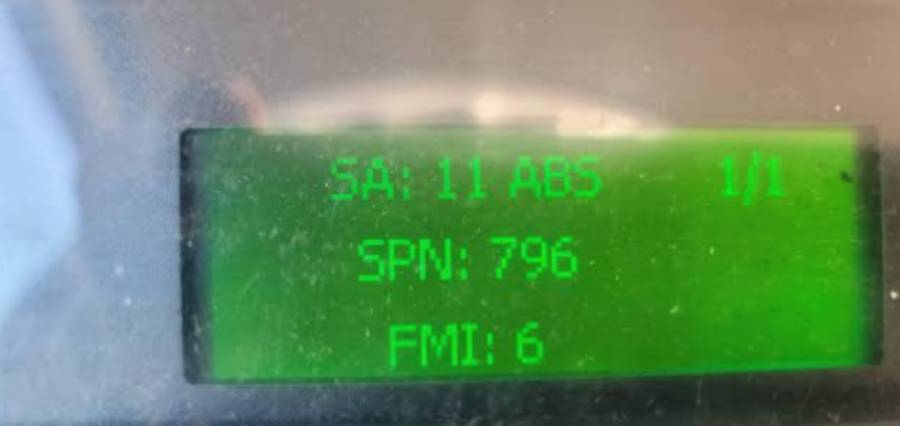
The Freightliner M2 ABS light indicates that the truck’s anti-lock braking system is performing a startup self-check or has detected a malfunction. If the warning light stays on after the self-check, the ABS may not function correctly during braking. Common causes include faulty wheel speed sensors, damaged wiring, corroded electrical connectors, ABS control module faults, and problems with the system’s power supply.
The anti-lock braking system helps prevent wheel lockup by regulating brake pressure when excessive wheel slip is detected. When an ABS fault occurs, the truck’s conventional braking system may remain operational, but the anti-lock function can be partially or completely disabled. This can reduce vehicle control during hard braking, particularly on wet or slippery roads. Additional brake warnings or abnormal braking behavior require immediate attention.
Diagnosing a Freightliner M2 ABS warning light involves retrieving diagnostic trouble codes, inspecting wheel speed sensors, checking electrical connections, and testing the affected components. The correct repair depends on the fault identified and the ABS system installed on the truck. This guide explains the causes of the warning light, how to diagnose ABS faults, the appropriate repair methods, and when professional service is necessary.
What Does the ABS Light Mean on a Freightliner M2?
The ABS light on a Freightliner M2 indicates that the anti-lock braking system is performing a self-check or has detected a fault that may affect its operation. The warning light normally illuminates briefly when the ignition is switched on. If it remains illuminated after the required self-check is complete, the ABS control unit has detected a condition that requires diagnosis.
The Freightliner M2 uses an anti-lock braking system to monitor wheel rotation and regulate brake pressure when a wheel approaches lockup. Wheel speed sensors send rotational speed information to the ABS electronic control unit (ECU). When the ECU detects excessive wheel deceleration during braking, it commands the appropriate modulator valves to adjust brake pressure. This process helps maintain wheel rotation and steering control during hard braking.
An illuminated ABS warning light does not automatically mean the truck has lost all braking capability. The conventional service brakes may continue operating even when the anti-lock function is disabled. However, the wheels may lock during aggressive braking, especially on wet, icy, or loose surfaces. A separate brake warning light, low air pressure warning, or noticeable braking problem indicates a potentially more serious condition that requires immediate attention.
The warning light’s behavior also provides diagnostic information. A light that stays on after startup indicates a different condition from one that illuminates intermittently while driving. The exact self-check sequence and warning behavior depend on the ABS equipment and vehicle configuration.
Why Is the ABS Light On in a Freightliner M2?
The Freightliner M2 ABS light can turn on because of six main fault categories: wheel speed sensor problems, damaged wiring, tone ring defects, ABS control module faults, modulator valve problems, and electrical power supply failures. Each fault interferes with the system’s ability to monitor wheel speed, communicate with components, or regulate braking pressure.
1. Faulty wheel speed sensors. Wheel speed sensors measure the rotational speed of individual wheels and transmit signals to the ABS control module. A damaged sensor, excessive sensor-to-tone-ring gap, or contaminated sensing area can produce missing or inconsistent speed signals. When the ECU detects an implausible wheel speed reading or an electrical fault, it can activate the ABS warning light. Sensor condition and signal quality must be checked before replacement.
2. Damaged ABS wiring and connectors. The ABS wiring harness connects wheel speed sensors, modulator valves, and other electrical components to the control unit. Broken wires, loose connectors, corrosion, and damaged insulation can interrupt electrical signals or create short circuits. For example, a harness rubbing against a chassis bracket can develop intermittent faults as the truck vibrates. Inspecting the wiring route and connector condition helps identify these problems.
3. Damaged or misaligned tone rings. A tone ring provides the repeating reference pattern used by a compatible wheel speed sensor to measure wheel rotation. Missing teeth, physical damage, excessive debris, or an incorrect sensor gap can disrupt the speed signal. The ABS control module may interpret the irregular signal as a wheel speed fault. Inspecting the tone ring and its relationship to the sensor helps distinguish mechanical damage from sensor failure.
4. ABS control module faults. The ABS electronic control unit processes wheel speed signals, monitors electrical circuits, and controls ABS operation. Internal electronic failures can trigger warning lights, but communication problems, poor grounding, and unstable power supplies can produce similar symptoms. A control module should not be replaced solely because the ABS light is illuminated. Diagnostic codes and electrical tests are necessary to determine whether the module itself is defective.
5. ABS modulator valve problems. ABS modulator valves regulate brake pressure in response to commands from the control unit. Electrical faults involving valve solenoids, damaged connectors, or defective valve circuits can generate ABS diagnostic trouble codes. A mechanical problem may also affect braking performance, although not every mechanical failure will trigger an electronic warning. The specific fault code and the manufacturer’s diagnostic procedure determine whether the valve, wiring, or another component requires repair.
6. Electrical power supply failures. The ABS control unit requires a stable electrical supply and reliable ground connections. A blown fuse, damaged power wire, poor ground, or abnormal system voltage can interrupt controller operation and activate the warning light. Electrical problems may also produce multiple warning indicators or communication faults. Checking the relevant fuses, battery and charging system condition, power connections, and grounds helps identify supply-related failures.
These six fault categories can produce similar dashboard warnings, but they require different repairs. Retrieving ABS diagnostic trouble codes is the most effective starting point for narrowing down the cause. The codes identify the circuit, component, or operating condition detected by the controller, allowing technicians to perform targeted inspections instead of replacing parts through trial and error.
How Do You Diagnose the ABS Light on a Freightliner M2?
To diagnose the ABS light on a Freightliner M2, check the warning light behavior, retrieve ABS diagnostic trouble codes, inspect wheel speed sensors and wiring, and test the electrical circuits associated with the reported fault. This process helps identify whether the problem originates from a sensor, electrical connection, ABS control module, or brake system component.
Start by observing the ABS warning light when the ignition is switched on. The light normally illuminates during the system’s initial self-check. Depending on the ABS configuration, the warning may turn off after the electronic checks are completed or after the truck begins moving and the system verifies wheel speed signals. A warning that remains illuminated beyond the specified self-check sequence indicates a condition requiring further diagnosis.
Read the ABS diagnostic trouble codes using a compatible heavy-duty truck diagnostic scanner. Connect the scanner to the vehicle’s diagnostic connector, establish communication with the ABS electronic control unit, and retrieve active and stored fault codes. Record each code and its description before clearing anything. Diagnostic software must support the specific ABS controller installed on the Freightliner M2 because available codes, communication protocols, and test functions vary between systems.
Next, inspect the wheel speed sensors and their wiring if the diagnostic information points to a wheel speed circuit. Check sensor mounting, visible damage, connector security, corrosion, and harness routing. Inspect the tone ring for damaged teeth or excessive contamination where accessible. For example, a wheel speed fault that appears only while driving may indicate an intermittent sensor signal, excessive sensor gap, or damaged tone ring rather than a completely disconnected sensor.
Electrical testing should follow the manufacturer’s specifications for the identified ABS system. Verify the relevant fuses, controller power supply, ground connections, and wiring continuity. Sensor resistance or signal measurements should only be performed using the procedure specified for that sensor type. Passive and active wheel speed sensors have different electrical characteristics, so a universal resistance specification cannot reliably diagnose every Freightliner M2 ABS configuration.
Finally, compare the fault codes with the inspection and test results to identify the defective component or circuit. After completing the repair, repeat the relevant diagnostic checks and confirm that the ABS warning light behaves normally. Some systems require a road test or specific operating conditions before certain faults become inactive.
What ABS Fault Codes Can Appear on a Freightliner M2?
Freightliner M2 ABS fault codes identify electrical, sensor, communication, and brake control problems detected by the ABS electronic control unit. The exact codes depend on the truck’s model year, ABS manufacturer, controller configuration, and diagnostic communication system. Common diagnostic categories include wheel speed sensor faults, modulator valve circuit faults, controller power supply problems, and communication errors.
Many heavy-duty vehicle diagnostic systems use Suspect Parameter Numbers (SPNs) and Failure Mode Identifiers (FMIs) to describe faults. An SPN identifies a parameter or component associated with a diagnostic condition, while an FMI describes the type of failure detected. For example, an FMI may indicate voltage below the expected range, an abnormal signal, or an intermittent electrical condition. The combination helps technicians narrow down the problem, but the correct interpretation must be verified against the documentation for the installed controller.
The following table summarizes ABS fault categories and their corresponding diagnostic checks.
| ABS Fault Category | Possible Problem | Recommended Diagnostic Check |
|---|---|---|
| Wheel speed sensor fault | Missing, irregular, or implausible wheel speed signal | Inspect sensor, connector, tone ring, and signal |
| ABS modulator valve fault | Solenoid circuit or valve control problem | Check valve circuit, wiring, and manufacturer-specified tests |
| ABS controller fault | Internal controller error or power-related malfunction | Verify power, grounds, communication, and controller diagnostics |
| ABS communication fault | Interrupted communication between electronic modules | Inspect network wiring, connectors, and relevant communication codes |
| ABS power supply fault | Low voltage, interrupted power, or poor grounding | Test fuses, supply voltage, and ground circuits |
Active ABS fault codes indicate conditions currently detected by the controller, while stored or inactive codes record previously detected conditions. An active wheel speed sensor circuit fault may point to an existing electrical problem, whereas an inactive code may reflect an intermittent connection that temporarily recovered. Both require interpretation alongside the truck’s symptoms and operating conditions.
A diagnostic code does not always identify a failed part directly. For example, a wheel speed sensor fault can result from damaged wiring, an incorrect sensor gap, tone ring damage, or the sensor itself. Replacing the sensor without checking these related components may leave the original problem unresolved.
Technicians should use the ABS controller identification, complete fault code information, and manufacturer-specific troubleshooting procedures to determine the correct repair. Recording the codes before clearing them also preserves diagnostic evidence, particularly when the Freightliner M2 ABS light turns on intermittently.
How Do You Fix the ABS Light on a Freightliner M2?
To fix the ABS light on a Freightliner M2, identify the active ABS fault code, repair the defective component or circuit, and verify that the anti-lock braking system operates correctly. The repair may involve replacing a wheel speed sensor, restoring damaged wiring, correcting an electrical supply problem, or servicing an ABS modulator valve. The appropriate procedure depends on the fault identified and the ABS equipment installed on the truck.
Before beginning repairs, park the truck on a level surface, secure it against movement, and follow the manufacturer’s safety procedures. Air brake components can retain pressure after the engine is switched off, while electrical circuits may remain energized. Work involving pressurized brake components, wheel removal, or ABS controller replacement should be performed by a qualified technician using the appropriate service information.
How Do You Fix a Faulty ABS Wheel Speed Sensor?
Fixing a faulty Freightliner M2 ABS wheel speed sensor requires inspecting its mounting position, electrical connection, signal quality, and associated tone ring before replacing the sensor. A wheel speed sensor generates information that allows the ABS controller to monitor wheel rotation. Damage or incorrect positioning can interrupt this information and trigger an ABS warning.
Begin by locating the wheel speed sensor associated with the diagnostic trouble code. Inspect the sensor cable for cuts, crushed insulation, or damage near moving suspension and wheel-end components. Check the electrical connector for corrosion, moisture, loose terminals, and damaged seals. A poor connection can produce the same warning as a defective sensor.
Next, inspect the sensor mounting area and tone ring where accessible. Excessive debris, physical damage, or an incorrect sensor gap can interfere with wheel speed detection. Clean accessible components using approved methods and verify sensor positioning according to the installed ABS manufacturer’s specifications. Some sensor designs require a specific installation procedure, while others use different mounting and adjustment methods.
Replace the wheel speed sensor when diagnostic testing confirms that it is defective. Use a compatible replacement part and follow the manufacturer’s instructions for installation, cable routing, and connection. After replacement, check the sensor signal with compatible diagnostic equipment and confirm that the ABS controller receives consistent wheel speed information.
How Do You Repair ABS Wiring and Electrical Faults?
Repairing Freightliner M2 ABS wiring faults involves locating damaged conductors, restoring secure electrical connections, and verifying proper voltage, grounding, and circuit operation. Wiring failures can interrupt communication between the ABS controller, wheel speed sensors, and modulator valves, causing persistent or intermittent warning lights.
Inspect the wiring harness along the chassis, suspension, and wheel-end areas. Look for insulation worn by contact with metal brackets, broken conductors, exposed wires, corrosion, and loose connectors. For example, a wheel speed sensor harness that repeatedly bends near a suspension component may develop an internal wire break that causes the ABS light to illuminate while driving.
Repair damaged wiring using the approved wire type, terminal connections, sealing methods, and harness protection specified for the vehicle. Replace connectors when terminals are corroded or cannot maintain reliable electrical contact. Secure repaired wiring away from excessive heat, sharp edges, and moving components to prevent repeated damage.
If diagnostic codes indicate an electrical supply problem, check the ABS fuses, power connections, and ground circuits. Measure voltage under the operating conditions specified by the manufacturer rather than relying only on a visual inspection. A poor ground or excessive voltage drop can interfere with ABS controller operation even when the wiring appears intact.
ABS control module and modulator valve faults require additional diagnosis. Verify the relevant power supply, ground, wiring, and component circuits before replacing either assembly. A replacement controller may require configuration or programming, depending on the installed system. Repairs involving brake pressure control components must follow the manufacturer’s service procedures.
After completing the electrical repair, reconnect the diagnostic scanner, check for active fault codes, and perform the required system verification. The repair is complete only when the underlying fault has been corrected and the ABS system passes the applicable diagnostic checks.
How Do You Reset the ABS Light on a Freightliner M2?
To reset the ABS light on a Freightliner M2, repair the fault that triggered the warning and complete the ABS controller’s required fault-clearing or verification procedure. Some ABS warning lights turn off automatically after the controller confirms normal operation, while other systems require a diagnostic tool or specific operating conditions before the warning clears.
Start by connecting a compatible heavy-duty diagnostic scanner and checking the ABS electronic control unit for active and stored trouble codes. Record the codes before performing any clearing procedure. If an active fault remains, diagnose and repair the affected component or circuit before attempting to reset the warning.
After repairing the problem, follow the ABS manufacturer’s procedure for clearing diagnostic trouble codes when supported. Switch the ignition off and restart the truck if required by the service instructions. Observe the ABS warning light during the startup self-check. Depending on the controller, certain wheel speed-related faults may require the vehicle to move before the system can verify normal operation and turn off the warning.
If the ABS light remains illuminated, scan the controller again to determine whether the original fault is still active or another fault has been detected. A recurring wheel speed sensor code, for example, may indicate unresolved wiring damage, an incorrect sensor gap, or a defective tone ring. Clearing the code repeatedly will not correct these conditions.
Disconnecting the battery is not a reliable method for resetting the Freightliner M2 ABS light. Removing electrical power does not repair defective components, and diagnostic information may remain stored or return when the controller detects the fault again. Battery disconnection can also affect other electronic systems.
The ABS warning light should remain off after the required self-check and operating verification when the system is functioning correctly. Confirm the repair through diagnostic testing and any manufacturer-specified road test conducted under safe conditions. If the warning persists after the relevant repairs, further diagnosis by a qualified heavy-duty truck technician is necessary.
Can You Drive a Freightliner M2 With the ABS Light On?
A Freightliner M2 may retain conventional braking capability when the ABS light is on, but the truck should not be considered safe to drive until the braking system’s condition has been assessed. An illuminated ABS warning indicates that the anti-lock braking function may be partially or completely unavailable. The appropriate response depends on additional warning indicators, brake performance, and the vehicle’s operating condition.
The anti-lock braking system helps prevent wheel lockup by adjusting brake pressure during hard braking. When ABS becomes unavailable, the conventional service brakes may still slow or stop the truck, but wheel lockup can reduce steering control and directional stability. This creates additional risks on wet, icy, or loose road surfaces, particularly when the truck is carrying a heavy load.
Stop the truck in a safe location if the ABS light appears alongside a low air pressure warning, a red brake warning, or abnormal braking behavior. Symptoms such as reduced braking response, unusual brake pedal behavior, or difficulty controlling the vehicle require immediate inspection. Do not continue operating a truck with a suspected service brake malfunction. A qualified technician should determine whether the vehicle meets the applicable safety requirements before it returns to service.
If the ABS light is the only warning and the conventional brakes appear to operate normally, the driver should still arrange prompt diagnosis. Check the Freightliner M2 operator’s manual and applicable commercial vehicle inspection requirements before deciding whether the truck can be moved. An ABS warning alone does not establish that the vehicle is safe or legally permitted to continue operating under every condition.
Why Does the Freightliner M2 ABS Light Come On Intermittently?
The Freightliner M2 ABS light can turn on intermittently because of unstable wheel speed sensor signals, loose electrical connections, damaged wiring, or intermittent power supply faults. These problems may appear only under specific driving conditions, making them more difficult to identify than faults that remain active continuously.
Wheel speed sensor problems are one possible cause of intermittent ABS warnings. A damaged sensor cable, excessive sensor gap, or irregular tone ring signal can interrupt wheel speed information while the truck is moving. For example, a sensor harness with an internal wire break may temporarily lose electrical continuity when suspension movement bends the cable. The ABS controller detects the abnormal signal and activates the warning light.
Loose connectors and corroded terminals can produce similar symptoms. Vibration, moisture, and temperature changes may affect electrical contact, allowing a circuit to operate normally at one moment and fail at another. Intermittent controller power or ground connections can also trigger warning lights or communication faults.
Diagnosing an intermittent ABS light requires retrieving stored fault codes and comparing them with the conditions under which the warning appears. Record whether the light activates during startup, acceleration, braking, turning, or travel over uneven roads. Inspect the affected wiring and connectors, then use compatible diagnostic equipment to monitor relevant fault information and wheel speed signals when supported.
An ABS warning that disappears without repair does not prove the underlying problem has been resolved. The controller may retain an inactive fault code even after the electrical signal returns to normal. Identifying and correcting the original fault is necessary to prevent repeated warnings and restore reliable ABS operation.
Read more: Freightliner M2 112 Problems: Common Issues & Fixes
How Much Does It Cost to Fix a Freightliner M2 ABS Light?
The cost to fix a Freightliner M2 ABS light depends on the faulty component, diagnostic labor, replacement parts, and the truck’s ABS configuration. Repairing a damaged connector or wheel speed sensor generally involves less work than replacing an ABS control module or modulator valve. An accurate estimate requires identifying the fault before selecting replacement parts.
ABS diagnostic costs depend on the time required to retrieve fault codes, inspect electrical circuits, and confirm the cause. A straightforward sensor circuit fault may require limited testing, while an intermittent wiring problem can demand additional labor to locate damaged conductors or unstable connections. Diagnostic labor rates also vary between independent diesel repair shops, mobile technicians, and authorized truck service centers.
The following table identifies five common ABS repair categories and the factors that influence their costs.
| ABS Repair Type | Main Cost Factors |
|---|---|
| Wheel speed sensor replacement | Sensor compatibility, wheel-end access, and labor |
| ABS wiring repair | Harness damage, connector replacement, and diagnostic time |
| Tone ring repair | Wheel-end disassembly, replacement parts, and labor |
| ABS modulator valve replacement | Valve assembly, brake system configuration, and installation labor |
| ABS control module replacement | Controller compatibility, programming requirements, and diagnostic labor |
Wheel speed sensor and wiring repairs are generally less complex than ABS controller or modulator valve replacement, although accessibility and the extent of damage can significantly affect labor costs. For example, replacing an accessible sensor differs from repairing a damaged tone ring that requires wheel-end disassembly.
Before approving repairs, request an estimate that separates diagnostic labor, replacement parts, installation, and any required programming or verification. The shop should confirm the ABS controller type and compatible part numbers using the truck’s vehicle identification information. Replacing components without confirming the diagnostic fault can increase repair expenses without resolving the warning light.
How Can You Prevent ABS Warning Light Problems on a Freightliner M2?
Preventing Freightliner M2 ABS warning light problems requires regular inspection of wheel speed sensors, electrical wiring, connectors, and related brake system components. Preventive maintenance helps identify physical damage, corrosion, and loose connections before they interrupt ABS operation. It cannot eliminate every electronic failure, but it reduces the likelihood of avoidable faults caused by deteriorating components.
Inspect ABS sensor wiring during scheduled brake and wheel-end maintenance. Check for damaged insulation, loose mounting clips, excessive bending, and contact with moving suspension components. Wiring should remain securely routed away from sharp edges, excessive heat, and areas where vibration can cause abrasion. Replace damaged protective coverings and secure loose harness sections using approved mounting methods.
Keep ABS electrical connectors clean, sealed, and securely attached. Moisture intrusion and corrosion can increase electrical resistance or interrupt sensor signals. During maintenance, inspect connector seals, terminals, and locking mechanisms for deterioration. Repair damaged connections using manufacturer-approved components rather than temporary electrical connections that may fail under vibration or exposure to road contaminants.
Wheel-end inspections should also include the condition of accessible wheel speed sensors and tone rings. Check for physical damage, excessive contamination, and abnormal component movement. Wheel bearing problems or incorrect component installation can affect the relationship between a sensor and its tone ring. Any sensor adjustment or replacement must follow the specifications for the installed ABS system.
Finally, investigate ABS warning lights as soon as they appear instead of repeatedly clearing diagnostic codes. Record active and stored faults, inspect the affected components, and confirm proper operation after repairs. Following the Freightliner M2 maintenance schedule and the ABS manufacturer’s service instructions helps preserve reliable anti-lock braking performance throughout the truck’s service life.