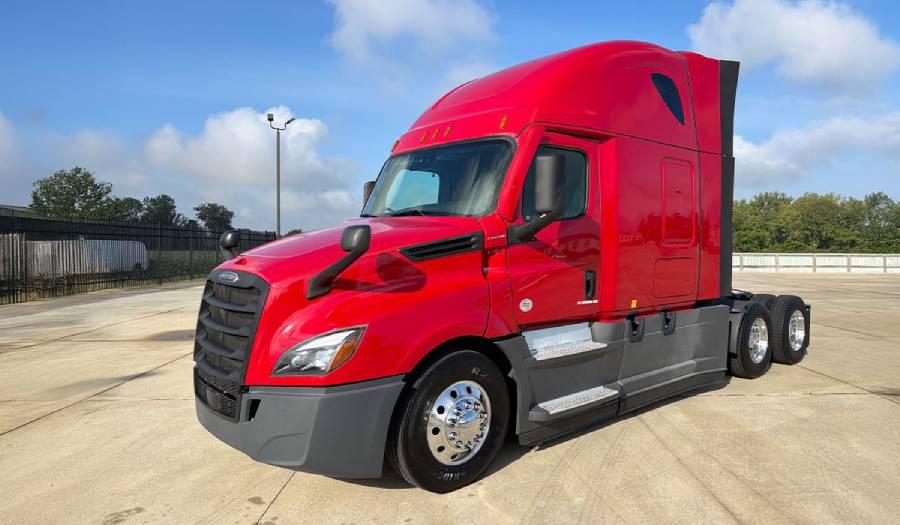
A Freightliner Cascadia that won’t shut off typically has a problem with the ignition switch, electrical relays, wiring, or engine control system. These faults can prevent the engine from receiving or responding to the shutdown command after the ignition key is turned to the OFF position. The exact cause depends on whether the diesel engine continues running or the dashboard and electrical accessories remain powered after the engine stops.
A faulty ignition switch can maintain an unintended ignition signal, while a stuck relay or damaged wiring can keep an electrical circuit energized. Problems involving the Engine Control Module (ECM) or Common Powertrain Controller (CPC) can also interfere with engine shutdown when the relevant control signals or power circuits malfunction. However, these components require proper testing before replacement because similar symptoms can originate from different electrical faults.
Diagnosing a Freightliner Cascadia shutdown problem starts with identifying which systems remain active after key-off. The next steps involve checking ignition signals, inspecting relays and wiring, and reviewing available diagnostic fault codes. This guide explains the main causes, safe shutdown precautions, diagnostic procedures, repair options, and preventive maintenance practices for Freightliner Cascadia trucks.
Why Won’t a Freightliner Cascadia Shut Off?
A Freightliner Cascadia may fail to shut off because of four main electrical and control-system problems: a faulty ignition switch, a stuck relay, damaged wiring, or an engine control fault. These problems can interrupt the normal shutdown process by maintaining an ignition signal, supplying unintended electrical power, or preventing the engine control system from recognizing the key-off command.
The engine shutdown process depends on the vehicle’s electrical architecture and engine configuration. In a Detroit DD13 or DD15-powered Cascadia, electronic controls manage fuel injection and engine operation. Turning the ignition off should initiate the shutdown sequence. When the required signals or power circuits malfunction, the engine may continue running even though the driver has turned the key to the OFF position.
Can a Faulty Ignition Switch Keep a Freightliner Cascadia Running?
A faulty ignition switch can keep a Freightliner Cascadia running by failing to remove the ignition-on signal when the key is turned off. The ignition switch controls electrical circuits that communicate the driver’s selected operating position to the vehicle’s control systems. Worn contacts, internal damage, or a defective electrical connection can cause the ignition circuit to remain energized.
A common indication is an engine that continues idling after the key reaches the OFF position. Dashboard indicators or other ignition-controlled accessories may also remain active. However, these symptoms do not confirm switch failure because a relay or wiring fault can produce similar behavior. Testing the switch output against the correct wiring diagram helps distinguish a defective switch from an external electrical problem.
Can a Stuck Relay or Wiring Problem Prevent Engine Shutdown?
A stuck relay or wiring fault can prevent engine shutdown by maintaining electrical power in a circuit that should turn off with the ignition. Relays use electrically operated contacts to control power distribution. When relay contacts become welded or mechanically stuck, the affected circuit may remain energized after the ignition switch changes position.
Damaged wiring can create a similar condition through electrical backfeed, where voltage reaches a circuit through an unintended path. Shorted wires, corroded connectors, and incorrectly installed aftermarket equipment are potential sources. For example, an improperly connected auxiliary electrical device may feed power into an ignition-controlled circuit after the key is removed.
A relay that remains energized is not necessarily defective. Its control circuit may still be receiving a command. Technicians must determine whether the problem originates inside the relay or from the wiring and control signals supplying it.
Can an ECM or CPC Problem Prevent Engine Shutdown?
An ECM or CPC-related fault can interfere with engine shutdown when the control system receives incorrect ignition information or experiences a power-supply or communication problem. The Engine Control Module (ECM) manages engine functions, including fuel injection, while the Common Powertrain Controller (CPC) participates in coordinating vehicle and powertrain control functions on applicable Detroit-powered Cascadia configurations.
An incorrect ignition-status input, unstable module power supply, or communication fault can disrupt the expected shutdown sequence. These symptoms do not automatically indicate a failed ECM or CPC. A defective ignition circuit can produce abnormal control-module behavior even when the modules themselves are functioning correctly.
Technicians can use Detroit Diesel DiagnosticLink to examine available fault codes, ignition-status information, and relevant control-module data. Comparing those readings with the actual key position and electrical measurements helps identify whether the fault originates in the control module, its power supply, or an external circuit.
How Can You Safely Shut Off a Freightliner Cascadia That Keeps Running?
The safest response to a Freightliner Cascadia that won’t shut off is to secure the truck, attempt the normal shutdown procedure, and obtain professional assistance if the engine continues running. An unexpected shutdown failure should be treated as an electrical or control-system malfunction rather than a reason to disconnect components while the engine is operating.
Park the truck on level ground in a well-ventilated location, shift the transmission into neutral, and apply the parking brakes. Keep the vehicle away from enclosed spaces because a running diesel engine produces hazardous exhaust gases. Turn the ignition key fully to the OFF position and verify whether the engine is still running or only the dashboard and accessories remain powered.
If the engine continues idling, check the applicable Freightliner operator’s manual for a manufacturer-approved shutdown procedure specific to the truck’s model year and configuration. Avoid repeatedly cycling the ignition, disconnecting battery cables, removing unidentified fuses, or unplugging engine control modules while the engine is running. These actions can introduce electrical hazards, damage components, or complicate diagnosis.
Contact a qualified diesel technician or roadside assistance provider when the normal shutdown command fails. A technician can identify the ignition and engine-control circuits using the correct wiring documentation and diagnostic equipment. Smoke, burning odors, or unusually high engine speed require immediate emergency precautions rather than routine troubleshooting.
Once the engine has been safely stopped, the underlying fault should be diagnosed before the truck returns to service. Repeated shutdown failures indicate an unresolved problem that may affect vehicle reliability and electrical-system operation.
How Do You Diagnose a Freightliner Cascadia That Won’t Shut Off?
Diagnosing a Freightliner Cascadia that won’t shut off requires four main checks: confirming the symptom, testing the ignition signal, inspecting the electrical circuits, and scanning the engine control modules. This sequence helps identify whether the problem comes from the ignition switch, an unintended power supply, damaged wiring, or a control-system fault. Freightliner and Detroit service documentation should guide the procedure because circuit layouts and diagnostic requirements vary by model year and engine configuration.
How Do You Check the Ignition Switch and Key-Off Signal?
Start by confirming whether the engine continues running after the ignition key reaches the OFF position. Observe the dashboard and other ignition-controlled accessories to determine whether electrical power also remains active. These observations help establish which circuits require further investigation.
A qualified technician can then compare the ignition switch position with the electrical signals reaching the relevant control modules. If the switch changes position but an ignition-on signal remains present, the fault may involve the switch, its connector, or the associated wiring. If the switch output changes correctly but the control module continues to report an ignition-on state, the technician should investigate the circuit between the switch and the module.
Use the wiring diagram applicable to the truck’s VIN and model year to identify the correct terminals and expected voltage readings. Do not assume that every Cascadia uses the same wire colors, connector pin assignments, or ignition-control architecture. Electrical measurements should be performed with appropriate equipment and the manufacturer’s prescribed testing procedure.
How Do You Test Relays, Fuses, and Wiring?
Inspect the relevant electrical circuits for loose connectors, corrosion, damaged insulation, signs of overheating, and previous wiring modifications. These defects can maintain unintended electrical power or prevent an ignition signal from changing as expected. Particular attention should be given to circuits identified by the vehicle-specific wiring diagram rather than replacing or disconnecting components at random.
Next, test the suspected relay according to its circuit function. A relay with contacts that remain closed after its control signal disappears may continue supplying power. However, a relay that remains energized because its control circuit is still active may be functioning normally. Measuring the control signal and switched output separately helps distinguish these conditions.
If the ignition circuit remains powered with the switch off, investigate possible electrical backfeed and shorts to a power source. A technician should trace the circuit to locate the source of the unwanted voltage before repairing wiring or replacing parts. Avoid removing unidentified fuses or disconnecting engine-control wiring while the engine is running.
How Do You Check ECM and CPC Fault Codes?
Use an appropriate diagnostic tool, such as Detroit Diesel DiagnosticLink on compatible vehicles, to retrieve available fault codes and examine relevant control-module data. The Engine Control Module (ECM) and Common Powertrain Controller (CPC) can provide diagnostic information that helps establish whether the engine-control system recognizes the ignition-off command. Detroit’s official diagnostic resources also provide access to technical troubleshooting information for supported powertrain controllers.
Record active and inactive fault codes before clearing anything. Where supported, compare the reported ignition status and module power information with the physical ignition-switch position. If a module continues to report an ignition-on condition, investigate the relevant input circuit and power distribution before concluding that the module has failed.
A fault code alone does not prove that the ECM or CPC needs replacement. The diagnosis should establish whether the problem originates from an external electrical circuit, a communication issue, a power-supply fault, or an internal module failure. Follow the service procedure for the exact vehicle configuration and verify the repair by confirming that the engine shuts down normally after the ignition is turned off.
How Do You Fix a Freightliner Cascadia That Won’t Shut Off?
Fixing a Freightliner Cascadia that won’t shut off requires repairing the component or circuit responsible for the failed shutdown command. The four main repair paths are ignition switch replacement, relay or power-circuit repair, wiring repair, and engine-control system troubleshooting. The correct solution depends on diagnostic results, the truck’s model year, and its engine and electrical configuration. Replacing parts without confirming the fault can increase repair costs and leave the original problem unresolved.
If the ignition switch fails to change the relevant electrical signal when turned off, a technician should verify the switch and connector before installing a compatible replacement. If a relay supplies power after its control signal has been removed, testing should establish whether the relay contacts are stuck or whether the control circuit is keeping the relay energized. Damaged wiring requires tracing the affected circuit, locating the source of unintended voltage, and completing a repair that meets the manufacturer’s specifications.
Problems involving the Engine Control Module (ECM) or Common Powertrain Controller (CPC) require additional care. Technicians should verify power supplies, grounds, input signals, communication status, and applicable fault codes before considering module replacement. Some repairs may require model-specific programming or configuration procedures. After completing the repair, the technician should clear faults only when appropriate and verify that the engine shuts down normally under the conditions specified in the service procedure.
Why Does a Freightliner Cascadia Stay On After the Key Is Removed?
A Freightliner Cascadia can remain electrically active after the key is removed for reasons that differ from an engine that continues running. The first step is to determine whether the diesel engine is still operating or whether only the dashboard and electrical accessories remain powered. This distinction helps prevent unnecessary engine-control repairs when the actual problem involves an accessory or power-distribution circuit.
If the engine continues running, investigate the ignition-off signal, relevant relay circuits, electrical backfeed, and engine-control inputs. The key being removed does not establish that every circuit has lost power. A defective switch, wiring fault, or control-system problem may leave a required signal or power supply active.
If the engine has stopped but the dashboard lights remain on, inspect the applicable ignition-controlled and accessory-power circuits. Some vehicle systems follow a controlled shutdown sequence, so a brief delay does not automatically indicate a defect. Persistent electrical activity beyond the behavior specified in the operator’s manual warrants further diagnosis.
Electrical accessories that remain powered can also point to a separate circuit problem. For example, an aftermarket device connected incorrectly to an ignition-controlled circuit may continue receiving power after the key is removed. The correct diagnosis depends on which components remain active, how long they stay powered, and whether the behavior matches the truck’s documented operating sequence.
Do Freightliner Cascadia Shutdown Problems Differ by Model Year?
Freightliner Cascadia shutdown problems can require different diagnostic procedures depending on the truck’s model year, engine configuration, and electrical architecture. Technicians must use the wiring diagrams and service information that match the specific vehicle rather than assume that every Cascadia has identical circuits or control modules. Changes in electronic controls, connectors, and power-distribution arrangements can affect where and how a shutdown fault should be tested.
On older Cascadia models, diagnosis may focus on the ignition switch, circuit connections, relay operation, and the documented path of the ignition signal. These checks can reveal whether the switch itself is defective or whether an external circuit is maintaining power. The actual procedure must still follow the truck’s model-specific wiring information.
Newer Cascadia configurations may involve more integrated electronic controls and communication between vehicle and powertrain modules. Diagnostic software can help identify ignition-status discrepancies, module communication faults, and relevant electrical problems. However, electronic complexity alone does not establish that a control module has failed.
Before ordering parts, identify the truck by its VIN, confirm the engine model, and obtain the correct service documentation. This information helps the technician select compatible components, identify the correct test points, and follow any required programming or verification procedures. Model-specific diagnosis reduces the risk of replacing a functioning part or applying an unsuitable repair method.
How Much Does It Cost to Fix a Freightliner Cascadia That Won’t Shut Off?
The cost of fixing a Freightliner Cascadia that won’t shut off depends on the failed component, diagnostic labor, parts availability, and the complexity of the electrical fault. A straightforward relay or ignition-switch repair generally involves less work than tracing an intermittent wiring fault or diagnosing a control-module problem. An accurate estimate requires identifying the cause before deciding which parts or procedures are necessary.
Ignition-switch repairs may involve testing the switch, checking connectors, and installing a compatible replacement. Relay repairs depend on whether the relay itself has failed or whether its control circuit is responsible for keeping it energized. Wiring repairs can require additional labor because technicians must locate the damaged section, determine why the fault occurred, and verify circuit operation after the repair.
ECM or CPC problems can involve more extensive diagnosis, and a confirmed module replacement may require additional configuration or programming. These steps can increase labor costs compared with replacing a simple electrical component. A diagnostic fee may also apply even when the final repair does not require a replacement part.
To compare repair estimates, ask the shop to separate diagnostic labor, parts, installation, programming, and any additional electrical repairs. Request confirmation of the failed component and the tests used to identify it. Because labor rates and parts prices vary by location and vehicle configuration, obtain a current quote from a qualified diesel repair facility instead of relying on a universal price range.
How Can You Prevent Freightliner Cascadia Shutdown Problems?
Preventing Freightliner Cascadia shutdown problems starts with maintaining the electrical system and addressing abnormal ignition behavior before it becomes a recurring failure. Four useful preventive measures are inspecting electrical connections, checking wiring condition, using compatible electrical accessories, and investigating warning signs promptly. These practices help identify faults that could interrupt normal shutdown operation.
Inspect battery connections and relevant electrical connectors during scheduled maintenance. Loose or corroded connections can interfere with reliable electrical operation and complicate diagnosis. Repairs should follow the manufacturer’s procedures, particularly when working with high-current circuits or electronic control systems.
Check accessible wiring and harnesses for damaged insulation, moisture intrusion, corrosion, and signs of overheating. Wiring that has been modified for aftermarket equipment deserves particular attention because incorrect connections can introduce unwanted voltage into ignition-controlled circuits. Any damaged wiring should be repaired using appropriate automotive electrical methods.
Do not ignore symptoms such as an ignition switch that behaves inconsistently, dashboard lights that remain on unexpectedly, or repeated electrical faults. Record the conditions under which the problem occurs and have recurring issues diagnosed before replacing components. Following the correct maintenance schedule and using vehicle-specific service information helps technicians identify developing problems while avoiding unnecessary repairs.
Why Does a Freightliner Cascadia Stay On After the Key Is Removed?
A Freightliner Cascadia that stays on after the key is removed may have an ignition-circuit problem, an electrical power-distribution fault, or a control-system issue. The most important diagnostic distinction is whether the diesel engine continues running or only the dashboard and electrical accessories remain powered. These conditions involve different systems and should not be treated as the same failure.
If the engine continues running after the key is removed, the diagnostic process should focus on whether the shutdown command reaches the appropriate control systems. A faulty ignition switch, a relay that maintains unintended power, damaged wiring, or an abnormal control-module input may explain the symptom. Testing the relevant circuit helps establish whether the problem originates in the ignition switch, electrical connections, or engine-control system.
If the engine stops but the dashboard lights remain illuminated, the problem may involve accessory power or another electrical circuit that has not shut down as expected. Some vehicle systems may retain power briefly as part of their normal operating sequence. However, electrical activity that persists beyond the behavior specified in the truck’s documentation warrants investigation.
Electrical accessories that remain active provide additional diagnostic clues. For example, an aftermarket radio or other accessory that stays powered after the ignition is switched off may indicate an incorrectly connected accessory circuit or an electrical backfeed. A technician should compare the observed behavior with the correct wiring diagram before replacing components.
Do Freightliner Cascadia Shutdown Problems Differ by Model Year?
Freightliner Cascadia shutdown problems can require different diagnostic approaches because electrical architecture, engine configurations, and electronic control systems vary across vehicle generations. The correct diagnostic procedure depends on the truck’s specific configuration, not simply the Cascadia model name. Identifying the vehicle accurately helps technicians use the correct wiring diagrams, connector information, and troubleshooting procedures.
For an older Cascadia, the investigation may involve checking the ignition switch, relay circuits, wiring connections, and the path of the ignition signal. These tests help determine whether electrical power remains active because of a defective component or an external circuit fault. The precise components and test points must be confirmed using the vehicle-specific service documentation.
For a newer Cascadia, diagnosis may involve additional electronic control and communication checks. Depending on the configuration, the technician may need to review ignition-status data, control-module fault codes, power supplies, and communication between relevant vehicle systems. Diagnostic software can help identify discrepancies, but a stored fault code alone does not prove that a module requires replacement.
The engine model also matters. A Cascadia equipped with a Detroit DD13, DD15, or DD16 may have different diagnostic requirements depending on its generation and installed control systems. Technicians should verify the VIN, engine model, and applicable service information before ordering parts or performing electrical tests. This approach reduces the risk of applying an incorrect procedure or replacing a functioning component.
When the shutdown problem occurs intermittently, record the conditions under which it happens, including whether the engine remains running, whether dashboard lights stay on, and whether any warning messages appear. These details help a technician reproduce the fault and narrow the diagnostic process.
Read more: Freightliner Cascadia Engine Light On but No Codes
How Much Does It Cost to Fix a Freightliner Cascadia That Won’t Shut Off?
The cost of fixing a Freightliner Cascadia that won’t shut off depends on the failed component, diagnostic time, labor rates, and whether the repair requires electronic programming. A confirmed ignition-switch or relay fault generally requires less diagnostic work than an intermittent wiring problem or a control-module failure. The final cost should reflect the actual fault rather than the assumption that every shutdown problem requires a replacement part.
Four repair categories can help truck owners understand the potential expenses. Ignition-switch repairs involve testing the switch and its connections before replacing a defective unit. Relay repairs require determining whether the relay contacts have failed or whether an external control circuit is keeping the relay energized. Wiring repairs may require additional labor to locate damaged conductors, trace unwanted voltage, and restore the circuit correctly.
ECM or CPC diagnosis can require specialized diagnostic equipment and additional testing. If a control module is confirmed to be defective, the repair may also involve compatible replacement hardware, configuration, or programming. These requirements vary by vehicle generation and installed powertrain components.
| Repair category | Factors affecting cost |
|---|---|
| Ignition switch | Part compatibility, testing, installation labor |
| Relay or fuse circuit | Component failure, circuit testing, underlying cause |
| Wiring repair | Fault location, harness access, extent of damage |
| ECM or CPC diagnosis | Diagnostic time, module testing, programming requirements |
No single price applies to every Freightliner Cascadia shutdown problem. Labor rates, parts availability, and the truck’s configuration differ between repair facilities. Request an itemized estimate that separates diagnostic labor, parts, installation, programming, and additional repairs. Ask the technician to identify the confirmed fault and explain which test results justify the recommended work.
How Can You Prevent Freightliner Cascadia Shutdown Problems?
Preventing Freightliner Cascadia shutdown problems involves maintaining the electrical system, avoiding improper wiring modifications, and investigating abnormal ignition behavior promptly. Four preventive measures are inspecting electrical connections, checking wiring condition, installing compatible accessories, and addressing recurring symptoms early. These measures help identify electrical faults before they cause repeated shutdown failures.
Inspect battery connections and accessible electrical connectors during scheduled maintenance. Loose connections, corrosion, and damaged terminals can interfere with electrical reliability. Follow the manufacturer’s procedures when cleaning or repairing connections, and observe the required precautions for battery and electronic control systems.
Check wiring harnesses for damaged insulation, moisture intrusion, corrosion, and signs of overheating. Pay particular attention to circuits modified for aftermarket equipment, such as auxiliary lighting, radios, or other electrical accessories. Incorrect connections can introduce unwanted voltage into ignition-controlled circuits and create symptoms that resemble a defective ignition switch.
Address unusual ignition behavior as soon as it appears. Examples include an engine that occasionally continues running after key-off, dashboard lights that remain illuminated unexpectedly, or recurring electrical fault codes. Record the circumstances surrounding the problem and provide those details to the technician. Intermittent faults are easier to investigate when the operating conditions and symptoms are documented.
Follow the maintenance schedule and use service information that matches the truck’s VIN, engine, and electrical configuration. If a shutdown failure recurs after a repair, request further circuit testing instead of repeatedly replacing the same component. Verifying the repair under the appropriate operating conditions helps confirm that the underlying fault has been resolved.