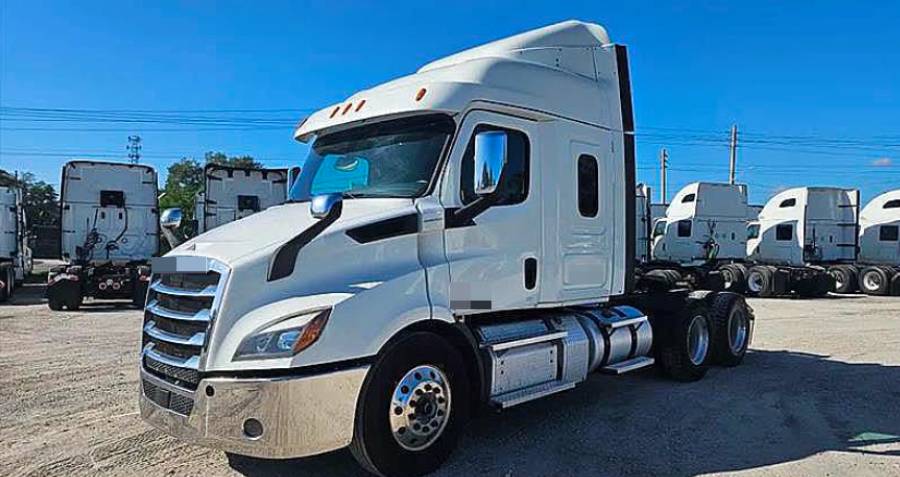
Freightliner Cascadia regen problems occur when the diesel particulate filter (DPF) regeneration system fails to start, complete, or operate at normal intervals. The most common causes include excessive soot accumulation, faulty exhaust temperature sensors, DPF differential pressure sensor malfunctions, fuel doser problems, and operating conditions that prevent proper regeneration. These issues can trigger DPF warning lights, repeated parked regeneration requests, and engine power derating when exhaust restrictions or aftertreatment faults become severe.
The Freightliner Cascadia uses a diesel aftertreatment system to reduce harmful exhaust emissions. During DPF regeneration, accumulated soot is burned off through elevated exhaust temperatures to maintain proper exhaust flow. When regeneration fails, soot can continue accumulating inside the filter, increasing exhaust backpressure and potentially affecting engine performance. However, not every regeneration warning indicates a clogged DPF, as sensor faults and unmet regeneration conditions can produce similar symptoms.
Diagnosing Freightliner Cascadia regen problems requires identifying warning signs, checking diagnostic trouble codes, evaluating DPF soot load, and inspecting relevant aftertreatment components. This guide explains the causes of regeneration failures, how to troubleshoot parked regen issues, available repair options, and preventive maintenance practices that help reduce recurring DPF problems.
What Are the Common Signs of Freightliner Cascadia Regen Problems?
The most common signs of Freightliner Cascadia regen problems include DPF warning lights, frequent regeneration requests, failed parked regeneration, increased exhaust backpressure, and engine power derating. These symptoms indicate that the diesel aftertreatment system is experiencing abnormal operating conditions or cannot complete the regeneration process as expected.
The DPF warning light is one of the earliest indicators of a regeneration issue. A solid DPF indicator generally signals that regeneration is needed, while a flashing indicator can indicate a more urgent condition, depending on the vehicle’s model year and warning configuration. A check engine light may also appear when the engine control system detects an aftertreatment fault. Drivers should check the dashboard message and applicable Freightliner operating instructions rather than assuming every DPF warning indicates a failed filter.
Frequent regeneration requests are another warning sign, particularly when the truck repeatedly requests parked regeneration shortly after completing a previous cycle. Regeneration frequency depends on engine load, driving conditions, and soot accumulation. However, unusually frequent requests can indicate excessive soot production, inaccurate sensor readings, or incomplete regeneration cycles.
Engine derating is a more serious consequence of certain regeneration-related faults. When the engine control system detects excessive soot loading or qualifying aftertreatment faults, it may restrict engine performance to protect components or enforce emissions-system requirements. Reduced power, limited vehicle speed, and additional dashboard warnings can accompany these conditions. The severity depends on the active fault and the vehicle’s engine control strategy.
What Causes Freightliner Cascadia Regen Problems?
Freightliner Cascadia regen problems primarily result from excessive DPF soot accumulation, faulty aftertreatment sensors, fuel doser malfunctions, and operating conditions that interfere with regeneration. These problems disrupt soot monitoring, exhaust temperature control, or the conditions required to initiate and complete a regeneration cycle.
Can a Clogged DPF Cause Regen Failure?
A clogged diesel particulate filter can prevent successful regeneration when soot accumulation exceeds the system’s allowable operating limits. The DPF captures particulate matter from diesel exhaust, and regeneration removes accumulated combustible soot by exposing it to sufficiently high temperatures. When soot loading becomes excessive, exhaust restriction increases and the engine control system may inhibit normal regeneration to prevent damage.
Soot accumulation can increase when the truck operates under conditions that produce insufficient exhaust heat for effective regeneration. Repeated interrupted regeneration cycles, excessive engine idling, and certain engine performance problems can accelerate this process. For example, a Cascadia operating primarily on short, low-load routes may have fewer opportunities to complete regeneration than a truck operating continuously under suitable highway conditions.
DPF restriction can also result from ash accumulation, which differs from combustible soot. Ash consists of noncombustible residue associated with engine oil additives and other sources. Unlike soot, ash cannot be removed through normal regeneration. A filter with excessive ash accumulation may require professional cleaning or replacement, even when the regeneration system is functioning correctly.
Can Faulty Sensors Prevent DPF Regeneration?
Faulty DPF differential pressure sensors and exhaust temperature sensors can interfere with regeneration by providing inaccurate information to the engine control system. These sensors help the system evaluate filter restriction and monitor exhaust temperatures during aftertreatment operation.
The DPF differential pressure sensor measures the pressure difference across the filter. This information contributes to evaluating exhaust restriction and filter condition. A defective sensor, damaged pressure tube, blocked sensing line, or electrical wiring fault can produce misleading readings. For example, an incorrectly elevated differential pressure reading may suggest excessive filter restriction even when the actual DPF condition is different.
Exhaust temperature sensors monitor temperatures at designated locations within the aftertreatment system. Their readings help the engine controller determine whether appropriate thermal conditions exist for regeneration. When a sensor reports an implausible temperature or fails electrically, the control system may interrupt or inhibit regeneration, depending on the specific fault.
Sensor-related regeneration problems should be diagnosed using fault codes and live operating data. Replacing the DPF without checking sensor accuracy can leave the original problem unresolved.
Can a Faulty Fuel Doser Cause Regen Problems?
A malfunctioning aftertreatment fuel doser can cause active DPF regeneration to fail by preventing the exhaust system from reaching the required regeneration temperature. In Detroit Diesel aftertreatment configurations that use an exhaust fuel dosing system, additional fuel supports heat generation through the diesel oxidation catalyst during active regeneration.
Fuel doser problems include restricted fuel delivery, injector deposits, electrical faults, and mechanical malfunctions. A doser that delivers insufficient fuel may prevent the aftertreatment system from achieving the temperatures necessary for effective soot oxidation. As a result, the regeneration cycle may take longer than expected, terminate unsuccessfully, or leave excessive soot in the DPF.
For example, a Freightliner Cascadia equipped with a Detroit DD15 engine may request regeneration but fail to achieve the expected exhaust temperature increase because of a fuel dosing or related aftertreatment fault. However, insufficient temperature alone does not confirm a defective doser. The diesel oxidation catalyst, temperature sensors, fuel supply, and control commands must also be evaluated before identifying the failed component.
Can Excessive Idling Cause Regen Problems?
Excessive engine idling can contribute to Freightliner Cascadia regen problems by reducing exhaust temperatures and limiting opportunities for effective DPF regeneration. Diesel engines operating at low load generally produce less exhaust heat than engines working under sustained driving conditions.
During extended idling, the aftertreatment system may not maintain the temperatures required for passive soot oxidation. Soot can continue accumulating, increasing the need for active regeneration. Although the truck’s control system can manage regeneration under certain operating conditions, prolonged low-load operation can make maintaining the DPF more difficult.
For example, a Cascadia used for deliveries with frequent stops and long idling periods may experience more regeneration requests than a comparable truck operating on sustained highway routes. Actual regeneration behavior also depends on engine calibration, ambient conditions, maintenance history, and vehicle duty cycle.
Reducing unnecessary idling and allowing required regeneration cycles to complete can help limit soot accumulation. However, driving at highway speed is not a guaranteed solution for a DPF that is already severely restricted or a regeneration system with active component faults.
How Do You Diagnose Freightliner Cascadia Regen Problems?
To diagnose Freightliner Cascadia regen problems, check the dashboard warnings, retrieve diagnostic trouble codes, evaluate DPF soot load, inspect exhaust pressure readings, and identify conditions that prevent regeneration. A systematic diagnosis helps distinguish a clogged DPF from sensor malfunctions, fuel dosing failures, and operating conditions that interrupt regeneration.
Start by recording all active warning lights and dashboard messages. Determine whether the truck is requesting regeneration, refusing to start a parked regen, or stopping regeneration before completion. These conditions indicate different diagnostic paths. For example, a regeneration request accompanied by a DPF warning light does not necessarily mean the filter is damaged, while repeated regeneration failures with active engine faults require further investigation.
A compatible diagnostic tool, such as Detroit DiagnosticLink for supported Detroit-powered Cascadia models, provides access to fault codes and aftertreatment operating data. Technicians can use this information to examine calculated soot load, exhaust temperatures, differential pressure, and regeneration status. The diagnostic procedure must match the truck’s model year, engine configuration, and aftertreatment system.
Which Fault Codes Indicate Regen Problems?
Freightliner Cascadia regen problems can be associated with fault codes involving DPF soot accumulation, exhaust temperature sensors, differential pressure sensors, fuel dosing components, and regeneration control conditions. These codes identify abnormal operating conditions and help technicians determine which systems require testing.
Detroit-powered Cascadia trucks commonly use diagnostic information that includes Suspect Parameter Numbers (SPNs) and Failure Mode Identifiers (FMIs). An SPN identifies the affected parameter or system, while an FMI describes the reported failure condition. The complete SPN/FMI combination, together with the engine configuration and manufacturer documentation, is necessary for accurate interpretation.
For example, SPN 3719 is associated with DPF soot loading information in applicable heavy-duty engine diagnostic systems. However, the specific FMI determines the reported condition and the appropriate troubleshooting procedure. A soot-related fault may indicate excessive calculated soot accumulation rather than proving that the DPF itself requires replacement.
Technicians should also distinguish active faults from previously recorded faults. An active exhaust temperature sensor fault may interfere with regeneration because the engine controller cannot reliably verify the required operating temperatures. An inactive fault provides diagnostic history but does not necessarily explain the current regeneration problem.
Fault codes should be evaluated alongside live sensor readings, operating conditions, and OEM troubleshooting procedures. Replacing components based only on a fault code can result in unnecessary repairs.
How Do You Check DPF Soot Load and Exhaust Pressure?
DPF soot load and exhaust differential pressure are checked using compatible diagnostic equipment and the aftertreatment sensor data reported by the engine control system. These measurements help determine whether regeneration problems involve excessive particulate accumulation, abnormal exhaust restriction, or inaccurate sensor information.
Calculated soot load is an estimate maintained by the engine control system using operating data and regeneration history. It is not always a direct physical measurement of the soot inside the filter. Technicians should compare the reported soot load with the applicable manufacturer thresholds before determining whether a normal regeneration, service procedure, or additional repair is appropriate.
The DPF differential pressure sensor measures the pressure difference between designated points across the filter. As exhaust restriction increases, differential pressure generally rises at comparable exhaust flow conditions. However, readings must be interpreted in relation to engine speed, exhaust flow, and manufacturer specifications. A high pressure reading at one operating condition cannot independently confirm a clogged DPF.
Sensor tubing and electrical connections also require inspection. Blocked pressure lines, damaged hoses, loose connectors, and defective sensors can produce incorrect measurements. For example, a restricted pressure sensing line may cause abnormal readings even when the DPF is not excessively loaded.
When soot load and pressure readings disagree, technicians should verify sensor operation before replacing the filter. This approach helps identify the actual cause of the regeneration problem and avoids unnecessary DPF replacement.
Why Won’t a Freightliner Cascadia Complete a Parked Regen?
A Freightliner Cascadia may fail to complete a parked regen because required operating conditions are not satisfied, active engine faults inhibit regeneration, exhaust temperatures remain insufficient, or the DPF soot load exceeds the permitted regeneration range. The exact reason depends on whether regeneration fails to start or begins but terminates before completion.
Parked regeneration requires specific vehicle and engine conditions before the system will initiate the process. Depending on the truck’s configuration, these typically include a stationary vehicle, transmission in neutral, parking brake applied, and appropriate engine operating conditions. The driver must also follow the applicable Freightliner and Detroit operating instructions. Certain active fault codes or regeneration inhibit settings can prevent the process from starting even when the truck appears correctly parked.
A parked regen that starts but stops prematurely requires a different diagnostic approach. The engine controller monitors operating conditions and aftertreatment temperatures throughout regeneration. If a required condition changes or the system detects a fault, regeneration may terminate before sufficient soot has been removed. For example, a faulty exhaust temperature sensor or inadequate fuel dosing can interfere with the temperature control required for successful regeneration.
Excessive soot loading presents another complication. When the engine control system determines that soot accumulation exceeds a calibrated safety threshold, it may restrict regeneration to prevent uncontrolled temperature increases or damage to the DPF. In this condition, repeatedly requesting parked regeneration does not resolve the underlying restriction and may be inappropriate.
Drivers should first review dashboard messages and confirm that the required parked regeneration conditions are satisfied. If the process repeatedly fails, technicians should retrieve active fault codes, review regeneration inhibit status, and evaluate aftertreatment sensor data before attempting further procedures.
Parked regeneration also produces extremely hot exhaust gases. It must be performed in a suitable location away from combustible materials, dry vegetation, and enclosed spaces without adequate exhaust ventilation. Drivers should never bypass safety interlocks or attempt unauthorized forced regeneration to overcome an active system fault.
A Freightliner Cascadia that repeatedly fails parked regeneration requires diagnosis of the underlying fault rather than repeated regeneration attempts. The correct repair depends on whether the failure originates from vehicle operating conditions, inaccurate sensor readings, insufficient exhaust temperature, or excessive DPF restriction.
How Do You Fix Freightliner Cascadia Regen Problems?
To fix Freightliner Cascadia regen problems, identify and repair the underlying fault, verify aftertreatment sensor operation, restore proper fuel dosing, and clean or replace the DPF when necessary. The correct repair depends on diagnostic trouble codes, soot load, exhaust pressure readings, and the condition of the aftertreatment components. A parked regeneration or service regeneration should only be performed when the engine control system permits it and the applicable manufacturer procedures are satisfied.
Regeneration problems caused by faulty sensors or electrical connections require different repairs from those caused by excessive soot or ash accumulation. For example, replacing a restricted DPF will not resolve a defective exhaust temperature sensor that prevents regeneration. Similarly, repairing a sensor will not remove noncombustible ash accumulated inside the filter. Accurate diagnosis prevents unnecessary component replacement and recurring regeneration failures.
How Do You Fix Sensor and Fuel Doser Problems?
Sensor-related regen problems are fixed by repairing damaged wiring, restoring sensor connections, clearing blocked pressure sensing lines, or replacing sensors confirmed to be defective. The DPF differential pressure sensor and exhaust temperature sensors provide information that the engine controller uses to monitor aftertreatment operation. Incorrect readings can interfere with regeneration even when the filter itself remains functional.
Technicians should inspect sensor connectors, wiring harnesses, and pressure sensing tubes before replacing components. Diagnostic equipment can help compare live sensor readings against expected operating conditions and manufacturer specifications. For example, an abnormal differential pressure reading with the engine stopped may indicate a sensor offset or pressure sensing problem rather than actual DPF restriction. The exact diagnostic criteria depend on the installed engine and aftertreatment system.
Fuel doser problems require verification of fuel delivery, electrical control, and component operation before repair or replacement. A restricted or malfunctioning aftertreatment fuel doser may prevent sufficient exhaust temperature increases during active regeneration. Technicians should follow the applicable Detroit Diesel diagnostic procedures to determine whether the problem involves the doser, fuel supply, electrical circuit, or another component affecting exhaust temperature.
After repairing a confirmed sensor or fuel dosing fault, technicians should verify that live operating data has returned to the specified range. Diagnostic trouble codes should be cleared according to the manufacturer procedure after the underlying fault is corrected. A subsequent regeneration verification or approved aftertreatment test can confirm whether the repair restored normal operation.
When Should You Clean or Replace the DPF?
A Freightliner Cascadia DPF should be professionally cleaned when accumulated ash or removable deposits cause excessive restriction and the filter remains structurally serviceable. DPF cleaning is different from regeneration because regeneration removes combustible soot, while specialized cleaning procedures remove noncombustible ash and other retained deposits.
Professional DPF cleaning may involve controlled thermal treatment, pneumatic cleaning, or other approved methods suited to the filter’s construction and condition. Before cleaning, technicians should evaluate differential pressure, maintenance history, and signs of physical damage. A filter containing excessive ash may continue restricting exhaust flow even after a successful regeneration because ash does not burn away during normal DPF operation.
DPF replacement is necessary when the filter is damaged, cannot be restored to acceptable operating specifications, or fails the applicable inspection criteria. Cracked filter substrates, melted internal structures, and certain forms of severe contamination can make cleaning ineffective. For example, a filter damaged by excessive heat may require replacement because cleaning cannot restore the original internal structure.
A service regeneration may be appropriate when soot loading and system conditions fall within the manufacturer’s permitted range. Unlike a routine driver-initiated parked regen, service regeneration is performed using approved diagnostic procedures and equipment. It is not a substitute for repairing failed sensors, fuel dosing problems, or a damaged DPF. Excessive soot loading may make regeneration unsafe or cause the engine controller to prohibit the procedure.
After DPF cleaning or replacement, technicians should perform the required installation checks, diagnostic resets or adaptations, and operating verification specified for the engine configuration. This may include confirming exhaust pressure readings, checking for leaks, and verifying that regeneration-related faults no longer return.
A successful repair restores the aftertreatment system’s ability to monitor soot accumulation and complete regeneration under appropriate operating conditions. Replacing parts without confirming the root cause can allow the same Freightliner Cascadia regen problems to reappear.
How Often Should a Freightliner Cascadia Regenerate?
A Freightliner Cascadia should regenerate whenever the diesel particulate filter reaches the soot loading threshold established by the engine control system. There is no fixed regeneration interval that applies to every Cascadia because regeneration frequency depends on engine load, driving conditions, exhaust temperature, and the condition of the aftertreatment system.
Freightliner Cascadia trucks equipped with Detroit DD13, DD15, or DD16 engines use aftertreatment control strategies that monitor soot accumulation and initiate active regeneration when necessary. During sustained highway operation, sufficiently high exhaust temperatures can support passive regeneration, which oxidizes soot without requiring a separate parked regeneration event. Active regeneration uses additional heat management to remove accumulated soot when normal operating temperatures are insufficient.
Frequent regeneration becomes a potential warning sign when requests occur substantially more often than the truck’s established operating pattern or return shortly after a completed cycle. Excessive soot production, interrupted regeneration, inaccurate differential pressure readings, and aftertreatment component faults can contribute to this behavior. For example, a Cascadia that repeatedly requests parked regeneration after completing a previous cycle may have an unresolved sensor problem or excessive soot accumulation.
Drivers should monitor changes in regeneration frequency rather than relying on a universal mileage interval. Comparing regeneration history, diagnostic fault codes, and engine operating conditions helps determine whether the frequency is normal for the truck’s duty cycle. A significant change in regeneration behavior warrants inspection before excessive DPF restriction develops.
How Much Does It Cost to Fix Freightliner Cascadia Regen Problems?
The cost of fixing Freightliner Cascadia regen problems depends on the failed component, diagnostic labor, DPF condition, and required repair procedure. Sensor wiring repairs and minor electrical faults generally involve less extensive work than professional DPF cleaning or complete filter replacement. However, the final repair cost depends on the truck’s model year, engine configuration, parts availability, and local commercial truck service rates.
The following table compares common regeneration-related repairs and the factors that influence their costs.
| Repair Type | Main Cost Factors |
|---|---|
| Diagnostic inspection | Technician labor, diagnostic equipment, testing time |
| Sensor repair or replacement | Sensor type, wiring condition, parts and labor |
| Fuel doser repair | Fuel delivery diagnosis, component condition, replacement parts |
| DPF cleaning | Filter removal, cleaning method, inspection, reinstallation |
| DPF replacement | Filter assembly, OEM or approved replacement parts, installation labor |
| Service regeneration | Diagnostic labor, equipment use, required monitoring |
DPF replacement is generally a more extensive repair than sensor replacement because it involves a major exhaust aftertreatment component and additional installation work. A damaged filter may require replacement, while an ash-loaded but structurally sound filter may qualify for professional cleaning. For example, a DPF with excessive ash accumulation may be restored through an approved cleaning procedure, avoiding the expense of replacing an otherwise serviceable filter.
Repair estimates should distinguish diagnostic charges, replacement parts, labor, and any additional aftertreatment testing. Exact prices should be obtained from a qualified repair facility because costs vary by location and vehicle configuration. Before authorizing a major repair, truck owners should request confirmation of the failed component and the diagnostic evidence supporting replacement.
Addressing regeneration problems early can help avoid additional repair work associated with prolonged operation under excessive exhaust restriction. However, the lowest initial repair estimate is not necessarily the most economical option if the underlying fault remains unresolved.
Read more: Freightliner Cascadia NOx Sensor: Location & Symptoms
How Can You Prevent Freightliner Cascadia Regen Problems?
To prevent Freightliner Cascadia regen problems, reduce unnecessary engine idling, follow scheduled DPF maintenance, address aftertreatment fault codes promptly, and allow regeneration cycles to complete under appropriate operating conditions. These practices help control soot accumulation, maintain accurate aftertreatment monitoring, and reduce the risk of recurring regeneration failures.
Reducing excessive idling helps limit soot accumulation associated with prolonged low-load engine operation. Diesel engines generally produce lower exhaust temperatures during extended idling, which reduces opportunities for passive DPF regeneration. For example, a Cascadia operating on long highway routes may maintain more favorable exhaust temperatures than a truck that spends several hours idling between deliveries. Drivers should minimize unnecessary idling while following operational requirements and manufacturer recommendations.
Regular aftertreatment maintenance is equally important. The DPF collects both combustible soot and noncombustible ash, but normal regeneration removes only soot. Ash gradually accumulates and must be addressed through approved cleaning or replacement procedures when required. Following the applicable Detroit Diesel maintenance schedule and using engine oil that meets the specified approval helps maintain aftertreatment performance. Maintenance intervals should reflect the engine model, operating conditions, and manufacturer requirements.
Addressing active fault codes early helps prevent minor aftertreatment problems from developing into regeneration failures. Faulty exhaust temperature sensors, damaged pressure sensing lines, and fuel dosing malfunctions can interfere with regeneration control. For example, repairing a defective temperature sensor before repeated regeneration failures occur may prevent additional soot accumulation caused by unsuccessful regeneration cycles.
Drivers should also avoid unnecessarily interrupting an active regeneration cycle when safe and practical. Repeated interruptions can leave soot incompletely oxidized and increase the need for subsequent regeneration. However, regeneration should never take priority over safe vehicle operation, and drivers must follow dashboard instructions and applicable operating procedures.
Can You Drive a Freightliner Cascadia With Regen Problems?
A Freightliner Cascadia may remain drivable with certain regeneration warnings, but continued operation depends on the warning severity, active fault codes, and engine operating restrictions. A routine regeneration request does not automatically require the driver to stop immediately. However, flashing DPF warnings, engine derating, and critical engine alerts can indicate conditions that require prompt attention or immediate action.
When the dashboard displays a normal regeneration request without critical warnings, the driver should follow the applicable Freightliner operating instructions. Depending on the vehicle configuration and operating conditions, regeneration may occur during continued driving or require an approved parked regeneration procedure. A driver should not assume that highway driving will resolve a regeneration problem when active faults prevent the system from operating correctly.
Engine derating indicates that the control system has restricted engine performance in response to a qualifying fault or operating condition. Reduced engine power or vehicle speed can make continued operation difficult, particularly when climbing grades, merging into traffic, or carrying heavy loads. Drivers should assess the warning messages, move to a safe location when necessary, and arrange professional diagnosis rather than repeatedly attempting regeneration.
A red stop-engine warning requires following the manufacturer’s immediate-action instructions. Depending on the warning and operating conditions, this can mean stopping the vehicle safely and shutting down the engine. Continuing to drive against critical warnings can increase the risk of equipment damage or unsafe operation.
A Freightliner Cascadia with repeated regeneration failures, severe DPF restriction, or unresolved aftertreatment faults should be inspected by a qualified diesel technician. The safest decision depends on the specific fault and the truck’s operating condition, not simply whether the engine can still run.