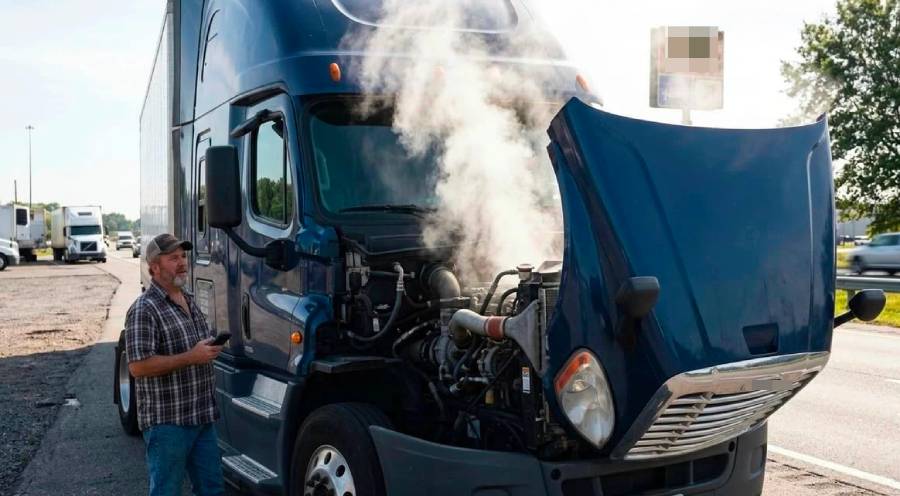
Freightliner Cascadia overheating is commonly caused by low coolant levels, coolant leaks, a faulty thermostat, a clogged radiator, a malfunctioning cooling fan, or a failing water pump. These problems prevent the cooling system from removing engine heat efficiently, causing coolant temperatures to rise beyond normal operating levels. Overheating can occur while driving, climbing hills, hauling heavy loads, or idling, depending on the affected component.
Common signs of Freightliner Cascadia overheating include rising coolant temperature readings, dashboard warning messages, coolant loss, and reduced engine power. On trucks equipped with Detroit DD13, DD15, or DD16 engines, the engine protection system may reduce power or trigger shutdown warnings when critical operating limits are reached. The specific warning behavior and temperature thresholds depend on the engine configuration and model year.
Identifying the cause early is essential because continued operation with an overheating engine can damage cylinder head gaskets, cylinder heads, and other internal engine components. This guide explains the main causes of Freightliner Cascadia overheating, how to recognize cooling system failures, which diagnostic checks help identify the problem, and what repairs are needed to restore normal engine temperature.
What Causes a Freightliner Cascadia to Overheat?
Freightliner Cascadia overheating has five common cooling system causes: low coolant levels, a faulty thermostat, cooling fan failure, radiator blockage, and water pump malfunction. Each problem disrupts heat removal by reducing coolant circulation, restricting airflow, or preventing the engine from maintaining its intended operating temperature. The exact cause depends on whether overheating occurs at idle, under heavy loads, or during highway driving.
The cooling system uses a water pump to circulate coolant through the engine, a thermostat to regulate coolant flow, and a radiator to release heat into the surrounding air. A cooling fan provides additional airflow when vehicle speed or operating conditions require it. When one of these components fails, engine temperature can rise faster than the system can remove heat.
Can Low Coolant Cause a Freightliner Cascadia to Overheat?
Low coolant can cause a Freightliner Cascadia to overheat because insufficient coolant reduces the cooling system’s ability to absorb and transfer engine heat. As coolant volume decreases, air can enter the system, interrupting circulation and creating localized hot spots around engine components.
Coolant loss commonly results from leaking radiator hoses, damaged connections, a cracked coolant reservoir, a failing water pump seal, or radiator damage. A defective pressure cap can also allow coolant to escape when system pressure increases. These problems may produce visible coolant stains, puddles beneath the truck, or repeated low coolant warnings.
For example, a Freightliner Cascadia with a leaking radiator hose may maintain an acceptable temperature during light driving but begin overheating when climbing a hill with a heavy trailer. Higher engine loads generate additional heat, while the reduced coolant volume limits the cooling system’s ability to dissipate it.
Checking the coolant level in the surge tank after the engine has completely cooled is an important initial diagnostic step. However, adding coolant does not resolve overheating caused by an active leak. The damaged component must be identified and repaired, and the system must be refilled according to the applicable engine manufacturer’s specifications.
Can a Bad Thermostat Cause a Freightliner Cascadia to Overheat?
A faulty thermostat can cause Freightliner Cascadia overheating when it remains closed or fails to open sufficiently as engine temperature increases. The thermostat regulates coolant circulation through the radiator, allowing the engine to warm up efficiently before directing more coolant through the cooling circuit.
When a thermostat becomes stuck closed, hot coolant cannot circulate through the radiator at the required rate. Heat accumulates inside the engine, causing coolant temperature to rise. A partially opening thermostat can produce similar symptoms, particularly during acceleration, hill climbing, or heavy hauling.
For example, a Freightliner Cascadia equipped with a Detroit DD15 engine may show normal coolant temperature shortly after startup but experience a continuing temperature increase as the engine reaches operating conditions. Restricted coolant flow through the thermostat is one possible explanation, although radiator restrictions and water pump problems can produce similar symptoms.
A thermostat stuck open generally causes slow engine warm-up or unusually low operating temperatures rather than overheating. Mechanics should confirm thermostat operation and inspect related cooling system components before replacing it, since high coolant temperature alone does not establish thermostat failure.
Can a Faulty Cooling Fan Cause a Freightliner Cascadia to Overheat?
A malfunctioning cooling fan can cause Freightliner Cascadia overheating by reducing airflow through the radiator when additional cooling is required. This problem is especially noticeable during idling, slow-speed driving, and stop-and-go traffic because the truck receives less natural airflow than it does at highway speeds.
Depending on the model year and engine configuration, the cooling fan system may use an electronically controlled fan clutch with associated electrical or pneumatic controls. The engine control system determines when additional fan operation is required based on operating conditions and temperature-related inputs.
A fan clutch that fails to engage, a damaged control circuit, or an incorrect sensor signal can prevent adequate airflow through the radiator. For example, a Cascadia may maintain normal coolant temperature at highway speeds but begin overheating during prolonged idling. This pattern suggests an airflow-related problem, although low coolant or restricted coolant circulation must also be considered.
Radiator blockage can produce similar overheating symptoms. Dirt, road debris, insects, and other material accumulating on the radiator or charge-air cooler surfaces restrict airflow and reduce heat transfer. Internal radiator deposits or restrictions can also limit coolant movement through the radiator.
Water pump failure is another potential cause. A damaged impeller, bearing problem, or pump-related coolant leak can interfere with coolant circulation and reduce cooling efficiency. Overheating accompanied by coolant leakage near the pump or unusual mechanical noise warrants further inspection.
Diagnosing cooling fan problems requires checking fan operation, control signals, and related fault codes under the correct operating conditions. Because engine cooling fans can engage unexpectedly, inspections near rotating components should be performed by qualified technicians using appropriate safety procedures.
What Are the Symptoms of Freightliner Cascadia Overheating?
The main symptoms of Freightliner Cascadia overheating are rising coolant temperature, dashboard temperature warnings, engine power reduction, coolant loss, and visible steam from the cooling system. These symptoms indicate that the engine is generating more heat than the cooling system can remove or that a cooling system component is no longer functioning correctly.
A rising coolant temperature reading is one of the earliest signs of overheating. Under normal operating conditions, the cooling system regulates engine temperature through coolant circulation, thermostat operation, and radiator airflow. When the temperature continues increasing beyond the engine’s specified operating range, the dashboard may display a high coolant temperature warning. The exact warning thresholds vary by engine model, calibration, and vehicle configuration.
Engine power reduction is another important warning sign. Freightliner Cascadia trucks equipped with compatible Detroit Diesel engine protection systems can enter a derate condition when the engine control module detects excessive coolant temperature. This protective response limits engine output to reduce thermal stress. More severe conditions may trigger a stop-engine warning or an engine shutdown sequence, depending on the programmed protection settings.
Coolant loss and visible steam can indicate a more serious cooling system problem. Excessive temperature increases cooling system pressure, potentially forcing coolant through a defective pressure cap, damaged hose, or leaking connection. Steam escaping from the engine compartment may indicate coolant contacting hot surfaces or escaping from an overheated system.
For example, a Freightliner Cascadia climbing a long grade with a loaded trailer may display a steadily increasing coolant temperature followed by an engine warning and reduced power. This combination suggests that the cooling system cannot maintain the required temperature under load. However, an incorrect coolant temperature sensor reading or electrical fault can also produce temperature-related warnings without actual overheating.
Drivers should treat high-temperature warnings as potentially serious until the engine temperature and cooling system condition have been verified. Continuing to operate an overheating engine increases the risk of cylinder head distortion, head gasket failure, and internal engine damage.
What Should You Do When a Freightliner Cascadia Overheats?
When a Freightliner Cascadia overheats, reduce engine load, pull over in a safe location, and follow the dashboard warnings and engine manufacturer’s shutdown instructions. Continuing to drive with excessive coolant temperature can turn a cooling system malfunction into major engine damage.
First, move the truck away from traffic as soon as conditions permit. Avoid hard acceleration and additional engine load while reaching a safe stopping location. If a stop-engine warning appears, follow the applicable engine protection procedure. Do not continue driving simply because the truck remains capable of moving.
Once the truck is safely stopped, shut down the engine when required by the warning system or manufacturer’s instructions. Do not assume that prolonged idling will resolve severe overheating. Although some operating procedures call for a controlled cooldown under specific conditions, critical temperature warnings, coolant loss, or visible steam require particular caution.
Allow the engine and cooling system to cool before inspecting the coolant reservoir. Never remove the pressure cap from a hot cooling system because pressurized coolant and steam can cause severe burns. After the system has cooled, check for visible coolant leaks, damaged hoses, and an abnormally low coolant level without touching hot or moving components.
For example, if a Freightliner Cascadia overheats and leaves a coolant puddle beneath the engine compartment, restarting the truck before identifying the leak can result in further coolant loss and rapid temperature increases. The cooling system should be inspected and the damaged component repaired before normal operation resumes.
Professional assistance is necessary when overheating persists, coolant escapes rapidly, the engine displays critical protection warnings, or the cause cannot be identified through safe visual checks. A qualified diesel technician can perform cooling system pressure testing, inspect coolant circulation, and retrieve engine fault codes to determine whether the truck can safely return to service.
How Do You Diagnose Freightliner Cascadia Overheating Problems?
Diagnosing Freightliner Cascadia overheating requires checking the coolant level, inspecting the radiator and cooling fan, testing coolant circulation, and reviewing engine fault codes. These checks help identify whether excessive engine temperature results from coolant loss, restricted airflow, mechanical failure, or incorrect temperature readings. The diagnostic process should begin with visible cooling system conditions before progressing to component testing.
The conditions under which overheating occurs provide important diagnostic clues. A truck that overheats primarily at idle may have insufficient radiator airflow, while overheating during heavy hauling can indicate restricted coolant circulation or inadequate heat dissipation. Repeated overheating accompanied by coolant loss suggests a leak or pressure-related problem. These patterns narrow the possible causes but do not confirm a specific component failure.
How Do You Check the Coolant Level on a Freightliner Cascadia?
To check the coolant level on a Freightliner Cascadia, park the truck on level ground, allow the engine to cool completely, and inspect the coolant level through the surge tank. The coolant should meet the appropriate cold-level marking specified for the vehicle. A level below the required mark indicates insufficient coolant and requires further investigation.
Inspect the surge tank, radiator hoses, hose connections, and accessible cooling system components for signs of leakage. Dried coolant residue, wet connections, and puddles beneath the engine compartment can help locate external leaks. Coolant loss without visible external leakage may require additional testing to identify internal leaks or coolant escaping only when the system is pressurized.
Coolant condition also provides diagnostic information. Oil contamination, excessive sediment, or abnormal discoloration can indicate cooling system contamination or mechanical problems. However, coolant color alone does not establish whether the fluid meets the required specification. Freightliner Cascadia trucks with Detroit DD13, DD15, or DD16 engines must use coolant compatible with the applicable engine manufacturer’s requirements.
For example, a Cascadia that repeatedly displays a low coolant warning after the reservoir has been refilled may have a small leak that becomes noticeable only when the engine reaches operating temperature. A cooling system pressure test can help locate leaks that are difficult to identify during a visual inspection.
Never remove the surge tank pressure cap while the cooling system is hot. Pressurized coolant can escape suddenly and cause serious burns. Any required pressure testing should be performed on a cooled system using the correct equipment and manufacturer-specified test pressure.
How Do You Check the Radiator and Cooling Fan on a Freightliner Cascadia?
Checking the Freightliner Cascadia radiator and cooling fan involves inspecting airflow restrictions, examining visible component damage, and verifying fan operation under the appropriate engine operating conditions. Both components are essential for transferring heat from the coolant to the surrounding air.
Start by inspecting the radiator and charge-air cooler surfaces for accumulated dirt, insects, road debris, or damaged fins. Material trapped between cooling components can restrict airflow even when the front-facing surfaces appear relatively clean. Restricted airflow reduces the radiator’s ability to dissipate heat, especially during heavy engine loads or high ambient temperatures.
The cooling fan should engage when commanded by the engine control system. Depending on the vehicle configuration, fan operation may be controlled through an electronically managed clutch and associated electrical or pneumatic components. A fan that fails to engage when required can cause coolant temperature to increase during idling or low-speed operation.
For example, a Freightliner Cascadia that overheats while waiting in traffic but maintains normal temperature at highway speeds may have a cooling fan control problem. Highway airflow can provide sufficient radiator cooling while the truck is moving, masking a fan malfunction that becomes apparent when vehicle speed decreases.
A qualified technician can use diagnostic equipment to compare commanded fan operation with actual fan response. This process helps distinguish a defective fan clutch from problems involving control circuits, sensors, or related components. Fan engagement should never be tested by placing hands or tools near rotating components because the fan can activate unexpectedly.
Radiator and fan inspections should be followed by coolant circulation testing when airflow problems are not found. A thermostat that fails to open correctly can restrict coolant movement through the radiator, while a damaged water pump can reduce circulation throughout the engine. These failures may produce similar overheating symptoms and require component-specific testing.
Engine diagnostic fault codes provide additional evidence. A compatible heavy-duty diagnostic scanner can retrieve active and stored faults, display coolant temperature sensor readings, and examine relevant engine operating data. Comparing electronic temperature readings with independent measurements can help identify inaccurate sensor signals.
For example, a dashboard high-temperature warning accompanied by an implausible coolant temperature reading may indicate a sensor or wiring problem rather than actual overheating. Conversely, confirmed high coolant temperature combined with inadequate fan operation supports further investigation of the cooling fan system.
The diagnostic process is complete only when the suspected fault has been verified and the cooling system maintains the specified operating temperature under appropriate test conditions. Replacing components based solely on overheating symptoms can lead to unnecessary repair costs without correcting the underlying problem.
How Do You Fix a Freightliner Cascadia That Keeps Overheating?
Fixing a Freightliner Cascadia that keeps overheating requires repairing the confirmed cooling system fault, restoring proper coolant circulation, and verifying that the engine maintains its specified operating temperature. The most common repairs involve fixing coolant leaks, replacing a defective thermostat, cleaning or repairing the radiator, restoring cooling fan operation, or replacing a failing water pump. The correct repair depends on diagnostic findings rather than the overheating warning alone.
Coolant leaks must be repaired before the cooling system can operate reliably. Damaged radiator hoses, loose connections, cracked surge tanks, and leaking radiator components allow coolant to escape and reduce the system’s heat-transfer capacity. A technician should identify the leak source through visual inspection or pressure testing, replace the damaged component, and refill the system with coolant that meets the engine manufacturer’s specifications.
For example, a Freightliner Cascadia with a leaking upper radiator hose may continue losing coolant after each refill. Replacing the damaged hose and securing its connections restores the system’s ability to retain coolant, provided no additional leaks are present. After the repair, the cooling system must be filled and purged of trapped air according to the applicable service procedure. Remaining air pockets can interfere with coolant circulation and contribute to recurring temperature problems.
A defective thermostat requires replacement when testing confirms that it does not regulate coolant flow correctly. A thermostat stuck closed restricts coolant movement through the radiator, allowing heat to accumulate inside the engine. Replacing the thermostat restores the intended flow regulation, but technicians must also inspect related components because radiator restrictions and water pump failures can produce similar symptoms.
Radiator problems require different repairs depending on whether the restriction is external or internal. Dirt, insects, and road debris blocking the cooling surfaces should be removed using cleaning methods approved for the radiator and charge-air cooler assembly. Excessive cleaning pressure can bend cooling fins and reduce airflow. Internal restrictions, damaged radiator passages, or significant corrosion may require professional servicing or radiator replacement.
Cooling fan problems must be corrected by identifying the failed mechanical or control component. A defective fan clutch may prevent the fan from delivering sufficient airflow during idling or low-speed driving. Electrical faults, damaged wiring, or pneumatic control problems can also interfere with fan engagement, depending on the truck’s configuration. Replacing a fan clutch without verifying its control system may leave the original overheating problem unresolved.
For example, a Cascadia that overheats at idle but cools down during highway driving may require cooling fan diagnostics. If testing confirms that the engine control system commands fan engagement but the fan clutch fails to respond, repairing or replacing the defective clutch can restore the required airflow. Technicians should verify fan operation using the appropriate diagnostic procedure after completing the repair.
A failing water pump must be repaired or replaced when testing confirms inadequate coolant circulation, mechanical damage, or leakage from the pump assembly. The water pump moves coolant through the engine and radiator, making it essential for continuous heat removal. A damaged impeller, worn bearing, or failed seal can compromise cooling performance. Water pump replacement should follow the engine-specific service procedure, including inspection of related seals, drive components, and coolant connections.
Persistent overheating after these repairs requires further investigation. Possible underlying problems include combustion gases entering the cooling system, a damaged cylinder head gasket, internal coolant restrictions, or inaccurate temperature sensor readings. A combustion gas test, cooling system pressure test, and additional engine diagnostics can help distinguish these faults from ordinary cooling system component failures.
After completing any overheating repair, the technician should verify coolant level, inspect for leaks, confirm proper fan operation, and monitor engine temperature under suitable operating conditions. The engine should maintain the temperature range specified for its configuration without repeated warnings or unexplained coolant loss.
A Freightliner Cascadia should not return to normal hauling operations until the cause of overheating has been corrected and cooling system performance has been verified. This final check reduces the risk of repeated breakdowns, unnecessary component replacements, and expensive internal engine damage.
Why Does a Freightliner Cascadia Overheat While Driving but Not at Idle?
A Freightliner Cascadia that overheats while driving but maintains normal temperature at idle may have insufficient cooling capacity under engine load, restricted coolant circulation, or reduced radiator efficiency. Driving under heavy loads generates more engine heat than idling, placing greater demand on the cooling system. When the radiator, thermostat, or water pump cannot manage this additional heat, coolant temperature rises even though the engine operates normally at lower loads.
Heavy hauling and uphill driving increase engine workload because the engine must produce additional power to move the truck and trailer. This increases fuel consumption and heat generation. A partially restricted radiator or thermostat may provide enough cooling during idling but fail to maintain the required temperature during sustained acceleration or climbing.
For example, a Freightliner Cascadia equipped with a Detroit DD15 engine may maintain stable coolant temperature while parked but experience rising temperatures when pulling a loaded trailer uphill. This pattern can indicate insufficient heat dissipation, restricted coolant flow, or a cooling system component that cannot meet higher thermal demands. The symptom alone does not identify which component has failed.
Restricted airflow through the radiator can also contribute to overheating while driving. Dirt, insects, and road debris accumulating between the charge-air cooler and radiator reduce the amount of air passing through the cooling surfaces. Although highway speeds increase natural airflow, severe restrictions can prevent adequate heat transfer during high-load operation.
Diagnosing load-related overheating requires examining radiator cleanliness, coolant circulation, thermostat operation, and cooling fan performance. Technicians should also review engine operating data and verify that coolant temperature increases correspond with actual engine load. Identifying the specific restriction or component failure prevents unnecessary repairs and repeated overheating during hauling.
Why Does a Freightliner Cascadia Overheat at Idle?
A Freightliner Cascadia that overheats at idle commonly has inadequate radiator airflow, a malfunctioning cooling fan, or reduced cooling system efficiency at low engine speeds. Unlike highway driving, idling produces little natural airflow through the radiator. The cooling fan must provide sufficient airflow to remove engine heat when vehicle movement cannot support radiator cooling.
Cooling fan malfunction is an important cause of idle-related overheating. Depending on the truck’s model year and configuration, the fan clutch and its control system regulate additional airflow based on engine operating conditions. A clutch that fails to engage or a faulty control circuit can reduce cooling performance while the truck remains stationary.
For example, a Freightliner Cascadia may display increasing coolant temperature while idling at a loading dock but return to normal operating temperature after reaching highway speed. This behavior suggests that natural airflow is compensating for insufficient fan-assisted cooling. However, radiator restrictions, low coolant levels, and other cooling system faults can produce similar symptoms.
Reduced coolant circulation can also contribute to overheating at idle. A deteriorating water pump or partially restricted cooling passage may limit heat transfer when coolant flow is relatively low. These problems can become more noticeable during extended idling, particularly when ambient temperatures are high or the engine is operating with additional accessory loads.
A qualified technician should verify cooling fan engagement, inspect the radiator for airflow restrictions, and evaluate coolant circulation under the relevant operating conditions. Diagnostic equipment can help determine whether the engine control system is requesting fan operation and whether the fan responds correctly.
The main diagnostic difference is that overheating while driving points toward insufficient cooling capacity under load, while overheating at idle places greater emphasis on fan-assisted airflow and low-speed cooling performance. Neither pattern confirms a specific failure without additional testing.
Read more: Freightliner M2 No Throttle Response: Causes & Fixes
How Much Does It Cost to Fix Freightliner Cascadia Overheating?
The cost of fixing Freightliner Cascadia overheating depends on the failed cooling system component, engine configuration, labor requirements, and extent of engine damage. Repairs involving coolant hoses or thermostat replacement are generally less complex than radiator replacement, water pump replacement, or repairs involving internal engine damage. An accurate estimate requires identifying the underlying failure before selecting replacement parts.
Coolant leak repairs vary according to the location and severity of the leak. Replacing a damaged hose or clamp generally requires fewer parts and less labor than replacing a leaking radiator or water pump assembly. However, leaks that are difficult to locate may require additional diagnostic labor, including cooling system pressure testing and inspection of components that are not easily accessible.
Thermostat replacement costs depend on the engine model, thermostat housing design, and labor needed to access the component. Radiator repairs can become more expensive when technicians must remove surrounding cooling components or replace the radiator assembly. Cooling fan repairs also vary because a malfunction may originate from the fan clutch, electrical wiring, pneumatic controls, or related sensors rather than the fan itself.
Water pump replacement typically involves additional labor because the technician must drain coolant, remove necessary components, replace the defective pump, and restore the cooling system. Costs increase when related seals, hoses, or drive components also require replacement. Freightliner Cascadia trucks equipped with different Detroit Diesel or Cummins engines may have different parts and service requirements.
For example, replacing a leaking coolant hose is a substantially different repair from correcting overheating caused by a damaged cylinder head gasket. The first addresses an external cooling system leak, while the second can involve extensive engine disassembly, additional diagnostic testing, and significant labor.
Repair estimates should separate parts, labor, diagnostic fees, coolant replacement, and any necessary additional services. Dealership rates, independent diesel repair shop rates, regional labor costs, and parts availability can all affect the final bill. Roadside service and towing may also increase the total expense when the truck cannot be driven safely.
The most reliable way to control Freightliner Cascadia overheating repair costs is to diagnose the failure before replacing components. Confirming whether the problem involves coolant loss, airflow restriction, or coolant circulation helps avoid unnecessary repairs and reduces the likelihood of repeated breakdowns.
How Can You Prevent Freightliner Cascadia Engine Overheating?
Preventing Freightliner Cascadia engine overheating requires maintaining the correct coolant level, keeping the radiator clean, inspecting cooling system components, and following manufacturer-recommended maintenance intervals. These practices help preserve coolant circulation, radiator airflow, and heat-transfer efficiency during idling, highway driving, and heavy hauling.
Coolant level inspection should be part of the truck’s routine pre-trip maintenance. Check the surge tank when the engine is cool and confirm that the coolant reaches the appropriate cold-level marking. A decreasing coolant level should prompt inspection for leaks rather than repeated refilling without identifying the cause. The coolant must also meet the specifications required for the installed engine and cooling system.
Radiator maintenance is equally important because dirt, insects, and road debris can accumulate on cooling surfaces over time. Restricted airflow reduces heat dissipation and increases the cooling system’s workload. Inspect the radiator and charge-air cooler for external blockage, damaged fins, and debris trapped between cooling components. Cleaning should follow the manufacturer’s recommended procedures to avoid damaging the cooling surfaces.
Cooling system hoses, clamps, and connections should be inspected for cracks, swelling, deterioration, and coolant residue. These conditions can indicate developing leaks that may worsen under operating pressure. The surge tank and pressure cap also require attention because maintaining the correct system pressure is necessary for reliable cooling performance.
For example, a Freightliner Cascadia operating on dusty construction routes may accumulate debris around its cooling package faster than a truck primarily used on clean highways. More frequent visual inspections help identify airflow restrictions before they contribute to overheating during heavy hauling or hot weather.
Cooling fan operation should be evaluated whenever abnormal temperature patterns appear. A truck that repeatedly runs hotter at idle than at highway speed may have an airflow or fan control problem requiring professional diagnosis. Early inspection can prevent a minor control issue from developing into repeated overheating incidents.
Coolant maintenance must follow the applicable Freightliner and engine manufacturer’s service requirements. Coolant replacement intervals depend on the approved coolant formulation, engine configuration, and maintenance schedule. Technicians should also perform the required coolant condition testing when specified. Mixing incompatible coolant formulations or using an unapproved product can compromise corrosion protection and cooling system reliability.
Drivers should monitor coolant temperature during demanding operating conditions, including steep grades, heavy trailer loads, and prolonged idling. A temperature reading that consistently rises beyond the expected operating range deserves investigation even when no critical warning has appeared. Comparing temperature behavior under similar operating conditions can help identify developing cooling system problems.
Regular cooling system inspections and timely repairs are the most effective ways to reduce recurring Freightliner Cascadia overheating. Maintaining coolant quality, repairing leaks, preserving radiator airflow, and verifying fan operation help protect engine components and reduce unexpected downtime.