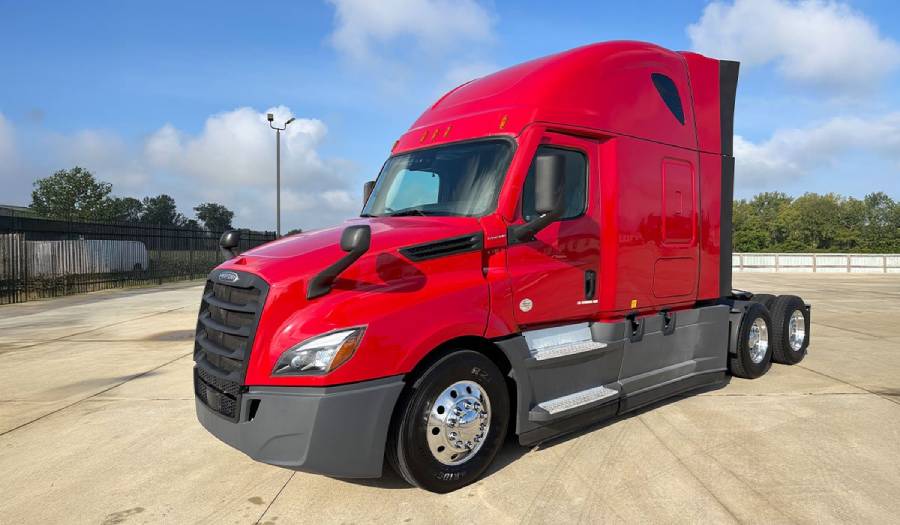
Freightliner Cascadia ignition switch problems can cause intermittent starting, no-crank conditions, loss of dashboard power, and difficulty turning the ignition key. These issues occur when the ignition switch fails to provide the electrical signals required to activate the truck’s ignition-controlled circuits or initiate the starting process. Worn internal contacts, damaged wiring, loose electrical connectors, and mechanical problems with the ignition lock cylinder are potential causes.
A faulty ignition switch does not always prevent the engine from starting completely. Some Freightliner Cascadia trucks experience intermittent electrical failures, where the dashboard powers on normally during one attempt but fails during the next. Similar symptoms can result from weak batteries, defective starter components, blown fuses, or poor ground connections. Distinguishing between these faults is essential because replacing the ignition switch will not resolve problems originating elsewhere in the electrical system.
Diagnosing Freightliner Cascadia ignition switch problems requires checking the symptoms, inspecting electrical connections, and testing the ignition circuit before replacing components. This guide explains the common warning signs, underlying causes, diagnostic procedures, repair options, and replacement costs. It also covers model-year differences and preventive maintenance practices to help truck owners and technicians identify ignition-related failures accurately and avoid unnecessary repairs.
What Are the Symptoms of a Bad Freightliner Cascadia Ignition Switch?
The four main symptoms of a bad Freightliner Cascadia ignition switch are failure to crank, loss of dashboard power, intermittent starting, and difficulty turning the ignition key. These symptoms indicate potential problems with the electrical contacts, ignition-controlled circuits, or mechanical components connected to the ignition switch. However, similar symptoms can also result from battery failures, damaged wiring, or defective starter components.
Failure to crank when turning the key is a common symptom associated with ignition switch problems. The ignition switch participates in the electrical control sequence that requests engine starting. When its internal contacts fail or the relevant circuit loses continuity, the starting request may not reach the components responsible for engaging the starter. The driver may hear no cranking sound despite turning the key to the START position. However, a faulty starter relay, discharged batteries, or an open circuit can produce the same symptom.
Loss of dashboard power when the ignition is switched on indicates that ignition-controlled electrical circuits may not be receiving the required power. Depending on the truck’s electrical configuration, a defective ignition switch or its wiring can prevent certain dashboard indicators, instrument displays, or control modules from activating normally. For example, the instrument cluster may remain dark when the key is turned to the ON position, even though other battery-powered accessories continue operating. This symptom requires checking the ignition power supply, fuses, and electrical connections before identifying the switch as defective.
Intermittent starting occurs when the ignition circuit operates inconsistently between starting attempts. Worn switch contacts, loose connectors, or damaged wiring can interrupt electrical continuity when the key changes position or the truck experiences vibration. A Freightliner Cascadia may start normally several times before failing to respond during another attempt. Repeatedly turning or repositioning the key may temporarily restore operation, but this behavior does not confirm that the ignition switch itself is faulty.
Difficulty turning the ignition key is primarily associated with mechanical problems in the ignition lock cylinder or key mechanism. A worn key, damaged lock cylinder, or binding mechanical linkage can prevent the key from moving smoothly between ignition positions. Drivers may notice increased resistance, sticking, or an inability to reach the START position. Unlike electrical contact failure, these symptoms require inspection of the mechanical ignition components.
Identifying the exact symptom helps narrow the diagnostic process. A no-crank condition requires starting-circuit testing, missing dashboard power requires ignition-feed inspection, and key resistance requires mechanical evaluation. The ignition switch should only be replaced after testing confirms that it is responsible for the malfunction.
What Causes Freightliner Cascadia Ignition Switch Problems?
The four main causes of Freightliner Cascadia ignition switch problems are worn electrical contacts, damaged wiring, loose or corroded connectors, and faulty ignition lock cylinder components. These failures can interrupt electrical power, prevent the starting request from being transmitted, or restrict key movement. Battery problems, defective relays, and blown fuses can produce similar symptoms without the ignition switch itself being damaged.
Worn internal electrical contacts can prevent the ignition switch from maintaining a reliable connection between its terminals. The switch operates through different key positions, including OFF, ON, and START, which activate specific electrical circuits. Repeated operation can gradually wear the conductive contact surfaces, increasing electrical resistance or interrupting continuity. For example, damaged contacts associated with the START position may prevent the starting request from being transmitted, while problems affecting ignition-controlled power circuits may cause dashboard electrical failures. Contact deterioration can also produce intermittent symptoms before the switch fails completely.
Damaged ignition switch wiring can interrupt electrical signals even when the switch operates correctly. The ignition circuit depends on wiring that connects the switch to the truck’s electrical distribution and control systems. Abrasion, excessive bending, poor previous repairs, or damaged insulation can create open circuits, short circuits, or increased resistance. For example, a partially broken wire near the steering column may maintain electrical continuity while stationary but lose contact when the wiring harness moves. This can cause intermittent starting problems that resemble internal ignition switch failure.
Loose or corroded electrical connectors can cause unstable voltage delivery to ignition-controlled circuits. Electrical terminals must maintain secure metal-to-metal contact to transmit power and control signals reliably. Loose terminal tension, moisture intrusion, or corrosion increases resistance and can interrupt the circuit under vibration. In severe cases, excessive resistance can generate heat and damage connector terminals or surrounding plastic. A Freightliner Cascadia experiencing intermittent dashboard power or inconsistent starting may therefore have a connector problem rather than a defective ignition switch.
A faulty ignition lock cylinder can prevent the key from operating the ignition mechanism correctly. The lock cylinder is a mechanical component that allows the driver to rotate the key and operate the associated ignition mechanism. Worn internal components, a damaged key, or mechanical binding can restrict rotation or prevent the mechanism from reaching the required position. For example, a key that becomes stuck before reaching START may indicate a lock cylinder problem rather than failed electrical contacts. The mechanical components and electrical switch must be evaluated separately because they perform different functions.
Blown fuses, faulty relays, and battery connection problems can mimic ignition switch failure. These components support the electrical circuits involved in powering vehicle systems and initiating engine starting. A blown fuse may interrupt power to an ignition-related circuit, while a defective starter relay or poor battery connection may prevent cranking despite a functioning ignition switch. Because Freightliner Cascadia electrical configurations vary by model year, the affected circuits and component locations should be identified using the appropriate wiring diagram.
Determining the actual cause requires separating mechanical key problems from electrical power and starting-circuit failures. Inspecting wiring, connectors, fuses, and battery connections before replacing the ignition switch helps prevent unnecessary component replacement and ensures that the underlying electrical fault is addressed.
How Do You Diagnose Freightliner Cascadia Ignition Switch Problems?
Diagnosing Freightliner Cascadia ignition switch problems involves five main checks: battery condition, electrical connections, fuses, ignition switch voltage, and starter circuit operation. These checks help determine whether the ignition switch is defective or another electrical component is preventing the truck from starting. A digital multimeter and the wiring diagram for the specific model year are essential for accurate electrical testing.
Start by checking the batteries and their connections. Freightliner Cascadia trucks typically use a nominal 12-volt electrical system, although battery arrangements vary by configuration. A fully charged 12-volt lead-acid battery generally measures approximately 12.6–12.8 volts at rest. A lower reading may indicate insufficient charge, but voltage alone does not establish battery health. Inspect battery terminals, ground connections, and cables for corrosion, looseness, or physical damage. A battery load test and voltage-drop testing can identify problems that a resting voltage measurement cannot detect.
Next, inspect the fuses and electrical connections associated with the ignition and starting circuits. Use the truck’s model-specific wiring diagram to identify the relevant power distribution components. Check whether the required supply voltage reaches the ignition circuit and examine accessible connectors for corrosion, overheating, damaged terminals, or loose wiring. A fuse that repeatedly blows indicates an underlying electrical fault that must be identified before the circuit is returned to service.
How Do You Test a Freightliner Cascadia Ignition Switch With a Multimeter?
Testing a Freightliner Cascadia ignition switch with a multimeter requires verifying its power supply and checking whether the appropriate output circuits respond to each key position. The correct terminal identification and expected switching behavior depend on the truck’s model year and electrical configuration.
First, locate the ignition switch and identify its input and output circuits using the appropriate wiring diagram. With the circuit safely accessible, set the multimeter to DC voltage and verify the specified supply voltage at the switch input. Then check the designated ignition-controlled output with the key in the ON position. Where the design uses a discrete START output, verify its operation during a controlled starting attempt. A switch that receives the required input voltage but fails to provide the specified output may have defective internal contacts, provided the test conditions and circuit configuration are correct.
Continuity testing provides another method for evaluating switch contacts when the manufacturer specifies a resistance-based test. Disconnect the electrical supply and isolate the switch before measuring resistance or continuity. Compare the readings in each key position with the manufacturer’s specifications. An open circuit where continuity is required indicates a possible internal failure. Never perform resistance testing on an energized circuit or probe unidentified terminals, because incorrect testing can damage electrical components.
How Do You Tell if the Ignition Switch or Starter Is Faulty?
The main difference between ignition switch failure and starter failure is whether the starting system receives the required control signal when the key is turned to START. A faulty ignition switch or its associated wiring may prevent the starting request from reaching the control system, while a defective starter motor or solenoid may fail even when the required starting command and electrical power are present.
Begin by confirming that the batteries have sufficient charge and that the starting system’s power and ground connections are in good condition. Next, use the model-specific wiring diagram to identify how the ignition switch communicates the starting request. Depending on the Cascadia configuration, this may involve a discrete electrical circuit or electronic control modules that authorize starter engagement.
If the ignition switch produces the specified starting request but the starter does not operate, investigate the starter relay, control module authorization, neutral-start conditions, wiring, starter solenoid, and starter motor. If the required ignition switch output is absent despite a verified power supply, the switch or its immediate connections require further testing. A technician can use voltage measurements and diagnostic software to distinguish these conditions without replacing functional components.
Professional diagnosis is necessary when the starting circuit involves electronic control modules, intermittent communication faults, or inaccessible electrical connections. Freightliner diagnostic documentation and compatible service equipment help identify the correct circuit behavior for the truck’s VIN and configuration. Confirming the failure through electrical testing ensures that ignition switch replacement addresses the actual cause rather than an unrelated starting-system problem.
How Do You Fix Freightliner Cascadia Ignition Switch Problems?
Fixing Freightliner Cascadia ignition switch problems requires repairing damaged electrical connections, replacing defective ignition components, or correcting faults in the starting circuit. The appropriate repair depends on the results of electrical testing. A switch with failed internal contacts generally requires replacement, while damaged wiring or loose connectors can be repaired without replacing a functional switch.
How Do You Repair Faulty Ignition Switch Wiring and Connections?
Repairing faulty ignition switch wiring involves identifying damaged conductors, restoring secure electrical connections, and verifying circuit operation. Before working on the ignition wiring, park the truck safely, switch off the ignition, and disconnect the batteries according to the manufacturer’s service procedure. Follow the specified precautions for steering-column components and nearby electrical systems.
Inspect the ignition switch connector and accessible wiring harness for corrosion, loose terminals, melted insulation, or broken conductors. Replace damaged terminals or connector housings using components compatible with the original electrical specifications. Wiring repairs should use the correct conductor size, approved joining methods, and suitable insulation to maintain electrical integrity. For example, a loose connector terminal that intermittently disconnects the ignition-controlled power supply should be repaired or replaced rather than temporarily repositioned.
After completing the repair, reconnect the electrical system according to the service procedure and verify circuit operation. Voltage-drop testing under the appropriate operating conditions can help identify excessive resistance that remains in repaired connections. Persistent voltage loss indicates that additional wiring or terminal inspection is necessary.
How Do You Replace a Freightliner Cascadia Ignition Switch?
Replacing a Freightliner Cascadia ignition switch involves confirming the defective component, disconnecting electrical power, accessing the switch assembly, installing a compatible replacement, and verifying operation. The exact removal procedure varies by model year, steering-column configuration, and ignition assembly design.
First, confirm the replacement part using the truck’s vehicle identification number (VIN) and manufacturer parts information. The electrical ignition switch and mechanical lock cylinder are separate components on configurations that use this arrangement. Replacing the lock cylinder will not correct defective electrical contacts unless the mechanical assembly is also responsible for the malfunction.
Next, disconnect the batteries and follow the applicable service instructions for accessing the ignition switch. Remove the required trim or access components without damaging nearby wiring or connectors. Disconnect the switch connector, release the specified retaining hardware, and remove the defective component. Install the replacement switch in the correct position, secure it using the manufacturer’s specified procedure, and reconnect the electrical connector.
Once installation is complete, restore electrical power and test the ignition functions. Verify that the appropriate dashboard systems activate in the ON position and that the truck responds correctly to a starting request. Check for abnormal key resistance, intermittent power loss, and diagnostic fault codes where applicable.
A successful ignition switch repair restores reliable electrical operation without leaving unresolved starting-system faults. If the truck continues to experience no-crank conditions after replacement, inspect the starter control circuit, battery connections, relays, and applicable electronic control modules. Repeatedly replacing ignition components without confirming the underlying fault can increase repair costs without resolving the problem.
How Much Does It Cost to Replace a Freightliner Cascadia Ignition Switch?
Freightliner Cascadia ignition switch replacement costs depend on three main factors: replacement part pricing, labor charges, and diagnostic requirements. The total expense varies according to the truck’s model year, ignition assembly configuration, and repair facility. Replacing only the electrical switch generally involves fewer components than repairing a damaged ignition lock cylinder, wiring harness, or complete ignition assembly.
Replacement part pricing depends on whether the repair uses an original equipment manufacturer (OEM) component or a compatible aftermarket alternative. OEM parts are selected according to Freightliner specifications, while aftermarket switches differ in manufacturer, design, and compatibility. A replacement must match the truck’s electrical connections, mounting arrangement, and ignition system requirements. For example, an ignition switch listed for an earlier Cascadia configuration should not be assumed to fit a newer truck without verifying the part number against the VIN.
Labor costs depend on switch accessibility, disassembly requirements, and the complexity of the electrical system. A repair involving an accessible switch and an undamaged connector generally requires less work than one involving steering-column disassembly or damaged wiring. Labor rates also differ between independent diesel repair shops and authorized Freightliner service facilities. Additional electrical repairs increase the total cost when technicians discover corroded terminals, damaged connectors, or wiring faults during replacement.
Diagnostic charges are separate from the replacement procedure when the cause of the starting problem has not been confirmed. A technician may need to test battery voltage, inspect ignition circuits, measure voltage drops, and evaluate starter control signals before identifying the defective component. These checks prevent unnecessary replacement when the actual fault originates from a relay, battery connection, or starter motor. Requesting an itemized estimate for diagnosis, parts, and labor helps truck owners understand the complete repair expense before authorizing work.
Read more: Freightliner Cascadia Starter Not Engaging: Fixes
Do Freightliner Cascadia Ignition Switch Problems Vary by Model Year?
Freightliner Cascadia ignition switch diagnosis and repair procedures vary by model year because electrical architecture, wiring configurations, and ignition-related components have changed across vehicle generations. These differences affect circuit identification, replacement part compatibility, and the diagnostic procedures required to locate electrical faults. However, model-year differences alone do not establish that one Cascadia generation experiences more ignition switch failures than another.
Earlier Cascadia configurations and newer-generation trucks can use different electrical distribution arrangements and electronic control systems. Depending on the vehicle configuration, turning the ignition key may activate electrical circuits directly or provide inputs to electronic modules responsible for managing ignition power and starting authorization. Consequently, a no-crank condition may require different diagnostic checks even when two trucks display similar symptoms.
Ignition switch replacement parts must be matched to the truck’s VIN rather than selected by the Cascadia model name alone. Manufacturing changes, electrical equipment options, and component revisions can affect connector designs, mounting arrangements, and part numbers. For example, a replacement switch compatible with one Cascadia model year may not match the wiring connector or ignition assembly installed on another configuration. Freightliner parts documentation provides the appropriate reference for confirming compatibility.
Diagnostic procedures also differ according to the vehicle’s electrical control system. Some configurations require direct voltage and continuity measurements, while others require electronic diagnostic information to determine whether the starting request is being recognized and authorized. Technicians should consult the correct wiring diagrams, service procedures, and diagnostic documentation before testing ignition-related circuits.
The most reliable way to address model-year differences is to identify the truck’s exact configuration before diagnosing or replacing ignition components. Using VIN-specific service information reduces the risk of incorrect electrical testing, incompatible replacement parts, and unnecessary repairs.
How Can You Prevent Freightliner Cascadia Ignition Switch Problems?
Preventing Freightliner Cascadia ignition switch problems involves maintaining electrical connections, protecting ignition components from damage, and addressing early signs of starting-system failure. Preventive maintenance cannot eliminate normal internal contact wear, but it can reduce electrical faults caused by corrosion, loose wiring, and excessive resistance. Regular inspections also help identify problems before they develop into complete no-crank conditions.
What Maintenance Helps Prevent Ignition Switch Problems?
Maintaining the battery connections, ignition wiring, and electrical connectors helps prevent faults that can resemble or contribute to ignition switch problems. Battery terminals and ground connections should remain clean, secure, and free from excessive corrosion. Poor electrical connections can cause voltage drops that interfere with ignition-controlled circuits and starter operation. For example, a corroded ground connection may produce intermittent dashboard power or starting failures even when the ignition switch functions correctly.
Inspect accessible ignition wiring and connectors during scheduled electrical maintenance. Look for damaged insulation, loose terminals, moisture intrusion, and signs of overheating. Wiring harnesses should remain properly secured to prevent abrasion and unnecessary movement near the steering column. Any damaged connector or conductor should be repaired using manufacturer-approved electrical repair procedures.
Proper ignition key handling also helps protect the mechanical lock cylinder. Avoid forcing a key that resists turning, using visibly damaged keys, or attaching excessive weight to the key ring. Mechanical binding should be inspected before additional force damages the key or ignition assembly. Electrical switch maintenance and mechanical lock cylinder care address different failure mechanisms, so both require attention.
What Are the Early Warning Signs of Ignition Switch Failure?
The early warning signs of potential Freightliner Cascadia ignition switch failure include intermittent no-crank conditions, inconsistent ignition-controlled dashboard power, and unusual resistance when turning the key. These symptoms deserve investigation because they may indicate developing electrical contact problems, damaged wiring, or mechanical ignition faults.
Intermittent electrical failures are particularly important to investigate. A truck that occasionally fails to crank but starts normally on subsequent attempts may have an unstable electrical connection or an ignition switch contact that does not operate consistently. Similarly, dashboard systems that fail to activate when the key reaches the ON position may indicate interrupted ignition power. Recording when these symptoms occur helps technicians reproduce the fault and identify the affected circuit.
Early diagnosis is more effective than replacing ignition components based on symptoms alone. Checking battery condition, electrical connections, ignition switch outputs, and starter control signals helps identify the actual source of the malfunction. Addressing confirmed defects promptly reduces the risk of unexpected starting failures and unnecessary vehicle downtime.