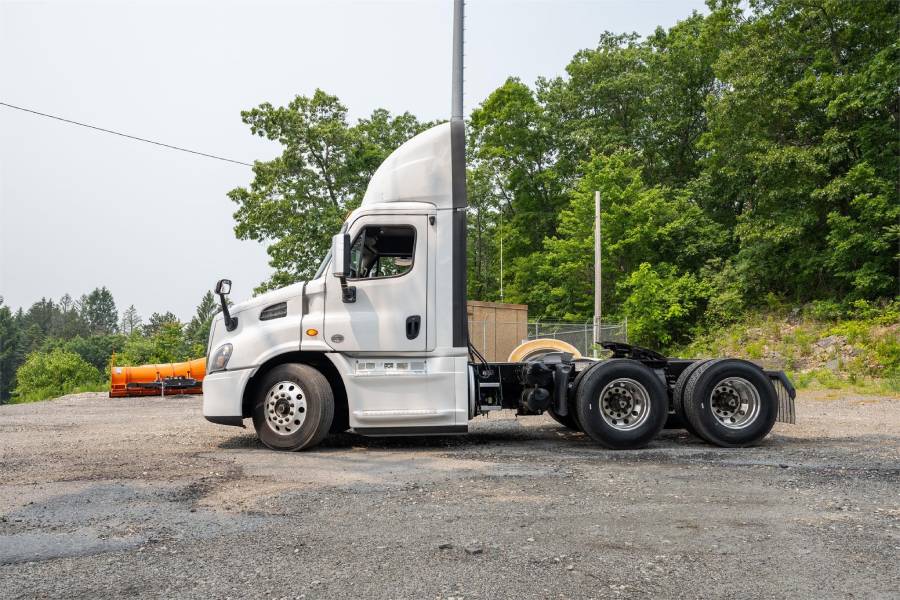
A Freightliner Cascadia coolant leak can result from damaged radiator hoses, loose connections, a cracked coolant reservoir, worn water pump seals, or internal engine problems such as a failing EGR cooler or head gasket. These failures allow coolant to escape from the cooling system, reducing its ability to regulate engine temperature. The exact cause depends on the truck’s model year, engine configuration, and the location of the leak.
Common signs of a coolant leak include a low coolant warning on the dashboard, visible fluid beneath the truck, a sweet coolant smell, and rising engine temperatures. Some leaks develop gradually, causing repeated coolant loss without obvious puddles. Others release coolant rapidly and can lead to severe overheating. Continuing to operate a Freightliner Cascadia with insufficient coolant increases the risk of cylinder head damage, head gasket failure, and costly engine repairs.
Diagnosing a Freightliner Cascadia coolant leak starts with identifying where coolant is escaping and determining whether the leak is external or internal. This guide explains the most common causes, symptoms, and leak locations, along with practical diagnostic procedures, repair options, estimated repair costs, and preventive maintenance measures for Freightliner Cascadia trucks.
What Causes a Coolant Leak in a Freightliner Cascadia?
A Freightliner Cascadia coolant leak is primarily caused by damaged cooling system components, deteriorated seals, loose hose connections, or internal engine failures. Common sources include the radiator, coolant hoses, water pump, surge tank, EGR cooler, and cylinder head gasket. These components operate under changing temperatures and cooling system pressure, which can gradually weaken seals, plastic fittings, and rubber connections. The failure location determines whether coolant escapes outside the engine or enters internal engine passages.
What Causes External Coolant Leaks in a Freightliner Cascadia?
External coolant leaks occur when coolant escapes through damaged components or connections and becomes visible around the engine compartment or beneath the truck. The main external leak sources are radiator assemblies, coolant hoses, water pumps, surge tanks, and coolant fittings.
Radiator leaks develop when corrosion, vibration, or repeated thermal expansion damages the radiator core, seams, or connections. Coolant may collect near the bottom of the radiator or drip onto surrounding components. A damaged radiator can lose coolant more rapidly as cooling system pressure increases during engine operation.
Coolant hoses leak when rubber deteriorates, develops cracks, or loses its seal around connection points. Loose clamps and damaged fittings also allow pressurized coolant to escape. On Freightliner Cascadia trucks, hose connections around the radiator, engine, and coolant reservoir should be inspected for wet surfaces, dried coolant deposits, and visible deterioration.
Water pump leaks typically originate from a worn mechanical seal or damaged pump housing gasket. A failing mechanical seal may allow coolant to escape through the pump’s weep hole, while a deteriorated gasket can cause leakage around the mounting surface. These failures can produce coolant deposits near the pump and surrounding engine components.
The coolant surge tank can also develop cracks or leaks around hose connections, fittings, and seals. Repeated heating and cooling cycles place stress on plastic reservoirs, while excessive cooling system pressure can worsen existing weaknesses. A damaged tank or connection may release coolant during operation even when no leak is visible with the engine cold.
What Causes Internal Coolant Leaks in a Freightliner Cascadia?
Internal coolant leaks occur when coolant enters engine cylinders, exhaust passages, lubricating oil, or other areas outside the intended cooling circuit. Unlike external leaks, internal coolant loss may occur without visible puddles beneath the truck. Potential causes include EGR cooler failure, cylinder head gasket damage, and cracks in engine components.
A leaking EGR cooler is a potential source of internal coolant loss on Freightliner Cascadia trucks equipped with compatible exhaust gas recirculation systems, including Detroit DD-series engines. The EGR cooler transfers heat from recirculated exhaust gases into the engine coolant. When its internal passages crack or develop leaks, coolant can enter the exhaust gas circuit instead of remaining within the cooling system. Depending on the failure, symptoms may include unexplained coolant loss, abnormal exhaust vapor, or cooling system pressure problems.
A damaged cylinder head gasket can also allow coolant to enter the combustion chamber or mix with engine oil. The head gasket seals the interface between the engine block and cylinder head, separating combustion pressure, coolant passages, and oil passages. When this seal fails, coolant may escape into adjacent passages. Possible symptoms include repeated coolant loss, abnormal cooling system pressurization, and coolant contamination of engine oil.
Cracked cylinder heads or engine blocks represent another potential cause of internal coolant leakage. These failures can result from severe overheating, mechanical damage, or thermal stress. Identifying them requires specialized diagnostic procedures because the symptoms can resemble those of a failed head gasket.
Distinguishing external from internal coolant leakage is essential before replacing parts. External leaks are generally identified through visual inspection and cooling system pressure testing, while suspected internal leaks require additional checks of the EGR cooler, combustion system, and engine oil. Accurate diagnosis prevents unnecessary component replacement and helps determine the appropriate repair.
What Are the Symptoms of a Freightliner Cascadia Coolant Leak?
The most common symptoms of a Freightliner Cascadia coolant leak are low coolant warnings, visible coolant puddles, engine overheating, a sweet coolant smell, and repeated coolant loss. These symptoms occur when coolant escapes from the cooling system, reducing the fluid available to absorb and transfer engine heat. Their severity depends on the leak location, coolant loss rate, and engine operating conditions.
A low coolant warning on the dashboard is one of the earliest indicators of coolant loss. The coolant level sensor monitors the fluid level in the surge tank and triggers a warning when it falls below the specified threshold. A warning that returns after the cooling system has been properly refilled may indicate an ongoing leak. However, a faulty coolant level sensor or damaged wiring can also trigger warnings, so the actual coolant level must be checked before identifying the cause.
Visible coolant puddles beneath the truck provide stronger evidence of an external leak. Coolant may appear pink, purple, red, orange, or another color depending on the product used. Leaking fluid can collect beneath the radiator, engine, or coolant hose connections. However, the location of a puddle does not always identify the failed component because coolant can travel along hoses, brackets, and engine surfaces before reaching the ground.
Engine overheating is a more serious symptom because insufficient coolant reduces the cooling system’s ability to remove heat from the engine. As coolant levels fall, air pockets may develop and disrupt normal coolant circulation. This can cause abnormal temperature readings, engine protection warnings, or power reduction. A truck displaying an overheating warning should be stopped safely and shut down according to the manufacturer’s instructions to prevent further engine damage.
A sweet chemical smell around the engine compartment can indicate coolant escaping onto hot engine components. Small leaks may evaporate before forming visible puddles, leaving dried coolant deposits near hose connections, radiator fittings, or the water pump. Repeated coolant loss without visible external leakage may also indicate an internal problem involving the EGR cooler, head gasket, or another engine component.
Where Are the Most Common Coolant Leak Locations on a Freightliner Cascadia?
Common coolant leak inspection points on a Freightliner Cascadia include the radiator, coolant hose connections, water pump, surge tank, thermostat housing, and engine coolant fittings. Their exact positions vary according to the truck’s model year and engine configuration. Inspecting these areas helps narrow down the source before performing pressure testing or replacing components.
The radiator is a primary inspection point because it contains multiple potential leakage areas, including the core, end tanks, seams, and hose connections. Coolant stains near the lower radiator section may indicate a damaged core or connection. Leaks around the upper or lower radiator hose fittings can also spread across nearby surfaces, making the radiator appear damaged even when the actual problem is a hose seal.
Coolant hose connections are another common inspection area. The cooling system contains hoses connecting the radiator, engine, surge tank, and other cooling components. Leakage often develops around clamps, hose ends, and fittings where rubber contacts metal or plastic surfaces. Dried coolant residue, moisture around a connection, or visible cracking can help identify a damaged hose or sealing point.
The water pump should be inspected around its housing, mounting surfaces, and weep hole where applicable. Coolant residue near the pump’s weep hole can indicate mechanical seal deterioration. However, fluid from a higher hose connection may run down the engine and collect near the pump, so the surrounding area must also be examined before concluding that the pump has failed.
The surge tank is another important inspection location, particularly around its seams, hose fittings, and pressure cap. Small cracks in the reservoir or damaged connections may leak only when the cooling system reaches operating pressure. Coolant stains around the tank can indicate leakage, although overflow or discharge from the pressure cap must be distinguished from a cracked reservoir.
Additional inspection points include the thermostat housing, engine coolant fittings, and coolant lines serving engine accessories. On trucks equipped with Detroit DD-series engines, the EGR cooling circuit also requires attention when coolant loss cannot be explained by visible external leaks. These components may be positioned behind or beneath other engine parts, making their leakage difficult to identify through a basic visual inspection.
The most reliable way to locate a coolant leak is to trace coolant residue back to its highest visible source and confirm the finding with an appropriate cooling system pressure test. This prevents replacing components based solely on where coolant collects beneath the truck.
How Do You Diagnose a Coolant Leak in a Freightliner Cascadia?
Diagnosing a Freightliner Cascadia coolant leak involves checking the coolant level, inspecting cooling system components, performing a pressure test, and investigating possible internal coolant loss. The diagnostic process should begin with a cold engine because the cooling system operates under pressure and can release scalding coolant when opened while hot. The correct testing procedure and pressure specifications depend on the truck’s model year, engine configuration, and cooling system design.
How Do You Find an External Coolant Leak?
An external coolant leak can be located through visual inspection, coolant residue tracing, and cooling system pressure testing. These methods help identify damaged hoses, leaking connections, cracked reservoirs, and defective cooling system components without unnecessary part replacement.
Start by parking the truck on level ground, shutting off the engine, and allowing the cooling system to cool completely. Check the coolant level against the markings on the surge tank and compare it with the manufacturer’s specified cold-fill level. A coolant level below the recommended range indicates insufficient coolant but does not establish where the fluid has escaped.
Next, inspect accessible cooling system components using a flashlight. Look for wet surfaces, dried coolant deposits, damaged hoses, loose connections, and cracks around the radiator and surge tank. Pay particular attention to hose junctions and areas beneath the water pump. Coolant residue may appear as colored stains or crusty deposits after the liquid evaporates. Tracing these deposits toward their highest point helps distinguish the original leak from coolant that has traveled across engine surfaces.
A cooling system pressure test provides additional confirmation when visual inspection does not reveal the source. A technician connects a compatible pressure tester to the cooling system and pressurizes it to the vehicle manufacturer’s specified test pressure. The engine generally remains off during this procedure. A pressure drop indicates that the system may not be holding pressure, although tester connections and adapters must also be checked for leakage.
While the system is pressurized, inspect suspected components for fresh coolant seepage. Small cracks around radiator seams, reservoir fittings, and hose connections may become visible under pressure. Never exceed the specified test pressure, as excessive pressure can damage cooling system components. If the pressure remains stable and no external leak appears, further investigation may be necessary to identify intermittent or internal coolant loss.
How Do You Diagnose an Internal Coolant Leak?
An internal coolant leak is diagnosed by testing for coolant entering the exhaust system, combustion chambers, engine oil, or other internal passages. This investigation is necessary when a Freightliner Cascadia repeatedly loses coolant without an identifiable external leak.
Begin by checking the engine oil for signs of coolant contamination. A milky appearance, unexplained oil level increase, or laboratory-confirmed coolant contamination may indicate that coolant has entered the lubrication system. However, normal-looking oil does not rule out an internal leak because coolant can enter the exhaust or combustion system without mixing with engine oil.
The EGR cooler requires specific attention on Freightliner Cascadia trucks equipped with an exhaust gas recirculation system. An internally damaged EGR cooler can allow coolant to enter the exhaust gas passages. Depending on the engine configuration and failure location, a technician may inspect the EGR circuit for coolant residue and perform an engine-specific EGR cooler leak test. These procedures should follow Detroit Diesel or the applicable engine manufacturer’s service instructions.
A combustion gas test can help investigate suspected cylinder head gasket failure. This test checks for combustion gases entering the cooling system, which may occur when the seal between a combustion chamber and coolant passage fails. Abnormal cooling system pressurization, persistent coolant loss, and combustion gas detection can support this diagnosis. However, a negative test does not eliminate every possible head gasket failure, and additional testing may be required.
For difficult cases, technicians may use cylinder leak-down testing, borescope inspection, or specialized component pressure tests to isolate the source. These procedures help distinguish head gasket damage, EGR cooler leakage, and cracks in engine components before major disassembly.
A confirmed leak location should determine the repair, not coolant loss alone. External leaks generally require replacement of damaged cooling system components or seals, while internal leaks require engine-specific diagnostic testing to identify the failed component accurately.
How Do You Fix a Freightliner Cascadia Coolant Leak?
Fixing a Freightliner Cascadia coolant leak requires repairing or replacing the damaged component, restoring the correct coolant level, and verifying that the cooling system holds pressure. The appropriate repair depends on whether coolant is escaping through an external component, such as a radiator hose or water pump, or leaking internally through an EGR cooler, head gasket, or damaged engine passage. Repairs must follow the specifications for the truck’s engine and cooling system configuration.
How Do You Repair External Coolant Leaks?
External coolant leaks are repaired by replacing damaged hoses, seals, radiators, water pumps, or coolant reservoirs. The defective component must be identified before repairs begin because coolant can travel across engine surfaces and make nearby components appear to be leaking.
A leaking coolant hose generally requires replacement when its rubber has cracked, hardened, swollen, or deteriorated around the connection points. The repair involves draining enough coolant to safely disconnect the hose, removing the damaged component, and installing a replacement that matches the original hose specifications. Clamps and sealing surfaces should also be inspected because a loose clamp or damaged fitting can cause leakage even when the hose remains intact. Connections must be secured according to the manufacturer’s requirements to prevent further coolant loss.
Radiator leaks require different repairs depending on the location and severity of the damage. A loose hose connection may only require a replacement clamp, seal, or hose. However, cracks in the radiator core, damaged end tanks, or deteriorated seams generally require radiator replacement. Before installing a new radiator, technicians should inspect mounting brackets, hoses, and surrounding components for vibration damage or excessive stress that could contribute to another failure.
A leaking water pump usually requires replacement when coolant escapes through its mechanical seal or weep hole. Replacing the pump involves draining the cooling system, removing components that restrict access, disconnecting the pump, and installing a compatible replacement with the specified seals or gaskets. The mounting surface must be cleaned and inspected before installation. Reusing damaged gaskets or installing the pump incorrectly can create additional leaks.
Coolant reservoir leaks are repaired by replacing cracked surge tanks, damaged fittings, or defective seals. A leaking pressure cap may also require replacement when testing confirms that it cannot maintain the specified pressure. Because the surge tank is part of the pressurized cooling system, replacement components must match the vehicle’s configuration and pressure requirements.
After completing an external leak repair, the cooling system must be refilled with coolant meeting the applicable engine manufacturer’s specifications. Air must be removed using the prescribed filling and bleeding procedure. A final pressure test and operating-temperature inspection help confirm that the repaired connections remain sealed and the engine maintains normal coolant temperature.
How Do You Repair Internal Coolant Leaks?
Internal coolant leaks require repairing or replacing the failed EGR cooler, cylinder head gasket, or damaged engine component after confirming the source through diagnostic testing. These repairs are more complex than external hose or reservoir replacement because they involve engine systems that may require specialized tools, component removal, and manufacturer-specific procedures.
A leaking EGR cooler generally requires replacement when testing confirms an internal failure. The repair involves accessing the EGR cooling assembly, draining the affected coolant circuit, removing the defective cooler, and installing a compatible replacement with the specified gaskets and seals. Technicians must also inspect associated coolant connections and exhaust passages for contamination or additional damage. The exact procedure varies between Detroit DD-series engines and other engine configurations used in Freightliner Cascadia trucks.
A failed cylinder head gasket requires a more extensive repair. The cylinder head must be removed so the gasket, mating surfaces, and surrounding components can be inspected. Technicians should check the cylinder head and engine block for warping, cracks, or other damage before installing a replacement gasket. A new gasket alone will not resolve the problem when damaged sealing surfaces or excessive cylinder head distortion remain uncorrected.
Cracked cylinder heads or engine blocks require further evaluation to determine whether the affected component can be repaired or must be replaced. The decision depends on the crack location, structural damage, engine manufacturer’s repair limits, and overall engine condition. Severe damage may require cylinder head replacement or a more extensive engine repair.
Once the internal leak has been repaired, the cooling system must be cleaned or serviced as necessary, refilled with approved coolant, and tested for proper operation. Engine oil and filters may also require replacement when coolant contamination has been confirmed. A final inspection should verify stable coolant levels, normal operating temperature, and the absence of recurring pressure loss.
A successful Freightliner Cascadia coolant leak repair must address both the failed component and any damage caused by coolant loss. Replacing parts without correcting overheating-related damage, contamination, or abnormal cooling system pressure can result in repeated failures and additional repair costs.
How Much Does It Cost to Fix a Freightliner Cascadia Coolant Leak?
Freightliner Cascadia coolant leak repair costs can range from approximately $100 for a minor hose repair to more than $5,000 for major internal engine repairs. The total cost depends on the failed component, engine configuration, replacement parts, labor rates, and the extent of damage. Repairs involving accessible cooling system connections generally cost less than those requiring extensive engine disassembly.
The following table provides broad estimated repair costs for Freightliner Cascadia trucks in the United States. These are planning estimates rather than verified current shop quotes.
| Repair Type | Estimated Total Cost |
|---|---|
| Coolant hose or clamp replacement | $100–$350 |
| Coolant surge tank replacement | $200–$600 |
| Radiator replacement | $700–$1,800 |
| Water pump replacement | $600–$1,500 |
| EGR cooler replacement | $1,500–$4,000 |
| Cylinder head gasket replacement | $3,000–$7,000+ |
Coolant hose and reservoir repairs are generally less expensive because they involve fewer components and shorter labor times. Radiator and water pump replacements cost more due to larger replacement assemblies, coolant draining, and additional component removal. EGR cooler and head gasket repairs require more extensive diagnostics and labor, particularly on Detroit DD15 and DD13 engines.
Labor rates also affect the final repair bill. Heavy-duty truck dealerships, independent diesel repair shops, and mobile repair services use different pricing structures. Additional expenses may include diagnostic testing, coolant replacement, towing, and repairs to components damaged by overheating. Obtaining an itemized estimate after the leak source has been confirmed provides a more reliable cost assessment than replacing parts based on symptoms alone.
Can You Drive a Freightliner Cascadia With a Coolant Leak?
You should not continue driving a Freightliner Cascadia with an active coolant leak that causes low coolant warnings, overheating, or rapid coolant loss. Insufficient coolant reduces the cooling system’s ability to control engine temperature and can lead to severe engine damage. Even a small leak can become more serious when cooling system pressure and engine temperature increase during highway operation.
A minor leak does not always cause immediate overheating, but it still requires inspection before the truck returns to service. Coolant loss can accelerate under heavy loads, during long climbs, or in high ambient temperatures. A truck that initially maintains normal engine temperature may develop overheating problems after additional coolant escapes.
Stop the truck in a safe location if the dashboard displays a critical coolant warning, engine temperature rises abnormally, or coolant begins leaking rapidly. Follow the vehicle’s engine protection warnings and shutdown instructions. Allow the engine to cool completely before inspecting the surge tank, and never remove a pressurized coolant cap while the cooling system is hot.
Driving with insufficient coolant can damage several engine components, including the cylinder head, head gasket, pistons, and cylinder liners. Excessive heat can distort metal components, compromise sealing surfaces, and reduce lubrication effectiveness. In severe cases, continued operation can cause engine seizure or require major engine repairs.
Towing or professional roadside assistance is the safest option when coolant loss is significant, overheating occurs, or the leak source remains unknown. The truck should return to normal operation only after the leak has been repaired, the cooling system has been properly refilled, and testing confirms stable coolant levels and normal engine temperature.
Why Does a Freightliner Cascadia Lose Coolant Without a Visible Leak?
A Freightliner Cascadia can lose coolant without visible leaks because of internal EGR cooler failure, a damaged head gasket, small leaks that evaporate on hot engine surfaces, or coolant escaping through the pressure relief system. These problems allow coolant to leave the cooling system without forming noticeable puddles beneath the truck. Identifying the cause requires checking coolant consumption patterns, cooling system pressure, and signs of internal leakage.
Can a Faulty EGR Cooler Cause Coolant Loss Without Visible Leaks?
A faulty EGR cooler can cause unexplained coolant loss by allowing coolant to enter the exhaust gas recirculation circuit. The EGR cooler uses engine coolant to reduce exhaust gas temperatures before recirculation. When internal passages crack or develop leaks, coolant can escape into the exhaust stream rather than dripping onto external engine surfaces.
On Freightliner Cascadia trucks equipped with Detroit DD13 or DD15 engines, an internally leaking EGR cooler may produce repeated low coolant warnings without obvious external leakage. Depending on the failure, additional signs may include abnormal exhaust vapor, coolant residue within the EGR circuit, or unusual cooling system pressure behavior. A technician can investigate the cooler using the engine manufacturer’s specified inspection and pressure-testing procedures.
Can a Blown Head Gasket Cause Coolant Loss Without Visible Leaks?
A blown head gasket can cause hidden coolant loss when coolant enters the combustion chamber or another internal engine passage. The cylinder head gasket separates coolant passages from combustion chambers and oil passages. Damage to this seal can allow coolant to escape internally while leaving the exterior of the engine dry.
Possible symptoms include unexplained coolant consumption, abnormal cooling system pressurization, persistent white exhaust vapor, and coolant contamination of engine oil. These signs are not exclusive to head gasket failure, so confirmation requires appropriate diagnostic testing. Combustion gas testing, cylinder leak-down testing, and inspection of the EGR cooling circuit help distinguish a damaged head gasket from other internal coolant leaks.
Small external leaks can also disappear before reaching the ground. Coolant dripping onto hot engine surfaces may evaporate, leaving dried deposits around fittings or gaskets. A defective surge tank pressure cap can release coolant when system pressure exceeds the cap’s operating threshold. These conditions should be investigated before concluding that the engine has an internal failure.
Read more: Freightliner Cascadia Low Oil Pressure: Causes & Fixes
What Type of Coolant Does a Freightliner Cascadia Use?
A Freightliner Cascadia requires engine coolant that meets the specifications approved for its particular engine, model year, and cooling system configuration. Freightliner Cascadia trucks equipped with Detroit DD-series engines and those using Cummins engines may have different coolant approval requirements. The correct coolant must be selected using the applicable engine manufacturer’s maintenance documentation rather than color alone.
Detroit-powered Cascadia trucks commonly use approved heavy-duty extended-life coolant formulations, but the exact specification depends on the engine generation and factory cooling system fill. Coolant chemistry, corrosion inhibitors, and compatibility with engine materials determine whether a product is suitable. Mixing incompatible coolant formulations can reduce corrosion protection and create maintenance problems.
Coolant should be mixed with water at the concentration specified by the engine manufacturer. A 50/50 coolant-to-water mixture is common in heavy-duty cooling systems, although the approved concentration and product requirements must be verified for the specific vehicle. Use water that meets the coolant manufacturer’s quality requirements when dilution is necessary.
Before adding coolant after a leak repair, confirm the existing coolant type and check the engine’s service documentation. Using an approved formulation helps protect the radiator, water pump, cylinder liners, and other cooling system components against corrosion, freezing, and overheating.
How Can You Prevent Coolant Leaks in a Freightliner Cascadia?
Preventing Freightliner Cascadia coolant leaks requires regular cooling system inspections, proper coolant maintenance, early leak detection, and timely replacement of deteriorated components. These measures reduce the risk of coolant loss caused by aging hoses, damaged seals, corrosion, and cooling system pressure problems.
Inspect the coolant level regularly with the engine cold and the truck parked on level ground. A gradual decline in coolant level between inspections may indicate a developing leak. Record repeated coolant additions because an ongoing need to refill the surge tank is a sign that the cooling system requires diagnosis.
Check coolant hoses, clamps, radiator connections, and the surge tank for deterioration during routine maintenance. Look for cracks, swelling, hardened rubber, wet fittings, and dried coolant residue. Replace damaged components before they develop larger leaks under operating pressure. The water pump and surrounding connections should also be inspected for signs of seal deterioration.
Maintain the cooling system using the coolant type and service intervals specified by the engine manufacturer. Proper coolant chemistry protects metal surfaces against corrosion and helps prevent deposits that can interfere with heat transfer. Coolant condition should be evaluated using the testing procedures appropriate for the installed formulation rather than relying only on appearance.
Cooling system pressure problems also require prompt attention. A defective pressure cap, restricted cooling component, or recurring overheating condition can increase stress on hoses, seals, and reservoirs. Investigating abnormal operating temperatures and repeated coolant warnings helps identify these problems before they cause more extensive damage.
Consistent preventive maintenance reduces the likelihood of unexpected coolant leaks and overheating-related engine failures. For Freightliner Cascadia owners and fleet operators, combining regular inspections with manufacturer-recommended coolant service provides a practical approach to maintaining cooling system reliability and reducing unplanned downtime.