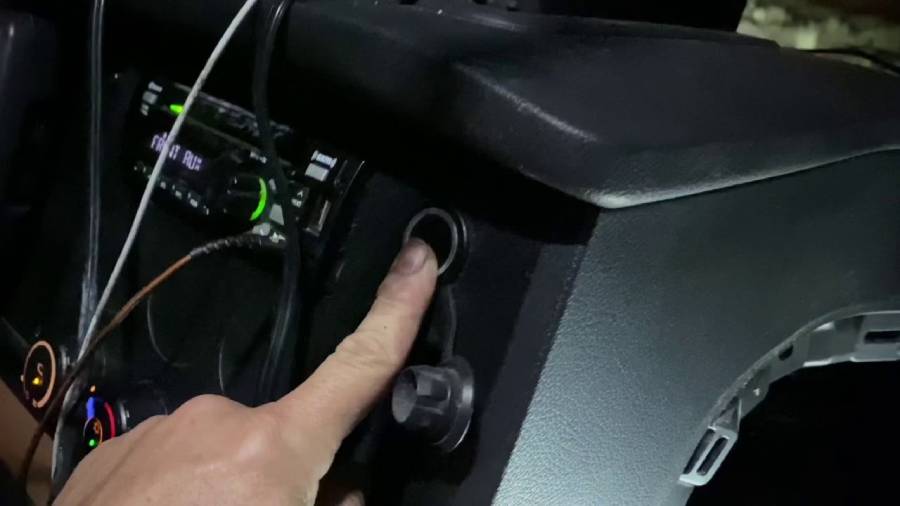
A Freightliner 12V outlet may stop working because of a blown fuse, damaged socket, loose wiring, poor ground connection, or a faulty power supply circuit. A defective phone charger or other plugged-in accessory can also make a working outlet appear faulty. Identifying the cause requires checking the accessory, inspecting the fuse, and testing the outlet for electrical power.
The 12V power outlet supplies electricity to accessories such as GPS devices, phone chargers, dash cameras, and portable electronics. When the outlet fails, these devices lose their power source even if the truck’s other electrical systems continue operating. On Freightliner models such as the Cascadia and M2, fuse locations, circuit configurations, and ignition-dependent power settings vary by model year and equipment.
Start troubleshooting by testing the accessory in another working outlet and checking whether the ignition must be on. If the outlet remains inactive, inspect its fuse and measure the socket voltage with a multimeter. A blown fuse, missing voltage, or damaged connection helps narrow down the fault before replacing components.
This guide explains the common causes of Freightliner 12V outlet failure, how to locate and test the correct fuse, how to diagnose wiring and socket problems, and how to restore power safely. It also covers repeated fuse failures and ways to prevent future outlet problems.
Why Is My Freightliner 12V Outlet Not Working?
A Freightliner 12V outlet stops working when its electrical circuit loses power, the socket develops a faulty connection, or the connected accessory fails. Six primary causes should be checked: a blown fuse, a defective accessory, damaged socket contacts, loose wiring, a poor ground connection, and an interrupted power supply.
A blown fuse is one of the first components to inspect because it protects the accessory circuit against excessive current. When a connected device draws more current than the circuit can safely handle, or a short circuit occurs, the fuse may open and disconnect power. Replacing the fuse restores operation only when the underlying electrical fault has been resolved.
A damaged outlet can also prevent an accessory from receiving power even when the fuse remains intact. The socket’s center contact supplies positive voltage, while its outer metal contact provides the ground connection. Corrosion, bent contacts, accumulated debris, or worn terminals can interrupt either connection. Loose wiring behind the dashboard can produce similar symptoms, including intermittent charging when the accessory plug moves.
The following table connects common symptoms with their possible causes and initial diagnostic checks.
| Symptom | Possible Cause | Recommended Check |
|---|---|---|
| Outlet has no power | Blown fuse | Inspect the correct accessory circuit fuse |
| Charger does not work | Defective accessory | Test the charger in another working outlet |
| Power cuts in and out | Loose or worn socket contacts | Inspect the socket and plug connection |
| Outlet has no voltage | Open power circuit | Test voltage at the socket |
| Voltage is present but the device fails | Poor contact or ground connection | Inspect terminals and test under load |
| Outlet works only with ignition on | Ignition-controlled circuit | Verify the truck’s outlet power configuration |
A missing power supply does not always indicate a defective component. Some Freightliner outlets operate only when the ignition or accessory circuit is active. Check the truck’s operating instructions before removing electrical components.
Where Is the Freightliner 12V Outlet Fuse Located?
The Freightliner 12V outlet fuse is located in the fuse or power distribution system assigned to the accessory circuit, but its exact position varies by truck model, production year, and electrical configuration. Freightliner trucks use circuit protection arrangements that may include interior fuse panels, power distribution modules, and circuit breakers.
Start by locating the truck’s fuse identification diagram in the owner’s documentation or on the applicable fuse panel cover. Look for circuit descriptions such as “Power Outlet,” “Accessory Power,” or “Cigar Lighter,” where applicable. Do not assume that every Freightliner uses the same fuse label, position, or amperage rating.
Once the correct circuit is identified, switch off the relevant electrical loads and inspect its protective fuse. Replace a blown fuse only with the specified type and amperage. Installing a higher-rated fuse can allow excessive current to overheat the wiring before circuit protection operates.
Where Is the 12V Outlet Fuse on a Freightliner Cascadia?
The Freightliner Cascadia 12V outlet fuse must be identified through the fuse diagram for the truck’s specific model year and electrical configuration. Cascadia trucks use power distribution systems with circuit assignments that differ across generations and equipment packages.
Locate the applicable interior fuse panel or electrical distribution module using the truck’s documentation. Match the accessory outlet circuit description to the fuse identification chart before removing any fuse. Newer Cascadia configurations may use different electrical layouts from earlier models, so a fuse position listed for one truck should not be applied to another without verification.
If the outlet fuse is intact but the socket remains inactive, test whether power reaches the outlet before assuming the socket requires replacement.
Where Is the 12V Outlet Fuse on a Freightliner M2?
The Freightliner M2 12V outlet fuse is identified through the model-specific fuse and power distribution documentation. The M2 series includes different cab configurations, production years, and electrical equipment options, which affect circuit assignments.
Consult the fuse panel identification chart and locate the circuit associated with the cigarette lighter or auxiliary power outlet. Confirm the correct fuse rating before testing or replacing it. The M2 fuse layout should not be assumed to match a Cascadia layout.
When the correct fuse tests good, the next diagnostic step is to measure voltage at the outlet and inspect the power and ground connections. These checks help determine whether the failure originates in the socket or elsewhere in the electrical circuit.
How Do You Troubleshoot a Freightliner 12V Outlet That Has No Power?
To troubleshoot a Freightliner 12V outlet with no power, check the connected accessory, verify the ignition position, inspect the outlet fuse, and measure voltage at the socket. These four checks help determine whether the problem comes from the accessory, circuit protection, power supply, or outlet itself.
Start by unplugging the connected device and testing it in another working 12V outlet. If the device fails in both outlets, inspect its plug, internal fuse (if equipped), or power adapter. If it works in another outlet, the original socket or its electrical circuit requires further inspection.
Next, turn the ignition to the position specified for accessory power. Some Freightliner outlets receive power continuously, while others operate only when the ignition is on. Test the outlet again using a known working accessory before proceeding to electrical measurements.
How Do You Check the Freightliner 12V Outlet Fuse?
Check the Freightliner 12V outlet fuse by identifying the correct circuit, removing the fuse with power switched off, and testing it for continuity. A blown fuse interrupts the electrical path and prevents voltage from reaching the outlet.
Locate the fuse using the truck’s fuse identification diagram. Remove it with an appropriate fuse puller and inspect the internal metal element. A visibly broken element indicates failure, but a fuse can also fail without obvious damage. For a more reliable check, set a digital multimeter to continuity mode and touch one probe to each fuse terminal.
A functional fuse should show electrical continuity, typically indicated by a low resistance reading or an audible tone. An open circuit indicates a blown fuse. Perform this test only after removing the fuse from the energized circuit.
Replace a defective fuse with one matching the manufacturer’s specified amperage and type. If the replacement blows immediately or repeatedly, stop replacing it and investigate a possible short circuit or overloaded accessory.
How Do You Test a Freightliner 12V Outlet With a Multimeter?
Test a Freightliner 12V outlet by setting a digital multimeter to DC voltage and measuring between the socket’s center positive contact and outer ground contact. A functioning outlet should display voltage close to the truck’s electrical system voltage when its power circuit is active.
Follow these steps to measure outlet voltage:
- Set the multimeter to DC voltage and select a range suitable for the vehicle’s electrical system.
- Turn the ignition to the position required to energize the outlet.
- Carefully place the red probe against the center contact inside the socket.
- Place the black probe against the outer metal ground contact without allowing the probes to touch each other.
- Read the voltage displayed on the multimeter.
A Freightliner with a nominal 12V electrical system may show approximately 12–13V with the engine off and around 13.5–14.8V while the charging system is operating. Actual readings depend on battery condition, charging operation, and vehicle configuration.
A reading near zero volts suggests that power is not reaching the socket, the ground path is open, or the circuit is not enabled. A normal voltage reading with no accessory operation points toward poor socket contact, a defective accessory, or a connection that fails under load.
If the fuse and supply voltage are correct, inspect accessible wiring and connectors with the circuit de-energized. Look for loose terminals, corrosion, damaged insulation, and overheated connections. A qualified technician can use voltage-drop testing under load to identify excessive resistance in the power or ground circuit.
How Do You Fix a Freightliner 12V Outlet That Is Not Working?
Fix a Freightliner 12V outlet by replacing the failed fuse, cleaning damaged contacts, repairing loose electrical connections, or installing a compatible replacement socket. The correct repair depends on the fault identified during troubleshooting. Replacing components without testing the circuit can leave the original problem unresolved.
Replace a blown fuse. Turn off the ignition and disconnect all accessories from the affected outlet. Remove the defective fuse using a fuse puller and install a replacement with the exact amperage rating and fuse type specified for the circuit. Restore power and test the outlet with a known working accessory. If the replacement fuse blows again, disconnect the accessory and investigate the circuit before attempting another replacement.
Clean corroded socket contacts. Dirt, moisture, and oxidation can prevent the accessory plug from making reliable electrical contact. Disconnect power to the outlet before cleaning it. Remove loose debris with a nonmetallic tool and use an electrical contact cleaner suitable for automotive components when necessary. Allow the socket to dry completely before restoring power. Replace the socket if its contacts are severely corroded, burned, or physically deformed.
Repair loose or damaged wiring. Inspect accessible connectors behind the outlet for loose terminals, damaged insulation, corrosion, and signs of overheating. Disconnect the circuit before handling electrical connections. A loose connector may only require proper reseating, while damaged terminals or wiring require suitable automotive-grade replacement components. Avoid twisting wires together or using unprotected connections because vibration and heat can cause recurring electrical failures.
Replace a faulty 12V socket. If the outlet receives the correct supply voltage and has a functional ground but cannot maintain reliable contact with a working accessory, the socket may need replacement. Select a replacement compatible with the Freightliner model, mounting arrangement, connector, and electrical rating. Disconnect the power supply, remove the surrounding trim as required, and detach the socket connector. Install the replacement, secure its connections, and verify operation before reassembling the panel.
Professional electrical diagnosis is necessary when the fuse repeatedly fails, wiring shows heat damage, or voltage testing identifies an unresolved power or ground fault. These conditions may require circuit diagrams, specialized diagnostic equipment, or access to protected wiring harnesses.
Why Does My Freightliner 12V Outlet Fuse Keep Blowing?
A Freightliner 12V outlet fuse keeps blowing because excessive current flows through the protected circuit, typically due to an overloaded accessory, damaged wiring, a shorted socket, or a defective connected device. A fuse opens when current exceeds its protective characteristics for a sufficient period, preventing the circuit from carrying potentially damaging current.
Repeated fuse failure should be investigated before installing another replacement. Disconnect every accessory from the affected outlet and inspect the socket for foreign metal objects, bent contacts, and visible damage. A conductive object touching the center positive terminal and grounded outer contact can create a short circuit that blows the fuse.
If the fuse fails even with no accessory connected, the problem may involve the socket, wiring harness, or another component sharing the protected circuit. Inspect accessible wiring for crushed insulation, abrasion against metal brackets, and overheated connectors. Electrical testing should isolate the faulty section before repairs are attempted.
Never install a fuse with a higher amperage rating to prevent repeated failures. The specified fuse protects wiring and electrical components according to the circuit design. Increasing its rating can allow excessive current to overheat conductors and create a fire hazard.
Can an Overloaded 12V Outlet Cause Repeated Fuse Failure?
Yes, an overloaded 12V outlet can repeatedly blow its fuse when connected accessories draw more current than the circuit is designed to supply. High-power inverters, portable heating devices, and multiple accessories connected through a splitter can exceed the outlet’s electrical capacity.
Electrical power is calculated using the formula Power (W) = Voltage (V) × Current (A). For example, a 12V circuit protected by a 15A fuse has a nominal power calculation of 180W. However, this does not establish a safe continuous operating limit, because actual outlet ratings, wiring specifications, operating voltage, and fuse characteristics must also be considered.
A 200W accessory drawing power from a nominal 12V supply requires approximately 16.7A before accounting for conversion losses. That current exceeds 15A and can cause a properly rated fuse to open. Accessories with motors or power converters may also draw higher current briefly during startup.
Check the outlet’s specified electrical rating and the accessory’s input requirements before connecting high-power equipment. If the device requires more power than the outlet supports, use an approved power connection designed for that load rather than modifying the existing 12V circuit.
Does a Freightliner 12V Outlet Work When the Truck Is Turned Off?
A Freightliner 12V outlet may work with the ignition turned off if it is connected to a constant-power circuit. Outlets controlled by the ignition switch or an accessory power circuit require the appropriate ignition position to supply electricity. The operating configuration depends on the Freightliner model, production year, and installed electrical equipment.
Constant-power outlets receive electricity from the vehicle’s battery system through a protected circuit, allowing connected devices to operate while the engine is off. Ignition-controlled outlets receive power only when the relevant electrical circuit is enabled. Some truck configurations also use power management systems that disconnect selected accessory loads to protect battery capacity.
To determine how an outlet operates, connect a known working 12V accessory and check its operation with the ignition off. Turn the ignition to the accessory or on position, as applicable, and repeat the test. If the outlet functions only after the ignition is activated, this behavior may be normal rather than an electrical failure.
Leaving accessories connected to a continuously powered outlet can discharge the truck’s batteries. Devices such as dash cameras, portable refrigerators, and power inverters may continue consuming electricity after the engine stops. Disconnect unnecessary accessories during extended parking periods, particularly when the truck does not have a dedicated auxiliary battery system.
Read more: Freightliner Fuel Gauge Not Working? Causes & Fixes
Why Does One Freightliner 12V Outlet Work While Another Does Not?
One Freightliner 12V outlet can work while another fails because the outlets may use different fuses, wiring connections, ground paths, or power-control circuits. Even when two sockets are installed in the same cab, they do not necessarily share identical electrical protection or operating conditions.
For example, a dashboard accessory outlet may operate through an ignition-controlled circuit, while a sleeper compartment outlet may receive continuous battery power. The exact arrangement depends on the truck’s electrical configuration. A blown fuse or disconnected wire affecting one circuit may leave the other outlet functioning normally.
Start diagnosis by testing the same accessory in both outlets under the appropriate ignition conditions. If the device works in one socket but not the other, inspect the nonfunctional outlet and identify its assigned circuit protection. A working outlet confirms that the accessory can operate, but it does not establish that the second outlet has a defective socket.
Measure voltage at the failed outlet and compare the results with its expected power supply conditions. If battery voltage is present but the accessory does not operate, inspect the socket contacts and ground connection. If voltage is absent, check the appropriate fuse, power wiring, and circuit-control conditions.
Avoid assuming that both outlets use the same fuse or amperage rating. Consult the applicable Freightliner electrical documentation before replacing components or modifying either circuit.
How Can You Prevent Freightliner 12V Outlet Problems?
Prevent Freightliner 12V outlet failures by keeping accessory current within the specified circuit rating, protecting socket contacts from contamination, and replacing damaged plugs or connectors before they cause electrical faults. These practices reduce the risk of blown fuses, intermittent power, overheating, and premature socket wear.
Use accessories that match the outlet’s electrical capacity. Check the manufacturer’s current or wattage rating before connecting power inverters, portable refrigerators, heating devices, or multi-port charging adapters. A splitter does not increase the outlet’s available electrical capacity. The combined current draw of connected devices must remain within the applicable circuit and outlet limits.
Keep the socket clean and dry. Dust, moisture, and metallic debris can interfere with electrical contact or create an unintended connection between the positive and ground terminals. Inspect the outlet periodically, especially in trucks exposed to frequent cab cleaning, humidity, or dusty working conditions. Disconnect circuit power before removing debris or cleaning the socket.
Inspect accessory plugs for damage. Loose plugs, bent contacts, damaged cables, and discolored connectors can indicate poor electrical contact or overheating. A plug that fits poorly may create intermittent power interruptions as the truck vibrates. Replace damaged accessories rather than forcing their connectors into the outlet.
Avoid excessive strain on the outlet. Heavy adapters and unsupported cables can place mechanical stress on the socket during normal vehicle movement. Use appropriately sized plugs and secure accessory cables to prevent pulling or twisting at the connection point.
Investigate recurring electrical symptoms promptly. Intermittent charging, unusual heat, a burning smell, or repeated fuse failures indicate that the outlet or its circuit requires inspection. Stop using the affected outlet if overheating or electrical damage is suspected. Repairing the underlying fault prevents further damage to the socket, wiring harness, and connected equipment.