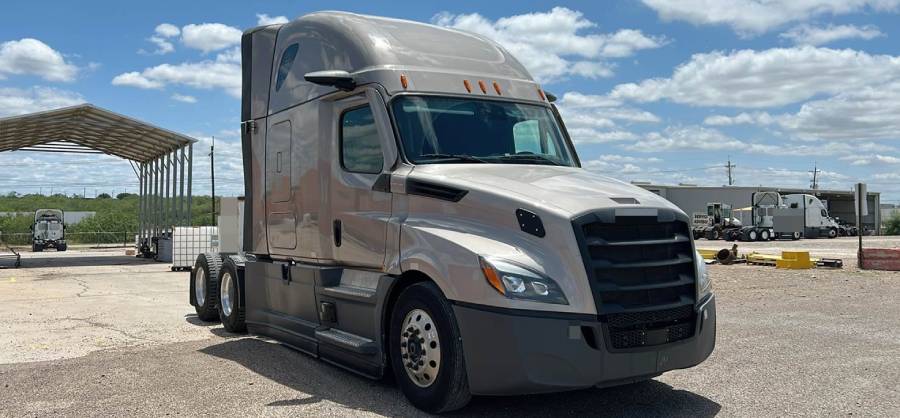
A Freightliner Cascadia starter not engaging is commonly caused by weak batteries, corroded electrical connections, a faulty starter solenoid, a defective starter relay, or a problem with the starting control circuit. These faults can prevent the starter motor from receiving sufficient electrical power or stop the starter pinion from engaging the engine’s flywheel. Identifying the exact cause requires checking the starting system before replacing components.
The symptoms of starter engagement failure help narrow down the problem. A single clicking sound may indicate a solenoid or high-resistance electrical connection problem, while rapid clicking often points to insufficient battery power. No clicking sound can indicate an interrupted start signal, faulty relay, or start interlock issue. If the starter spins without cranking the engine, the starter drive or flywheel ring gear may be damaged.
Freightliner Cascadia trucks equipped with Detroit DD13 or DD15 engines can also experience starting problems related to wiring faults and electronic start authorization. The diagnostic process varies depending on the truck’s model year, transmission, and electrical configuration.
This guide explains the causes of Freightliner Cascadia starter engagement failure, how to diagnose electrical and mechanical problems, and which repairs restore reliable starting performance.
Why Is the Freightliner Cascadia Starter Not Engaging?
A Freightliner Cascadia starter may fail to engage because of five main problems: insufficient battery power, faulty electrical connections, a defective starter solenoid, a malfunctioning starter relay or control circuit, and mechanical damage to the starter drive. Each problem interrupts either the electrical starting sequence or the mechanical connection between the starter motor and the engine’s flywheel. Identifying which part of the system has failed prevents unnecessary starter replacement.
The starting process requires the batteries to supply electrical power, the starting control circuit to authorize cranking, and the starter solenoid to engage the starter pinion with the flywheel ring gear. Once engaged, the starter motor rotates the engine until combustion begins. A failure at any stage can produce a no-crank condition, clicking noises, or a starter motor that spins without turning the engine.
Can a Weak Battery Prevent the Starter From Engaging?
A weak battery can prevent the Freightliner Cascadia starter from engaging by failing to deliver sufficient voltage and current under load. The starter motor requires substantial electrical current to rotate a heavy-duty diesel engine. When battery voltage drops excessively during a starting attempt, the solenoid may click without maintaining engagement, or the starter motor may fail to turn.
Freightliner Cascadia trucks typically use a 12-volt electrical starting system with multiple batteries connected in parallel. A fully charged conventional lead-acid battery generally measures approximately 12.6 volts at rest. However, a normal resting voltage does not guarantee sufficient cranking capacity. Battery condition must also be evaluated through load testing and voltage measurements during a starting attempt.
Loose battery terminals, corroded cable connections, and damaged ground straps can produce similar symptoms even when the batteries are healthy. These connections increase electrical resistance, reducing the voltage available at the starter. For example, a corroded ground connection can prevent adequate current flow and cause the starter solenoid to click without cranking the engine.
Can a Bad Starter Solenoid or Relay Cause This Problem?
A defective starter solenoid or starter relay can prevent the Freightliner Cascadia starter from engaging even when the batteries are fully charged. These components perform different functions within the starting circuit. The relay controls the electrical signal supplied to the starter solenoid, while the solenoid moves the starter drive into engagement and connects battery power to the starter motor.
A faulty starter relay can interrupt the start command before it reaches the solenoid. This may produce a completely silent no-crank condition when the ignition switch is turned to the start position. However, the same symptom can result from a damaged ignition switch, broken control wire, or electronic start interlock that has not authorized cranking.
A defective solenoid can produce a single click without starter rotation. This occurs when the solenoid moves but its internal electrical contacts fail to deliver sufficient current to the motor. Mechanical wear can also prevent the solenoid from moving the starter pinion correctly.
Starter engagement can also fail because of damaged starter drive components or worn flywheel ring gear teeth. Unlike an electrical no-crank condition, mechanical engagement failure may allow the starter motor to spin while the engine remains stationary. The starter assembly and flywheel should be inspected when electrical testing confirms that the motor receives the required power and control signal.
What Do Different Freightliner Cascadia Starter Symptoms Mean?
Freightliner Cascadia starter engagement problems produce four main symptoms: a single click, rapid clicking, no clicking sound, or a spinning starter that does not crank the engine. Each symptom indicates a different possible failure within the electrical or mechanical starting system. Although these sounds help narrow the diagnosis, they do not identify a defective component without additional testing.
A single click generally indicates that a relay or solenoid has activated, but the starter motor has not successfully rotated the engine. Rapid clicking commonly results from voltage dropping below the level required to maintain solenoid operation. Complete silence suggests that the start command may not be reaching the starter circuit. A spinning sound without engine rotation points toward a starter drive engagement problem.
Why Does the Starter Click but Not Crank?
A Freightliner Cascadia starter that clicks but does not crank may have insufficient battery power, excessive resistance in the starter circuit, defective solenoid contacts, or a failed starter motor. The clicking sound occurs when an electrical switching component activates, but the starting system cannot complete the cranking process.
A single loud click near the starter may indicate solenoid activation without motor rotation. The solenoid can move its internal mechanism while worn contacts prevent adequate electrical current from reaching the starter motor. A seized starter motor or excessive resistance in the battery cables can create a similar symptom.
Rapid clicking indicates repeated activation and release of a relay or solenoid. This commonly happens when battery voltage drops during the starting attempt, causing the component to disengage. Once the electrical load decreases, voltage recovers enough to activate it again, repeating the cycle.
The first diagnostic step is to measure battery voltage during the starting attempt and inspect the positive and ground connections. If battery voltage remains within the manufacturer’s specified range, voltage-drop testing can identify resistance in the cables and connections. Starter replacement should only be considered after the electrical supply and control circuits have been evaluated.
Why Does the Starter Spin Without Engaging?
A Freightliner Cascadia starter that spins without engaging the engine usually indicates a problem with the starter drive mechanism or flywheel ring gear. In this condition, the starter motor rotates, but its pinion gear does not successfully transfer rotational force to the engine’s flywheel.
The starter drive uses a pinion gear and an overrunning clutch to transfer torque from the starter motor to the flywheel during cranking. If the drive clutch slips, the pinion fails to move into position, or the gear teeth are damaged, the starter motor may produce a high-speed whirring sound while the engine remains stationary.
Worn or broken flywheel ring gear teeth can also prevent proper engagement. Damage concentrated in particular sections of the ring gear may cause intermittent starting problems because the engine stops in different rotational positions. A truck may start normally on one attempt but fail to engage on another when damaged teeth align with the starter pinion.
Diagnosing this problem requires checking whether the starter motor receives proper electrical power and whether the drive mechanism engages correctly. If electrical testing confirms normal starter operation, the starter pinion and accessible flywheel ring gear teeth should be inspected for wear, chipping, or missing teeth. Damaged components must be repaired or replaced before reliable starter engagement can be restored.
How Do You Diagnose a Freightliner Cascadia Starter That Will Not Engage?
To diagnose a Freightliner Cascadia starter that will not engage, check the battery condition, inspect the starter cables and ground connections, measure voltage drop, and verify the starter control signal. These tests help determine whether the problem originates from insufficient electrical power, excessive circuit resistance, a failed starter component, or an interrupted start command. Follow the diagnostic sequence before removing or replacing the starter motor.
Before testing, park the truck on level ground, apply the parking brake, place the transmission in neutral, and secure the wheels with chocks. Keep hands, tools, and loose clothing away from rotating engine components. Starter circuits carry high electrical current, so use appropriately rated testing equipment and avoid shorting electrical terminals. Verify the truck’s model-specific starting circuit and battery-disconnection procedures in the applicable service manual.
How Do You Test the Battery and Starter Connections?
Test the Freightliner Cascadia batteries by measuring their resting voltage, checking voltage during cranking, and inspecting the battery terminals and starter cable connections. Battery voltage measurements establish the initial electrical condition, while loaded testing determines whether the battery bank can supply the current required by the starter motor.
Start by switching off electrical accessories and measuring voltage across the battery bank with a digital multimeter. A fully charged conventional 12-volt lead-acid battery generally reads approximately 12.6–12.8 volts at rest. A reading near 12.2 volts indicates a substantially reduced state of charge, although temperature, battery chemistry, and recent charging activity affect the measurement.
Next, observe battery voltage while an assistant briefly requests engine cranking. A significant voltage collapse indicates a possible discharged battery, weak battery cell, or excessive electrical load. A commonly used reference for a 12-volt lead-acid battery load test is approximately 9.6 volts at 70°F (21°C), but this threshold must not be treated as a universal Freightliner Cascadia cranking specification. Use the battery manufacturer’s temperature-adjusted testing procedure and the truck’s service information to evaluate the results.
Inspect the battery terminals for corrosion, loose clamps, damaged cable insulation, and signs of overheating. Examine the positive cable connections leading toward the starter and the ground connections between the batteries, chassis, and engine. A connection that appears secure can still develop excessive resistance because of corrosion between its contact surfaces.
For trucks equipped with multiple batteries, test individual batteries according to the manufacturer’s procedure. One deteriorated battery can reduce the performance of the entire parallel battery bank. If the batteries fail an appropriate load or conductance test, correct the battery problem before continuing with starter diagnosis.
How Do You Check Power and Voltage Drop at the Starter?
Check starter power and voltage drop by measuring the voltage lost across the positive and ground circuits while the starter is under load. Voltage-drop testing identifies electrical resistance that may not be visible during a routine cable inspection. Excessive resistance prevents the starter from receiving adequate voltage even when the batteries are fully charged.
To test the positive circuit, connect the multimeter’s positive lead to the battery positive terminal and the negative lead to the starter’s main battery supply terminal. Set the meter to DC voltage and record the reading during a controlled cranking attempt. The displayed value represents the voltage lost between those two points. A high reading indicates resistance in the positive cable, terminals, or intermediate connections.
For the ground circuit, connect the positive meter lead to a clean starter housing ground point and the negative lead to the battery negative terminal. Measure voltage during the same starting condition. An excessive reading indicates resistance along the return path, potentially involving the starter mounting connection, engine ground strap, chassis ground, or battery negative cable.
Voltage-drop limits depend on the starting system and the test points specified by the manufacturer. As a general diagnostic reference, technicians may investigate a positive cable drop exceeding approximately 0.5 volts or a ground path drop exceeding approximately 0.2 volts during cranking. These figures are screening references rather than verified Cascadia specifications. A no-crank condition that produces little or no current may also make voltage-drop readings inconclusive.
After checking the main power circuits, verify whether the starter solenoid receives the appropriate start-command voltage when cranking is requested. Use the correct wiring diagram to identify the control terminal and an approved method of accessing it. If the command is absent, investigate the starter relay, ignition circuit, wiring, and start authorization conditions. If the command and main power supply are present but the starter does not operate, the solenoid or starter motor becomes a stronger suspect.
A starter that receives the correct power and control signals but fails to crank should undergo further testing according to the manufacturer’s diagnostic procedure. Do not bypass the starter relay, bridge solenoid terminals, or defeat transmission safety interlocks to force engagement. These actions can cause unexpected vehicle movement, electrical arcing, or damage to electronic control components.
How Do You Test a Freightliner Cascadia Starter Relay or Solenoid?
To test a Freightliner Cascadia starter relay or solenoid, verify the electrical power supply, check the start-command signal, and measure whether each component delivers the required output. A defective relay can prevent the start signal from reaching the solenoid, while a faulty solenoid can prevent the starter motor from receiving battery current or engaging the flywheel. Testing these components separately helps identify the actual failure without replacing a functioning starter assembly.
The starter relay is part of the low-current control circuit, while the starter solenoid operates the high-current switching mechanism at the starter motor. Relay location and circuit configuration vary by Cascadia model year and electrical architecture. Identify the correct relay, fuse, and wiring terminals using the truck’s vehicle-specific electrical documentation before beginning diagnosis.
Start by checking the starter relay’s power supply and control circuit with a digital multimeter. When the ignition switch requests cranking and all start-permission conditions are satisfied, the relay should receive the appropriate control signal. A relay that receives the required power and activation signal but fails to provide its specified output may have defective internal contacts or an open coil. However, an absent activation signal indicates a problem elsewhere in the control circuit rather than confirming relay failure.
A relay may produce an audible click without successfully delivering power through its switched contacts. This happens when the electromagnetic coil operates but worn, corroded, or damaged contacts create excessive resistance. Testing the relay’s output under the appropriate electrical load provides more useful information than relying on clicking sounds alone. Any replacement relay must match the original component’s electrical ratings and terminal configuration.
The starter solenoid requires a separate inspection because it controls both electrical switching and mechanical engagement. Verify that the main starter battery terminal has the required power and that the solenoid control terminal receives the correct start signal during an authorized cranking request. If both inputs are present but the starter does not engage, investigate defective solenoid contacts, a damaged engagement mechanism, or an internal starter motor fault.
For example, a Freightliner Cascadia may produce one loud click near the starter while the engine remains stationary. If battery testing, cable voltage-drop measurements, and solenoid control-signal testing all meet the applicable specifications, the fault may be inside the starter assembly. A technician can then evaluate the solenoid and motor using an approved component-testing procedure.
Do not connect starter terminals together to bypass the solenoid or relay. High-current starter circuits can generate severe electrical arcs, and bypassing the control system can cause unexpected engine cranking. Disconnect and isolate electrical power according to the service manual before removing the starter or testing disconnected components.
Can a Freightliner Cascadia Start Interlock Prevent Starter Engagement?
A Freightliner Cascadia start interlock can prevent starter engagement when the vehicle’s control system does not recognize the conditions required for safe engine cranking. Depending on the truck’s model year and transmission configuration, these conditions may include an acceptable transmission neutral status, a valid ignition start request, and authorization from the relevant electronic control modules. When a required condition is missing, the starter may remain completely silent despite having charged batteries and a functional starter motor.
The transmission neutral condition is a critical part of starting authorization. Trucks equipped with automated manual transmissions rely on transmission-related signals to confirm that the drivetrain is in an acceptable starting state. If the transmission controller cannot verify neutral because of a sensor, wiring, communication, or control-system fault, the vehicle may inhibit cranking. The exact logic depends on the installed transmission and vehicle configuration.
The ignition switch and its associated wiring also influence starter engagement. When the driver turns the key to the start position, the electrical system must recognize and process the request before activating the starter circuit. A defective ignition switch, damaged connector, or interrupted control wire can prevent the request from reaching the appropriate controller or relay. This failure can produce a no-click, no-crank condition that resembles a defective starter relay.
Electronic control modules add another diagnostic layer. Freightliner Cascadia trucks use vehicle and powertrain control systems that communicate through electronic networks. Depending on the electrical architecture, the Common Powertrain Controller (CPC), transmission controller, and other modules may participate in processing starting-related conditions. A missing input, communication fault, or module power-supply problem can interfere with start authorization even when the starter’s main electrical connections are intact.
Diagnostic trouble codes help identify these problems by providing information about detected electrical, communication, and transmission-related faults. A compatible heavy-duty diagnostic tool can retrieve active and stored codes and, where supported, display parameters such as transmission neutral status, ignition start request, and starter authorization. These readings help determine whether the starting system is receiving the conditions required to activate the starter.
For example, a Cascadia with healthy batteries may show no starter response when the ignition key is turned. If testing confirms that the starter relay receives battery power but never receives an activation command, the next diagnostic step is to investigate start authorization and the control circuit. A transmission-related fault code or an incorrect neutral-status reading may explain why the vehicle refuses to crank.
Start interlock problems should be repaired by correcting the underlying sensor, wiring, communication, or control-system fault. Do not bypass neutral safety circuits or directly energize the starter to overcome an electronic starting restriction. When the cause cannot be identified through basic electrical checks, a qualified diesel technician should use the appropriate Freightliner and powertrain diagnostic information to evaluate the start authorization system.
How Do You Fix a Freightliner Cascadia Starter That Is Not Engaging?
To fix a Freightliner Cascadia starter that is not engaging, repair the electrical or mechanical component responsible for interrupting the starting process. The correct repair depends on diagnostic results and may involve charging or replacing weak batteries, restoring damaged electrical connections, replacing a faulty starter relay, or installing a new starter motor or solenoid. Starter replacement is unnecessary when the actual problem is insufficient voltage, excessive circuit resistance, or missing start authorization.
Begin with the simplest confirmed faults before replacing expensive components. Battery and cable problems should be corrected first because they can produce the same symptoms as a failed starter. If the electrical supply is functioning correctly, investigate the relay, solenoid, starter motor, and mechanical engagement components. After completing the repair, verify that the engine cranks normally and that the original symptoms no longer occur.
How Do You Fix Battery and Starter Wiring Problems?
Fix battery and starter wiring problems by restoring adequate battery capacity, cleaning corroded terminals, tightening loose connections, and replacing damaged cables. These repairs reduce electrical resistance and allow the starter motor to receive the current required to crank the engine.
If battery testing confirms a discharged battery, recharge it using equipment and procedures suitable for the installed battery type. Test the battery again after charging to determine whether it can retain sufficient charge and deliver the required starting current. Replace batteries that fail the manufacturer’s capacity or load-testing requirements. On trucks with multiple batteries, evaluate the entire battery bank because differences in battery condition can affect starting performance.
Corroded terminals should be disconnected and cleaned according to the vehicle’s electrical service procedure. Remove corrosion from approved contact surfaces, inspect terminals for pitting or deterioration, and reconnect them using the specified tightening torque. Replace terminals or cables with damaged conductors, loose crimp connections, or excessive corrosion. Cleaning the outside of a cable does not repair corrosion that has spread beneath its insulation.
Inspect the engine ground straps and starter power cables for loose mounting points, broken strands, damaged insulation, and heat discoloration. Replace defective cables with components that meet the truck’s required conductor size, current capacity, and terminal specifications. After completing the repair, repeat voltage-drop testing under an appropriate load to confirm that electrical resistance has returned to an acceptable level.
A starter relay should be replaced when testing confirms that it receives the required control signal and power supply but fails to deliver the specified output. Use a replacement relay with the correct electrical rating and terminal arrangement. If the relay does not receive an activation command, diagnose the ignition circuit, wiring, and start authorization system instead of replacing the relay.
When Should You Replace the Starter Motor or Solenoid?
Replace the Freightliner Cascadia starter motor or solenoid when diagnostic testing confirms an internal electrical or mechanical failure that cannot be corrected through an approved repair procedure. Replacement is justified when the starter receives the required battery power and control signal but cannot engage or rotate the engine, provided external circuit faults and engine mechanical restrictions have been excluded.
A defective solenoid may fail to move the starter pinion or close the internal contacts that supply current to the motor. A damaged starter motor may have worn brushes, faulty windings, internal electrical connections, or mechanical damage that prevents normal rotation. Some starter designs allow specific components to be serviced separately, while others require replacement of the complete assembly. Follow the applicable starter manufacturer’s repair recommendations.
Before removing the starter, disconnect and isolate the battery power supply using the vehicle-specific service procedure. Heavy-duty starter motors are substantial components, so support the assembly during removal and avoid placing tools across exposed electrical terminals. Inspect the mounting surfaces, electrical connections, and starter pinion for damage before installing the replacement unit.
If the starter motor spins without turning the engine, inspect the starter drive and accessible flywheel ring gear teeth. A slipping overrunning clutch, damaged pinion, or worn ring gear can prevent torque transfer to the crankshaft. Replacing the starter may correct a defective drive mechanism, but damaged flywheel teeth require separate mechanical repair. Installing a new starter against a damaged ring gear can cause repeated engagement problems.
Select a replacement starter that matches the truck’s engine, electrical system, mounting configuration, and original equipment specifications. Freightliner Cascadia starter applications differ by model year and engine configuration, including Detroit DD13 and DD15 installations. Verify compatibility using the vehicle identification number and the appropriate parts catalog rather than assuming that every Cascadia uses the same starter assembly.
After installation, reconnect the electrical cables using the specified terminal torque, restore battery power, and perform a controlled starting test. Confirm that the starter engages smoothly, cranks the engine at the expected speed, and disengages after the engine starts. Inspect the connections for abnormal heating and verify that the original electrical or mechanical symptoms have been eliminated.
Professional diesel diagnostics are necessary when the starter receives no authorized start signal, electronic control faults remain active, or mechanical damage is suspected inside the flywheel housing. These conditions require vehicle-specific wiring information, compatible diagnostic equipment, or specialized mechanical inspection. Correcting the confirmed underlying fault is essential for preventing repeated starter failures.
Read more: Freightliner Cascadia No Communication With ECM: Fixes
How Can You Tell If the Freightliner Cascadia Starter or Battery Is Bad?
The most reliable way to distinguish a bad Freightliner Cascadia starter from a weak battery is to test battery performance under load and verify the voltage reaching the starter during a cranking attempt. A weak battery cannot consistently supply the required starting current, while a defective starter may fail even when adequate electrical power and an authorized start signal are present. Both problems can produce clicking sounds, slow cranking, or a complete no-crank condition.
A weak battery commonly causes slow engine cranking, rapid solenoid clicking, and noticeable voltage reduction during a starting attempt. Electrical accessories may also dim when the starter is activated. However, dashboard lights and other low-current accessories can operate normally even when the battery lacks sufficient capacity to crank a heavy-duty diesel engine. Battery load testing provides a more dependable diagnosis than observing accessory operation.
A defective starter motor is more likely when the battery bank passes the appropriate load test, the positive and ground circuits meet voltage-drop specifications, and the starter receives the required control signal but still fails to crank. A single loud click near the starter may indicate defective solenoid contacts or an internal motor problem. A high-speed spinning sound without engine rotation suggests a faulty starter drive or damaged flywheel ring gear rather than a discharged battery.
Damaged battery cables and ground connections can imitate either failure. For example, a fully charged battery bank may supply normal voltage at its terminals while corrosion in the positive starter cable prevents adequate current from reaching the motor. Comparing battery voltage with voltage measured at the starter under load helps identify this difference. Confirming electrical supply, control authorization, and mechanical engagement before replacing components reduces unnecessary repair costs.
How Can You Prevent Freightliner Cascadia Starter Problems?
Prevent Freightliner Cascadia starter problems by maintaining the battery bank, inspecting electrical connections, monitoring starting performance, and correcting early signs of electrical resistance or mechanical wear. These practices reduce avoidable starting failures because the starter depends on stable electrical power, reliable control signals, and properly functioning mechanical components.
Inspect battery terminals, starter cables, and engine ground connections during scheduled preventive maintenance. Check for corrosion, loose terminals, cracked insulation, damaged ground straps, and heat discoloration around electrical connections. Trucks operating in wet environments, road-salt conditions, or high-vibration applications require particular attention because moisture, contamination, and repeated movement accelerate connection deterioration.
Battery testing should follow the vehicle and battery manufacturers’ maintenance recommendations. Check battery state of charge, charging-system performance, and battery condition using an appropriate load or conductance test. For trucks equipped with multiple batteries, evaluate each battery individually when testing indicates an imbalance or reduced starting capacity. Maintaining healthy batteries helps prevent excessive voltage drop during cranking and reduces repeated unsuccessful starting attempts.
Monitor changes in starter operation, including slower cranking, intermittent clicking, unusual grinding noises, and delayed engagement. These symptoms can indicate deteriorating electrical connections, solenoid wear, or starter drive damage. Investigate recurring symptoms promptly instead of repeatedly attempting to start the engine, because prolonged or unsuccessful cranking can overheat the starter motor and damage associated components.
Starter mounting hardware and accessible electrical connections should also be inspected according to the applicable service schedule. Loose mounting fasteners can affect starter alignment, while damaged terminals can increase resistance and generate heat. Any repair involving starter removal should include an inspection of the pinion gear, mounting surfaces, and accessible flywheel ring gear teeth.
For fleet operators, recording battery test results, starter-related repairs, and recurring no-crank complaints helps identify trucks with developing electrical problems. Comparing maintenance records with diagnostic findings supports timely component replacement and reduces unexpected vehicle downtime. A consistent preventive maintenance program keeps the Freightliner Cascadia starting system reliable and helps prevent repeated starter engagement failures.