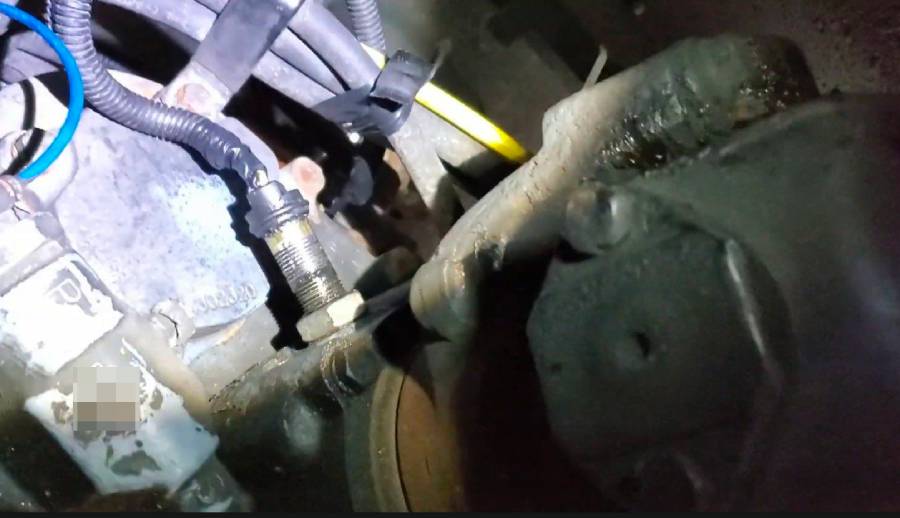
Freightliner speed sensor problems can cause incorrect speedometer readings, ABS warning lights, transmission shifting issues, cruise control problems, intermittent speed readings, and diagnostic trouble codes. These problems occur when a sensor or another component in the speed-sensing circuit fails to provide accurate vehicle or wheel speed data to the control system.
A Freightliner truck can use several sources of speed data, so a “bad speed sensor” does not always refer to the same component. Depending on the model, model year, transmission, axle configuration, and electronic control system, the fault may involve an ABS wheel speed sensor, a transmission-related speed sensor, its wiring and electrical connector, or a tone ring used to generate the speed signal. For this reason, replacing a sensor based only on an ABS light or malfunctioning speedometer can result in an unnecessary repair.
Diagnosing Freightliner speed sensor problems requires identifying the symptoms first and then checking fault codes, sensor condition, wiring, connectors, related components, and speed-signal data. This guide explains the common problems and symptoms, their causes, how to diagnose the faulty component, and how to determine whether the correct fix is cleaning, wiring repair, adjustment, or sensor replacement.
What Are the Most Common Freightliner Speed Sensor Problems?
The most common Freightliner speed sensor problems involve sensor failure, damaged wiring, loose or corroded electrical connections, sensor contamination, incorrect sensor positioning, damaged tone rings, and intermittent speed signals. These faults can prevent an ABS, transmission, or vehicle control system from receiving accurate speed data. The exact problem depends on which speed-sensing system is affected and how the truck is configured.
A failed speed sensor is one possible source of the problem, but the sensor itself should not automatically be considered defective. A speed sensor generates or transmits information that a control module uses to determine wheel, transmission, or vehicle speed. When the sensor stops producing a valid signal, the receiving module may detect missing, implausible, or inconsistent speed information. The result can include a warning light, incorrect speed readings, stored diagnostic trouble codes, or changes in the operation of systems that depend on speed data.
Damaged wiring and electrical connectors can create similar symptoms even when the speed sensor remains functional. An open circuit, short circuit, loose terminal, damaged harness, or corroded connector can interrupt the electrical path between the sensor and its control module. This distinction matters during diagnosis because replacing a functional sensor will not correct a broken wire or poor electrical connection.
Contamination, sensor positioning, and damage to the component the sensor reads can also affect the speed signal. For speed-sensing designs that rely on a tone or reluctor ring, damaged or contaminated surfaces can produce an irregular signal as the component rotates. An incorrect sensor gap can likewise reduce signal quality on systems where sensor-to-target clearance is critical. These conditions can make a mechanical or installation problem appear to be an electronic sensor failure.
Intermittent speed sensor problems require particular attention because the fault may disappear while the truck is being inspected. Vibration, movement of a damaged harness, moisture in a connector, or an unstable sensor signal can cause speed data to drop out temporarily and then return. Checking stored fault information and live speed data can therefore provide useful evidence even when the problem is not continuously present.
The correct diagnosis is based on the complete speed-sensing circuit rather than the sensor alone. The sensor, wiring, connectors, signal target, and control system should be evaluated as related components before a Freightliner speed sensor is replaced.
What Are the Symptoms of a Bad Speed Sensor on a Freightliner?
The main symptoms of a bad speed sensor on a Freightliner include incorrect or missing speedometer readings, an illuminated ABS warning light, transmission shifting problems, cruise control malfunctions, intermittent speed readings, and stored diagnostic trouble codes. The specific symptoms depend on which speed sensor or speed signal has failed because the ABS, transmission, instrument cluster, and other control systems do not necessarily use speed information in the same way.
An incorrect or non-working speedometer is one noticeable symptom of a speed-signal problem. The speedometer requires vehicle-speed information to display how fast the truck is moving. A missing signal can cause the displayed speed to remain at zero, while an unstable signal can make the reading fluctuate or drop unexpectedly. However, a speedometer problem alone does not prove that the sensor is defective because wiring, connectors, communication faults, or other components in the signal path can produce a similar result.
An illuminated ABS warning light can indicate a problem with wheel-speed information. The ABS control system compares speed data from the wheels to determine whether a wheel is approaching lockup during braking. If one sensor reports an implausible value or stops supplying usable information, the ABS module can detect the discrepancy and store a fault. The warning light therefore identifies a problem within the monitored system rather than confirming that the wheel speed sensor itself must be replaced.
Transmission shifting problems can occur when the affected control system depends on accurate speed information to determine operating conditions. Missing or incorrect speed data can interfere with decisions related to shift timing or transmission operation. A driver may notice unusual shift behavior at the same time that a speed-related fault is recorded. Because transmission symptoms can have several causes, the speed signal should be verified before attributing the shifting problem to a sensor.
Cruise control can also stop working correctly when valid vehicle-speed information is unavailable. Cruise control must monitor road speed to maintain the selected setting. If the system cannot determine speed reliably, it may disengage, refuse to activate, or operate inconsistently. A cruise control malfunction accompanied by other speed-related symptoms provides stronger evidence of a shared speed-signal problem than a cruise control issue occurring by itself.
Intermittent readings are particularly useful diagnostic clues. A speedometer that occasionally drops out, an ABS warning that appears and disappears, or a fault that occurs mainly while the truck is moving can point toward an unstable signal. Loose electrical terminals, damaged wiring, contamination, vibration-sensitive connections, or an intermittent sensor fault can interrupt the signal without causing a permanent failure.
Diagnostic trouble codes provide additional evidence by identifying the system that detected an abnormal signal. A warning light or fault code should be treated as the starting point for diagnosis rather than proof of a failed Freightliner speed sensor. The code, affected system, live speed data, wiring condition, and sensor circuit should be evaluated together before deciding which component requires repair or replacement.
What Causes Freightliner Speed Sensor Problems?
Freightliner speed sensor problems are mainly caused by sensor failure, damaged wiring, loose or corroded connectors, contamination, damaged tone or reluctor rings, and incorrect sensor positioning or clearance. These faults affect either the sensor itself or the path used to generate and transmit speed data. Identifying the actual cause is important because replacing the sensor will not solve a problem caused by wiring, a connector, or another component used to generate the speed signal.
Sensor failure occurs when the sensor can no longer produce a reliable signal for the system monitoring wheel, transmission, or vehicle speed. Electrical or internal component failure can result in a signal that is missing, intermittent, or outside the expected range. The control module can then recognize the abnormal speed information and store a related diagnostic fault. A failed sensor should be confirmed through inspection and testing rather than diagnosed from a warning light alone.
Damaged wiring is another major cause because the speed signal must travel between the sensor and the relevant control module. Wires can become damaged by abrasion, vibration, heat, moisture, or physical contact with surrounding components. An open circuit can eliminate the signal completely, while a short or unstable connection can produce intermittent readings. Wiring faults are especially important to investigate when a warning light or speed reading changes as the truck moves or vibrates.
Loose and corroded electrical connectors can interrupt the same circuit without visible damage to the sensor. Moisture and contamination at a connector can degrade electrical contact, while a loose terminal can cause the connection to repeatedly open and close. For example, a truck may operate normally while stationary during inspection but develop a speed-related fault after vibration or suspension movement affects a marginal connection.
Contamination can interfere with speed sensing when dirt, metallic debris, or other material accumulates around components involved in generating the signal. The exact effect depends on the type of sensor and its installation. Cleaning can correct the problem when contamination is responsible, but cleaning will not repair a sensor with an internal electrical failure or a physically damaged signal target.
A damaged tone or reluctor ring can also create a bad speed signal even when the sensor is operating correctly. The sensor relies on a consistent target pattern to detect rotational speed in systems that use this design. Missing, damaged, contaminated, or irregular sections of the target can therefore cause the sensor output to become inconsistent. This is one reason a speed sensor should not be replaced before its related mechanical components have been inspected.
Incorrect sensor positioning or clearance can cause another form of signal problem. The sensor must be installed within the correct operating relationship to its target when the specific Freightliner system requires a defined sensor gap. Excessive clearance can weaken or interrupt the signal, while improper installation can contribute to inconsistent readings or physical damage. The correct specification depends on the sensor, axle, transmission, and vehicle configuration, so the applicable service information should be used instead of applying one clearance value to every Freightliner truck.
The underlying cause can therefore be divided into three diagnostic areas: the sensor, the electrical circuit, and the component used to generate the speed signal. Checking all three areas helps distinguish a genuinely failed sensor from a wiring or mechanical fault and reduces unnecessary parts replacement.
How Do You Diagnose a Freightliner Speed Sensor Problem?
Diagnose a Freightliner speed sensor problem by checking the symptoms, retrieving diagnostic trouble codes, inspecting the sensor and its electrical circuit, examining related components, and testing the speed signal. Diagnosis should confirm where the signal is being lost or distorted before any sensor is replaced. A warning light or fault code identifies the affected circuit or system, but it does not automatically prove that the sensor itself has failed.
Start by identifying every symptom that occurs at the same time. Check whether the truck has an ABS warning light, incorrect speedometer reading, intermittent speed display, unusual transmission behavior, cruise control malfunction, or another speed-related warning. Multiple symptoms can help identify whether the problem is isolated to one wheel-speed circuit or affects vehicle-speed information used by several systems.
Retrieve stored and active diagnostic trouble codes with a compatible diagnostic tool. Record the codes before clearing them because they provide evidence about which module detected the fault and what type of signal problem occurred. Depending on the truck configuration, speed-related faults can be detected by the ABS system, transmission controller, engine or vehicle control system, or another electronic module.
Inspect the suspected sensor and surrounding components after identifying the affected circuit. Look for physical damage, contamination, improper installation, loose components, or evidence that the sensor has contacted its target. If the system uses a tone or reluctor ring, inspect that component for damage, contamination, irregularities, or other conditions that could prevent the sensor from receiving a consistent target as the wheel or shaft rotates.
Inspect the wiring harness and electrical connector before condemning the sensor. Look for rubbed-through insulation, broken wires, loose terminals, corrosion, moisture, damaged connector locks, and wiring positioned where vibration or moving components can damage it. An intermittent wiring fault can be especially difficult to identify because the circuit may test normally while the truck is stationary and fail again when vibration or movement affects the damaged connection.
Test the electrical circuit according to the sensor design and applicable Freightliner service information. A multimeter can be used for appropriate voltage, continuity, resistance, or circuit checks, but the correct test depends on the sensor technology and system configuration. Do not assume that one resistance specification or test procedure applies to every Freightliner speed sensor. Using the specification for the specific model, axle, transmission, and sensor prevents a functional component from being incorrectly diagnosed as defective.
Use live data when the diagnostic equipment supports it. Comparing speed readings while the relevant wheel or drivetrain component is moving can reveal a sensor that reports zero, drops out intermittently, or produces data that differs substantially from the other expected readings. Live data is particularly useful when the problem occurs only while driving and a static electrical inspection does not reveal an obvious fault.
The final diagnosis should establish whether the fault originates from the sensor, wiring or connector, signal target, sensor installation, or another part of the control system. Replace the speed sensor only after the diagnostic evidence points to the sensor itself.
Which Fault Codes Can Indicate a Freightliner Speed Sensor Problem?
The fault codes associated with a Freightliner speed sensor problem depend on the truck model, model year, sensor type, ABS configuration, transmission, and electronic control system. There is no single universal speed sensor code that accurately applies to every Freightliner truck.
A code should first be interpreted according to the module that generated it and the component or circuit identified in its description. For example, a wheel-speed-related fault stored by an ABS module should direct diagnosis toward the corresponding wheel-speed circuit, while a transmission-related speed fault requires inspection of the relevant transmission speed signal and circuit. The diagnostic context determines which sensor and components need to be tested.
Do not replace a sensor solely because its circuit appears in a fault code. A code associated with missing, implausible, or intermittent speed information can also result from damaged wiring, a poor electrical connection, incorrect sensor positioning, or a problem with the target the sensor reads. Use the fault code to locate the diagnostic path, then confirm the failed component through inspection, circuit testing, and live speed data before replacing parts.
How Do You Fix Freightliner Speed Sensor Problems?
Fix a Freightliner speed sensor problem by repairing the specific fault identified during diagnosis, which may involve cleaning the sensor area, repairing wiring or connectors, correcting sensor installation, addressing a damaged signal target, or replacing a failed sensor. The correct repair depends on where the speed signal is being interrupted or distorted. Replacing the sensor without confirming the cause can leave the original problem unresolved.
Clean the sensor and surrounding area when inspection shows contamination that can interfere with the speed signal. Dirt, metallic debris, or other material around a sensor or its target can affect signal generation on applicable systems. Cleaning should be followed by another inspection because contamination may hide physical damage to the sensor, mounting area, or tone ring. If the speed signal remains incorrect after the area is clean, further electrical and mechanical diagnosis is required.
Repair damaged wiring when testing identifies an open circuit, short circuit, damaged insulation, or intermittent connection between the sensor and control module. The repaired harness should be routed and secured so that it does not rub against moving, hot, or sharp components. Connector problems also need to be corrected rather than bypassed by installing a new sensor. Corroded terminals, loose pins, damaged connector locks, or moisture intrusion can continue to interrupt the signal even when a new sensor is installed.
Correct sensor positioning when the sensor is improperly installed or its relationship with the target does not meet the requirements of the specific system. A sensor that is too far from its target may generate a weak or inconsistent signal, while incorrect installation can also contribute to physical contact or damage. Use the service procedure for the specific Freightliner model and component because sensor installation and clearance requirements can differ between configurations.
Repair or replace a damaged tone or reluctor ring when diagnosis shows that the sensor cannot obtain a consistent signal from its target. A functional sensor cannot compensate for a damaged or irregular target. This type of fault can produce symptoms similar to sensor failure, including intermittent readings and speed-related diagnostic faults, which is why the target should be inspected before the sensor is condemned.
After completing the repair, clear applicable diagnostic trouble codes according to the appropriate service procedure and verify operation again. Check live speed data when available and confirm that the previously affected systems operate correctly. A successful repair should correct both the underlying speed-signal fault and the symptoms that originally led to diagnosis.
When Should You Replace a Freightliner Speed Sensor?
Replace a Freightliner speed sensor when diagnostic testing confirms that the sensor cannot provide the required speed signal and the wiring, connector, installation, and related signal target have been ruled out as the cause. Physical sensor damage can also justify replacement when it prevents reliable operation.
Replacement is appropriate when the sensor consistently fails the specified electrical or signal test for that particular system. The applicable test must match the sensor design because different sensor technologies cannot be evaluated with one universal resistance or voltage specification. Service information for the specific truck, axle, transmission, or ABS configuration should provide the required diagnostic procedure.
A sensor may also require replacement when its output repeatedly disappears or becomes implausible while the circuit and target remain functional. Live data can help identify this condition by showing that the affected sensor drops out or reports an abnormal value under conditions where a valid signal should be present. Reproducing the fault provides stronger diagnostic evidence than replacing a component based only on a stored code.
Do not replace the sensor first when damaged wiring, a loose connector, corrosion, incorrect positioning, contamination, or a damaged tone ring has already been identified. A replacement sensor fixes a failed sensor; it does not fix the rest of the speed-sensing circuit. Correcting the verified root cause first reduces repeat faults and unnecessary parts replacement.
After installing the replacement sensor, inspect its mounting and electrical connection, then verify the repair using the appropriate diagnostic procedure. Confirm that the expected speed data is present, related diagnostic trouble codes do not return, and symptoms such as an ABS warning, intermittent speed reading, or affected system operation have been resolved.
Where Is the Speed Sensor Located on a Freightliner?
The speed sensor location on a Freightliner depends on the type of sensor, truck model, model year, axle configuration, transmission, and electronic control system. There is no single speed sensor location that applies to every Freightliner truck. A speed-related fault may involve a wheel speed sensor used by the ABS, a transmission-related speed sensor, or another component responsible for providing vehicle-speed information.
ABS wheel speed sensors are located at the wheel ends where they can monitor wheel rotation. Each sensor works with a corresponding target, such as a tone or reluctor ring, to generate wheel-speed information for the ABS control system. When diagnosing an ABS-related speed sensor problem, the affected wheel location identified through diagnostic information should be inspected rather than checking unrelated speed sensors elsewhere on the truck.
Transmission-related speed sensors are located on or around the transmission according to the transmission design. These sensors monitor rotational speed that can be used for transmission operation or vehicle-speed calculations. Their exact position varies because Freightliner trucks can use different transmissions and drivetrain configurations. A sensor location found for one Freightliner model should therefore not be assumed to apply to another truck.
Use the truck’s VIN, model, model year, axle or transmission information, and diagnostic fault details to identify the correct sensor before removing components. Service information or a component diagram for the specific configuration provides a more reliable location than a generic Freightliner speed sensor diagram. This step also prevents confusion between an ABS wheel speed sensor and a transmission-related speed sensor.
How Much Does It Cost to Replace a Freightliner Speed Sensor?
The cost to replace a Freightliner speed sensor consists of the replacement part, diagnostic labor, installation labor, and any additional repairs required to restore the speed-sensing circuit. A single replacement price cannot accurately represent every Freightliner because cost varies with the sensor type, truck configuration, accessibility, labor rate, and actual cause of the fault.
The sensor itself is only one part of the total repair cost. A straightforward replacement can require less labor when the defective component is readily accessible and diagnosis has already confirmed the failure. Labor requirements increase when technicians must trace an intermittent circuit problem, access difficult components, inspect multiple wheel-speed signals, or perform additional testing to isolate the fault.
Additional repairs can make the final bill higher than the price of a speed sensor. For example, diagnosis may reveal a damaged wiring harness, corroded connector, damaged tone ring, or another component affecting the signal. In these cases, replacing only the sensor would add parts cost without correcting the original problem.
Diagnostic time should therefore be considered part of the repair rather than an unnecessary expense. Confirming whether the fault is in the sensor, wiring, connector, target, or another system component reduces the risk of replacing functional parts. The most useful repair estimate is one based on the specific Freightliner configuration and confirmed failure, not the average price of a generic speed sensor.
Before approving replacement, ask for an estimate that separates the sensor price, diagnostic charge, labor charge, and additional parts required. This breakdown makes it easier to determine whether the repair involves a simple sensor replacement or a broader electrical or mechanical speed-signal problem.
Can You Drive a Freightliner With a Bad Speed Sensor?
You should not continue normal operation of a Freightliner with a confirmed bad speed sensor until you know which system is affected and how the fault changes vehicle operation. A speed sensor problem can range from an intermittent speed reading to a fault that affects ABS operation, transmission behavior, cruise control, or other systems that depend on accurate speed information. The severity therefore depends on the sensor and the consequences of losing its signal.
An ABS wheel speed sensor fault can cause the ABS control system to lose reliable speed information from an affected wheel. The truck may still be physically capable of moving, but an illuminated ABS warning indicates that the system has detected a fault that requires diagnosis. Continuing to operate the truck as though the warning were insignificant is not appropriate because normal braking and ABS-assisted braking are not the same function.
A transmission-related speed sensor problem can require greater caution when it produces abnormal shifting or other noticeable drivetrain behavior. The transmission or its control system can depend on speed information when determining operating conditions. If the truck shifts incorrectly, behaves unpredictably, or develops additional warnings, continued driving can complicate the original problem and should be avoided until the fault is evaluated.
A malfunctioning speedometer also creates a practical operating problem because the driver may not have reliable vehicle-speed information. Even when the truck otherwise appears to operate normally, an inaccurate or intermittent speed display should not be treated as proof that the underlying fault is minor. The same speed-related information may be used elsewhere in the vehicle depending on its configuration.
Cruise control problems provide another reason to diagnose the fault rather than ignore it. A system that cannot obtain reliable vehicle-speed information may refuse to engage or may disengage when a fault is detected. Do not use cruise control as a workaround or repeatedly attempt to activate it when a speed-related problem is present.
The appropriate response is determined by the symptoms. Stop operating the truck and seek diagnosis when the speed sensor problem is accompanied by unsafe braking behavior, severe or unpredictable shifting, loss of critical vehicle information, or other symptoms that make the truck difficult to control safely. When the only indication is a warning or intermittent fault and the truck otherwise operates normally, the problem still requires timely diagnosis rather than continued operation without inspection.
Read more: Freightliner Cascadia Automatic Transmission Problems
How Can You Tell Whether the Speed Sensor or Another Component Is Bad?
You can distinguish a bad Freightliner speed sensor from another component fault by testing the complete speed-sensing circuit and determining where the signal becomes incorrect. The sensor should be compared with its wiring, connector, signal target, installation, and available live data before it is identified as the failed component.
Start with the sensor when inspection reveals obvious physical damage or testing shows that its output does not meet the applicable specification. A repeatable loss of signal from one sensor while its wiring and related components test correctly provides stronger evidence of sensor failure. Replacement becomes justified when the diagnostic results consistently isolate the fault to that component.
Suspect the wiring or connector when the signal changes with vibration, harness movement, moisture, or changes in electrical connection. A sensor can be fully functional while a broken conductor, loose terminal, corroded contact, or damaged connector interrupts its signal. In this situation, installing a new sensor may temporarily disturb the wiring and appear to solve the fault even though the actual electrical problem remains.
Inspect the tone or reluctor ring when the sensor and electrical circuit test correctly but the speed reading remains irregular as the wheel or shaft rotates. A damaged or contaminated target can prevent a functional sensor from producing consistent speed information. A repeating irregularity at a particular point in rotation is especially useful evidence that the problem may involve the target rather than an internal sensor failure.
Sensor installation should also be checked when a fault appears after wheel-end, axle, transmission, or related repair work. Incorrect positioning or clearance can weaken the signal on systems where the sensor-to-target relationship is critical. Correcting the installation can restore the signal without replacing the sensor.
Live diagnostic data provides one of the clearest ways to separate these faults when the applicable system supports it. Compare the affected speed value with other relevant speed readings while reproducing the problem. A reading that remains at zero, drops out, or changes unexpectedly identifies the circuit requiring further investigation, but additional testing is still needed to determine whether the sensor, wiring, connector, or target caused the abnormal data.
A bad speed signal and a bad speed sensor are not the same diagnosis. The speed sensor should be replaced only when testing isolates the sensor as the source of the incorrect signal; otherwise, repair the wiring, connector, target, installation, or other component responsible for the fault.
How Can You Prevent Freightliner Speed Sensor Problems?
Prevent Freightliner speed sensor problems by inspecting sensor wiring and connectors, keeping applicable sensor areas free of contamination, checking related components during wheel-end or drivetrain service, and diagnosing intermittent speed-related faults before they develop into persistent failures. Not every sensor failure is preventable, but routine inspection can identify electrical, installation, and mechanical problems before they cause a complete loss of the speed signal.
Inspect speed sensor wiring whenever maintenance provides access to the relevant wheel-end, axle, or transmission area. Look for damaged insulation, abrasion, excessive tension, loose harness supports, and wiring positioned close to moving or hot components. Vibration and repeated movement can gradually damage a harness even when the sensor itself remains functional. Correct routing and secure mounting reduce the chance that an electrical problem will later appear as a sensor failure.
Check electrical connectors for moisture, corrosion, damaged terminals, loose connections, and broken locking mechanisms. A connector needs to maintain consistent electrical contact while the truck is exposed to vibration, temperature changes, road debris, and moisture. An unstable connection can create intermittent speed readings that eventually become a permanent circuit fault. Addressing connector damage when it is first discovered is more effective than waiting until the speed signal disappears completely.
Keep the sensor and its related target clean when the design makes them vulnerable to contamination. Dirt or metallic debris around the sensing area can interfere with signal generation on applicable systems. Cleaning should be performed carefully so the sensor, wiring, mounting point, and tone or reluctor ring are not damaged in the process. Repeated contamination also warrants inspection for the underlying condition allowing debris to accumulate.
Inspect speed-sensing components after repairs involving the wheel end, axle, transmission, or surrounding drivetrain components. A sensor or harness can be disturbed during unrelated service, while incorrect positioning can change the relationship between a sensor and its target. Confirm that connectors are fully seated, wiring is correctly routed, and the sensor is installed according to the requirements for that specific Freightliner configuration.
Do not ignore intermittent ABS warnings, fluctuating speed readings, recurring speed-related fault codes, or unexplained changes in transmission or cruise-control behavior. Intermittent faults provide an opportunity to identify a deteriorating connection, damaged harness, contaminated sensing area, or unstable sensor before the signal is lost completely. Recording when and under what conditions the problem occurs can also make diagnosis more efficient.
Preventive maintenance should focus on preserving the complete speed-sensing circuit rather than repeatedly replacing sensors. Keeping the sensor, wiring, connectors, mounting arrangement, and related signal target in proper condition reduces avoidable faults and makes genuine sensor failures easier to identify when they occur.