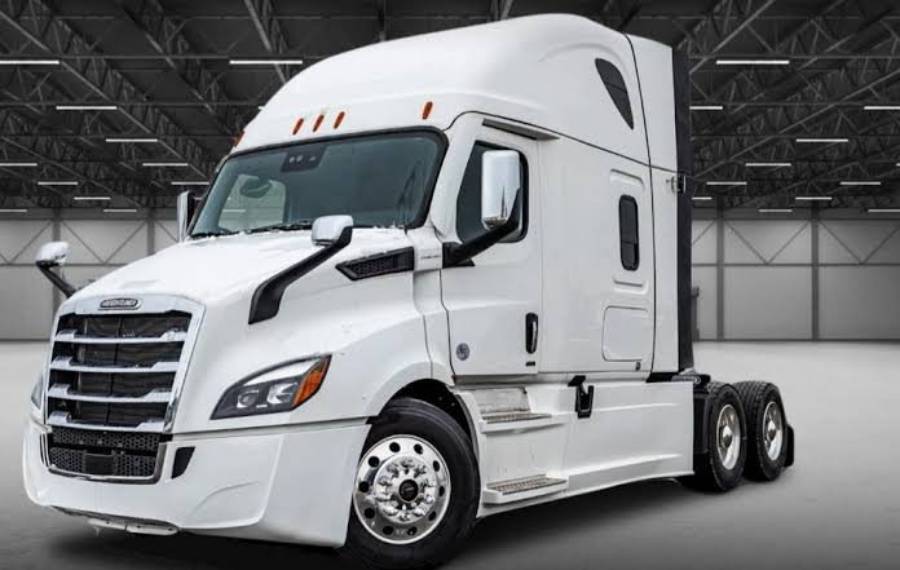
A Freightliner that cranks but won’t start usually has a problem with fuel delivery, electrical power, engine position signals, ECM control, air intake, or engine compression. The starter can still turn the engine because cranking and starting are two different processes. Cranking only confirms that the starting system can rotate the engine; the engine still needs the correct fuel supply, electrical inputs, airflow, compression, and control signals to begin running.
Start the diagnosis by checking the battery condition and electrical connections, fuel level and delivery, fuel filter, relevant fuses and relays, and available fault codes. If these basic checks do not identify the problem, the next steps include testing ECM power and communication, crankshaft and camshaft position sensor signals, fuel pressure, and mechanical condition. The exact diagnostic procedure can differ between Freightliner models, model years, engines, and electrical configurations.
This guide explains the main causes of a Freightliner crank-no-start condition, what to check first, and how to narrow the problem down to the fuel, electrical, sensor, ECM, or mechanical system before replacing parts.
Why Does a Freightliner Crank but Not Start?
A Freightliner can crank but not start when the starter turns the engine but one of the systems required for combustion does not operate correctly. The 5 main problem areas are fuel delivery, battery or electrical supply, engine position sensors, ECM-related electrical circuits, and mechanical or air-intake conditions. Because the engine already cranks, replacing the starter should not be the first response unless testing identifies a starter-related cranking-speed problem.
Fuel delivery problems are a primary area to check because a diesel engine cannot start without sufficient fuel reaching the cylinders at the required pressure. An empty or very low fuel tank is the simplest cause, but the same symptom can result from a restricted fuel filter, air entering the fuel system, a fuel supply problem, inadequate fuel pressure, or an injector-related fault. A Freightliner may therefore crank normally while the cylinders receive insufficient fuel for combustion.
Battery and electrical problems can also produce a crank-no-start condition even when the starter still operates. Cranking does not prove that every electrical circuit has adequate voltage. Weak batteries, excessive voltage drop, corroded terminals, loose grounds, damaged wiring, or poor connections can affect the ECM and other engine-management components while leaving enough electrical power to rotate the engine. Battery condition and voltage should therefore be tested rather than judged only by whether the starter turns.
Crankshaft and camshaft position sensor problems can prevent the engine-management system from receiving the position and speed information it needs during starting. The ECM uses these signals to determine engine operation and control related functions. A failed sensor, damaged wiring, poor connector, or missing signal can therefore leave the engine cranking without starting. Sensor-related diagnostic trouble codes can help narrow the problem, but the presence of a code does not by itself prove that the sensor must be replaced.
ECM power and associated electrical circuits are another possible source of a no-start condition. A blown fuse, failed relay, poor ground, wiring fault, connector problem, or loss of ECM power can interrupt engine control even though the starting circuit continues to crank the engine. This is why the starting circuit and engine-management circuit should not be treated as the same system during diagnosis.
Mechanical and air-intake conditions should be investigated when the basic fuel and electrical checks do not reveal the cause. A diesel engine requires adequate compression and airflow in addition to fuel and correct control signals. Mechanical damage, insufficient compression, or a serious intake restriction can interfere with starting. These faults generally require deeper testing and should come later in the diagnostic sequence rather than being assumed before simpler causes have been eliminated.
What Should You Check First When a Freightliner Cranks but Won’t Start?
Check the battery and electrical connections, available fuel, fuel delivery, fuel filter, relevant fuses and relays, and diagnostic fault codes first. This order allows common and relatively accessible problems to be identified before moving to sensor testing, ECM diagnosis, fuel-pressure testing, or mechanical inspection.
Start with the battery and main electrical connections. Inspect the battery terminals for looseness or corrosion and check the major ground connections for visible damage or poor contact. Battery voltage and voltage drop should be measured when appropriate because a battery can still turn the starter while voltage falls too far for other electronic systems to operate correctly. Slow or inconsistent cranking also makes battery condition, connections, and the starting circuit higher-priority diagnostic areas.
Verify that the truck has fuel and that fuel can reach the engine. Do not rely entirely on the fuel gauge when the symptom appeared after the truck had been operating with a low fuel level or after fuel-system work. Look for visible leaks and other signs of a fuel-supply problem, then inspect the fuel filter and associated components according to the engine’s service procedure. A restricted filter or air introduced into the fuel system can interfere with fuel delivery and produce extended cranking or a complete no-start condition.
Inspect relevant fuses and relays after the basic battery and fuel checks. The exact fuse, relay, and module arrangement varies by Freightliner model, model year, engine, and electrical configuration, so use the correct service information rather than assuming that a fuse location from another Freightliner applies to the truck being diagnosed. A failed engine-management circuit can stop the engine from starting while the starter circuit remains functional.
Finally, check the instrument panel for warning indicators and scan the truck for available diagnostic trouble codes. Codes related to engine speed or position signals, fuel-system operation, sensor circuits, ECM power, or communication can narrow the next diagnostic step. Treat a fault code as diagnostic evidence rather than automatic proof of a failed component. For example, a sensor-related code can also result from damaged wiring, a poor connector, an electrical supply problem, or another condition affecting the signal.
How Do You Diagnose a Freightliner Crank-No-Start Problem Step by Step?
Diagnose a Freightliner crank-no-start problem by confirming the symptom first, then checking electrical power, fuel delivery, fault codes, ECM operation, engine position signals, and finally advanced fuel or mechanical conditions. Following this sequence reduces unnecessary parts replacement because each test determines which system should be investigated next.
Step 1: Confirm that the engine actually cranks. Turn the key or activate the starting system and determine whether the starter consistently rotates the engine. A truck that does not crank requires a different diagnostic path involving the batteries, starter circuit, starter motor, ignition or start-control circuit, and related connections. If the engine rotates but never begins running, continue with crank-no-start diagnosis.
Step 2: Check battery condition and cranking performance. Verify battery condition, terminal connections, cables, and grounds. Pay attention to slow, uneven, or weakening cranking because cranking speed and available voltage affect the starting process. Measure voltage and voltage drop where appropriate instead of assuming the batteries are good simply because the starter operates. Correct loose, corroded, or damaged connections before diagnosing more complex systems.
Step 3: Verify fuel availability and delivery. Confirm that there is adequate diesel fuel in the tank and inspect the fuel system for obvious leaks, restrictions, or conditions that could introduce air. Check the fuel filter and other serviceable fuel-system components according to the engine manufacturer’s procedure. If the problem appeared immediately after a filter change, fuel-system repair, or running very low on fuel, air entering the fuel system becomes a more relevant diagnostic clue.
Step 4: Check the fuses, relays, and engine-management power circuits. Inspect the circuits associated with the ECM and engine operation using service information for the specific truck. A Freightliner can continue to crank when an engine-control fuse, relay, ground, or power circuit has failed because the starter and engine-management systems do not depend on exactly the same electrical path. Do not substitute fuse locations or specifications from another model year without confirming that the electrical configuration matches.
Step 5: Scan for diagnostic trouble codes. Connect an appropriate diagnostic tool and record active and stored codes before clearing anything. Pay particular attention to faults involving engine speed or position, fuel delivery, sensor circuits, ECM power, and communication. Diagnostic codes should determine what to test next rather than which component to replace immediately.
Step 6: Verify ECM power and communication. If the diagnostic tool cannot communicate with the engine controller, investigate ECM power, grounds, connectors, wiring, and communication circuits before assuming the ECM itself has failed. Loss of communication can originate outside the module. If communication is available, review relevant live data during cranking when the diagnostic equipment and service procedure support it.
Step 7: Evaluate crankshaft and camshaft position information. The engine-management system requires valid engine position and speed information to control starting and operation. If the ECM does not receive the required signal during cranking, inspect the applicable sensor circuit, connector, wiring, and sensor according to the engine-specific diagnostic procedure. Replace a sensor only after testing supports the diagnosis.
Step 8: Move to advanced fuel-system testing if the electrical and control checks pass. A truck can have fuel in the tank while still failing to develop the fuel delivery or pressure required for starting. At this stage, diagnosis can involve fuel-pressure measurements, supply-system tests, injector-related checks, or other engine-specific procedures. Diesel fuel systems can operate at extremely high pressures, so tests that require opening or working directly on high-pressure components should follow the manufacturer’s safety and service procedures.
Step 9: Investigate mechanical conditions when the previous systems test correctly. Adequate compression, correct mechanical operation, and unrestricted airflow remain necessary for combustion. Compression loss or another internal engine problem becomes more relevant when electrical control, sensor inputs, and fuel delivery have been verified. These tests normally require additional tools and technical knowledge, making professional diagnosis appropriate when basic troubleshooting has already eliminated accessible causes.
The diagnostic sequence should narrow the problem rather than produce a list of unrelated parts to replace. For example, normal cranking electrical conditions combined with correct ECM communication and engine-speed information shifts attention toward fuel delivery or mechanical conditions. Missing engine-speed data during cranking instead shifts diagnosis toward the relevant sensor, wiring, connector, or related circuit.
What Freightliner Fault Codes Should You Check When the Engine Won’t Start?
Check Freightliner fault codes related to engine speed and position, fuel-system operation, sensor circuits, ECM power, and network communication when the engine cranks but does not start. The exact codes depend on the truck’s model year, engine, modules, and electronic architecture, so diagnosis should use codes retrieved from the specific truck rather than a generic list assumed to apply to every Freightliner.
Engine speed and position faults deserve attention because the ECM depends on crankshaft and camshaft information to determine engine operation. A code involving one of these circuits can point toward a failed sensor, damaged wiring, a poor electrical connection, or an invalid signal. The correct next action is to test the circuit identified by the diagnostic procedure rather than replace the named sensor automatically.
Fuel-system codes can direct diagnosis toward fuel pressure, fuel delivery, injectors, or related control circuits. These codes become especially relevant when the truck has adequate electrical power and valid engine-position information but still cannot establish combustion. Compare the code with actual fuel-system test results where the engine manufacturer’s diagnostic procedure requires them.
ECM power and communication codes can identify another important diagnostic path. A module that loses power, ground, or network communication may not control the engine correctly even though the starter continues to crank. Check the appropriate power supply, grounds, connectors, wiring, and communication circuits before concluding that the control module itself is defective.
Sensor circuit codes should also be interpreted in context. A diagnostic code identifies a detected condition within a monitored system; it does not necessarily identify the failed physical part. For example, damaged wiring or a loose connector can alter a sensor signal and generate a code associated with that sensor. Testing the complete circuit prevents unnecessary component replacement.
Can a Freightliner Crank but Not Start Without Showing a Fault Code?
Yes, a Freightliner can crank but not start without storing a diagnostic trouble code. A no-start condition does not always create an electronic fault that the ECM can recognize and record. Fuel restrictions, air in the fuel system, certain wiring problems, low compression, and other mechanical conditions can exist without producing a code that directly identifies the cause.
The absence of fault codes therefore changes the diagnostic process but does not end it. Confirm battery and cranking conditions, verify fuel delivery, inspect the fuel filter and relevant electrical connections, and review available live data when appropriate. If those checks are normal, fuel-pressure and mechanical testing may be required.
A no-code condition is particularly important because replacing electronic components without test evidence becomes less defensible. Diagnosis should move from observable conditions and measurements toward the failed system. The objective is to establish what the engine is missing during cranking—adequate electrical conditions, fuel delivery, valid control inputs, airflow, or compression—and then identify why that requirement is not being met.
How Can You Tell Whether a Freightliner No-Start Problem Is Fuel, Electrical, or Mechanical?
You can distinguish a fuel, electrical, sensor, or mechanical no-start problem by comparing the symptoms with test results instead of diagnosing the truck from cranking behavior alone. Fuel problems typically involve inadequate fuel delivery or pressure, electrical problems affect voltage or engine-control circuits, sensor problems prevent the ECM from receiving required operating information, and mechanical problems prevent the engine from creating the physical conditions required for combustion.
A fuel-related problem becomes more likely when the engine cranks at a normal speed and the electrical system appears functional but the engine cannot establish combustion. Recent fuel-system work, running the tank very low, a restricted fuel filter, visible fuel leakage, air entering the supply system, or inadequate fuel delivery provides additional evidence. The correct diagnostic response is to verify fuel supply and delivery before moving deeper into high-pressure fuel-system testing.
An electrical problem becomes more likely when cranking speed is slow or inconsistent, battery voltage is inadequate, connections become hot, terminals are corroded, grounds are loose, or engine-management circuits lack proper power. The fact that the starter turns does not eliminate electrical faults. The starting circuit can operate while another circuit supplying the ECM, sensors, or related components has insufficient voltage or loses power entirely.
A sensor or ECM-control problem becomes more likely when electrical supply is correct but the engine controller lacks information required during cranking. Missing engine-speed or position information, relevant diagnostic trouble codes, abnormal live data, or communication problems can direct diagnosis toward crankshaft or camshaft position circuits, ECM power, wiring, connectors, or network communication. Test the complete affected circuit because a code associated with a sensor does not prove that the sensor itself has failed.
A mechanical problem moves higher on the diagnostic list after adequate electrical power, ECM operation, required sensor inputs, and fuel delivery have been verified. Insufficient compression or another internal engine condition can prevent diesel combustion even when the electronic systems operate correctly. Mechanical testing generally belongs later in the diagnostic sequence because it requires more equipment and labor than checking accessible electrical and fuel-system conditions.
The most useful distinction comes from identifying what is missing during cranking. Normal electrical conditions but inadequate fuel delivery point toward the fuel system. Missing ECM power or engine-position data points toward electrical or control systems. Correct fuel and electronic conditions combined with a persistent no-start condition make mechanical testing more relevant. This evidence-based process is more reliable than replacing components based on symptoms alone.
Why Does a Freightliner Start and Then Shut Off?
A Freightliner that starts and then shuts off has a different symptom from an engine that continuously cranks without ever starting. Starting briefly confirms that combustion occurred, so diagnosis should focus on conditions that allow the engine to start but prevent it from continuing to run. Fuel delivery, intermittent electrical supply, ECM power, sensor signals, and engine-protection or control conditions become relevant areas to investigate.
Fuel supply should be checked because the engine may receive enough fuel to start but fail to maintain the required supply afterward. A restriction, air entering the fuel system, or another delivery problem can produce a situation in which initial combustion occurs before the engine stops. Recent fuel-filter replacement or other fuel-system work is useful diagnostic context because it can help determine where inspection should begin.
Intermittent electrical power can create a similar symptom. A loose connection, poor ground, damaged wiring, relay problem, or interrupted ECM power supply can allow the engine to start and then stop when the circuit loses continuity. Inspecting connections and checking relevant circuits is therefore more useful than treating every start-then-die symptom as a fuel problem.
Fault codes and live diagnostic information can further narrow the cause. Record codes before clearing them and compare them with the exact sequence of events. A truck that starts normally and immediately shuts down requires a different diagnostic path from one that runs for several minutes before stopping. The timing and repeatability of the shutdown are diagnostic evidence because they show under what operating condition the failure appears.
Do not treat “starts then shuts off” and “cranks but won’t start” as interchangeable descriptions. Determine whether the engine actually reaches a running state, how long it runs, and whether the same behavior occurs on every attempt. Correctly defining the symptom prevents diagnosis from beginning in the wrong system.
Why Does a Freightliner Not Crank at All?
A Freightliner that does not crank has a starting-system problem that requires a different diagnostic path from a crank-no-start condition. In a no-crank condition, the starter does not rotate the engine when a start command is given. The first areas to investigate include battery power, battery connections, grounds, starter circuits, control circuits, and the starter itself.
Battery condition should be checked first because the starter requires substantial electrical power to rotate a diesel engine. Weak batteries, loose or corroded terminals, damaged cables, or poor grounds can result in no cranking, slow cranking, or intermittent starter operation. Testing voltage and voltage drop provides stronger diagnostic evidence than judging battery condition from lights or other low-current electrical accessories.
The starter circuit becomes the next diagnostic area when battery condition and major connections are satisfactory. The specific circuit arrangement depends on the Freightliner model, model year, and configuration, so the correct wiring and service information should guide fuse, relay, control-circuit, and starter testing.
The key distinction is simple: a no-crank Freightliner does not have its engine rotated by the starter, while a crank-no-start Freightliner has an engine that rotates but fails to begin running. Establishing which condition exists should be the first diagnostic decision because the two symptoms lead to different systems and tests.
Do Freightliner Cascadia and M2 Trucks Have the Same No-Start Causes?
Freightliner Cascadia and M2 trucks can share the same general crank-no-start causes, but they should not automatically receive the same diagnostic procedure. Fuel delivery problems, inadequate electrical power, sensor faults, ECM power problems, wiring faults, and mechanical conditions can affect both models. The exact components, circuit layouts, fault codes, and test procedures depend on the model year, engine, and electrical configuration.
The engine configuration is particularly important when diagnosing a no-start condition. A diagnostic procedure written for one engine should not be assumed to apply to another engine simply because both engines are installed in Freightliner trucks. Fuel-system architecture, sensors, control modules, connectors, and diagnostic specifications can differ. Identify the truck and engine configuration before following component-specific testing instructions.
Model year also matters because electrical and electronic systems can change between production years. Fuse locations, relay assignments, wiring routes, modules, connectors, and diagnostic information can differ even between trucks carrying the same model name. For example, a fuse location shown for one Cascadia configuration should not be treated as the correct location for every Cascadia without checking the appropriate service information.
The best approach is therefore to use the same diagnostic logic but configuration-specific procedures. First establish whether the missing requirement is electrical power, fuel delivery, engine-position information, ECM control, or mechanical operation. Once the affected system has been identified, use service information for the specific Freightliner model, model year, and engine to locate components and perform the required tests.
Read more: Freightliner M2 Fuse Box Location: Complete Guide
When Should You Call a Diesel Technician for a Freightliner That Won’t Start?
Call a qualified diesel technician when basic battery, connection, fuel-supply, fuse, relay, and fault-code checks do not identify the cause, or when diagnosis requires specialized testing of the fuel system, ECM circuits, communication network, sensor signals, or internal engine condition. Continuing to replace parts without test evidence can increase repair cost without correcting the actual failure.
Professional diagnosis becomes appropriate when the ECM cannot communicate with diagnostic equipment and basic power and ground checks have not identified the problem. Communication faults can involve wiring, connectors, module power, grounds, network circuits, or control modules. Proper diagnosis may require wiring diagrams, electrical measurements, compatible diagnostic equipment, and configuration-specific service information.
Advanced fuel-system problems are another reason to involve a diesel technician. Confirming that diesel fuel exists in the tank does not prove that the engine receives fuel under the conditions required for starting. Diagnosis may require pressure measurements and additional fuel-system tests. High-pressure diesel fuel systems can present serious injury hazards, so procedures involving high-pressure components should be performed with the correct equipment and manufacturer-approved safety procedures.
Mechanical testing should also be escalated when fuel delivery, electrical supply, ECM operation, and required sensor inputs have been verified but the engine still does not start. Compression testing and diagnosis of internal engine conditions require additional tools and technical knowledge. At this point, further basic roadside checks are unlikely to provide enough evidence to identify the failure.
Stop troubleshooting immediately when a test requires a procedure or piece of equipment you cannot use safely. The objective of basic diagnosis is not to perform every possible repair at the roadside. It is to eliminate accessible causes, collect useful diagnostic evidence, and determine when specialized testing is necessary.
How Can You Prevent a Freightliner Crank-No-Start Problem?
You can reduce the risk of a Freightliner crank-no-start problem by maintaining the batteries and electrical connections, servicing the fuel system on schedule, replacing filters at the required intervals, addressing fault codes promptly, and inspecting wiring and grounds when signs of deterioration appear. Preventive maintenance cannot eliminate every no-start failure, but it can reduce failures caused by neglected service items and deteriorating connections.
Keep the batteries, terminals, cables, and major grounds in serviceable condition because starting a diesel engine places a substantial demand on the electrical system. Corrosion, loose connections, damaged cables, and declining battery condition can create voltage problems that affect both cranking performance and engine-management electronics. Battery and connection problems should be corrected when they first appear rather than after the truck develops an intermittent starting problem.
Maintain the fuel system according to the applicable engine service schedule. Replace fuel filters at the specified interval and investigate fuel leaks, contamination, repeated loss of prime, or other fuel-delivery symptoms instead of waiting for a complete no-start condition. After fuel-system service, follow the correct procedure for the specific engine to prevent or remove air from the system.
Respond to recurring warning lights and diagnostic trouble codes before they develop into a roadside failure. A code involving an engine-position circuit, fuel system, electrical supply, or communication network provides an opportunity to investigate a developing fault while the truck still operates. Record the code and diagnose the affected system rather than repeatedly clearing the fault without identifying its cause.
Include wiring, connectors, and grounds in routine inspections when operating conditions expose the truck to vibration, moisture, corrosion, or physical damage. An intermittent connection can initially produce occasional starting difficulty before becoming a permanent open circuit or communication problem. Finding deteriorated electrical connections early can prevent an intermittent fault from becoming a crank-no-start condition.
Finally, keep accurate maintenance and repair records for the truck. Previous battery replacements, fuel-system work, wiring repairs, sensor faults, and recurring diagnostic codes provide useful context when a new starting problem develops. When a Freightliner eventually cranks but won’t start, a documented service history can shorten the diagnostic process by showing which systems have recently been serviced and which faults have occurred before.