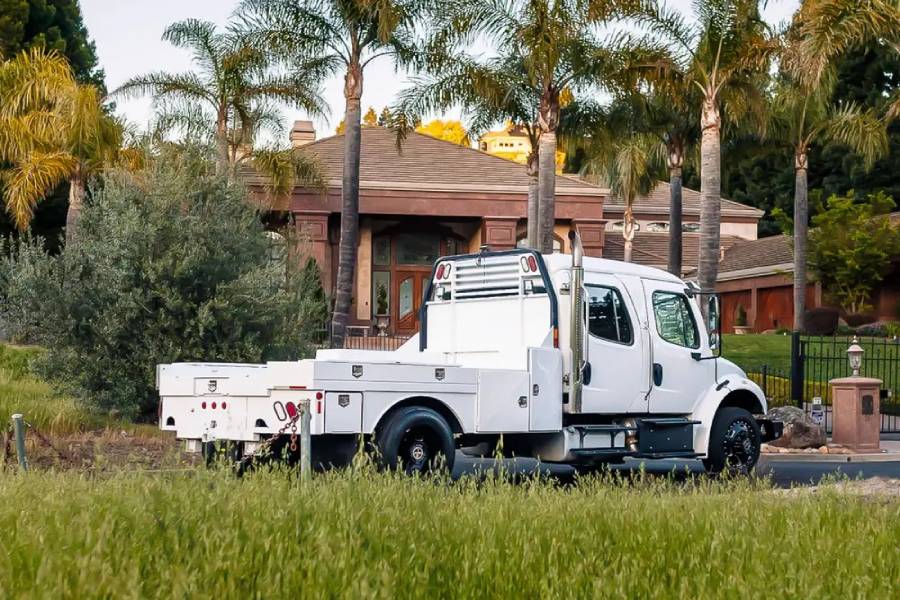
The Range Inhibit warning on a Freightliner M2 indicates that the transmission control system is preventing or restricting a requested gear-range change under specific conditions. Although this warning does not automatically mean the transmission has failed, it requires attention when it appears alongside shifting problems, warning lights, or abnormal vehicle behavior.
Common causes and conditions to investigate include operating restrictions, shift selector signals, transmission control module (TCM) faults, electrical connection problems, and diagnostic trouble codes (DTCs). On trucks equipped with Allison automatic transmissions, the exact troubleshooting procedure depends on the transmission model, vehicle configuration, and fault information stored by the control system.
To troubleshoot a Freightliner M2 Range Inhibit warning effectively, start by identifying the transmission model and recording the symptoms. Next, check the operating conditions, retrieve the relevant diagnostic codes, and inspect the components indicated by the diagnostic evidence. Avoid replacing sensors, electrical components, or the transmission itself based on the warning alone.
Safety should come first throughout the troubleshooting process. If the truck cannot engage a gear reliably, loses propulsion, or exhibits signs of a serious transmission malfunction, stop in a safe location and arrange professional assistance. The following guide explains how to identify possible causes, perform systematic checks, and determine when specialized transmission diagnosis is necessary.
What Does Range Inhibit Mean on a Freightliner M2?
Range Inhibit on a Freightliner M2 indicates that the transmission control system is preventing or restricting a requested gear-range change. On trucks equipped with an Allison automatic transmission, this function helps prevent gear selection under operating conditions that do not meet the transmission’s requirements. The warning itself does not confirm mechanical transmission failure. To determine whether the condition is normal or fault-related, the driver or technician must examine the operating symptoms and diagnostic information.
The Transmission Control Module (TCM) manages transmission operation by processing information from relevant sensors, the shift selector, and other control inputs. Based on this information, the system determines whether a requested shift is permitted. If the required conditions are not satisfied, the transmission may reject the request or remain in its current range. For example, a truck may display a range-related warning when a requested gear change conflicts with an operating restriction defined for its transmission configuration.
The shift selector is another important component in this process. It communicates the driver’s requested gear or range to the transmission control system. If the selected range does not match the range accepted by the system, further diagnosis may be necessary. However, a difference between the requested and actual range does not automatically indicate a defective selector. The condition may result from an operating restriction, a control-system issue, or another fault that must be identified through testing.
The correct interpretation also depends on the transmission installed in the truck. Freightliner M2 vehicles may have different transmission configurations, and diagnostic procedures can vary by model and year. Technicians should identify the transmission model before applying specific fault-code definitions, electrical specifications, or repair procedures. This prevents incorrect diagnoses caused by applying instructions intended for a different transmission.
Why Does Range Inhibit Not Always Mean Transmission Failure?
Range Inhibit does not always mean the transmission needs repair because the system can restrict a gear change when operating conditions do not permit the requested selection. A temporary restriction and a persistent transmission fault are different diagnostic situations. For instance, a warning that appears during a specific operating condition may require a different response from a warning accompanied by repeated loss of gear engagement or abnormal transmission behavior.
To distinguish these situations, record when the warning appears, which range the driver selected, whether the transmission responds, and whether other warning indicators are present. Retrieve the applicable transmission diagnostic trouble codes before clearing them or replacing components. If the warning persists, the truck cannot engage a gear reliably, or the transmission exhibits abnormal behavior, follow the manufacturer’s diagnostic procedure or consult a qualified transmission technician.
What Symptoms Occur When Range Inhibit Appears?
When Range Inhibit appears on a Freightliner M2, the most important symptoms to record are rejected gear selections, difficulty engaging Drive or Reverse, intermittent warning indications, and abnormal transmission behavior. These symptoms help narrow the diagnostic process, but none identifies a specific failed component on its own. The correct diagnosis depends on the installed transmission, the conditions under which the warning appears, and the diagnostic trouble codes (DTCs) stored in the control system.
Difficulty Shifting Into Drive or Reverse
A Freightliner M2 that cannot engage Drive or Reverse requires further investigation to determine whether the transmission is actively restricting the requested range or experiencing a separate shifting problem. The distinction matters because a range-selection restriction does not necessarily indicate internal transmission damage. For example, if the selector displays a requested range but the transmission does not engage it, a technician must compare the requested range, the displayed range, and the transmission’s actual response.
Start by recording which gear selection fails and whether the problem occurs consistently or only under particular operating conditions. Check the shift selector display and any accompanying warning indicators. Do not repeatedly force gear selections or attempt to move the truck when engagement is uncertain. If the truck cannot select a gear reliably, secure it in a safe location and arrange professional diagnosis.
Intermittent Range Inhibit Warnings
An intermittent Range Inhibit warning appears under some conditions but disappears under others. This pattern is useful diagnostic evidence because the operating circumstances may help identify the conditions associated with the restriction. However, an intermittent warning does not prove that a sensor, electrical connector, or transmission control module is defective.
Record when the warning occurs, including whether it appears during startup, after the vehicle warms up, while changing ranges, or during a particular driving condition. Note whether the warning disappears without intervention or returns after the next operating cycle. If diagnostic codes are available, record them before clearing anything. This information helps a technician compare the warning with stored fault data rather than replacing components based on guesswork.
Other Warning Lights and Abnormal Transmission Behavior
Additional warning indicators or changes in transmission behavior can help establish the seriousness of a Range Inhibit event. Relevant observations include unexpected shifts, loss of propulsion, unusual mechanical noises, fluid leakage, or other transmission-related warnings. These signs should be documented because they may indicate a broader problem requiring investigation beyond the range-inhibit function.
For example, a Range Inhibit warning accompanied by an inability to engage a gear requires a different level of attention from an isolated warning with otherwise normal operation. If the truck loses propulsion, exhibits signs of serious mechanical damage, or cannot be operated safely, stop in a safe location and request professional assistance. Do not assume the vehicle is safe to continue driving simply because the warning disappears.
The key diagnostic principle is to document the exact symptom before identifying its cause. Recording the selected range, warning indicators, operating conditions, and available DTCs provides a more reliable starting point for the next troubleshooting stage.
What Causes Range Inhibit on a Freightliner M2?
Range Inhibit on a Freightliner M2 can result from normal operating restrictions or a fault affecting transmission control, electrical signals, or gear selection. The warning alone does not identify the root cause. An accurate diagnosis requires confirming the installed transmission model, recording the symptoms, and checking the relevant diagnostic trouble codes (DTCs). This approach helps technicians distinguish an expected operating restriction from a fault that requires repair.
1. Operating Conditions That Restrict Gear Selection
Some Range Inhibit events occur because the transmission control system does not permit the requested gear-range change under the current operating conditions. Automatic transmissions use control logic to determine when a shift is permitted, and the applicable restrictions depend on the transmission model and vehicle configuration. A rejected shift therefore does not automatically mean that a transmission component has failed.
For example, a driver may request a different range while the transmission is operating outside the conditions specified for that shift. The system may reject the request until the required conditions are met. To investigate this possibility, record the selected range, vehicle operating state, engine speed if available, and the exact circumstances in which the warning appears. Compare these observations with the manufacturer’s operating instructions for the installed transmission rather than applying a universal RPM or speed threshold.
2. Shift Selector or Transmission Control Module Problems
The shift selector communicates the driver’s requested range to the transmission control system, while the Transmission Control Module (TCM) processes relevant inputs and manages transmission operation. A problem affecting selector signals, control-module inputs, or communication between components can contribute to shifting complaints. However, the presence of Range Inhibit does not establish that either the selector or TCM is defective.
The first step is to compare the range selected by the driver with the range displayed by the selector and the transmission’s reported operating state, where diagnostic data is available. If the displayed selection is inconsistent with the driver’s request, inspect the relevant system according to the vehicle’s service information. If the selector reports the correct request but the transmission refuses the shift, retrieve the transmission DTCs and follow the corresponding diagnostic procedure before considering component replacement.
3. Damaged Wiring, Electrical Connections, or Power Supply
Damaged wiring, loose connectors, corrosion, or an electrical supply problem can interfere with transmission control signals. These faults may produce intermittent warnings, communication errors, or shifting problems. Electrical issues deserve attention when the warning appears inconsistently, particularly if diagnostic codes or other symptoms indicate a problem with a circuit or control-system connection.
Begin with a visual inspection of accessible wiring harnesses and connectors associated with the transmission control system. Look for damaged insulation, loose connections, corrosion, moisture intrusion, or evidence of previous repairs. Before disconnecting connectors or performing electrical measurements, follow the manufacturer’s safety procedures. Use the correct wiring diagram and specified test values for the vehicle and transmission. Do not replace the TCM or a sensor solely because a wiring-related symptom is present; verify the circuit and its connections first.
4. Sensor Signals and Transmission Diagnostic Trouble Codes
Transmission control depends on input signals that allow the system to determine operating conditions and manage gear selection. Depending on the transmission model, relevant diagnostic information may involve engine speed, transmission input or output speed, selector signals, or communication between control modules. An incorrect or missing signal can affect transmission operation, but the exact relationship between a signal fault and Range Inhibit must be confirmed for the installed transmission.
Use a compatible diagnostic tool to retrieve the available transmission DTCs. Record the complete code, its description, its current or stored status, and any associated data before clearing codes or disconnecting components. For example, a speed-signal-related code would direct the technician toward the specified sensor circuit and supporting wiring checks rather than automatically proving that the sensor itself has failed. Follow the manufacturer’s diagnostic flowchart to test the indicated circuit or component and confirm the root cause.
On Freightliner M2 trucks equipped with a Power Take-Off (PTO), the PTO configuration and its operating interlocks may affect permitted transmission operations. A truck fitted with equipment that drives hydraulic pumps or other auxiliary machinery may use control conditions that differ from those on a vehicle without PTO equipment. The relevance of PTO operation to a Range Inhibit warning depends on the actual transmission, PTO installation, and programmed control logic.
If the truck has a PTO, record whether the warning occurs while the PTO is engaged, disengaged, or being operated. Check the PTO operating instructions and the applicable transmission or vehicle service documentation for any restrictions affecting range selection. Do not assume that every Range Inhibit warning originates from the PTO system, and do not bypass an interlock to force a gear change. If the warning persists after the required operating conditions are met, use the relevant diagnostic procedure to investigate further.
The most effective way to narrow down the cause is to connect each symptom with testable evidence. Operating restrictions should be checked first, followed by selector behavior, diagnostic codes, and targeted electrical or component testing. The next step is to apply these checks in a consistent order.
How Do You Troubleshoot Range Inhibit on a Freightliner M2 Step by Step?
Troubleshooting Range Inhibit on a Freightliner M2 requires a systematic process that identifies the transmission configuration, documents the symptoms, retrieves diagnostic trouble codes (DTCs), and verifies suspected faults before repairs begin. The most reliable approach is to diagnose the cause before replacing components. Because Freightliner M2 trucks can use different transmission configurations, technicians must follow the service procedures and specifications applicable to the particular vehicle.
Step 1: Identify the Transmission Model
Start by identifying the truck’s model year, vehicle configuration, and installed transmission. The transmission model determines which diagnostic procedures, fault-code definitions, electrical specifications, and fluid-checking requirements apply. Applying instructions intended for a different transmission can lead to incorrect test results or unnecessary repairs.
Check the vehicle identification information and transmission identification label, then consult the appropriate Freightliner or transmission manufacturer’s service documentation. If the truck uses an Allison automatic transmission, confirm the specific model and series before following Allison diagnostic instructions. Record this information so that every subsequent check uses the correct technical reference.
Step 2: Record the Symptoms and Operating Conditions
Document exactly what happens when Range Inhibit appears. Record whether the truck cannot select Drive or Reverse, whether the warning appears intermittently, and whether other transmission indicators or abnormal behaviors occur at the same time. These details help distinguish a restricted gear selection from a broader transmission-control or mechanical problem.
Also record the conditions surrounding the event, including whether it occurs during startup, while attempting to change ranges, after the transmission warms up, or during a particular operating task. Note the selected range and any displayed information. For example, an intermittent warning that appears only during a specific operating condition provides a different diagnostic starting point from a warning accompanied by persistent loss of gear engagement.
If the truck cannot engage a gear reliably, loses propulsion, or exhibits signs of serious transmission damage, stop in a safe location and arrange professional assistance. Do not attempt road testing merely to reproduce the warning when vehicle operation may be unsafe.
Step 3: Check the Shift Selector and Operating Conditions
Inspect the shift selector display and confirm that the requested gear range matches the driver’s selection. Check whether the transmission accepts the request and whether the displayed range changes as expected. A mismatch between the requested and reported range can help identify where further diagnosis is needed, but it does not automatically prove that the selector is defective.
Next, compare the observed operating conditions with the transmission manufacturer’s requirements. Depending on the configuration, these conditions may involve vehicle speed, engine operating state, transmission status, or an active PTO interlock. Do not assume that a single RPM or vehicle-speed threshold applies to every Freightliner M2. Use the specifications for the installed transmission to determine whether the requested shift should be permitted.
Step 4: Retrieve Transmission Diagnostic Trouble Codes
Read the transmission control system with a diagnostic tool that supports the installed transmission. Record all relevant active and stored DTCs, their descriptions, and any available freeze-frame or operating data before clearing codes or disconnecting components. These records provide evidence that can help distinguish an operating restriction from an electrical, sensor, or control-system fault.
Follow the diagnostic instructions associated with each applicable code. For example, if a code identifies a suspected speed-signal circuit problem, the next step is to test the specified circuit and signal according to the service procedure. Replacing the sensor immediately without verifying the wiring, connector, and test results risks leaving the original problem unresolved.
If no relevant codes are present, do not conclude that the transmission is fault-free. Continue with the appropriate symptom-based diagnostic procedure and examine the operating conditions under which Range Inhibit occurs.
Step 5: Inspect Electrical Connections and Transmission Fluid
Inspect accessible transmission-related wiring and connectors for damaged insulation, loose connections, corrosion, or moisture intrusion. Electrical faults can interrupt control signals and cause intermittent transmission problems. If the inspection reveals damage, test the affected circuit using the correct wiring diagram and manufacturer-specified procedures before deciding which component requires repair.
Check transmission fluid only according to the procedure specified for the installed transmission. The required fluid level, checking temperature, vehicle position, and engine state may vary by model. Also verify that the fluid meets the manufacturer’s specification and inspect for signs of leakage or contamination when applicable. An incorrect fluid level or unsuitable fluid may contribute to transmission problems, but neither should be assumed to be the cause of Range Inhibit without supporting evidence.
Avoid working beneath an inadequately secured vehicle or handling hot transmission fluid without suitable precautions. Electrical measurements, connector disconnection, and fluid servicing should follow the appropriate safety procedures.
Step 6: Confirm the Root Cause and Verify the Repair
Before replacing a sensor, shift selector, TCM, or transmission assembly, confirm that the test results support the proposed repair. Compare the symptoms, diagnostic codes, live data, wiring inspection, and component test results. This evidence-based process reduces unnecessary parts replacement and helps ensure that the actual fault is addressed.
After the repair, follow the manufacturer’s verification procedure. Confirm that the original symptom has been resolved, that the transmission responds correctly under the specified test conditions, and that the relevant DTCs do not return. Any road test should take place only when the truck is safe to operate and under appropriate conditions. If Range Inhibit persists or the cause remains uncertain, refer the vehicle to a qualified technician with the correct diagnostic equipment and service information.
Which Diagnostic Trouble Codes Should You Check for Range Inhibit?
Diagnosing Range Inhibit on a Freightliner M2 requires checking the transmission diagnostic trouble codes (DTCs) supported by the installed transmission and control system. There is no single universal fault code that confirms the cause of every Range Inhibit warning. The appropriate diagnostic path depends on the transmission model, the symptoms, and the information reported by the control module.
How Do You Find the Correct Transmission Fault Code Definitions?
Use a diagnostic tool that supports the truck’s transmission control system, then retrieve the available transmission codes and their descriptions. Confirm whether the information comes from the transmission control module (TCM), the engine control module, or another vehicle system. This distinction matters because a code reported by one module may require a different diagnostic procedure from a code reported by another.
Consult the manufacturer’s diagnostic documentation for the exact transmission model. The documentation should identify the meaning of each code, the conditions that trigger it, and the prescribed testing sequence. For example, if the diagnostic system reports a circuit-related fault, the next step is to follow the specified wiring and electrical tests rather than immediately replacing the component associated with the circuit.
Record the complete code and its description. Avoid relying on an unverified code list from a different transmission series or model year, because similar symptoms can have different diagnostic requirements across configurations.
How Do You Interpret Active and Stored Transmission Codes?
Active DTCs indicate faults that the control system currently detects, while stored or historical codes record faults detected previously. Both types can provide useful diagnostic evidence, but their presence does not automatically establish which component needs replacement. A stored code may relate to an intermittent problem that is no longer present, whereas an active code may indicate a condition that still requires investigation.
Compare the code status with the symptoms and operating conditions recorded when Range Inhibit appeared. If a fault occurs intermittently, examine any available event records or diagnostic data to determine whether the fault returns under specific conditions. For example, a stored electrical fault combined with intermittent warning indications may justify inspecting the relevant circuit and connectors before testing other components.
Prioritize codes and diagnostic instructions that directly relate to the observed transmission behavior. If multiple codes are present, follow the manufacturer’s diagnostic sequence instead of assuming that every code represents a separate failed component. One underlying electrical or communication problem may affect several system functions.
Should You Clear Transmission Codes Before Diagnosing the Problem?
Do not clear transmission codes before recording the available diagnostic information. Clearing codes prematurely can remove useful evidence about intermittent faults, making it more difficult to establish the original cause. Save the code descriptions, statuses, and available supporting data before performing any reset.
After completing the necessary checks and repairs, clear codes only when the applicable service procedure calls for it. Then perform the prescribed verification process and check whether the relevant codes return. If Range Inhibit remains active or the original symptoms persist, continue the diagnostic procedure rather than repeatedly resetting the system.
The objective of DTC diagnosis is to verify the underlying fault, not simply to remove the warning. A successful repair should address the confirmed cause and restore the expected transmission operation under the manufacturer’s specified test conditions.
Can You Drive a Freightliner M2 With the Range Inhibit Light On?
You should not assume that a Freightliner M2 is safe to drive simply because the Range Inhibit warning appears without other obvious symptoms. Whether the truck can continue operating depends on the transmission’s behavior, the operating conditions, and any additional faults. If the truck cannot engage a gear reliably, loses propulsion, or exhibits signs of serious transmission malfunction, stop in a safe location and arrange professional assistance.
When Should You Stop Driving and Request Roadside Assistance?
Stop operating the truck when the transmission cannot engage the required gear reliably, the vehicle unexpectedly loses propulsion, or abnormal mechanical noises, fluid leakage, or other serious warnings accompany Range Inhibit. These symptoms can indicate a problem that affects the truck’s ability to move or remain under control. Continuing to drive may increase the risk of a breakdown or further damage.
For example, a truck that refuses to engage Drive after the driver selects the range should not be moved by repeatedly cycling through gear selections. Secure the vehicle according to the manufacturer’s instructions and arrange roadside assistance if the transmission cannot operate safely. Do not attempt to bypass a transmission interlock or force a gear selection to get the vehicle moving.
If the warning appears without an obvious loss of transmission function, document the circumstances and consult the applicable operating instructions. A warning that disappears does not prove that the underlying condition has been resolved. Persistent or recurring warnings warrant further diagnosis before the vehicle returns to normal service.
When Is a Professional Transmission Diagnosis Necessary?
Professional diagnosis is necessary when Range Inhibit persists, returns repeatedly, or occurs with shifting problems that cannot be explained by the documented operating conditions. A qualified technician can access the appropriate transmission control data, interpret manufacturer-specific DTCs, and perform electrical or component tests using the correct service procedures.
This is especially important when diagnosis involves the TCM, transmission wiring, sensor signals, or internal transmission components. These systems may require specialized diagnostic software, wiring diagrams, test equipment, and model-specific specifications. Replacing expensive components without confirming the fault can increase repair costs while leaving the original problem unresolved.
Choose a repair facility equipped to service the specific transmission installed in the Freightliner M2. Provide the vehicle identification information and transmission model when arranging the appointment so the technician can identify the correct diagnostic documentation.
What Should You Tell a Diesel Technician About the Problem?
Provide the technician with a clear record of the warning and the symptoms that occurred with it. Useful information includes:
- The Freightliner M2 model year and transmission model, if known.
- The exact warning displayed and when it first appeared.
- Whether Drive, Reverse, or another range could be selected.
- Whether the problem occurred intermittently or persisted.
- Other warning indicators, abnormal noises, or changes in vehicle behavior.
- Any transmission DTCs retrieved before codes were cleared.
- Recent repairs, electrical work, or transmission maintenance relevant to the problem.
For example, reporting that Range Inhibit appeared intermittently while selecting a particular range, together with the corresponding DTCs, gives the technician a more useful starting point than reporting only that the transmission is not working. Accurate observations help narrow the diagnostic process and reduce unnecessary testing.
How Can You Prevent Recurring Transmission Range Inhibit Problems?
Preventing recurring Range Inhibit problems on a Freightliner M2 starts with following the maintenance requirements for the installed transmission, inspecting relevant electrical connections when symptoms justify it, and documenting recurring faults. Preventive maintenance can reduce avoidable transmission problems, but it cannot eliminate every condition that triggers Range Inhibit. The most effective approach combines scheduled servicing with timely diagnosis of warning indicators and abnormal shifting behavior.
Follow the Correct Transmission Maintenance Schedule
Follow the maintenance schedule specified for the truck and its transmission model. Depending on the configuration, scheduled maintenance may include checking transmission fluid condition and level, servicing filters, and inspecting components identified by the manufacturer. Fluid type, service intervals, checking temperature, and level-measurement procedures must follow the applicable service documentation.
For example, a fluid-level check performed under the wrong temperature or operating conditions may produce an inaccurate result. Likewise, using fluid that does not meet the transmission manufacturer’s specification can create avoidable operating problems. Confirm the transmission model and use the appropriate service information before performing maintenance.
Keep records of fluid servicing, filter replacement, repairs, and inspections. These records help technicians identify maintenance-related patterns and determine whether a recurring warning appeared before or after a particular service.
Inspect Wiring and Electrical Connections When Needed
Inspect accessible transmission-related wiring and connectors when there are signs of electrical problems, intermittent warnings, or diagnostic codes that identify a relevant circuit. Look for damaged insulation, loose connectors, corrosion, and moisture intrusion. Address confirmed defects using the manufacturer’s repair procedures rather than applying temporary fixes that may fail during vehicle operation.
Electrical inspections should be guided by the observed symptoms and diagnostic evidence. For instance, if a transmission warning repeatedly appears alongside a circuit-related DTC, checking the specified wiring and connector becomes a logical diagnostic priority. However, inspecting or replacing unrelated electrical components without supporting evidence does not constitute effective preventive maintenance.
Follow appropriate safety procedures before disconnecting connectors or performing electrical tests. Use the correct wiring diagrams and test specifications for the particular Freightliner M2 and transmission configuration.
Record Recurring Faults and Repair History
Maintain a record of Range Inhibit events, including when the warning appeared, the selected gear range, other symptoms, and any diagnostic codes retrieved. This information helps distinguish an isolated operating restriction from a recurring fault that requires further investigation.
For example, if the warning returns after a previous repair, the technician can compare the new DTCs and symptoms with the original diagnostic records. This comparison helps determine whether the original fault remains unresolved, an intermittent condition has returned, or a different problem has developed.
Do not repeatedly clear codes without recording them or assume that a warning has been permanently resolved because it temporarily disappears. If Range Inhibit recurs, investigate the underlying cause using the appropriate diagnostic procedure.
Consistent maintenance, accurate fault records, and evidence-based repairs provide the best foundation for reducing avoidable transmission problems. If the warning persists or returns frequently, obtain a professional diagnosis before the condition develops into a more serious operational issue.
Read more: Freightliner M2 Cummins Engine Won’t Start: Fixes
What Are the Most Common Questions About Freightliner M2 Range Inhibit?
Does Range Inhibit Mean the Transmission Needs Replacement?
No. Range Inhibit does not automatically mean that the transmission needs replacement. The warning indicates that a requested gear-range change is being restricted, but the underlying cause may involve operating conditions, control signals, electrical faults, or another transmission-related issue. For example, a circuit fault identified by a diagnostic trouble code may require electrical testing rather than transmission replacement. Retrieve the relevant DTCs and follow the manufacturer’s diagnostic procedure before deciding which components need repair.
Can Electrical Problems Cause Range Inhibit?
Yes. Electrical problems can contribute to transmission control issues when damaged wiring, loose connectors, poor connections, or other circuit faults interfere with control signals. The symptoms may include intermittent warnings, shifting difficulties, or diagnostic codes related to a particular circuit. However, an electrical fault should be confirmed through inspection and appropriate testing. Use the wiring diagram and electrical specifications for the installed transmission instead of replacing sensors or the TCM based on symptoms alone.
Can Cycling the Ignition Reset a Range Inhibit Warning?
Cycling the ignition may cause a temporary warning to disappear under some circumstances, but it does not establish that the underlying problem has been repaired. If the warning results from a persistent fault or an operating condition that still prevents the requested shift, it may return when the relevant conditions occur again. Record available diagnostic codes before attempting a reset, and follow the vehicle manufacturer’s instructions. If Range Inhibit persists or the transmission cannot engage a gear reliably, obtain a proper diagnosis rather than repeatedly restarting the vehicle.
Does Every Freightliner M2 Use the Same Troubleshooting Procedure?
No. Troubleshooting procedures can differ according to the Freightliner M2 model year, installed transmission, control-system configuration, and available diagnostic equipment. A procedure or fault-code definition intended for one Allison transmission model may not apply to another transmission. Identify the transmission before checking fault codes, measuring electrical signals, or inspecting transmission fluid. Following the correct service documentation helps prevent inaccurate diagnoses, inappropriate repairs, and unnecessary component replacement.