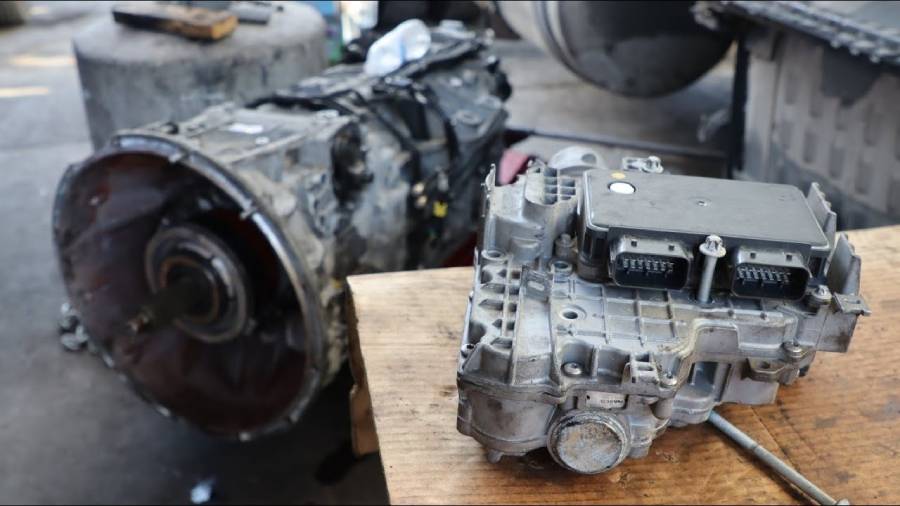
Freightliner automatic transmission problems commonly include hard shifting, delayed engagement, transmission slipping, failure to shift, getting stuck in gear, limp mode, and overheating. These problems can originate from low or degraded transmission fluid, electrical wiring and connectors, transmission sensors, control-system faults, excessive operating temperature, or internal mechanical wear. The same symptom does not always indicate the same failed component, so identifying how and when the transmission behaves abnormally is the first step toward an accurate diagnosis.
A Freightliner that hesitates after Drive or Reverse is selected may have a different problem from one that shifts harshly while moving or suddenly enters limp mode. Warning lights, stored fault codes, fluid condition, leaks, unusual noises, transmission temperature, and changes in engine RPM during shifting provide additional diagnostic information. The specific transmission also matters because Freightliner trucks can use different transmission configurations depending on the model, model year, powertrain, and application.
This guide explains the common Freightliner automatic transmission problems, the symptoms that indicate transmission trouble, their likely causes, and the diagnostic steps used to isolate a fault. It also covers repair options, repair costs, driving with transmission problems, preventive maintenance, and when internal repair, rebuilding, or replacement may be necessary.
What Are the Most Common Freightliner Automatic Transmission Problems?
The most common Freightliner automatic transmission problems include hard shifting, transmission slipping, delayed engagement, failure to shift, getting stuck in gear, limp mode, and overheating. Each problem produces a different driving pattern, but several can share the same underlying causes, including transmission fluid problems, electrical faults, sensor failures, control-system issues, and internal mechanical wear.
Hard or rough shifting occurs when the transmission changes gears with a noticeable jerk, impact, or hesitation instead of completing a smooth gear transition. The problem can develop when hydraulic pressure is incorrect, transmission fluid is low or degraded, a sensor provides inaccurate operating data, or the transmission control system cannot command a shift correctly. Internal component wear can produce similar behavior, which means harsh shifting alone does not identify the failed part.
Transmission slipping occurs when the transmission cannot maintain the expected transfer of engine power to the drivetrain. A driver may notice the engine RPM increasing without a proportional increase in vehicle speed, inconsistent acceleration, or the transmission appearing to move out of the expected gear. Low fluid level, inadequate hydraulic pressure, control problems, or worn internal components can contribute to slipping. Persistent slipping requires diagnosis because continued operation can generate additional heat and accelerate internal wear.
Delayed engagement is a noticeable pause between selecting Drive or Reverse and the transmission actually engaging. A short delay that becomes progressively longer can indicate a fluid-pressure problem, low transmission fluid, hydraulic-system wear, or an internal transmission fault. Electronic controls can also affect engagement, so replacing mechanical components without first checking fault information and electrical operation can lead to an incorrect repair.
A Freightliner transmission can also fail to shift or remain stuck in one gear. The truck may refuse to upshift, downshift, or respond normally to gear-selection commands. This behavior can result from sensor faults, wiring or connector problems, control-system errors, or internal mechanical failures. Checking stored diagnostic information is particularly important when the shifting problem appears suddenly or occurs together with a transmission warning indicator.
Limp mode is a protective operating strategy that limits normal transmission operation after the control system detects certain faults. The transmission may remain in a restricted gear or provide limited shifting so the vehicle can avoid further damage. Limp mode is therefore a symptom of a detected problem rather than a specific failed component. Repeatedly clearing a warning without identifying its cause does not correct the underlying transmission fault.
Transmission overheating occurs when heat generation exceeds the transmission system’s ability to maintain an acceptable operating temperature. Low or degraded fluid, heavy operating loads, inadequate cooling, slipping, or internal friction can contribute to excessive temperature. Heat also accelerates fluid degradation and can increase component wear, creating a cycle in which an existing transmission problem becomes progressively more severe.
What Are the Signs of a Failing Freightliner Automatic Transmission?
Signs of a failing Freightliner automatic transmission include abnormal gear changes, delayed engagement, slipping, unexpected RPM changes, inability to select or maintain a gear, warning indicators, unusual noises, and excessive transmission temperature. A single symptom does not confirm complete transmission failure, but repeated or worsening symptoms indicate that the transmission and its control system should be diagnosed.
Unexpected engine RPM changes are a recognizable sign of transmission slipping. Engine speed may rise during acceleration while road speed does not increase at the expected rate. This happens when power transfer through the transmission becomes inconsistent. The cause can involve fluid pressure, control operation, or internal components, so RPM behavior should be evaluated together with other symptoms rather than treated as proof that the entire transmission needs replacement.
Delayed shifting and delayed engagement indicate two different behaviors. Delayed shifting occurs when the transmission stays in a gear longer than expected before completing the next shift. Delayed engagement occurs after the driver selects Drive or Reverse but the transmission takes additional time to engage. Distinguishing these symptoms helps narrow the diagnostic process because they can involve different hydraulic, electronic, and mechanical functions.
Jerking or banging during gear changes indicates that a shift is not occurring smoothly. The severity can range from a noticeable jolt to a strong impact when a gear engages. Fluid condition, incorrect hydraulic pressure, sensor inputs, electronic controls, and internal wear are possible areas to investigate. The operating conditions should also be recorded because a problem that appears only when cold, hot, loaded, or at a specific speed provides more useful diagnostic information than the description “shifts badly.”
A transmission warning indicator or related diagnostic message means the vehicle has detected information that requires investigation. Stored fault codes can help identify the affected circuit, operating condition, or system, but a fault code should not automatically be treated as confirmation that the named component has failed. Wiring, connectors, power supply, sensor inputs, and related components may need to be tested before replacement.
Unusual transmission noises can provide additional evidence when they occur at the same time as shifting or engagement problems. Whining, grinding, clunking, or other abnormal sounds should be documented according to when they occur, such as during gear selection, acceleration, a specific shift, or deceleration. Noise alone is not sufficient for an accurate diagnosis because drivetrain and engine components can produce sounds that appear to come from the transmission.
A combination of symptoms provides stronger diagnostic direction than one isolated sign. For example, slipping accompanied by rising transmission temperature and abnormal RPM behavior points toward a different diagnostic path than a sudden no-shift condition accompanied by a warning indicator. Identifying the exact symptoms, operating conditions, and sequence in which they occur reduces unnecessary component replacement and helps determine whether the fault is related to fluid, electrical controls, or internal transmission components.
What Causes Freightliner Automatic Transmission Problems?
Freightliner automatic transmission problems can result from five main areas: transmission fluid, electrical wiring and connections, sensors, electronic controls, and internal mechanical components. These causes can produce similar symptoms, including hard shifting, delayed engagement, slipping, failure to shift, and limp mode. Diagnosis should therefore identify the system responsible for the symptom before individual parts are replaced.
Low transmission fluid can reduce the hydraulic pressure and lubrication required for normal transmission operation. The transmission depends on fluid to lubricate moving components, control heat, and support hydraulic functions. A low fluid level caused by leakage can therefore contribute to delayed engagement, irregular shifting, overheating, or slipping. Finding low fluid should also trigger an inspection for the source of the loss rather than treating fluid addition as the complete repair.
Degraded or contaminated transmission fluid can also interfere with transmission operation. Fluid deteriorates as it is exposed to heat and normal operating stresses, while internal wear or component damage can introduce contaminants. Changes in fluid condition can reduce lubrication and heat-management performance. Fluid condition is therefore useful diagnostic evidence, although it should be interpreted together with the transmission’s service requirements and other symptoms.
Electrical wiring and connector problems can interrupt communication between transmission components and the electronic control system. Damaged wiring, loose connections, corrosion, or poor electrical contact can create intermittent or continuous faults. A transmission may then shift incorrectly, refuse to shift, display a warning, or enter a restricted operating mode even when its internal mechanical components remain functional. This is one reason electrical inspection should occur before assuming that an abnormal shift requires transmission replacement.
Transmission sensors provide operating information used to determine how the transmission should respond. Incorrect sensor data can affect shift timing, gear selection, and other electronically controlled functions. A failed sensor is one possible cause, but the circuit supplying or transmitting its signal can produce similar diagnostic information. Testing the sensor, wiring, connectors, and associated circuit is more reliable than replacing a sensor solely because a fault code refers to it.
Electronic control problems can cause abnormal transmission behavior when commands are based on incorrect information or cannot be carried out as intended. Depending on the transmission configuration, the control system processes inputs from multiple components to determine gear changes and protective responses. A control-related fault can therefore resemble a mechanical transmission problem. Stored diagnostic information and electrical testing help separate these conditions.
Excessive transmission temperature can be both a cause and a consequence of transmission trouble. Slipping and excessive internal friction generate heat, while low or degraded fluid can reduce lubrication and heat management. Continued operation under excessive heat accelerates fluid deterioration and can increase component wear. An overheating transmission should therefore be treated as part of the diagnostic problem rather than only as an isolated temperature issue.
Internal mechanical wear becomes a stronger possibility when fluid, electrical, sensor, and control checks do not explain persistent slipping, engagement problems, abnormal noises, or loss of gear operation. Internal faults can affect components responsible for transferring power or applying the required gear. The exact components vary by transmission design, so internal diagnosis should be based on the specific transmission installed in the Freightliner rather than a generic automatic-transmission parts list.
How Do You Diagnose Freightliner Automatic Transmission Problems?
Diagnose Freightliner automatic transmission problems by confirming the exact symptom, checking warning information and fluid condition, inspecting electrical connections, retrieving fault codes, testing suspected circuits or components, and investigating internal transmission faults when external causes have been eliminated. Following this sequence reduces the risk of replacing expensive components based on symptoms alone.
Start by documenting exactly what the transmission does and when the problem occurs. Record whether the transmission slips, shifts hard, delays engagement, refuses a gear, becomes stuck in one gear, or enters limp mode. Operating conditions also matter. Note whether the symptom appears when the truck is cold or at operating temperature, during acceleration, under load, at a particular road speed, or immediately after Drive or Reverse is selected. These details narrow the number of systems that need to be tested.
Check available warning information next. A transmission warning indicator, driver display message, or stored diagnostic fault can provide a starting point for testing. Diagnostic codes identify detected conditions or circuits; they do not necessarily identify the component that must be replaced. For example, a code involving a sensor circuit can result from the sensor itself, its connector, damaged wiring, or another electrical condition affecting the signal.
Inspect transmission fluid according to the procedure and specification for the transmission installed in the truck. Check for an incorrect fluid level, visible leakage, abnormal condition, or evidence suggesting overheating or contamination where these checks apply. Do not use a universal fluid-checking procedure for every Freightliner because transmission designs and service requirements differ by model and configuration.
Inspect accessible wiring and connectors when the symptoms or fault information indicate an electrical problem. Look for damaged wiring, loose connections, corrosion, contamination, or other conditions that can interrupt a circuit. Intermittent electrical faults deserve particular attention because vibration, temperature changes, and vehicle movement can cause a poor connection to appear and disappear during operation.
Retrieve and interpret transmission fault codes before replacing electronically controlled components. The correct diagnostic process uses a code to identify the circuit or operating condition that requires testing. The suspected sensor, wiring, power supply, ground, connector, and related control inputs can then be checked according to the appropriate service information. Clearing codes without repairing the underlying cause can temporarily remove an indication while leaving the original problem unchanged.
Internal transmission diagnosis becomes appropriate when external inspections and electronic tests do not explain the symptom or when evidence directly indicates an internal fault. Persistent slipping, loss of engagement, abnormal mechanical noise, or severe gear-operation problems can require further hydraulic or mechanical testing. The diagnostic procedure should match the exact transmission model because component layouts, operating strategies, and specifications are not identical across Freightliner applications.
How Can You Tell Whether a Freightliner Transmission Problem Is Electrical or Mechanical?
Electrical Freightliner transmission problems are more likely to involve fault codes, intermittent operation, sensor-related symptoms, communication problems, or sudden changes in electronically controlled shifting, while mechanical problems are more likely to produce persistent slipping, loss of engagement, abnormal internal noise, or operation that remains defective after electrical causes have been eliminated. These patterns provide diagnostic direction, but they are not a substitute for testing.
Electrical faults can change rapidly because a sensor signal, connector, or wiring circuit may work under one condition and fail under another. For example, a poor connection can interrupt a signal during vibration and restore it later. This can produce intermittent shifting problems or warning indicators without continuous mechanical failure. Circuit testing and inspection of connectors are required to confirm the cause.
Mechanical faults tend to remain present or become progressively worse as worn or damaged components lose their ability to perform the required function. Persistent slipping or failure to engage a gear after fluid and electronic systems have been verified increases the likelihood of an internal problem. Mechanical damage can also create abnormal noise, excessive heat, or contamination that provides additional diagnostic evidence.
Electrical and mechanical problems can also interact. A control fault can command inappropriate operation, while prolonged slipping or overheating can contribute to mechanical wear. The reliable distinction therefore comes from combining symptom history, fault information, fluid inspection, electrical testing, and transmission-specific mechanical tests rather than deciding from one symptom alone.
How Do You Fix Freightliner Automatic Transmission Problems?
Fix Freightliner automatic transmission problems by repairing the specific fluid, electrical, control, or mechanical fault identified during diagnosis. The correct repair can range from correcting a fluid leak or damaged electrical connection to replacing a failed component or rebuilding the transmission. Replacing parts based only on symptoms is unreliable because hard shifting, slipping, delayed engagement, and no-shift conditions can originate from different systems.
Fluid-related problems require more than simply adding transmission fluid. Correct the source of a low fluid level, such as a leak, and restore the fluid to the level and specification required for the installed transmission. Fluid that shows evidence of severe degradation, overheating, or contamination can indicate a larger problem that requires further inspection. A fluid service can address a maintenance-related condition, but it cannot restore worn or damaged internal components.
Electrical repairs should target the circuit confirmed to be faulty. Damaged wiring, corroded connectors, poor electrical connections, and defective sensors can interfere with transmission control signals and cause irregular shifting or limp mode. Repairing the connection or circuit can restore normal operation when the transmission itself remains mechanically sound. Diagnostic testing should confirm the failure before an electronic component is replaced because a wiring fault can produce symptoms similar to a failed sensor.
Control-system faults require diagnosis of the inputs, outputs, electrical supply, communication circuits, and related components involved in transmission operation. A stored fault code provides a direction for testing rather than an automatic instruction to replace a control module. Software or calibration procedures may also be transmission-specific, so repair information should correspond to the exact Freightliner and transmission configuration.
Internal mechanical problems require a different level of repair. Persistent slipping, loss of engagement, damaged internal components, severe wear, or mechanical failure can require transmission removal and disassembly. Individual components may be repaired when the damage is localized, while extensive wear or multiple internal failures can make rebuilding or replacement more appropriate. The decision depends on the transmission design, condition, parts availability, labor requirements, and extent of damage.
When Should a Freightliner Transmission Be Rebuilt or Replaced?
A Freightliner transmission should be considered for rebuilding or replacement when diagnosis confirms extensive internal damage, severe wear, repeated internal failures, or repair requirements that make individual component replacement impractical. Hard shifting or a single fault code alone is not sufficient evidence that the complete transmission needs to be replaced.
A rebuild involves disassembling the transmission, inspecting its internal components, replacing worn or damaged parts as required, and reassembling the unit to the applicable specifications. This approach can be appropriate when the main transmission assembly remains suitable for rebuilding and the required parts and technical support are available. The actual scope depends on what inspection finds inside the unit.
Replacement exchanges the existing transmission for another complete unit. Replacement becomes a stronger option when internal damage is extensive, the existing unit is unsuitable for an economical rebuild, or another transmission provides a more practical repair path. Compatibility must be verified because the replacement needs to match the vehicle’s transmission configuration and associated control requirements.
The repair decision should therefore follow diagnosis rather than precede it. For example, a Freightliner that will not shift because of damaged wiring requires an electrical repair, not a transmission rebuild. A truck with confirmed extensive internal damage requires a substantially different repair. Separating these conditions prevents a relatively small external fault from being mistaken for complete transmission failure.
How Much Does It Cost to Fix a Freightliner Automatic Transmission?
The cost to fix a Freightliner automatic transmission depends primarily on the failed component, transmission model, required parts, labor time, and extent of internal damage. An electrical or external component repair can require substantially less work than removing and rebuilding or replacing the complete transmission, so there is no single repair price that accurately represents every Freightliner transmission problem.
Diagnostic work is the first cost category because the underlying fault must be identified before repair costs can be estimated accurately. Troubleshooting can involve retrieving fault codes, inspecting wiring and connectors, checking transmission fluid and leaks, testing sensors or circuits, and performing transmission-specific tests. More complex intermittent faults can require additional diagnostic time because the problem may need to be reproduced under particular operating conditions.
Fluid leaks and external electrical faults generally involve a different repair scope from internal transmission damage. A damaged connector, wiring fault, confirmed failed sensor, or accessible leak may be repaired without disassembling the complete transmission. Labor and parts requirements increase when access is difficult or when multiple components are affected.
Internal repair costs increase because transmission removal, disassembly, component inspection, parts replacement, reassembly, and installation require more labor. A rebuild can involve multiple internal parts rather than one failed component. Replacement adds the cost of the complete transmission assembly along with removal, installation, fluids, required setup, and any transmission-specific programming or calibration procedures that apply.
Vehicle and transmission identification are therefore necessary before using a repair estimate for decision-making. Freightliner trucks can have different powertrains and transmission configurations, and parts or labor requirements for one combination should not automatically be applied to another. An accurate estimate should identify the installed transmission, confirmed failure, required repair procedure, parts, and labor before comparing repair, rebuild, and replacement options.
Can You Drive a Freightliner With Transmission Problems?
You should not continue driving a Freightliner with severe transmission problems such as persistent slipping, loss of gear engagement, uncontrolled shifting, repeated limp mode, abnormal mechanical noises, or transmission overheating. Minor changes in shifting behavior may allow the truck to be moved for diagnosis, but continued operation becomes risky when the transmission cannot transfer power or select gears reliably.
Transmission slipping deserves prompt attention because it can generate additional heat while reducing effective power transfer. A driver may notice engine RPM increasing without a corresponding increase in vehicle speed. Continuing to operate the truck under load can increase thermal stress and worsen an existing fluid, hydraulic, or internal mechanical problem.
Loss of engagement creates a more immediate operating concern. A transmission that intermittently fails to engage Drive or Reverse, unexpectedly loses a selected gear, or cannot maintain normal shifting can make vehicle response unpredictable. The truck should not remain in normal service when transmission behavior interferes with reliable acceleration or gear selection.
Transmission overheating is another reason to stop and investigate the problem. Excessive temperature can accelerate fluid degradation and increase internal wear, while an existing slipping or lubrication problem can generate even more heat. Continuing to drive without identifying the source can turn a correctable problem into more extensive transmission damage.
Limp mode requires diagnosis even when the truck can still move. The restricted operation is intended to respond to a detected fault, not to provide a permanent operating condition. Retrieve the relevant diagnostic information and identify the underlying cause instead of repeatedly clearing warnings and returning the truck to normal service.
The safest decision depends on symptom severity. A minor shift-quality change requires inspection before it becomes worse, while loss of engagement, severe slipping, overheating, or abnormal mechanical noise warrants stopping operation and arranging professional diagnosis or towing when necessary.
Read more: Freightliner Cruise Control Not Working: Causes & Fixes
How Can You Prevent Freightliner Automatic Transmission Problems?
Prevent Freightliner automatic transmission problems by following the correct transmission maintenance schedule, maintaining the specified fluid level and condition, repairing leaks promptly, responding to fault warnings, monitoring abnormal temperature or shifting behavior, and using service procedures that match the installed transmission. Preventive maintenance cannot eliminate every component failure, but it can reduce problems caused by neglected fluid, heat, leaks, and unresolved faults.
Follow the service requirements for the specific transmission rather than applying one universal maintenance interval to every Freightliner truck. Transmission type, vehicle application, operating conditions, and manufacturer requirements can change fluid specifications and service intervals. Identify the transmission installed in the truck before selecting fluid or planning maintenance.
Check for fluid loss and visible leakage during routine inspections. A leak can gradually reduce the amount of fluid available for lubrication, cooling, and hydraulic operation. Correct the leak instead of repeatedly adding fluid because continued fluid loss can eventually contribute to delayed engagement, slipping, overheating, or internal wear.
Respond to changes in shift quality when they first appear. Hard shifts, delayed engagement, unexpected RPM changes, intermittent gear-selection problems, or repeated warning indicators provide early evidence that the transmission requires inspection. Diagnosing an electrical connection, sensor circuit, fluid problem, or external leak early can prevent continued operation from creating additional complications.
Control excessive transmission heat by investigating the condition that causes it. Persistent high temperature can be associated with slipping, fluid problems, heavy operating conditions, cooling deficiencies, or excessive internal friction. Temperature should therefore be treated as diagnostic information rather than simply a number to monitor.
Keep electrical connectors and wiring associated with transmission operation in serviceable condition. Commercial trucks operate in environments where vibration, moisture, contamination, and repeated temperature changes can affect electrical connections. Inspecting damaged wiring and poor connections is especially important when shifting faults are intermittent.
Document recurring transmission symptoms and repairs. Recording when a problem occurs, the fault codes retrieved, components tested, repairs performed, and whether the symptom returned creates useful diagnostic history. This information becomes particularly valuable when an intermittent problem cannot be reproduced immediately during inspection.
Do All Freightliner Trucks Have the Same Automatic Transmission Problems?
No, all Freightliner trucks do not have the same automatic transmission problems because transmission configuration can vary by truck model, model year, engine, application, and installed transmission. A symptom described as a “Freightliner transmission problem” therefore needs to be connected to the actual transmission before a specific diagnostic procedure, fluid requirement, fault interpretation, or repair recommendation is applied.
Freightliner identifies the vehicle brand, but it does not by itself identify every component inside the drivetrain. Different trucks can use different transmission designs and electronic control strategies. As a result, a diagnostic procedure that applies to one Freightliner configuration may not apply unchanged to another.
Transmission identification is especially important when dealing with fluid requirements. Using information intended for a different transmission can lead to an incorrect fluid specification, service procedure, or maintenance interval. The appropriate service information should match the installed unit rather than relying only on the Freightliner badge or truck model name.
Fault-code interpretation also depends on the relevant system. Similar driver complaints can originate from different circuits or components depending on the transmission and vehicle configuration. A no-shift condition on one truck should therefore not be assumed to have the same cause as a no-shift condition on another Freightliner.
The same principle applies to repairs. Sensors, wiring arrangements, control components, internal parts, calibration requirements, and removal procedures can differ between transmission configurations. Identifying the truck’s model, model year, powertrain, and transmission is therefore one of the most useful steps before ordering parts or following a detailed repair procedure.
Freightliner automatic transmission troubleshooting is most reliable when it moves from the general symptom to the specific vehicle configuration. Identify what the transmission is doing, retrieve available diagnostic information, determine which transmission is installed, and then use the service procedures and specifications that apply to that unit. This approach separates useful general troubleshooting from model-specific diagnosis and reduces unnecessary component replacement.
1 thought on “Freightliner Automatic Transmission Problems & Fixes”