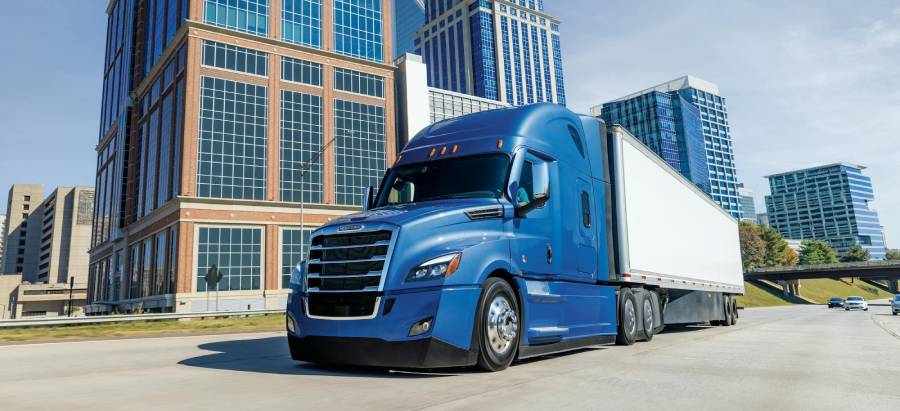
The Freightliner Cascadia check engine light indicates that the truck’s onboard diagnostic system has detected a fault involving the engine, emissions system, or related electronic controls. Common causes include malfunctioning engine sensors, diesel particulate filter (DPF) problems, diesel exhaust fluid (DEF) system faults, fuel delivery issues, and damaged electrical connections. The warning does not always indicate severe engine damage, but identifying the underlying fault is necessary to prevent further complications.
The engine control module (ECM) monitors operating conditions and records diagnostic trouble codes when it detects abnormal readings or system malfunctions. These codes help technicians identify affected components and determine whether the problem requires immediate attention. Depending on the fault, the truck may continue operating normally, experience reduced engine power, or display additional warnings. A Stop Engine warning requires a more urgent response than a standard Check Engine warning.
Diagnosing a Freightliner Cascadia check engine light involves checking dashboard warnings, retrieving fault codes, inspecting the affected systems, and verifying repairs. This guide explains the main causes of the warning, how to interpret SPN and FMI fault codes, which troubleshooting steps to follow, and when continuing to drive could damage the engine or compromise safety.
What Does the Check Engine Light Mean on a Freightliner Cascadia?
The check engine light on a Freightliner Cascadia indicates a detected malfunction in the engine management, emissions control, or related electronic systems. The warning appears when an onboard control module identifies operating conditions outside programmed limits. Depending on the model year and engine configuration, the malfunction may involve the Detroit DD13, DD15, or DD16 engine, its sensors, fuel delivery components, or exhaust aftertreatment system.
The engine control module (ECM) continuously processes information from sensors measuring engine speed, temperature, pressure, and other operating parameters. When a monitored signal exceeds its permitted range or a system fails a diagnostic test, the control module records a diagnostic trouble code (DTC). For example, an abnormal fuel rail pressure reading may trigger a fault related to fuel delivery, while an implausible exhaust temperature reading may indicate a sensor or electrical circuit problem. The check engine light alerts the driver that further diagnosis is required, but it does not identify the defective component by itself.
The severity of a Freightliner Cascadia engine warning depends on the detected fault and any accompanying indicators. A Check Engine warning signals a condition requiring attention, while a Stop Engine warning indicates a more serious condition that requires the driver to stop safely and follow the manufacturer’s instructions. An emissions-related malfunction indicator lamp (MIL) may also illuminate when the truck detects a fault affecting emissions compliance. These warnings have different meanings and should not be treated as interchangeable.
A check engine light may remain illuminated while a fault is active or appear intermittently when the malfunction occurs under specific operating conditions. For example, a loose electrical connector may interrupt a sensor signal during vibration and restore the connection when the truck stops. Retrieving the recorded fault codes and checking their active or inactive status provides a more reliable diagnosis than interpreting the warning light alone.
What Causes the Check Engine Light on a Freightliner Cascadia?
The main causes of a Freightliner Cascadia check engine light fall into four diagnostic categories: engine sensor faults, emissions system malfunctions, fuel system problems, and electrical failures. Each category contains components monitored by the truck’s electronic control systems. Identifying the affected system through diagnostic trouble codes is the first step toward determining the actual cause.
Engine sensor faults can trigger the check engine light when a sensor sends an incorrect, missing, or implausible signal to the ECM. Common diagnostic targets include coolant temperature sensors, intake manifold pressure sensors, crankshaft position sensors, and exhaust temperature sensors. For example, a coolant temperature sensor reporting an implausibly high reading may trigger an engine management fault even when the engine is not overheating. Technicians must compare sensor readings with actual operating conditions before deciding whether the sensor, wiring, or control circuit requires repair.
Emissions system malfunctions are another important cause, particularly in Cascadia trucks equipped with diesel particulate filter (DPF) and selective catalytic reduction (SCR) systems. The DPF captures soot from exhaust gases, while the SCR system uses diesel exhaust fluid (DEF) to reduce nitrogen oxide emissions. Problems involving DEF quality, DEF dosing, NOx sensors, exhaust temperature sensors, or DPF regeneration can activate engine or emissions warnings. For example, a malfunctioning NOx sensor may prevent the control system from accurately monitoring SCR performance, resulting in a diagnostic fault and potentially an engine derate if applicable fault conditions persist.
Fuel system problems can illuminate the check engine light when fuel pressure or delivery falls outside the engine’s required operating range. Possible causes include restricted fuel filters, fuel supply problems, pressure sensor faults, and malfunctioning fuel system components. A restricted fuel filter, for example, can reduce fuel supply under heavy engine load and contribute to low-pressure fault conditions. The driver may notice reduced acceleration, rough operation, or difficulty maintaining power on steep grades. However, these symptoms alone cannot establish that the fuel filter is defective.
Electrical failures can also cause check engine warnings by interrupting communication between sensors, control modules, and monitored components. Damaged wiring harnesses, corroded connectors, poor ground connections, and unstable voltage supplies can produce intermittent or persistent faults. Heavy-duty trucks operate under continuous vibration, temperature changes, and exposure to moisture, making electrical connections important inspection points. For example, corrosion inside an engine sensor connector may increase circuit resistance and cause abnormal readings even when the sensor itself functions correctly.
The exact cause of a Freightliner Cascadia check engine light cannot be determined from the warning alone. A truck displaying the light with reduced engine power may have an emissions-related derate, a fuel delivery fault, or another engine protection condition. Reading the diagnostic trouble codes, reviewing operating data, and testing the affected components helps distinguish these possibilities and prevents unnecessary parts replacement.
How Do You Diagnose a Freightliner Cascadia Check Engine Light?
To diagnose a Freightliner Cascadia check engine light, inspect the dashboard warnings, retrieve diagnostic trouble codes, identify the affected system, and test the components associated with the fault. This process helps distinguish engine sensor failures, emissions system malfunctions, fuel delivery problems, and electrical faults. A compatible heavy-duty diagnostic scanner or Detroit DiagnosticLink software provides the fault information needed for accurate troubleshooting.
Begin by checking the truck’s operating conditions and dashboard messages. Record whether the check engine light remains illuminated, appears intermittently, or accompanies reduced engine power. Check the engine coolant temperature, oil pressure, and any additional warning indicators. A Stop Engine warning or evidence of a critical engine condition requires the driver to stop safely and follow the applicable manufacturer instructions before attempting further diagnosis.
Next, retrieve the diagnostic trouble codes stored by the truck’s electronic control modules. These codes identify the monitored system and the type of malfunction detected. For example, a fault involving exhaust gas temperature may indicate a sensor circuit problem, an abnormal temperature condition, or another issue affecting the exhaust aftertreatment system. The code provides a diagnostic starting point rather than confirmation that a particular component needs replacement.
After identifying the fault, inspect the relevant components and compare live sensor readings with manufacturer specifications. Electrical diagnosis may require checking supply voltage, ground connections, wiring continuity, and connector condition. Fuel system diagnosis may involve measuring fuel pressure and inspecting filters, while emissions system diagnosis may require evaluating DEF dosing, exhaust temperatures, or aftertreatment performance. Complete the diagnosis by confirming the underlying cause before replacing parts or clearing fault codes.
How Do You Check Fault Codes on a Freightliner Cascadia?
To check fault codes on a Freightliner Cascadia, access the diagnostic information available through the instrument cluster or connect a compatible heavy-duty diagnostic scanner to the truck’s diagnostic port. The available dashboard menus and displayed information depend on the model year, instrument cluster, and electronic system configuration.
For trucks equipped with a driver information display that supports fault viewing, park the vehicle safely, apply the parking brake, and follow the instrument cluster’s menu instructions to locate diagnostic information. Some configurations display fault identifiers, affected electronic control units, or active fault information. Other configurations provide limited warning details and require a diagnostic scanner for complete fault retrieval.
A compatible heavy-duty scan tool communicates with the truck’s electronic control modules through its diagnostic connection. Freightliner Cascadia trucks use heavy-duty vehicle communication systems, including SAE J1939 on applicable configurations. A scanner supporting the truck’s communication protocols can retrieve available diagnostic trouble codes and identify the control module reporting each fault.
Detroit DiagnosticLink is a manufacturer-specific diagnostic application used with supported Detroit-powered vehicles and appropriate communication hardware. It allows technicians to access diagnostic information, monitor operating parameters, and perform supported service functions. For example, a technician investigating an SCR-related warning can review available aftertreatment fault codes and relevant sensor readings to determine whether further testing should focus on DEF delivery, NOx sensor feedback, or another monitored condition.
Record the complete fault information before clearing any codes. Include the reporting control module, SPN, FMI, fault status, and occurrence information when available. Active faults indicate conditions currently detected by the diagnostic system, while inactive or previously active faults provide a history of conditions that are no longer being detected. Both can be useful when investigating recurring or intermittent check engine warnings.
What Do SPN and FMI Codes Mean on a Freightliner Cascadia?
SPN and FMI codes identify the affected parameter and the type of failure detected by a Freightliner Cascadia’s electronic diagnostic system. SPN stands for Suspect Parameter Number, while FMI stands for Failure Mode Identifier. These identifiers are used within the SAE J1939 diagnostic framework to communicate fault information between electronic control modules and diagnostic equipment.
An SPN identifies a particular parameter, component-related measurement, or monitored function. For example, SPN 110 refers to engine coolant temperature, while SPN 100 refers to engine oil pressure. These identifiers help technicians determine which operating parameter requires investigation. However, an SPN alone does not establish whether a sensor is defective or whether the measured operating condition is genuinely abnormal.
An FMI provides additional information about how the detected condition differs from the expected operating range. Common examples include:
- FMI 0: Data valid but above the normal operating range, at the most severe level.
- FMI 1: Data valid but below the normal operating range, at the most severe level.
- FMI 2: Data erratic, intermittent, or incorrect.
- FMI 3: Voltage above normal or shorted to a high source.
- FMI 4: Voltage below normal or shorted to a low source.
- FMI 5: Current below normal or an open circuit.
- FMI 6: Current above normal or a grounded circuit.
For example, an engine coolant temperature fault associated with SPN 110 and FMI 0 indicates that the monitored temperature is above the normal operating range at the most severe level. The technician should investigate the actual engine temperature and cooling system condition rather than automatically replacing the coolant temperature sensor. By contrast, a voltage-related FMI associated with a sensor circuit directs attention toward electrical measurements and circuit integrity.
The reporting control module and manufacturer-specific diagnostic information are also important because identical parameter identifiers do not always provide enough information to determine the required repair. Detroit service documentation can specify diagnostic conditions, testing procedures, and component checks for the applicable engine and software configuration.
Accurate interpretation of Freightliner Cascadia fault codes requires combining the SPN, FMI, reporting module, active fault status, and observed symptoms. This approach allows technicians to distinguish an actual mechanical problem from an electrical or sensor-related malfunction and select the appropriate repair procedure.
How Do You Fix a Freightliner Cascadia Check Engine Light?
To fix a Freightliner Cascadia check engine light, identify the active fault codes, repair the underlying mechanical or electrical problem, and verify that the warning does not return. The correct repair depends on the affected system, which may include engine sensors, fuel delivery components, electrical circuits, or exhaust aftertreatment equipment. Replacing parts without confirming the fault can increase repair costs without resolving the warning.
For sensor-related faults, inspect the sensor connector, wiring harness, and electrical supply before replacing the component. A diagnostic code indicating an abnormal sensor signal does not necessarily mean the sensor has failed. For example, an intake manifold pressure sensor may report incorrect values because of a damaged connector, restricted sensing passage, or wiring fault. Comparing live sensor data with expected operating conditions helps determine whether the problem originates from the sensor or its supporting circuit.
Fuel system repairs require identifying the cause of abnormal fuel pressure or delivery. Inspect fuel filters, supply lines, and relevant pressure readings when diagnostic codes indicate a fuel-related problem. A restricted fuel filter can limit fuel delivery under heavy engine load, resulting in reduced power and a recorded fault. Replacing a restricted filter may resolve the condition, but persistent pressure abnormalities require further testing of the fuel supply and injection system according to the applicable Detroit engine service procedures.
Electrical faults require systematic circuit testing. Check battery connections, ground points, wiring harnesses, and control module connectors for corrosion, loose terminals, or physical damage. Measure voltage and circuit continuity using the manufacturer’s diagnostic specifications. For example, an intermittent sensor communication fault caused by a loose connector may disappear temporarily after restarting the engine but return during vibration. Repairing the connection addresses the underlying failure, whereas clearing the code only removes the recorded diagnostic information.
To fix emissions-related check engine light problems on a Freightliner Cascadia, diagnose the diesel particulate filter (DPF), selective catalytic reduction (SCR), diesel exhaust fluid (DEF), and related sensors using the recorded fault codes. These systems work together to control diesel exhaust emissions, and a malfunction in one component can affect the operation of another. The repair procedure must match the identified fault rather than the warning light alone.
DPF-related faults may involve excessive soot accumulation, unsuccessful regeneration, exhaust temperature sensor problems, or abnormal exhaust restriction. The DPF captures particulate matter from exhaust gases and periodically removes accumulated soot through regeneration. When regeneration cannot complete under the required conditions, soot loading may increase and trigger diagnostic warnings. Technicians should evaluate the reported soot load, differential pressure readings, exhaust temperatures, and relevant fault codes before selecting a repair procedure.
A parked regeneration may be appropriate for certain DPF conditions when permitted by the truck’s control system and manufacturer instructions. However, regeneration is not a universal solution for a check engine light. It will not repair a defective temperature sensor, damaged wiring, or failed aftertreatment component. Forced regeneration must not be attempted when prohibited by active faults, unsafe operating conditions, or manufacturer service instructions because exhaust temperatures become extremely high during the process.
SCR and DEF system faults require checking fluid quality, dosing performance, electrical connections, and sensor feedback. The SCR system injects DEF into the exhaust stream to support the chemical reduction of nitrogen oxides. Incorrect DEF concentration, contaminated fluid, dosing system failures, or malfunctioning NOx sensors can interfere with this process and activate emissions-related warnings. For example, a DEF dosing fault may require inspection of the DEF pump, injector, supply lines, and related electrical circuits rather than replacement of the SCR catalyst.
Some emissions system malfunctions can also trigger an engine derate, reducing available engine power or limiting vehicle operation. The conditions and severity of the derate depend on the fault, applicable emissions configuration, and control system programming. Repairs should restore the affected system to its specified operating condition, followed by the required diagnostic verification. Disabling emissions controls or bypassing fault monitoring is not an appropriate repair and may violate emissions regulations.
How Do You Reset the Freightliner Cascadia Check Engine Light?
To reset a Freightliner Cascadia check engine light, correct the underlying fault and use a compatible diagnostic tool to clear eligible fault codes when the manufacturer-supported procedure allows it. Some warnings turn off automatically after the control system confirms that the malfunction is no longer present. Others require additional operating conditions, diagnostic tests, or service procedures before the warning clears.
Start by retrieving and recording all relevant diagnostic information, including active and inactive fault codes. Complete the necessary repair and check that the affected system operates within its specified range. For example, after repairing a damaged exhaust temperature sensor connector, verify that the sensor provides plausible temperature readings and that the associated electrical fault is no longer active.
Next, use compatible heavy-duty diagnostic equipment or Detroit DiagnosticLink, where supported, to perform the appropriate fault-clearing procedure. The tool communicates with the electronic control modules and may allow inactive fault records to be cleared. Active faults generally cannot be permanently cleared while the malfunction remains present. If the warning returns immediately after clearing a code, the underlying fault is still being detected or another related condition requires diagnosis.
Turning the ignition off and restarting the engine is not a reliable repair or reset method. A warning may temporarily disappear when an intermittent fault is no longer present, but the diagnostic system can reactivate it when the failure condition returns. Disconnecting the batteries solely to erase a check engine light is also inappropriate because it does not correct the problem and may interrupt electronic system operation or erase useful diagnostic information.
Finally, verify the repair by monitoring relevant operating parameters and confirming that the warning remains off under the conditions specified by the service procedure. Certain faults require a completed diagnostic monitor, operating cycle, or manufacturer-defined verification test. For example, an SCR-related repair may require confirmation of DEF dosing and NOx sensor performance before the system recognizes that the malfunction has been resolved.
A successful reset means the diagnostic system no longer detects the repaired fault under the required verification conditions. If the Freightliner Cascadia check engine light remains illuminated, retrieve the current codes again and investigate the remaining active faults rather than repeatedly clearing the warning.
Can You Drive a Freightliner Cascadia With the Check Engine Light On?
You can continue driving a Freightliner Cascadia with the check engine light on in certain situations, but only when the truck operates normally, no critical warnings are present, and the manufacturer’s instructions permit continued operation. A steady Check Engine warning does not automatically require an immediate engine shutdown. However, the warning indicates a detected fault that needs diagnosis, and continuing to operate the truck without identifying the problem can increase the risk of mechanical damage or unexpected power reduction.
The decision depends on the warning indicators, engine performance, and operating conditions. If the check engine light appears without overheating, abnormal oil pressure, unusual engine noises, or reduced power, the driver should arrange a diagnostic inspection as soon as practical. For example, an intermittent sensor circuit fault may illuminate the warning while the engine continues operating normally. The absence of noticeable symptoms does not confirm that the truck is safe for an extended trip, because certain emissions and engine management faults develop without immediate changes in driving performance.
A Freightliner Cascadia may also enter an engine derate condition when its electronic control system detects a fault requiring reduced engine output. Engine derate limits available torque or power to protect components or enforce applicable emissions system requirements. Problems involving DEF delivery, SCR performance, or other monitored systems can produce derate conditions on equipped trucks. The resulting reduction in performance may affect acceleration, hill climbing, and the ability to maintain highway speeds.
Drivers should check the dashboard for additional messages, monitor engine temperature and oil pressure, and note any changes in vehicle performance. A truck that begins losing power during highway operation requires a different response from one displaying a steady warning with otherwise normal performance. Move to a safe location when necessary, avoid operating the truck beyond its safe capabilities, and obtain professional diagnostic assistance when the severity of the fault is uncertain.
When Should You Stop Driving a Freightliner Cascadia With the Check Engine Light On?
Stop driving a Freightliner Cascadia as soon as it is safe when the check engine light is accompanied by a Stop Engine warning, critical oil pressure warning, severe overheating, or symptoms indicating a serious mechanical problem. These conditions can indicate an immediate risk of engine damage or unsafe vehicle operation. Follow the applicable Freightliner and Detroit operator instructions, including engine shutdown requirements for the specific warning condition.
A Stop Engine warning indicates a more urgent condition than a standard Check Engine warning. Depending on the truck’s configuration and the detected fault, the engine protection system may initiate a shutdown sequence or restrict operation. For example, critically low engine oil pressure can prevent adequate lubrication of bearings and other moving components. Continuing to operate the engine under these conditions can cause severe internal damage. A driver should not assume that the engine is safe simply because it continues running.
Severe coolant temperature warnings also require immediate attention. Excessive engine temperature can damage cylinder head components, gaskets, and other heat-sensitive parts. If the dashboard indicates critical overheating, stop in a safe location and follow the manufacturer’s shutdown procedure. Do not open a hot, pressurized cooling system because escaping coolant and steam can cause serious burns.
Other warning signs include sudden loss of engine power, persistent abnormal knocking, visible smoke accompanied by abnormal engine operation, and significant fluid leaks. These symptoms require prompt assessment even when the dashboard does not display a Stop Engine warning. A major fuel leak, for example, presents a safety hazard beyond the engine management fault itself.
When stopping is necessary, move the truck out of traffic if it can be done safely, activate the hazard warning lights, and secure the vehicle. Follow applicable roadside safety procedures and contact qualified roadside assistance or a heavy-duty truck service provider. Restarting the engine repeatedly to bypass a shutdown warning does not correct the underlying condition and may expose the engine to additional damage.
An engine derate without a Stop Engine warning still requires attention because reduced power can affect safe operation, particularly on steep grades, during merging, or when carrying heavy loads. If the truck cannot maintain a safe speed or respond adequately to traffic conditions, stop at a suitable location and arrange service rather than continuing the trip.
The safest response to a Freightliner Cascadia check engine light is determined by the complete warning condition, not the light alone. A steady warning with normal engine operation may allow limited travel to a suitable repair facility, while critical warnings or serious mechanical symptoms require stopping as soon as safely possible.
Why Does the Freightliner Cascadia Check Engine Light Stay On After Repairs?
The Freightliner Cascadia check engine light may stay on after repairs because the original fault remains active, another malfunction is present, or the electronic control system has not completed the required fault verification process. Replacing a defective component does not always turn off the warning immediately. The engine control module (ECM) must recognize that the monitored system is operating within its specified parameters before certain diagnostic conditions are cleared.
An unresolved fault is one reason the warning remains illuminated. For example, replacing an exhaust temperature sensor will not correct a damaged wiring harness that prevents the sensor signal from reaching the control module. The ECM continues detecting the electrical malfunction and maintains the associated fault. Technicians should inspect the entire affected circuit, including connectors, wiring, power supply, and ground connections, rather than assuming that replacing the component has resolved the problem.
Additional active diagnostic trouble codes can also keep the warning illuminated after the original repair. A Freightliner Cascadia may record several faults involving related systems, particularly within the diesel exhaust aftertreatment system. For instance, correcting a DEF dosing problem may not eliminate a separate NOx sensor circuit fault. Both conditions require individual diagnosis, even when they produce similar dashboard warnings.
Some diagnostic systems also require specific operating conditions before confirming a successful repair. These conditions may include reaching a designated engine temperature, completing a diagnostic monitor, or performing a manufacturer-supported service verification procedure. A stored fault history does not necessarily mean that the malfunction remains active, and the relationship between stored codes and warning light status depends on the particular control system.
To resolve a persistent check engine light, retrieve the current fault codes again, distinguish active faults from inactive records, and compare the results with the original diagnostic report. Confirm that the repaired component operates correctly and that no additional faults require attention. Clearing diagnostic information without verifying the repair can temporarily remove useful evidence while leaving the actual malfunction unresolved.
Why Does the Freightliner Cascadia Check Engine Light Come On Intermittently?
An intermittent Freightliner Cascadia check engine light indicates that a monitored fault is detected under certain operating conditions but is not continuously present. Common diagnostic possibilities include loose electrical connections, damaged wiring, fluctuating sensor signals, and faults that occur only at specific engine temperatures or loads. The warning may disappear after restarting the truck and return when the same conditions occur again.
Electrical connection problems are a frequent diagnostic consideration because heavy-duty trucks operate under continuous vibration and changing environmental conditions. A loose sensor connector or damaged wire may temporarily interrupt communication when the engine moves under load. For example, a partially broken wire inside an engine harness may maintain electrical continuity while the truck is stationary but lose contact during acceleration or vibration. The ECM records a fault when the signal becomes invalid and may stop reporting the fault as active when the connection is restored.
Temperature-dependent faults can produce similar warning patterns. Electrical resistance, component performance, and sensor behavior change as the engine warms up. A sensor circuit with a deteriorating connection may operate normally during a cold start but produce abnormal readings after reaching operating temperature. Conversely, certain faults appear during cold starts and disappear after components expand or operating conditions stabilize.
Engine load can also influence intermittent warning behavior. Fuel pressure problems, boost pressure abnormalities, and exhaust aftertreatment faults may become detectable only when the engine operates within a particular speed or load range. For example, a restricted fuel supply may provide adequate pressure at idle but fail to meet demand during sustained acceleration or hill climbing. The check engine light may activate when the control module detects the resulting pressure deviation.
Diagnosing intermittent faults requires reviewing stored diagnostic codes, occurrence information, and available operating data. Technicians can monitor live sensor readings, inspect wiring harnesses, and reproduce the reported conditions when it is safe and appropriate to do so. Recording when the warning appears, such as during cold starts, highway driving, or heavy acceleration, helps narrow the diagnostic process. Replacing components without reproducing or confirming the failure can leave the intermittent problem unresolved.
Read more: Freightliner Cascadia Problems: Causes & Fixes
Can the Freightliner Cascadia Check Engine Light Turn On Without a Visible Fault Code?
Yes, a Freightliner Cascadia check engine light can illuminate without displaying a fault code on the dashboard because the instrument cluster may not show every diagnostic record available from the truck’s electronic control modules. The absence of a visible code does not establish that the ECM has detected no malfunction. Fault visibility depends on the model year, instrument cluster configuration, diagnostic menu capabilities, and the control module reporting the problem.
Some Freightliner Cascadia instrument clusters provide limited diagnostic information through the driver information display. The dashboard may show a general engine warning or system message without presenting the complete SPN and FMI identifiers. A compatible heavy-duty diagnostic scanner can retrieve additional information from supported control modules through the truck’s diagnostic communication system.
Fault information may also be stored in electronic modules other than the engine control module. Depending on the vehicle configuration, engine management, aftertreatment, and other electronic systems exchange diagnostic information through the vehicle communication network. A scanner that accesses only a limited selection of modules may fail to retrieve the fault responsible for the dashboard warning. Comprehensive diagnosis requires equipment compatible with the truck’s electronic architecture.
Intermittent faults create another diagnostic challenge. A warning may disappear when the malfunction is no longer detected, while a previously active fault remains recorded in module memory. Some dashboard interfaces do not provide the same historical information available through professional diagnostic software. Reviewing inactive fault records and occurrence data can help identify problems that are not present during the inspection.
When the check engine light appears without a visible code, inspect the dashboard for additional warnings and connect an appropriate diagnostic tool. Retrieve available fault information from the relevant modules, verify communication with the control systems, and check whether the warning remains active. If the diagnostic tool reports no relevant faults despite an illuminated warning, further investigation of instrument cluster operation, module communication, and manufacturer-specific diagnostic procedures is necessary.
How Can You Prevent Freightliner Cascadia Check Engine Light Problems?
Preventing Freightliner Cascadia check engine light problems requires scheduled engine maintenance, proper emissions system operation, regular electrical inspections, and early diagnosis of developing faults. Preventive maintenance reduces the likelihood of avoidable malfunctions, although it cannot eliminate every sensor failure, electrical defect, or electronic control problem. Maintenance intervals and service procedures should follow the recommendations for the truck’s model year, engine configuration, and operating conditions.
Engine maintenance should include replacing fuel filters at the specified intervals, checking fluid levels, inspecting for leaks, and monitoring engine performance. Fuel contamination and restricted filters can affect fuel delivery, while cooling system problems can contribute to abnormal engine temperatures. For example, identifying a coolant leak during a routine inspection can prevent coolant loss from developing into an overheating condition that triggers an engine warning. Maintenance records also help technicians identify whether a fault is associated with overdue service or a recurring mechanical problem.
Emissions system maintenance is particularly important for Freightliner Cascadia trucks equipped with DPF and SCR aftertreatment systems. Use DEF that meets the required quality specification, prevent contamination during storage and refilling, and respond promptly to DEF quality or aftertreatment warnings. The DPF regeneration process must also operate under the conditions specified by the manufacturer. Repeatedly interrupted regeneration events or unresolved exhaust system faults can contribute to soot accumulation and additional diagnostic warnings.
Electrical inspections should focus on wiring harnesses, connectors, battery terminals, and ground connections. Look for damaged insulation, corrosion, loose terminals, and wiring that contacts hot or moving components. For example, a harness rubbing against an engine bracket may gradually lose its protective insulation and develop an intermittent short circuit. Identifying and securing the harness before conductor damage occurs can prevent a future sensor or communication fault.
Monitoring fault history provides another preventive advantage. A diagnostic code that repeatedly changes between active and inactive status may indicate a developing problem even when the truck operates normally. Recording the fault identifier, operating conditions, and previous repairs helps establish whether the issue is becoming more frequent. Fleet operators can use this information to schedule inspections before an intermittent malfunction progresses into a persistent warning or unexpected engine derate.
Drivers should also respond to changes in engine behavior, including unusual fuel consumption, reduced power, difficult starting, abnormal exhaust conditions, and unexpected temperature readings. These symptoms do not identify a specific defective component, but they provide useful diagnostic evidence. Investigating them early can reduce the risk of secondary damage and unplanned downtime.
A consistent maintenance program supports reliable Freightliner Cascadia operation by keeping engine, fuel, electrical, and emissions systems within their intended operating conditions. Combining scheduled service with accurate fault-code diagnosis provides a more effective approach than waiting for a persistent check engine light before inspecting the truck.