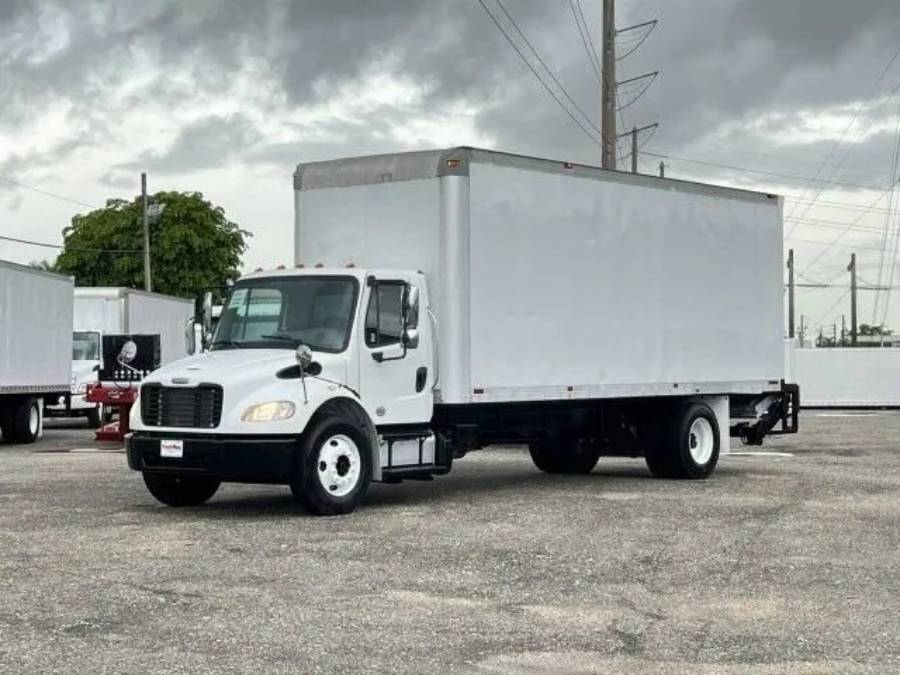
Freightliner fault codes identify problems in a truck’s engine, transmission, braking system, and emissions controls. These diagnostic trouble codes (DTCs) help drivers and technicians locate malfunctioning components, assess fault severity, and determine the next diagnostic steps. A Freightliner fault code list provides the code meanings needed to interpret dashboard warnings and diagnostic scanner results.
Most modern Freightliner trucks use the SAE J1939 diagnostic system, which identifies faults through Suspect Parameter Numbers (SPNs) and Failure Mode Identifiers (FMIs). An SPN identifies the affected parameter or system, while an FMI describes the type of failure detected. For example, SPN 100 relates to engine oil pressure, while FMI 1 indicates that a monitored value is below its normal operating range. The complete code interpretation also depends on the reporting electronic control unit (ECU) and vehicle configuration.
Freightliner Cascadia, M2, and other models may display different fault codes depending on their engine, transmission, and electronic systems. Detroit DD13 and DD15 engines, Cummins engines, and various transmission controllers also have manufacturer-specific diagnostic requirements.
This guide provides Freightliner SPN and FMI code meanings, common engine, transmission, and ABS fault codes, warning severity information, and troubleshooting procedures to help identify faults and determine appropriate repair actions.
What Is the Freightliner Fault Code List?
The Freightliner fault code list is a diagnostic reference that identifies electronic system faults detected by a Freightliner truck’s onboard control modules. Each fault code represents a specific monitored condition, such as low engine oil pressure, abnormal coolant temperature, sensor circuit failure, or communication loss between electronic control units (ECUs). Technicians use these codes to identify the affected system and select appropriate diagnostic procedures.
Freightliner trucks use multiple electronic control modules to monitor vehicle operations. The Engine Control Module (ECM) monitors engine performance, fuel injection, and emissions-related functions, while transmission and braking controllers supervise their respective systems. When a monitored parameter falls outside its programmed limits or an electrical malfunction occurs, the responsible controller records a diagnostic trouble code (DTC). Depending on the fault and vehicle configuration, the truck may also illuminate a Check Engine, ABS, or Stop Engine warning indicator.
Freightliner diagnostic codes are classified by their operating status. Active fault codes indicate conditions that the controller currently detects, while previously active or stored codes document faults detected during earlier operating conditions. A stored code does not necessarily indicate an ongoing malfunction. For example, an intermittent sensor connection may trigger an active fault while the connection is disrupted and leave a stored record after normal communication returns.
Fault code definitions also depend on the truck’s engine, electronic controllers, and model year. A Freightliner Cascadia equipped with a Detroit DD15 engine may use different manufacturer-specific diagnostic information than an M2 equipped with a Cummins engine. Therefore, technicians must identify the reporting controller and vehicle configuration before interpreting a fault code or replacing components.
What Are the Freightliner SPN and FMI Fault Codes?
Freightliner SPN and FMI fault codes identify the monitored parameter and the type of failure detected by a vehicle’s electronic control system. These identifiers are part of the SAE J1939 diagnostic communication framework used in heavy-duty vehicles. SPN stands for Suspect Parameter Number, while FMI stands for Failure Mode Identifier. Together, they provide more specific diagnostic information than a general dashboard warning.
An SPN identifies a monitored parameter, such as engine oil pressure, coolant temperature, or engine speed. The FMI describes how that parameter or its associated circuit has failed, such as a value exceeding its normal range, falling below its normal range, or producing an abnormal electrical signal. For example, SPN 100 FMI 1 identifies an engine oil pressure parameter reported as below its normal operating range. The code alone does not establish whether the underlying cause is insufficient oil, a mechanical problem, or an inaccurate sensor reading.
Freightliner diagnostic information may also include a source address (SA) and occurrence count (OC). The source address identifies the electronic controller reporting the fault, while the occurrence count records how many times the controller has detected the condition according to its diagnostic logic. These additional identifiers help technicians distinguish faults originating from different vehicle systems.
A typical SAE J1939 diagnostic record contains the following information:
| Component | Meaning | Example |
|---|---|---|
| SPN | Suspect Parameter Number | SPN 100 — Engine Oil Pressure |
| FMI | Failure Mode Identifier | FMI 1 — Data Valid but Below Normal Operating Range |
| SA | Source Address | SA 0 — Engine #1 |
| OC | Occurrence Count | Number of recorded occurrences |
The combination of SPN, FMI, and reporting controller provides the foundation for accurate Freightliner fault code interpretation. However, manufacturer-specific diagnostic documentation remains necessary to identify the precise troubleshooting procedure for each vehicle configuration.
What Are the Common Freightliner FMI Codes and Their Meanings?
Freightliner FMI codes describe the failure mode associated with a reported SPN, including abnormal operating values, electrical circuit problems, communication failures, and mechanical response errors. SAE J1939 defines standardized FMI descriptions that help technicians interpret diagnostic information across compatible heavy-duty vehicle systems.
The following table lists FMI identifiers 0 through 21 and their standardized meanings.
| FMI | Fault Description |
|---|---|
| 0 | Data Valid but Above Normal Operating Range — Most Severe Level |
| 1 | Data Valid but Below Normal Operating Range — Most Severe Level |
| 2 | Data Erratic, Intermittent, or Incorrect |
| 3 | Voltage Above Normal, or Shorted to High Source |
| 4 | Voltage Below Normal, or Shorted to Low Source |
| 5 | Current Below Normal or Open Circuit |
| 6 | Current Above Normal or Grounded Circuit |
| 7 | Mechanical System Not Responding or Out of Adjustment |
| 8 | Abnormal Frequency, Pulse Width, or Period |
| 9 | Abnormal Update Rate |
| 10 | Abnormal Rate of Change |
| 11 | Root Cause Not Known |
| 12 | Bad Intelligent Device or Component |
| 13 | Out of Calibration |
| 14 | Special Instructions |
| 15 | Data Valid but Above Normal Operating Range — Least Severe Level |
| 16 | Data Valid but Above Normal Operating Range — Moderately Severe Level |
| 17 | Data Valid but Below Normal Operating Range — Least Severe Level |
| 18 | Data Valid but Below Normal Operating Range — Moderately Severe Level |
| 19 | Received Network Data in Error |
| 20 | Data Drifted High |
| 21 | Data Drifted Low |
FMI values describe the detected failure condition rather than identifying a defective component with certainty. For example, FMI 3 indicates an abnormally high voltage condition, which may result from damaged wiring, a short to a voltage source, or another electrical fault. FMI 5 indicates abnormally low current or an open circuit, requiring inspection of the relevant electrical connections and circuit continuity.
The severity-related FMI values also require careful interpretation. FMI 0, 15, and 16 describe different levels of an above-normal parameter, while FMI 1, 17, and 18 describe below-normal conditions. These severity classifications concern the monitored parameter and do not independently determine whether the truck is safe to operate. Actual driving risk depends on the affected system, fault details, and vehicle warning indicators.
Technicians should interpret the complete SPN/FMI combination rather than relying on the FMI alone. For instance, FMI 1 has different diagnostic implications when paired with an engine oil pressure SPN than when paired with a different monitored parameter. Matching the complete code to the correct manufacturer documentation helps prevent unnecessary component replacement and incorrect repairs.
What Are the Common Freightliner Engine Fault Codes?
Common Freightliner engine fault codes identify problems involving engine oil pressure, coolant temperature, fuel delivery, intake air pressure, and electronic engine controls. These diagnostic trouble codes are reported by the Engine Control Module (ECM) when monitored parameters exceed programmed limits or electrical components fail to operate correctly. Freightliner trucks equipped with Detroit DD13, DD15, or Cummins engines use engine-specific diagnostic information to identify these conditions.
The following table lists common SAE J1939 engine-related SPN and FMI combinations applicable to compatible Freightliner configurations. The descriptions indicate standardized fault conditions, while exact diagnostic procedures depend on the engine manufacturer, ECM calibration, and vehicle model year.
| SPN | FMI | Fault Description |
|---|---|---|
| 100 | 1 | Engine Oil Pressure Below Normal — Most Severe |
| 100 | 3 | Engine Oil Pressure Sensor Voltage Above Normal |
| 100 | 4 | Engine Oil Pressure Sensor Voltage Below Normal |
| 110 | 0 | Engine Coolant Temperature Above Normal — Most Severe |
| 110 | 3 | Engine Coolant Temperature Sensor Voltage Above Normal |
| 110 | 4 | Engine Coolant Temperature Sensor Voltage Below Normal |
| 91 | 3 | Accelerator Pedal Position Sensor Voltage Above Normal |
| 91 | 4 | Accelerator Pedal Position Sensor Voltage Below Normal |
| 94 | 1 | Engine Fuel Delivery Pressure Below Normal — Most Severe |
| 94 | 3 | Engine Fuel Delivery Pressure Sensor Voltage Above Normal |
| 94 | 4 | Engine Fuel Delivery Pressure Sensor Voltage Below Normal |
| 102 | 3 | Engine Intake Manifold Pressure Sensor Voltage Above Normal |
| 102 | 4 | Engine Intake Manifold Pressure Sensor Voltage Below Normal |
| 190 | 0 | Engine Speed Above Normal — Most Severe |
| 190 | 2 | Engine Speed Signal Erratic or Incorrect |
These combinations illustrate common fault categories rather than a complete manufacturer-approved code list. A particular combination may not be supported by every engine calibration, and its manufacturer-specific definition must be confirmed before repairs.
Engine oil pressure faults, including SPN 100 FMI 1, require particular attention because insufficient lubrication can damage crankshaft bearings, camshaft components, and turbocharger bearings. Low oil pressure may result from inadequate oil quantity, oil pump problems, internal engine wear, or restrictions affecting lubrication. A sensor circuit fault, such as SPN 100 FMI 3 or FMI 4, instead indicates an electrical condition that requires testing of the sensor, wiring, reference voltage, and related connections. Technicians should verify actual oil pressure using the engine manufacturer’s approved diagnostic procedure before determining whether the fault is mechanical or electrical.
Engine coolant temperature faults identify abnormal cooling conditions or sensor circuit problems. SPN 110 FMI 0 indicates that the reported coolant temperature exceeds the most severe operating threshold. Possible causes include low coolant, restricted radiator airflow, thermostat malfunction, or inadequate coolant circulation. Continued operation during severe overheating can damage cylinder head gaskets, engine components, and cooling system seals. Sensor-related faults involving FMI 3 or FMI 4 require electrical inspection rather than assuming that the engine is overheating.
Fuel delivery pressure faults affect the engine’s ability to maintain the fuel supply required for normal combustion. SPN 94 identifies engine fuel delivery pressure, while the accompanying FMI indicates the detected condition. Low fuel pressure can result from restricted fuel filters, supply pump problems, air entering the fuel system, or fuel line restrictions. Depending on engine design and fault severity, drivers may experience reduced power, difficult starting, unstable engine operation, or unexpected shutdowns. Technicians should compare measured fuel pressure against the manufacturer’s specifications before replacing fuel system components.
Intake manifold pressure faults affect the ECM’s ability to evaluate engine air supply and boost conditions. SPN 102 identifies engine intake manifold pressure, with FMI 3 and FMI 4 indicating electrical voltage faults. Possible causes include damaged sensor wiring, loose electrical connectors, or a defective pressure sensor. Low engine power can also result from charge-air leaks, turbocharger problems, or air intake restrictions, but these mechanical conditions must be distinguished from electrical sensor faults through diagnostic testing.
Engine fault codes should always be interpreted alongside operating symptoms, freeze-frame or event data when available, and additional active codes. For example, a low fuel pressure fault accompanied by reduced engine power points toward a different diagnostic path than an isolated fuel pressure sensor circuit fault. Identifying the exact failure mode prevents unnecessary repairs and reduces the risk of overlooking the underlying problem.
What Freightliner Fault Codes Indicate DPF or SCR Problems?
Freightliner DPF and SCR fault codes identify malfunctions in the diesel exhaust aftertreatment system, including particulate filter restrictions, regeneration problems, diesel exhaust fluid quality issues, and selective catalytic reduction efficiency faults. Modern Freightliner trucks equipped with compatible Detroit or Cummins diesel engines use aftertreatment controls to reduce particulate matter and nitrogen oxide (NOx) emissions.
The Diesel Particulate Filter (DPF) captures soot from engine exhaust and removes accumulated particles through regeneration. The Selective Catalytic Reduction (SCR) system uses Diesel Exhaust Fluid (DEF) to reduce NOx emissions. These systems depend on exhaust temperature sensors, differential pressure sensors, NOx sensors, DEF delivery components, and electronic control modules to maintain proper operation.
The following table identifies common J1939 aftertreatment parameters and illustrative failure modes. These entries are not a substitute for the engine manufacturer’s complete fault-code definitions.
| SPN | FMI | Fault Description |
|---|---|---|
| 3251 | 0 | DPF Differential Pressure Above Normal — Most Severe |
| 3251 | 16 | DPF Differential Pressure Above Normal — Moderately Severe |
| 3719 | 0 | DPF Soot Load Above Normal — Most Severe |
| 3719 | 16 | DPF Soot Load Above Normal — Moderately Severe |
| 3719 | 31 | DPF Soot Load Condition Exists |
| 3364 | 2 | DEF Quality Signal Erratic or Incorrect |
| 3364 | 3 | DEF Quality Sensor Voltage Above Normal |
| 3364 | 4 | DEF Quality Sensor Voltage Below Normal |
| 4094 | 18 | SCR NOx Conversion Efficiency Below Normal — Moderately Severe |
The exact availability and diagnostic meaning of each combination must be verified for the installed engine and aftertreatment controller. Manufacturer-specific diagnostic systems may also report additional codes that identify more precise component failures.
DPF differential pressure faults indicate abnormal pressure measurements across the particulate filter. SPN 3251 identifies DPF differential pressure, while its FMI describes the detected failure condition. Excessive differential pressure can indicate soot accumulation, ash loading, exhaust flow restrictions, or sensor measurement problems. Technicians should inspect differential pressure sensor tubing, sensor readings, and exhaust system conditions before concluding that the DPF requires cleaning or replacement.
DPF soot load faults indicate that the aftertreatment controller has detected soot accumulation exceeding a programmed threshold. SPN 3719 is associated with DPF soot load conditions, which may occur when regeneration is interrupted, exhaust temperatures remain insufficient, or engine problems increase soot production. Depending on the engine’s control strategy, excessive soot loading may trigger dashboard warnings, restrict regeneration, or reduce engine power. A forced regeneration should only be performed when permitted by the manufacturer’s diagnostic procedure, because excessive soot loading can create unsafe exhaust temperatures.
DEF quality faults relate to the condition or measurement of diesel exhaust fluid used by the SCR system. SPN 3364 identifies DEF quality, while the FMI indicates the reported failure mode. Incorrect DEF concentration, fluid contamination, sensor malfunction, or electrical circuit problems can affect SCR operation. Technicians should verify fluid quality and sensor operation before replacing DEF tanks, pumps, or other aftertreatment components. DEF used in SCR systems must meet ISO 22241 specifications, including the required urea concentration of approximately 32.5%.
SCR efficiency faults indicate that the aftertreatment system is not achieving its expected NOx conversion performance. SPN 4094 is associated with SCR NOx conversion efficiency, and the reported FMI provides additional failure information. Potential causes include inadequate DEF dosing, contaminated DEF, malfunctioning NOx sensors, exhaust leaks, or degraded SCR catalyst performance. Diagnosis requires evaluating upstream and downstream NOx readings, DEF delivery, exhaust temperatures, and related active faults according to the engine manufacturer’s procedures.
Freightliner trucks experiencing serious aftertreatment faults may activate an engine derate strategy that limits available power or vehicle speed. The timing and severity of the restriction depend on the engine calibration, applicable emissions requirements, and detected fault conditions. Addressing the original DPF, DEF, or SCR malfunction is necessary to restore normal operation; simply clearing a diagnostic code does not correct an unresolved emissions system problem.
What Are the Common Freightliner Transmission Fault Codes?
Common Freightliner transmission fault codes identify problems with gear selection, shift actuators, transmission sensors, clutch operation, and electronic communication. These faults are monitored by the Transmission Control Module (TCM), which coordinates gear changes and communicates with the engine controller through the vehicle’s electronic network. Freightliner trucks equipped with automated manual or automatic transmissions use different diagnostic systems depending on the transmission manufacturer and model.
Freightliner Cascadia trucks commonly use Detroit DT12 automated manual transmissions, while other Freightliner configurations may feature Eaton automated transmissions or Allison automatic transmissions. Each system has manufacturer-specific fault codes and diagnostic procedures. Consequently, a transmission fault must be interpreted using the installed transmission model, reporting controller, and complete diagnostic identifier.
The following table identifies J1939 transmission-related parameters and their associated failure modes. These are reference examples rather than a complete list of codes supported by every Freightliner transmission.
| SPN | FMI | Fault Description |
|---|---|---|
| 177 | 0 | Transmission Oil Temperature Above Normal — Most Severe |
| 177 | 3 | Transmission Oil Temperature Sensor Voltage Above Normal |
| 177 | 4 | Transmission Oil Temperature Sensor Voltage Below Normal |
| 191 | 2 | Transmission Output Shaft Speed Signal Erratic or Incorrect |
| 191 | 8 | Transmission Output Shaft Speed Signal Frequency Abnormal |
| 523 | 2 | Transmission Current Gear Signal Erratic or Incorrect |
| 523 | 9 | Transmission Current Gear Signal Update Rate Abnormal |
| 560 | 2 | Transmission Driveline Engaged Signal Erratic or Incorrect |
| 560 | 9 | Transmission Driveline Engaged Signal Update Rate Abnormal |
The listed SPNs identify standardized transmission parameters, while their FMIs describe the reported failure conditions. Specific SPN/FMI combinations must be confirmed against the applicable transmission manufacturer’s diagnostic documentation before being treated as valid fault entries.
Transmission temperature faults indicate excessive operating temperatures or electrical problems involving the temperature sensor. SPN 177 identifies transmission oil temperature, while FMI 0 represents a temperature reading above the most severe operating threshold. Excessive heat can result from inadequate lubrication, cooling system problems, excessive loads, or internal transmission damage. High temperatures accelerate lubricant degradation and increase wear on bearings, gears, and friction components. Technicians should verify the actual temperature and inspect the transmission’s lubrication and cooling systems before replacing components.
Transmission speed sensor faults affect the controller’s ability to calculate shaft speeds and coordinate gear changes. SPN 191 identifies transmission output shaft speed, and FMI 2 indicates an erratic, intermittent, or incorrect signal. Damaged wiring, contaminated connectors, sensor malfunction, or mechanical damage affecting the sensor target can disrupt speed measurements. Depending on the transmission design, these problems may cause delayed shifts, incorrect gear selection, transmission warnings, or restricted operation. Diagnosis involves inspecting the sensor circuit and comparing reported shaft speeds with expected operating values.
Gear selection and driveline engagement faults indicate that the transmission controller has received abnormal information about the selected gear or engagement status. SPN 523 relates to the transmission’s current gear, while SPN 560 relates to driveline engagement status. Communication errors, inconsistent sensor data, or faults in the gear selection system may prevent the controller from confirming the requested operating state. Automated manual transmissions can also experience actuator or clutch-related problems that require manufacturer-specific diagnostic testing.
Transmission communication faults occur when electronic controllers fail to exchange required information over the vehicle network. These problems may involve damaged wiring, loose connectors, interrupted power supplies, or malfunctioning control modules. Because a communication fault can produce secondary transmission warnings, technicians should inspect active network faults and controller power supplies before replacing the TCM or mechanical transmission components.
What Are the Common Freightliner ABS Fault Codes?
Common Freightliner ABS fault codes identify malfunctions involving wheel-speed sensors, brake control modules, electrical circuits, and communication between braking system components. The Anti-lock Braking System (ABS) monitors wheel rotation and adjusts brake pressure during conditions that could cause wheel lockup. Freightliner trucks use electronic braking systems from suppliers such as Bendix and WABCO/ZF, depending on the vehicle configuration and model year.
ABS faults may illuminate the dashboard ABS warning light and disable part or all of the anti-lock braking function. Conventional service braking may remain available, but the vehicle can lose anti-lock control and other dependent functions. The actual effect depends on the detected fault and braking system design. A warning light therefore requires diagnosis even when the truck appears to brake normally.
The following table identifies standardized J1939 wheel-speed parameters and illustrative failure modes associated with ABS diagnostics.
| SPN | FMI | Fault Description |
|---|---|---|
| 789 | 2 | Wheel Speed, Front Axle Left — Erratic or Incorrect Data |
| 789 | 5 | Wheel Speed, Front Axle Left — Current Below Normal or Open Circuit |
| 789 | 6 | Wheel Speed, Front Axle Left — Current Above Normal or Grounded Circuit |
| 790 | 2 | Wheel Speed, Front Axle Right — Erratic or Incorrect Data |
| 790 | 5 | Wheel Speed, Front Axle Right — Current Below Normal or Open Circuit |
| 790 | 6 | Wheel Speed, Front Axle Right — Current Above Normal or Grounded Circuit |
These entries describe potential J1939 wheel-speed fault combinations. Exact code support, sensor identification, and fault definitions must be verified against the installed ABS controller’s service documentation. Some ABS systems also use manufacturer-specific diagnostic formats rather than displaying faults solely as SPN/FMI combinations.
Wheel-speed sensor faults occur when the ABS controller detects missing, inconsistent, or electrically abnormal wheel-speed information. Sensors monitor the rotation of individual wheels through magnetic or electronic sensing mechanisms. Damaged sensor wiring, corroded connectors, excessive sensor-to-tone-ring clearance, or damaged tone rings can interrupt the signal. For example, an intermittent front-left wheel-speed reading may result from a damaged cable near the steering knuckle, where repeated suspension and steering movement stresses the wiring.
ABS electrical circuit faults indicate problems with sensor wiring, power supplies, grounds, or other electronically controlled braking components. FMI 5 describes an abnormally low-current or open-circuit condition, while FMI 6 describes excessive current or a grounded circuit. Technicians should inspect connector condition, harness routing, circuit continuity, and applicable electrical measurements according to the ABS manufacturer’s specifications. Replacing a sensor without checking its wiring may leave the original fault unresolved.
ABS control module and communication faults affect the electronic unit responsible for processing wheel-speed signals and controlling anti-lock braking functions. A loss of communication between the ABS controller and other vehicle modules may produce multiple dashboard warnings. Potential causes include interrupted controller power, poor ground connections, damaged communication wiring, or controller malfunction. Diagnostic scanners capable of communicating directly with the ABS module provide more detailed information than generic engine-code readers.
ABS troubleshooting should begin by identifying the affected wheel or component and retrieving the complete fault information. Technicians should then inspect the corresponding sensor, tone ring, wiring, and connectors before conducting manufacturer-approved electrical or functional tests. Because ABS faults involve a safety-critical braking system, unresolved warnings should be evaluated promptly by a qualified technician. Clearing the fault memory without correcting the underlying problem does not restore a malfunctioning ABS system.
Which Freightliner Fault Codes Require Immediate Attention?
Freightliner fault codes involving critically low engine oil pressure, severe engine overheating, braking system malfunctions, and serious transmission problems require immediate attention. These faults can lead to engine damage, reduced vehicle control, or unsafe operating conditions. The urgency of a fault depends on its SPN/FMI combination, the affected electronic control module, dashboard warning indicators, and actual vehicle symptoms.
Freightliner trucks use warning indicators such as Check Engine, Stop Engine, and ABS warning lights to notify drivers of detected problems. A Check Engine warning indicates an engine-related fault that requires diagnosis, while a Stop Engine warning signals a condition that may require the driver to stop safely and shut down the engine. An ABS warning identifies a braking system malfunction that may reduce anti-lock braking capability. Warning behavior varies by model, engine configuration, and installed electronic systems.
The following table identifies examples of fault conditions that require prompt evaluation.
| Fault Code | Fault Condition | Recommended Action |
|---|---|---|
| SPN 100 FMI 1 | Critically low engine oil pressure | Stop safely, shut down the engine, and investigate the lubrication system |
| SPN 110 FMI 0 | Severely elevated engine coolant temperature | Stop safely and follow the manufacturer’s overheating procedure |
| SPN 94 FMI 1 | Severely low engine fuel delivery pressure | Evaluate fuel supply problems and engine operating symptoms |
| SPN 177 FMI 0 | Severely elevated transmission oil temperature | Stop safely and inspect transmission cooling and lubrication |
| SPN 3719 FMI 0 | Severe DPF soot loading condition | Follow manufacturer-approved aftertreatment diagnostic procedures |
| ABS-related fault | Wheel-speed sensor or braking control malfunction | Evaluate braking performance and obtain professional diagnosis |
These entries are illustrative rather than universal shutdown criteria. The complete diagnostic code, manufacturer-defined severity, and dashboard instructions determine the appropriate response. A fault code alone does not establish that a particular component has failed.
Low engine oil pressure is one of the most serious engine fault conditions because insufficient lubrication can rapidly damage internal components. Engine bearings, crankshaft journals, camshaft surfaces, and turbocharger bearings depend on a continuous oil supply to reduce friction and remove heat. When the ECM reports a severe oil pressure fault, continued operation can cause accelerated wear or catastrophic engine failure. Drivers should stop in a safe location, shut down the engine, and investigate the cause before restarting.
Severe engine overheating also requires immediate attention because excessive coolant temperature can damage cylinder heads, gaskets, pistons, and other engine components. Overheating may result from coolant loss, radiator restrictions, cooling fan problems, thermostat failure, or inadequate coolant circulation. Drivers should follow the vehicle manufacturer’s warning instructions and avoid opening a pressurized cooling system while it is hot. A coolant temperature sensor circuit fault must be distinguished from confirmed overheating through appropriate diagnostic testing.
Critical transmission and braking faults affect vehicle operation and safety. Excessive transmission temperature can accelerate lubricant degradation and damage internal transmission components, while ABS malfunctions can prevent the system from controlling wheel lockup during hard braking. An ABS warning does not automatically mean that all service braking has failed, but reduced anti-lock functionality can increase the risk of losing directional control on slippery surfaces. Drivers experiencing abnormal braking, unexpected gear disengagement, or other unsafe operating symptoms should stop safely and arrange professional inspection.
Freightliner trucks may also enter an engine derate mode when the electronic control system detects certain engine or emissions-related faults. Derate strategies reduce available engine torque, power, or vehicle speed to protect equipment or enforce applicable emissions-system requirements. The restrictions depend on the fault, engine calibration, and regulatory configuration. Drivers should not assume that a truck operating in derate mode is safe to continue driving, particularly when additional warnings or abnormal mechanical symptoms are present.
How Do You Read Freightliner Fault Codes?
Freightliner fault codes can be read through a supported dashboard diagnostic display or a compatible heavy-duty diagnostic scanner connected to the truck’s electronic control network. The available method depends on the Freightliner model, production year, instrument cluster, and installed control modules. Diagnostic information generally includes the SPN, FMI, fault status, and reporting controller.
Many Freightliner trucks equipped with electronic instrument clusters provide access to vehicle diagnostic information through dashboard menus. A driver may be able to view active faults, stored faults, and related warning messages without connecting external diagnostic equipment. However, dashboard displays do not always provide complete manufacturer-specific fault descriptions or detailed troubleshooting data.
To retrieve fault codes using a supported dashboard interface, follow these steps:
- Park the truck safely. Apply the parking brake and place the transmission in the appropriate parked or neutral condition.
- Switch on the ignition. Use the ignition position specified in the vehicle’s operator manual without starting the engine unless required.
- Open the vehicle information menu. Locate the diagnostics, vehicle status, or fault information screen if the instrument cluster supports it.
- Select the relevant fault information. Review the available active or previously recorded diagnostic entries.
- Record the complete fault details. Note the SPN, FMI, reporting controller, and occurrence count when displayed.
- Compare the code with the correct diagnostic documentation. Use the truck’s engine, model year, and electronic controller information to identify the applicable fault definition.
Dashboard navigation differs between Freightliner Cascadia, M2, and other models. Some instrument clusters display diagnostic information directly, while others provide limited warning messages. Drivers should consult the applicable operator manual rather than assuming that every Freightliner truck uses the same menu sequence.
Heavy-duty diagnostic scanners provide more detailed fault information by communicating with the vehicle’s electronic control modules through supported diagnostic protocols. Modern Freightliner trucks commonly use SAE J1939 communication, although diagnostic connectors and supported protocols vary by vehicle generation. Compatible scanners may retrieve active and inactive faults, identify reporting modules, display live sensor data, and access manufacturer-specific diagnostic functions.
Professional diagnostic applications, including Detroit Diesel DiagnosticLink for supported Detroit-powered vehicles, can provide additional information such as engine operating parameters, fault history, and guided diagnostic procedures. Other systems, including Cummins INSITE and compatible transmission or ABS diagnostic software, may be required to access manufacturer-specific information from different installed components.
When reading a code with a diagnostic scanner, technicians should identify the reporting electronic control unit before interpreting the SPN/FMI combination. For example, an engine-related fault reported by the ECM requires a different diagnostic procedure than a wheel-speed fault reported by the ABS controller. Reviewing related active codes, sensor readings, and operating conditions helps determine whether the reported fault represents the primary problem or a secondary effect.
Fault codes should be recorded before they are cleared, because stored diagnostic information can help identify intermittent problems that are not present during inspection. An intermittent electrical connection, for example, may trigger a fault during vehicle operation but return to normal when the truck is stationary. Preserving the code, occurrence count, and available operating data allows technicians to investigate the original failure conditions and verify whether repairs have resolved the problem.
Do Freightliner Fault Codes Differ by Truck Model?
Freightliner fault codes differ by truck model, engine manufacturer, transmission type, model year, and electronic control system. Although Freightliner trucks share standardized SAE J1939 diagnostic identifiers, their electronic control modules may report different fault combinations depending on the installed components. Freightliner Cascadia, M2, and vocational truck models therefore require vehicle-specific diagnostic information to interpret fault codes accurately.
The Freightliner Cascadia is designed primarily for long-haul transportation and commonly uses Detroit DD13 or DD15 diesel engines with integrated electronic controls. Depending on the model year and configuration, Cascadia trucks may feature Detroit DT12 automated manual transmissions, advanced driver assistance systems, and electronically controlled exhaust aftertreatment components. These systems generate diagnostic codes for engine performance, transmission operation, emissions controls, and vehicle communication networks.
Freightliner M2 trucks serve medium-duty and vocational applications, including delivery, utility, and commercial fleet operations. Depending on their configuration, M2 models may use Cummins or Detroit engines and Allison automatic or other compatible transmissions. Consequently, an M2 equipped with a Cummins engine may require different manufacturer-specific diagnostic software and repair procedures than a Cascadia equipped with a Detroit DD15 engine.
The following table summarizes the main diagnostic differences between these Freightliner truck models.
| Diagnostic Feature | Freightliner Cascadia | Freightliner M2 |
|---|---|---|
| Common engine options | Detroit DD13, DD15 | Cummins, Detroit |
| Transmission systems | Detroit DT12 and other configurations | Allison and other compatible transmissions |
| Diagnostic communication | Primarily SAE J1939 on modern models | SAE J1939 and model-dependent protocols |
| Engine diagnostic software | Detroit DiagnosticLink for supported engines | Cummins INSITE or Detroit DiagnosticLink, depending on engine |
| Common fault categories | Engine, transmission, DPF, SCR, ABS | Engine, transmission, ABS, electrical systems |
| Code interpretation | Engine and controller-specific | Engine and controller-specific |
The same SPN/FMI combination can appear on different Freightliner models without indicating the same repair procedure. For example, SPN 100 FMI 1 describes an engine oil pressure condition below the most severe operating threshold under the standardized J1939 framework. However, the diagnostic process depends on the engine’s lubrication system, sensor configuration, operating specifications, and ECM calibration. A Detroit DD15 and a Cummins engine may require different pressure tests, sensor checks, and manufacturer-defined diagnostic sequences.
Model year also affects fault code availability and interpretation. Changes in emissions regulations, electronic control modules, sensor configurations, and onboard diagnostic requirements introduce differences between vehicle generations. Newer trucks may include additional aftertreatment monitoring, communication diagnostics, and advanced safety systems that are absent from older models. Technicians should identify the vehicle identification number (VIN), engine serial number, transmission model, and installed controller before selecting diagnostic documentation.
How Do You Troubleshoot Freightliner Fault Codes?
Troubleshooting Freightliner fault codes requires identifying the complete diagnostic code, verifying the affected system, inspecting related components, and testing the suspected failure before replacing parts. A fault code identifies a detected condition rather than confirming the exact component responsible. Effective troubleshooting combines SPN/FMI interpretation, electronic diagnostic data, physical inspection, and manufacturer-approved testing procedures.
The following six-step process provides a structured approach to Freightliner fault diagnosis.
- Retrieve and record all fault codes. Use a compatible diagnostic scanner or supported dashboard display to collect active and stored SPN/FMI combinations. Record the reporting controller, occurrence count, and available operating data.
- Identify the affected vehicle system. Determine whether each fault originates from the engine, transmission, ABS, aftertreatment system, or electronic communication network.
- Review the manufacturer-specific fault definition. Match the complete diagnostic identifier to the installed engine, controller, and vehicle configuration.
- Inspect related components and connections. Check wiring harnesses, connectors, sensors, fluid levels, and mechanical components associated with the reported fault.
- Perform the required diagnostic tests. Use appropriate electrical measurements, pressure tests, sensor data comparisons, or manufacturer-guided procedures to verify the suspected cause.
- Repair the confirmed problem and verify operation. Correct the underlying fault, follow the approved code-clearing procedure when applicable, and confirm that the fault does not return under the required operating conditions.
Electrical faults should be diagnosed by testing the complete circuit rather than replacing the sensor immediately. For example, SPN 100 FMI 3 indicates that the engine oil pressure sensor circuit has reported voltage above its normal range. Possible causes include a short to a voltage source, damaged wiring, connector problems, or sensor malfunction. Technicians should inspect the relevant circuit and compare electrical measurements with the engine manufacturer’s specifications. Replacing the oil pressure sensor without confirming the circuit condition may leave the fault unresolved.
Mechanical faults require verification of the actual operating condition. An engine oil pressure warning may result from insufficient oil quantity, lubrication system restrictions, oil pump problems, or internal engine wear. A technician should first determine whether the engine is safe to operate and then follow the manufacturer’s approved oil pressure testing procedure. If measured oil pressure is within specification but the electronic reading is abnormal, further sensor and circuit diagnosis may be necessary. If actual pressure is below specification, the mechanical lubrication system requires investigation.
Communication faults require inspection of controller power supplies, grounds, and network connections. Freightliner electronic systems exchange information through vehicle communication networks, including SAE J1939 CAN networks on compatible models. Damaged wiring, poor connector contact, incorrect network termination, or interrupted module power can prevent controllers from exchanging data. For example, an abnormal update rate fault may occur when an electronic controller stops transmitting expected information. Technicians should verify controller communication and network integrity before replacing an ECM, TCM, or ABS control module.
Multiple fault codes should also be evaluated together because one malfunction can trigger additional diagnostic warnings. A damaged wiring harness may interrupt several sensor signals, while a charging system problem can affect multiple electronic controllers. Repairing the underlying electrical problem may resolve several related faults without requiring replacement of each reported component.
Diagnostic verification is the final requirement of a successful Freightliner repair. After correcting the confirmed fault, technicians should review active diagnostic codes, clear eligible stored codes according to manufacturer instructions, and perform any required functional tests. Depending on the system, verification may include monitoring live sensor values, checking transmission operation, confirming ABS functionality, or completing an approved aftertreatment test. A repair is considered successful when the affected system operates within specification and the original fault does not recur during the prescribed verification procedure.
Read more: Freightliner Air Suspension System Diagram & Parts
How Do You Clear Freightliner Fault Codes?
Freightliner fault codes can be cleared using a compatible diagnostic scanner or manufacturer-specific diagnostic software after the underlying malfunction has been repaired. The clearing procedure depends on the electronic control module, fault status, and vehicle configuration. Active faults generally remain present or return when the controller continues detecting the original problem, while stored fault records may be cleared when the diagnostic system permits it.
Freightliner trucks use electronic control modules to store diagnostic trouble codes and monitor whether fault conditions remain active. When a technician repairs a malfunctioning sensor, damaged wiring connection, or mechanical component, the corresponding fault may change from active to inactive after the controller confirms normal operation. However, some faults require additional operating cycles, system tests, or manufacturer-specific reset procedures before their status changes. Clearing a code without correcting its cause does not repair the vehicle.
To clear eligible Freightliner fault codes using diagnostic equipment, follow these six steps:
- Identify the original fault. Retrieve the complete SPN/FMI combination, reporting controller, and fault status before making repairs.
- Repair the underlying malfunction. Correct the confirmed mechanical, electrical, or electronic problem using the appropriate service procedure.
- Connect a compatible diagnostic tool. Establish communication with the affected control module through the vehicle’s supported diagnostic interface.
- Verify the fault status. Confirm that the original fault is no longer active and review any remaining diagnostic warnings.
- Clear eligible stored codes. Use the diagnostic application’s fault-clearing function when supported and permitted by the manufacturer.
- Confirm successful repair. Recheck diagnostic information and complete the required operating or functional tests to verify that the fault does not return.
Active and stored fault codes behave differently during the clearing process. An active code indicates that the controller currently detects the specified malfunction, while an inactive or previously active code records a condition detected earlier. For example, repairing a damaged coolant temperature sensor connector may eliminate an active electrical fault, but the controller may retain a historical record until it is cleared or automatically aged out according to its programmed diagnostic strategy.
Disconnecting the truck’s batteries is not a reliable method for clearing Freightliner fault codes. Many electronic control modules retain diagnostic information in nonvolatile memory, allowing stored records to remain available after electrical power is removed. Battery disconnection may also interrupt electronic system settings or introduce additional diagnostic problems. A compatible diagnostic scanner provides a more controlled method for retrieving, managing, and verifying fault information.
Certain aftertreatment and emissions-related faults require additional diagnostic procedures before normal operation can be restored. For example, a DPF or SCR malfunction may trigger an engine derate condition that remains until the controller verifies that the underlying problem has been corrected. Depending on the engine and fault, verification may involve DEF quality checks, sensor testing, an approved regeneration procedure, or an aftertreatment performance test. Clearing the fault memory alone does not guarantee that an emissions-related derate will be removed.
Where Can You Find Official Freightliner Fault Code Information?
Official Freightliner fault code information is available through Daimler Truck service resources and the diagnostic documentation provided by the installed engine, transmission, and braking system manufacturers. These resources contain vehicle-specific code definitions, troubleshooting procedures, wiring diagrams, component specifications, and repair instructions that are more precise than generic fault code lists.
Freightliner vehicles contain components manufactured by different suppliers, making it necessary to select diagnostic information according to the system reporting the fault. For example, a Detroit DD15 engine fault should be interpreted using the applicable Detroit service documentation, while a Cummins engine fault requires Cummins-specific diagnostic information. Similarly, transmission and ABS faults may require technical resources from Detroit, Eaton, Allison, Bendix, or ZF, depending on the installed equipment.
The following resources provide manufacturer-specific diagnostic information for compatible Freightliner systems.
| Manufacturer or Resource | Diagnostic Coverage | Official Website |
|---|---|---|
| Daimler Truck North America | Freightliner vehicle systems, service information, wiring diagrams | dtnasolutions.com |
| Detroit | DD13, DD15, Detroit DT12 and supported electronic systems | demanddetroit.com |
| Cummins | Cummins engine fault codes, ECM diagnostics, engine troubleshooting | quickserve.cummins.com |
| Allison Transmission | Automatic transmission diagnostics and service information | allisontransmission.com |
| Eaton | Automated transmission diagnostics and troubleshooting | eaton.com |
| Bendix | Commercial vehicle ABS and electronic braking diagnostics | bendix.com |
| ZF | Commercial vehicle braking and transmission systems | zf.com |
Access to certain service manuals, diagnostic applications, and repair procedures may require registration, a subscription, or authorized service credentials. The availability of specific documents also depends on the vehicle model, engine serial number, and installed component configuration.
The vehicle identification number (VIN) and component serial numbers help technicians locate the correct service documentation. A Freightliner Cascadia equipped with a Detroit DD15 engine and DT12 transmission requires different technical resources than an M2 equipped with a Cummins engine and Allison transmission. Using the correct identifiers helps prevent diagnostic errors caused by applying procedures intended for another vehicle configuration.
Which Diagnostic Tools Can Read Freightliner Fault Codes?
Freightliner fault codes can be read using compatible heavy-duty diagnostic scanners and manufacturer-specific diagnostic applications, including Detroit DiagnosticLink, Cummins INSITE, and supported transmission or ABS diagnostic software. The appropriate tool depends on the truck’s electronic architecture, installed components, and the level of diagnostic access required.
Detroit DiagnosticLink provides diagnostic capabilities for supported Detroit engines and related electronic systems. Depending on the application and authorization level, technicians can retrieve fault codes, monitor operating parameters, perform diagnostic tests, and access supported service functions. It is particularly relevant to Freightliner Cascadia trucks equipped with Detroit DD13 or DD15 engines.
Cummins INSITE is designed for supported Cummins electronic engines and provides engine-specific diagnostic information, fault monitoring, and troubleshooting functions. Freightliner M2 trucks equipped with compatible Cummins engines may require INSITE to access detailed engine diagnostics that a generic scanner cannot provide. Cummins QuickServe Online complements this software by providing applicable service documentation and repair procedures.
Other diagnostic tools support additional Freightliner systems. Allison DOC provides diagnostic capabilities for supported Allison transmissions, while Bendix ACom diagnostic software supports compatible Bendix electronic braking systems. Multi-brand heavy-duty scanners may retrieve J1939 fault codes from several controllers, but their advanced functions vary by manufacturer, vehicle model, software version, and licensing.
| Diagnostic Tool | Primary Application | Typical Diagnostic Functions |
|---|---|---|
| Detroit DiagnosticLink | Supported Detroit engines and electronic systems | Fault retrieval, live data, diagnostic tests |
| Cummins INSITE | Supported Cummins engines | Engine fault codes, parameter monitoring, diagnostic tests |
| Allison DOC | Supported Allison transmissions | Transmission fault retrieval, operating data, diagnostic functions |
| Bendix ACom | Compatible Bendix braking systems | ABS fault retrieval, component diagnostics, supported tests |
| Heavy-duty J1939 scanner | Compatible multi-brand commercial vehicles | SPN/FMI reading, fault status, selected live data |
A diagnostic tool must support the specific vehicle controller to provide accurate and complete fault information. A generic J1939 scanner may identify a standardized SPN/FMI combination but lack access to manufacturer-specific descriptions, guided troubleshooting, or specialized service functions. Professional diagnostic software can provide additional information when the vehicle, controller, and software version are compatible.
Technicians should select diagnostic equipment based on the installed engine, transmission, braking system, and required repair functions rather than assuming that one scanner supports every Freightliner component. Matching the diagnostic tool to the reporting controller improves fault identification, reduces unnecessary component replacement, and supports accurate repair verification.