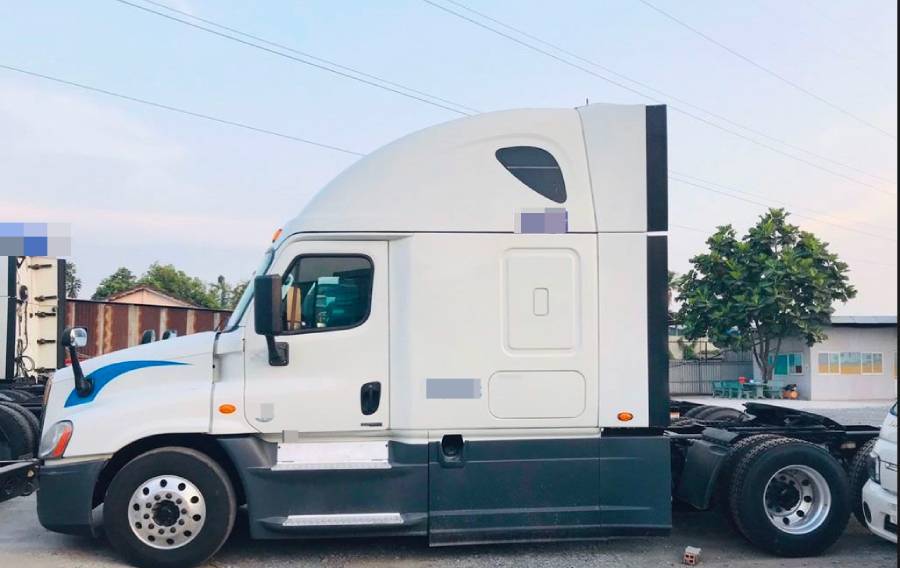
Freightliner CPC problems can cause loss of throttle response, engine starting issues, derate conditions, warning lights, and communication failures between vehicle control modules. The Common Powertrain Controller (CPC) plays a central role in processing driver inputs and exchanging information across the truck’s powertrain network. When the CPC or its supporting electrical circuits malfunction, the truck may operate intermittently, lose critical functions, or fail to start.
However, these symptoms do not automatically confirm a bad CPC. A Freightliner can display CPC-related problems when the actual cause is low voltage, a poor ground connection, damaged wiring, corroded connectors, or a CAN/J1939 communication fault. Replacing the controller without testing these components can leave the original problem unresolved and add unnecessary repair costs.
Diagnosing Freightliner CPC problems therefore requires a systematic process that separates an internal controller failure from external electrical and communication faults. This guide explains the most common CPC problems and symptoms, what causes them, how to diagnose the system, and how to determine whether the correct solution is repairing the circuit, reprogramming the controller, repairing the CPC, or replacing it.
What Are the Most Common Freightliner CPC Problems?
The most common Freightliner CPC problems include communication failure, loss of throttle response, no-start conditions, engine derate, intermittent electrical faults, power or ground problems, and internal CPC failure. These problems can prevent the Common Powertrain Controller from processing driver inputs or exchanging information correctly with other electronic control modules.
CPC communication failure occurs when the controller cannot reliably send or receive data through the truck’s communication network. The CPC communicates with other modules to coordinate powertrain functions, so a communication interruption can produce multiple symptoms at the same time. A scan tool may be unable to communicate with the CPC, other modules may report communication-related fault codes, or several warning indicators may appear together. The failure can originate inside the CPC, but damaged wiring, poor connections, unstable power, or network faults can produce similar results.
Loss of throttle response is another significant CPC-related problem. The CPC processes driver inputs that are used by the powertrain control system, including accelerator pedal information. A communication or controller problem can therefore result in delayed, intermittent, or absent throttle response. The engine may continue running while the accelerator pedal produces little or no expected response. Because pedal sensors, wiring, connectors, and other control components can create similar symptoms, throttle loss alone does not confirm CPC failure.
No-start and abnormal engine operation can also occur when the CPC cannot perform its required control or communication functions. The truck may crank without operating normally, experience intermittent starting problems, or enter a reduced-performance condition. A CPC-related fault can also occur intermittently, causing the truck to behave normally at one moment and develop control or communication problems later.
Power and ground faults deserve particular attention because they can imitate an internally failed controller. The CPC requires a stable electrical supply and reliable ground connection to operate and communicate. Low voltage, excessive resistance, damaged wiring, loose terminals, or corrosion can interrupt those conditions. For this reason, a CPC that appears dead or stops communicating should not automatically be replaced before its electrical circuits are tested.
What Are the Symptoms of a Bad Freightliner CPC?
The primary symptoms of a bad Freightliner CPC are no communication with the controller, loss of throttle response, starting problems, engine derate or abnormal operation, multiple warning indications, and intermittent electronic faults. The combination and persistence of these symptoms provide more diagnostic value than any single symptom by itself.
A no-communication condition is one of the strongest reasons to investigate the CPC and its circuits. When diagnostic equipment cannot establish communication with the controller, the fault can involve the CPC itself or something preventing the module from operating. The diagnostic process must therefore determine whether the CPC has proper power, ground, wiring, and network connectivity before treating no communication as proof of internal module failure.
Throttle problems can appear when the CPC is unable to process or transmit the required driver-input information correctly. A driver may experience an accelerator pedal that stops responding, responds intermittently, or fails to produce the expected engine response. If the symptom occurs together with CPC communication faults or other control-module errors, the CPC and its associated circuits become stronger diagnostic targets. If throttle response is the only symptom, accelerator pedal sensors and their circuits also need to be considered.
Starting and engine-performance symptoms can range from intermittent operation to a truck that cannot operate normally. A communication disruption may interfere with the information exchanged among powertrain controllers, while a more severe fault can contribute to a no-start or derate condition. Multiple warning lights or seemingly unrelated electronic faults appearing at the same time can also indicate a shared communication, power, or controller problem rather than several independent component failures.
Intermittent symptoms are particularly important because they often complicate CPC diagnosis. A loose connector, corroded terminal, damaged wire, unstable voltage, or developing internal module fault may work under one condition and fail under another. Vibration, temperature changes, moisture, and changes in electrical load can expose an intermittent problem. Diagnostic testing should therefore consider when the fault occurs instead of relying only on whether the truck operates normally during a single inspection.
A symptom should ultimately be treated as evidence for diagnosis rather than confirmation that the CPC is defective. Confirming CPC failure requires separating the controller itself from external power, ground, wiring, connector, and communication-network problems that can produce the same symptoms.
What Causes Freightliner CPC Problems?
Freightliner CPC problems can result from power supply faults, poor ground connections, damaged wiring or connectors, CAN/J1939 communication faults, voltage problems, moisture or corrosion, programming issues, and internal CPC failure. These causes can produce similar symptoms, which is why a no-communication condition or throttle problem should not automatically lead to CPC replacement.
Power supply problems can prevent the CPC from operating even when the controller itself is functional. The module requires stable electrical power to process inputs and communicate with other control modules. A problem in the power circuit can cause the CPC to shut down, reset intermittently, or disappear from the communication network. The resulting symptoms may resemble complete controller failure because diagnostic equipment and other modules can no longer communicate normally with the CPC.
Poor ground connections can create similar problems. A ground circuit with excessive resistance, a loose connection, damaged wiring, or corrosion can interfere with the CPC’s electrical operation. The fault may remain constant or become intermittent as vibration, temperature, and electrical load change. This explains why a truck can operate normally during one inspection but develop CPC-related symptoms later.
Damaged wiring and connectors can interrupt both electrical supply and communication signals. Common failure mechanisms include loose terminals, damaged insulation, broken conductors, poor terminal contact, and corrosion. Wiring faults become especially important when CPC symptoms appear intermittently or after electrical repairs, component replacement, moisture exposure, or physical damage near the harness.
Communication-network faults can also make a functioning CPC appear defective. Freightliner electronic control modules exchange information through vehicle data networks such as J1939. An open circuit, short circuit, wiring problem, connector fault, or another network-related problem can disrupt this communication. The CPC may consequently become unavailable to diagnostic equipment even though the failure originates outside the controller.
Moisture and corrosion can affect connectors, terminals, wiring, and electronic components. Corrosion increases electrical resistance and can degrade a connection progressively, producing faults that initially occur only under certain conditions. Significant moisture intrusion or physical damage can also affect the CPC itself. Visible corrosion or water exposure should therefore lead to inspection of both the module and its associated electrical connections.
Programming or configuration issues should be distinguished from physical controller failure. A CPC that requires correct vehicle-specific configuration may not operate as expected when software, programming, or module configuration is incorrect. This distinction becomes particularly important after controller replacement because installing compatible hardware does not necessarily complete the repair if programming or configuration is also required.
Internal CPC failure remains a possible cause after external faults have been eliminated. Electronic components inside the controller can fail and prevent normal processing or communication. However, internal failure should be confirmed through diagnosis rather than inferred from symptoms alone. Testing power, ground, wiring, connectors, and network communication first reduces the risk of replacing a functional CPC.
Can Low Battery Voltage Cause Freightliner CPC Problems?
Low or unstable battery voltage can cause CPC-related symptoms when the controller does not receive the electrical conditions required for consistent operation. The resulting problem can include intermittent module operation, communication faults, resets, or other electronic symptoms that resemble a defective CPC.
Battery condition is only one part of the electrical diagnosis. The charging system, power circuits, connections, grounds, and voltage available at the controller also affect module operation. A battery may have enough energy to operate certain electrical systems while a voltage drop or poor connection prevents the CPC from receiving a reliable supply.
This is why voltage-related faults should be investigated before condemning the controller. Replacing the CPC while leaving an unstable electrical supply unresolved can result in the same symptoms remaining after the new module is installed.
Can CAN Bus or J1939 Faults Be Mistaken for a Bad CPC?
CAN bus or J1939 communication faults can be mistaken for a bad CPC because both conditions can cause loss of communication between the CPC, diagnostic equipment, and other control modules. A communication failure identifies a network problem that requires diagnosis; it does not identify the failed component by itself.
The distinction depends on isolating the source of the communication loss. If the CPC has the required power and ground but cannot communicate, the diagnostic process should still examine the network circuits and associated connections. Wiring damage, shorts, open circuits, poor connector contact, or faults elsewhere on the network can interfere with data transmission.
The pattern of communication failure can provide additional diagnostic direction. For example, a problem involving several modules can point toward a broader network or electrical issue rather than an isolated CPC failure. A fault consistently isolated to the CPC after its external circuits have been verified provides stronger evidence that the controller itself requires further testing.
The practical rule is straightforward: no communication is a symptom, not a final diagnosis. CPC failure becomes a stronger conclusion only after power, ground, wiring, connectors, and communication-network faults have been systematically eliminated.
How Do You Diagnose Freightliner CPC Problems?
To diagnose Freightliner CPC problems, verify the symptoms, scan the truck for fault codes, check communication with the CPC, test its power and ground circuits, inspect wiring and connectors, evaluate the J1939 network, and confirm the controller itself only after external faults have been eliminated. This sequence prevents a wiring, voltage, or network problem from being misdiagnosed as a failed CPC.
Start by confirming the reported symptoms. Determine whether the truck has no throttle response, intermittent throttle operation, a no-start condition, derate, warning lights, or loss of communication with the CPC. Record whether the problem is constant or intermittent and identify the conditions under which it occurs. An intermittent failure that changes with vibration, temperature, moisture, or electrical load can point toward a connection, wiring, or power-supply problem.
Next, connect appropriate diagnostic equipment and scan the available control modules for diagnostic trouble codes. Do not focus only on codes associated with the CPC. Communication faults stored in other modules can help establish whether the problem affects one controller or a larger portion of the vehicle network. Multiple modules reporting communication problems can indicate a shared electrical or J1939 network fault.
Check whether the diagnostic tool can communicate directly with the CPC. A CPC that does not appear on the network requires further testing, but lack of communication alone does not prove internal controller failure. The CPC cannot communicate normally if it lacks adequate power or ground, has a damaged connector, or is disconnected from a functioning communication network.
Verify the CPC power and ground circuits before replacing the module. The objective is to establish that the controller receives a stable electrical supply and has reliable ground paths under the conditions in which the fault occurs. Inspect the relevant electrical connections, fuses and circuits according to the applicable Freightliner service information. Testing should account for voltage drop and circuit integrity rather than assuming that visible wiring or an intact fuse confirms a healthy circuit.
Inspect the CPC connectors and related wiring for loose terminals, corrosion, moisture, damaged insulation, broken conductors, or evidence of previous electrical repairs. Connector problems can create intermittent failures when vibration changes terminal contact. A visual inspection can identify obvious damage, but electrical testing may still be required because a conductor or terminal can fail without visible external damage.
Evaluate the J1939 communication network when power and ground are present but communication remains abnormal. Determine whether the fault is isolated to the CPC or affects multiple modules. Network wiring, connectors, shorts, open circuits, and other devices connected to the network can interfere with communication. The diagnostic objective is to isolate the failed circuit or component rather than replacing whichever module first appears offline.
The CPC itself becomes a stronger failure candidate after its external requirements have been verified. If the controller has proper power and ground, its connectors and wiring are functional, the communication network has been checked, and the CPC still fails to operate or communicate correctly, internal controller failure warrants further confirmation. This evidence-based sequence provides a stronger diagnosis than relying on one fault code or symptom.
How Do You Tell Whether the CPC or Wiring Is Bad?
To determine whether the CPC or wiring is bad, test the circuits that allow the CPC to operate before condemning the controller. A wiring fault is more likely when testing identifies missing power, an unreliable ground, damaged conductors, poor terminal contact, corrosion, or a communication-circuit problem. CPC failure becomes more likely when those external conditions test correctly but the controller still cannot perform or communicate as required.
Intermittent behavior can provide useful evidence. If communication changes when a harness or connector is disturbed, the electrical path deserves further investigation. Likewise, faults associated with moisture, vibration, or recent wiring work can justify closer inspection of connectors and harnesses. These patterns do not prove a wiring failure, but they help determine where testing should be concentrated.
The diagnostic pattern also matters. Several modules losing communication simultaneously can indicate a shared power or network problem. A CPC that remains the isolated non-communicating module after its power, ground, wiring, and network connections have been verified provides stronger evidence of an internal CPC problem.
Do not use module replacement as a diagnostic test unless the applicable repair procedure specifically requires it. A replacement CPC can still fail to communicate if the original problem is a damaged circuit or J1939 network fault, and a replacement controller may introduce additional programming or configuration requirements.
The final diagnosis should therefore establish what failed and why it produced the observed symptoms. Confirming that distinction before repair reduces unnecessary CPC replacement and directs the next step toward the actual fault.
How Do You Fix Freightliner CPC Problems?
To fix Freightliner CPC problems, repair the specific electrical, communication, programming, or controller fault identified during diagnosis. The correct solution may involve restoring power or ground, repairing wiring and connectors, resolving a J1939 communication fault, correcting CPC programming, repairing the controller, or replacing a confirmed failed CPC.
Repair power and ground problems first when testing shows that the CPC is not receiving a reliable electrical supply. The repair can involve correcting damaged circuits, poor connections, excessive resistance, or other faults affecting power delivery or ground integrity. After the repair, verify that the CPC remains powered and communicates normally under the operating conditions that previously produced the problem.
Repair damaged wiring and connectors when inspection or electrical testing identifies an open circuit, short circuit, loose terminal, corrosion, damaged conductor, or poor connector contact. Replacing the CPC will not correct these faults because the communication or electrical path remains defective. After wiring repairs, rescan the truck and confirm that the original CPC symptoms and communication faults no longer occur.
Resolve J1939 communication problems at the network level rather than assuming the CPC is responsible. A network fault can affect communication among several controllers and make a functioning CPC appear offline. The repair depends on the diagnosed failure and may involve damaged network wiring, connectors, terminals, or another source disrupting communication. The network should be retested after repair to confirm that the CPC and other affected modules communicate correctly.
Correct programming or configuration when diagnosis identifies a software or vehicle-configuration issue rather than a physical controller failure. This consideration is particularly important after installing another CPC because compatible hardware may still require vehicle-specific programming or configuration before the truck operates correctly. Programming should follow the applicable service procedure for the truck and controller being installed.
Repairing the existing CPC may be an option when the module has a confirmed internal fault that can be professionally repaired. The suitability of this approach depends on the type and extent of the internal failure. A repaired controller must still function correctly with the truck’s electrical and communication systems, so the external cause of the original failure should also be addressed if one exists.
Replace the CPC when diagnosis confirms that the controller itself has failed and an appropriate repair is not practical. Replacement should occur only after power, ground, wiring, connectors, and communication circuits have been checked. The replacement CPC must also be compatible with the vehicle and configured or programmed as required for proper operation.
A successful CPC repair should be verified rather than assumed. Clear or document relevant faults according to the diagnostic procedure, restore communication, operate the truck under appropriate conditions, and check whether the original symptoms return. The repair is complete when the diagnosed cause has been corrected and the affected systems operate normally.
Should You Repair, Reprogram, or Replace a Freightliner CPC?
You should repair a Freightliner CPC when the existing module has a repairable hardware fault, reprogram or configure it when the problem is software or configuration-related, and replace it when internal module failure has been confirmed and repair is not appropriate. These three solutions address different failure conditions and should not be treated as interchangeable.
CPC repair preserves the existing controller while correcting an internal hardware problem. This option makes sense only after diagnosis separates internal CPC failure from external electrical or network faults. Repairing a controller will not solve a poor ground, damaged harness, corroded connector, or J1939 communication problem elsewhere on the truck.
Reprogramming or configuration addresses a different category of problem. A CPC can have functional hardware but still require correct software or vehicle-specific configuration. This is particularly relevant when a controller has been replaced or when diagnosis identifies a programming-related issue. Reprogramming should not be used as a substitute for electrical diagnosis when the controller lacks power, ground, or network connectivity.
CPC replacement is appropriate when the module has a confirmed internal failure that cannot be reliably corrected through repair or programming. Before replacement, verify that the external circuits required by the controller are functioning correctly. Installing another CPC without correcting an underlying voltage, wiring, connector, or network problem can leave the truck with the same fault.
Compatibility must also be confirmed before installing a replacement controller. Freightliner trucks vary by model, configuration, powertrain, and electronic architecture, so a CPC should not be selected solely because it appears physically interchangeable. The applicable vehicle and service information should determine controller compatibility and programming requirements.
The decision therefore follows a clear diagnostic sequence: repair the circuit when the circuit is faulty, correct programming when programming is faulty, repair the CPC when its internal fault is repairable, and replace the CPC when confirmed module failure requires replacement. This approach addresses the actual cause instead of using CPC replacement as the first troubleshooting step.
Can You Drive a Freightliner With a Bad CPC?
Driving a Freightliner with a bad CPC depends on the severity of the fault and which vehicle functions are affected, but significant throttle, communication, starting, or derate problems should be diagnosed before the truck remains in service. A CPC-related problem can range from an intermittent electronic fault to a condition that prevents normal powertrain operation.
An intermittent CPC-related fault may allow the truck to operate normally between occurrences. However, intermittent operation does not mean the underlying problem has been resolved. A loose electrical connection, damaged wire, unstable power supply, network fault, or developing controller failure can return when vibration, temperature, moisture, or electrical load changes. Continuing operation without diagnosis can therefore make the truck’s behavior unpredictable.
Loss of throttle response presents a more serious drivability problem. The CPC participates in processing and communicating driver inputs within the powertrain control system, so a fault affecting this function can prevent the truck from responding normally to accelerator input. A truck experiencing intermittent or complete throttle loss should not be treated in the same way as one displaying only a stored fault without an active drivability symptom.
An engine derate also indicates that normal operation has been affected. Derate can have causes outside the CPC, so the condition should not automatically be attributed to controller failure. The diagnostic process should identify the active faults and determine whether the CPC, another control system, or a communication problem is responsible.
A no-start condition represents the other end of the severity range because the truck may be unable to operate at all. When CPC communication is also unavailable, technicians should verify power, ground, wiring, connectors, and network integrity before concluding that the controller itself caused the no-start.
The practical decision should therefore be based on the active symptoms rather than the CPC label alone. Loss of throttle response, persistent communication failure, abnormal powertrain operation, or a no-start condition requires diagnosis of the underlying fault instead of continued operation based on the assumption that the problem will remain intermittent.
Read more: Freightliner Engine Fan Not Coming On: Causes & Fixes
How Can You Prevent Freightliner CPC Problems?
To reduce the risk of Freightliner CPC problems, maintain the truck’s electrical system, correct battery and charging faults, protect wiring and connectors, address moisture or corrosion, and investigate intermittent communication problems before they become persistent failures. Preventive attention is particularly valuable because several faults that appear to be CPC failures originate outside the controller.
Maintain reliable battery and charging-system operation because electronic controllers depend on a stable electrical supply. Repeated low-voltage or unstable-voltage conditions can contribute to electronic symptoms and complicate diagnosis. Electrical problems should be corrected when they are identified rather than allowing repeated communication or module-operation faults to continue.
Inspect wiring and connectors when servicing areas around the CPC or related vehicle networks. Harness damage, loose terminals, poor connector contact, and corrosion can interfere with power, ground, or communication circuits. Wiring should also be inspected after repairs or physical damage when CPC symptoms begin soon afterward, since the timing can help identify the source of a new electrical problem.
Address moisture and corrosion before terminal or connector damage becomes severe. Moisture can degrade electrical connections, while corrosion can increase resistance and create intermittent faults. Early correction can prevent a minor connection problem from developing into repeated communication loss or an electrical failure that resembles a defective CPC.
Do not ignore intermittent CPC communication problems simply because the truck begins operating normally again. Intermittent faults provide diagnostic information about the conditions that trigger the problem. Recording when the symptom occurs, which warning indicators appear, and whether other modules lose communication can help isolate the fault before it becomes constant.
Preventive maintenance cannot eliminate every internal CPC failure because electronic components can eventually fail. It can, however, reduce avoidable external faults and make genuine controller failures easier to identify. Keeping power, ground, wiring, connectors, and vehicle communication circuits in good condition removes several common sources of symptoms that can otherwise be mistaken for a bad CPC.
What Should You Check Before Replacing a Freightliner CPC?
Before replacing a Freightliner CPC, confirm the symptoms, review diagnostic trouble codes, verify CPC communication, test power and ground, inspect wiring and connectors, check the J1939 network, and confirm the replacement module’s compatibility and programming requirements. CPC replacement should follow a confirmed diagnosis rather than serve as the first diagnostic step.
Start by verifying the original symptoms and determining whether they consistently point toward the CPC or its supporting circuits. Loss of throttle response, no communication, starting problems, derate, and intermittent electronic faults justify CPC diagnosis, but none of these symptoms independently proves that the controller has failed. Document when the problem occurs and whether other vehicle systems are affected at the same time.
Review diagnostic trouble codes from the available control modules next. Communication codes stored by other modules can reveal whether the CPC is the only controller affected or whether the truck has a broader network problem. Fault codes should guide testing rather than be treated as automatic instructions to replace a component.
Verify that the CPC has the electrical conditions required to operate. Test its power supply and ground circuits and investigate abnormal voltage, excessive resistance, poor connections, or other electrical faults. A CPC without reliable power or ground can appear completely unresponsive even when its internal electronics remain functional.
Inspect the wiring harness and connectors before condemning the controller. Look for damaged conductors, loose or damaged terminals, corrosion, moisture, and evidence of previous repairs. Pay particular attention to intermittent faults because changes in vibration, temperature, moisture, or connector position can temporarily restore or interrupt an electrical connection.
Check J1939 communication when the CPC has proper power and ground but still cannot communicate normally. Determine whether communication loss is isolated to the CPC or affects several modules. A network wiring fault or another communication problem can make the CPC appear offline, so network integrity should be established before an internal controller failure is confirmed.
Confirm the CPC itself only after these external causes have been eliminated. A controller that receives proper power and ground, has functional wiring and connectors, and is connected to a verified communication network but still fails to operate correctly provides substantially stronger evidence of an internal CPC fault.
Finally, verify replacement compatibility before installing another CPC. The replacement controller must be appropriate for the specific vehicle configuration, and programming or configuration may be required before normal operation is restored. The applicable Freightliner service information should be used to determine the correct procedure for the specific truck and controller.
CPC replacement should follow diagnosis, not replace diagnosis. Verifying the electrical supply, ground, wiring, connectors, communication network, controller condition, and replacement requirements first reduces unnecessary parts replacement and increases the likelihood that the repair addresses the actual cause of the Freightliner CPC problem.