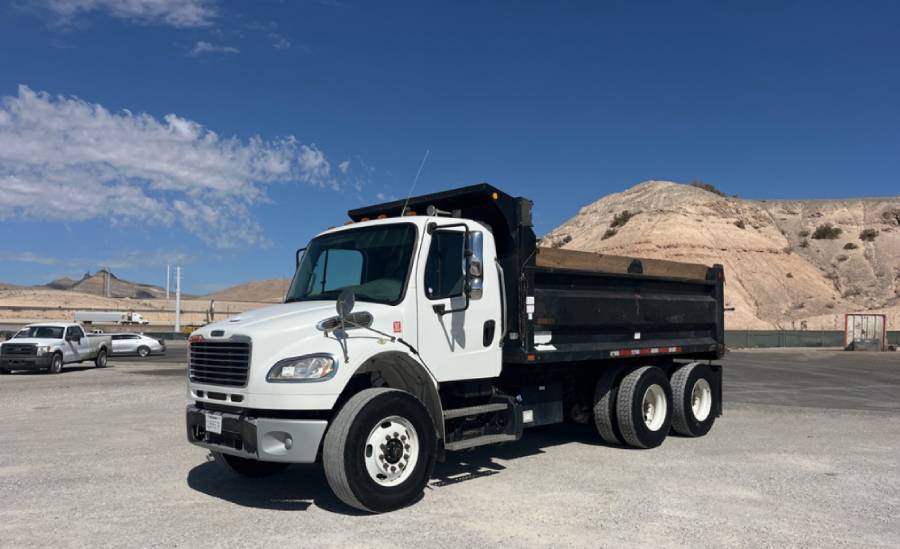
The Freightliner M2 fuse box is primarily located inside the cab, but the exact fuse and power distribution locations can vary by model year, M2 configuration, and installed equipment. Freightliner M2 trucks use fuses and relays to protect electrical circuits for systems such as the lights, HVAC, horn, power outlets, and other cab or chassis components. Finding the correct panel is therefore the first step when diagnosing an electrical component that has stopped working.
The main fuse panel can be accessed from inside the cab, while additional power distribution components may be located elsewhere on the truck depending on its electrical configuration. This distinction matters because finding one fuse panel does not necessarily mean the fuse or relay for the affected circuit is located there. The fuse diagram and vehicle-specific documentation should be used to match the electrical circuit with the correct fuse position and amperage rating.
This guide explains the Freightliner M2 fuse box location, how to access the panel, where to find the fuse diagram, how to identify and test the correct fuse, and what to check when a fuse repeatedly blows or an electrical component remains inoperative.
Main Fuse Box Location and Number of Fuse Boxes
The Freightliner M2 fuse box is primarily located inside the cab, but the exact fuse and power distribution locations can vary by model year, M2 configuration, and installed equipment. Freightliner M2 trucks use fuses and relays to protect electrical circuits for systems such as the lights, HVAC, horn, power outlets, and other cab or chassis components. Finding the correct panel is therefore the first step when diagnosing an electrical component that has stopped working.
The main fuse panel can be accessed from inside the cab, while additional power distribution components may be located elsewhere on the truck depending on its electrical configuration. This distinction matters because finding one fuse panel does not necessarily mean the fuse or relay for the affected circuit is located there. The fuse diagram and vehicle-specific documentation should be used to match the electrical circuit with the correct fuse position and amperage rating.
This guide explains the Freightliner M2 fuse box location, how to access the panel, where to find the fuse diagram, how to identify and test the correct fuse, and what to check when a fuse repeatedly blows or an electrical component remains inoperative.
Where Is the Fuse Box Located on a Freightliner M2?
The main Freightliner M2 fuse panel is located inside the cab, while additional electrical power distribution components may be installed in other locations depending on the truck’s model year and configuration. For this reason, the interior fuse panel is the first location to check when troubleshooting a cab-related electrical problem, but it should not automatically be treated as the location of every fuse and relay on the truck.
The interior panel contains circuit protection for multiple electrical functions. Each fuse protects a specific circuit by opening when electrical current exceeds its rated limit. This prevents excessive current from continuing through the wiring and potentially damaging wiring, connectors, modules, or electrical components. The panel also provides an organized location where individual circuits can be identified and tested during troubleshooting.
The exact layout is important because the Freightliner M2 is available in different configurations, including M2 106 and M2 112 models, and trucks can also have body-builder or upfitter electrical equipment. A fuse position shown for one configuration should therefore not be assumed to apply to every M2. The truck-specific fuse diagram or electrical documentation should be checked before removing or replacing a fuse.
Finding the panel is only the first part of the process. The next step is identifying which fuse corresponds to the failed electrical system. For example, a driver investigating an inoperative power outlet needs to locate the circuit assigned to that outlet rather than inspecting unrelated lighting or HVAC fuses. Matching the symptom to the correct circuit reduces unnecessary fuse removal and makes electrical diagnosis more precise.
How Many Fuse Boxes Does a Freightliner M2 Have?
A Freightliner M2 should not be treated as having one universal fuse box that contains every fuse, relay, and electrical protection device on the truck. Its electrical distribution system can include the main interior fuse panel plus additional power distribution components associated with the chassis, engine, optional equipment, or body installation.
This arrangement exists because an M2 can support substantially different electrical equipment depending on how the truck is configured. A delivery truck, utility vehicle, tow truck, box truck, or other vocational M2 can have additional circuits installed by a body builder or upfitter. Those circuits may use separate fuses, circuit protection devices, relays, or power distribution points rather than relying exclusively on the primary cab fuse panel.
The number and location of electrical distribution points can therefore vary between trucks. Model year, chassis specification, engine configuration, optional equipment, and aftermarket or upfitter installations can all affect where a particular protected circuit is located. This is why a fuse diagram from a visually similar Freightliner M2 is not sufficient evidence that the same fuse occupies the same position on another truck.
When troubleshooting, identify the affected component first and then trace it to the appropriate circuit protection location. For example, a problem with a factory cab accessory may direct the diagnosis toward the interior fuse panel, while a fault involving body equipment may require checking an upfitter-installed electrical distribution point. The vehicle-specific diagram provides the connection between the electrical symptom, circuit designation, fuse or relay, and its physical location.
Where Is the Freightliner M2 Fuse Box Inside the Cab?
The Freightliner M2 cab fuse panel is positioned behind an interior access panel, but the exact access point and electrical layout should be confirmed for the specific truck. Model year and vehicle configuration matter because Freightliner M2 trucks are built for different commercial and vocational applications, and their electrical equipment is not identical.
Start by looking for the removable interior panel that provides access to the truck’s electrical distribution area. Once the access panel is removed or opened, the fuse panel can be identified by its organized rows of replaceable fuses and associated electrical components. Labels, circuit identification information, or a fuse diagram may also be present near the panel or on its cover.
Do not identify a fuse solely by its physical position. Two M2 trucks can have similar-looking panels while using different circuit assignments because of equipment or production differences. A position that protects one electrical function on one configuration may not provide a reliable reference for another configuration. The fuse identification information for the specific vehicle should therefore take priority over diagrams or photographs from an unidentified truck.
The same rule applies to trucks with equipment installed after the chassis left the factory. Box bodies, liftgates, towing equipment, utility bodies, refrigeration systems, and other vocational equipment can introduce additional electrical protection devices. Finding the factory cab fuse panel does not confirm that a fuse for added equipment is located in that panel.
How Do You Access the Fuse Box on a Freightliner M2?
To access the Freightliner M2 fuse box, secure the truck, switch off the affected electrical equipment, locate the appropriate interior access panel, and open or remove the panel to expose the fuse area. Confirm the vehicle-specific procedure before disconnecting components or removing electrical hardware.
First, park the truck securely and prevent unintended vehicle movement. Turn off the electrical load being diagnosed and place the ignition in the appropriate off position before removing a fuse. These steps reduce the chance of creating an additional electrical fault while the circuit is being inspected.
Next, locate the interior access panel covering the fuse area. Open or remove the cover carefully rather than forcing it. Once the fuse panel is visible, look for circuit labels, fuse identification information, or a corresponding diagram. The objective is to identify the circuit before pulling a fuse rather than removing several fuses until the suspected component stops or starts working.
After locating the correct circuit, verify both the fuse position and its specified amperage. For example, if an accessory has stopped operating, identify that accessory on the applicable diagram and trace its circuit to the designated fuse position. This method is more reliable than choosing a fuse because its color or physical location resembles an example found for another Freightliner M2.
Avoid replacing a fuse with one of a higher amperage simply because the specified fuse continues to blow. A fuse opens when current exceeds the level the circuit is designed to handle. Installing a higher-rated fuse can allow excessive current to remain in the wiring instead of addressing the underlying electrical problem. A repeatedly blown fuse requires diagnosis of the circuit rather than progressively larger replacement fuses.
Where Can You Find the Freightliner M2 Fuse Box Diagram?
The correct Freightliner M2 fuse box diagram should be obtained from the fuse-panel identification information or documentation that matches the truck’s specific model year and configuration. The diagram is necessary because physical fuse location alone does not reliably identify which circuit a fuse protects.
A useful fuse diagram connects several pieces of information: the fuse position, circuit designation, protected electrical component, and specified amperage. Relay identification may also be included where applicable. Together, these details allow the driver or technician to move from a symptom, such as an inoperative electrical accessory, to the circuit protection device that needs to be inspected.
Vehicle-specific identification matters more than a generic Freightliner M2 diagram. M2 trucks span different model years, chassis configurations, engines, optional equipment, and vocational applications. Electrical assignments can therefore differ even when two fuse panels appear similar. An online diagram should not be treated as vehicle-specific unless its application matches the truck being serviced.
The panel itself should be checked for labels or circuit identification before relying on an external diagram. Vehicle documentation can then be used to confirm the circuit assignment. For equipment installed by a body builder or upfitter, separate documentation may be required because those circuits may not appear on the factory fuse-panel diagram.
How Do You Find the Correct Fuse on a Freightliner M2?
Find the correct Freightliner M2 fuse by identifying the failed electrical function first and matching that function to its circuit designation and fuse position on the applicable diagram. This symptom-to-circuit approach is more accurate than removing fuses individually or selecting one based only on its physical position.
For example, start with the affected system when the horn, HVAC controls, lighting, or a power outlet stops working. Locate that system or its associated circuit in the applicable electrical information, identify the designated fuse position, and then find that position on the physical panel. This creates a direct diagnostic sequence: electrical symptom → circuit → fuse designation → physical fuse.
The fuse amperage must also match the specification for that circuit. Fuse ratings determine how much current can pass before the fuse opens to protect the wiring. A replacement with the same specified rating maintains the intended circuit protection, while installing a higher-rated fuse can expose wiring or electrical components to current above the designed limit.
Fuse color can help distinguish amperage ratings on standardized automotive fuse types, but color should not replace the printed rating or vehicle-specific information. Verify the amperage marking on the fuse and compare it with the specified circuit rating before installation.
The correct fuse may also be intact even when the component does not operate. A failed relay, poor ground, damaged connector, open wiring, loss of power supply, or failed component can produce a similar symptom. Fuse identification is therefore one diagnostic step rather than proof that the fuse is responsible for the electrical failure.
Does the Freightliner M2 Fuse Box Location Change by Model Year?
The Freightliner M2 fuse box location and circuit arrangement can differ by model year, chassis configuration, and installed equipment. The main electrical distribution area may remain in a similar general part of the cab across multiple M2 versions, but this does not mean every fuse position, relay assignment, or secondary power distribution point remains identical.
Model year matters because electrical systems change as vehicle designs, control modules, engines, and optional equipment are updated. A fuse assigned to a particular circuit on one M2 model year may occupy another position or use a different electrical distribution arrangement on another. For this reason, a fuse box diagram should be matched to the truck being diagnosed rather than selected only because it carries the Freightliner M2 name.
The M2 configuration also affects electrical layout. M2 106 and M2 112 trucks can be equipped for different applications, while vocational bodies add another level of variation. For example, liftgates, refrigeration equipment, utility bodies, warning lights, and other body equipment can require additional circuits that are not part of the standard cab fuse arrangement.
Use the truck’s model year, configuration, and vehicle-specific electrical information when identifying a fuse. If the truck has body-builder or aftermarket electrical equipment, check the documentation for that installation as well. This approach prevents a diagram from another M2 configuration from being mistaken for an exact representation of the vehicle being serviced.
How Do You Check a Fuse on a Freightliner M2?
A Freightliner M2 fuse can be checked by visual inspection or electrical testing with a test light or multimeter. Electrical testing provides more diagnostic information because a fuse that appears intact does not by itself confirm that the circuit has the required power supply.
Visual inspection starts by removing the correctly identified fuse and examining its internal conductive element. A visible break or burned section indicates that the fuse has opened. However, inspection should only follow correct fuse identification so that unrelated circuits are not unnecessarily disturbed.
A test light can determine whether electrical power reaches the fuse test points when the circuit conditions are appropriate for testing. Power on one side but not the other can indicate an open fuse. No power at either side can point toward an upstream power-supply issue rather than automatically proving that the fuse itself has failed.
A digital multimeter can also be used to test continuity across a removed fuse. An intact fuse provides electrical continuity through its conductive element, while an open fuse does not. Voltage measurements across the installed circuit can provide additional information when diagnosing a power-distribution problem.
Fuse testing should therefore follow a defined sequence: identify the affected circuit, locate the specified fuse, verify its rating, and then test it using the appropriate method. If the fuse tests good, continue diagnosing the circuit instead of replacing the fuse without evidence of failure.
How Do You Replace a Blown Fuse on a Freightliner M2?
Replace a blown Freightliner M2 fuse with a fuse of the same specified type and amperage rating after confirming the correct circuit and fuse position. A replacement fuse restores circuit protection; it does not repair the electrical fault that caused the original fuse to open.
Start by identifying the affected electrical component and matching it to the correct fuse using the applicable fuse diagram. Secure the truck, switch off the affected electrical load, and follow the appropriate electrical shutdown procedure before removing the fuse. Pull the identified fuse from its position and inspect or test it to confirm that it has failed.
Check the amperage rating before installing the replacement. The new fuse should match the rating specified for that circuit. Do not substitute a higher-amperage fuse to prevent repeated failures. The fuse rating is selected to protect the wiring and electrical components from excessive current, so increasing the rating can allow the circuit to carry more current than intended.
Install the correct replacement fuse securely in the same position and restore the circuit for testing. Operate the affected component and confirm whether normal function returns. If the new fuse remains intact and the component operates correctly, continue monitoring the circuit for another failure.
A replacement fuse that blows immediately or shortly after installation indicates that further diagnosis is required. Repeatedly installing new fuses does not correct the underlying problem and can make troubleshooting more difficult.
Read more: Freightliner DEF Light Blinking but Tank Is Full: Fixes
Why Does a Freightliner M2 Fuse Keep Blowing?
A Freightliner M2 fuse that repeatedly blows indicates excessive current or an electrical fault in the protected circuit. The fuse is responding to the fault by opening the circuit, so the diagnostic objective is to find why current exceeds the circuit’s intended limit.
Common causes include a short circuit, damaged wiring, an overloaded circuit, a failed electrical component, an incorrect fuse installation, or a problem associated with aftermarket or upfitter wiring. For example, insulation damaged by abrasion can allow a powered wire to contact the chassis or another conductor. The resulting low-resistance path can cause current to rise rapidly and open the fuse.
Circuit overload is another possible cause. Additional electrical equipment can increase the load on a circuit beyond its intended capacity when it is connected incorrectly. This issue deserves particular attention on vocational M2 trucks because equipment such as liftgates, auxiliary lighting, refrigeration systems, utility-body accessories, and other body components can introduce electrical circuits beyond the standard cab equipment.
The timing of the fuse failure can help narrow the diagnostic area. A fuse that opens immediately after installation suggests a persistent fault that is present as soon as the circuit receives power. A fuse that fails only when a particular component is switched on directs attention toward that component, its wiring, connectors, and the part of the circuit activated at that moment.
Do not increase the fuse amperage to compensate for repeated failures. The correct repair is to locate and correct the electrical fault while maintaining the specified circuit protection. If the cause cannot be identified through basic fuse, wiring, connector, and component checks, the circuit requires more detailed electrical diagnosis.
What Should You Check If the Fuse Is Good but the Electrical Component Still Does Not Work?
If the Freightliner M2 fuse is good but the electrical component still does not work, check the relay, wiring and connectors, ground connection, power supply, and the component itself. A good fuse confirms that the fuse element has not opened; it does not confirm that voltage reaches every point in the circuit or that the electrical component is functional.
Check the relay first when the affected circuit uses one. A relay allows a low-current control circuit to switch a higher-current electrical load. A relay failure can therefore prevent a component from operating even when its fuse remains intact. The applicable electrical diagram should be used to determine whether the circuit contains a relay and where that relay is located.
Inspect the wiring and connectors next. Damaged wires, loose terminals, corrosion, disconnected connectors, and broken conductors can interrupt current between the fuse panel and the electrical component. On a commercial truck, wiring can also be exposed to vibration, movement, moisture, and modifications associated with vocational equipment. Visual inspection should focus on accessible connectors and areas where the harness may contact surrounding components.
Check the ground connection because an electrical component needs a complete circuit to operate. A loose, corroded, or damaged ground can produce symptoms similar to a failed fuse, including a completely inoperative component or intermittent operation. Measuring voltage and checking the ground side of the circuit can help distinguish a ground problem from a loss of power.
Verify the power supply at the affected component rather than assuming that an intact fuse means power reaches the load. A multimeter or suitable test equipment can be used to determine whether the expected voltage is present under the correct operating conditions. If voltage is available at the fuse but absent at the component, the fault is located somewhere between those points in the circuit.
Finally, test the electrical component itself after the fuse, relay, wiring, connectors, power supply, and ground have been evaluated. Motors, switches, lamps, control devices, and other electrical loads can fail internally while leaving their protective fuse intact. Diagnosis should therefore follow the circuit logically from its power source to the load instead of replacing parts based only on the symptom.
For a Freightliner M2 electrical problem, the practical diagnostic sequence is fuse → relay → wiring and connectors → ground → power supply → electrical component. Following this sequence separates a fuse-related failure from a broader circuit fault and reduces unnecessary replacement of functional electrical parts.